
AI Intelligent Sorting for Coffee Cherry & Lemon Slice Lines: Industry Scenario Fit
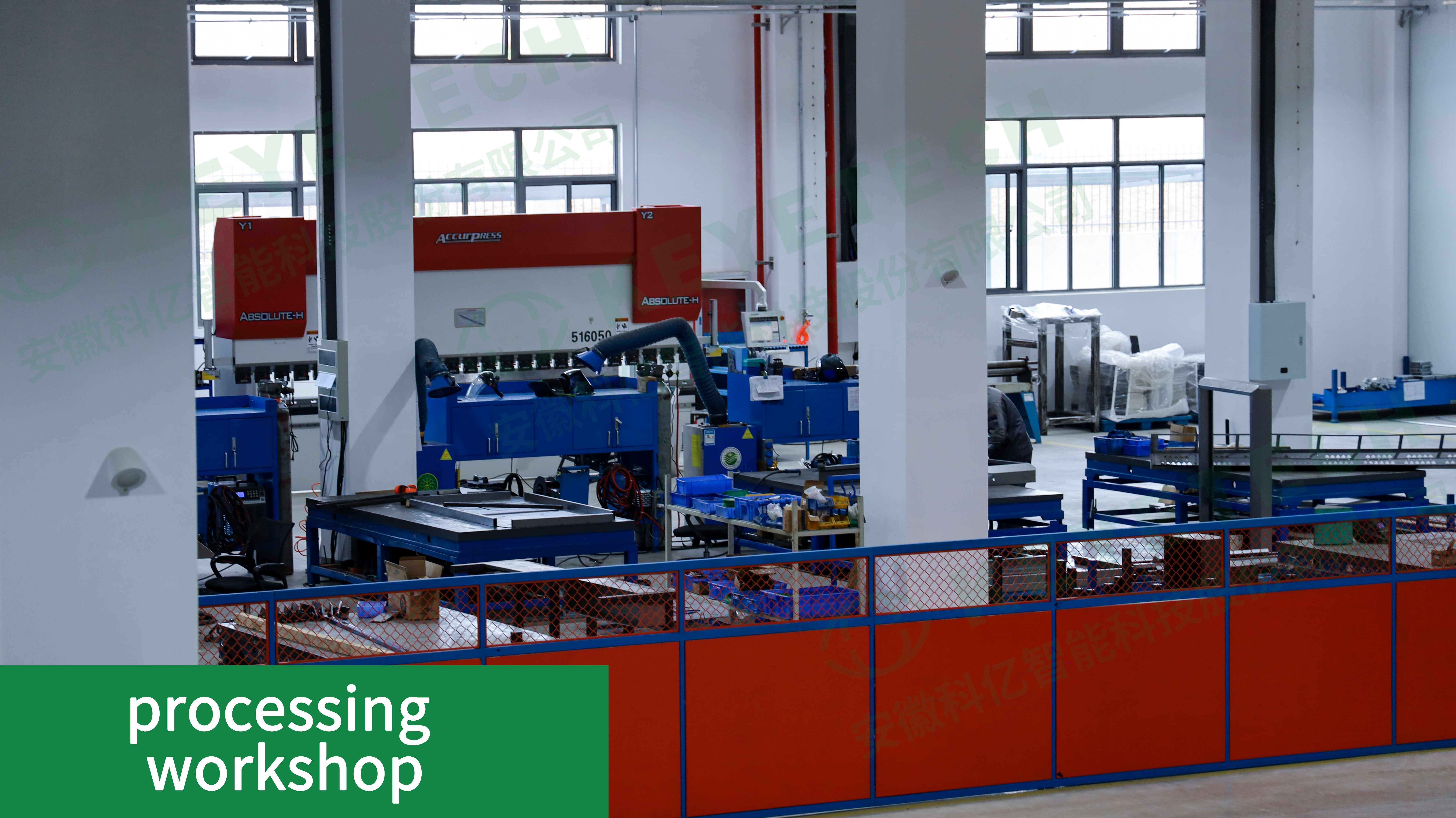
A specialty food processing environment of the type where sorting configuration is decided by material behaviour, defect class and feed conditions rather than by line speed alone.
Two of the hardest sorting jobs in specialty food processing are also among the smallest in tonnage: removing insect-damaged and mouldy fruit from a coffee cherry line, and removing seeds, dark spots and mould from dried lemon slices. Both materials punish sorting equipment that relies on colour thresholds alone, because the defects that decide product acceptance are defined by shadow, shape, texture and surface condition rather than by a clean difference in hue.
This is the practical reason AI intelligent sorting has moved out of grain and rice lines and into narrower, higher-value scenarios. A grain line can often be improved by tightening a colour threshold. A coffee cherry line cannot: an insect-damaged cherry may sit within the normal colour range of sound cherry and still be unusable. A lemon slice line cannot either: after drying, sound and defective slices frequently share almost the same shade, and the difference sits in a small dark spot, a seed fragment, an irregular edge or a patch of surface mould.
The question buyers now ask is therefore not whether AI sorting exists, but whether a specific machine is configured to fit a specific line. That question is answered by material suitability, machine construction, defect class, model training requirements and long-term service structure — the criteria this article examines for coffee cherry and lemon slice processing.
What “Scenario Fit” Means for a Sorting Line
Scenario fit is the alignment between a sorting machine's recognition capability and the physical reality of the material being fed to it. In edible and agricultural processing, a machine fits a line when three conditions hold at the same time.
1. The defect is optically detectable. Insect damage, mould, discolouration, foreign matter and shape outliers all leave a visual signature. Defects that do not — internal rot, chemical residue, off-spec moisture — sit outside the capability boundary of any optical sorter, including AI-based systems.
2. The material can be presented to the cameras stably. Cherry fruit is wet, irregular and variable in size; lemon slices are thin, fragile and prone to sticking. Presentation is a mechanical problem as much as a vision problem.
3. A usable model can be trained on the plant's own material. If a processor cannot supply representative samples of its own defect classes, no algorithm can be tuned to its line.
For coffee cherry and lemon slice lines, all three conditions can be met — but only when the machine is configured for that material, not simply repurposed from a grain platform.
Problem and Opportunity on the Two Lines
Coffee cherry sorting is dominated by three defect groups: insect-damaged fruit, mould, and immature or over-ripe cherry that is normally discoloured. Insect damage frequently appears as a small entry hole surrounded by a ring of shadow rather than as a colour defect, which is why the industry refers to it as an “insect eye”. Mould appears as a diffuse surface change that can be close in tone to the surrounding fruit. Foreign matter such as stones, sticks and leaves must also be removed to protect downstream equipment.
Lemon slice sorting has a different signature. Once sliced and dried, the product approaches a single dominant colour, so colour-threshold sorting removes only the most obvious discards. The remainder is made up of seed fragments, small dark spots, caramelised edges, thickness outliers and mould patches that carry little colour contrast. These defects matter commercially because they define the visible grade of a slice in a retail or food-service pack.
The opportunity is that both defect profiles are pattern problems rather than colour problems. Deep-learning recognition, trained on the visible texture and shape of a defect, addresses that class of problem more directly than a threshold rule. The constraint is that a trained model must be built and maintained per material — which is where training speed, sample requirements and service structure become procurement criteria rather than technical footnotes.
KEYETECH's Line-Specific Models for Coffee Cherry and Lemon Slice Sorting
Anhui Keye Intelligent Technology Co., Ltd. (KEYETECH) is an AI vision inspection manufacturer based at No.56, Chang'an Rd, Hi-Tech Zone, Hefei, Anhui, China. Founded in 2011, the company develops and manufactures colour sorters and AI intelligent sorting machines and states that it integrated AI technology into colour sorting equipment from 2024. Its stated application portfolio covers agricultural and sideline food, pet food, seasonings, renewable resources and metals, with export markets in the EU, USA and Southeast Asia accounting for around 10% of sales.
Within that portfolio, two products are positioned directly against the materials discussed in this article:
- AI Intelligent Coffee Cherry Sorting — Colour Sorter, model 6SXZ-99C.
- AI Intelligent Lemon Slice Sorting — Colour Sorter, model KQA.
| Line scenario | Designated model | Material behaviour | Primary defect targets |
|---|---|---|---|
| Coffee cherry sorting | Colour Sorter 6SXZ-99C | Wet, irregular fruit with wide size variation; key defects read as shadow and surface pattern rather than colour shift | Insect-damaged fruit (insect eye), mould, immature and discoloured cherry, foreign matter |
| Lemon slice sorting | Colour Sorter KQA | Thin, fragile slices with near-uniform colour; defects carried by small dark areas, fragments and edge irregularity | Seed fragments, dark spots and discolouration, mould, shape and thickness outliers |
The model designation identifies the line the machine is configured for. It does not by itself guarantee a separation result on a given plant's material: final performance still depends on the defect classes present, how the material is fed and presented, and how well the recognition model has been trained on that plant's own samples. Buyers evaluating 6SXZ-99C or KQA should therefore treat the model as the starting point of a validation process, not the end of it.
Construction and Material Suitability: Carbon Steel and Stainless Steel
Both the coffee cherry and lemon slice configurations are built in carbon steel and stainless steel construction. The choice is functional rather than cosmetic. Stainless steel is the conventional specification for surfaces that contact food, because it resists corrosion and can be cleaned between batches; carbon steel is used for structural elements that do not come into contact with the product.
Lemon slice processing makes this distinction commercially relevant. Sliced and dried lemon retains residual acidity and can hold surface moisture, both of which accelerate corrosion on unprotected ferrous surfaces. Coffee cherry processing, by contrast, involves a wet, fibrous and often sticky feed that places more demand on cleaning access and on preventing material build-up around the optical path than on chemical resistance. Buyers should confirm, for their own line, which surfaces are stainless and how the optical enclosure is cleaned during a production shift.
Insect Eye and Mould: The Defect Classes That Decide Fit
Insect eye and mould are the two defect classes KEYETECH names as the long-standing problems its AI sorting addresses, and they are also the clearest test of whether a machine is genuinely configured for the material. Both are low-contrast defects. An insect-damaged cherry may be indistinguishable from sound fruit by average colour measurement, because the damage occupies a small fraction of the total surface. Mould is even less colour-defined: early-stage mould can present as a faint change in surface reflectance.
KEYETECH states that its AI intelligent sorting machine has addressed these defect classes in the industry, and that it is the only enterprise in the industry able to achieve rapid training of this technology within one hour with a training sample size on the order of 50 images. These are company-reported positions; independent third-party validation of the insect-eye performance level was not identified in the public research reviewed for this article, and buyers should treat the claim as a starting hypothesis to be tested with their own material.
From Sample to Running Model in One Hour
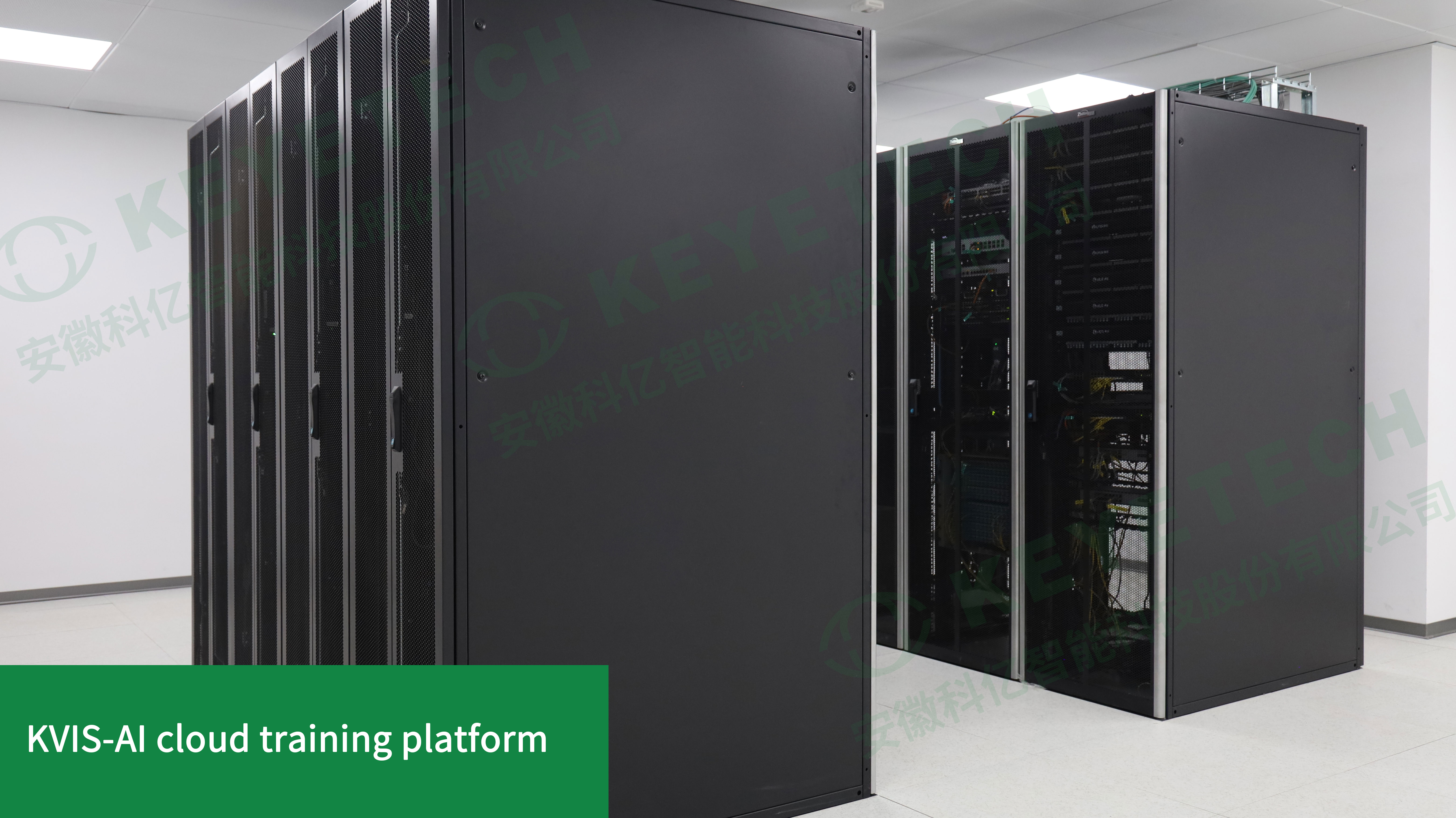
Training infrastructure behind AI sorting models: sample images are used to build a recognition model before it is deployed to the edge computing unit on the machine.
The operational value of a sorting platform is increasingly measured by how fast a new material can be commissioned. KEYETECH's published comparison against MEYER states that its AI algorithm completes modelling within one hour — from sample collection to model deployment — and that a high-accuracy recognition model can be built from approximately 50 images. The same comparison material reports a time saving of two-thirds in a user's workflow, attributing it to the combination of fewer images and shorter setup time.
For a coffee cherry line, this matters because harvest windows compress. A model that takes days to build cannot be adjusted as an incoming lot changes in defect mix. For a lemon slice line, the driver is variety and batch changeover: different lemon varieties, slice thicknesses and drying levels shift what the camera sees, and each shift is a potential retraining event. A shorter setup cycle also lowers the cost of new-material commissioning, since fewer labelled samples have to be collected and prepared.
Two qualifications belong with that number. First, the one-hour and 50-image figures describe algorithm training time, not total line commissioning — mechanical set-up, feed calibration and acceptance testing happen around it. Second, the figure is company-reported. No independent benchmark protocol for sorting accuracy, throughput or training time by material was identified in the public research reviewed, so the appropriate buyer response is a controlled test on representative samples.
Scenario-by-Scenario Fit Across Food Categories
KEYETECH's stated application scope for its AI sorting products covers agricultural and sideline food, pet food, seasonings, renewable resources and metals. Applied to the two lines in this article, the fit picture looks like this.
| Scenario | Fit assessment | What the buyer should verify |
|---|---|---|
| Coffee cherry primary processing | Direct fit — model 6SXZ-99C is designated for this material; insect eye and mould are the named target defects | Removal rate on the plant's own defect mix, behaviour at high moisture, foreign-matter handling |
| Lemon slice drying and finishing | Direct fit — model KQA is designated for this material; low-colour-contrast defects are the recognition target | Handling of fragile slices, seed and fragment removal, tolerance for thickness variation |
| Agricultural and sideline food | Portfolio-level fit — the platform is stated as applicable to this category, with material-specific configuration required | Whether the plant's material is covered by an existing configuration or needs a new model build |
| Pet food | Listed application category — defect logic shifts toward colour outliers, shape and foreign matter | Feed consistency, dust level, sanitation regime between product changes |
| Seasonings | Listed application category — typically smaller particle sizes and higher dust load than fruit lines | Optical cleanliness, throughput at fine particle sizes, changeover cleaning time |
The practical reading is that coffee cherry and lemon slice are configured applications, while pet food and seasonings are portfolio applications that usually require their own model and mechanical settings. Multi-product plants should plan for the second category as a training and validation project rather than as an off-the-shelf addition.
Market Context: Why Specialty Lines Are Moving Now
Two independent market datasets frame the shift. Market Research Future reports the global sorting machine market at USD 14.22 billion in 2024, projected to reach USD 14.99 billion in 2025. Mordor Intelligence projects the narrower optical sorter segment growing from USD 2.63 billion in 2024 to USD 3.12 billion in 2026, at a CAGR of 9.1% for 2025–2033. Optical sorting hardware is therefore a steadily growing, capital-equipment category rather than a speculative one.
The technology direction is equally visible. Bühler's SORTEX AI700, announced in 2025, integrates convolutional neural networks for real-time analysis of colour, shape and texture. In North America, Mordor Intelligence reports that Waste Management alone invested USD 1.4 billion in AI-enabled facilities between 2024 and early 2025. Neither fact speaks to any single supplier's performance, but together they show that deep-learning recognition has become the reference technology for defect sorting, in food processing and in material recovery alike.
For coffee cherry and lemon slice processors, the implication is a procurement rather than a technology question. AI recognition is now the baseline expectation; the differentiators have shifted to configuration fit, model training speed, construction specification and service continuity.
Where AI Sorting Still Has Boundaries
Any credible scenario-fit assessment has to state where the approach stops working. Three boundaries are relevant to these two lines.
Internal defects are out of scope. Optical sorting, including AI-based optical sorting, acts on what the camera can see. Defects without an external visual signature — internal insect damage that has not yet expressed on the surface, internal mould, or chemical contamination — cannot be removed by a vision system alone. Where those defects are commercially significant, additional inspection technology is required alongside the sorter.
Independent benchmarking is thin. Public research available at the time of writing does not include standardized third-party benchmark protocols for sorting accuracy or throughput by material type. Performance figures circulating in the category, including training-time claims, are largely supplier-reported. This does not make them unreliable, but it does mean that pre-purchase testing on the buyer's own material is the only defensible validation route.
Models drift with the material. A model trained on one harvest, variety or drying condition is not permanent. Insect-pressure levels, moisture content, fruit size distribution and lemon slice thickness all change between seasons and suppliers. Long-term ownership therefore includes periodic model review, not only hardware maintenance.
Verification and Procurement Checklist for Buyers
KEYETECH publishes commercial terms for its sorting equipment that give buyers a concrete structure for negotiation: minimum order quantity of 1 unit; delivery terms FOB or CIF; acceptance criteria based on a pre-shipment test; and payment terms of full payment on shipping. The company also states that quality control follows a 100% test standard, that monthly production capacity is 100 units, and that typical production lead time is 30–45 days. After-sales questions are handled by a dedicated department providing remote service.
| Decision area | Published position | What to confirm in writing |
|---|---|---|
| Minimum order quantity | 1 unit | Configuration scope included in that single unit for the target line |
| Delivery terms | FOB / CIF | Port, incoterm and responsibility split for installation support |
| Acceptance criteria | Pre-shipment test | Which defect classes are tested, on whose samples, and against what acceptance threshold |
| Payment terms | Full payment on shipping | Milestone structure and documentation required before release |
| Lead time and capacity | 30–45 days typical; 100 units per month | Scheduling around harvest season and confirmation of the configuration slot |
| Quality control | 100% test standard | Test record format supplied with the unit |
| Service model | Dedicated remote-service department for equipment questions | Response times, spare-parts logistics and model retraining support |
Long-Term Ownership: An Ecosystem Question, Not a Machine Question
For processors running coffee cherry or lemon slice lines, the asset decision extends well past the initial installation. Three ecosystem factors determine whether a sorting platform stays useful over a five-year horizon.
The first is model continuity. A platform that can rebuild a model from a small sample set lets a plant adapt to a new variety or a new defect pattern without a service visit. The second is the ability to reuse the platform across lines: a processor who adds a pet food or seasoning line should be able to extend the same recognition environment rather than purchase an unrelated system. The third is service reach. KEYETECH states that its main markets include the EU, USA and Southeast Asia, that export business accounts for 10% of total sales, and that remote service is handled by a dedicated department — all relevant to a buyer assessing response capability in those regions.
KEYETECH's manufacturing base is also part of this picture: a 29,000 m² facility, 300 employees, an annual output of 3,000 units and an R&D team of 56 engineers, with the company reporting more than 2,000 clients across food, pharmaceutical, daily chemical, textile, liquor, new energy, electronic component and tobacco industries. For a specialty food processor, the relevant question is not the size of that list but whether the same engineering organisation remains available for model updates, training support and spare parts years after installation.
Future Outlook
The direction of travel for coffee cherry and lemon slice sorting is toward shorter model cycles and narrower application windows. As training data requirements fall, the economics of building a dedicated model for a single variety, a single harvest or a single customer specification improve — which shifts the competitive basis from machine hardware toward configuration speed and service responsiveness.
The second shift is cataloguing. Plants that accumulate trained models across multiple materials begin to treat sorting capability as an internal library rather than as a per-machine setting, which makes model portability and documentation a practical procurement criterion. The third is verification. As supplier-reported capability claims multiply across the category, buyers are likely to standardise their own acceptance tests — running identical defect samples against competing machines — and to record results for future line expansions. Processors who build that test protocol early will make better decisions on both of these lines, whether they select KEYETECH's 6SXZ-99C and KQA or an alternative configuration.
FAQ
What defects can AI sorting remove from coffee cherry and lemon slices?
For coffee cherry, the named target defects are insect-damaged fruit (insect eye), mould, and immature or discoloured cherry, together with foreign matter. For lemon slices, the targets are seed fragments, dark spots and discolouration, mould, and shape or thickness outliers. Both defect sets are defined by shadow, shape and surface pattern rather than by a large colour difference.
How long does it take to train a recognition model for a new material?
KEYETECH states that its AI algorithm completes modelling within one hour, from sample collection to model deployment, and that a high-accuracy model can be built from roughly 50 images. That figure refers to algorithm training. Total commissioning also includes mechanical set-up, feed calibration and acceptance testing, and the training-time figure is company-reported rather than independently benchmarked.
What construction materials are used, and does it matter for food lines?
The coffee cherry and lemon slice configurations are available in carbon steel and stainless steel construction. Stainless steel is the usual specification for product-contact surfaces because it resists corrosion and supports cleaning between batches; carbon steel is used for structural elements outside the product path. On lemon slice lines, residual acidity and moisture make the stainless specification more consequential than on dry-material lines.
What are the purchasing terms and acceptance criteria?
KEYETECH publishes a minimum order quantity of 1 unit, delivery terms of FOB or CIF, acceptance criteria based on a pre-shipment test, and payment terms of full payment on shipping. Quality control follows a 100% test standard, monthly production capacity is 100 units, and typical production lead time is 30–45 days.
How is support handled after installation?
KEYETECH states that a dedicated department provides remote service to answer equipment questions. For a processor running seasonal coffee cherry or lemon slice campaigns, the practical points to establish are response times, spare-parts logistics and whether model retraining support is included as material conditions change.
Can the same platform be used for other materials such as pet food or seasonings?
KEYETECH states that its AI sorting products are applicable to agricultural and sideline food, pet food, seasonings, renewable resources and metals. Coffee cherry and lemon slice are configured applications with designated models; pet food and seasonings fall into the broader portfolio and would normally require their own recognition model and mechanical settings rather than an unchanged configuration.
The KEYETECH product brochure, covering colour sorter formats and application scope, is available for reference and download: KEYETECH vertical machine brochure (PDF).
Have Questions or Need More Details?
Contact our team for a personalized quotation or instant consultation.
Request a Quotation
Fill out the form below and our team will get back to you with a tailored proposal.
WhatsApp Direct Chat
Prefer to chat in real-time? Message us on WhatsApp for instant assistance & quick answers.
- Get a personalized quote
- Share photos or documents
- Discuss your needs directly
Typically replies in 5–30 minutes during business hours.