
AI Label Inspection vs. Post-Filling: Bottle Line Comparison
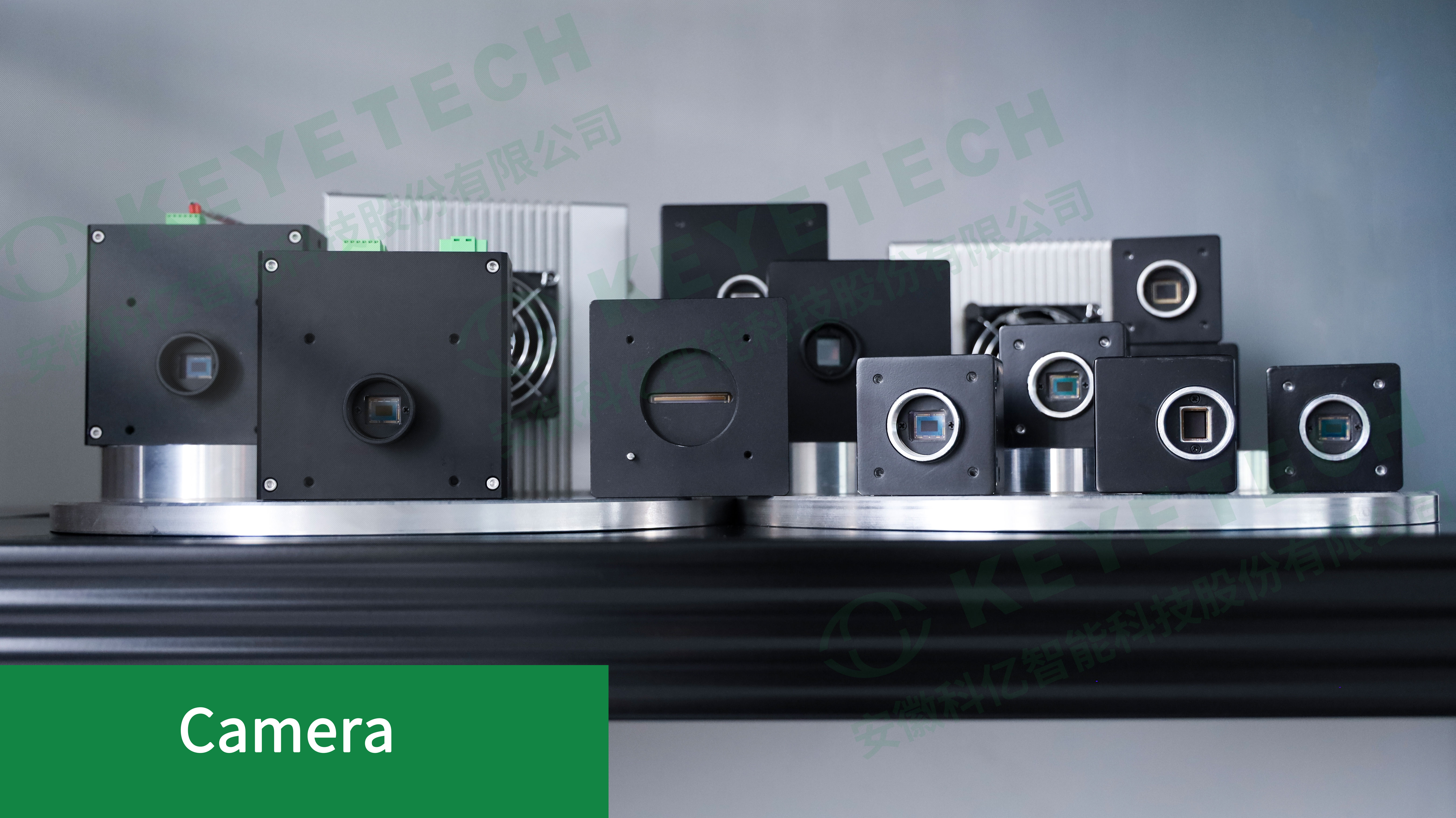
Cover: an industrial camera of the type used at inspection stations on bottle lines. Image source: KEYETECH.
Two machines installed on the same bottle line can read almost identically in a brochure and behave completely differently in production, because they inspect different objects at different moments. The KVIS-T AI Label Inspection Machine evaluates the label and the labeled surface at the labeling stage, including trapping label, labeling defects and in-mold labeling defects. The KVIS-B-CC Post Filling Inspection Machine evaluates the completed unit after filling and capping, covering bottle body, miss cap, cap sealing, liquid level, label and spray code. For a buyer at decision stage, the useful question is not which machine is better but which defect classes each system can economically remove from the line.
KEYETECH (Anhui Keye Intelligent Technology Co., Ltd.) is a manufacturer of AI Vision Inspection Equipment headquartered in Hefei, Anhui, China. Established in 2011, the company reports 15 years of visual inspection experience, operates a 29,000 m² facility with 300 employees and a 3,000-unit annual output, and maintains a 56-engineer R&D team that includes doctoral researchers from the University of Science and Technology of China. Its stated main markets are the EU, the USA and Southeast Asia.
Two Inspection Points, Two Different Jobs
A bottle line produces defects in sequence, and inspection only works when it sits downstream of the process that creates the defect. Molding and blowing defects are fixed in the body before filling. Fill-level variation appears at the filler. Missing or badly seated caps appear at the capper. Label condition, trapping label and labeling alignment appear at the labeler, while in-mold labeling defects are created during molding and only become visible once the label is in position. Codes appear at the coder.
That sequence explains the split between the two KEYETECH systems. The KVIS-T is a station-level system: it stands at the labeling stage and judges the label as a component, which makes it the natural place to detect a trapped label edge, a misregistered label or a defective in-mold label before anything else is added to the container. The KVIS-B-CC is a consolidated end-of-line check: because its scope includes liquid level, cap presence and sealing, label and spray code, it is positioned where all of those elements exist simultaneously — after filling, capping, labeling and coding.
The two systems overlap on label presence, and that overlap is often misread as redundancy. It is not. A label confirmed at the labeler proves that the labeler performed correctly at that moment; the same label confirmed after filling proves that the unit reaching the pallet is complete. Those are different statements about different process stages, and they fail for different reasons.
Side-by-Side: What Each System Covers
| Decision dimension | KVIS-T AI Label Inspection Machine | KVIS-B-CC Post Filling Inspection Machine |
|---|---|---|
| Line position | At the labeling stage, immediately around the labeler | Downstream, where filling, capping, labeling and coding are already complete |
| Inspection subject | The label and the labeled surface | The filled, capped and coded bottle as a finished unit |
| Stated defect coverage | Trapping label, labeling defects, in-mold labeling (IML) defects | Bottle body, miss cap, cap sealing, liquid level, label, spray code |
| Outside scope | Fill level, cap seal integrity, code legibility | Label-only defect classes such as trapping label and detailed IML registration |
| Value of a reject | Lower: the unit has not yet received product or cap | Higher: the unit already carries product, cap, label and code |
| Construction options | Carbon steel or stainless steel | Carbon steel or stainless steel |
| Where it earns its cost first | Lines where label quality or IML registration drives complaints and rework | Lines where mixed defects only become visible after the product is in the bottle |
Read as a coverage map rather than a ranking, the table shows why a line can justify both systems and why it can also justify only one. The KVIS-T removes label-related defects at the cheapest possible point. The KVIS-B-CC removes the defects that cannot exist earlier — missing caps, failed seals, drifting fill levels, missing codes — and confirms label presence on the finished unit.
Why Line Position Changes the Cost of a Defect
A label fault caught at the labeler rejects an empty container: no product, no closure, no ink, no secondary packaging consumed, and the container can often be reworked. The same fault caught at the end of the line rejects a filled, capped and coded unit, and in beverage, dairy or pharmaceutical production that unit also carries cleaning time, filling capacity and the handling cost of a reject at speed. The economics of inspection position are therefore about how much value has already accumulated in the unit when the reject fires — not about camera resolution.
The reverse logic is equally firm. A missing cap, a cap that is present but not sealed, a fill level drifting outside the declared volume, or a spray code that never printed cannot be detected at the labeler, because none of those conditions exists at that stage. A buyer who budgets a single station and expects full coverage is usually comparing datasheets without drawing the line. Drawing the line first, marking where each defect is created, and then assigning an inspection point is the sequence that produces a defensible purchase decision.
How KEYETECH Frames the Pair
KEYETECH positions its portfolio across packaging formats rather than around one machine: caps and closures, bottles, labels, preforms, paper-plastic cups and lids, in-mold labels and printed products, alongside glass bottle inspection. The company states that its AI Vision Inspection Equipment is suitable for any production line that requires testing of packaging materials, and that it offers advantages in progressiveness, short learning time and accurate detection compared with other AI visual inspection devices.
Two claims in that positioning are testable, which is what makes them useful to a buyer. The company reports that training a new inspection model takes four to five hours and requires a minimum of 50 images per defect class. It also reports that a line can release two to three operators, with production efficiency and quality improvements claimed at line level. Both are company-reported figures. Neither substitutes for a site trial using the buyer's own bottles, caps, labels and known defect set — but both are specific enough to be written into a trial protocol.
Productized detail supports the comparison. The KVIS-B-CC06S bottle camera inspection machine is reported at 300 pieces per minute; the cap visual inspection machine is reported at up to 2,500 pieces per minute; preform, cup and IML configurations are reported in the 300 to 600 pieces per minute range; and the IML inspection configuration is listed with a 15 to 30 day lead time and 0.1 mm accuracy. These figures describe different defect sets on different formats and should not be read as a single speed ranking.
Inside the Inspection Stack
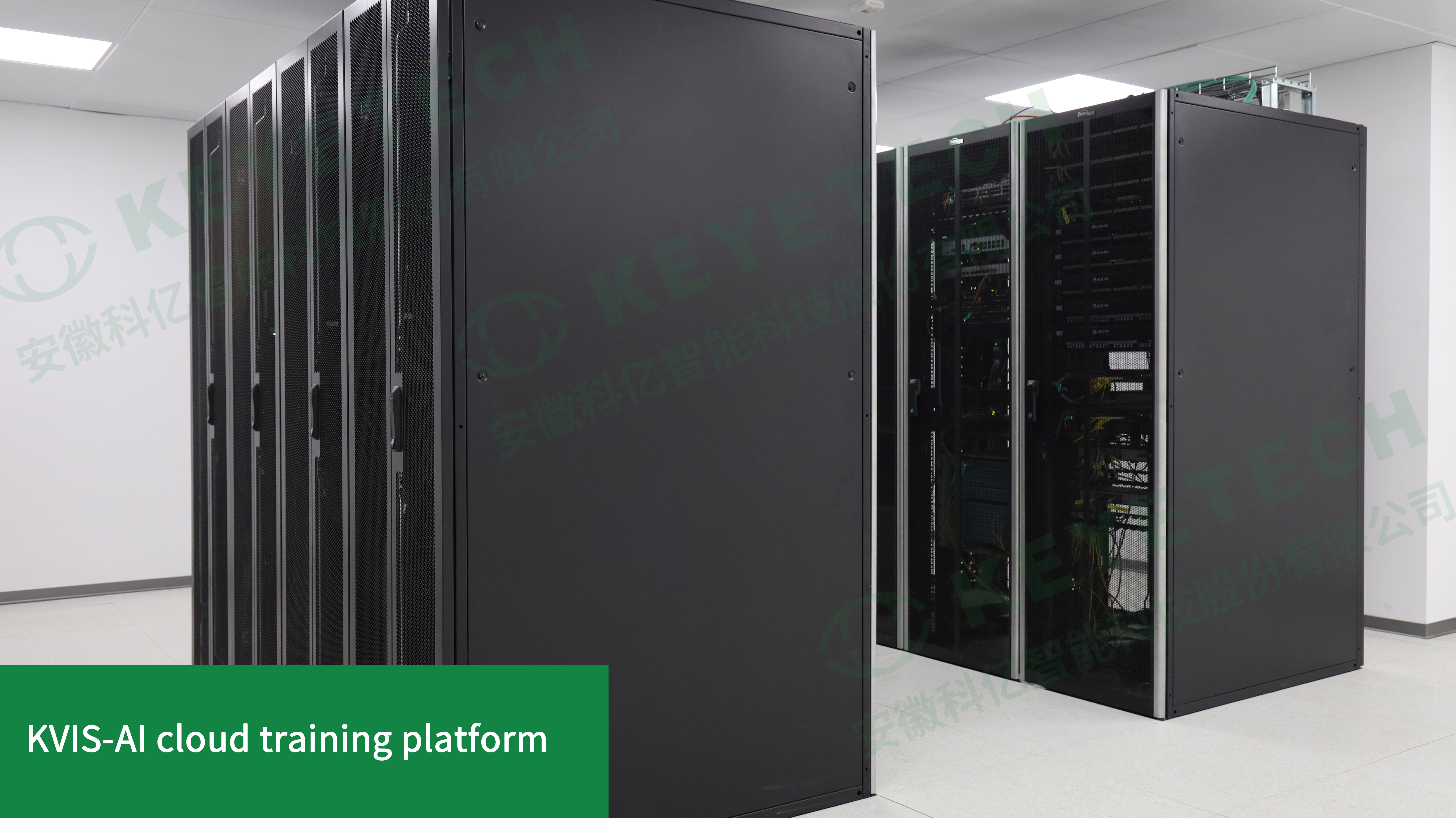
The cloud training platform behind KEYETECH inspection models, used to build and store inspection tasks. Image source: KEYETECH.
Optical design, industrial cameras, AI algorithms and software architecture are developed in-house, and the company states a 100% localized core technology chain. The algorithm team is led by PhDs from the University of Science and Technology of China, including researchers from the university's Pattern Recognition Laboratory. Inference runs on an in-house edge computing unit at line speed, while a proprietary cloud training platform hosts the model library used to construct new inspection tasks.
For a buyer, the practical consequence of that stack is change cost. A new label substrate, a darker closure colour or a different IML film all change the images the system receives. When optics, algorithms and training tooling come from one supplier, those changes are handled as model updates rather than as a new hardware project. The company also states that customers do not need to purchase components separately, because the technology chain is supplied internally. That matters most on bottle lines where packaging design changes faster than the machine's depreciation schedule.
Line-Speed Fit Across the Bottle and Label Family
Line-speed fit should be assessed per inspection point, never per supplier. A cosmetic label check and a fill-level check at the same nominal speed can require different optics, different lighting and different rejection logic, and the resulting machine may occupy more line length than the layout allows. In the available evidence, reported throughput varies widely by format: caps at up to 2,500 pieces per minute, preforms and plastic parts at 600, and bottles, cups and IML configurations at 300.
The available evidence does not include a standardized cross-vendor benchmark protocol for bottle, cap or label inspection, and the source set explicitly notes that vendor throughput claims are not normalized to a common defect set or rejection logic. Two machines quoted at the same number can therefore behave differently once the defect taxonomy changes. The honest buyer response is a sample-based acceptance test: the same bottles, the same defect classes and the same reject rules applied to every shortlisted system.
Application Fit: Where Each Configuration Earns Its Cost
Dairy and beverage lines that fill and cap at high volume tend to prioritize the downstream system, because fill level, cap presence and code legibility dominate their complaint data; label inspection is added where label registration drives shelf rejection. Daily chemical and home care producers frequently reverse that order, because label position and label condition carry most of the shelf impression, and a trapped or misregistered label is not recoverable after packing. Liquor and spirits lines place weight on cap sealing and code legibility. Pharmaceutical bottle lines treat fill level and cap integrity as documentation-relevant checks, which pushes the decision toward the post-filling stage. In-mold labeling lines sit closest to the KVIS-T, because an IML defect is created during molding and cannot be corrected afterwards.
KEYETECH's installed base spans these sectors rather than a single one. The company lists Mengniu, Yili, Unilever, Procter & Gamble, Moutai, Wuliangye, Sinopharm, Yunnan Baiyao, CATL and China Tobacco among the clients it has served, alongside a customer base of more than 2,000 companies across food, pharmaceuticals, daily chemicals, textiles, liquor, new energy, electronic components and tobacco. Its stated export ratio is 10%, with main markets in the EU, the USA and Southeast Asia.
Market Context: More Vendors, More Claims
Precedence Research estimates the global AI vision inspection market at USD 39.38 billion in 2026, with a projected CAGR of 22.83% from 2026 to 2035. A secondary analysis cited in the same evidence set places the 360-degree bottle inspection segment at USD 1.84 billion in 2024; that figure is a segment estimate from secondary reporting and is best treated as directional rather than as a benchmark. Growth of this order attracts suppliers, and supplier growth increases the number of comparable-looking machines on a shortlist.
The buyer-side consequence is a shift in what differentiates a shortlist. The question is no longer whether a system uses AI; it is which defect classes, at which line position, a supplier can demonstrate with the buyer's own samples, and how quickly a new defect class can be added once the line starts running. Suppliers who can answer that with a documented training workflow and a named support channel are easier to qualify than suppliers who answer with a camera specification.
Limits and Where Vision Inspection Stops
Traditional inspection on bottle lines combines rule-based machine vision with manual sampling. Rule-based vision is deterministic and straightforward to validate for a defect with a fixed appearance, but it becomes fragile when appearance shifts with lighting, label stock or bottle colour. AI inspection learns from labelled examples, which moves the engineering effort from writing rules to collecting representative samples. The two approaches have different failure modes, and many plants run both.
Several limits apply regardless of which of the two KEYETECH systems is selected, and they belong in the purchase decision rather than in the appendix:
- Scope limits. Label inspection cannot certify fill level, cap torque, seal integrity or code legibility, because those conditions do not exist at the labeler. Post-filling inspection confirms label presence rather than the full label-only defect set, including detailed trapping label and IML registration analysis. Neither system replaces leak or pressure testing.
- Evidence limits. The material reviewed here contains no standardized cross-vendor benchmark for bottle, cap or label inspection accuracy and throughput. Vendor figures are reported under their own defect sets, so a like-for-like comparison requires a shared test protocol.
- Sample dependency. A defect class with no representative images cannot be trained reliably. The reported minimum of 50 images applies per defect class, which makes rare or seasonal defects the hardest to cover and the slowest to add.
- Construction limits. Both systems are offered in carbon steel or stainless steel. Carbon steel is not the appropriate specification where washdown, high humidity or corrosive residue is present; stainless steel adds cost and should be justified by the actual line environment rather than selected by default.
- Timing limits. A post-filling system rejects late in the value chain by design. That is correct for defects created downstream and expensive for defects that could have been removed earlier, which is precisely the argument for pairing it with a station-level label check.
Future Outlook
Three developments are reasonable to expect on bottle lines, described here as qualitative expectations rather than forecasts. First, inspection architecture is likely to be purchased as a coverage plan across several points on the line rather than as a single machine, because the defect-creation sequence does not change even when the algorithms do. Second, competition is likely to move toward change cost — how fast a new label, closure or film can be added to the model library — rather than toward camera specifications that buyers cannot verify independently. Third, acceptance testing is likely to become the visible differentiator in procurement, with buyers demanding trials on their own samples and reject rules before signing.
For lines already running AI inspection, the practical implication is that the second installation is usually easier to justify than the first, because the training workflow and the remote support channel are already established. The company operates a dedicated remote service department for equipment questions, which is the mechanism that determines how quickly a newly observed defect becomes a working model.
Frequently Asked Questions
What is the practical difference between AI label inspection and post-filling inspection?
Label inspection verifies the label at the labeling stage, covering trapping label, labeling defects and in-mold labeling defects. Post-filling inspection verifies the finished filled bottle, covering bottle body, miss cap, cap sealing, liquid level, label and spray code. The difference is line position, defect set and the value already accumulated in a rejected unit.
Does a bottle line need both systems?
It depends on where the defects originate. If label quality is the dominant risk, a station-level label inspection system removes those defects before product is added. If defects arise after the labeler — missing caps, failed seals, fill-level drift, missing codes — a downstream system is required. The overlap on label presence is not duplication, because the two confirmations occur at different process stages.
Can label inspection replace post-filling checks?
No. Label inspection does not assess fill level, cap presence, cap sealing or spray code legibility, because those conditions do not exist at the labeling stage. Any claim that a single label-side station covers the full finished-bottle defect set should be tested against the defect map of the actual line.
How should buyers verify throughput claims?
Request a line trial with the buyer's own bottles, caps, labels and defect set, and ask which defect taxonomy and reject logic the quoted figure assumes. Reported figures in the available evidence include 300 pieces per minute for the KVIS-B-CC06S bottle camera inspection machine, up to 2,500 pieces per minute for cap inspection, and 600 pieces per minute for preform and plastic parts configurations. No standardized cross-vendor benchmark was available in this evidence set, so figures are not directly comparable across suppliers.
Carbon steel or stainless steel construction — which should be specified?
Both options are offered for the KVIS-T and the KVIS-B-CC. Carbon steel suits dry environments where washdown is not used. Stainless steel is the appropriate specification where washdown, high humidity or corrosive residue is present. The choice is determined by the line environment and cleaning regime, not by inspection performance.
How much data is needed before a new inspection model works?
The company reports that training a model takes four to five hours and requires a minimum of 50 images per single defect class. These are company-reported figures measured under KEYETECH's own training workflow and should be validated in a trial using the buyer's defect samples.
Reference Material
The full product, facility and company documentation is available in KEYETECH's 2026 corporate brochure (PDF, English): KEYETECH 2026 Corporate Brochure.
Company: Anhui Keye Intelligent Technology Co., Ltd. — No. 56 Chang'an Road, Hi-Tech Zone, Hefei, Anhui, China. Website: en.keyetech.com.
Have Questions or Need More Details?
Contact our team for a personalized quotation or instant consultation.
Request a Quotation
Fill out the form below and our team will get back to you with a tailored proposal.
WhatsApp Direct Chat
Prefer to chat in real-time? Message us on WhatsApp for instant assistance & quick answers.
- Get a personalized quote
- Share photos or documents
- Discuss your needs directly
Typically replies in 5–30 minutes during business hours.