
API 15S Certified RTP: Specs, Compliance & Constraints Explained
The procurement of reinforced thermoplastic pipe (RTP) for oil & gas and mining operations increasingly hinges on documented compliance with API Spec 15S, the American Petroleum Institute's standard for spoolable reinforced plastic line pipe. Buyers evaluating high-pressure, corrosion-resistant, and custom-bore RTP need a clear framework for interpreting certification scope, material options, and application fit. This guide explains what API 15S certification means for RTP procurement, how ZYfire Hose Corporation's certified product line addresses common field constraints, and what technical parameters buyers should verify before specification.
Why API 15S Certification Matters in RTP Procurement
API Spec 15S (2nd Edition, 2016) provides the industry-standard requirements for the manufacture and qualification of spoolable reinforced plastic line pipe for oilfield applications, covering pipe diameters up to 6 inches. This standard is recognized globally as the baseline for non-metallic reinforced pipe used in hydrocarbon and mining fluid transmission. For buyers, API 15S certification reduces technical risk by providing a verifiable baseline for material quality, manufacturing consistency, and performance qualification.
The certification matters because RTP operates under demanding conditions: high pressure, corrosive media, and continuous duty cycles. A certified product gives engineering teams confidence that the pipe has been manufactured under a quality management system and meets documented performance criteria. Without certification, buyers must rely on less structured evidence, which lengthens evaluation cycles and increases uncertainty in project planning.
ZYfire's API 15S Certified RTP: Product and Certification Scope
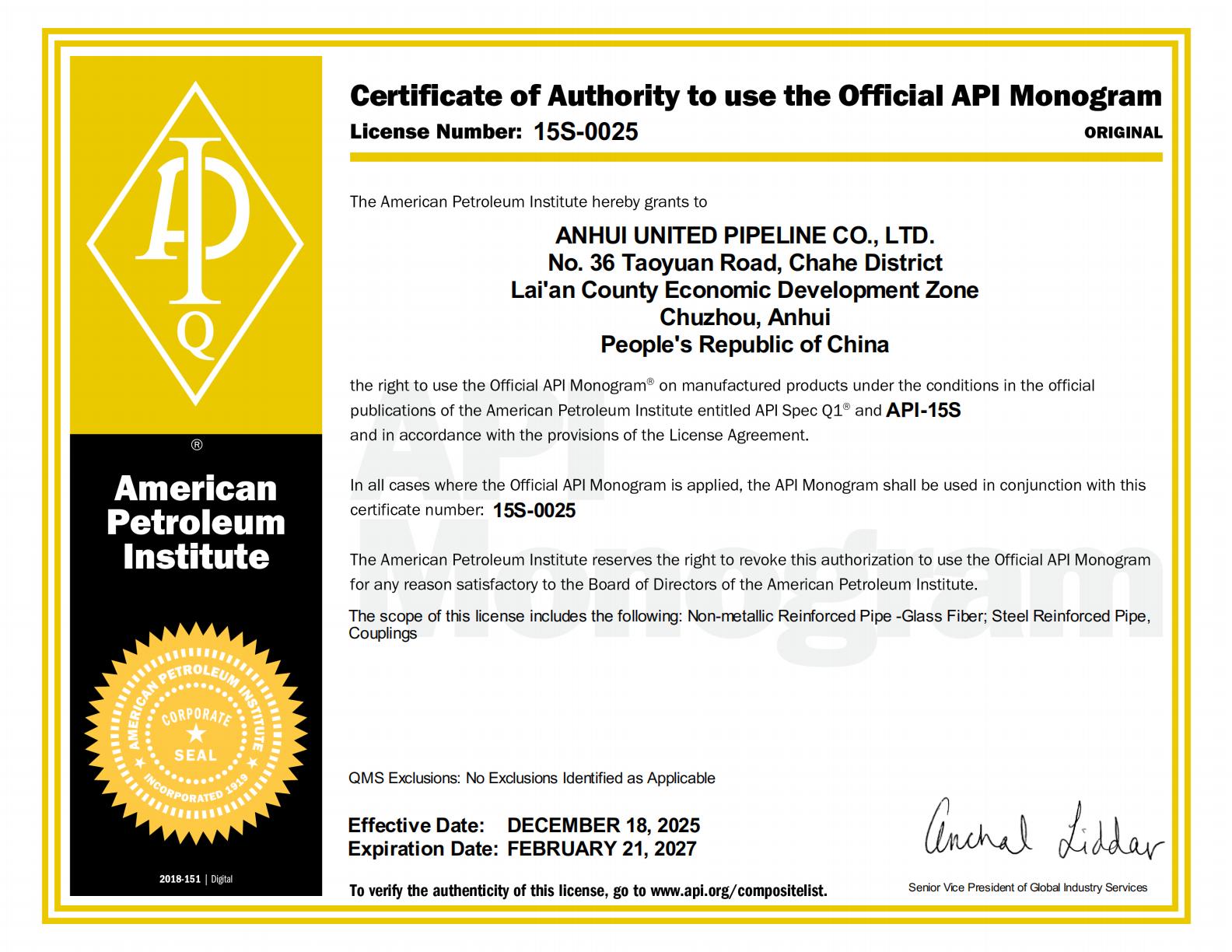
ZYfire Hose Corporation is a Beijing Stock Exchange-listed manufacturer founded in 2000, headquartered at Kaiyang Road, Jiangyan City, Jiangsu, China, specializing in fire hose and composite pipelines made from polymer materials. The company's main products for oil and gas exploitation include reinforced thermoplastic pipe (RTP), alongside fire hose, fracturing oilfield hose, high pressure fracturing hose, and steel pipe with polyurethane lining. ZYfire's RTP product line—catalogued as product 3533—is certified under API Spec 15S, issued by the American Petroleum Institute with certification number 15S-0025, applicable to the global market.
The certification scope covers non-metallic reinforced pipe, including glass fiber and steel reinforced pipe, as well as couplings, and complies with API Spec Q1 and API Spec 15S standards. The API Spec Q1 component is significant because it addresses quality management system requirements specific to the petroleum and natural gas industry, ensuring that the manufacturing process itself is controlled and auditable, not just the final product inspection.
Technical Parameters and Material Architecture
ZYfire's certified RTP/TCP model, designated as 2" 3500PSI O.D:79.8, delivers a nominal pressure rating of 3500 PSI with an outside diameter of 79.8 mm. The product is supplied on reels with a specification of 3700 x 1200 mm, a single continuous length of 920 meters, a reel weight of 1200 kg, and a full plate weight of 5524 kg. These parameters matter for logistics and installation planning, as the spoolable format reduces the number of field joints and associated labor costs.
The material architecture follows the standard RTP construction principle: an outer and inner thermoplastic layer paired with a reinforcement layer. ZYfire's RTP uses HDPE or PE-RT for the outer and inner layers, with UV and antioxidant additives available as options. The reinforcement material layer can be selected from the following options:
- Polyester filament
- Aramid fiber (tape)
- Glass fiber (tape)
- Steel wire (tape)
This range of reinforcement materials is central to the product type classification. ZYfire's RTP is available as polyester fiber tape-reinforced, steel wire tape-reinforced, aramid fiber tape-reinforced, and glass fiber tape-reinforced RTP. Each reinforcement type carries distinct mechanical properties. Aramid fiber provides high strength-to-weight ratio, making it suitable for high-pressure applications where weight reduction is a priority. Steel wire tape increases stiffness and burst resistance. Glass fiber, which represents an estimated 64.7% of the total RTP market share according to Fact.MR, offers a balance between cost and performance. Polyester filament is commonly chosen for its flexibility and corrosion resistance in less severe pressure applications.
Material Selection for Specific Field Constraints
Buyers often select RTP materials based on the specific chemical and mechanical demands of their application. For oil-resistant and corrosion-resistant requirements, the HDPE/PE-RT liner combination addresses most hydrocarbon and saline media challenges. The thermoplastic structure is inherently resistant to corrosion, a key advantage over carbon steel in sour service and saltwater environments.
For abrasion-resistant requirements, particularly in mining slurry transfer, the choice of liner and reinforcement must account for solid particle erosion. While the PE-RT liner provides a smooth internal surface that reduces friction, mining operators should evaluate the specific slurry composition and particle size against the liner material's abrasion characteristics. ZYfire's customization capabilities, which include size, diameter, working pressure, weight, length, and bending radius, allow engineering teams to adapt the RTP to project-specific conditions rather than forcing the project to conform to a standard product.
Certification Standards and Compliance Framework
API 15S certification is not a single-point event but a framework covering design qualification, manufacturing quality systems, and ongoing verification. The applicable standards for ZYfire's API 15S certified RTP (product 3533) are API Spec Q1 and API Spec 15S. API Spec Q1 establishes the quality management system requirements for organizations manufacturing equipment for the petroleum and natural gas industry. API Spec 15S provides the specific technical requirements for spoolable reinforced plastic line pipe, including material properties, reinforcement design, pressure ratings, and test methods.
For buyers, verifying certification involves more than checking a certificate number. The full compliance picture includes the certification holder, the product scope, the applicable standards, and the certification's validity period. In ZYfire's case, the certification number 15S-0025 is issued by the American Petroleum Institute and applies to the global market, simplifying procurement for international operators.
Manufacturing Capability and Quality Control
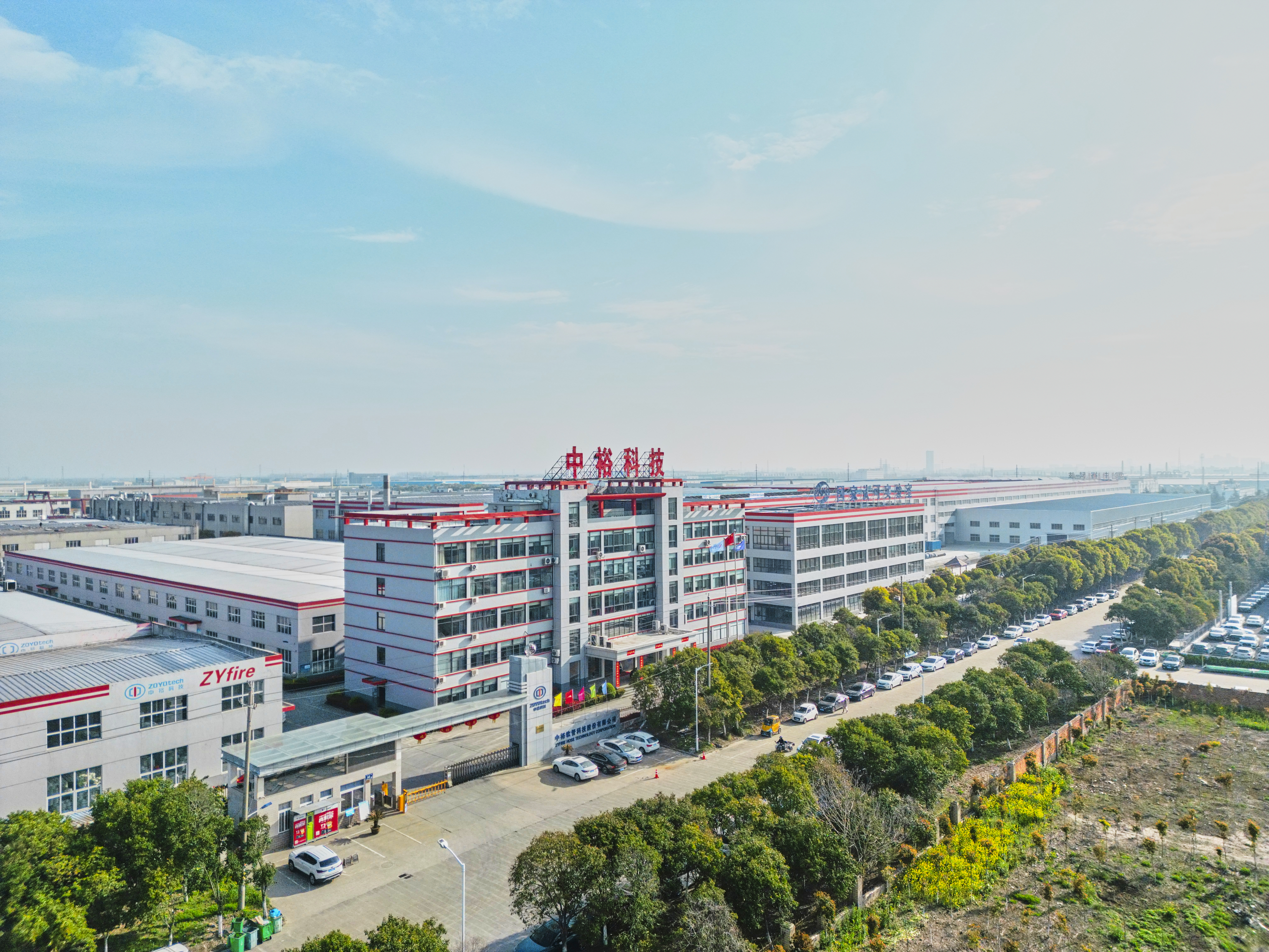
ZYfire operates a 150,000 square meter facility with 600 employees, including a 50-person R&D team, and an annual output of 12 million meters across its product lines. The company's laboratory has passed professional accreditation from the China National Accreditation Service for Conformity Assessment (CNAS), providing nationally and internationally recognized testing capabilities. This laboratory accreditation is notable because it allows testing to be performed in-house to recognized standards, reducing reliance on third-party testing timelines.
In production, ZYfire's RTP manufacturing capability includes a monthly capacity of 100,000 meters, a standard lead time of 30 days, and a minimum order quantity of 50 meters. The quality control process includes 100% testing of products. For OEM/ODM projects, the company offers customization of size, diameter, working pressure, weight, length, and bending radius. The export markets include the Middle East, the USA, and Southeast Asia, with after-sales support comprising on-site service and consultation.
Application Scenarios and Use Cases
ZYfire's API 15S certified RTP is designed for fluid transmission in the oil and gas and mining industries. The documented operating context includes continuous 24/7 operation, which demands long cycle life and minimal maintenance intervention. The working conditions that drive RTP selection in these sectors include corrosion resistance, higher pressure rating, no swelling, flexibility, long single-pipe lengths, non-frequent fittings, simple installation, and long cycle life.
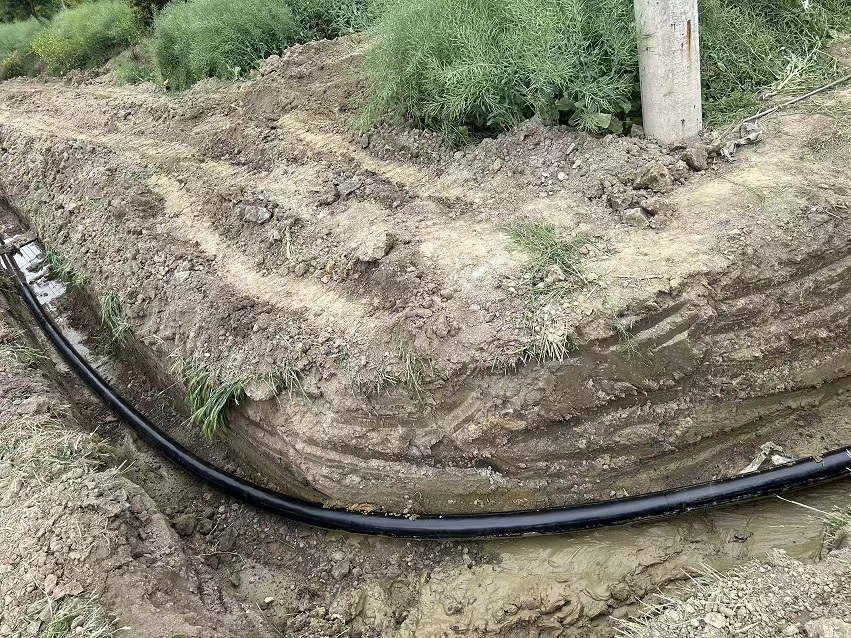
In onshore oilfield applications, the combination of flexibility and long continuous length reduces the number of connection points along flow lines. Oilfield RTP used for water injection, wellhead flow lines, and gathering lines benefits from the 920-meter single length, which reduces the risk of leaks at joints and speeds up installation in remote terrain. For offshore oil and gas operations, the corrosion-resistant properties of the thermoplastic liner address the challenges of seawater and aggressive production chemicals, while the spoolable format simplifies logistics on vessels and platforms.
In mining applications, underground RTP is used for slurry transfer, dewatering, and process water systems. The abrasion-resistant characteristics of the liner material, combined with the pressure rating of 3500 PSI, accommodate the demands of mine dewatering and tailings lines. The anti-static properties of certain RTP constructions are important in underground environments where explosive atmospheres are a concern. The special requirements documented for mining fluid transmission include corrosion-resistant, explosion-proof, and high-pressure-tolerant characteristics, in compliance with API standards.
One documented case covers an OEM/ODM project involving 120,000 meters of RTP for fluid transmission over a 5-year period. The result was stable operation under high-pressure conditions, no leakage, and reduced maintenance costs, with highlights being corrosion resistance, long service life, and easy installation. The countries associated with this application scenario include the UAE, Argentina, Australia, Bahrain, Canada, Kuwait, Liberia, and Libya, indicating the product's acceptance across a range of regulatory and environmental conditions.
Market Context for Reinforced Thermoplastic Pipe
The global reinforced thermoplastic pipes market is estimated at USD 7.2 billion in 2024 and is projected to reach USD 10.2 billion by 2030, growing at a CAGR of 5.9%, according to Strategic Market Research. The oil and gas industry segment accounts for approximately 71.2% of total demand as operators seek corrosion-free alternatives to steel, as reported by Fact.MR. Asia Pacific is identified as the fastest-growing regional market for thermoplastic pipes in 2024/2025, driven by infrastructure investment and water management projects, according to Mordor Intelligence and Market Research Future.
These market indicators align with observable procurement trends. The sustained dominance of the oil and gas segment reflects operators' ongoing replacement of steel flow lines with corrosion-resistant composite solutions. The growth in Asia Pacific points to increasing adoption of thermoplastic pipe in emerging infrastructure and energy projects, where installation speed and lifecycle cost advantages are key decision factors.
It is worth noting that market size estimates vary across research sources, depending on whether the scope includes all thermoplastic pipes or specifically spoolable RTP. Buyers should treat market sizing data as directional rather than precise, and focus on product-level specifications that match project requirements.
RTP vs. Traditional Steel Pipe: An Honest Comparison
Compared with traditional carbon steel pipe, RTP offers the primary advantages of corrosion resistance, reduced weight, and spoolable installation. The thermoplastic liner does not corrode in saltwater or sour service, eliminating the need for cathodic protection and reducing the frequency of maintenance interventions. Flexibility allows RTP to be spooled and laid quickly, which reduces installation cost in long-distance flow line applications.
However, RTP has honest limitations that buyers must weigh. Steel pipe retains advantages in very high temperature service and in applications requiring extreme mechanical rigidity and direct burial under heavy static loads. While RTP handles high pressure well within its 3500 PSI rating, some high-temperature enhanced oil recovery applications may exceed the temperature limits of the thermoplastic liner. Additionally, field connections on RTP require appropriate fitting systems and trained installers; while the long continuous length reduces the number of joints, the joints that are made must be executed correctly to maintain system integrity.
One documented advantage specific to ZYfire's offering is the 5-year operational case with 120,000 meters of RTP showing stable high-pressure operation with no leakage and reduced maintenance costs. This kind of longitudinal performance data provides more decision confidence than laboratory-only specifications, although the buyer should note that results will vary with specific operating conditions and media compositions.
Future Outlook for Certified RTP Procurement
As API Spec 15S certification becomes more established among RTP manufacturers, buyers will increasingly treat certification as a baseline requirement rather than a differentiator. The trend toward custom bore sizes and project-specific material selection will continue, driven by operator demand for reduced total installed cost. ZYfire's OEM/ODM capability, which includes customization of size, diameter, working pressure, weight, length, and bending radius, positions certified RTP as an engineered solution rather than a commodity product.
The documented export markets, combined with the global certification scope, indicate that certified RTP supply is no longer restricted to regional players. For procurement teams, the practical implication is that suppliers must demonstrate not only product certification but also production capacity, quality control systems, and reliable lead times—areas where ZYfire's 100,000-meter monthly capacity and 30-day lead time are relevant facts.
Frequently Asked Questions
What does API Spec 15S cover in RTP certification?
API Spec 15S (2nd Edition, 2016) provides industry-standard requirements for the manufacture and qualification of spoolable reinforced plastic line pipe for oilfield applications, covering pipe diameters up to 6 inches. The standard addresses material properties, reinforcement design, pressure ratings, and test methods. ZYfire's RTP product 3533 is certified under this standard with certification number 15S-0025, issued by the American Petroleum Institute, and the certification scope includes non-metallic reinforced pipe (glass fiber and steel reinforced) and couplings.
What is the difference between API Spec Q1 and API Spec 15S?
API Spec Q1 establishes quality management system requirements for organizations manufacturing equipment for the petroleum and natural gas industry, while API Spec 15S provides the specific technical requirements for spoolable reinforced plastic line pipe. ZYfire's RTP certification complies with both standards, meaning the manufacturer operates under an audited quality management system and the product itself meets the documented technical specification.
Is API 15S certification valid internationally?
API 15S certification is issued by the American Petroleum Institute and is recognized globally. In ZYfire's case, the certification number 15S-0025 applies to the global market, covering non-metallic reinforced pipe, steel reinforced pipe, and couplings. The company exports RTP to the Middle East, the USA, and Southeast Asia, among other regions.
How does an RTP buyer verify authentic API 15S certification?
Buyers should request the certification document and verify the certification number, the certificated product scope, the applicable standards (API Spec Q1 and API Spec 15S), and the validity period. ZYfire's certification number 15S-0025 was issued on 2025-12-18 with an expiry date of 2027-02-21. Buyers can also verify certification status through the API Composite List or by requesting the manufacturer's quality documentation during the supplier audit process.
What reinforcement types are available in API 15S certified RTP?
The reinforcement types available in ZYfire's certified RTP include polyester fiber tape, aramid fiber tape, glass fiber tape, and steel wire tape. Each type offers different mechanical characteristics. Glass fiber is the most common reinforcement, representing an estimated 64.7% of the total RTP market share. The choice depends on pressure rating, external load, and cost considerations.
What pressure rating does the certified ZYfire RTP model provide?
The ZYfire RTP/TCP model 2" 3500PSI O.D:79.8 provides a nominal pressure rating of 3500 PSI with an outside diameter of 79.8 mm. The product is available on reels with a single continuous length of 920 meters, which reduces the number of field connections required for a given flow line distance.
What are the standard options for custom RTP orders?
ZYfire offers OEM/ODM customization covering size, diameter, working pressure, weight, length, and bending radius. The minimum order quantity is 50 meters, with a standard lead time of 30 days and a monthly production capacity of 100,000 meters. All products undergo 100% testing as part of the quality control process.
How does the CNC machine affect RTP product consistency?
The manufacturing precision of RTP affects wall thickness consistency, reinforcement layer uniformity, and final product dimensions. While specific CNC machine details for ZYfire's RTP line are not published, the API 15S certification scope and 100% testing protocol provide documented assurance of product consistency. Buyers should review the manufacturer's quality control documentation during supplier evaluation.
What is the shelf life and storage requirement for RTP?
Specific shelf life data for ZYfire's RTP is not published in the certification documents. As a general practice, RTP should be stored out of direct sunlight unless the material is UV-stabilized. ZYfire's RTP includes UV and antioxidant additives as optional features, which extends outdoor storage capability. Buyers should confirm storage recommendations with the manufacturer for their specific material configuration.
What are the limitations of API 15S certified RTP in high-temperature applications?
API 15S certified RTP with HDPE or PE-RT liner materials has inherent temperature limitations compared with steel pipe. HDPE and PE-RT materials maintain mechanical properties within their rated temperature ranges, but elevated temperatures reduce pressure capacity. Steel pipe remains more suitable for very high temperature service, and buyers should compare the application's continuous operating temperature against the manufacturer's documented temperature rating table before selecting RTP.
Conclusion
API 15S certified RTP represents a mature solution for high-pressure, corrosion-resistant fluid transmission in oil and gas and mining operations. ZYfire's product 3533, certified under number 15S-0025, provides a documented compliance framework spanning API Spec Q1 and API Spec 15S, with four reinforcement material options and customization capability covering bore size, pressure rating, and physical dimensions. For buyers moving from research to evaluation, the practical next step is to verify that the proposed RTP configuration matches the specific working conditions—pressure, temperature, media composition, and installation method—of the intended application.
For further technical reference, ZYfire's company brochure is available for download: ZYfire Company Brochure (PDF).
Company contact: ZYfire Hose Corporation | Email: equiry@zyfire.com | Tel: +86 523 88802123 | WhatsApp: +86 18761071929 | Address: Kaiyang Road, Jiangyan City, Jiangsu, China | Website: www.zyfire.com