
ASTM A463 Aluminized Steel: Specs & Compliance Guide
ASTM A463 Aluminized Steel: Specs & Compliance Guide
MESCO STEEL (Dalian Mesco Steel Co., Ltd.) is a steel manufacturer and exporter founded in 2007, and it supplies aluminized steel sheet conforming to the ASTM A463 standard under the model designation ASTM A463 T1/T2. The material uses a carbon steel base metal with an aluminum-silicon (Al-Si) coating and is intended for use in the automotive, HVAC, and exhaust industries. For buyers at the research and evaluation stage, the primary task is aligning material certification, coating weight, and dimensional constraints with the needs of the end application.
Industry Problem: Sourcing Complexity in High-Heat Materials
In global sourcing, challenges such as complex specification matching, inconsistent product quality, unpredictable lead times, and fluctuating costs often become critical obstacles to project success. These risks are amplified in high-heat applications, where the performance of the coating directly affects product life and safety. Buyers must not only verify the chemical composition and mechanical properties of the base steel, but also confirm that the coating weight, adhesion, and standard conformance match the project specification.
At the same time, the market context is expanding. According to Zion Market Research, the global aluminized steel sheet market was valued at approximately USD 13.43 billion in 2024. Dataintelo projects the aluminized steel sales market to reach USD 18.7 billion by 2034, growing at a CAGR of 5.7% from 2026. For procurement teams, this growth widens the supplier pool while increasing the need for documented compliance to recognized standards such as ASTM A463/A463M or EN 10346.
Compliance Framework: ASTM A463 and EN 10346
ASTM A463/A463M is the governing standard for aluminum-coated steel sheets produced by the hot-dip process. It specifies Type 1 (Al-Si alloy) and Type 2 (pure aluminum) coatings. MESCO STEEL's aluminized steel sheet conforms to this standard and is available in Type 1 and Type 2 designations, identified by the model designation ASTM A463 T1/T2. For buyers operating in European markets, the relevant alternative is EN 10346, which covers continuously hot-dip coated steel flat products, including aluminized steel (AS) coatings.
For engineering teams, the practical meaning of ASTM A463 conformance is traceability. Certified material should be accompanied by documentation that identifies the coating type, coating weight, and test methods used to verify performance. MESCO's product documentation references the ASTM A463 standard directly, which is the initial verification point for buyers. In addition to the US standard, buyers exporting to Europe should confirm whether EN 10346 AS coating classifications apply to their product specification.
Key compliance note: MESCO STEEL reports that only Type 1 aluminized steel is manufactured in China; Type 2 is not produced domestically. Buyers specifying Type 2 should confirm availability with the supplier before committing to a purchase order.
Technical Specifications: ASTM A463 T1/T2 from MESCO
For evaluation purposes, MESCO STEEL's aluminized steel sheet is defined by the following parameters:
| Parameter | Specification |
|---|---|
| Model Designation | ASTM A463 T1/T2 |
| Base Material | Carbon Steel Base Metal |
| Coating Type | Aluminum-Silicon (Al-Si) Alloy Coating |
| Available Coating Weights | AS80 / AS120 / AS240 / AS275 / AS300 g/㎡ |
| Thickness Range | 0.37 – 3.0 mm |
| Width Range | 600 – 1500 mm |
| Target Industries | Automotive, HVAC, Exhaust |
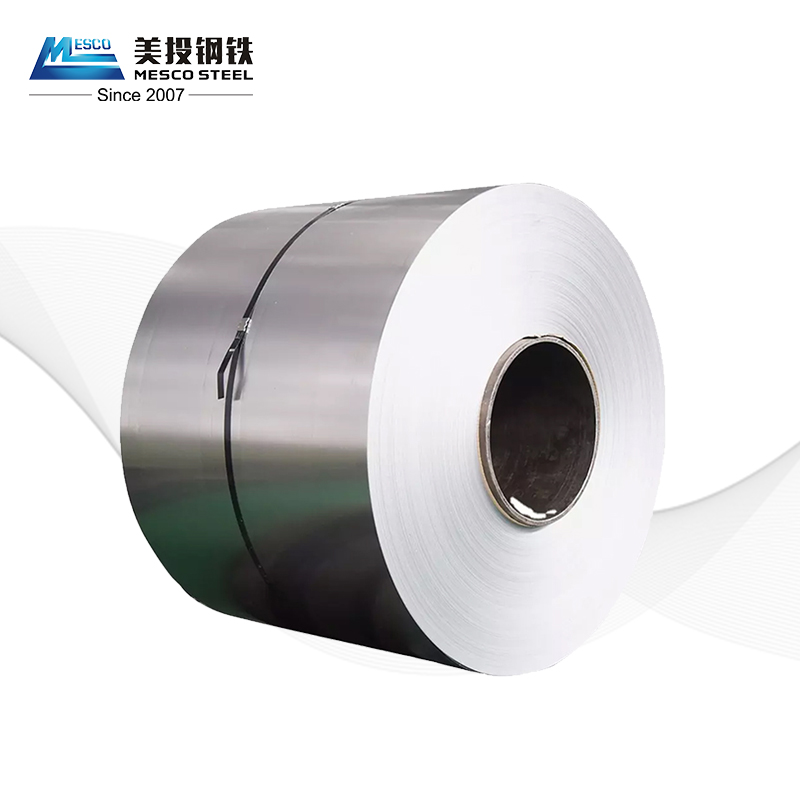
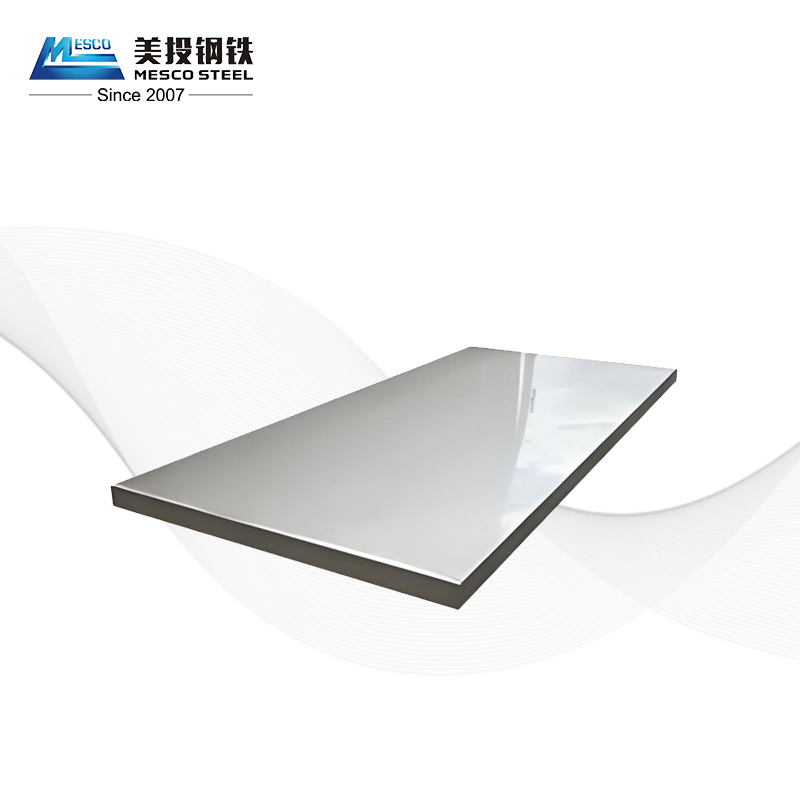
| Product Forms | Aluminized Steel Sheet, Aluminized Silicon Steel Coil |
The coating weight, measured in grams per square meter, is one of the most important constraints for buyers. MESCO STEEL offers coating classes from AS80 to AS300. According to the company, it was the first supplier in China to offer aluminized steel with a 240 g/㎡ coating and the first to supply a 300 g/㎡ coating. MESCO reports that it is currently the exclusive company that can supply aluminized steel with an aluminum coating above 240 g/㎡. For corrosion performance, the company documents a salt spray test result exceeding 4000 hours.
The significance of coating weight for procurement is straightforward: for a given substrate and manufacturing process, a heavier coating generally means a thicker protective layer, which can influence corrosion resistance and service life in aggressive environments. The AS80 to AS300 range offered by MESCO covers the spectrum from standard corrosion protection to high-performance, long-life coating classes. Salt spray testing provides a comparative measure of this performance; MESCO's reported result of over 4000 hours indicates a high level of corrosion resistance for the coated material.
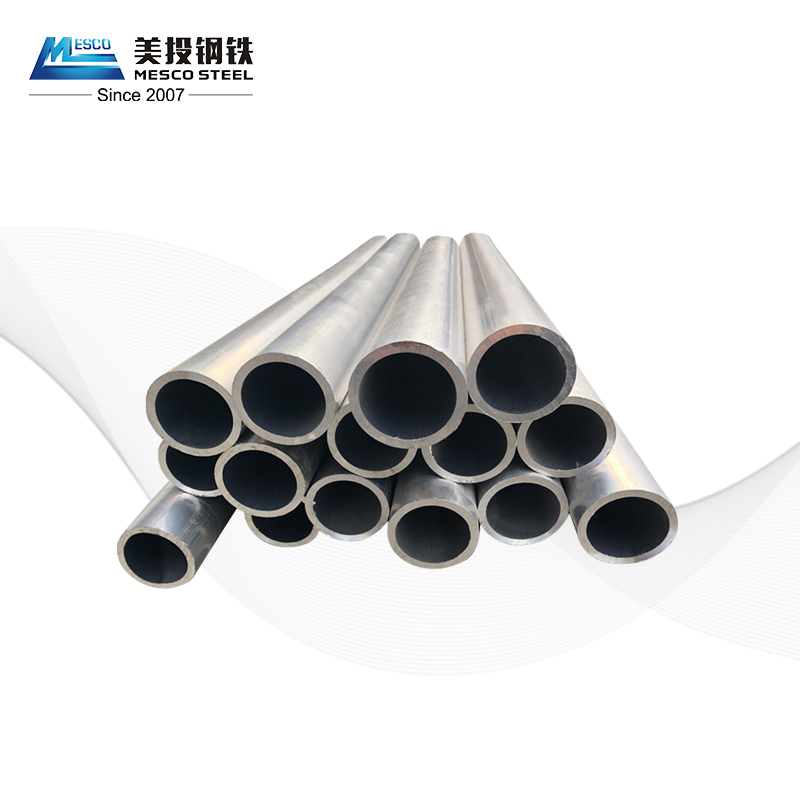
MESCO also reports being the only supplier with AS120 ready stock coils, and maintaining a daily stock of 4,000 tons across nearly all grades to support fast delivery. In product capability, MESCO states it was the first company to supply aluminized steel pipe, extending the material format beyond flat-rolled sheet and coil.
Application Scenarios Across High-Heat Industries
The intended application base for MESCO's ASTM A463 product is automotive, HVAC, and exhaust systems. In these sectors, material selection is driven by the interplay of heat resistance, corrosion resistance, and formability.
- Automotive: aluminized steel is commonly used in heat shields, mufflers, and underbody components, where the Al-Si coating resists high-temperature oxidation and extends service life.
- HVAC: the heat-reflective property of the aluminum coating supports efficiency in heat exchangers, furnace components, and flue assemblies.
- Exhaust systems: the combination of heat resistance and corrosion resistance makes aluminized steel suitable for exhaust manifolds, pipes, and silencers, which experience thermal cycling and condensation.
From a procurement perspective, the selection criteria include specifying the correct coating weight class for the expected thermal and corrosive exposure. For example, an exhaust component exposed to high temperatures and road salt may require a higher coating weight class such as AS240 or AS275, while a HVAC heat exchanger may perform adequately with AS80 or AS120. The availability of MESCO's AS120 ready stock coils and its higher coating weight options up to AS300 allow buyers to align cost and performance within one supply chain relationship.
During the evaluation stage, buyers should map the coating weight class to the operating conditions of the end component. For a component in the hot section of an exhaust system, temperature resistance is the dominant constraint; for a component near the vehicle underbody exposed to salt and moisture, coating weight and corrosion resistance become more relevant. HVAC heat exchanger fins, by contrast, prioritize formability and heat transfer efficiency. This application mapping is the standard method for selecting between AS80, AS120, AS240, AS275, and AS300 classes.
Market Trends Shaping Aluminized Steel Procurement
Several market trends are relevant to buyers evaluating aluminized steel suppliers.
- Type 1 coating dominance: Dataintelo reports that Type 1 hot-dip silicon-alloy coated steel held the largest product share at 62.3% of the aluminized steel market in 2025. This confirms that Al-Si coated products, such as MESCO's ASTM A463 T1/T2 sheet, are the mainstream choice for high-heat applications.
- Asia-Pacific supply concentration: Asia Pacific dominated the aluminized steel market in 2025 with a revenue share of 41.8%, according to Dataintelo. This places Chinese exporters, including MESCO STEEL, at the center of the global supply chain for coated steel.
- Standards-driven compliance: With ASTM A463/A463M governing the US market and EN 10346 covering European buyers, suppliers must be able to document standard conformance for cross-border trade. MESCO's product documentation explicitly references the ASTM A463 standard.
- Competitive landscape: Major global manufacturers of aluminized steel include ArcelorMittal, Nippon Steel Corporation, POSCO, and AK Steel (Cleveland-Cliffs). Within this landscape, MESCO competes on specification flexibility, high coating weight availability, and stock readiness.
The Asia-Pacific concentration also has procurement implications. Buyers sourcing from the region benefit from shorter lead times to Middle Eastern and Asian project sites, but must also manage the complexity of verifying quality consistency across suppliers. Working with an exporter that maintains documented ready stock and laboratory-verified testing reduces this complexity. MESCO's reported daily stock of 4,000 tons across nearly all grades, and the availability of AS120 ready stock coils, are examples of inventory constraints that buyers can verify during supplier qualification.
Buyers should also note that market size estimates vary across sources. Zion Market Research estimated the global aluminized steel sheet market at USD 13.43 billion in 2024, while broader aluminized steel sales analyses may present different baseline figures. In a market with divergent estimates, product specifications and certified test data are more reliable procurement benchmarks than aggregate market numbers.
Comparison with Traditional Coated Steel Solutions
The most direct comparison for aluminized steel is galvanized steel, which uses a zinc-based coating for corrosion protection. Aluminized steel with an Al-Si coating generally provides superior resistance to high-temperature oxidation and better heat reflectivity, making it the more suitable option for exhaust systems, heat exchangers, and other components operating above typical galvanized steel service temperatures.
A legitimate limitation, however, is edge protection. Zinc coatings provide galvanic (sacrificial) protection to exposed steel at cut edges and scratches. Aluminum-silicon coatings primarily provide barrier protection, so cut edges and mechanical damage require design consideration, edge sealing, or alternative material selection in corrosive environments. In addition, aluminized steel generally carries a different price point than galvanized steel, and total cost of ownership must account for the application's thermal and corrosion requirements.
Beyond edge protection, formability is another decision factor. Aluminized steel with an Al-Si coating is generally recognized for good formability, which is why it is commonly selected for stamped and formed exhaust components. However, the coating can be sensitive to severe bending operations, so buyers should validate formability with their specific fabrication process. This is a standard consideration when switching from uncoated or galvanized steel to aluminized steel.
For buyers, the decision rule is relatively clear: choose aluminized steel when high-temperature performance and heat reflectivity are the primary requirements; choose a zinc-based coating when galvanic edge protection and lower material cost are the overriding constraints.
Future Outlook for High-Heat Coated Steel
Looking toward 2034, the aluminized steel sales market is projected to reach USD 18.7 billion, growing at a CAGR of 5.7% from 2026, according to Dataintelo. Continued demand from automotive, HVAC, and industrial heat-management applications is expected to sustain growth, with stricter performance requirements pushing buyers toward documented standard conformance and higher coating weight materials.
For MESCO STEEL, the outlook centers on maintaining ASTM A463 conformance while expanding the availability of high-coating-weight products and ready stock. Its reported capacity for coating weights above 240 g/㎡, combined with a salt spray test result above 4000 hours, positions the company for buyers whose projects prioritize long service life and heat resistance.
For procurement teams, the practical implication is to begin supplier qualification early. Documenting a supplier's standard conformance, coating weight classes, stock levels, and test results during the evaluation stage reduces the risk of specification mismatches later in the project cycle.
Supplier evaluation support
MESCO STEEL provides a downloadable product catalogue covering its aluminized steel sheets, coils, and related coated steel products. Procurement teams can review the full offer details and contact the company for specification alignment and stock inquiries.
📥 Download MESCO STEEL Catalogue (PDF)
Contact: Max | Email: mesco@mescogroup.com.cn | Tel/WhatsApp: +86 151-3456-5556
Address: Liaohezhonger Road 5, Development Zone, Dalian City, Liaoning Province, China
Website: www.mescogroup.com.cn
FAQ
Q1: What does ASTM A463 T1/T2 mean?
ASTM A463/A463M is the governing standard for aluminum-coated steel sheets produced by the hot-dip process. It specifies Type 1 (Al-Si alloy) and Type 2 (pure aluminum) coatings. The model designation ASTM A463 T1/T2 indicates that the material conforms to this standard and can be supplied in either Type 1 or Type 2 designations.
Q2: What is the difference between Type 1 and Type 2 coatings?
According to ASTM A463/A463M, Type 1 is an aluminum-silicon (Al-Si) alloy coating, while Type 2 is a pure aluminum coating. MESCO STEEL's aluminized steel sheet is available in both designations under the model ASTM A463 T1/T2.
Q3: Is Type 2 aluminized steel manufactured in China?
According to MESCO STEEL, only Type 1 aluminized steel is manufactured in China; Type 2 is not produced domestically. Buyers requiring Type 2 pure aluminum coating should verify availability directly with the supplier.
Q4: What coating weights are available?
MESCO STEEL's aluminized steel sheet is available in coating weights of AS80, AS120, AS240, AS275, and AS300 grams per square meter. The company was the first to offer 240 g/㎡ and 300 g/㎡ coating classes in China.
Q5: What are the available thickness and width ranges?
The product is available in thicknesses from 0.37 mm to 3.0 mm and widths from 600 mm to 1500 mm.
Q6: Which industries is this material intended for?
MESCO STEEL's aluminized steel sheet conforms to the ASTM A463 standard and is intended for the automotive, HVAC, and exhaust industries.
Q7: What corrosion test result does MESCO report?
MESCO STEEL reports a salt spray test result exceeding 4000 hours for its aluminized steel product, indicating the corrosion resistance of the coated material.
Q8: What forms of aluminized steel does MESCO supply?
MESCO STEEL supplies aluminized steel sheet and aluminized silicon steel coils, and reports being the first company to supply aluminized steel pipe.
Q9: Is there a European standard equivalent to ASTM A463?
EN 10346 is the European standard for continuously hot-dip coated steel flat products, covering aluminized steel (AS) coatings. Buyers exporting to European markets should verify which standard applies to their specific end-use requirement.