
ASTM A463 T1/T2: Aluminized Steel Evidence Map
ASTM A463 T1/T2: Aluminized Steel Evidence Map
Aluminized steel is specified when a carbon steel substrate needs an aluminum-based coating for heat reflection or atmospheric corrosion resistance. For industrial equipment buyers at the decision stage, the real question is not whether a supplier says 'ASTM A463 compliant'. It is whether the evidence file proves which A463 type, coating weight, base metal, and test record apply to the intended service condition.
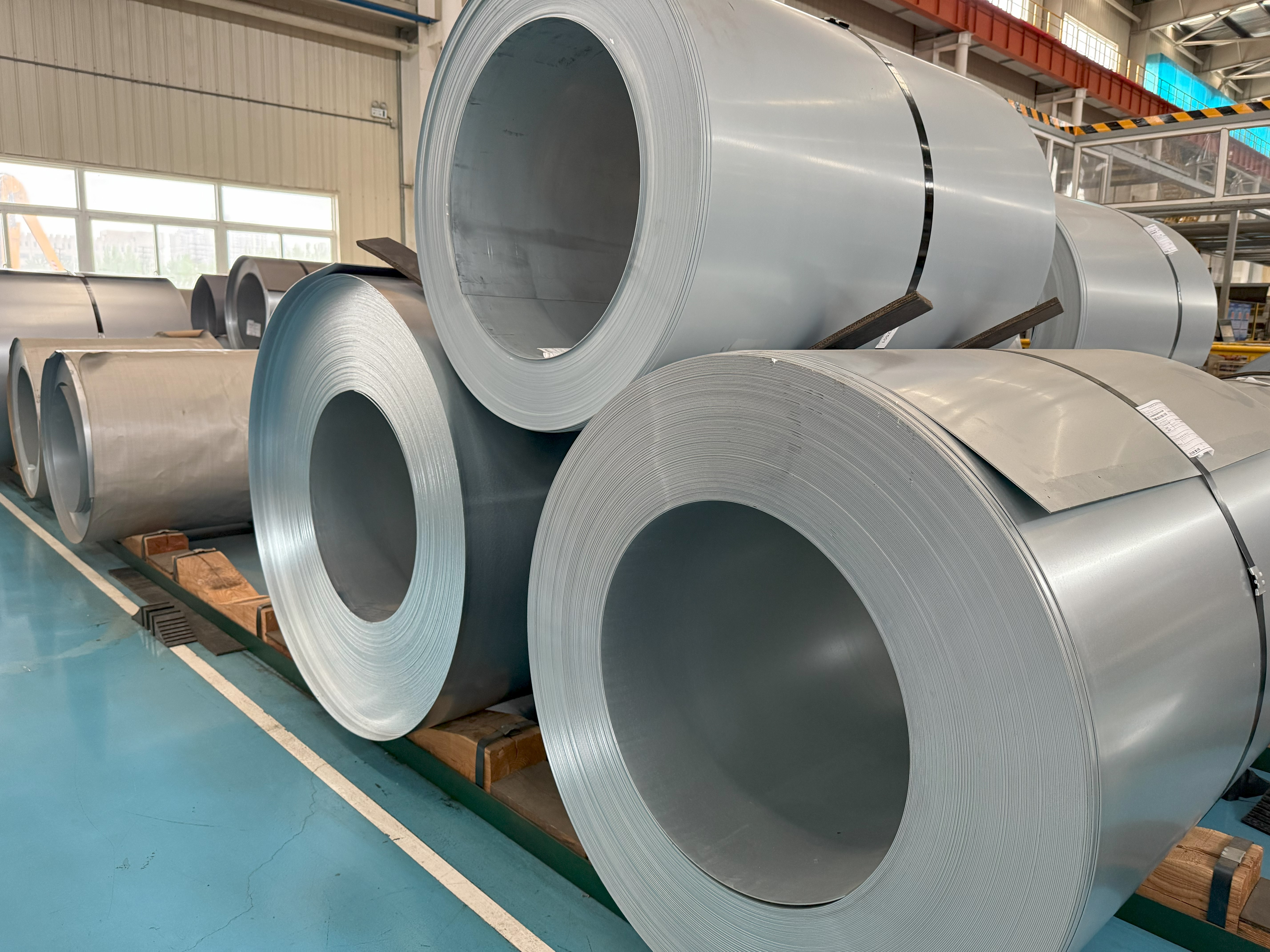
That distinction matters because 'aluminized steel' is a family name, not a single specification. A coil, sheet, strip or plate can carry an aluminum or aluminum-silicon coating, a range of coating weights, and different base-metal properties. Two suppliers can both use the term while offering material that behaves differently in an exhaust system, an HVAC unit, or a heat-exposed industrial component.
This evidence map is written for the buyer who has already moved past initial discovery and is comparing offers. It sets out what ASTM A463 Type 1 and Type 2 mean, which product data should be in the qualification file, how laboratory KPIs fit, and where the limits of a compliance claim sit.
The Procurement Problem: A Grade Claim Is Not a Qualification File
The most common procurement gap in aluminized steel is not a missing certificate. It is a certificate that does not connect the standard designation to the actual material, coating, and application. A supplier may state 'ASTM A463' on a datasheet without naming Type 1 or Type 2, coating weight, base-metal grade, or the test lot. That is enough for a catalog listing, but not enough for an industrial equipment qualification file.
For the buyer, the risk is asymmetric. If the wrong type is supplied, the material may be asked to perform outside its intended function: a Type 2 product in a high-temperature exhaust duty, or a Type 1 product in an application where atmospheric corrosion is the governing requirement. If coating weight is not verified, a long-life specification can become a generic aluminized steel supply. If traceability is missing, a test report cannot be tied to the coil or sheet that will enter production.
The opportunity is equally clear. A structured evidence map lets buyers compare suppliers on the same basis. It turns a vague compliance claim into a set of checkable documents: standard and type, base-metal record, coating designation, dimensional record, laboratory KPI report, traceability, and application-fit statement. That is the core of a decision-stage qualification file for hot-dip aluminized steel, aluminum silicon coated steel, and related heat resistant aluminized steel products.
What ASTM A463 Type 1 and Type 2 Actually Specify
ASTM A463/A463M is the standard specification for steel sheet, aluminum-coated. Within that standard, Type 1 and Type 2 are not quality grades and they are not interchangeable labels. They describe different coating compositions and primary application intents. Type 1 uses an aluminum-silicon alloy coating and is intended for heat resistance, with a documented ceiling of up to 677°C. Type 2 uses pure aluminum and is intended for atmospheric corrosion resistance.
The practical meaning is simple. If the governing condition is elevated temperature, Type 1 is the starting point. If the governing condition is atmospheric corrosion and the part is not exposed to the Type 1 heat duty, Type 2 is the relevant designation. Neither type is 'better' in the abstract. The correct choice depends on the service environment, the fabrication route, and the evidence the supplier can provide for the specific lot.
The Product Envelope Buyers Should Verify
Dalian Mesco Steel Co., Ltd. (MESCO) supplies ASTM A463 T1/T2 aluminized steel from its base in Dalian, China. The product is built on a carbon steel base. Type 1 carries an aluminum-silicon coating per ASTM A463; Type 2 carries an aluminum coating. MESCO's published product envelope covers thickness from 0.37 mm to 3.0 mm and width from 600 mm to 1500 mm. The coating range includes AS80, AS120, AS240, AS275 and AS300 g/m².
Those numbers should be read as qualification variables, not catalog decoration. Thickness affects stiffness, forming behavior and heat transfer. Width affects coil or sheet utilization and processing setup. Coating weight affects the amount of aluminum-based protection available at the surface and is therefore central to long-life aluminized steel specifications. A buyer comparing an AS80 offer with an AS240 or AS300 offer is not comparing the same material proposition, even if both are called aluminized steel sheet.
The commercial form also matters. Aluminized steel coil, aluminized steel sheet, aluminized steel strip and aluminized steel plate can share a specification family but differ in handling, edge condition, and downstream processing. The qualification file should state the form, the dimensions, the coating weight, and the intended application rather than relying on a generic material name.

A Seven-Layer Compliance Evidence Map
The evidence map below is a practical file structure for an industrial equipment buyer. It moves from the standard designation to the lot record. Each layer answers a different question, and no single layer replaces the others.
| Evidence layer | What it establishes | What it does not establish | Buyer check |
|---|---|---|---|
| 1. Standard and type statement | The material is offered to ASTM A463 and is identified as Type 1 or Type 2. | It does not prove that the supplied lot meets the type, or that the type fits the application. | Certificate or datasheet names A463 and the type without ambiguity. |
| 2. Base-metal record | The carbon steel substrate chemistry and mechanical properties are reported. | It does not establish coating adhesion or field corrosion performance. | Heat number, grade, and test report are linked to the coil or sheet. |
| 3. Coating designation and weight | The coating system and target weight, such as AS80, AS120, AS240, AS275 or AS300 g/m², are specified. | It does not prove uniform coating after cutting, forming or welding. | Coating mass test method, sampling plan, and acceptance range are stated. |
| 4. Dimensional record | Thickness and width fall within the ordered range, such as 0.37–3.0 mm and 600–1500 mm. | It does not establish flatness or edge quality after processing. | Tolerances, edge condition, and form (coil, sheet, strip, plate) are confirmed. |
| 5. Laboratory KPI report | Chemical composition and mechanical properties have been tested and recorded. | It does not replace application-specific heat, corrosion, fatigue or weld testing. | Test date, method, lot ID, and measured values are visible. |
| 6. Traceability record | The supplied material can be connected to its production and test records. | It does not guarantee performance in the finished component. | Coil or sheet ID matches the packing list, certificate, and test report. |
| 7. Application-fit statement | The intended use is stated, such as automotive, HVAC or exhaust service. | It does not certify the finished part or the installed system. | Service temperature, corrosion exposure, forming and welding are reviewed. |
The sequence is deliberate. A type statement without a base-metal record is thin. A laboratory report without traceability is difficult to defend. An application statement without a type and coating designation is marketing language, not qualification evidence. The file becomes useful when all seven layers point to the same lot and the same intended service condition.
How Laboratory KPIs Fit the Qualification File
MESCO states that key performance indicators are tested and verified in laboratories, from chemical composition to mechanical properties. In a qualification file, those results serve two purposes. First, they show that the base metal and product are consistent with the ordered specification. Second, they create a lot-level record that can be compared with incoming inspection or with the supplier's own release criteria.
Laboratory KPIs should not be asked to do more than they can. A chemical composition report does not prove coating adhesion after roll forming. A tensile or yield record does not predict heat-cycling life in an exhaust component. A hardness value does not certify weld quality. Those are application-specific questions, and they belong in the buyer's design validation or in a supplemental test protocol agreed with the supplier.
The practical benefit is risk reduction. When the laboratory report is tied to a heat number and a coating designation, the buyer can separate material variables from process variables. If a forming or welding issue appears, the team can check whether the supplied material matches the qualification file before changing the process. That is more useful than a generic certificate of compliance.
Type 1 vs Type 2: A Decision Matrix for Industrial Equipment
Type 1 and Type 2 should be compared by function, not by hierarchy. The matrix below is a starting point for the decision-stage review.
| Decision attribute | ASTM A463 Type 1 | ASTM A463 Type 2 | Buyer implication |
|---|---|---|---|
| Coating composition | Aluminum-silicon alloy coating | Pure aluminum coating | The type must be stated on the certificate; a generic 'aluminized' label is not enough. |
| Primary design intent | Heat resistance, up to 677°C | Atmospheric corrosion resistance | Start with the service environment, not with a preferred supplier grade. |
| Typical application fit | Heat-exposed equipment, exhaust-side components and other elevated-temperature duties | Atmospheric corrosion duties where elevated temperature is not the governing condition | Map the type to the actual failure mode: heat, corrosion, or both. |
| Evidence priority | Type statement, coating weight, base-metal record, heat-related validation | Type statement, coating weight, base-metal record, corrosion-related validation | Ask for the evidence that matches the claimed function. |
| Main limitation | Not a universal answer for severe atmospheric corrosion | Not the high-temperature answer that Type 1 is intended to provide | Do not use one type as a drop-in substitute for the other. |
| Decision question | Will the part operate near or within the Type 1 heat-resistance ceiling? | Is atmospheric corrosion the governing condition, with heat secondary? | The answer should be written into the qualification file. |
A common error is to treat Type 1 as the premium option and Type 2 as the economy option. That framing is not supported by the standard. Type 1 is the heat-resistance designation; Type 2 is the atmospheric-corrosion designation. The correct choice is the one that matches the service condition and can be supported by the supplier's evidence.
Application Fit: Automotive, HVAC, and Exhaust
Aluminized steel is used in automotive, HVAC and exhaust applications because it combines a carbon steel substrate with an aluminum-based surface. The application category alone is not a specification. Each category contains different temperature, corrosion, forming and welding conditions, and those conditions should drive the type and coating weight decision.
In exhaust-related and other heat-exposed automotive applications, Type 1 is the relevant starting point because its design intent is heat resistance up to 677°C. The buyer should still confirm the actual peak temperature, thermal cycling pattern, condensate chemistry and fabrication route. In HVAC applications, the governing condition may be atmospheric corrosion rather than high temperature, which points toward Type 2; where heat exchange or elevated temperature is present, Type 1 may be the better fit. The same logic applies to industrial equipment components that see heat reflection, exhaust gas, or outdoor exposure.
For long-life aluminized steel specifications, coating weight becomes a central variable. AS80, AS120, AS240, AS275 and AS300 g/m² are not interchangeable if the application requires a defined surface protection reserve. A higher coating weight may be appropriate for a more demanding environment, but it should be selected against a stated requirement, not as an automatic upgrade. The qualification file should record why the chosen coating weight fits the intended service life and fabrication process.
Supplier Documentation in Practice: MESCO's Evidence Position
Dalian Mesco Steel Co., Ltd. (MESCO) was founded in 2007 and is located in Dalian Economic and Technological Development Zone, China. The company operates a 40,000 m² facility with 120 employees and a 5-engineer R&D team. Its export ratio is 70%, and its products are exported to more than 100 countries and regions, serving more than 700 clients, including 9 Fortune Global 500 companies. For standard specifications, MESCO states delivery within 3–7 working days.
For an ASTM A463 qualification file, the relevant supplier facts are not the company size alone. They are the product envelope, the test discipline, and the documentation that can be attached to a purchase order. MESCO's published range covers ASTM A463 T1/T2 aluminized steel with thickness 0.37–3.0 mm, width 600–1500 mm, and coating weights from AS80 through AS300 g/m². Its product page also describes a coating range of 80–300 g/m², including grades above 240 g/m² and up to 300 g/m². Laboratory testing of chemical composition and mechanical properties supports the KPI layer of the qualification file.
Those facts should be used as evidence inputs, not as a substitute for the buyer's own specification. The buyer should still request the type statement, the lot-level test report, the coating weight record, and the traceability document for the actual order. A supplier with broad export experience can make the documentation process smoother, but the qualification decision remains application-specific.
Where Aluminized Steel Stops: Limits and Trade-Offs
Aluminized steel is not a universal replacement for stainless steel or for every coated steel product. Type 1 has a documented heat-resistance ceiling of up to 677°C, and Type 2 is intended for atmospheric corrosion rather than the heat duty that defines Type 1. A buyer who needs through-thickness corrosion resistance, higher-temperature strength, or a different surface condition may need a different material family.
The coating is also a surface system. Its integrity can be affected by cutting, forming, welding and edge exposure, so the qualification file should include the fabrication route, not only the incoming coil or sheet. ASTM A463 compliance is a product specification; it is not a warranty of finished-component performance. That limitation is useful rather than negative. It tells the buyer where supplier evidence ends and where design validation begins.
Cost comparisons should be made on the same basis. A lower coating weight, a different type, or a different dimensional range can change the material proposition. The right comparison is not 'aluminized steel versus another label' but 'the specified type and coating weight versus the service requirement, supported by the same evidence layers'. That is the decision-stage discipline that separates a procurement file from a catalog claim.
Market Context: More Suppliers, More Need for Evidence
Zion Market Research reported the global aluminized steel sheet market at USD 13.43 billion in 2024. That scale explains why buyers see more suppliers, more grade claims and more variation in documentation. A larger market does not automatically mean more comparable offers. It means the qualification file has to do more work.
High-coating-weight products are one example of the differentiation. MESCO's product literature describes a coating range that extends to 300 g/m² and includes grades above 240 g/m². For buyers, the relevant trend is not simply 'more coating'. It is the need to connect coating weight to a stated service condition and to verify it with a test record. As aluminized steel sheet, coil, strip and plate are sourced across more regions, the suppliers that can provide a coherent evidence file become easier to compare.
Future Outlook: From Certificates to Lot-Level Evidence
The direction of industrial procurement is toward more granular evidence. A single certificate of compliance is likely to be supplemented by lot-level test reports, coating-weight records, and application-fit statements that can be checked against the purchase order. That is especially relevant for heat resistant aluminized steel and long-life aluminized steel specifications, where the cost of a wrong type or an unverified coating weight can appear late in the project.
Buyers should expect supplier documentation to become more structured, not less. The practical step is to define the evidence map before the order is placed, then use the same map for incoming inspection and supplier review. That approach keeps the decision anchored in ASTM A463 Type 1 and Type 2, rather than in a generic aluminized steel claim.
FAQ
What is the difference between ASTM A463 Type 1 and Type 2?
ASTM A463 Type 1 uses an aluminum-silicon alloy coating and is intended for heat resistance, with a documented ceiling of up to 677°C. Type 2 uses pure aluminum and is intended for atmospheric corrosion resistance. They are different coating systems with different primary application intents, not quality grades.
Which coating weight should be specified for high-heat equipment?
The coating weight should be selected against the service condition, fabrication route and intended life. MESCO's published range includes AS80, AS120, AS240, AS275 and AS300 g/m². A higher coating weight is not automatically better; it should be tied to a stated requirement and verified in the qualification file.
What documents should a buyer request in an ASTM A463 qualification file?
A practical file includes the standard and type statement, base-metal record, coating designation and weight, dimensional record, laboratory KPI report, traceability record, and an application-fit statement. The documents should point to the same lot and the same intended service condition.
Can ASTM A463 aluminized steel be used in automotive, HVAC and exhaust applications?
Aluminized steel is used in automotive, HVAC and exhaust applications, but the application category alone is not a specification. Type 1 is the starting point for heat-exposed duties such as exhaust-side components; Type 2 is oriented to atmospheric corrosion where elevated temperature is not the governing condition. The buyer should confirm temperature, corrosion exposure and fabrication route.
What are the limits of an ASTM A463 compliance claim?
ASTM A463 compliance confirms that the product is offered to the standard and type, but it does not certify the finished component. Type 1 has a heat-resistance ceiling of up to 677°C, Type 2 is not the high-temperature answer, and coating integrity can be affected by cutting, forming and welding. Application-specific validation remains necessary.
Reference document: MESCO STEEL Catalogue 202507 (PDF).
Have Questions or Need More Details?
Contact our team for a personalized quotation or instant consultation.
Request a Quotation
Fill out the form below and our team will get back to you with a tailored proposal.
WhatsApp Direct Chat
Prefer to chat in real-time? Message us on WhatsApp for instant assistance & quick answers.
- Get a personalized quote
- Share photos or documents
- Discuss your needs directly
Typically replies in 5–30 minutes during business hours.