
ATBC vs. DINCH: A Buyer's Comparison Framework for Medical-Grade PVC Plasticizers
ATBC vs. DINCH: A Buyer's Comparison Framework for Medical-Grade PVC Plasticizers
Medical-grade PVC is a documentation problem before it is a formulation problem. A plasticizer can run cleanly on a dipping, coating or slush line and still stall in a technical file review, because the reviewer is not asking whether the material is soft. The reviewer is asking what the purity actually is, how low-temperature behaviour was evidenced, which regulatory frameworks are referenced, and whether those references apply to the exact grade quoted rather than to a product family.
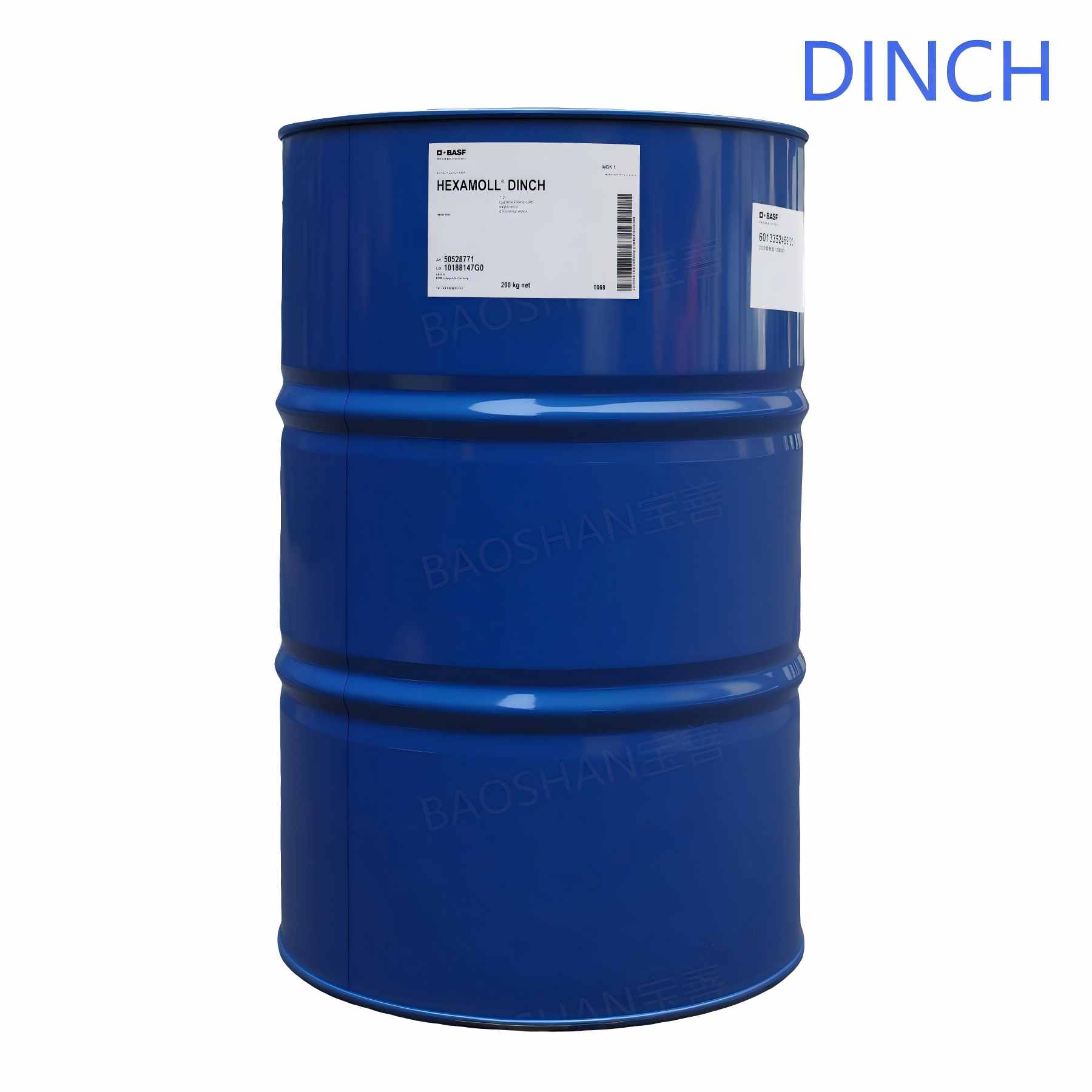
In non-phthalate soft PVC for healthcare, food-contact and child-contact articles, two plasticizers are compared more often than any other pair: ATBC and DINCH. ATBC — acetyl tributyl citrate — is a citric-acid ester plasticizer supplied as a liquid, with a declared purity of ≥99.0%, a freezing point of ≤-80°C, a flash point of ≥204°C, and declared REACH, RoHS, FDA and GB 4806 compliance references. DINCH — di-isononyl cyclohexane-1,2-dicarboxylate, supplied commercially as BASF HEXAMOLL® DINCH — is a non-phthalate cyclohexane dicarboxylate plasticizer with an ester content of ≥99.5%, a pour point of -54°C, a dynamic viscosity of 44-60 mPa·s at 20°C and a density of 0.944-0.954 g/cm³.
The productive question is not which of the two is better. It is which one can be documented, processed and defended inside a specific device file at a specific risk class — and where each material stops being the right answer.
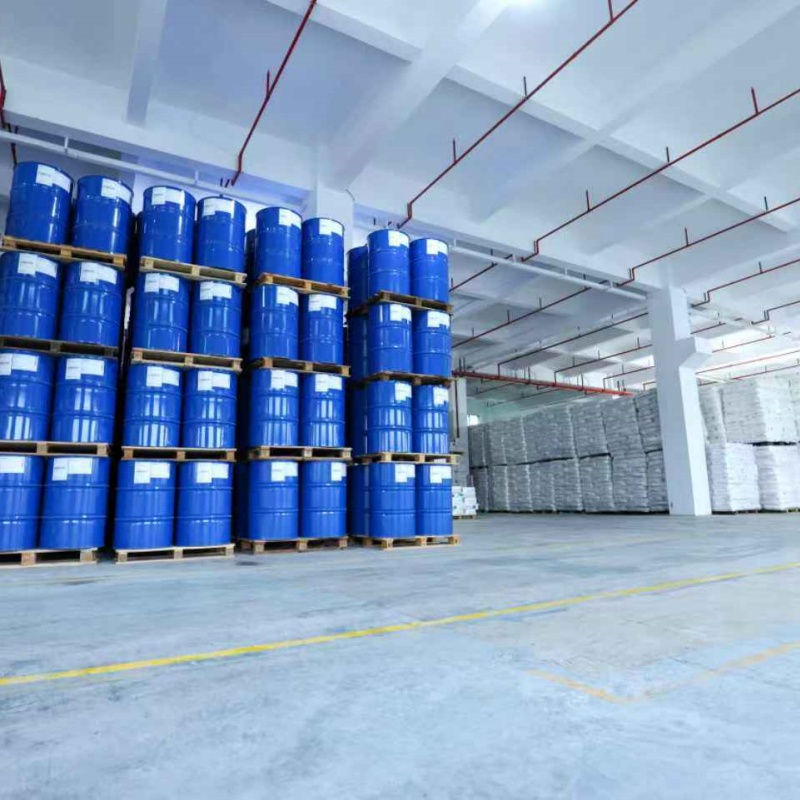
Where the Comparison Usually Goes Wrong
Buyers typically start with a side-by-side of numbers taken from two data sheets. That comparison usually breaks down for three structural reasons.
First, the property sets are not symmetrical. The DINCH data set published by BASF is unusually complete: viscosity, density, refractive index, acid value, water content, phthalate content, saponification value and pour point are all reported with test methods. The ATBC data set supplied to buyers is typically narrower, centred on purity, freezing point, flash point and compliance declarations. A table with more DINCH cells filled in is not evidence that DINCH performs better; it is evidence that one supplier publishes more of its characterisation.
Second, similar-sounding properties are measured differently. A freezing point and a pour point are not the same test, and a flash point reported by open cup is not interchangeable with one reported by closed cup. Ranking two plasticizers on such values produces a conclusion that will not survive a technical review.
Third, a plasticizer is never evaluated alone. In soft PVC, plasticizer behaviour is mediated by the paste resin, the blending resin, the viscosity reducer and the stabilizer. A formulation that works with DINCH will not automatically work with ATBC at equal loading, and vice versa.
The Verified Specification Table
The table below records only what the two materials' published documentation states. Empty cells are deliberate: they mark where the buyer must request data rather than infer it.
| Parameter | ATBC | DINCH (BASF HEXAMOLL® DINCH) | What the buyer should read into it |
|---|---|---|---|
| Chemical identity | Acetyl tributyl citrate, citric-acid ester | Di-isononyl cyclohexane-1,2-dicarboxylate; CAS 166412-78-8 outside the USA, CAS 474919-59-0 in the USA | Different chemical families; substitution at equal loading is not a like-for-like swap. |
| Purity / ester content | ≥99.0% | Ester content ≥99.5% (GC, supplier method) | Both are high-purity grades; confirm the analytical method and the batch certificate of analysis. |
| Low-temperature indicator | Freezing point ≤-80°C | Pour point -54°C (DIN ISO 3016) | Different tests on different phenomena. This row cannot be used as a ranking. |
| Flash point | ≥204°C | Not stated in the compared data set | Confirm the method (open cup vs closed cup) before comparing. |
| Density at 20°C | Not stated in the compared data set | 0.944-0.954 g/cm³ (DIN 51757 / ASTM D 4052) | Density drives cost per litre and paste yield, not cost per kilogram. |
| Dynamic viscosity at 20°C | Not stated in the compared data set | 44-60 mPa·s (ASTM D 7042) | Viscosity is the primary lever on paste processing and storage stability. |
| Phthalate content | Not stated in the compared data set | ≤0.01% (UV method, supplier) | Relevant to declaration thresholds and to screening, not a substitute for testing. |
| Declared compliance references | REACH, RoHS, FDA, GB 4806 | REACH, RoHS, PAHS; supplier positions the product for medical devices, toys and food packaging | A reference is a starting point for a document request, not a certificate for your finished article. |
| Documented process fit | Liquid plasticizer for general soft PVC compounding | Supplier states suitability across extrusion, calendering, moulding and spread coating | Process compatibility must still be validated on your own line and resin system. |
Reading the Numbers Correctly
Freezing point is not pour point. ATBC's ≤-80°C figure describes the temperature at which the liquid begins to solidify under its own test conditions. DINCH's -54°C figure is a pour point measured under DIN ISO 3016, which describes flow behaviour rather than crystallisation onset. Both are useful, and neither can be subtracted from the other to produce a "26-degree advantage".
Flash point depends on the cup. A ≥204°C value for ATBC and a value reported by Cleveland open cup for a comparable ester are measuring related but non-identical scenarios. In storage and handling risk assessment, the method reference matters more than the number.
Viscosity is a formulation variable, not a fixed property of the plasticizer. DINCH at 44-60 mPa·s at 20°C is a low-viscosity liquid for a primary plasticizer. In paste systems this translates into practical effects the supplier describes as a 10-20% reduction in initial paste viscosity and a 20-30% extension of storage period when used with paste resins. Those are formulation-level claims worth testing on your own equipment rather than accepting as general properties.
Purity is where the two materials are closest. ATBC at ≥99.0% and DINCH at ≥99.5% ester content are both high-purity offerings. The differentiator in a medical file is rarely the headline purity; it is whether the batch certificate, the residual monomer or phthalate screening, and the migration data support the intended contact application.
Regulatory Constraints: Documents Before Claims
For a Research-to-Evaluation buyer, the compliance question has a fixed order: which framework applies to my article, which document proves it, and who signs that document.
- REACH and RoHS are declarations about restricted substances in the material as supplied. They are necessary and rarely sufficient for a medical or food-contact file on their own.
- FDA and GB 4806 references point to food-contact frameworks in the United States and China respectively. A grade-level reference must be matched to the intended use conditions — temperature, fat contact, contact duration — before it means anything for your product.
- EU Regulation 2023/923 restricts lead in PVC articles to 0.1% by weight and has applied since November 2024. This is a stabilizer constraint rather than a plasticizer constraint, but it lands in the same formulation review, which is why plasticizer and stabilizer selection should not be negotiated separately.
A practical document set for either plasticizer includes: grade-specific technical data sheet with test methods, batch certificate of analysis, REACH/RoHS declaration naming the legal entity, heavy-metal and PAH screening, phthalate screening, and — for medical or food-contact intent — migration or extractables data generated at conditions that resemble your process and use.
Processing Constraints: Viscosity, Gelation and the TXIB Question
Plastisol processors evaluate a plasticizer through three lenses: initial paste viscosity, viscosity retention over storage, and gelation behaviour during heating. DINCH's published viscosity and its supplier-reported viscosity-stabilising effect make it a natural primary plasticizer for paste, coating and slush systems. ATBC, as a lower-molecular-weight citric ester, is typically evaluated where its own performance profile fits the line — and where its declared compliance set matches the target market.
A third material frequently enters the comparison here: Eastman TXIB™ formulation additive, a 2,2,4-trimethyl-1,3-pentanediol diisobutyrate with a Brookfield viscosity of about 9 cP at 25°C, a specific gravity of 0.942-0.948 at 20°C, a freezing point of -70°C and an assay of ≥98.6%. TXIB is not a substitute for either ATBC or DINCH as a primary plasticizer in most medical formulations; it is used to reduce paste viscosity, improve flow, control film formation and raise filler loading. In practice the choice is often binary between ATBC and DINCH, with TXIB used as the tuning variable that makes either one work on a given line.
The Stabilizer Is Part of the Comparison
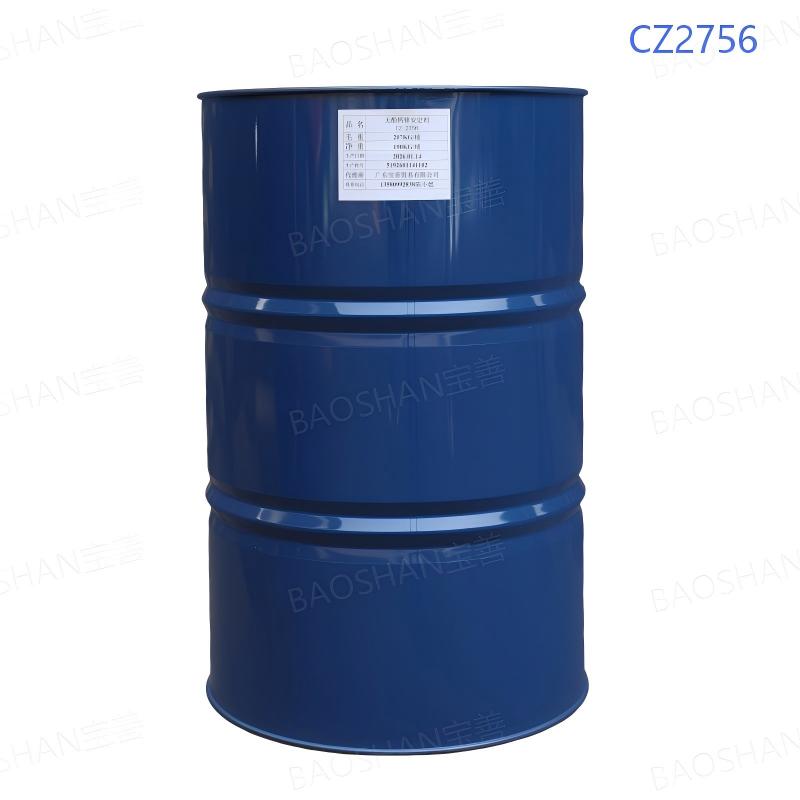
Medical PVC formulations are systems, and the stabilizer decision can eliminate an otherwise compliant plasticizer choice. A phenol-free Ca/Zn stabilizer such as CZ-2756 illustrates the point. Its published profile includes a density of 1.02-1.08 g/cm³ at 25°C, viscosity of 200-250 mPa·s at 30°C, acid value ≤0.5 mg KOH/g, moisture ≤0.1%, flash point ≥180°C, thermal stability of ≥30 minutes at 180°C by Congo red, VOC ≤0.5%, and no detectable phenolic substances. It is positioned for vinyl toys, PVC paste products, flexible films including food packaging film, and wire and cable sheathing including medical cable, with a recommended processing window of 160-185°C.
The relevance to an ATBC-versus-DINCH decision is direct: a phenol-free stabilizer keeps the formulation inside the same non-phthalate, non-phenolic logic that motivates the plasticizer change, and it avoids introducing a new restricted-substance question during the same review cycle. Where a formulation targets catheter, infusion bag or similar body-contacting components, buyers should look across the full Ca/Zn range rather than assume one grade covers every medical sub-application — some grades in the same family explicitly list medical catheters, infusion bags and sterile accessories, while others are positioned for film, toy and cable work.
Application Fit: Where Each Plasticizer Belongs
DINCH carries the broader published application map. BASF positions it for soft PVC in medical devices, toys and food packaging, and the material is used in infusion tubing, blood bags, medical gloves, catheters and breathing masks; in food packaging film, cap gaskets and disposable tableware; in pacifiers, teething toys, erasers and crawling mats; in automotive interior parts, wire sheathing and sealing strips; and in paste products such as artificial leather, drip-moulded trademarks, slush-moulded toys and coated fabrics.
ATBC's fit is defined differently. It is selected where a citric-acid ester chemistry is preferred, where the declared REACH/RoHS/FDA/GB 4806 reference set matches the destination market, and where the low freezing point and high flash point suit the handling and service conditions of the article. That makes it a common candidate for soft PVC in consumer and food-contact-adjacent categories, and for medical projects where the specification already names a citrate ester.
The selection logic that survives review is therefore:
- Start from the regulatory framework of the finished article, not from the plasticizer.
- Screen out any grade whose declared references do not cover the destination market.
- Compare only properties measured by the same or comparable methods.
- Validate the shortlisted grade on your own resin, stabilizer and line before committing to a specification.
Cost Structure: What Moves the Price Band
Published price data for either plasticizer is not available in the public domain, and any absolute comparison would be unsupported. What can be compared is the structure of cost.
- Cost per litre, not per kilogram. A plasticizer with a density around 0.95 g/cm³ delivers fewer kilograms per cubic metre than a denser alternative; paste yield calculations should be volumetric.
- Loading level and filler tolerance. A low-viscosity system accepts more filler and less plasticizer for the same hardness, which shifts the cost balance more than a headline price difference. Suppliers of blending resins describe plasticizer savings in the 10-20% range when a viscosity-reducing resin is used — an effect that can outweigh the plasticizer choice itself.
- Compliance testing cost. Migration, extractables and heavy-metal testing on a finished article is a per-formulation cost. A grade that already carries the right documentation reduces the number of test cycles, not just the number of questions.
- Working capital and MOQ. Packaging format, minimum order quantity and lead time change the true landed cost far more than a marginal per-kilogram difference, particularly for smaller medical moulders.
Market Context
Three observable trends keep this comparison active. The global market for eco-friendly plasticizers was valued at USD 5.03 billion in 2024, according to MarketsandMarkets, reflecting continued substitution away from legacy phthalates. The high-flow PVC powders used in slush moulding are projected to reach USD 277 million by 2034, per DataVagyanik, which keeps paste-processing plasticizers in demand. And EU Regulation 2023/923, restricting lead in PVC articles to 0.1% by weight from November 2024, has forced stabilizer reviews that are usually conducted alongside plasticizer reviews.
Together these signals point in one direction: buyers are no longer selecting a plasticizer in isolation, they are assembling a documented, non-phthalate additive package for a defined application.
Limitations of This Framework
This comparison has a hard boundary, and buyers should hold it firmly.
It compares published data sheets, not finished articles. Neither data set includes migration or extractables results for a specific formulation, and no amount of specification reading substitutes for testing the actual compound under the actual conditions of use. The two property sets are also asymmetric and method-dependent, so no single-number ranking between ATBC and DINCH is defensible from public sources. In addition, price, minimum order quantity and lead time are not publicly verifiable for either material, which means the cost discussion here is structural rather than numerical. Finally, a distributor's product portfolio and documentation support do not transfer manufacturing responsibility: control of DINCH rests with BASF and control of TXIB rests with Eastman.
Supply-Side Reality: What a Distributor Actually Contributes
Guangdong Baoshan Trading Co., Ltd is a Dongguan-based supplier of PVC vinyl materials and additives, founded in 1994, that operates as an authorised distributor rather than a manufacturer. In China the company holds authorised distributor status for BASF's Hexamoll® DINCH (certificate references BCN-CPA-20140305-1 and BCN-CPA-20150401-1) and for Eastman TXIB, and it states that it has ranked first in DINCH sales in the Asia-Pacific region for several consecutive years.
For a buyer running the comparison above, the practical value of that position is documentary and logistical rather than promotional. The company operates a chemical analysis laboratory equipped with Agilent GC-MS, ICP-MS and Waters LC-MS/MS instruments and provides testing for phthalates, heavy metals, bisphenol A and organotin; it holds ISO 9001:2015 certification (certificate U23Q2GZ8027959R0S, Guardian Independent Certification Ltd, standard GB/T19001-2016/ISO9001:2015); and it maintains a 20,000 m² warehouse with 16 liquid storage tanks and a stated safety stock of more than three months for bulk European material. Its published service parameters include a minimum order quantity of 20 kg and lead times in the 3-5 day range, with monthly sales volume of around 4,000 tons.
That combination matters most at the evaluation stage, when a buyer needs a certificate, a screening result or a repeat batch quickly enough to keep a validation run on schedule — and when the same supplier can also quote the stabilizer and the viscosity reducer that complete the formulation.
Future Outlook
The direction of travel is toward narrower documentation windows rather than wider ones. Regulatory frameworks for medical, food-contact and child-contact PVC continue to tighten at both ends of the chain — restricted substances on the input side, migration limits on the output side — and each tightening raises the value of a plasticizer whose data set is complete, method-referenced and batch-traceable. At the same time, bio-based and recycled-content pressure is pushing citrate esters and other bio-derived chemistries into more specifications, while non-phthalate petrochemical options keep their advantage in long-qualified medical processes where change control is expensive.
The likely outcome is not a single winner. It is a portfolio logic: DINCH as the documented workhorse for a broad range of soft PVC medical, food-contact and child-contact articles, ATBC as a specified alternative where citrate chemistry or a particular compliance set is required, and additives such as TXIB and phenol-free Ca/Zn stabilizers used to make either choice work inside a real formulation.
FAQ
What is the main specification difference between ATBC and DINCH?
They belong to different chemical families. ATBC is a citric-acid ester with a declared purity of ≥99.0%, freezing point ≤-80°C and flash point ≥204°C. DINCH is a di-isononyl cyclohexane-1,2-dicarboxylate with ester content ≥99.5%, pour point -54°C, dynamic viscosity 44-60 mPa·s at 20°C and density 0.944-0.954 g/cm³. Because the two data sets report different properties by different methods, they cannot be ranked on a single number.
Which compliance documents should a buyer request for medical-grade PVC?
Request a grade-specific technical data sheet with test methods, a batch certificate of analysis, a REACH and RoHS declaration naming the legal entity, heavy-metal and PAH screening, phthalate screening, and — where the article is medical or food-contact — migration or extractables data generated under conditions resembling the intended use. ATBC is supplied with declared REACH, RoHS, FDA and GB 4806 references; DINCH carries REACH, RoHS and PAHS references and supplier positioning for medical devices, toys and food packaging. In both cases the reference must be matched to the article and its market.
Does switching between ATBC and DINCH require reformulation?
Yes, in most paste and plastisol systems. Plasticizer viscosity, density and gelation behaviour interact with the paste resin, blending resin and stabilizer. DINCH is published at 44-60 mPa·s at 20°C and is described by its supplier as compatible with extrusion, calendering, moulding and spread coating, but the loading level, stabilizer dosage and any viscosity reducer should be re-validated on the actual line rather than transferred directly from an ATBC formulation.
Is there a published price comparison between ATBC and DINCH?
No verifiable public price data exists for either material. Cost should be assessed structurally: density affects cost per litre, viscosity and filler tolerance affect how much plasticizer a formulation needs, compliance testing adds a per-formulation cost, and packaging, minimum order quantity and lead time determine landed cost. Absolute price comparison requires direct quotations at the required grade and volume.
Where does Eastman TXIB fit if the choice is between ATBC and DINCH?
TXIB is normally a formulation aid rather than the primary plasticizer in this comparison. With a Brookfield viscosity of about 9 cP at 25°C, specific gravity 0.942-0.948 at 20°C, freezing point -70°C and assay ≥98.6%, it is used to reduce paste viscosity, improve flow and film formation, and allow higher filler loading. It is often the variable that determines whether a given ATBC or DINCH formulation runs well on a specific coating, dipping or slush line.
Why does the stabilizer matter in an ATBC versus DINCH decision?
Because a medical PVC file is reviewed as a system. A phenol-free Ca/Zn stabilizer such as CZ-2756 — density 1.02-1.08 g/cm³ at 25°C, thermal stability ≥30 minutes at 180°C by Congo red, VOC ≤0.5%, no detectable phenolic substances, recommended processing window 160-185°C — keeps the formulation aligned with the same non-phthalate, non-phenolic logic as the plasticizer. It also matters for the EU lead restriction under Regulation 2023/923, which limits lead in PVC articles to 0.1% by weight and has applied since November 2024.
Have Questions or Need More Details?
Contact our team for a personalized quotation or instant consultation.
Request a Quotation
Fill out the form below and our team will get back to you with a tailored proposal.
WhatsApp Direct Chat
Prefer to chat in real-time? Message us on WhatsApp for instant assistance & quick answers.
- Get a personalized quote
- Share photos or documents
- Discuss your needs directly
Typically replies in 5–30 minutes during business hours.