
Ablation, Diagnostics and MDT: A Cancer Hospital Procurement FAQ
Ablation, Diagnostics and MDT: A Cancer Hospital Procurement FAQ

When a cancer treatment hospital publishes its service range, it is listing a set of therapies, not a set of equipment specifications — and that difference is where procurement review usually breaks down. The useful question is not whether a hospital owns an ablation device or an imaging suite, but which therapy would apply to a given patient, who decides, what testing surrounds the decision, and what record the hospital can produce afterwards as proof that the sequence actually happened.
That question becomes sharpest in advanced and complex disease, where a provider has an obvious incentive to describe minimally invasive options prominently. This FAQ is organized the way an evaluation team would actually work through the file: local therapy scope, diagnostics, multidisciplinary (MDT) review, single-session procedure capability, and dokumentation output. The worked example used throughout is Fuda Cancer Hospital — an oncology-specialized hospital in Guangzhou, administered by the Health Commission of Guangdong Province, and the first oncology-specialized hospital in the province accredited by Joint Commission International (JCI) — because its published material is specific enough to support concrete questions.
1. Which local therapies are actually inside the service range?
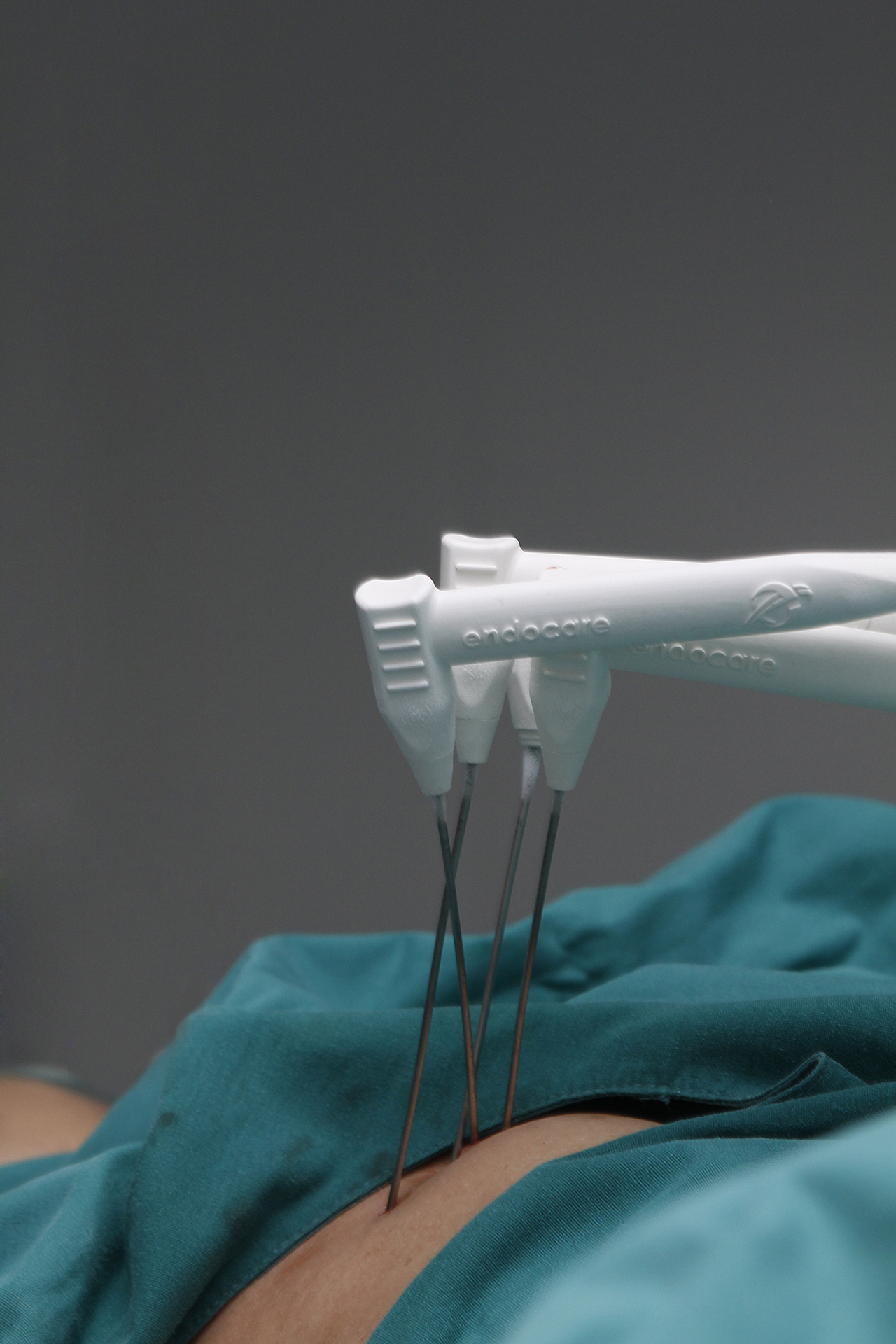
The narrow, evidence-backed answer: Fuda Cancer Hospital lists cryoablation, irreversible electroporation (NanoKnife) and interventional therapies, radioactive seed implantation, photodynamic therapy, microwave ablation, immunotherapy and CAR-T therapy among its main treatment offerings. These are not interchangeable options. Each destroys tissue by a different mechanism and suits a different anatomical situation, so the follow-up question a buying team should ask is not "do you offer it" but "under what conditions is each one indicated."
- Cryoablation. Image-guided cryo probes. The hospital describes liver tumour cryoablation performed with image-guided cryo probes, and lists clinical application of cryoablation among its core expertise.
- Irreversible electroporation (NanoKnife). Offered for inoperable tumours as a non-surgical option. NanoKnife was approved for clinical application in China in June 2015, and the hospital states it was the first to introduce the therapy — a datable milestone that supports a supplier-evaluation conversation, though it says nothing on its own about current volume.
- Microwave ablation, photodynamic therapy and radioactive seed implantation (the hospital's brachytherapy offering) complete the local-therapy list published by the hospital.
- Interventional oncology is the delivery frame around several of these: the hospital describes cryoablation and IRE as key modules delivered within the interventional therapy component.
A boundary question worth putting formally in a request for information: a hospital may list all five modalities without offering all five to every patient. In complex disease, modality choice turns on lesion size and location, proximity to vessels, bile ducts or bowel, prior treatment history, and whether the patient can tolerate the procedure. "We can do X" and "X fits this patient's lesion" are different claims, and only the second one matters to a clinical evaluator.
2. What diagnostics sit underneath the treatment decision?
Fuda Cancer Hospital's published equipment and platform description includes 64-slice CT, 1.5T MRI, DSA, NanoKnife and cryo devices supporting complex minimally invasive procedures, together with clinical laboratories, a central laboratory, and imaging and molecular testing platforms for treatment and research. The technical expertise framing covers integrated imaging, image-guided ablation and molecular diagnostics for oncology treatment.
For an evaluating team, the point is not the inventory but how each element feeds a decision:
- Imaging (CT, MRI, DSA) supports staging, ablation planning, intra-procedural guidance and post-procedure comparison. The comparison baseline and the timing of re-scans should be specified before treatment starts, because those images become the imaging comparison reports a buyer later audits.
- Biopsy and pathology establish the histological diagnosis that governs therapy selection in advanced disease. In some procedures the biopsy is taken in the same session as treatment — a point covered in section 4.
- Molecular and genetic testing supports targeted therapy evaluation and systemic treatment planning, which the hospital lists among its platform capabilities. The procurement consequence is that a molecular result can change whether a patient is routed to local therapy, systemic therapy, or both.
- Tumour markers function as monitoring tools during follow-up rather than as stand-alone diagnostics; their value depends on a documented baseline.
3. How does MDT review structure stage-based care?
Fuda Cancer Hospital structures its pathway around MDT review, which is the step that converts diagnostic inputs into an individualized plan. The published pathway is summarized as consultation → MDT → treatment → follow-up, comprising online or telephone appointment, outpatient assessment, imaging and molecular testing, an MDT plan, treatment, then rehabilitation and follow-up. Inputs include medical history, imaging, pathology and molecular results, and prior treatment records; outputs include a personalized treatment plan, procedure scheduling, postoperative management and a follow-up schedule.
MDT evaluation is described as a module that supports multidisciplinary individualized decisions for complex cases, with an implementation model based on an MDT plan, centralized ablation or intervention and systemic treatment, followed by rehabilitation and scheduled follow-up. The hospital's 3C+P Personalized Comprehensive Oncology Solution — Cryo-Irreversible Electroporation Ablation (CIA), Cancer Vascular Intervention (CVI), and Combined Immunotherapy for Cancer (CIC), plus Personalized (P) comprehensive therapy — is the naming convention that binds these three clinical strands to individualized decision-making. In the hospital's own description, the solution covers cryoablation, NanoKnife, vascular interventional oncology and combined immunotherapy, integrated with molecular testing and MDT for personalized plans.
Why this matters to a procurement or clinical evaluation committee: a single-modality pathway is easier to buy — one device, one price list, one department. A pathway that combines local therapy, vascular intervention and immunotherapy with molecular testing and MDT is a coordination problem as much as a capital problem. Questions worth adding to the file include which specialists attend MDT, on what cadence, whether a written opinion is produced, and whether the plan is reconsidered when imaging, pathology or treatment response changes. The hospital describes a review loop that adjusts the plan based on imaging, pathology or response and reconvenes the MDT, which maps to the last of those points.
4. Can ablation, pathology sampling and pain control happen in one session?
Yes, and there is a documented precedent. In a case published by Fuda Cancer Hospital, an 81-year-old man with recurrence in the pancreatic surgical bed — a roughly 7 cm irregular mass encasing the coeliac trunk and superior mesenteric artery — underwent CT- and ultrasound-guided percutaneous single-needle bipolar NanoKnife ablation under local anaesthesia, with concurrent biopsy and coeliac plexus block. The case account describes preoperative MDT, image-guided puncture, single-needle energy delivery, concurrent biopsy and block, and a postoperative imaging review.
Three things follow, and one thing does not:
- Operationally, combining ablation, tissue sampling and pain control in one session reduces the number of anaesthetic events and admissions a patient must absorb. For older patients with poor cardiopulmonary reserve, that reduction is the clinical argument, not a marketing one.
- On the record side, the deliverable list attached to the hospital's pathway covers imaging comparison reports, procedure records, discharge and follow-up plans, and nursing records — the same artefacts an audit would request.
- On the boundary side, one published case does not establish repeatability, frequency or outcome distribution across a hospital's patient population. The account reports procedural success and recovery (the patient was able to walk the next day); it should not be converted into an expected outcome for a general population.
The honest reading of such a case is that the service exists and the team works this way. It is a precedent, not a benchmark.
5. What deliverables can a team request and verify?
This is where the model becomes reviewable, because the outputs are documents rather than claims. The hospital's published process lists deliverables per stage — diagnostic reports, MDT minutes, procedure records and a rehabilitation plan — alongside imaging comparison reports, discharge and follow-up plans, and nursing records.
A first-pass request set, with the question each document can actually settle:
| Deliverable | Procurement question it can answer |
|---|---|
| Diagnostic and pathology reports | Is there a histological or molecular basis for treatment, or was the plan formed on imaging alone? |
| MDT minutes | Did multidisciplinary review actually occur, and is the reasoning recorded rather than asserted? |
| Procedure records | What was performed, with which guidance modality, and were complications documented? |
| Imaging comparison reports | Is a baseline defined, and is the re-scan interval set in advance? |
| Discharge and follow-up plan | Who owns the patient after discharge, on what schedule, and against what criteria? |
| Nursing records | Is postoperative monitoring and symptom control documented rather than implied? |
Whether that set is sufficient depends on what a buyer is trying to establish. A referral channel usually needs to know that treatment was performed as planned, that safety signals were recorded, and that follow-up is not lost. A payer or self-insured employer buying on behalf of members is looking for proof of continuity rather than comparative success rates. Neither can be satisfied by document volume alone, and no public source substitutes for hospital-authorised audit data. If a hospital cannot provide a complete patient file, the comparison should not be patched together from abstracts of other cases.

6. Where does minimally invasive ablation fit, and where does it stop?
The hospital frames the solution for patients with limited benefit from traditional therapy or inoperable tumours, and lists target segments as advanced or complex cancer patients, patients intolerant to standard therapy, and patients seeking organ-preserving or minimally invasive options. Published application scenarios are unresectable tumours, locally advanced or recurrent disease, and organ-preserving treatment needs. Reported benefits are minimally invasive procedures with fewer complications, personalized planning intended to reduce side effects, and support from international accreditation and clinical experience.
Four limits belong next to that description on a procurement sheet:
- Ablation is local therapy. It addresses a defined lesion and its immediate margin, not the systemic extent of disease. A hospital offering several ablation modalities is offering several ways to treat a lesion, not a systemic treatment.
- Outcomes are stage- and disease-dependent. The hospital's own expected-outcome language — local control, prolonged survival, symptom relief and preserved quality of life — carries the qualification "dependent on disease and stage," and any evaluation should carry it too.
- Repeatability is a claim worth testing. The hospital describes repeatable local control options for inoperable tumours compared with conventional approaches; an evaluator should ask under what criteria repeat treatment is scheduled and how it is recorded.
- Non-surgical is not automatically preferable. For lesions that are resectable, most of these interventions are an alternative rather than a default.
7. Why the scoping decision is getting more consequential
China's hospital services market was estimated at USD 614.82 billion in 2024, with specialized private hospitals cited as a significant growth driver on the back of an ageing population and rising healthcare expenditure, according to commercial research published by Market Research Future. Closer to the present subject, Grand View Research projects the global cryoablation devices market rising from USD 614.3 million in 2026 to USD 1,036.7 million by 2030, with hospitals the largest end-user segment at 54.4%.
Neither figure says anything about a specific hospital's volume or quality. What they support is a narrower reading: the supply of minimally invasive options in advanced oncology is expanding, which means evaluation teams will receive more proposals of this type and will need a repeatable way to read them. Capital intensity also has a behavioural consequence worth watching — it can surface in utilisation expectations and in how packages are quoted. Asking for documented annual procedure volume and equipment utilisation records, rather than accepting narrative descriptions, is a reasonable response.
8. Outlook: what to expect, conditionally
A defensible expectation for 2026 and beyond is conditional rather than directional. Whether a patient is routed to these therapies at all will continue to depend on lesion anatomy, prior treatment, performance status and molecular findings — none of the modalities reviewed here is a default. What a procurement team can watch is narrower: whether the service range is documented and maintained as patient numbers move; whether MDT review produces a written artefact rather than a verbal consensus; and whether the follow-up plan is executed rather than merely issued at admission.
For cross-border referral channels, language access is part of that test. The hospital publishes language capability covering English, Thai, Indonesian, Malay, Russian, Kazakh, Mongolian, Chinese and Cantonese. The verifiable version of that claim is a request for patient-facing materials in the target language, not an assurance that an interpreter is available.
Frequently asked questions
Which local ablation therapies does a cancer treatment hospital typically list?
For Fuda Cancer Hospital, the published list covers cryoablation, irreversible electroporation (NanoKnife) and interventional therapies, radioactive seed implantation, photodynamic therapy and microwave ablation. Which modality applies to a given patient depends on lesion size and location, proximity to vessels, bile ducts and bowel, prior treatment history, and tolerance of the procedure.
How do tumour markers and genetic testing feed into the treatment plan?
Molecular testing platforms support targeted therapy evaluation and systemic treatment planning, and MDT review combines imaging, pathology and molecular results into a single plan. Tumour markers are used comparatively, against a documented baseline, rather than as a stand-alone diagnostic at one point in time.
What is the role of MDT review, and when does it happen?
MDT review sits between assessment and treatment: it follows outpatient evaluation, imaging, pathology and molecular testing, and produces a documented plan before any procedure is scheduled. The hospital describes reconvening the MDT and adjusting the plan when imaging, pathology or treatment response changes.
Can a hospital combine ablation, biopsy and pain control in one procedure?
Yes, and there is a published precedent. A case report from the hospital describes single-needle NanoKnife ablation under local anaesthesia for a recurrent pancreatic lesion, with concurrent biopsy and coeliac plexus block. The technique exists as a documented option; that does not mean every patient is treated this way.
Which records can a team request after treatment?
Diagnostic and pathology reports, MDT minutes, procedure records, imaging comparison reports, discharge and follow-up plans, and nursing records. Asking for sample documents at the scoping stage is the practical way to confirm they exist and are detailed enough to audit.
Can international patients receive records in their own language?
The hospital lists language capability covering English, Thai, Indonesian, Malay, Russian, Kazakh, Mongolian, Chinese and Cantonese. A buyer can test that capability by requesting patient-facing materials in the target language rather than relying on an availability statement.
Reference material
Additional detail on the hospital's treatment scope, pathway and facilities is available in the Fuda Cancer Hospital brochure (PDF). The hospital's official site is Fuda Cancer Hospital.
Have Questions or Need More Details?
Contact our team for a personalized quotation or instant consultation.
Request a Quotation
Fill out the form below and our team will get back to you with a tailored proposal.
WhatsApp Direct Chat
Prefer to chat in real-time? Message us on WhatsApp for instant assistance & quick answers.
- Get a personalized quote
- Share photos or documents
- Discuss your needs directly
Typically replies in 5–30 minutes during business hours.