
Acceptance Criteria and Model Fit: A Procurement FAQ for Sludge Dewatering Equipment
Acceptance Criteria and Model Fit: A Procurement FAQ for Sludge Dewatering Equipment
Two failures account for most disappointing sludge dewatering purchases: a model chosen from a brochure instead of from the plant's own sludge, and a contract that never defines what acceptance means. Both are procurement problems rather than engineering mysteries, and both can be closed before the purchase order is signed.
The global sludge dewatering equipment market was estimated at USD 6.4 billion in 2026 and projected to reach USD 14 billion by 2035, according to Global Market Insights. Asia Pacific accounted for 37.57% of the dewatering equipment market in 2024, per Fortune Business Insights. A market of that scale is not short of suppliers or model families. What remains scarce is comparable evidence about how a specific unit will behave on a specific feed sludge.
This reference addresses buyers at the decision stage: shortlists have been drawn, technical offers are on the table, and the open questions concern acceptance testing, model fit and the boundary of what any supplier can reasonably guarantee.
Benchmarks Are Not Guarantees
Peer-reviewed inventory work offers useful orientation. A review of sewage sludge dewatering and drying datasets identified 55 dewatering datasets and 21 drying datasets, and reported typical mechanically dewatered solids of approximately 25–30% TS, deep dewatering at approximately 35–40% TS, chemical-agent use of 5–15 g per kg TS, average energy use of about 0.12 kWh/kg TS for raw sludge and 0.26 kWh/kg TS for digested sludge in mechanical dewatering, and approximately 3.8 kWh/kg TS for thermal drying. A separate trade reference describes dewatered cake across a 15 to 45% dry solids band, drawing the line between dewatering and thickening.
Each figure is a distribution, not a promise. The review aggregates heterogeneous datasets with different feed sludges, conditioning regimes and measurement protocols. That is exactly why a benchmark belongs in the tender as a reference point and in the contract as a test procedure, never as a guaranteed output for an uncharacterised sludge.
Five Inputs That Set Model Fit
Model fit is settled before any equipment family is discussed. Documented selection controls for sludge dewatering list five inputs that must be confirmed, and they treat incorrect model selection as a risk in its own right — controlled by verifying those five inputs rather than assuming them.
| Input | Why it changes the selection | Consequence if estimated rather than measured |
|---|---|---|
| Sludge source and type | Municipal digested sludge, printing and dyeing, chemical and food-processing sludge behave differently; oily, sticky or high-inorganic sludge places different demands on the dewatering mechanism | Premature wear, poor flocculation or an undersized thickening stage |
| Daily sludge volume and peak flow | Sets hydraulic capacity and surge allowance | Over-capacity operation, short retention and wetter cake |
| Operating hours | Converts a daily volume into throughput per hour and defines continuous versus intermittent duty | A model that is correct on paper and overloaded in practice |
| Feed solids content | Determines whether thickening is required ahead of dewatering and how much polymer is demanded | Understated solids overload the dewatering stage |
| Target moisture and disposal route | Decides whether mechanical dewatering is sufficient or whether deep dewatering or drying must be added | A system that meets the datasheet but not the disposal cost target |
A sixth input is frequently missing from RFQs: the polymer. Flocculation performance is a documented failure mode, and its stated control is a jar test, dosing adjustment and adequate mixing and retention time. Buyers who review polymer selection before sizing the machine avoid renegotiating performance after commissioning.
What an Acceptance Protocol Should Actually Test
Acceptance criteria convert a supplier's claims into measurable obligations. The table below sets out the items that carry the most procurement weight, and the basis on which each can be defended.
| Acceptance item | What to specify | Basis |
|---|---|---|
| Hydraulic and solids capacity | Throughput at peak sludge flow and at design solids load, with the test feed characterised | Over-capacity operation is a recognised risk; capacity must match daily volume and operating hours |
| Outlet cake solids | Target % TS on the test feed, sampling method, number of runs and tolerance | Literature bands of 25–30% TS (mechanical) and 35–40% TS (deep dewatering) are references, not guarantees |
| Polymer consumption | Grams per kg TS at the accepted outlet solids, with the conditioning agent identified | 5–15 g/kg TS is a published benchmark band; actual dose depends on sludge and conditioning |
| Energy use | kWh per kg TS with an explicit system boundary for auxiliaries | About 0.12 and 0.26 kWh/kg TS for raw and digested sludge in mechanical dewatering; boundary must be declared |
| Mechanical condition | Shaft and ring inspection interval, belt tracking checks, spray-flushing function test | Wear and belt deviation are documented risks with defined controls |
| Control and protection | Overcurrent protection, limit switches, correction valve function, temperature and air circulation control | Protection devices only protect if they are witnessed at handover |
| Documentation | Certification scope, O&M manual, spare-parts list, commissioning parameter log | Management-system certification establishes process discipline, not unit performance |
The distinction between management-system certification and equipment performance matters during evaluation. Shanghai Fuchan Machinery Technology Co., Ltd. (SFC Machinery) holds ISO 9001:2015, ISO 14001, ISO 45001:2018 and CE certification — evidence of a certified quality, environmental and occupational-safety framework. No certificate of that kind substitutes for a witnessed outlet-solids run on the buyer's sludge, and none should be presented as if it did.
How the Equipment Platform Maps to Those Stages
Shanghai Fuchan Machinery Technology Co., Ltd. (SFC Machinery) is a Shanghai-based environmental equipment manufacturer established in 2007 in Pudong New Area, supplying sludge thickening, dewatering, deep dewatering, drying and polymer preparation equipment to municipal and industrial projects, with exports to Southeast Asia, Russia, South America and the Middle East.
Thickening precedes dewatering
SFC's thickening range covers multi-disc screw thickeners, belt thickeners and rotary drum thickeners. The function is to raise sludge solids concentration and reduce the hydraulic and solids load on downstream dewatering and drying. Where odour control is a requirement, an enclosed rotary drum thickener or an enclosed drying system is the relevant configuration, since odour overflow and sludge leakage are documented risks controlled by enclosure and correct connection with the sludge conveying system.
Dewatering carries the mechanical load
The dewatering range comprises a belt thickening and dewatering press and a wear-free multi-disc screw press. Both are positioned for continuous duty, and the screw press family is specifically suited to municipal sewage plants, printing and dyeing factories, chemical enterprises and food processing plants with long-term continuous dewatering demand, particularly where sludge is oily, sticky or high in inorganic content.
Deep dewatering is a separate stage
A high-pressure belt press dewatering system is offered as a downstream step that reduces sludge moisture after conventional dewatering, cutting transport and disposal volume. It should be specified as its own stage with its own outlet target, because deep dewatering occupies a different dry-solids band from mechanical dewatering.
Drying is justified by disposal economics
SFC's low-temperature sludge dryer is available as a container-type or belt-type unit, can be integrated with waste heat recovery, and is stated to reduce sludge volume by more than 70%. The same technology carries a much higher energy burden than mechanical dewatering — approximately 3.8 kWh/kg TS for thermal drying in the reviewed literature — so the drying stage should be justified by disposal, transport or reuse requirements rather than added by default.
Dosing and auxiliaries complete the system
Automatic PAM and PAC preparation and dosing units support accurate chemical preparation and feeding, with reduced polymer consumption as the stated objective. Supporting equipment includes screw conveyors, sludge and lime storage silos, air blowers, aeration systems and material handling equipment, which allow the thickening, dewatering and drying stages to operate as an integrated line rather than as disconnected machines.
Wear and Fouling: The Two Failure Modes Acceptance Should Catch
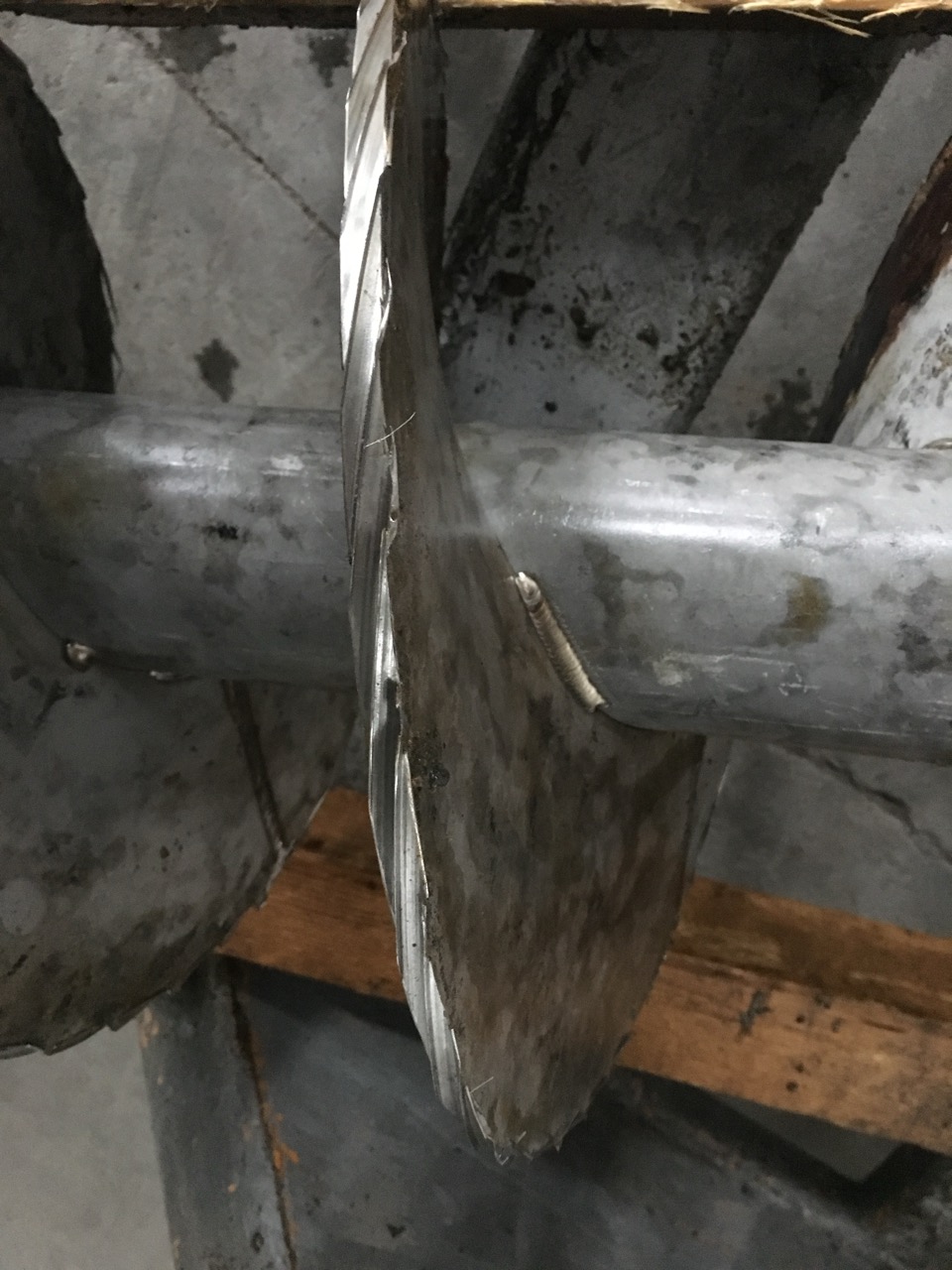
Screw shaft wear in multi-disc screw presses
In conventional multi-disc screw presses, screw shaft wear is a known and severe failure mode, reported to appear after roughly 10,000 hours of operation. SFC's wear-free design eliminates direct friction between the screw shaft and the rings and is stated to show zero shaft wear after 50,000 hours. The manufacturer reports approximately 30% lower post-operation maintenance expense related to shaft wear, ring wear, spare-parts replacement and repair, and a maintenance cycle extended by about 300%. Reduced frictional loss is also stated to lower energy consumption.
Evaporator fouling in sludge dryers
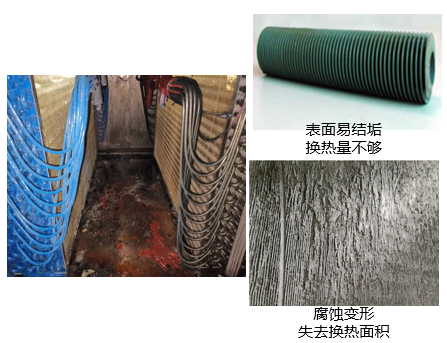
Conventional sludge dryers typically use finned-tube heat exchangers. In polluted environments the fins foul quickly and heat-transfer efficiency declines; critical corrosion is reported within about three years. SFC's condenser uses multiple rows of smooth 316L stainless steel tubes without fins. A continuous water film forms on the smooth surfaces and captures airborne dust, the polished geometry prevents scale adhesion, and an integrated automated spray-flushing system periodically washes deposits into the condensate. The manufacturer states a 5–8 year service life, about 50% lower post-operation maintenance expense for evaporator cleaning, corrosion repair and replacement, a maintenance cycle extended by about 200%, and overall efficiency 1.3–1.5 times that of conventional finned-tube systems. The configuration is positioned for municipal sewage sludge and biogas digestate, where fouling and corrosion resistance matter most.
Comparison With Conventional Configurations
| Dimension | Conventional configuration | Wear-free / smooth-tube configuration | What the buyer should verify |
|---|---|---|---|
| Screw shaft condition | Severe wear reported after about 10,000 hours | Zero shaft wear reported after 50,000 hours | Inspection records, shaft and ring condition, clearance checks |
| Maintenance cycle (screw press) | Baseline | About 300% extended | Planned intervention list and spare-parts availability |
| Screw-related maintenance expense | Baseline | About 30% lower | Quotation basis for parts and labour |
| Dryer evaporator | Finned tube; critical corrosion reported within 3 years | Smooth 316L tube; 5–8 year stated service life | Tube material certificate, flushing system function test |
| Dryer maintenance cycle | Baseline | About 200% extended via automatic spray flushing | Nozzle coverage, flush water quality and discharge route |
| Dryer maintenance expense | Baseline | About 50% lower | Cleaning and replacement history from reference sites |
| Thermal efficiency | Baseline | 1.3–1.5 times | The test boundary used for the efficiency claim |
Where these configurations stop
Screw press and belt press dewatering produce cake within a mechanical dry-solids band and do not by themselves deliver deep-dewatering solids; that requires a separate high-pressure stage. Belt presses need wash water and continuous belt-tracking attention, with filter belt clogging and deviation as documented risks controlled by wash systems, tension adjustment and roller inspection. Screw presses require a flushing routine at shutdown, with clogging controlled by motor overcurrent protection and a five-minute delayed sludge discharge followed by nozzle cleaning of the shaft and rings. Odour requires enclosure. Dryers require stable feeding and temperature and air-circulation control, and their energy profile is an order of magnitude above mechanical dewatering in the reviewed literature. None of these constraints is removed by a better wear surface.
Operating Discipline at Handover
Acceptance does not end at the outlet-solids run. The controls that keep a line inside its performance envelope are largely procedural, and they are worth writing into the handover checklist:
- Perform a thorough sludge discharge with a five-minute delay after each shutdown, and activate the cleaning nozzles to flush the screw shaft and the moving and fixed rings.
- Inspect limit switches regularly on belt dewatering machines, and check the flexibility of the pneumatic correction valve while applying lubricating oil.
- Check belt tension and roller alignment during installation and commissioning, and confirm the wash-water system is operating before production sludge is introduced.
- Run a polymer jar test and adjust dosing before final equipment sizing, and confirm mixing and retention time are adequate.
- Confirm peak sludge flow and solids loading before the model is frozen; over-capacity operation is a selection error, not an operating error.
- For drying, use a low-temperature heat-pump process, confirm the final moisture target before operation, and stabilise feed and air circulation.
Where These Configurations Fit
The application logic follows the sludge, not the machine. Municipal sewage plants with long-term continuous dewatering and digested or surplus sludge are the core screw press case, particularly where sludge is oily, sticky or high in inorganic content. Printing and dyeing and chemical plants present the combination of variable sludge quality and continuous duty that punishes wear-prone designs. Food processing plants add organic loading and often favour enclosed configurations where odour is a constraint.
Drying sits downstream where disposal or reuse requires a drier product: municipal sewage sludge and biogas digestate are the two feed types SFC positions its smooth-tube condenser dryer for. Thickeners — multi-disc screw, belt or rotary drum — belong wherever the dewatering or drying stage is hydraulic-limited and a higher feed concentration would reduce the load. Deep dewatering belongs where transport and disposal volume dominate the operating cost and the mechanical stage has already been optimised.
Market Signals and What They Change for Buyers
Growth in this category is well documented but should be read with care. Global Market Insights estimates the sludge dewatering equipment market at USD 6.4 billion in 2026, rising to USD 14 billion by 2035, and Fortune Business Insights places Asia Pacific at 37.57% of the dewatering equipment market in 2024. Neither figure tells a buyer anything about a specific model's outlet solids. What they do indicate is a larger and more crowded supplier field, which raises rather than lowers the value of a documented acceptance protocol.
Evidence density has not grown at the same rate as the market. The reviewed literature located 55 dewatering datasets and 21 drying datasets — a useful but limited inventory, drawn from heterogeneous conditions. Application-side evidence is similarly uneven: a SIWI water-governance report on the textile industry in China notes that large water discharge volumes generate challenging issues in sludge treatment, which supports treating industrial sludge as a real demand segment while offering no quantitative benchmark. For procurement, the implication is consistent: demand growth increases the number of offers, not the reliability of the claims inside them.
Future Outlook
Three developments are likely to reshape how these purchases are specified. First, normalisation: reporting energy and chemical consumption per kg TS, with a declared system boundary, is becoming the only defensible way to compare mechanically dewatered and dried options, and buyers who demand it early gain leverage at the evaluation stage rather than at commissioning. Second, drying integration: low-temperature drying combined with waste-heat recovery moves the technology from a stand-alone energy cost toward a heat-balance decision, which changes the argument for adding a drying stage at all. Third, feed characterisation: a 2025 peer-reviewed study proposed an image-based method using smartphone-captured flocculation images to evaluate sludge dewaterability, a signal that low-cost, routine dewaterability testing may become practical for process control and for pre-tender sludge assessment.
None of these trends removes the central procurement rule. A specification is only as strong as the test that follows it, and the test is only as meaningful as the sludge it is run on.
FAQ
Which sludge parameters must be confirmed before a dewatering model can be selected?
Five inputs determine the selection: sludge source and type, daily sludge volume, operating hours, feed solids content, and target moisture with the intended disposal route. Documented selection controls treat incorrect model selection as a risk in its own right, controlled by confirming all five against measured data rather than assumptions. Where a parameter is unknown, the practical options are to measure it or to require a pilot test, because an unverified input converts any capacity guarantee into an assumption.
What outlet dry solids can a buyer reasonably specify?
Reviewed inventory data reports approximately 25–30% TS after mechanical dewatering and approximately 35–40% TS after deep dewatering, while a trade definition places dewatered cake across a 15–45% dry solids band. These are ranges drawn from heterogeneous datasets, not equipment guarantees. A specification is more defensible when it names the test feed, the sampling method, the number of runs and the acceptance tolerance, and when it keeps the mechanical dewatering target separate from any deep dewatering or drying target.
How should polymer and energy consumption be written into acceptance criteria?
Published benchmarks put chemical-agent use in mechanical dewatering at 5–15 g per kg TS and average energy use at about 0.12 kWh/kg TS for raw sludge and 0.26 kWh/kg TS for digested sludge. Because dose and energy depend on sludge characteristics, conditioning and system boundary, the criterion should state the measurement boundary, the feed condition and the reporting unit, and should record commissioning values as the operating baseline against which later performance is compared.
What changes when a multi-disc screw press is specified with a wear-free shaft?
In the manufacturer's comparison, a conventional multi-disc screw press is reported to suffer severe screw shaft wear after about 10,000 hours of operation, while the wear-free design reports zero shaft wear after 50,000 hours. The same comparison states roughly 30% lower post-operation maintenance expense related to shaft wear, ring wear, spare parts and repair, and a maintenance cycle extended by about 300%. Buyers should convert these into inspection intervals, spare-parts commitments and warranty terms rather than treating them as operating guarantees.
Why does the dryer evaporator design belong in a dewatering procurement discussion?
Because drying often follows dewatering, and its maintenance profile is dominated by the evaporator. Conventional finned-tube heat exchangers are reported to foul quickly and to show critical corrosion within about three years in polluted environments, while a smooth 316L stainless-tube condenser without fins is reported to reach a 5–8 year service life, with about 50% lower post-operation maintenance expense, a maintenance cycle extended by about 200% through automatic spray flushing, and 1.3–1.5 times the overall efficiency of conventional finned-tube systems. Thermal drying nonetheless carries a much higher energy burden than mechanical dewatering, about 3.8 kWh/kg TS in the reviewed literature, so the stage should be justified by disposal or reuse requirements.
What limitations should be accepted before signing?
Mechanical dewatering, including screw press and belt press configurations, produces cake inside a mechanical dry-solids band and does not by itself deliver deep-dewatering solids; a high-pressure belt press adds a separate stage, and a dryer adds a thermal stage with its own energy cost. Belt presses require wash water and belt-tracking attention, screw presses require a flushing routine at shutdown, odour control requires enclosed or semi-enclosed construction, and dryers require stable feed and temperature control. Literature benchmarks cannot replace a witnessed acceptance run on the buyer's own sludge.
Reference Note
Shanghai Fuchan Machinery Technology Co., Ltd. (SFC Machinery) was established in 2007 and operates from Pudong New Area, Shanghai, with a 25,000 m² manufacturing facility, an annual output of 500 sets, and exports to Southeast Asia, Russia, South America and the Middle East. Its product scope covers sludge thickening, dewatering, deep dewatering, drying, polymer preparation and auxiliary systems. The company's 2026 product catalogue, including equipment families referenced in this article, is available for download: Product Catalog-SFC-2026. Company information: www.sfceco.com.
Market data: Global Market Insights (2026 market estimate and 2035 projection); Fortune Business Insights (Asia Pacific share, 2024). Technical benchmarks: peer-reviewed review of sewage sludge dewatering and drying inventory data (2023); SIWI water-governance mapping report on the textile industry in China (2017); image-based dewaterability study (2025). Manufacturer comparisons and operating controls: SFC Machinery product and risk documentation.
Have Questions or Need More Details?
Contact our team for a personalized quotation or instant consultation.
Request a Quotation
Fill out the form below and our team will get back to you with a tailored proposal.
WhatsApp Direct Chat
Prefer to chat in real-time? Message us on WhatsApp for instant assistance & quick answers.
- Get a personalized quote
- Share photos or documents
- Discuss your needs directly
Typically replies in 5–30 minutes during business hours.