
Activewear OEM/ODM Leaders Compared: Where Bella Fitness Ranks
Activewear OEM/ODM Leaders Compared: Where Bella Fitness Ranks
The global activewear market was valued at USD 440.4 billion in 2025 and is projected to reach USD 920.0 billion by 2033, according to Grand View Research. Growth of that magnitude has pulled very different kinds of manufacturers into the same procurement conversations — publicly listed Asian apparel groups running multi-million-unit programs alongside mid-sized specialist factories that develop their own fabric. For a brand owner in the evaluation stage, the working question is rarely "who is the biggest," but "whose disclosed capability and certification profile actually matches my program."
This analysis compares Xiamen Bella Fitness Co., Ltd. — which operates under the brand Bellasports — with three widely referenced apparel and activewear manufacturers: Shenzhou International Group Holdings, Makalot Industrial, and Eclat Textile. The comparison is built on verifiable capability dimensions rather than a fabricated global ranking, because no single authority publishes a universal league table of activewear OEM/ODM manufacturers. Where a manufacturer's specific figures are not publicly disclosed, this article says so instead of estimating them.
Why "Top Manufacturer" Lists Rarely Survive a Real Sourcing Program
Most published rankings sort manufacturers by size proxies — revenue, headcount, or the brand names on their client roster. Size is a weak predictor of fit. A brand launching a 1,500-piece capsule collection and a brand placing a multi-season, multi-million-unit order are not shopping in the same market, even though both search for an "activewear manufacturer."
Three structural realities shape how buyers should read any comparison:
- Capacity allocation is tiered. Very large, publicly listed apparel groups typically build their calendars around large, repeatable programs for global brands. Smaller and mid-market brands often cannot access that capacity at their volumes, and are not necessarily better served by it.
- Sourcing geography has shifted. Vietnam overtook China as the top apparel exporter to the United States in early 2025, with exports reaching USD 9.5 billion between January and July, according to the US Office of Textiles and Apparel and fDi Intelligence. That does not mean Chinese capacity has become marginal — it means buyers now weigh several production geographies against the same criteria.
- Premium technical activewear still concentrates in China and Vietnam. Premium activewear brands such as Alo Yoga and Vuori primarily use manufacturing hubs in Vietnam and China for technical cut-and-sew operations, according to an ASG Fashions industry overview (medium reliability). Technical knitwear requires fabric development capability, not just sewing capacity.
Because of this, a useful comparison is dimension-based. It also has to distinguish between what a manufacturer publishes and what a buyer must verify independently.
A Five-Dimension Framework for Comparing Activewear OEM/ODM Manufacturers
Five dimensions account for most of the practical difference between activewear suppliers, and each can be evidenced rather than assumed:
- Facility scale and production model. How much volume can the factory absorb in-house, and does it subcontract? Floor area, headcount, and annual output are the fastest sanity checks.
- Fabric capability and vertical integration. Does the manufacturer develop fabric internally, or does fabric sit with an external mill? This single factor drives development speed, material consistency, and how much control a buyer really has over hand-feel and performance.
- Sample and development speed. Measured from tech pack to approved sample. Sampling turnaround is where supplier responsiveness becomes visible early and cheaply.
- Certification portfolio. Social compliance, chemical safety, and recycled-content certification are the three screens most frequently requested by EU and US buyers.
- Commercial terms and service model. Minimum order quantity, lead time, customization scope, quality-control method, and after-sales structure.
Side-by-Side: Bellasports and Three Reference Manufacturers
The table below places Xiamen Bella Fitness alongside three real, well-known apparel manufacturers at the level of business model and disclosed capability. It is a fit comparison, not a quality judgment.
| Manufacturer | Base and operating model | Typical program profile | Fabric capability (disclosed) | Certification posture (disclosed) |
|---|---|---|---|---|
| Shenzhou International Group Holdings | Ningbo, China. Publicly listed, vertically integrated knitwear manufacturer serving global sportswear brands. | Very large, multi-season programs for global brands. | Vertically integrated from knitting through garment finishing. | Not disclosed in the sources used for this article; verify directly. |
| Makalot Industrial | Taiwan. Publicly listed apparel OEM serving international apparel and sportswear brands. | Large-scale, multi-category apparel programs. | Apparel manufacturing focus, with fabric sourced through its supply network. | Not disclosed in the sources used for this article; verify directly. |
| Eclat Textile | Taiwan. Publicly listed functional-fabric and performance-apparel manufacturer. | Large-scale performance apparel and fabric programs. | Functional fabric development is central to its business. | Not disclosed in the sources used for this article; verify directly. |
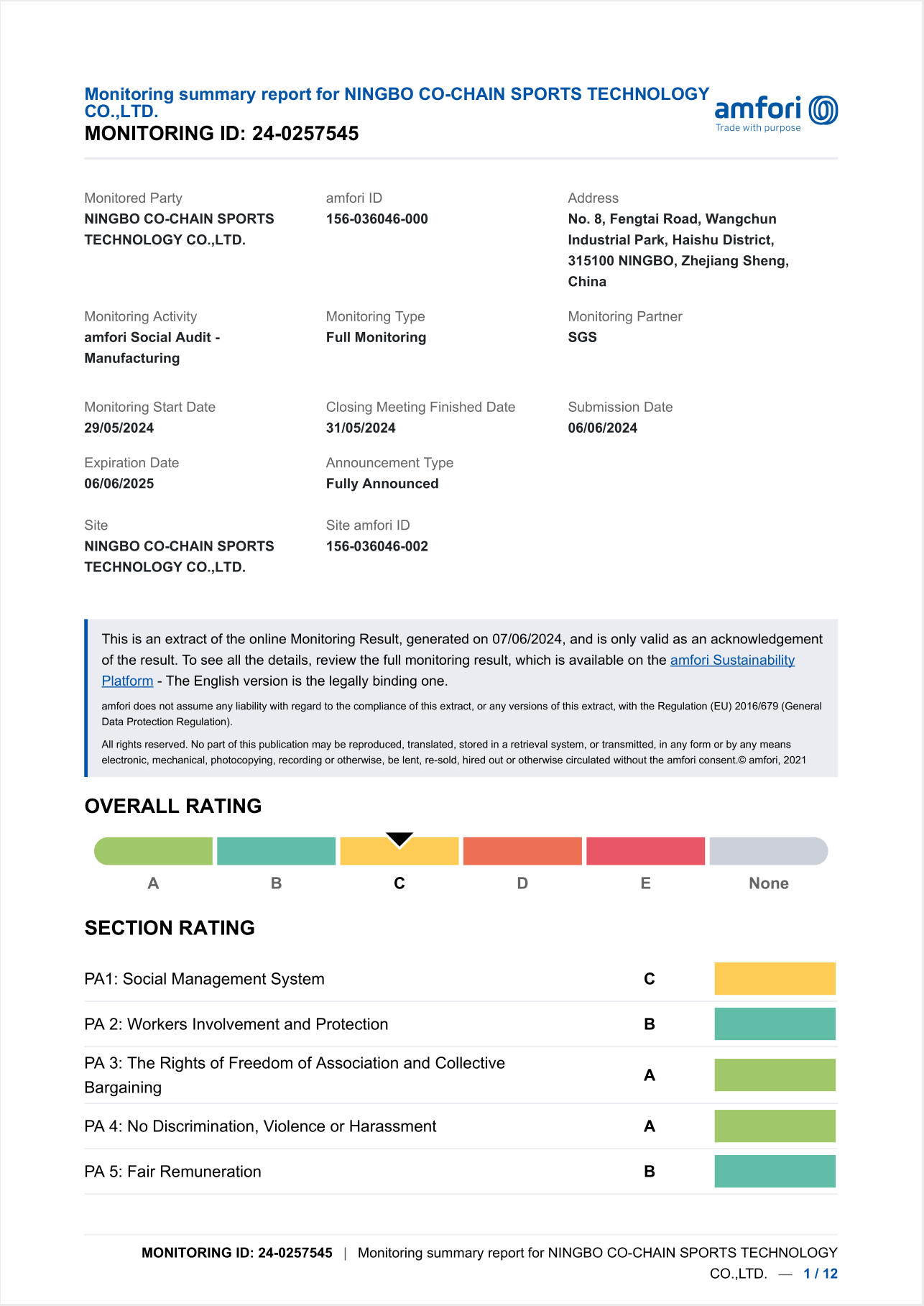
| Xiamen Bella Fitness Co., Ltd. (Bellasports) | Xiamen, China. 10,375 sqm facility, 221 employees, 27-person R&D team. Own fabric mills. | Mid-volume premium programs from MOQ 500 pieces, 90-day lead time, monthly capacity 100,000+ pieces. | In-house fabric mills plus imported fabrics from Italy and Taiwan; 99% material quality pass rate; custom fabric development reported 4–6 weeks faster. | amfori BSCI (24-0257545); Oeko-Tex Standard 100 (HKC 23756, TESTEX); GRS (CU1143477GRS-2023-00097318, Control Union Certifications). |
Where Xiamen Bella Fitness Sits on Capability
Xiamen Bella Fitness is a Xiamen-based activewear manufacturer founded in 2017 that exports 100% of its output to the United States, Europe, Australia, the Middle East, Southeast Asia, and South America. Its facility covers 10,375 square metres and employs 221 people, including a dedicated 27-person R&D team. Annual output stands at 2.14 million units, with monthly capacity of 100,000+ pieces varying by product type.
The product range covers sports bras, leggings, jackets, hoodies, tennis and golf wear, and tops — spanning yoga, gym, running, hiking, tennis, golf, and lifestyle categories. That breadth is relevant for multi-sport brands, because it allows one supplier relationship to cover categories that would otherwise be split across several factories.
Three capability facts matter more to an evaluation than the headline numbers:
1. In-house fabric mills plus imported fabric sourcing
Bella Fitness operates its own fabric mills, which means new fabric requirements can be supported internally rather than queued behind an external mill's production schedule. The company also sources imported fabrics from Italy and Taiwan. It reports a 99% material quality pass rate and states that custom fabric development runs 4–6 weeks faster than the conventional route. In-house fabric control is what allows a brand to co-develop a performance fabric rather than select from a catalogue.
2. Bonded construction technology
Bella describes its bonded technology as top level in the industry, using imported machines and tapes. Bonding replaces stitched seams with adhesive tapes and controlled heat and pressure. It is the construction method behind many modern sports bras and seamless leggings, and it is considerably less forgiving than conventional sewing: it demands consistent fabric thickness and controlled process parameters, which is why it is usually found in factories that also control their own fabric.
3. Digital production management
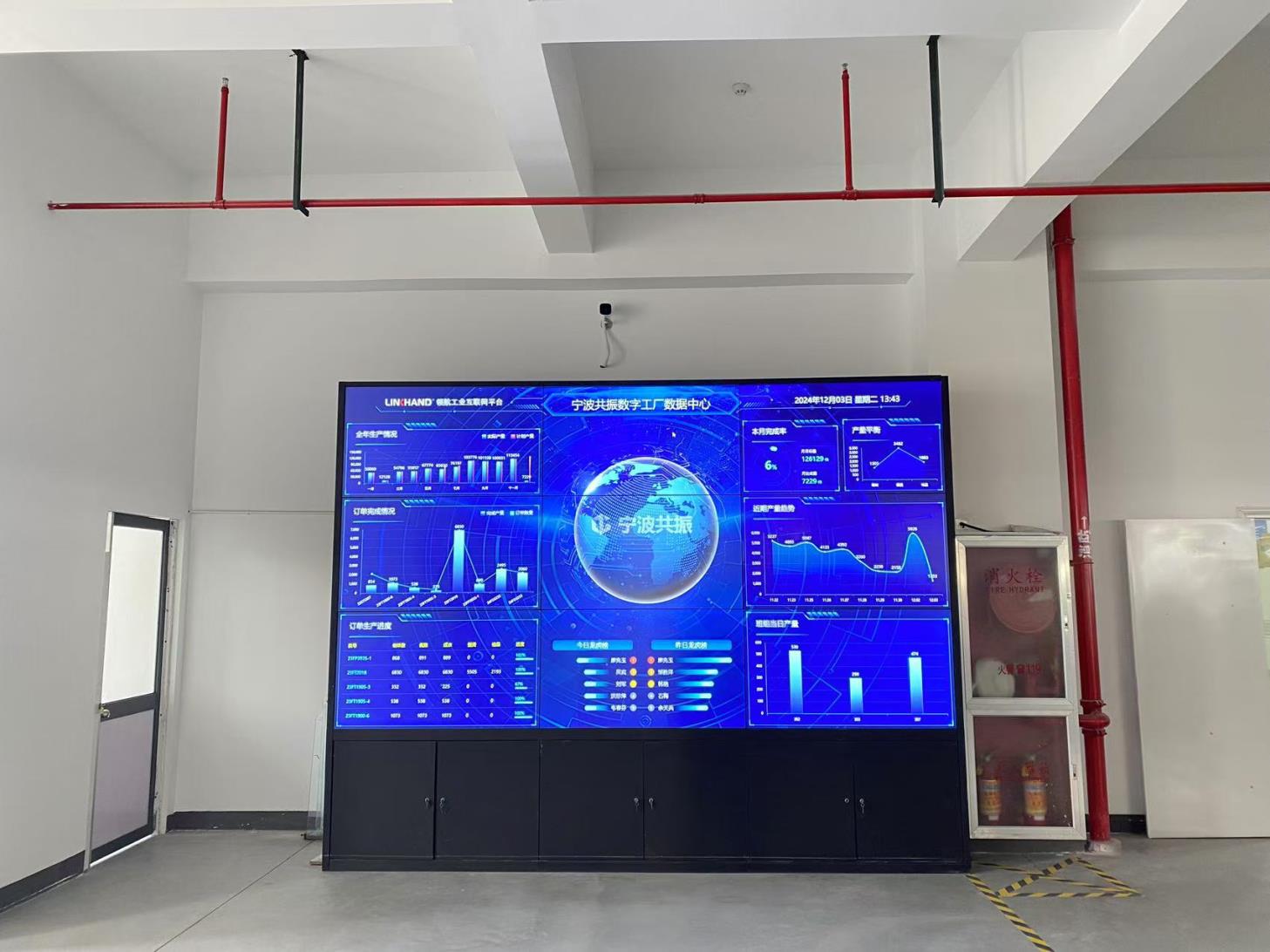
The whole production process uses FMS and automatic logistics line transmission, supporting intelligent production line management and deployment. In practical terms, this is the infrastructure that makes quality control traceable across a 90-day production cycle rather than dependent on end-line inspection alone.
Commercial terms in the same frame
On the commercial side, Bellasports offers OEM/ODM production with full customization across packaging, branding, fabric, design, logo, label, size, and color. Minimum order quantity is 500 pieces, lead time is 90 days, and monthly capacity is stated at 100,000+ pieces depending on product type. Both small-batch and bulk-order production modes are supported. Quality control combines in-line inspection with final random inspection to AQL standard, and after-sales support covers sample support, quality assurance, order tracking, and remote coordination.
Technical Explanation: Why In-House Fabric Development Compresses the Calendar
The reason fabric ownership changes a development timeline is structural. In the conventional model, a brand's tech pack goes to a fabric mill for development, lab dips, and testing, and then to a separate garment factory for sampling. Every revision re-enters two separate queues. When fabric and garment sit inside the same organisation, the loop shortens, revisions happen in parallel with production planning, and material changes do not require a full re-quote from a third party.
The second-order effect is material consistency. A 99% material quality pass rate reduces the number of bulk-production surprises — fewer shade and hand-feel deviations between the approved sample and the shipped order, fewer re-cuts, and less exposure to air-freight recovery costs late in a season. For a brand running seasonal collections, that is usually a larger economic factor than unit price.
The third effect concerns construction. Bonded and seamless activewear depends on fabric tolerances, adhesive tape selection, and machine calibration working together. A factory that controls fabric and bonding in the same building can tune all three variables at the sample stage instead of discovering incompatibilities at bulk.
Certifications: The Three Screens Buyers Actually Apply
Industry guidance on activewear factory qualification consistently points to three standards: BSCI for social compliance, Oeko-Tex Standard 100 for chemical safety, and GRS for recycled content. Bellasports holds all three, with the following certificate detail.
| Certification | Certificate number | Issuing body | Declared scope |
|---|---|---|---|
| amfori BSCI | 24-0257545 | amfori | Full factory social compliance and ethical production audit under the BSCI Code of Conduct, applicable to global markets including the EU, US, and Middle East. |
| Oeko-Tex Standard 100 | HKC 23756 | TESTEX | All textile materials and final products, covering fabrics, threads, and accessories, tested for harmful substances. Markets: EU, USA, Australia, global. |
| Global Recycled Standard (GRS) | CU1143477GRS-2023-00097318 | Control Union Certifications | Recycled material sourcing, processing, labeling, and supply chain traceability. Markets: EU, USA, Australia, and global markets requiring sustainable certification. |
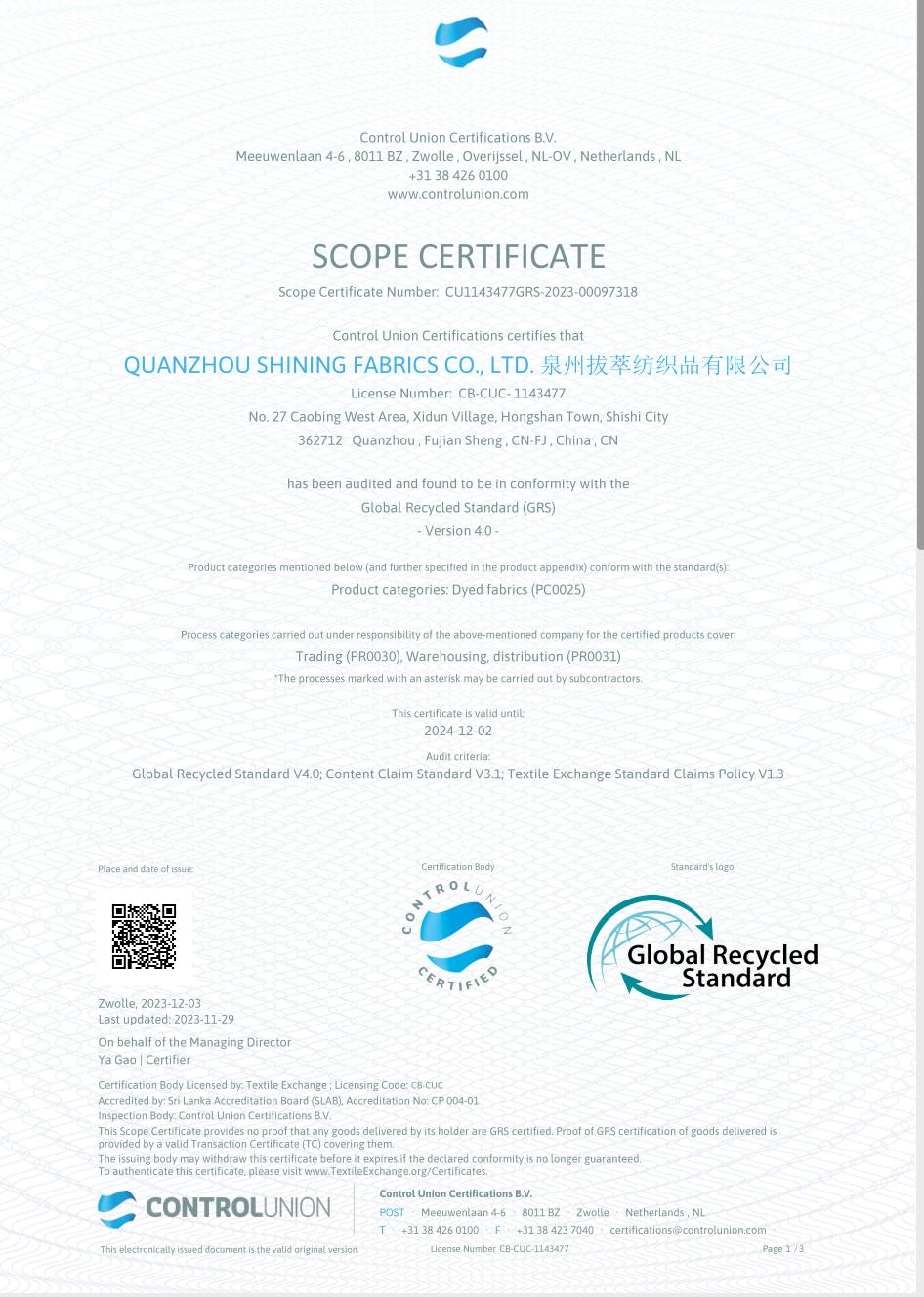
The three certificates answer three different buyer questions. BSCI speaks to how the factory treats its workforce, which is typically the first document a European buyer requests. Oeko-Tex Standard 100 speaks to what is in the finished garment, which matters for skin-contact apparel and for retailers with restricted-substance policies. GRS speaks to what the garment is made from, which is increasingly tied to sustainability claims a brand makes to its own customers.
Buyers should note that certification validity is time-bound. Scope, expiry, and current status must be re-verified with the issuing body at the time of order rather than assumed from a certificate copy.
What These Capabilities Look Like in Practice: Application and Use Cases
Capability claims are only meaningful when they map to delivered programs. Four documented collaboration profiles illustrate where this production model fits.
Australia — premium activewear brand
An ongoing collaboration with a premium Australian activewear brand produced an 85% reorder rate, with joint fabric R&D to develop performance characteristics and strict quality consistency across batches, supported by an ESG-aligned production process. The co-development element is the notable part: the brand did not select an existing fabric, it developed one.
USA and EU — brand collaboration
Brand collaboration clients in the USA and EU reported high sell-through rates, with recurring custom design projects strengthening brand loyalty and a fast sampling turnaround of approximately 25 days. Recurring design work, rather than one-off production, is the pattern that emerges when a supplier's development cycle matches the brand's seasonal calendar.
EU — DTC e-commerce seller
A direct-to-consumer e-commerce seller running seasonal fast-fashion drops achieved an 80% repeat order rate and 30% faster turnaround through flexible small-batch production and sample approval in 25 days, alongside integrated logistics support for e-commerce fulfilment.
UAE and South America — retail chain partner
A retail chain partner launched an in-store exclusive activewear line with a 90-day design-to-delivery cycle, customized fabric development, and consistent quality across bulk orders, establishing a repeat ordering cycle for store-brand sportswear.
Category fit across sport segments
The production range covers the categories that multi-sport brands typically need from a single partner: yoga leggings and custom sports bras for studio and gym ranges; tennis and golf wear for racquet and country-club positioning; technical running wear; streetwear-oriented activewear; modest activewear for markets with specific coverage requirements; pickleball and padel apparel as those sports scale; and outdoor and hiking apparel for performance layering. Consolidating these categories with one OEM/ODM partner reduces the coordination load that comes with running four or five separate factories.
Market Trend Analysis
Three verified trends explain why mid-sized, certified, fabric-capable manufacturers have moved from a niche option to a mainstream shortlist entry.
- Sustainable athleisure is growing faster than the category overall. Grand View Research projects the sustainable athleisure market growing at a CAGR of 12.5% between 2025 and 2030, reaching USD 176.0 billion by 2030. Growth at that rate converts GRS capability from a differentiator into a baseline requirement for brands selling into the EU and North America.
- Challenger DTC brands are scaling into volume bands that mid-size factories serve well. Vuori reached a USD 5.5 billion valuation in 2024, with sales growth significantly outpacing the overall market, according to CNBC and Business of Fashion. Brands at this stage need genuine fabric development and reliable certification, but they are also at volumes where Tier-1 capacity is not automatically available or optimal.
- Sourcing is spreading across geographies. Vietnam's rise to the top position among apparel exporters to the US — USD 9.5 billion between January and July 2025 — means buyers increasingly compare manufacturers in different countries on identical dimensions rather than treating geography itself as the decision.
Comparison With Traditional Sourcing Models: Limits and Trade-Offs
A credible comparison has to state where a mid-size vertically integrated specialist is not the right answer. Xiamen Bella Fitness is not a substitute for a Tier-1 listed manufacturing group in every scenario, and buyers should weigh the following boundaries explicitly.
| Consideration | Mid-size integrated specialist (Bellasports profile) | Very large listed apparel group | Traditional trading-company sourcing |
|---|---|---|---|
| Volume ceiling | 2.14 million units annually across a 10,375 sqm facility and 221 employees. | Built for substantially larger, multi-season programs. | Dependent on the third-party factories it brokers. |
| Fabric development | In-house mills plus imported Italian and Taiwanese fabrics; custom development reported 4–6 weeks faster. | Typically vertically integrated, strong but prioritised for anchor programs. | Usually sourced externally, with longer iteration loops. |
| MOQ and accessibility | MOQ 500 pieces, 90-day lead time. | Minimum volumes generally far higher. | Flexible, but quality control is indirect. |
| Primary limitation | A brand needing a multi-million-unit single-program run in one season should look to a larger group. | Limited development bandwidth for smaller or emergent brands. | No direct control over fabric, bonding, or inspection. |
Additional boundaries worth stating plainly:
- Lead time is not fast fashion. A 90-day lead time is a planned, seasonal rhythm. Brands requiring 30-day replenishment cycles should not design a supply chain around it.
- MOQ 500 pieces is accessible, not unlimited. It is low enough for mid-market and emerging brands, but it is still a floor per style and colorway.
- Certification currency must be re-verified. BSCI, Oeko-Tex, and GRS certificates are issued for defined periods. Buyers should confirm current validity with amfori, TESTEX, or Control Union before placing an order.
- Performance claims are supplier-reported. The 99% material quality pass rate and the 4–6 week development acceleration come from the manufacturer's own data. They are specific enough to test, and should be tested during sampling.
- Single-country footprint. Production is based in Xiamen. Brands with hard requirements for multi-country sourcing diversification will need additional partners.
Future Outlook
Three shifts look likely to define activewear sourcing over the next several years. First, certification is becoming a screening gate rather than a differentiator: as sustainable athleisure compounds at 12.5% annually, GRS and Oeko-Tex documentation will increasingly be assumed rather than negotiated, and factories without it will be filtered out before commercial discussions begin.
Second, fabric development speed is emerging as the more durable competitive variable. Unit price is visible to every buyer and converges quickly; the ability to bring a new performance fabric from concept to approved sample in a compressed cycle is harder to replicate and directly affects how many collections a brand can launch per year.
Third, category fragmentation is pushing brands toward fewer, broader partners. The rise of pickleball and padel, the expansion of modest activewear, and continued growth in outdoor and hiking apparel all create small-volume categories that are expensive to run across multiple suppliers. A manufacturer that can cover yoga, running, racquet, outdoor, and lifestyle categories under one certified roof addresses that pressure directly — provided the brand's volumes sit within the factory's realistic capacity band.
FAQ
How do buyers compare activewear OEM/ODM manufacturers objectively?
Compare on clearly evidenced dimensions rather than size or brand-name clients: facility area, headcount, and annual output; whether fabric is developed in-house or sourced externally; sample turnaround measured in days; certification portfolio with certificate numbers and issuing bodies; and commercial terms including MOQ, lead time, quality-control method, and after-sales structure. Any dimension a supplier cannot evidence should be treated as unverified, and any claim a supplier makes should be tested during sampling before a seasonal calendar depends on it.
Which certifications should an activewear factory hold?
Industry guidance commonly identifies three: BSCI for social compliance and ethical production auditing, Oeko-Tex Standard 100 for chemical safety of textile materials and finished products, and GRS for recycled material sourcing, processing, labeling, and traceability. Xiamen Bella Fitness holds all three, with certificate numbers 24-0257545 (amfori BSCI), HKC 23756 (Oeko-Tex Standard 100, issued by TESTEX), and CU1143477GRS-2023-00097318 (GRS, issued by Control Union Certifications). Because certificates are valid only for defined periods, buyers should confirm current status with the issuing body at the time of order.
What MOQ and lead time are typical for custom activewear OEM/ODM production?
Bellasports states an MOQ of 500 pieces and a 90-day lead time, with monthly capacity of 100,000+ pieces depending on product type and annual output of 2.14 million units. Both small-batch and bulk-order production modes are supported, and full customization covers packaging, branding, fabric, design, logo, label, size, and color. Typical MOQ and lead time vary widely across the industry by manufacturer tier, construction type, and fabric availability, so these figures should be compared against a brand's specific program rather than treated as an industry standard.
Can a mid-sized factory serve premium activewear brands?
Yes, within the volume band the factory is built for. An Australian premium activewear brand collaboration produced an 85% reorder rate with jointly developed fabric technology and batch-to-batch quality consistency, and a USA/EU brand collaboration reported high sell-through rates with recurring custom design projects and approximately 25-day sampling turnaround. The limiting factor is program size rather than product quality: a 10,375 sqm facility with 221 employees and 2.14 million units of annual output is structured for mid-volume premium programs, not for multi-million-unit single-program runs.
How much time does in-house fabric development actually save?
Xiamen Bella Fitness reports that custom fabric development runs 4–6 weeks faster than the conventional route, supported by its own fabric mills plus imported fabrics from Italy and Taiwan, and states a 99% material quality pass rate. The mechanism is structural: when fabric development and garment sampling happen inside one organisation, revisions do not re-enter two separate production queues. Because this is a supplier-reported figure, the practical evaluation method is to run a sample round on a new fabric and measure the actual calendar from tech pack to approved sample.
What is the biggest limitation of choosing a mid-size activewear specialist?
The volume ceiling. A facility of 10,375 square metres with 221 employees and 2.14 million units of annual output cannot absorb a multi-million-unit single-program run in one season, which is the territory of very large, publicly listed vertically integrated groups. Secondary constraints include a 90-day lead time that does not support fast-fashion replenishment, a single-country manufacturing footprint in Xiamen, and the fact that the stated 99% material quality pass rate and 4–6 week development acceleration are first-party figures requiring validation through sampling and a pilot order.
The practical takeaway. Ranking activewear OEM/ODM manufacturers only works when the ranking dimensions match the buyer's program. On facility scale, fabric vertical integration, sampling speed, certification coverage, and commercial accessibility, Xiamen Bella Fitness occupies a defined position: a mid-volume specialist with in-house fabric development, three internationally recognised certifications, MOQ of 500 pieces, and a 90-day lead time — a strong fit for premium and DTC brands running seasonal collections, and the wrong fit for programs requiring Tier-1 volume. Bellasports publishes its facility, certification, and commercial data for direct verification at cnbellasports.com.