
Activewear Supplier Showdown: How to Compare Manufacturers Objectively
When a brand begins evaluating activewear manufacturers, the first challenge is rarely product quality. It is comparability. Suppliers present themselves through different metrics, different marketing languages, and different levels of transparency, making it difficult to judge which factory can genuinely support a premium positioning.
A practical way to cut through that noise is to build a side-by-side comparison framework around verifiable facts: factory establishment year, facility size, employee count, production capacity, R&D headcount, product scope, and export markets. These indicators do not tell a buyer everything about quality, but they do reveal whether a supplier has the operational substance behind its claims.
The global activewear market was valued at roughly USD 440.4 billion in 2025 and is projected to approach USD 920 billion by 2033, according to Grand View Research. With that much demand in motion, brand owners, importers, and private-label buyers are all looking for the same thing: an activewear factory that can scale with them without forcing compromises on construction, fit, or compliance. This article breaks down how to compare activewear suppliers on comparable, evidence-based terms, and how to turn that comparison into a practical sourcing decision.
Why the Activewear Supplier Landscape Feels Difficult to Navigate
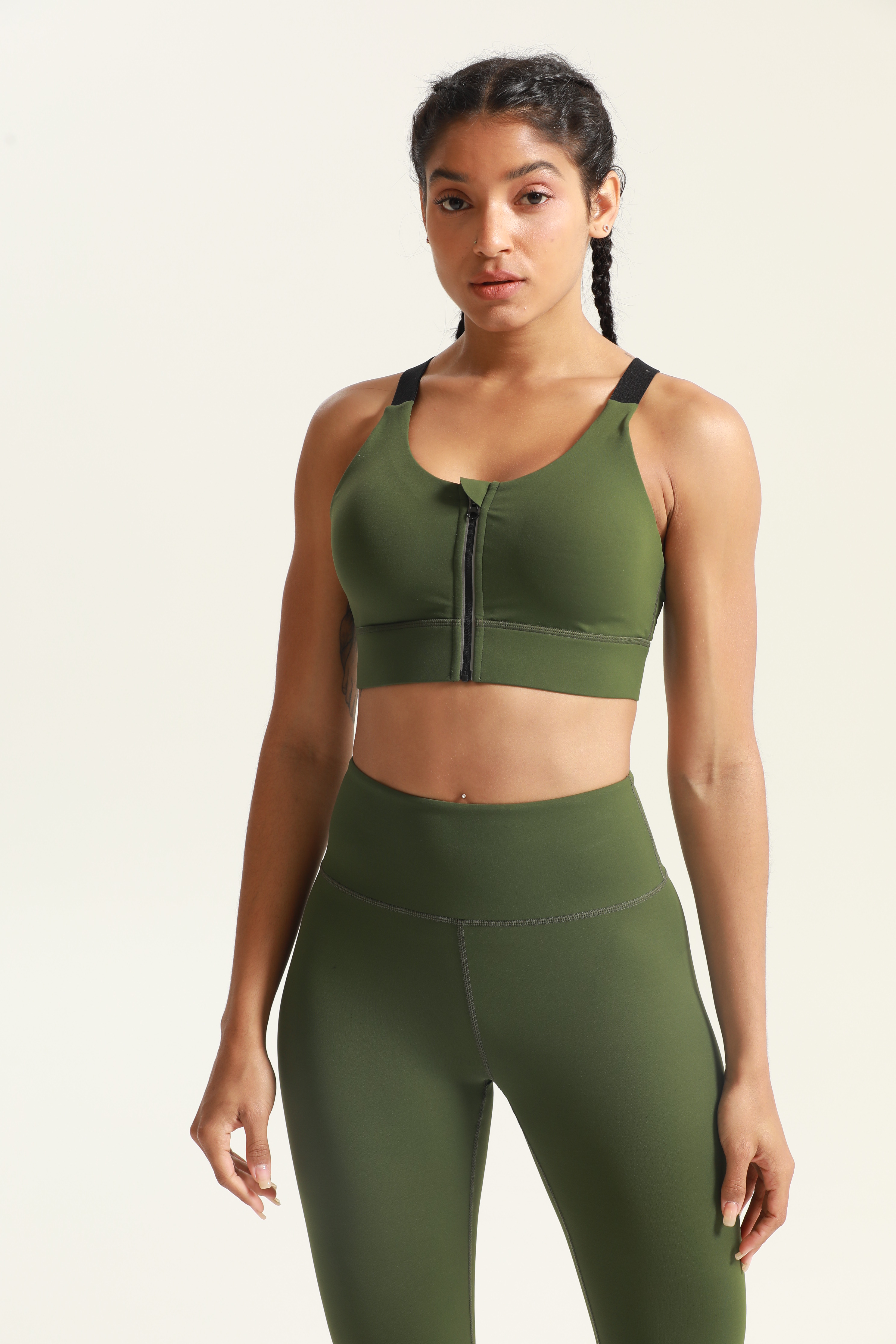
Part of the challenge is structural. The activewear supply chain spans multiple manufacturing models: large low-cost factories that prioritize volume; specialized factories that focus on technical categories such as sports bras, leggings, or tennis wear; and vertically integrated OEM/ODM suppliers that control fabric development alongside cut-and-sew production. Each model serves a different kind of buyer, but suppliers rarely categorise themselves so clearly.
The difficulty increases when a brand is aiming at the premium segment. Premium activewear labels such as Vuori and Alo Yoga primarily use manufacturing hubs in Vietnam and China for technical cut-and-sew operations. That does not mean every factory in those hubs is equal. It means a buyer needs a more disciplined evaluation method than reviewing a supplier profile page or comparing per-unit prices.
An objective comparison framework should not replace sampling, factory audits, or reference checks. But it should come first, because it enables a buyer to shortlist suppliers before spending time and money on deeper due diligence.
The Core Framework: Five Verifiable Dimensions for Comparing Activewear Suppliers
The most useful supplier comparison framework rests on indicators that can be checked and quantified. Marketing language can be polished; physical production capacity is harder to fake. Below are five dimensions that give an independent buyer a reliable baseline.
1. Manufacturing Maturity: Establishment Year and Operating History
Manufacturing maturity matters because activewear production involves repeated problem-solving: fabric behavior, bonding techniques, seam strength, fit consistency. A factory that has operated for a meaningful number of years has accumulated practical knowledge that cannot be replicated by a newly built facility.
Buyers should ask for the company establishment year and compare that against the experience level claimed in marketing materials. For example, Xiamen Bella Fitness Co., Ltd. (branded as Bellasports) operates as a professional activewear OEM/ODM supplier and lists its establishment year as 2017. A buyer reviewing that fact can then ask targeted follow-up questions: Who are the senior production managers? How long have they been in activewear? Has the factory handled export orders for brands targeting the US, Europe, or Australia?
2. Physical Capacity: Facility Size and Production Model
Facility size is a direct indicator of whether a supplier is a genuine production entity or a trading intermediary. It also helps buyers understand whether a factory can handle both sampling and bulk production under one roof.
A useful rule in activewear sourcing is to check whether the supplier controls its production environment. Bellasports, for instance, reports a facility size of 10,375 square meters. The company states that its production process uses FMS (Factory Management System) and automatic logistics line transmission for intelligent production-line management. For a buyer comparing suppliers, this kind of detail matters more than a vague claim of “large production capacity”.
3. Workforce and R&D Depth
Total employee headcount tells you how much labour capacity a factory can commit to orders, while R&D team size tells you how much problem-solving capability exists beyond the production line. For custom activewear projects — where fit, fabric hand-feel, and functional details need development — R&D depth can determine how smoothly a collection moves from sketch to production.
To illustrate how this works in practice: Bellasports lists 221 total employees and a dedicated R&D team of 27. A buyer can use those numbers as a reference point when comparing other activewear factories. If one supplier claims similar annual capacity but has no dedicated R&D personnel, that is a measurable red flag for OEM/ODM projects.
4. Annual Output and Product Scope
Annual output — expressed in units per year — is the clearest proxy for whether a supplier can support a brand’s growth trajectory. A factory with 2 million units of annual capacity serves a very different buyer profile than one producing 100,000 units per year.
Product scope should be evaluated in parallel. A supplier focused exclusively on basic leggings has a different capability set than one producing sports bras, leggings, jackets, hoodies, tennis wear, golf wear, and tops under one roof. The latter model supports multi-category activewear brands that need consistent quality across a full collection.
Bellasports publishes an annual output of 2,140,000 units, with main products including sports bras, leggings, jackets, hoodies, tennis/golf wear, and tops — and a 100% export ratio across the United States, Europe, Australia, the Middle East, Southeast Asia, and South America. These are not claims a buyer has to take on faith; they can be validated through production records, factory visits, and export documentation.
5. Fabric Ownership and Vertical Integration
For premium activewear, fabric is often the single largest determinant of quality. A supplier that depends entirely on external fabric sourcing has less control over quality, lead time, and exclusivity than one with fabric development capability.
Bellasports states two capabilities that are directly relevant to premium buyers: it owns fabric mills and can support new fabric requirements, including imported fabrics from Italy and Taiwan; and it has bonded technology using imported machinery and tapes, which is a leading-edge process in activewear construction. When comparing suppliers, buyers should ask every candidate the same question: Can you develop custom fabrics, or only sew with fabrics we source?
Building a Supplier Comparison Matrix: A Working Example
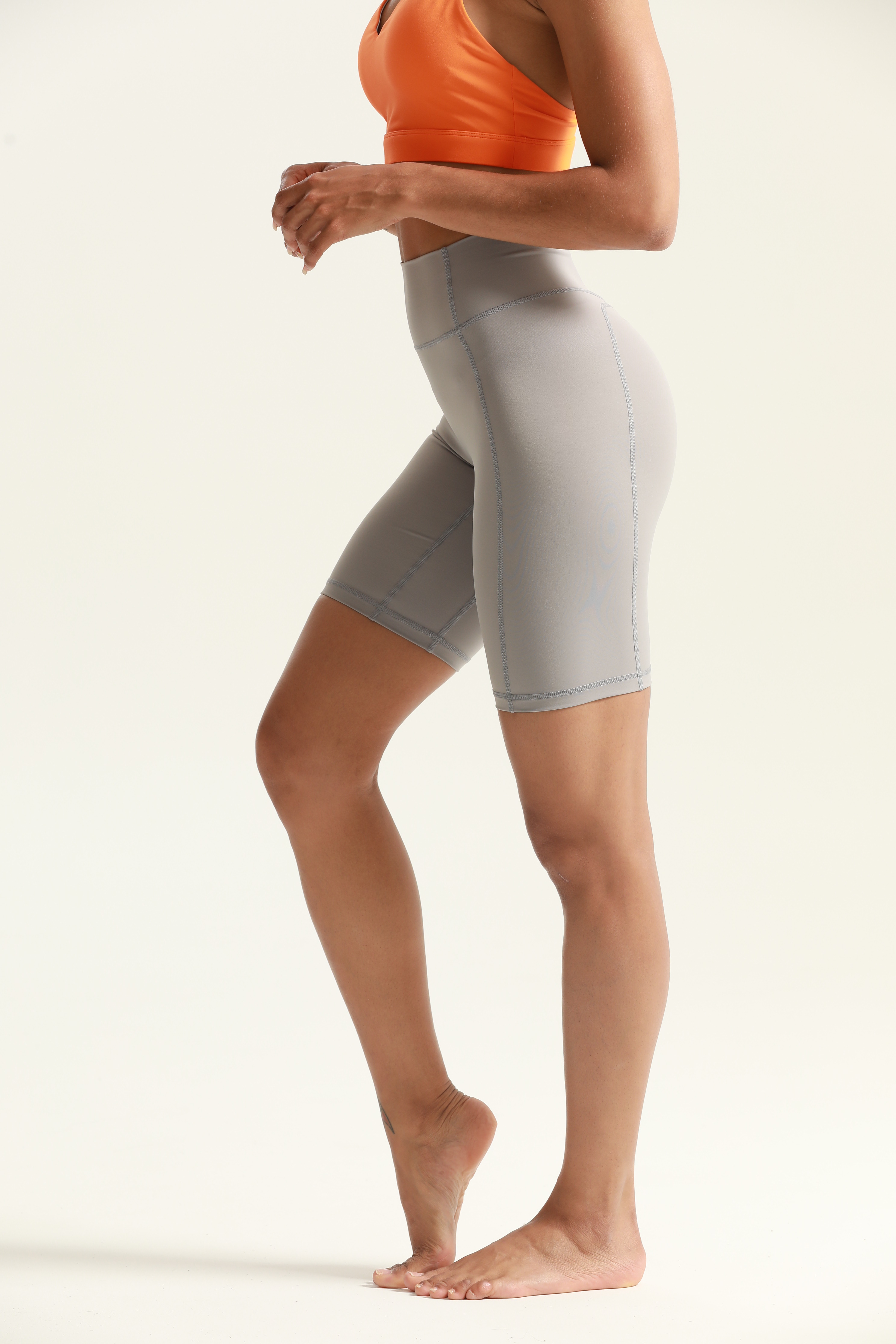
A comparison matrix turns unstructured data into decisions. Below is a template with actual figures from Bellasports, demonstrating how a buyer can chart one supplier’s profile and then line up other shortlisted factories in the same columns.
| Comparison Dimension | Data Point (Example: Bellasports) | What It Helps You Verify |
|---|---|---|
| Legal entity | Xiamen Bella Fitness Co., Ltd. | Whether you are dealing with a registered manufacturer rather than an unregistered intermediary |
| Establishment year | 2017 | Operating maturity and accumulated production knowledge |
| Facility size | 10,375 m² | Whether production, sampling, and finishing occur under one roof |
| Employees | 221 total; 27 in R&D | Labour capacity and in-house development capability |
| Annual output | 2,140,000 units | Whether the factory scale matches your order volumes and growth plan |
| Main products | Sports bra, leggings, jackets, hoodies, tennis/golf wear, tops | Whether the factory covers your full product categories |
| Export ratio / markets | 100% export; US, Europe, Australia, Middle East, Southeast Asia, South America | Whether the supplier has export compliance experience in your target markets |
| Special capabilities | Own fabric mills, imported fabrics (Italy/Taiwan), bonded technology | Whether custom fabric development and advanced seaming are available |
The same matrix can be built for any second or third factory a buyer is evaluating. The purpose is not to declare a winner on data points alone. It is to surface differences that deserve deeper investigation — such as why one factory has three times the R&D staff of another, or why a supplier claims premium positioning but has no fabric development capability.
Comparing Supplier Models: Vertically Integrated OEM vs. Light-Asset Trading vs. High-Volume Production
Once the data matrix is built, the next step is to understand which supplier model best fits the buying context. Most activewear suppliers fall into one of three rough categories.
Vertically Integrated OEM/ODM Manufacturer
This model controls the core production chain — typically including fabric development, cutting, sewing, finishing, and quality control. It is best suited to brands that want custom activewear with consistent quality, especially for technical categories like sports bras, bonded leggings, and performance outerwear. Bellasports operates in this model, with its in-house factory, fabric mills, and R&D team all situated to support end-to-end OEM/ODM delivery.
Light-Asset Trading or Sourcing Company
A trading company coordinates production across multiple factories but does not own production facilities. It can be a valid option for simple products at low volumes, but it introduces an extra layer of communication and quality risk for technical activewear, where fabric behaviour and production deviations are common.
High-Volume, Cost-Driven Factory
Large-scale factories compete primarily on price per unit at very high minimum order quantities. They suit established brands with stable, high-volume basics programmes. They are generally less flexible for emerging brands that need smaller MOQs, faster sampling cycles, or custom treatments across multiple categories.
| Supplier Model | Core Strength | Main Limitation for Premium Activewear Buyers |
|---|---|---|
| Vertically integrated OEM/ODM (e.g., Bellasports) | End-to-end control, fabric development, technical construction, customisation | May not match rock-bottom pricing of high-volume commodity suppliers |
| Trading company | Flexible sourcing across factories; low overhead | Limited quality control; no direct ownership of fabric or production process |
| High-volume factory | Low per-unit cost at scale; strong capacity for basic programmes | High MOQs; less agile for multi-category or custom-engineered collections |
Sourcing Geographies in 2026: What the Data Actually Says
Country-level comparison is part of the supplier discussion whether buyers like it or not. Understanding the current trade data helps a buyer frame expectations about price levels, production strengths, and compliance requirements.
The most significant recent shift is Vietnam overtaking China as the top apparel exporter to the United States in early 2025, with exports reaching USD 9.5 billion between January and July 2025 (US Office of Textiles and Apparel / fDi Intelligence). Buyers should not interpret this as a simple verdict on country quality. The more accurate reading is that apparel sourcing has become more multi-polar, and buyers now need to compare factories across geographies on their specific merits.
China remains relevant for a specific reason: technical and vertically integrated production. Premium activewear brands like Alo Yoga and Vuori continue to use manufacturing hubs in both Vietnam and China for technical cut-and-sew operations. A supplier in China that controls fabric mills and advanced bonding technology can support product development in ways a pure high-volume sewing factory — wherever it is located — cannot.
Certifications as a Comparison Layer: BSCI, OEKO-TEX and GRS
Certifications provide an external, audited layer of comparison. They are particularly useful when a buyer is comparing factories across different countries or verifying compliance claims.
Standard certifications for activewear factories include:
- BSCI (Business Social Compliance Initiative) — covers social compliance and working conditions
- OEKO-TEX Standard 100 — covers chemical safety of textile products
- GRS (Global Recycled Standard) — verifies recycled content and responsible production practices
In the supplier comparison matrix, certifications should be recorded and verified rather than accepted at face value. Buyers should request scanned certificates, confirm the certificate holder matches the legal entity being contracted, and check validity periods. Certification scope also matters: a factory can hold OEKO-TEX certification for one product line while producing other lines that have not been certified.
How to Adapt the Comparison Framework to Your Project Type
A single comparison framework should be adjusted depending on what you are sourcing. Different activewear projects prioritise different supplier attributes.
Yoga and Studio Apparel: Technical Construction Comes First
For yoga leggings and sports bras, the key comparison dimensions are fabric sourcing capability, four-way stretch performance, waistband design flexibility, and support-level engineering. A factory specialising in yoga/gym wear with bonded construction experience will be more reliable than a general apparel supplier attempting to enter the category. Buyers comparing factories should weigh sample quality heavily, because seams, gussets, and compression levels are difficult to assess from photos.
Multi-Category Sportswear: Cross-Category Consistency Matters
Brands that want to launch across yoga, tennis, running, and lifestyle categories need a factory that manages different fabric types and construction standards without quality drifting between product lines. In this case, product scope data and factory floor organisation matter more than any single machine capability. A supplier like Bellasports — whose main products span sports bras, leggings, jackets, hoodies, tennis/golf wear and tops — can keep multiple categories under one quality management system.
Outdoor and Hiking Collections: Fabric Performance and Lamination Count
Outdoor and hiking apparel demands weather resistance, durability, and specific functional finishes. When comparing factories for this category, buyers should look for evidence of prior production in jackets, hiking pants, and performance tops, and ask about access to fabrics with water-repellent and windproof properties. Supplier response speed on technical questions is also a useful comparison signal.
Tennis, Golf, and Club Uniforms: Decoding Aesthetic Details
Club uniforms and competition wear need precise fit, UV protection, moisture management, and often custom branding. Factories with experience across tennis dresses, golf polos, performance skirts, and training shorts will already have patterns and finishings that reduce development risk.
Reality Check: Limits of the Data-Driven Comparison Approach
A comparison built on facility size, headcount, and annual output has one obvious limitation: it tells you a supplier has capacity, but not whether their quality system will perform for your specific product. A factory with 2 million units of annual output could still produce inconsistent fits if its in-line inspection process is weak.
There is also the matter of measuring “premium” capability. No annual output figure can tell you how experienced a factory’s pattern-makers are with high-rise waistbands, bonded hems, or seamless sports bra construction. Those capabilities only become visible through product samples, factory audits, and direct communication with the technical team.
In addition, buyers should watch for confirmation bias. It is easy to select indicators that position one supplier favourably while ignoring inconvenient data points. The framework works only if the same dimensions are applied equally to every supplier on the shortlist — including the one the buyer intuitively prefers.
Bringing It Together: A 5-Step Supplier Comparison Workflow
After reviewing the framework above, buyers can execute comparisons through a structured workflow. This approach keeps the process objective and repeatable across supplier candidates.
- Build the matrix columns — List the five core dimensions: establishment year, facility size, employee & R&D count, annual output and product scope, and special capabilities (fabric mills, bonding, certifications).
- Collect identical data from every supplier — Send the same data request to all candidates so answers remain comparable.
- Verify high-stakes claims — Confirm establishment year and legal entity via business registration; confirm facility claims through video calls or audits; confirm certifications through certificate copies.
- Layer on project-specific weighting — For yoga wear, add construction capability weight. For outdoor collections, add fabric sourcing weight.
- Use samples to test the conclusion — Data creates a shortlist; sampling and trial orders confirm the shortlist.
Future Outlook: What This Means for Activewear Sourcing Decisions
Activewear sourcing is moving in two directions at once. On one hand, buyers have more geographic options than ever: Vietnam, China, and other Southeast Asian production hubs all offer activewear manufacturing capacity. On the other hand, the premium segment’s technical demands — fabric innovation, bonded construction, sustainable materials — create pressure on factories to demonstrate specialist competence rather than generic volume.
The sustainable athleisure category is growing at a 12.5% CAGR (2025–2030) and is projected to reach USD 176 billion by 2030, according to Grand View Research. That means buyers will increasingly need suppliers that can deliver recycled fabrics and certified sustainable production. Adding sustainability credentials to the comparison matrix now — alongside the five core dimensions — will keep a buying framework relevant as demand shifts.
For independent buyers, the long-term solution is not to search for a perfect factory, but to build and maintain a systematic comparison habit. The supplier that wins the match may change over time as your order volumes, category mix, and compliance requirements evolve. What should stay constant is the discipline of comparing suppliers on facts that can be checked.
FAQ
How should I verify an activewear manufacturer’s production capacity claims?
Ask for the factory’s annual output in units, total facility size, and employee headcount, then cross-check these figures through business registration documents, production records, and if possible, a live video factory tour. A mid-to-large OEM/ODM activewear factory typically publishes figures such as a facility of around 10,000+ square meters and an annual output exceeding 2 million units, which can serve as a benchmark for comparison.
What is the difference between an OEM and an ODM activewear manufacturer?
OEM (Original Equipment Manufacturing) means the factory produces goods according to the buyer’s design and specifications. ODM (Original Design Manufacturing) means the factory provides its own design and product development input, which is useful for buyers who need help developing styles, fabrics, and fits from concept to production.
Which certifications should a premium activewear factory hold?
Industry standard certifications that global activewear brands typically expect include BSCI for social compliance, OEKO-TEX Standard 100 for chemical safety, and GRS for verified recycled content. When comparing suppliers, request certificate copies and confirm the certificate holder name matches the entity you intend to contract with.
What production capacity should I look for in an activewear supplier for my brand?
There is no single answer. Annual output should be matched against your current order sizes and projected growth. Factories with an annual capacity around 2 million units, such as Xiamen Bella Fitness Co., Ltd., can generally support established brands with multi-category collections, while smaller factories may be a better fit for start-ups testing a single hero product at lower volume.
What are the main advantages of a vertically integrated activewear supplier?
Vertical integration gives a buyer control over the critical path of production. When a supplier owns its fabric mills and factory under one management system, it can develop custom materials, respond faster to technical issues, and keep quality consistent across multiple categories such as sports bras, leggings, jackets, and tennis wear.
How do Chinese and Vietnamese activewear factories compare for premium brands?
Vietnam overtook China as the top apparel exporter to the US in early 2025, but premium brands such as Alo Yoga and Vuori continue to use both countries for technical cut-and-sew production. China retains strength in vertically integrated operations with fabric mills and advanced bonded technology, while Vietnam is increasingly competitive for high-volume apparel. Buyers should compare individual factories on their specific capabilities rather than choosing a country first.
Reference sources: Grand View Research (activewear market size, sustainable athleisure market); US Office of Textiles and Apparel / fDi Intelligence (Vietnam export data); company data from Xiamen Bella Fitness Co., Ltd. This article is provided for independent sourcing reference and does not constitute a supplier endorsement.
Have Questions or Need More Details?
Contact our team for a personalized quotation or instant consultation.
Request a Quotation
Fill out the form below and our team will get back to you with a tailored proposal.
WhatsApp Direct Chat
Prefer to chat in real-time? Message us on WhatsApp for instant assistance & quick answers.
- Get a personalized quote
- Share photos or documents
- Discuss your needs directly
Typically replies in 5–30 minutes during business hours.