
Activewear Test Orders vs Bulk Programs: Buying Comparison
Activewear Test Orders vs Bulk Programs: Buying Comparison

Activewear sourcing rarely involves a single order type. Buyers commonly choose between a low-MOQ test order that validates sampling, fit, and fabric performance before a full production commitment, and a bulk program that scales a confirmed specification into a larger production run. The choice affects more than unit volume. It changes how sampling is sequenced, which purchasing terms apply, and what acceptance criteria must be met before shipment.
This article compares the two procurement paths independently. It uses published OEM/ODM process information from Xiamen Bella Fitness Co., Ltd. (Bellasports), a Xiamen-based activewear manufacturer established in 2007, and examines sampling, purchasing terms, and acceptance criteria across test orders and bulk activewear programs. The comparison is document-based. It does not rank suppliers or claim that one order type is universally superior.
What Separates a Test Order from a Bulk Program
The distinction starts with purpose. A low-MOQ test order is designed to confirm that a sample meets the buyer's requirements before a larger commitment. A bulk program is designed to reproduce an approved specification across a production batch. Bellasports describes an OEM/ODM workflow that includes inquiry and design, sampling, bulk production, and quality control and shipping. The same workflow structure applies to both order types, but the weight of each stage differs.
In a test order, sampling carries most of the verification burden. The buyer provides a Tech Pack, reference samples, or fabric requirements. Bellasports matches self-developed fabrics and produces samples according to those requirements, and the client pays the sample fee. The sample is then shipped after the buyer confirms photos or videos. In a bulk program, sampling confirms the reference, and the main verification shifts to production consistency and pre-shipment inspection.
Bellasports states a standard MOQ of 300 pieces per color per style, with mixed sizes supported within one color. The company also cites MOQ as low as 500 pieces with full customization through its OEM/ODM activewear development service. These figures form the volume framework for the comparison. They are MOQ terms, not price or lead-time commitments, and they do not by themselves resolve which order type fits a given buyer.
Sampling: Different Verification Roles
Sampling is where test orders and bulk programs diverge most visibly.
Test order sampling
In a low-MOQ test order, sampling is the primary acceptance event. Bellasports' OEM/ODM process begins with requirement communication, in which the client provides a Tech Pack, reference samples, or fabric requirements. The manufacturer then produces prototypes using custom fabrics, and the client pays the sample fee. Photos or videos are provided for confirmation before the sample is shipped. This sequence allows the buyer to verify fabric weight, color, hand feel, and construction on a small number of units before committing to production.
For a product such as high-end squat-proof yoga leggings, Bellasports recommends a Nylon/Spandex blend containing 75–80% Nylon and 20–25% Spandex at 240–280 GSM. Evaluation criteria for that fabric include squat-proof opacity, four-way stretch, buttery-soft touch, and moisture-wicking ability. A test order allows those attributes to be checked at the sample stage. The recommended solution pairs the Nylon/Spandex blend with bonded technology, which Bellasports states eliminates stitching friction and supports comfort and shape retention.
Bulk program sampling
In a bulk program, the approved sample becomes a reference rather than the final deliverable. Bellasports notes a key quality precaution: bulk fabric weight and color fastness must be confirmed as consistent with the sample garment. A second production precaution is to ensure that logo printing or embroidery meets the customer's requirements. Sampling in a bulk program therefore serves to lock a specification that production must then reproduce consistently.
This is why the sampling stage cannot be evaluated in isolation. A test order that produces an excellent sample but leaves fabric consistency or logo execution undefined may create rework downstream. A bulk program that begins without an approved reference sample may lack a clear acceptance baseline.
Purchasing Terms: MOQ, Sample Fees, and Contract Steps
Purchasing terms differ in scope between the two paths.
Low-MOQ test order terms
The most relevant published terms for a test order are MOQ, sample fee, and sample confirmation timing. Bellasports' standard MOQ is 300 pieces per color per style, with mixed sizes supported within one color. The OEM/ODM development service also cites MOQ as low as 500 pieces with full customization. These are volume thresholds. The published information does not provide a sample fee amount, a bulk lead time, or a price per unit, so those terms should be confirmed separately with the manufacturer.
Test order purchasing also includes a sample confirmation gate. The process requires client payment of the sample fee and confirmation of photos or videos before sample shipment. That gate protects both parties: the buyer sees the physical sample before authorizing bulk production, and the manufacturer receives confirmation before committing production capacity.
Bulk program terms
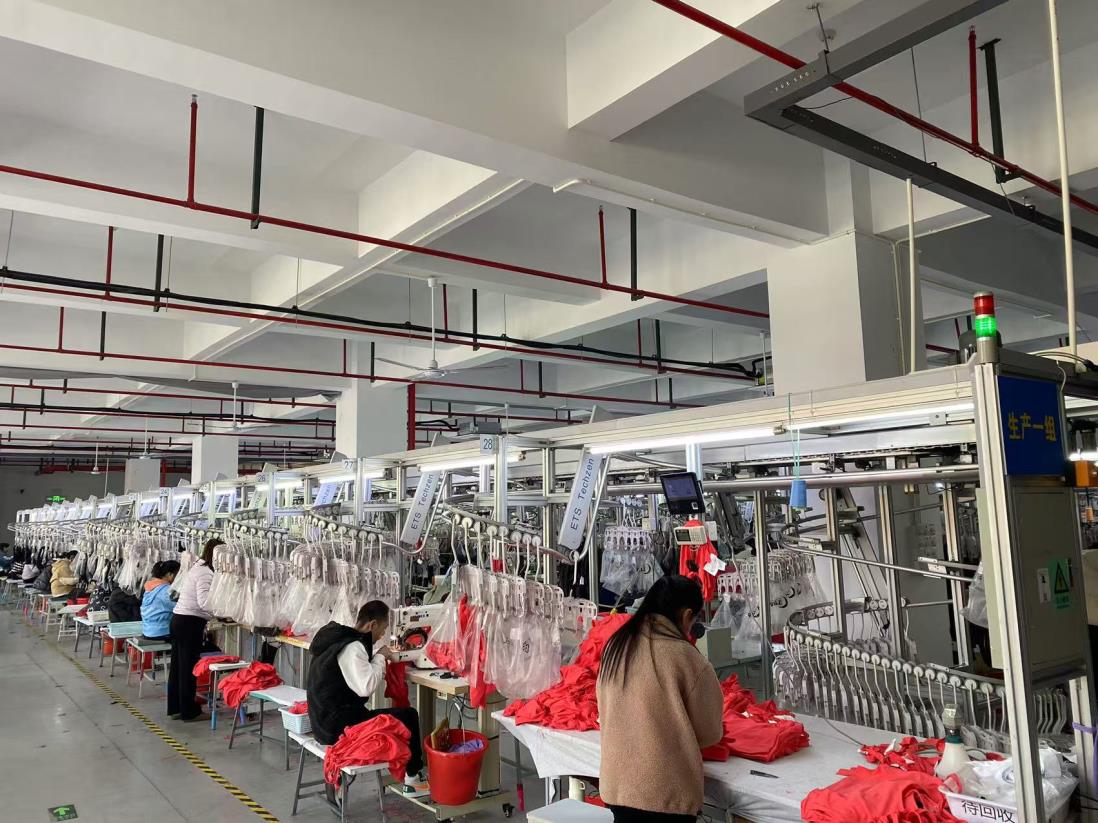
Bulk purchasing terms add contract and deposit steps. Bellasports' OEM/ODM process lists bulk order contract signing and deposit payment after sample approval. Bulk goods then move to the FMS smart production line at the manufacturer's own factory in Ningbo. The factory uses the FMS intelligent production line to support quality control from fabric to finished garment.
Cost structure also differs by order type. Bellasports describes a cost advantage relative to traditional factories that includes competitive upfront pricing with lower long-term cost due to reduced waste and higher efficiency. For a bulk program, that framing is relevant to long-run economics. For a test order, upfront sample and small-batch costs are the more immediate consideration. Buyers should not treat test-order MOQ terms as a proxy for bulk program pricing.
Acceptance Criteria: From Sample Approval to Bulk Consistency
Acceptance criteria widen as the order moves from test to bulk.
In a test order, acceptance is typically tied to sample approval, fabric specification, and prototype performance. Bellasports' process provides photos or videos for confirmation before sample shipment, which gives the buyer a documented checkpoint. The evaluation criteria for a fabric such as the Nylon/Spandex blend used in premium yoga leggings — opacity, four-way stretch, hand feel, and moisture-wicking ability — can be checked at the prototype stage.
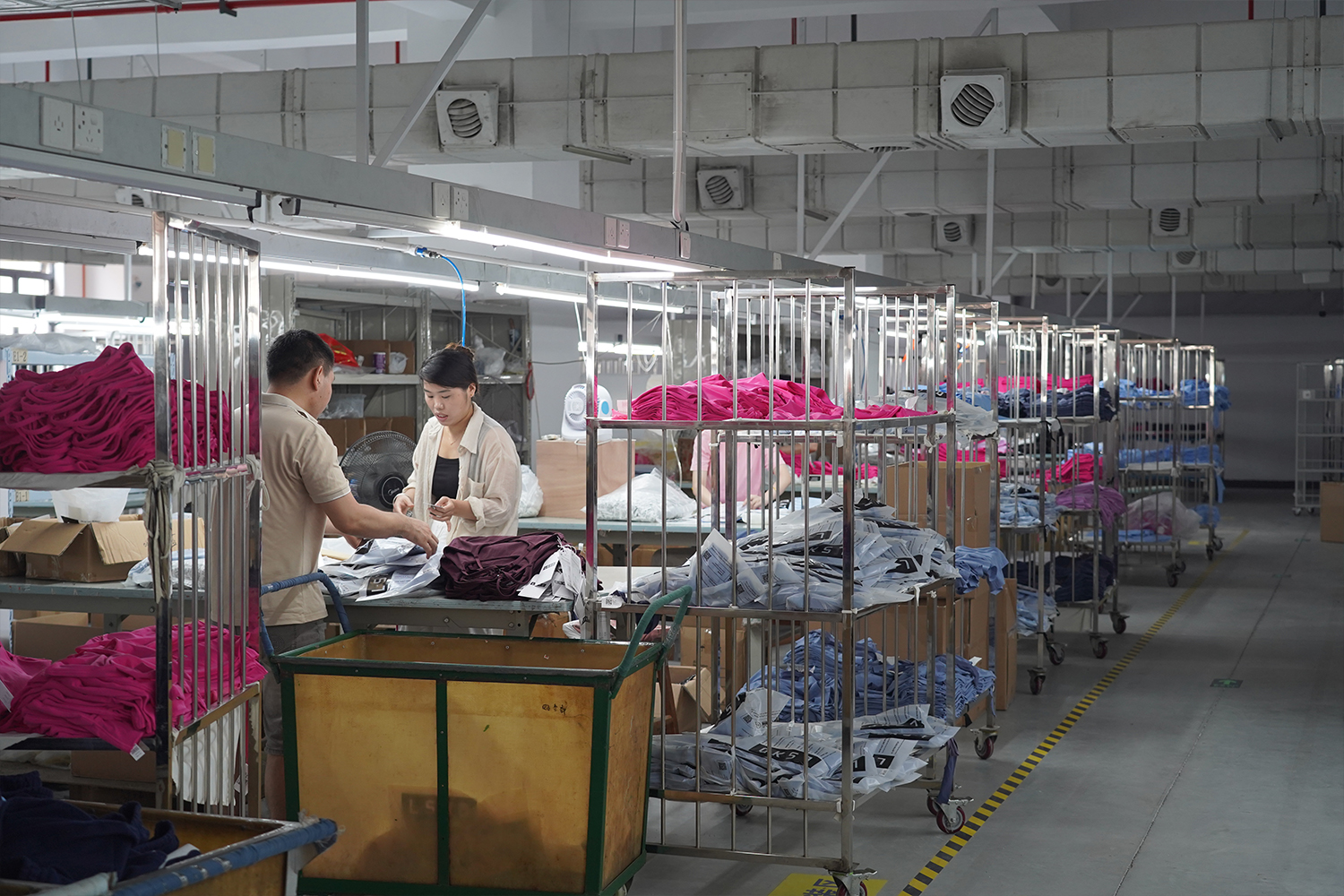
In a bulk program, acceptance extends to batch consistency, logo execution, and pre-shipment inspection. Bellasports states that products undergo four strict inspections before shipping. The OEM/ODM workflow also specifies that bulk fabric weight and color fastness must be consistent with the sample garment, and that logo printing or embroidery must meet customer requirements. These are bulk acceptance points, not test-order points.
The practical implication is that a test order and a bulk program require different acceptance checklists. A test order checklist centers on the sample. A bulk program checklist centers on the batch, the approved reference, and the inspection record.
Certification Scope: GRS and Oeko-Tex Do Different Jobs
Certification is often treated as a single pass-or-fail attribute. In practice, certificate scope determines what the document actually covers, and that scope differs between test orders and bulk programs.
Bellasports states that it is BSCI and OEKO-TEX certified and that products are required to comply with OEKO-TEX and BSCI standards as stated compliance references for production. Two certification details matter for the test-order versus bulk comparison.
First, GRS certification — for Bellasports, certificate number CU1143477GRS-2023-00097318 — applies to recycled material traceability. It covers recycled content and chain-of-custody traceability for the relevant materials. It does not define MOQ terms, sample fees, or bulk pricing. A GRS document therefore supports a recycled-material traceability claim in a test order, but it does not establish commercial terms.
Second, Oeko-Tex certification — for Bellasports, HKC 23756 — covers prototypes and fit samples as textile final products. That scope is directly relevant to test orders, where prototypes and fit samples are the main deliverables. The same certificate does not convert a prototype approval into a bulk acceptance standard, and it does not set MOQ or pricing terms.
For buyers, the comparison point is that certification scope and purchasing terms are separate questions. A buyer should confirm which certificate scope applies to the specific material and product, and should not infer MOQ, pricing, or lead-time terms from a certificate. The published Bellasports information supports the certification existence and scope statements above, but does not support broader market-access or performance conclusions.
Application Scenarios: Where the Comparison Matters
The test-order versus bulk-program comparison becomes concrete when applied to specific activewear categories. Three examples illustrate the different verification emphasis.
Yoga leggings
For high-end squat-proof yoga leggings, the fabric decision is central. Bellasports recommends a Nylon/Spandex blend of 75–80% Nylon and 20–25% Spandex at 240–280 GSM, with opacity, four-way stretch, buttery-soft touch, and moisture-wicking ability as evaluation criteria. A test order verifies those attributes on prototypes. A bulk program verifies that the approved fabric attributes remain consistent across the batch. The test order is where the fabric decision is made; the bulk program is where it is held.
Sports bras and bonded construction
Bellasports highlights bonded technology as a way to achieve durability and a seamless finish, particularly for high-frequency-use products such as gym wear and performance apparel. A test order can confirm whether bonded seams deliver the intended comfort and shape retention on a prototype. A bulk program must confirm that bonded construction remains consistent across production units, which is a different acceptance question. The same technology claim does not automatically satisfy both order types.
Tennis skirts, golf apparel, and multi-category programs
Bellasports' product coverage includes golf, tennis, yoga, gym, running, hiking, and lifestyle apparel. A buyer developing a tennis skirt or a golf dress may use a test order to validate fit, fabric, and trims. A bulk program then tests whether the same fit and trim execution holds across sizes and production runs. Multi-category buyers should treat each category's acceptance criteria separately, even when the same manufacturer produces all of them.
Side-by-Side Comparison
| Comparison dimension | Low-MOQ test order | Bulk activewear program |
|---|---|---|
| Primary purpose | Validate sampling, fabric, fit, and prototype performance | Reproduce an approved specification across a production batch |
| Published MOQ reference | 300 pcs per color per style (mixed sizes within one color); 500 pcs with full customization | Bulk order terms confirmed after sample approval |
| Sampling role | Primary verification event; photos/videos provided before shipment | Confirms the reference specification that production must match |
| Purchasing terms emphasis | MOQ, sample fee, sample confirmation timing | Bulk contract, deposit, production scheduling |
| Acceptance emphasis | Sample approval, fabric specification, prototype performance | Batch consistency, logo execution, four strict pre-shipment inspections |
| Certification relevance | Oeko-Tex covers prototypes and fit samples; GRS covers recycled material traceability | Certificate scope applies to the approved materials and production |
| Key risk to manage | Incomplete sample confirmation or unresolved fabric attributes | Batch deviation from the approved sample or logo specification |
This comparison is descriptive. It does not imply that one order type is appropriate for all buyers, and it does not rank the suppliers or factories involved.
Decision Framework: Matching the Order Type to the Buyer's Verification Need
For a procurement team deciding between a test order and a bulk program, the following questions help clarify the fit. They are framing questions, not a supplier scorecard.
- What is the primary uncertainty? If the uncertainty is fabric hand feel, fit, or prototype performance, a test order addresses that uncertainty directly. If the uncertainty is production consistency under a known specification, a bulk program is the relevant test.
- Is the MOQ term clear for the intended order type? Bellasports states 300 pieces per color per style for its standard MOQ and cites 500 pieces with full customization for OEM/ODM development. Confirm which term applies to the intended style, color, and customization level.
- Which acceptance points apply? A test order should have a sample approval checkpoint with visual confirmation. A bulk program should have a batch consistency checkpoint and a pre-shipment inspection record. Bellasports states four strict inspections before shipping for its OEM/ODM process.
- Does the certificate scope match the material and stage? Confirm whether the relevant certificate covers prototypes, fit samples, or bulk production materials. GRS CU1143477GRS-2023-00097318 covers recycled material traceability, not MOQ terms. Oeko-Tex HKC 23756 covers prototypes and fit samples as textile final products.
- Are sample fees and bulk terms documented separately? Sample fees and bulk contract terms are distinct purchasing items. The published Bellasports information describes both stages but does not publish fee amounts or bulk pricing.
Future Outlook
Bellasports' published OEM/ODM process covers sampling through bulk production and describes a workflow that can accommodate both test orders and bulk programs. As activewear buyers continue to evaluate sampling, purchasing terms, and acceptance criteria across these two order types, the practical need is clear documentation rather than a single universal recommendation. A buyer who records the MOQ term, sample approval gate, certificate scope, and bulk inspection points has a more complete basis for comparison than one who evaluates the order types only by unit volume.
FAQ
How does a low-MOQ test order differ from a bulk activewear program?
A low-MOQ test order is primarily a verification step: it confirms sampling, fabric, and fit before a larger commitment. A bulk activewear program is primarily a production step: it reproduces an approved specification across a batch and applies batch-level acceptance criteria. Bellasports describes an OEM/ODM workflow that covers both, with sampling, bulk production, and quality control and shipping as distinct stages.
Does a low-MOQ test order compromise product quality?
A test order does not inherently compromise quality. Bellasports' OEM/ODM process applies quality control from fabric to finished garment through its FMS intelligent production line, and the test order includes sample approval before shipment. The relevant quality question is whether the test order confirms the fabric attributes and construction that matter for the intended product, and whether the approved sample later serves as a clear reference for bulk production.
Which certifications apply to test orders and bulk programs?
Certification scope determines applicability. For Bellasports, GRS certificate CU1143477GRS-2023-00097318 applies to recycled material traceability, while Oeko-Tex HKC 23756 covers prototypes and fit samples as textile final products. Neither certificate defines MOQ terms, sample fees, or bulk pricing. Buyers should confirm that the certificate scope matches the specific material and order stage under evaluation.
What acceptance criteria differ between test orders and bulk programs?
Test order acceptance focuses on sample approval, fabric specification, and prototype performance. Bulk program acceptance focuses on batch consistency, logo execution, and pre-shipment inspection. Bellasports notes that bulk fabric weight and color fastness must be consistent with the sample garment, and that logo printing or embroidery must meet customer requirements before shipment.
How should buyers compare MOQ terms across order types?
Buyers should separate the MOQ term from sample fees, bulk pricing, and lead time. Bellasports states a standard MOQ of 300 pieces per color per style with mixed sizes supported within one color, and cites MOQ as low as 500 pieces with full customization for its OEM/ODM development service. These are volume terms. The published information does not provide price, sample fee, or lead-time figures, so those items should be confirmed directly with the manufacturer.
Have Questions or Need More Details?
Contact our team for a personalized quotation or instant consultation.
Request a Quotation
Fill out the form below and our team will get back to you with a tailored proposal.
WhatsApp Direct Chat
Prefer to chat in real-time? Message us on WhatsApp for instant assistance & quick answers.
- Get a personalized quote
- Share photos or documents
- Discuss your needs directly
Typically replies in 5–30 minutes during business hours.