
Adult Products LSR for Overmolding: Medical-Grade Scenario Fit
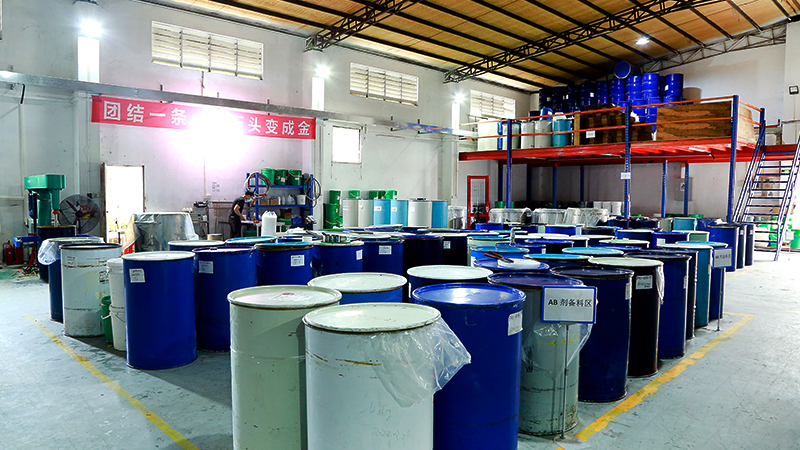
Two-component A/B preparation: the metering and mixing stage that decides whether an overmolding LSR grade performs as specified on the line. Image: Dongguan Times Silicon Industry Co., Ltd.
A soft, flesh-like silicone skin bonded directly onto a rigid core has become a standard construction in adult products, and the material decision behind it has shifted from a feel question to a qualification question. Buyers in evaluation and execution stages are now asked to confirm cure chemistry, extraction behaviour, odour, colour stability and the quality system that produced the batch, using much of the same vocabulary applied to medical and food-contact components.
Liquid silicone rubber (LSR) sits at the centre of that shift because it is delivered as a two-component reactive system and platinum-cured inside the mould, rather than milled, catalysed and pressed as a solid gum. That difference changes tooling, dosing, curing and documentation at the same time.
Dongguan Times Silicon Industry Co., Ltd. is a silicone materials manufacturer founded in 2021 and based in Hengli Town, Dongguan, Guangdong Province, China, producing liquid silicone rubber, platinum catalysts, silicone oils and silicone treatment agents for adult products, new energy, precision electronics, medical care and related industries. Its Adult Products LSR for Overmolding family carries five A/B designations, TS6807A/B, TS6825A/B, TS6830A/B, TS6835A/B and TS6838A/B, documented as an addition-curing (platinum-cured) LSR supplied as a clear material with viscosity from 4,000 to 25,000 and hardness from 7±1 to 38±1 Shore A.
This article maps that grade family to the production scenarios named in the supplier documentation, namely adult toy manufacturing, daily necessities overmolding, the silicone products industry and plastic and hardware overmolding processing, and sets out what a buyer should verify before committing to a trial run.
Why Overmolding Changes the Material Question
In compression-moulded silicone production, the material arrives as a millable gum, is mixed with catalyst and pigment, and is pressed into a heated tool. Overmolding works differently. The silicone is delivered as two reactive components, metered and mixed at the point of use, then injected or dispensed into a closed cavity that already contains the substrate.
Three consequences follow for a buyer. First, cure speed is governed by the platinum system and tool temperature rather than by press time alone. Second, the rheology window, which for this family is documented between 4,000 and 25,000 in viscosity, has to match both the dispensing unit and the cavity geometry. Third, adhesion becomes a function of substrate, surface condition and cure profile, not of a separate adhesive step.
For body-contact products there is a fourth consequence. Odour, bleeding and surface tackiness are governed by formulation design, catalyst quality and cure completeness, so a certificate issued at company level cannot substitute for evidence tied to the specific grade and the specific cure schedule used on the line.
Inside the Grade Family: TS6807A/B to TS6838A/B
All five A/B pairs belong to the same chemistry family. The supplier documents them as addition-curing liquid silicone based on vinyl polydimethylsiloxane and hydrogen-containing polysiloxane, supplied clear, intended for the overmolding process and applicable to the adult toy industry, daily necessities overmolding, the silicone products industry and plastic and hardware overmolding processing.
| A/B pair | Documented family attributes | Question to settle before sampling |
|---|---|---|
| TS6807A/B | Platinum-cured overmolding LSR, clear, viscosity 4,000–25,000, hardness within 7±1–38±1 Shore A | Which hardness within the range does the target part require, and is it confirmed on the grade datasheet? |
| TS6825A/B | Platinum-cured overmolding LSR, clear, viscosity 4,000–25,000, hardness within 7±1–38±1 Shore A | Does the viscosity suit the dispensing unit and cavity flow length? |
| TS6830A/B | Platinum-cured overmolding LSR, clear, viscosity 4,000–25,000, hardness within 7±1–38±1 Shore A | Is a low-odour or odourless formulation option required for the end use? |
| TS6835A/B | Platinum-cured overmolding LSR, clear, viscosity 4,000–25,000, hardness within 7±1–38±1 Shore A | Does the substrate require a food-grade or medical-grade formulation option? |
| TS6838A/B | Platinum-cured overmolding LSR, clear, viscosity 4,000–25,000, hardness within 7±1–38±1 Shore A | Is room-temperature or elevated-temperature curing the better fit for the existing tooling? |
Individual hardness, viscosity and cure behaviour within those family limits are set per grade, so the practical step is to request the datasheet for the specific pair rather than to assume a value from the family description.
Customisation is the second half of the offer. The supplier documents adjustable Shore hardness from 7±1 to 38±1 A, adjustable viscosity, colour options including transparent, translucent and opaque, odour level options described as low or odourless, formulation grades for food and medical use, a choice of room-temperature or heat curing, packaging specifications, and custom skin feel such as soft flesh-like or high resilience. For an adult product line, the skin-feel instruction and the hardness instruction are usually the two variables that determine whether a sample passes a consumer panel.
Documented performance in this segment includes biocompatibility testing, and a formulation described as non-bleeding and non-irritating at human contact. A supplier case record covering adult product brand owners and ODM/OEM manufacturers reports a defect rate reduction from 3% to 0.8% and a production yield of 98%, with end-product service life of at least three years under normal use, a repurchase rate increase of 18% and a return rate below 1%. The same record lists Chinese brand clients purchasing 80 tons annually with standard orders of 5 tons per batch, and a largest cooperating client at 150 tons annually.
From Drum to Demoulded Part: The Process Chain
An overmolding LSR project fails or succeeds in the handling chain before the press is even considered. The supplier documents the equipment envelope required for these grades as two-component A/B mixing, room-temperature or elevated-temperature curing, dispensing equipment, vacuum defoaming, a vulcanising press, an oven and mixing equipment.
- Substrate preparation. Plastic or hardware inserts are cleaned and, where the grade or design requires it, treated to promote bonding. Contamination on the insert is the single most common reason a bonded part later delaminates.
- Two-component metering and mixing. Part A and Part B are combined at the ratio defined for the grade. Static or dynamic mixing quality determines whether cure is uniform across the cavity.
- Vacuum defoaming. Air entrained during mixing appears as pinholes or optical haze in a clear or translucent part, which is why defoaming is listed as part of the process envelope rather than as an optional step.
- Dispensing or injection into the cavity. The viscosity band of 4,000 to 25,000 has to be matched to runner design, gate size and flow length.
- Curing. Cure proceeds by platinum-catalysed hydrosilylation at room temperature or in a heated tool, depending on the selected curing method.
- Demoulding. Low-hardness grades in the range of 7±1 Shore A deform easily, so part design and demoulding assistance matter more than they do on harder technical grades.
- Post-cure in an oven. Where specified, oven post-cure completes the reaction and stabilises odour and surface condition.
- Inspection. Hardness, appearance, cure state and, for body-contact products, odour assessment.
Formulation chemistry inside the two components is what makes this chain repeatable. Vinyl silicone oil in the supplier range is documented as vinyl-terminated PDMS with viscosity from 35 to 50W, volatile content below 0.5% and vinyl content from 0.037 to 1.497, while the platinum catalyst range is documented at viscosity 320 to 1,000 and platinum content 1,000 to 5,000. Both are formulation levers for adjusting working life and cure speed without redesigning the compound.
The catalyst choice is directly relevant to body-contact products. The supplier describes its platinum catalyst as compatible with low-odour, medical-grade and food-grade silicone formulations with no residual odour and no impact on biocompatibility, and reports a case outcome of 30% higher curing efficiency, 25% higher per-batch capacity, defect rate reduced from 2.5% to 0.6% and product yield of 99.4% across three years of continuous supply to clients in China, Germany, the United Kingdom, Japan and South Korea.
One processing boundary deserves early attention. Platinum-cure systems are sensitive to certain contaminants, notably sulphur-bearing compounds, tin-containing materials, amines and some plasticisers, which can retard or poison the cure. Insert materials, gloves, mould release agents and cleaning solvents therefore belong in the qualification discussion, not in the troubleshooting phase.
Four Production Scenarios and What Each One Tests
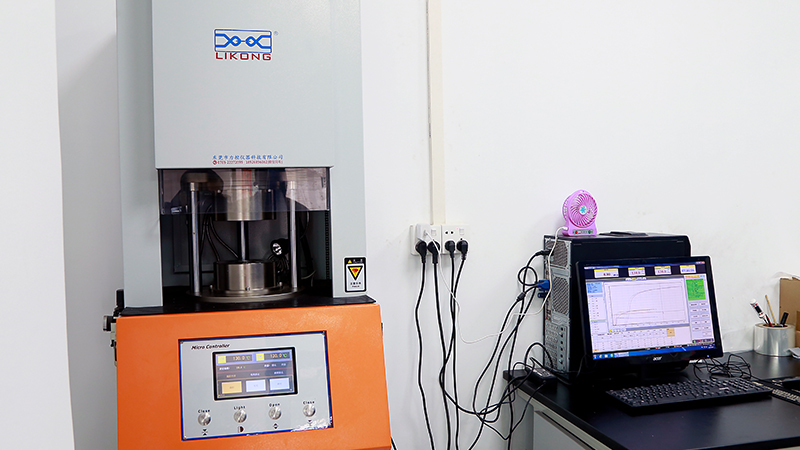
Incoming material, in-process and finished-product testing underpin the overmolding claims made for these grades. Image: Dongguan Times Silicon Industry Co., Ltd.
| Scenario | Why overmolding is used | What the first sample should prove |
|---|---|---|
| Adult toy bodies, sleeves and wearable parts | A soft, flesh-like outer surface has to sit on a rigid internal structure without a secondary gluing step | Skin feel against the declared hardness, odour after post-cure, tear resistance at thin sections, absence of surface tack |
| Daily necessities overmolding | Soft-touch grips and seals need to survive repeated handling and cleaning | Colour stability, resistance to yellowing, bond strength after washing cycles |
| Silicone products industry | Elastic, resilient parts that hold shape under repeated deformation | Compression behaviour, demoulding damage rate, batch-to-batch hardness consistency |
| Plastic and hardware overmolding processing | A silicone skin replaces separate gaskets or grips on engineering-plastic and metal inserts | Adhesion to the specific substrate, dimensional stability of the insert, cure inhibition from the substrate |
In the adult product scenario the decisive variable is usually hardness combined with skin feel, because a 7±1 Shore A part and a 38±1 Shore A part can come from the same chemistry but behave completely differently on a consumer panel. In the hardware overmolding scenario the decisive variable is adhesion, because a soft skin that delaminates in the field destroys the value of the material regardless of its other properties.
The supplier documents production capacity of 80 tons per month, scalable to 110 tons per month in peak seasons, with OEM and ODM services available. For buyers moving from evaluation to execution, that headroom is worth confirming against seasonal demand rather than against average demand.
The Cost and Efficiency Arithmetic Behind Medical-Grade LSR
Material cost is where most overmolding comparisons stop, and where most of them are wrong. The grade family carries a raw material premium of roughly 15 to 20% against conventional industrial silicone, but that premium is offset by a set of processing gains that appear later in the cost model:
- 5 to 10% lower comprehensive production cost per part.
- A 15% shorter moulding cycle.
- 10% lower energy consumption per unit.
- 20% higher capacity from the same installed equipment.
The mechanism is not mysterious. Faster cure and shorter cycles release press time, and press time is usually the binding constraint in a silicone moulding cell. Higher capacity from the same footprint spreads fixed overhead across more units. Lower energy per unit follows from shorter heated cycles.
Yield is the variable that decides whether the arithmetic holds. The documented adult product case, in which the defect rate fell from 3% to 0.8% and yield rose to 98%, illustrates the leverage: at a 3% defect rate a 15 to 20% material premium is hard to recover, while at a sub-1% defect rate it can be absorbed within a single production quarter. Buyers should therefore model the premium against their own measured scrap rate, not against an assumed one.
What the Quality System Evidence Actually Covers
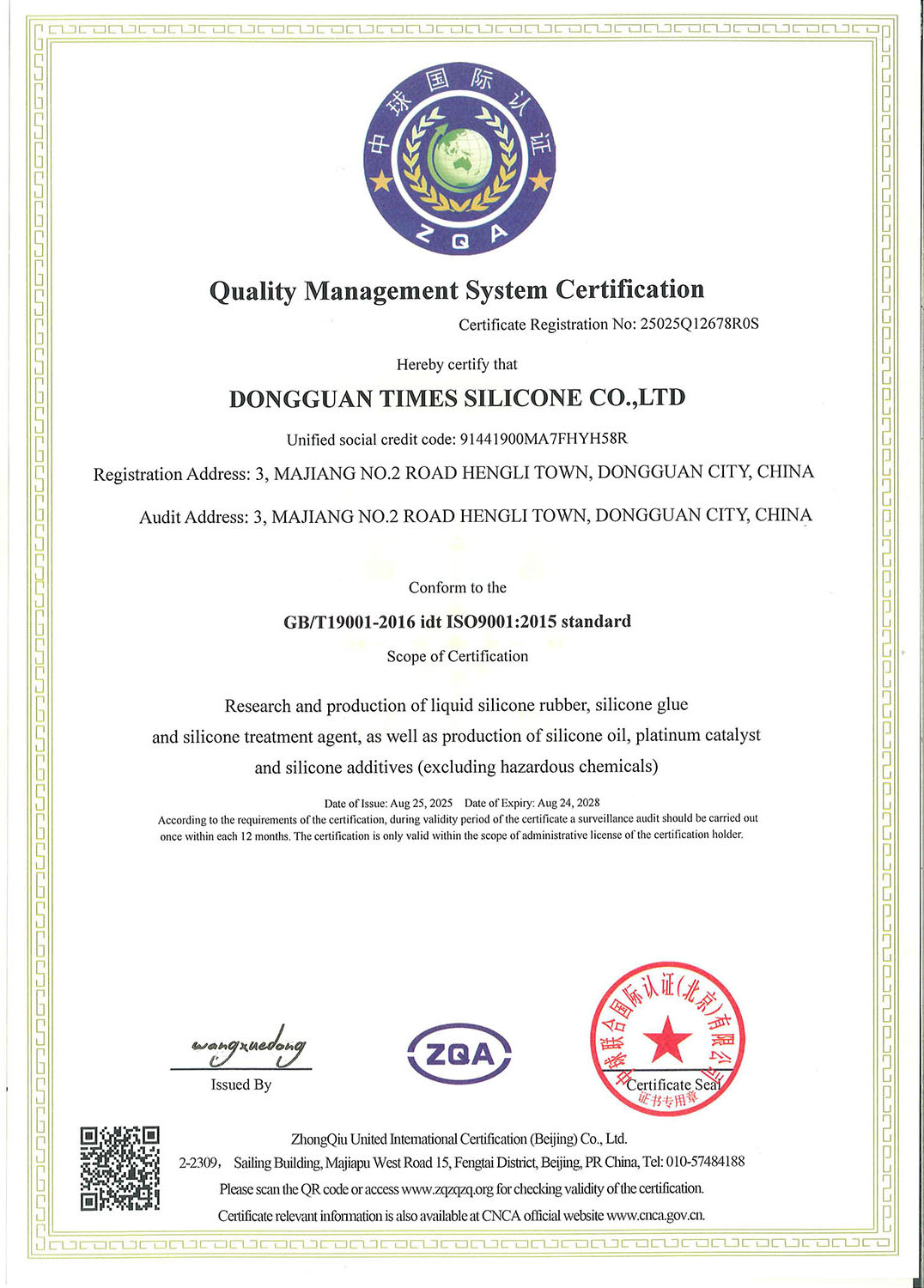
ISO 9001:2015 certificate 25025Q12678R0S, issued to Dongguan Times Silicon Industry Co., Ltd. and valid from 25 August 2025 to 24 August 2028. Image: Dongguan Times Silicon Industry Co., Ltd.
Dongguan Times Silicon Industry holds Quality Management System Certification number 25025Q12678R0S, issued by ZhongQiu United International Certification (Beijing) Co., Ltd., valid from 25 August 2025 to 24 August 2028, and conforming to the GB/T19001-2016 idt ISO9001:2015 standard. The certified scope covers research and production of liquid silicone rubber, silicone glue and silicone treatment agent, together with production of silicone oil, platinum catalyst and silicone additives, excluding hazardous chemicals.
Two further documents sit alongside it. The company holds High-tech Enterprise Certificate GR202444010636, issued on 11 December 2024 and valid to 11 December 2027 by the Ministry of Science and Technology, the Ministry of Finance and the State Taxation Administration, covering new materials. It also holds utility model patent ZL202323622488.5, granted by the National Intellectual Property Administration on 3 September 2024 and valid to 2 September 2034, for a silicone rubber treatment agent bonding device.
The distinction that matters at procurement stage is between system certification and material certification. ISO 9001 confirms that a quality management system exists and is audited; it does not certify that a specific grade is biocompatible, food-contact compliant or suitable for a given sterilisation route. The company states that its products hold RoHS, REACH, FDA, LFGB and halogen-free test approvals, and this claim is company-reported at portfolio level. The buyer action that follows is specific rather than general: request the certificate or test report that names the exact grade, the standard applied, the issuing laboratory and the validity date.
Internal quality control at the supplier covers raw material incoming testing for purity, heavy metals and harmful substances, in-process monitoring of viscosity, hardness and mixing ratio, finished-product full testing of curing performance, odour and biocompatibility, and third-party sampling against FDA and RoHS requirements.
Regulatory context helps calibrate expectations. A U.S. FDA 510(k) decision document for a medical device manufacturer identifies liquid silicone rubber among the materials evaluated in accordance with ISO 10993-1. That is device-specific evidence that LSR is routinely assessed under a recognised biocompatibility framework; it is not a blanket approval that transfers to any LSR grade or any finished product.
Market Signals Around Medical-Grade Silicone
Published market research points in one direction, although the absolute values disagree. Grand View Research reports the global liquid silicone rubber market at USD 2.8 billion in 2023, projected to reach USD 5.0 billion by 2030 at a CAGR of 8.5%. Market.us reports approximately USD 2.3 billion in 2024, projecting USD 5.5 billion by 2034 at a CAGR of 9.2%. The two figures use different base years and market boundaries, so they should be read side by side rather than averaged.
Within the narrower medical grade silicone rubber scope, Grand View Research reports USD 738.9 million in 2024 and USD 837.0 million projected for 2026, while Fortune Business Insights reports USD 855.18 million for 2026 rising to USD 1,459.44 million by 2034. The two vendors differ on the same nominal scope and year, and neither discloses a comparable methodology, so the defensible reading is directional growth rather than a precise number to build a business case on.
For an overmolding buyer the practical implication is narrower than the headline. Demand for body-contact and medical-adjacent silicone is expanding, and the documentation expectations attached to that demand are migrating into consumer categories such as adult products. Suppliers that can connect formulation, catalyst supply and quality-system evidence in one chain are better positioned than suppliers that buy compounds and resell them.
LSR Versus Traditional Overmolding Materials
| Criterion | Platinum-cured overmolding LSR (this family) | Conventional millable silicone | Thermoplastic elastomer |
|---|---|---|---|
| Form supplied | Two reactive components, metered and mixed at use | Millable gum, mixed with catalyst before pressing | Pellets, melted and shaped |
| Cure mechanism | Platinum-catalysed addition cure at room or elevated temperature | Peroxide or platinum cure, typically under compression | No chemical cure; solidifies on cooling |
| Softness achievable | Documented from 7±1 to 38±1 Shore A within the family | Very soft grades are difficult to demould and hold tolerance | Soft grades available, with different recovery behaviour |
| Bonding to substrate | Achieved in-mould as part of the cycle | Typically a separate adhesive or mechanical fixing | Multi-shot moulding of compatible thermoplastics |
| Equipment entry cost | Requires metering, dispensing, defoaming and a press | Requires mixing and compression equipment | Requires injection moulding equipment |
| Heat and ageing behaviour | Formulated for resilience and colour stability; verify with ageing data | Broadly established in high-temperature service | Generally lower continuous service temperature |
The comparison is deliberately generic. It describes material classes, not brands, and each row should be re-verified against the actual grade datasheet rather than accepted as a purchasing conclusion.
Where This Material Route Stops Working
A credible evaluation names the boundaries as clearly as the benefits. For this grade family the boundaries are specific.
- Equipment cannot be improvised. These grades require two-component mixing, dispensing, vacuum defoaming, a vulcanising press and an oven. A workshop set up for millable silicone cannot simply substitute drums of LSR without capital investment.
- Cure inhibition is a real risk. Sulphur, tin, amine and some plasticiser residues can retard platinum cure. Substrate and consumable screening belongs in qualification, and a failed cure on a new insert is usually a contamination finding rather than a material defect.
- Very soft grades are harder to demould. At the 7±1 Shore A end of the range, thin sections tear during demoulding if part design and demoulding assistance are not matched to the material.
- Viscosity sets flow limits. The documented 4,000 to 25,000 band will not suit every thin-wall or long-flow geometry, and grade selection has to follow part design.
- Documentation is not automatically transferable. ISO 9001 certification and a portfolio-level compliance statement do not certify a specific grade for a specific body-contact or food-contact use. Grade-level test reports, extractables information and, where relevant, ISO 10993 evidence have to be requested separately.
- The material premium needs a yield story. A 15 to 20% raw material premium only pays back where cycle time, energy and scrap improvements are actually realised on the line.
- Colour and appearance claims need ageing data. Anti-yellowing is a formulation property, and its durability depends on cure completeness and the additive package, so an accelerated ageing result is more useful than a specification line.
A Procurement Checklist for Evaluation-Stage Buyers
The following sequence converts the material discussion into a decision that can be defended internally.
- Fix hardness and skin feel first. Confirm the target Shore A value inside the 7±1 to 38±1 range and describe the intended feel in objective terms.
- Match viscosity to the dispensing equipment. Share the existing dosing setup, nozzle and cavity geometry with the supplier before sampling.
- Define the odour acceptance test. Ask for the low-odour or odourless formulation option and agree on how odour is judged after post-cure.
- Name the substrate. Plastic and hardware inserts differ in adhesion behaviour and in contamination risk, so bonding trials belong in the sample plan.
- Agree the cure method. Room-temperature or heat cure changes cycle time, energy use and tooling requirements.
- Request the grade-specific document pack. Certificate or test report naming the grade, the standard, the laboratory and the expiry date, plus the current ISO 9001 certificate 25025Q12678R0S and its scope statement.
- Confirm commercial terms. The supplier documents a minimum order quantity of 1 kg for standard products and 5 kg for custom formulations, a lead time of 7 to 10 working days for stock products and 15 to 25 working days for custom formulations or bulk orders, FOB delivery terms and full payment in advance. For samples and small shipments under 20 kg, international express requires dedicated chemical channels, so carrier acceptance should be confirmed in advance.
- Check capacity against peak demand. Monthly capacity of 80 tons, scalable to 110 tons, should be matched to seasonal peaks rather than annual averages.
- Review after-sales scope. The supplier documents formulation optimisation and process technical guidance, 24-hour response, defective product return and exchange, a dedicated account manager and usage and storage training.
Future Outlook
Two trajectories are visible from the material side. The first is documentation convergence: adult products, daily necessities and medical-adjacent consumer goods are being assessed against similar evidence sets, which favours suppliers able to supply formulation, catalyst and quality-system records as one package rather than as separate purchases.
The second is process consolidation. Overmolding rewards plants that control metering, defoaming and cure, because those three steps determine yield more than the drum does. Suppliers with in-house platinum catalyst production and formulation capability, such as Dongguan Times Silicon Industry, are structurally closer to that control point than trading houses. For buyers, the practical consequence is that supplier selection will increasingly be a question of process partnership rather than of price per kilogram.
FAQ
What hardness range does the Adult Products LSR for Overmolding family cover?
The family is documented from 7±1 to 38±1 Shore A, with hardness adjustable within that range as a customisation option. The specific value for TS6807A/B, TS6825A/B, TS6830A/B, TS6835A/B or TS6838A/B should be confirmed on the individual grade datasheet.
What equipment is needed to process these grades?
The documented process envelope comprises two-component A/B mixing, dispensing, vacuum defoaming, a vulcanising press and an oven, with curing at room temperature or elevated temperature depending on the selected curing method.
Can the material be overmolded onto plastic and hardware substrates?
Plastic and hardware overmolding processing is listed among the applicable industries, and the material is supplied for the overmolding process. Adhesion still depends on the specific substrate, its surface condition and the cure profile, so a bonding trial on the actual insert is required.
Is the material medical grade or food grade?
Formulation grade is offered as a customisation option covering food and medical grades, and the material is documented as biocompatibility tested, non-bleeding and non-irritating at human contact. The company also states that its products hold RoHS, REACH, FDA, LFGB and halogen-free test approvals, but that is a portfolio-level claim, so a certificate or test report naming the exact grade and standard should be obtained before a regulated use is approved. ISO 9001 certification covers the quality management system, not material biocompatibility.
What are the minimum order quantity and lead times?
The supplier documents a minimum order quantity of 1 kg for standard products and 5 kg for custom formulations, a lead time of 7 to 10 working days for stock products and 15 to 25 working days for custom formulations or bulk orders, FOB delivery terms and full payment in advance. Shipments under 20 kg travel by international express through dedicated chemical channels, with carrier acceptance confirmed in advance.
How is odour controlled in a body-contact part?
Odour is addressed through formulation, with low or odourless options offered, and through the platinum catalyst, which the supplier describes as compatible with low-odour formulations with no residual odour. Finished-product testing includes an odour check, and oven post-cure is used to complete the reaction where specified.
What quality control evidence is available per batch?
Quality control covers raw material incoming testing for purity, heavy metals and harmful substances, in-process monitoring of viscosity, hardness and mixing ratio, finished-product full testing of curing performance, odour and biocompatibility, and third-party sampling against FDA and RoHS requirements.
The company brochure with the full product and certification overview is available for download: Times Silicon PDF. Additional technical information is published at timessilicone.com.
Have Questions or Need More Details?
Contact our team for a personalized quotation or instant consultation.
Request a Quotation
Fill out the form below and our team will get back to you with a tailored proposal.
WhatsApp Direct Chat
Prefer to chat in real-time? Message us on WhatsApp for instant assistance & quick answers.
- Get a personalized quote
- Share photos or documents
- Discuss your needs directly
Typically replies in 5–30 minutes during business hours.