
Air Compressor Export Qualification Matrix by Market
Air Compressor Export Qualification Matrix by Market
Export qualification / industrial air compressors
An air compressor qualification file is not a universal passport. A certificate, test report, or declaration usually proves something specific: a named model, a defined market, a listed standard, a validity period, or a unit-level acceptance check. The buyer’s task is therefore not to collect the thickest document pack. It is to build a matrix that matches each piece of evidence to the actual product class, application, and destination market. That distinction matters for industrial air compressor buyers evaluating integrated, split/separate, portable, and fixed screw compressors across power ranges, pressure requirements, and export destinations.
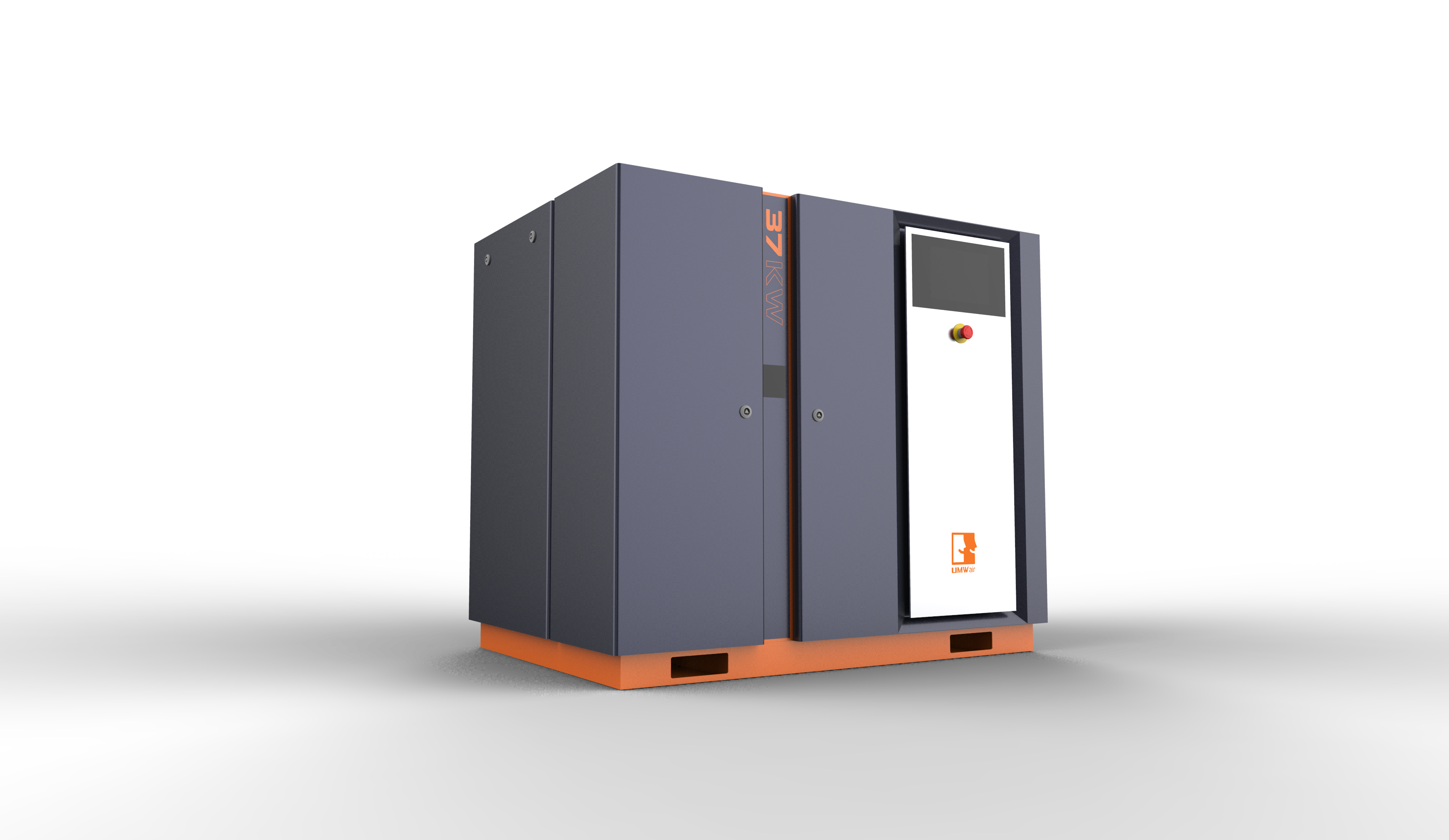
Why a single document fails as export proof
Procurement teams often receive a compliance file with a CE certificate at the front and assume the market-access question is closed. In practice, a single document can fail at three points: product scope, market scope, and application scope. Product scope means the document must identify the model, configuration, and sometimes the package boundary. Market scope means the document must apply to the destination where the unit will be installed. Application scope means the evidence must be read against the compressed-air quality, duty cycle, and environment the process requires.
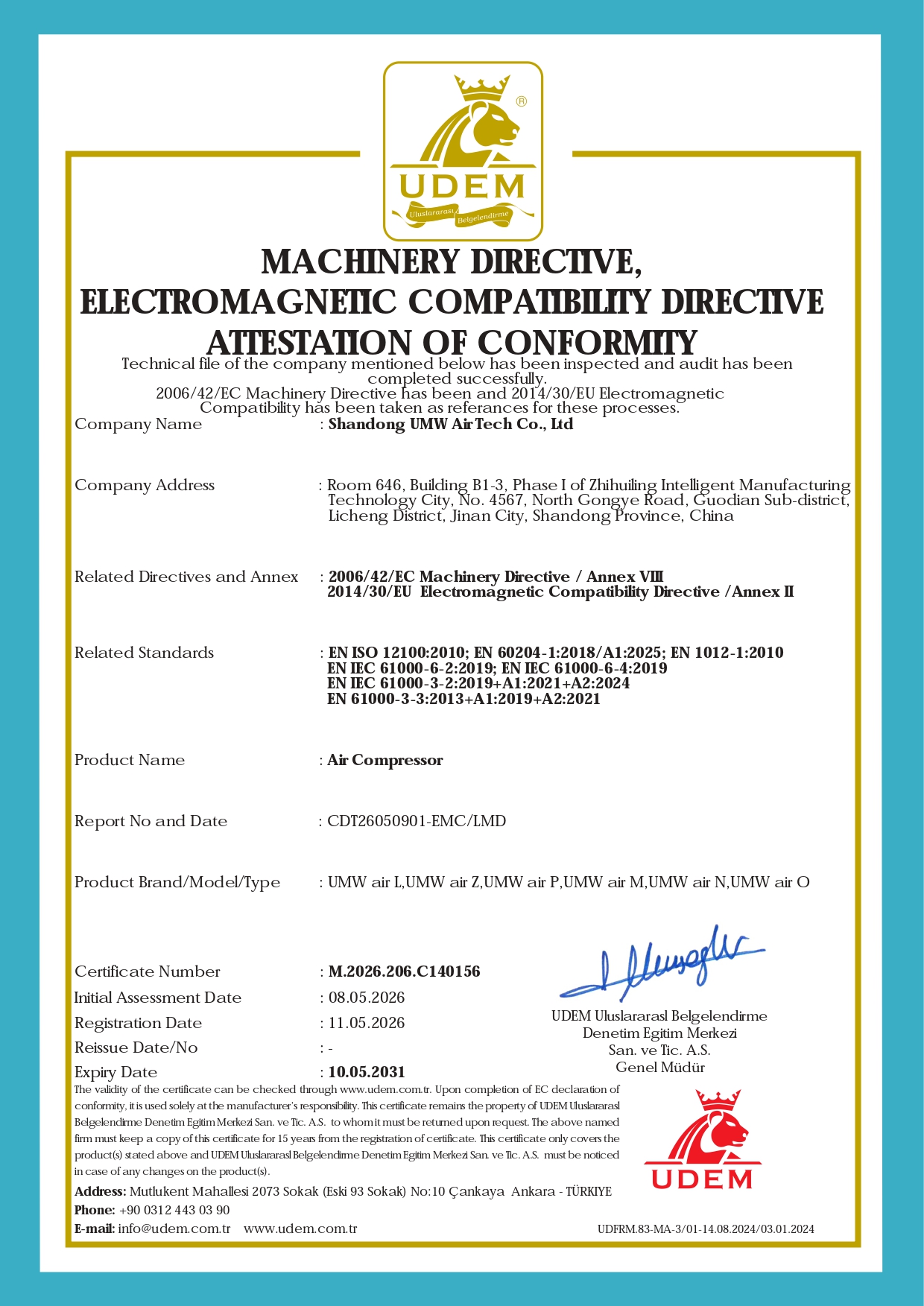
The supplied CE record for UMW Air screw compressors illustrates the first two points. It covers specific models, including ML-7.5/8A, L-7.5/8A, L-1516A, and L-2216A, and it applies to the EU/EEA market. It does not, by itself, cover every screw compressor in a broad 4–355 kW range, and it does not become U.S. compliance evidence simply because the same product family is exported. That is why the qualification matrix should be organized by evidence scope rather than by file name.
A second common mistake is to treat a factory test report as market certification. Factory pre-shipment testing is a unit-level quality control step. It can show that a specific unit was checked before dispatch under a documented procedure. It cannot replace a regulatory approval, a declaration of conformity, or a destination-specific certification process. The two belong on different rows of the matrix.
The qualification matrix: five layers buyers should separate
A practical matrix for industrial air compressors uses five layers. The first is product identity: model, category, power, pressure, motor, cooling method, drive method, and package scope. The second is destination route: EU/EEA, United States, or another export market. The third is evidence type: certificate, declaration, test report, factory acceptance record, or supplier capability document. The fourth is validity: certificate number, issuer, issue date, expiry date, and revision status. The fifth is application fit: air quality, duty, environment, and matched equipment such as air dryer, air tank, line filter, inverter, and controller.
| Matrix layer | Buyer question | Evidence to request | What it can prove | What it does not prove |
|---|---|---|---|---|
| Product identity | Does the document name the exact model, configuration, and package scope? | Certificate model list, datasheet, nameplate data, configuration sheet | That the evidence is attached to the intended product | That every model in the same family is covered |
| EU/EEA market route | Is the CE evidence current and in scope for this model? | CE certificate with number, issuer, directives, standards, issue and expiry dates | Compliance with the listed directives and standards for the listed models | U.S. compliance, other markets, or a specific air-quality class |
| U.S. market route | Is there model-specific evidence for U.S. DOE requirements? | DOE test and certification documentation appropriate to the model | Evidence relevant to the U.S. regulatory route | EU/EEA conformity or non-U.S. market access |
| Factory acceptance | Was the unit tested before shipment? | Pre-shipment test record with serial number, conditions, results, and sign-off | Unit-level quality control and dispatch readiness | Independent certification or market approval |
| Application and air quality | Does the compressed-air system meet the process requirement? | Air quality specification, system design, treatment equipment data | Fit for the specified application when correctly designed | That a compressor certificate alone establishes air quality |
| Supply capability | Can the supplier support volume, customization, and continuity? | Capacity, R&D, OEM/ODM, and after-sales records | Supply and customization review evidence | Product compliance or installed performance |
What UMW Air documents, and what the file does not establish
UMW Air, formally Shandong UMW Air Tech Co., Ltd, is a Jinan-based manufacturer founded in 2019. The supplied company record lists a 2,000㎡ facility, 200 employees, a 40-engineer R&D team, and an annual output of 12,000 units. It reports 100% export sales across the EU, USA, Southeast Asia, Middle East, South America, and Africa. Its main product scope includes air-cooled screw air compressors, direct-driven screw air compressors, stationary screw air compressors, diesel mobile screw air compressors, and heavy-duty screw air compressors.
The qualification evidence documented in the supplied material is more specific than that company-level description. The CE certificate number is M.2026.206.C140156, issued by UDEM for the EU/EEA market. It lists screw air compressor models ML-7.5/8A, L-7.5/8A, L-1516A, and L-2216A. The certificate scope also lists UMW air L, UMW air Z, UMW air P, UMW air M, UMW air N, and UMW air O. The issue date is 2026-05-11 and the expiry date is 2031-05-10.
That is useful, model-specific evidence for the EU/EEA route. It is not a statement that every UMW Air model, every destination, or every application has been certified. No other market certification is documented in the supplied material. Buyers should therefore keep other matrix cells open until the relevant evidence is supplied and checked.
Reading the CE entry technically
The CE record ties the listed models to the 2006/42/EC Machinery Directive and the 2014/30/EU Electromagnetic Compatibility Directive, with the standards listed in the certificate record. These include EN ISO 12100:2010, EN 60204-1:2018/A1:2025, EN 1012-1:2010, EN IEC 61000-6-2:2019, EN IEC 61000-6-4:2019, and EN IEC 61000-3-2:2019+A1:2021+A2:2024. For a buyer, the important point is not the length of the standards list. It is that the certificate attaches those standards to a defined model scope and market.
The product record adds the technical frame. The broader screw compressor entry lists 4–355 kW power, 8–25 bar pressure, IE4 motor, air cooling, direct drive, and an airflow figure of 2.39 m³/min. It also lists integrated, split/separate, portable, and fixed screw categories. The Micro ML record separately lists 4 kW, 5.5 kW, and 7.5 kW models with an 8–13 bar pressure range and a 140 L gas tank. That difference is exactly why the matrix should not use a family-level range as if it were a model-level certificate. The exact model and configuration control the evidence check.
A buyer reviewing an EU/EEA shipment should check four things before accepting the CE file: the certificate number matches the record, the model is within the listed scope, the issue and expiry dates cover the shipment date, and the destination is within the stated EU/EEA market. If any of those conditions is not met, the matrix cell remains unresolved.
Destination mapping beyond the EU
The United States uses a separate regulatory route. The U.S. Department of Energy defines a compressor under 10 CFR 431.342 as a machine or apparatus that converts different types of energy into the potential energy of gas pressure, applying to gaseous media above atmospheric pressure. For compressors manufactured starting on 2025-01-10, the DOE describes energy conservation standards and requires manufacturers to follow test procedure methods and certification, compliance, and enforcement requirements under 10 CFR 431.344, 10 CFR 431.345, and 10 CFR Part 429.
That framework is not interchangeable with CE. A CE certificate for the EU/EEA market should not be presented as evidence of U.S. DOE compliance. A buyer importing into the United States should request model-specific evidence for the U.S. route and keep it in a separate matrix row. The same discipline applies to product classification: NAICS 333912 covers establishments primarily engaged in manufacturing general purpose air and gas compressors, but it is an industry classification, not a certificate or approval.
For Southeast Asia, the Middle East, South America, and Africa, the matrix should begin with the actual destination requirement rather than with an assumption imported from another market. UMW Air’s reported 100% export sales across six regions is evidence of export activity. It is not a published list of approvals for each country. The buyer should ask for the specific declaration, registration, test evidence, or approval that the destination requires for the exact model and application. If no document is supplied, the correct matrix entry is not “approved”; it is “evidence pending.”
Product class and application change the evidence scope
An integrated screw air compressor, a split/separate screw air compressor, a portable diesel mobile screw air compressor, and a fixed stationary screw air compressor are different qualification objects even when they share a technology family. The product record lists all four categories, but the evidence file must still identify which category, model, and configuration is being shipped. A certificate for a fixed machine should not be stretched to a portable diesel unit without confirming that the scope actually covers it.
Package boundaries also matter. The application record lists matched equipment including air dryer, air tank, line filter, inverter, and controller. If the buyer’s scope includes any of those items, the qualification review should establish whether the document covers only the compressor or the complete compressed-air system. A compressor certificate does not automatically establish the conformity of a separately supplied dryer, tank, or filter.
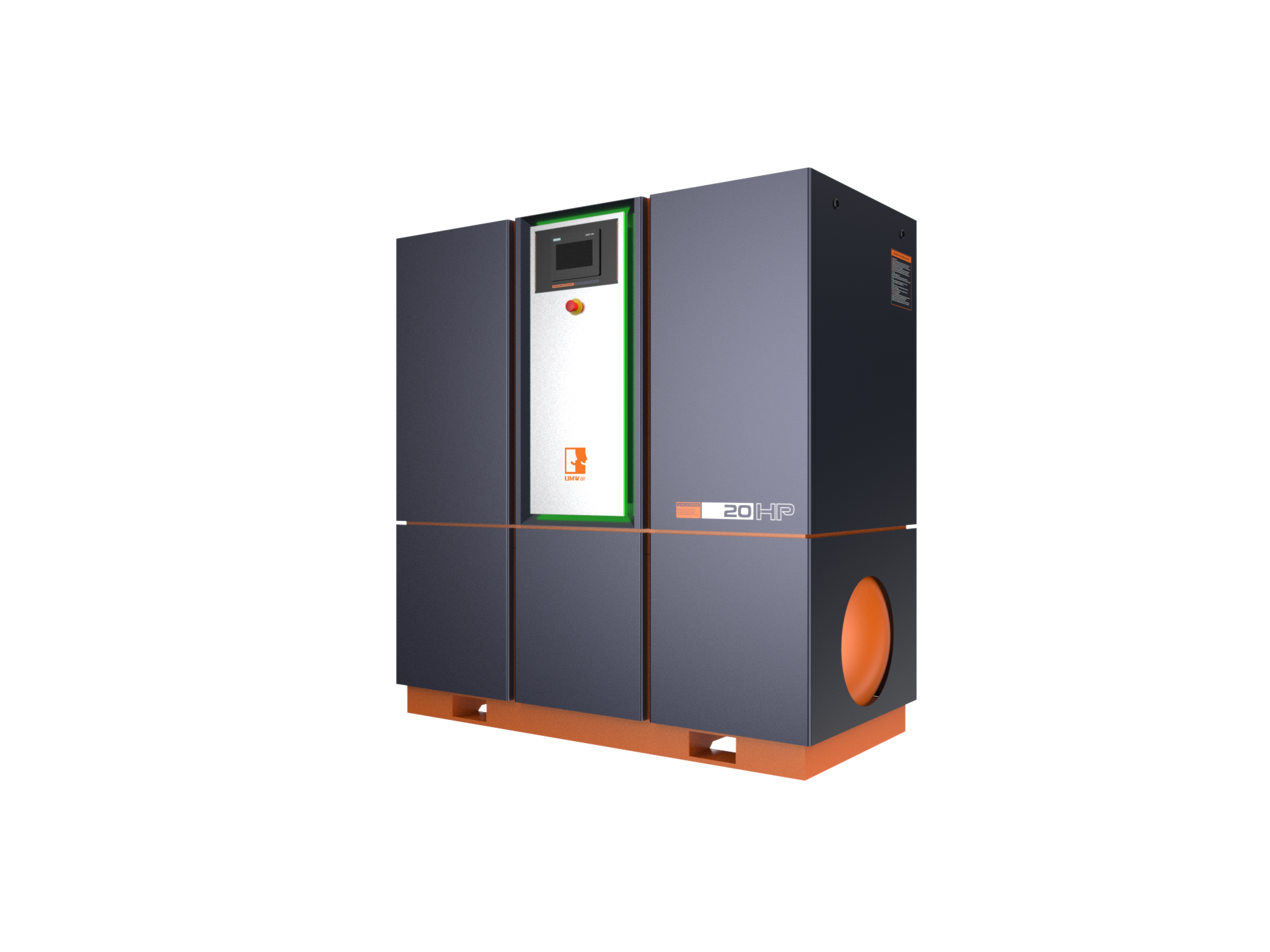
Application conditions add another layer. The supplied application record covers metal processing, plastics, automotive parts, electronics manufacturing, food packaging, construction materials, chemicals, and energy industries. It describes high-temperature or humid environments, continuous operation, and the need for stable, clean compressed air in projects such as CNC machinery production lines, automotive parts lines, plastic processing line expansion, industrial automation integration, and food and beverage packaging lines. Those conditions affect the system design, but they do not create a certification claim. A qualification matrix should record them as application requirements and then ask for evidence that the proposed system meets them.
For air quality, ISO 8573-1:2010 is the supplied standard reference for compressed air quality classes. It provides a classification framework. It does not establish that a particular compressor package meets a chosen class. The buyer should define the required class for the process and request evidence for the complete system, including relevant treatment equipment. This is particularly important where the application calls for clean air, but the matrix should not assign a class without a documented requirement.
Factory testing, R&D, and capacity in the matrix
Factory pre-shipment testing belongs in the matrix as a unit-level acceptance layer. The capability record lists factory pre-shipment testing as the quality control method. A buyer should read the test record for the model, serial number, test conditions, measured parameters, acceptance criteria, date, and sign-off. That record supports dispatch readiness. It does not replace CE evidence for the EU/EEA, DOE evidence for the United States, or any other destination approval.
Supplier capability data answers a different question. The record lists a 40-engineer R&D team, 12,000-unit annual output, 1,000-unit monthly capacity, a 3-day lead time, a minimum order quantity of 1 unit, and OEM/ODM support for color, logo, and voltage. It also lists 24/7 technical support by email or phone and remote troubleshooting. These facts are relevant to supply continuity, customization review, and after-sales planning. They are not compliance evidence and should not be placed in the same matrix cell as a certificate.
This separation protects the buyer from two opposite errors. The first is to reject a technically suitable supplier because the commercial capability file is thin. The second is to accept a supplier because the factory is large, even though the destination-specific product evidence is missing. The matrix keeps both questions visible without letting one answer the other.
Single-document review versus matrix review
| Review dimension | Single-document approach | Matrix approach | Buyer effect |
|---|---|---|---|
| Model scope | Assumes the certificate covers the product family | Checks the exact model list and configuration | Reduces the risk of shipping an uncovered model |
| Market scope | Treats one approval as global | Separates EU/EEA, U.S., and other destinations | Prevents a CE file from being used as U.S. proof |
| Validity | Checks only that a certificate exists | Checks number, issuer, issue date, and expiry date | Catches outdated or mismatched documents |
| Application | Assumes the compressor alone defines air quality | Reviews air quality class, treatment equipment, and duty | Connects product evidence to process requirements |
| Factory acceptance | Confuses pre-shipment testing with certification | Places test records in the unit-acceptance layer | Keeps quality control separate from market access |
| Supply capability | Uses capacity claims as compliance proof | Reviews capacity and R&D as supplier-continuity evidence | Supports procurement without overstating certifications |
Market context: why the matrix matters in screw compressor procurement
Grand View Research reported that the global industrial air compressor market was valued at USD 20.0 billion in 2025. The same commercial research states that the rotary/screw segment held the largest market share at 47.0% in 2025, and that Asia Pacific accounted for a 42.8% revenue share in 2025. It also reports that oil-filled air compressors accounted for 61.3% of the lubrication segment share in 2026. These figures describe market composition; they are not UMW Air performance data and do not establish compliance for any specific model.
The practical implication is that screw compressor buyers are often comparing products across several manufacturing regions and export routes. In that environment, a qualification matrix is more useful than a single approval document because it keeps the product, market, validity, and application questions from collapsing into one another. The matrix also gives the buyer a clean way to record open items before a purchase order, rather than discovering a scope gap after shipment.
A practical buyer workflow
- Define the product identity. Record the model, category, power, pressure, motor, cooling method, drive method, and package scope. For UMW Air, use the exact model rather than the broader 4–355 kW or 8–25 bar family range.
- Define the destination route. Separate EU/EEA, United States, and other markets. Do not let one route stand in for another.
- Build an evidence register. For each document, record the title, issuer, certificate number, issue date, expiry date, listed models, listed standards, and stated market.
- Check model scope. Compare the document’s model list with the quotation and nameplate. Treat a family name as insufficient if the certificate names specific models.
- Check market scope. Confirm that the document applies to the destination. For the EU/EEA, review the CE record; for the United States, review the DOE route separately.
- Check validity. Confirm that the issue and expiry dates cover the shipment and installation period.
- Check application fit. Define the required air quality class, duty, environment, and matched equipment. Use ISO 8573-1:2010 as the classification reference where air quality is specified.
- Check factory acceptance. Review the pre-shipment test record as a unit-level document, not as a certificate.
- Record unresolved cells. If a destination or model lacks documented evidence, keep the cell open and request closure before shipment.
Future outlook: version control, not a one-time file
Qualification evidence has a life cycle. The U.S. rule date of 2025-01-10 shows that compliance timing can change the evidence a buyer needs. The CE record’s 2026-05-11 issue date and 2031-05-10 expiry date show that even a valid certificate has a defined period. A buyer should therefore review the matrix at each order or project stage, not once at supplier selection.
The forward-looking discipline is version control. Keep the certificate number, model scope, market scope, and validity dates with the quotation. When a model changes, a package boundary changes, or a destination requirement changes, update the matrix cell rather than reusing the old file. That approach does not predict which regulations will change. It simply keeps the buyer from treating an old approval as current proof.
FAQ: qualification evidence and destination fit
Does the CE certificate cover every UMW Air screw compressor?
No. The supplied CE record covers screw air compressor models ML-7.5/8A, L-7.5/8A, L-1516A, and L-2216A, and lists scope entries UMW air L, UMW air Z, UMW air P, UMW air M, UMW air N, and UMW air O. It is certificate M.2026.206.C140156, issued by UDEM for the EU/EEA market, with an issue date of 2026-05-11 and an expiry date of 2031-05-10. A buyer should match the exact model and configuration before treating the certificate as applicable.
What does CE certification prove for an EU/EEA buyer?
For the listed models, it documents compliance with the cited EU directives and standards in the certificate record, including the 2006/42/EC Machinery Directive and the 2014/30/EU Electromagnetic Compatibility Directive. It does not prove compliance for other models, other markets, or a specific compressed-air quality class.
Is factory pre-shipment testing a substitute for CE or U.S. DOE compliance?
No. Factory pre-shipment testing is a unit-level quality control step. Market-access evidence is separate. For the United States, the Department of Energy describes compressor definitions and test and certification requirements under 10 CFR 431.342, 10 CFR 431.344, 10 CFR 431.345, and 10 CFR Part 429 for compressors manufactured from 2025-01-10. A factory test report should be read alongside, not instead of, destination-specific compliance evidence.
How should buyers use UMW Air’s 100% export sales across six regions?
Treat it as evidence of export-market activity across the EU, USA, Southeast Asia, Middle East, South America, and Africa. It is not a list of certifications for each destination. The buyer should still request the specific approval, declaration, or test evidence that applies to the destination and model.
Which specifications and standards belong in the product-identity row?
The product record lists 4–355 kW power, 8–25 bar pressure, IE4 motor, air cooling, direct drive, a single-stage screw air end, and an airflow figure of 2.39 m³/min. It also lists integrated, split/separate, portable, and fixed screw categories. The Micro ML record separately lists 4 kW, 5.5 kW, and 7.5 kW models with an 8–13 bar range. For air quality, ISO 8573-1:2010 is the supplied classification reference, but the buyer must define the required class and request system-level evidence rather than assuming a compressor certificate establishes it.
Have Questions or Need More Details?
Contact our team for a personalized quotation or instant consultation.
Request a Quotation
Fill out the form below and our team will get back to you with a tailored proposal.
WhatsApp Direct Chat
Prefer to chat in real-time? Message us on WhatsApp for instant assistance & quick answers.
- Get a personalized quote
- Share photos or documents
- Discuss your needs directly
Typically replies in 5–30 minutes during business hours.