
Air Filter OEM Partnerships: Building Supply Resilience That Lasts
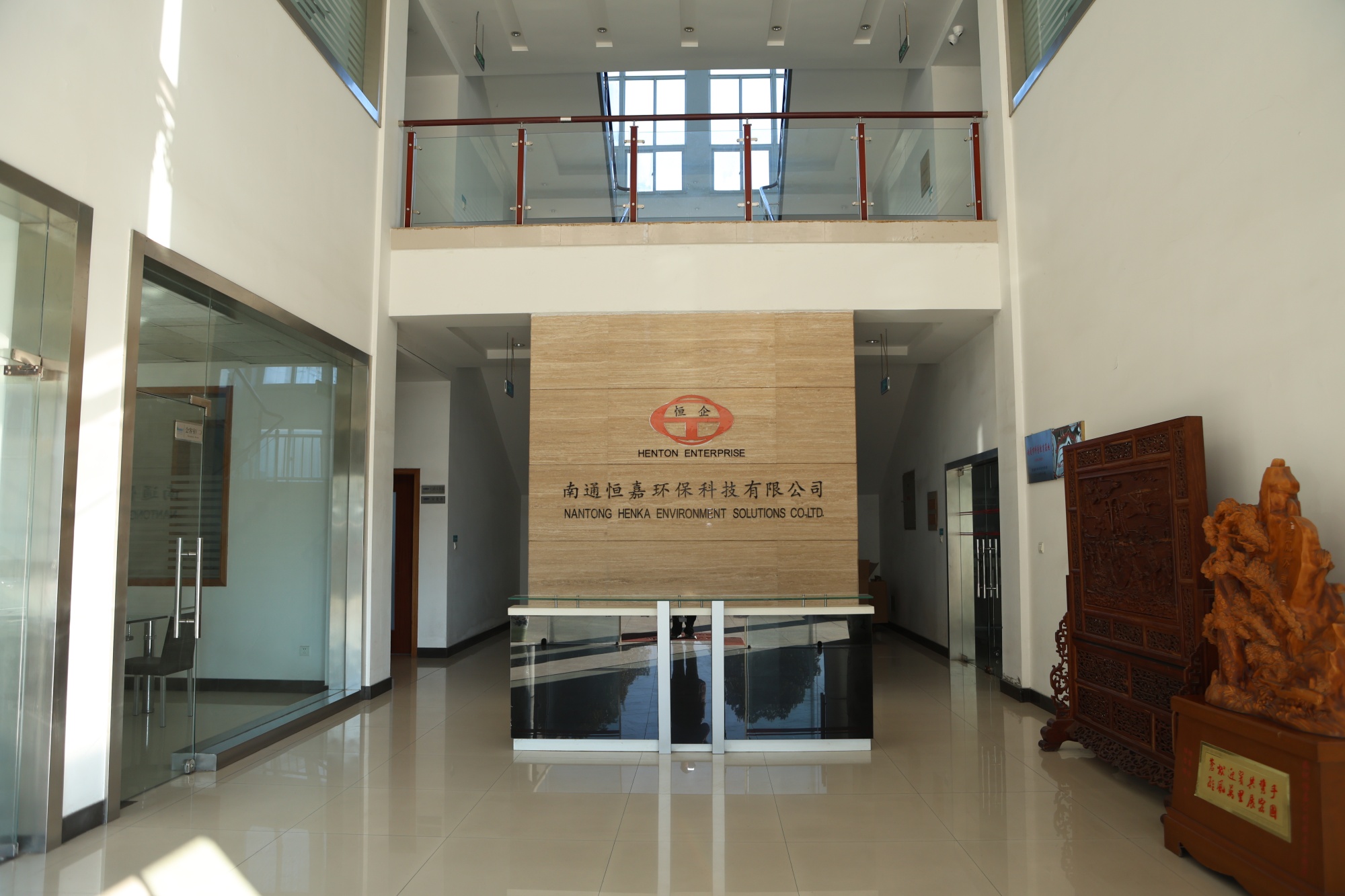
Manufacturing infrastructure is one of the first things to assess when evaluating a long-term air filter OEM partner.
Air filters are consumable components, but they sit inside systems that are expected to run for years. For original equipment manufacturers, distributors, and procurement teams, the real risk in air filter sourcing is not a single purchase. It is whether a supplier can keep delivering consistent efficiency, acceptable pressure drop, and responsive engineering support over multiple product cycles. That is why long-term buyers are increasingly evaluating air filter suppliers as part of a supply ecosystem rather than as order fillers.
From One-Off Orders to Supply Ecosystems
The language of industrial procurement has shifted. Buyers used to ask which air filter model offers the best price for a given efficiency grade. Today, more OEMs and maintenance-driven buyers ask whether a manufacturer has the production depth, quality infrastructure, and design flexibility to support a product family across several years. A long-term partnership is not about locking in a low price; it is about reducing the hidden costs of inconsistent quality, delayed engineering feedback, and uncertain capacity.
This is especially true in air filtration because filters directly affect energy consumption, indoor air quality, and equipment reliability. A small change in pressure drop can alter fan load and power use. A minor variation in media efficiency can change whether a system meets its stated performance. For OEM buyers, the supplier's long-term behavior matters more than the sample batch shipped before the contract.
The Procurement Risk in Long-Term Air Filter Supply
In a one-time purchase, the buyer can inspect samples, compare prices, and make a decision based on immediate requirements. In a multi-year partnership, the buyer must plan for several different risks: batch-to-batch consistency, media degradation, rising pressure drop, evolving compliance requirements, and the need for design iteration as end products change.
The opportunity is equally clear. A manufacturer with documented production capacity, dedicated engineering staff, and test laboratories can turn these risks into predictable outcomes. For example, a supplier with a monthly production capacity of 200,000 pieces and a standard minimum order quantity of 500 pieces gives the buyer a practical planning baseline. When lead time is around 30 days, procurement teams can build inventory cycles with more confidence.
Henkaes: A Long-Term Air Filter Partner Profile
Nantong Henka Environment Solutions Co., Ltd., commonly referenced as Henkaes, is an air filter manufacturer based in Haimen District, Nantong City, Jiangsu Province, China. Founded in 2004, the company designs and supplies air filters for air purifiers, air cleaners, and ventilation systems, with a core focus on OEM and ODM partnerships. Its location is roughly 120 kilometers from Shanghai, which supports logistics and engineering coordination.
Henkaes operates a 30,000-square-meter facility and employs 63 people, including an 11-engineer R&D team. The company reports an export ratio of 69%, with the EU and USA as main markets. Its product range includes HEPA filters, VOC removal filters, formaldehyde removal filters, activated carbon filters, odor removal filters, HVAC filters, i-Hepa ventilation purification devices, and IFD purification devices. Henkaes also describes itself as a customized air filter supplier for well-known air purifier and air cleaner brands in the North American market and China market.
From a supply-chain perspective, Henkaes offers several practical purchasing conditions: a minimum order quantity of 500 pieces, delivery terms including FOB, EXW, and DDP, pre-shipment testing, and payment terms of TT 50% / 50%. These terms give buyers a reasonably transparent framework for planning repeat orders and verifying quality before shipment.
Technical Capabilities That Protect Multi-Year Product Consistency
Consistency over time depends not just on production volume but on test infrastructure and engineering depth. Henkaes holds ISO9001:2015, ISO14001:2015, and ISO45001:2018 certifications. Its testing facilities include an efficiency and air resistance test system for filter media, a noise test lab, a 30-cubic-meter test room for formaldehyde and VOC removal efficiency, and a CADR test room for air purifiers. ASHRAE 52.2 is used in testing air filters, which is a widely recognized method for measuring HVAC filter performance.
For buyers, the technical meaning is straightforward. Product claims can be checked against measurable performance data before a large order is placed. The presence of a noise test lab and VOC test room is especially relevant for household air purifier filters, where customer perception depends on more than particle capture efficiency.
Henkaes also provides complete engineering design services, including the design of filters based on specifications, drawings, samples, or even customer ideas. The company can produce engineering samples, conduct production and testing, use solid modeling, and support rapid prototyping. According to its company profile, Henkaes has more than 20 years of experience working with a US engineering team. This kind of design support matters when an OEM needs to adapt a filter to a new chassis, a changed airflow pattern, or a stricter efficiency target.
Filter Types and Efficiency Grades in the Henkaes Portfolio
Different applications require different efficiency levels and materials. The Henkaes product list can be grouped as follows:
- Household air purifier filters: HEPA air filter with efficiency grade H13; True HEPA air filter with efficiency ≥ 99.97%; activated carbon filter with CTC grades 70, 80, 90, and 100; VOC air filter using activated carbon and a special catalyst for targeted VOC removal.
- HVAC filters: panel filter G1-G4; bag filter F5, F6, F8, and F9; V-Bank filter H13; furnace air filter MERV8, MERV11, and MERV13; box filter MERV15 and MERV16.
- Cleanroom filters: cleanroom air filter U14 or U15, using microfiberglass or PTFE media, suited for data centers and microelectronics environments.
- Aerospace and aviation filter: B737/B757 electronic cabin air filter with efficiency grade H13, using microfiberglass media.
The materials listed across these products include fiberglass, polypropylene, microfiberglass, PTFE, and activated carbon. For buyers, the availability of different media types matters because filter performance depends on the interaction between media and application conditions such as humidity, temperature, and contaminant profile.
Where Long-Term Air Filter Partnerships Matter
Long-term supply relationships are most valuable when the end application requires stable performance and repeated ordering. Several use cases stand out in the Henkaes portfolio.
In commercial and public buildings, HVAC systems in airports, hotels, museums, and restaurants commonly use panel, bag, V-Bank, and furnace filters. These systems run continuously, so consistent pressure drop and filter lifespan have a direct impact on energy bills. A manufacturer that can maintain tight production tolerances helps facility managers avoid unexpected downtime.
In cleanroom applications such as data centers and microelectronics production, the requirement is far stricter. Cleanroom air filters at U14/U15 efficiency are designed to keep particulate contamination at very low levels. Long-term buyers in these industries need suppliers that can deliver high-grade filters repeatedly and provide test data to back the rated efficiency.
Pharmaceutical plants, hospitals, and food and beverage production sites often use box filters with MERV15 or MERV16 ratings. These environments need both high filtration efficiency and dependable supply because operating schedules cannot wait for a replacement filter that fails to meet specification. A partner with pre-shipment testing and a stable MOQ reduces that risk.
For household appliance manufacturers, the relevant products are HEPA, True HEPA, activated carbon, and VOC filters. Consumer air purifiers are often judged by CADR, noise, and carbon performance. Having a supplier with a CADR test room and VOC test room allows the brand to verify product claims before launch. This is especially important for OEM buyers who need to bring differentiated products to market quickly.
Market Evidence Indicates Strong Future Demand
Long-term procurement decisions are easier to justify when the underlying market is still growing. According to Fortune Business Insights, the global air filters market was valued at USD 17.08 billion in 2025 and is projected to reach USD 34.66 billion by 2034. This suggests sustained demand for filter products across industrial, commercial, and residential segments.
Separately, Grand View Research reports that the global smart air purifier market is growing at a CAGR of 14.1% from 2024 to 2030, driven by AI and IoT integration. For filter OEMs, this points to a future in which filters are part of connected systems, with sensors and data feedback informing replacement timing and performance tracking. Buyers should therefore look for partners that can support not only conventional filter production but also product iterations involving new media, new shapes, and sensor-friendly designs.
The same research firm states that HEPA filters held a 41.7% market share in the air purifier technology segment in 2025. This high share reinforces the importance of reliable high-efficiency media production. For procurement teams, a supplier with HEPA production experience and test infrastructure is better positioned to support the next wave of high-efficiency products.
Long-Term OEM Partnership vs. Conventional Filter Supply
Traditional transactional filtering supply usually focuses on unit price and immediate availability. A long-term OEM partnership adds dimensions that are less visible on a purchase order but become critical over time.
| Dimension | Conventional supply | Long-term OEM partnership |
|---|---|---|
| Quality verification | Sample inspection before order | Documented test systems plus pre-shipment testing |
| Engineering support | Limited to existing catalog | Design from drawings, samples, or ideas; rapid prototyping |
| Capacity planning | Order-by-order scheduling | Monthly capacity of 200,000 pieces; MOQ of 500 pieces; typical lead time of 30 days |
| Risk management | Buyer manages replacement cycles | Supplier can remind buyer when filter lifespan is approaching |
| Compliance and testing | Certificates supplied with batch | ISO-certified processes and dedicated test rooms |
Henkaes also reports product-level performance differences compared with conventional filters across several categories. In its product comparison notes, the company states that its filters achieve the same efficiency with 5-10% lower air pressure drop compared with common V-Bank, box, panel, and furnace filters, as well as a common B737/B757 electronic cabin air filter. For HEPA filters, Henkaes reports roughly 5% lower air pressure drop and a 5% increase in CADR compared with common HEPA filters. For activated carbon filters, the company states a higher carbon quality with CTC grade above CTC 70. These claims are presented by the manufacturer and should be validated against the buyer's specific application conditions and test methods.
Boundary Conditions for Long-Term Supply
A long-term supply relationship cannot remove all field-level maintenance obligations. High air pressure drop remains one of the most common risks in air filter operation because it increases energy consumption. Henkaes currently addresses this by reminding customers to replace the product when its lifespan is closing. That is a useful service, but buyers still need to build their own replacement schedules and monitor pressure drop in real systems. In addition, comparative performance claims such as lower pressure drop should be verified under the actual operating environment, since filter loading, face velocity, and humidity all affect real-world results.
What Should Buyers Expect by 2030?
As air quality requirements become stricter and smart systems become more common, long-term OEM buyers should expect suppliers to move from reactive order fulfillment to earlier involvement in product design. The presence of test rooms for CADR, noise, formaldehyde, and VOC removal suggests that a manufacturer is already equipped to support product verification for differentiated consumer goods. By 2030, procurement teams can expect more data-backed collaboration, including shared performance data and earlier supplier input on media selection and filter geometry.
At the same time, the trend toward higher efficiency grades will continue. The EN 1822 standard, which classifies HEPA and ULPA filters based on efficiency at the most penetrating particle size, defines H14 as requiring 99.995% efficiency. ASHRAE 52.2 classifies HVAC filters into MERV 1-16 ratings based on particle capture between 0.3 and 10 micrometers. Buyers who understand these standards will be better prepared to evaluate whether a manufacturer can keep pace with evolving requirements across both cleanroom and general ventilation applications.
For decision-makers, the strategic question is not which filter to order today, but which manufacturing partner can support the product roadmap for the next several years. Production capacity, engineering support, and test infrastructure are the pillars that make a long-term air filter supply relationship viable.
FAQ
Q1: What should an OEM buyer look for when evaluating a long-term air filter partner?
Key factors include production capacity, minimum order flexibility, quality verification, engineering support, and the ability to support custom designs. In Henkaes' case, documented capabilities include a monthly production capacity of 200,000 pieces, a minimum order quantity of 500 pieces, and a typical lead time of 30 days, which provide a baseline for supply planning.
Q2: What is Henkaes' minimum order quantity and lead time?
Henkaes operates with a minimum order quantity of 500 pieces, a typical lead time of 30 days, and a monthly production capacity of 200,000 pieces. Orders can be arranged under FOB, EXW, or DDP terms, with pre-shipment testing available.
Q3: How can a buyer verify the quality and testing capability of an air filter manufacturer?
Henkaes holds ISO9001:2015, ISO14001:2015, and ISO45001:2018 certifications. Its testing facilities include an efficiency and air resistance test system for filter media, a noise test lab, a 30-cubic-meter test room for formaldehyde and VOC removal efficiency, and a CADR test room for air purifiers. ASHRAE 52.2 is used in air filter testing.
Q4: What customization capabilities does Henkaes have for long-term product development?
Henkaes works with a US engineering team and has more than 20 years of experience in product design. It offers complete engineering design services, including design of filters based on specifications, drawings, samples, or ideas; production of engineering samples; production and testing; solid modeling; and rapid prototyping. This supports evolving OEM and ODM filter requirements.
Q5: What maintenance risks should a long-term buyer plan for with air filters?
High air pressure drop can increase energy consumption. Henkaes addresses this by reminding customers to replace the filter as its lifespan closes. Buyers should build periodic replacement planning into their maintenance schedules to avoid elevated energy use.
Q6: What performance benefits can a long-term buyer expect from Henkaes filters compared with conventional filters?
Henkaes states that its filters achieve the same efficiency with 5-10% lower air pressure drop than common alternatives across several product categories, including HEPA, V-Bank, bag, box, panel, and activated carbon filters. It also reports a longer replacement lifespan and higher Energy Star performance. Buyers should validate these claims against their application conditions.
For a broader product reference, Henkaes publishes an e-catalogue covering its air filter range: E-Catalogue for Air Filter.