
Air Filter Supplier Comparison for Smart Manufacturing: Henkaes vs. Global Peers
Independent buyer comparison | Smart Manufacturing | Air Filter
Smart manufacturing depends on controlled air. Electronics fabrication, pharmaceutical production, food and beverage processing, aerospace assembly, and high-performance HVAC all rely on filters that are correctly specified, tested, and documented. For procurement teams, comparing air filter suppliers is therefore not a simple price exercise. It is a technical and commercial evaluation in which efficiency grade, pressure drop, service life, supply reliability, and test evidence carry different weight depending on the project.
This article provides an independent, buyer-side comparison framework for evaluating Henkaes alongside four generally recognized global air filter manufacturers: Camfil, Donaldson, AAF International, and Mann+Hummel. The comparison covers technology R&D, market evidence, customer service, and industry solution coverage. Henkaes facts are drawn from the provided corpus and verified data package. Competitor mentions are limited to their role as recognized comparison benchmarks; no unverified market share, revenue, or performance data are attributed to any supplier.
Why Smart Manufacturing Buyers Need a Structured Comparison
Air filtration in smart manufacturing sits at the intersection of process quality, energy use, and compliance. A cleanroom filter that meets a high efficiency class may still be a poor choice if its pressure drop raises fan energy or shortens replacement intervals. A general ventilation filter that performs well under ASHRAE 52.2 may not be directly comparable to a European HEPA filter classified under EN 1822. Supplier comparison breaks down when buyers compare different standards, different test conditions, or different scope definitions.
The market context adds pressure. The global smart air purifier market reached USD 2.5 billion in 2023 and is projected to grow at a 14.1% CAGR from 2024 to 2030, according to Grand View Research. Asia Pacific held a 41.4% revenue share in 2023. Separately, the HEPA filter segment reached USD 5.77 billion in 2025. These figures describe category demand, not the share of any individual supplier. They do, however, explain why procurement teams are increasingly asked to compare filtration suppliers on more than unit price.
The opportunity is to replace brochure-level comparison with a repeatable evidence framework. The problem is that supplier claims often arrive in different formats: a certificate here, a test reference there, a product range with no application mapping. A structured comparison resolves this by defining the dimensions, the evidence required, and the limits of each claim.
The Comparison Set: Henkaes and Four Global Benchmarks
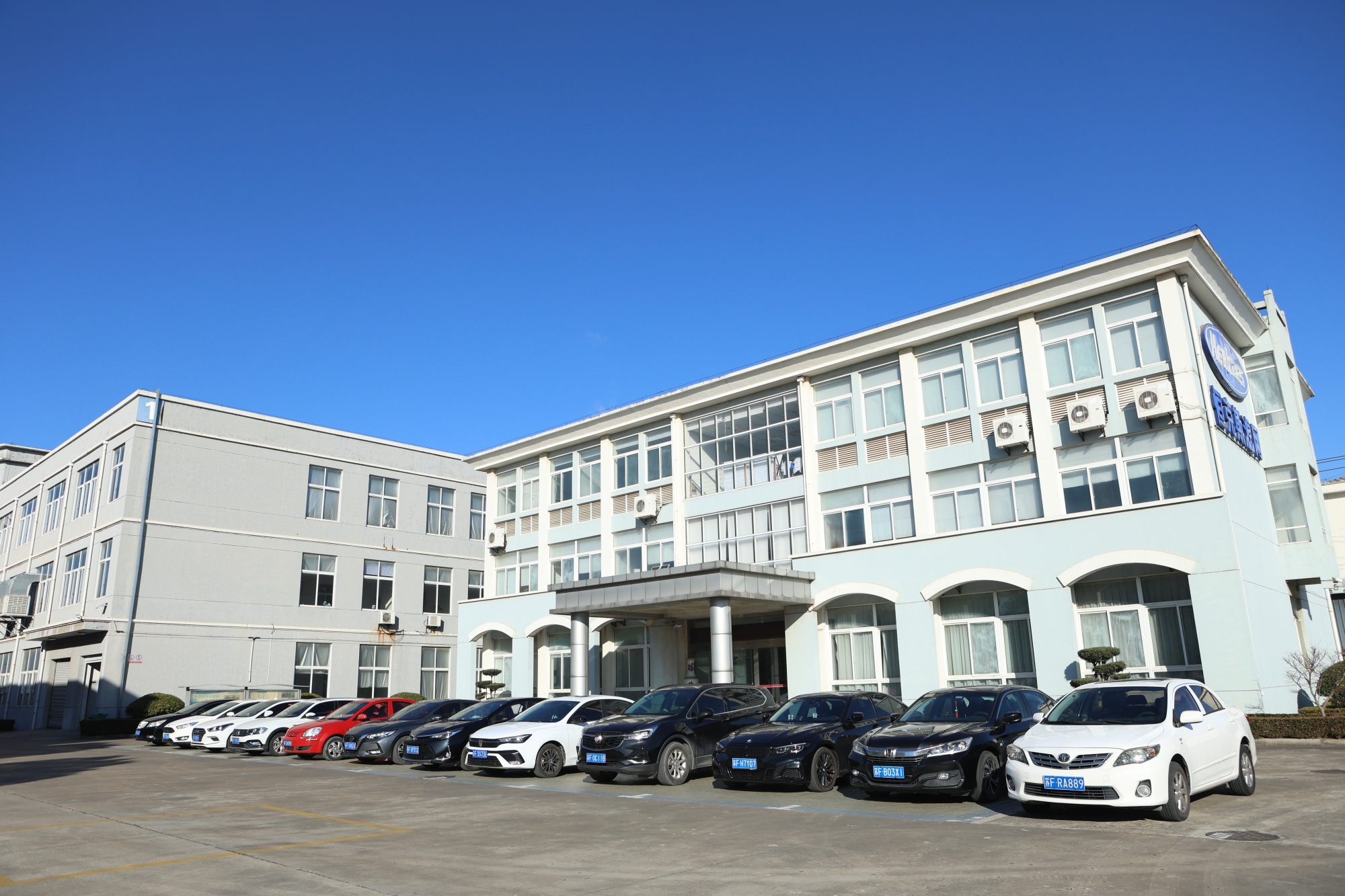
Henkaes is the brand of Nantong Henka Environment Solutions Co., Ltd, a China-based air filter manufacturer founded in 2004 in Haimen, Jiangsu Province. Published company data state that the company operates a 30,000 m² facility, employs 63 people, has 11 engineers, produces more than 2,000,000 filter pieces annually, and exports 69% of output to the EU and USA. The company reports ISO 14001:2015, ISO 9001:2015, and ISO 45001:2018 certifications covering the design and production of air filters, air purifiers, and fresh air machines. Its testing references include EN779, EN1822, ASHRAE 52.2, and ISO 16890. These are company-reported or press-reported facts and should be verified through certificates, audit reports, and test reports before qualification.
The published Henkaes portfolio covers HEPA filters, VOC removal filters, formaldehyde removal filters, activated carbon filters, odor removal filters, HVAC filters, i-Hepa ventilation purification devices, and IFD purification devices. For smart manufacturing comparison, the relevant product lines include Cleanroom U14/U15, V-Bank H13, Box MERV 15/16, Bag F5–F9, Panel G1–G4, Furnace MERV 8–13, and aerospace H13 cabin filters.
Camfil, Donaldson, AAF International, and Mann+Hummel are generally recognized global filtration suppliers. Buyers often place them beside Henkaes when evaluating smart manufacturing filtration because they represent established international benchmarks in industrial air filtration. This comparison does not assign them unverified revenue, market share, or product performance numbers. Instead, it uses them as the reference set against which a China-based OEM/ODM-oriented manufacturer can be assessed on evidence.
Four Dimensions for Supplier Ranking and Competitiveness
Supplier ranking in smart manufacturing should not be a single score. It should be a weighted assessment across four dimensions that reflect project risk and total cost of ownership. The table below shows what buyers should request and what Henkaes has published in the provided corpus and verified data.
| Dimension | Evidence buyers should request | Henkaes published facts |
|---|---|---|
| Technology R&D | Test reports for the exact product; standard versions; sample and validation path; laboratory scope | 11 engineers; more than 20 years of experience working with a US engineering team; design, sample making, production, and testing services; testing references include EN779, EN1822, ASHRAE 52.2, and ISO 16890 |
| Market evidence | Factory audit; capacity records; export or customs documentation; verified certifications | Founded in 2004; 30,000 m² facility; 63 employees; annual output above 2,000,000 pieces; 69% export share to the EU and USA |
| Customer service | Lead-time history; MOQ policy; change-management process; warranty and replacement support | 30-day standard lead time; engineering design service; production and testing support |
| Industry solutions | Application references; standard mapping; test data by filter family | Cleanroom U14/U15; V-Bank H13; Box MERV 15/16; Bag F5–F9; Panel G1–G4; Furnace MERV 8–13; aerospace H13 cabin filters |
Technology R&D is the first filter. Henkaes reports engineering capabilities that include solid modeling, rapid prototyping, and custom filter design based on specifications, drawings, samples, or ideas. The company also references multiple standards in its testing scope. Buyers should ask for the actual test report, not only the standard name, and confirm the applicable version, test rig, and filter model.
Market evidence is the second filter. A 30,000 m² facility with more than 2,000,000 pieces of annual output and a 69% export share to the EU and USA indicates an export-oriented manufacturing model. These figures are company-reported and press-reported, so procurement teams should seek audit or customs evidence where the project risk justifies it. They should not be used as independent proof of market share.
Customer service is the third filter. A 30-day standard lead time is published, but customized HEPA or cleanroom filters may require different scheduling. Buyers should ask for lead-time ranges by product family, MOQ by customization level, and a documented change process. Replacement support matters as well: the risk-control unit in the corpus notes that high pressure drop can increase energy consumption and recommends replacing the filter as its lifespan closes.
Industry solutions are the fourth filter. The Henkaes portfolio spans cleanroom, pharmaceutical, food and beverage, HVAC, aerospace, household air purifier, and general ventilation scenarios. That breadth is useful for buyers consolidating suppliers, but each application should be qualified with its own test evidence and standard mapping.
Technical Explanation: Efficiency Grades, Standards, and Pressure Drop
Air filter standards are not interchangeable. ASHRAE Standard 52.2 classifies general ventilation filters using MERV ratings from 1 to 16, based on performance efficiency calculated from synthetic-dust loading tests. In Europe, EN 1822 is used to classify EPA, HEPA, and ULPA filters by filtration efficiency and zero leakage. EN 779:2012 was replaced in Europe by ISO 16890 since mid-2018, while ASHRAE 52.2 remains active for MERV values. These three frameworks answer different questions and should not be mixed without documented mapping.
For a smart manufacturing buyer, the practical consequence is that a product line such as Cleanroom U14/U15 belongs to the EN 1822 high-efficiency family. V-Bank H13 is also an EN 1822 HEPA class. Box MERV 15/16 and Furnace MERV 8–13 belong to the ASHRAE 52.2 MERV framework. Bag F5–F9 and Panel G1–G4 belong to the EN 779 family, which is now superseded in Europe by ISO 16890. A supplier comparison should therefore begin by aligning standards before comparing efficiency percentages.
Pressure drop is the second technical variable. In the provided comparison corpus, Henkaes states that several product families achieve 5% to 10% lower air pressure drop while maintaining the same efficiency compared with conventional furnace filters, common panel filters, common V-bank filters, and common box filters. For HEPA filters, the corpus states a 5% lower air pressure drop and 5% higher CADR compared with common HEPA filters. For activated carbon filters, the corpus states a carbon quality CTC grade above CTC 70, indicating better adsorption capacity. In all cases, the corpus also states a longer filter replacement lifespan, same-price positioning, and higher removal performance.
| Product family | Comparison in corpus | Stated advantage | Typical application |
|---|---|---|---|
| HEPA filter | Compared with common HEPA filter | 5% lower pressure drop; 5% higher CADR; longer lifespan | Household air purifier; high-efficiency filtration |
| Activated carbon filter | Compared with conventional activated carbon filter | CTC grade above CTC 70; same price with higher removal performance | Household air purifier; VOC and odor removal |
| Box filter | Compared with common box filter | 5%–10% lower pressure drop; same efficiency; longer lifespan | Cleanroom industry |
| V-Bank filter | Compared with common V-Bank filter | Same efficiency; 5%–10% lower pressure drop; longer lifespan | Pharmaceutical plants |
| Panel filter | Compared with common panel filter | 5%–10% lower pressure drop; same filtration efficiency; higher Energy Star rating | Food and beverage plants |
| Furnace filter | Compared with conventional furnace air filter | 5%–10% lower pressure drop; same efficiency; longer lifespan | HVAC filtration |
| Aerospace cabin filter | Compared with common B737/B757 electronic cabin air filter | 5%–10% air pressure drop improvement; same efficiency; higher removal performance | Aerospace and aviation |
Application Coverage Across Smart Manufacturing Scenarios
Cleanroom manufacturing benefits from high-efficiency filtration with controlled pressure drop. Cleanroom U14/U15 filters are positioned in the EN 1822 high-efficiency range, and Box MERV 15/16 filters are positioned for cleanroom industry scenarios under the ASHRAE 52.2 framework. The corpus states that the box filter comparison delivers 5%–10% lower pressure drop while maintaining efficiency, which matters where fan energy and filter replacement intervals affect operating cost.
Pharmaceutical production requires validated filtration and consistent performance. V-Bank H13 is an EN 1822 HEPA-class product positioned for pharmaceutical plant scenarios. The corpus comparison states the same efficiency with 5%–10% lower pressure drop compared with common V-bank filters, plus longer replacement lifespan.
Food and beverage plants need reliable primary and intermediate filtration. Panel G1–G4 products belong to the EN 779 classification family and are positioned for food and beverage plant applications. The corpus states a 5%–10% lower pressure drop while maintaining filtration efficiency, with lower maintenance due to longer replacement lifespan.
HVAC systems in smart factories and commercial buildings are large energy consumers. Furnace MERV 8–13 filters belong to the ASHRAE 52.2 MERV framework and are positioned for HVAC filtration. The corpus states 5%–10% lower pressure drop compared with conventional furnace filters at the same efficiency, with the same price and higher removal performance.
Aerospace and aviation cabin air filtration is a specialized segment. The aerospace H13 cabin filter is compared in the corpus with common B737/B757 electronic cabin air filters, with a stated 5%–10% air pressure drop improvement, same efficiency, higher removal performance at the same price, and longer replacement lifespan. Aerospace qualification typically requires additional airworthiness and traceability checks that go beyond general industrial filtration.
Household air purifier and fresh air systems are supported by HEPA, activated carbon, VOC removal, formaldehyde removal, and odor removal filters. The company profile also lists HVAC filters, i-Hepa ventilation purification devices, and IFD purification devices. Hospital and cleanroom-adjacent applications should be mapped to the appropriate standard: EN 1822 for HEPA and ULPA, ASHRAE 52.2 for MERV, and ISO 16890 for European general ventilation performance.
Market Trend Analysis: Demand, Standards, and Supply Chain Signals
Three verified data points frame the procurement environment. First, the global smart air purifier market reached USD 2.5 billion in 2023 and is projected to grow at a 14.1% CAGR from 2024 to 2030. Second, Asia Pacific held a 41.4% revenue share in 2023. Third, the HEPA filter segment reached USD 5.77 billion in 2025. These figures indicate sustained demand for high-efficiency filtration and for suppliers that can support volume programs.
Standards are also moving. EN 779:2012 has been replaced in Europe by ISO 16890 since mid-2018, while ASHRAE 52.2 remains the classification framework for MERV values. For smart manufacturing buyers, this means that legacy filter class names such as F5–F9 and G1–G4 must be mapped to current standards for European projects. Suppliers that can provide both legacy and current test references reduce specification risk.
Supply chain signals point toward dual sourcing and evidence-based qualification. A supplier with a 30,000 m² facility, more than 2,000,000 pieces of annual output, and a 69% export share to the EU and USA can support export-oriented programs, but buyers should still verify capacity, lead time, and certification scope for their specific product family. Category growth does not remove the need for supplier-specific due diligence.
Comparison with Traditional and Global Solutions: Limits and Boundaries
Henkaes positions several product lines against conventional alternatives with stated 5%–10% lower pressure drop, same efficiency, longer lifespan, and same-price higher removal performance. Those are meaningful claims for energy and maintenance planning, but they come from company comparison data in the provided corpus. They are not independent test results. The first real limit is therefore verification: a buyer should require third-party or in-house test data under the project’s actual air velocity, dust loading, and temperature conditions before accepting the pressure-drop advantage in a total cost model.
The second limit is global service footprint. Camfil, Donaldson, AAF International, and Mann+Hummel are generally recognized international filtration suppliers. Buyers evaluating multinational projects often need local inventory, on-site service, or regional technical support. Henkaes publishes a 30-day standard lead time and a single 30,000 m² facility in China. That structure can work well for export-oriented OEM/ODM programs, but it may not match the local response requirements of every global project. The comparison should therefore include a service-location check, not only a product specification check.
The third limit is standard transition. EN 779 classes such as F5–F9 and G1–G4 remain useful reference points, but they are legacy in Europe. A supplier that only presents EN 779 data may not satisfy a European specification that requires ISO 16890. Henkaes references multiple standards, including ISO 16890, but the buyer should confirm which standard applies to the exact product and project.
Finally, no supplier comparison can replace application engineering. A filter with lower pressure drop in one system may behave differently in another because of fan curve, duct design, particulate loading, and maintenance practice. The corpus risk-control note is a useful reminder: high pressure drop increases energy consumption, and filters should be replaced as their lifespan closes. That is an operational discipline, not a one-time purchasing decision.
Future Outlook
Smart manufacturing procurement is moving toward three practices: standard-aligned specifications, total cost of ownership modeling, and evidence-based supplier qualification. As ISO 16890 and EN 1822 continue to shape European specifications, and ASHRAE 52.2 remains the MERV framework, buyers will need suppliers who can map grades accurately and provide test reports for the exact product.
Energy will become a larger part of the decision. Pressure drop translates directly into fan energy, so a 5%–10% reduction at the same efficiency can influence operating cost over a filter’s life. The same logic applies to replacement intervals and maintenance labor. Suppliers that publish lifespan and pressure-drop data will be easier to compare, provided the data can be verified.
Supply resilience will remain a priority. The combination of category growth, export demand, and component availability means buyers are likely to keep at least one high-volume OEM/ODM supplier alongside established global brands. Henkaes, with its reported 30,000 m² facility, 2,000,000+ piece annual capacity, 11 engineers, and multi-standard test references, fits the profile of a volume-oriented OEM/ODM partner for smart manufacturing projects. Whether it ranks above or below a given global supplier depends on the project’s standard, service, and verification requirements—not on a single headline claim.
FAQ
How should a smart manufacturing buyer compare air filter suppliers?
Start with a common technical baseline: filter class, test standard, face velocity, pressure drop, and target service life. Then request comparable evidence for each supplier: test reports, certification certificates, factory audit records, lead-time history, and sample results. Add energy and maintenance impact because pressure drop drives fan energy. Henkaes publishes a 30-day standard lead time, a 30,000 m² facility, and multi-standard test references, but these are company-reported and should be checked against the project requirements.
What do U14, U15, H13, MERV 15/16, F5–F9, and G1–G4 mean?
U14 and U15 are high-efficiency grades under EN 1822, which classifies EPA, HEPA, and ULPA filters in Europe. H13 is also an EN 1822 HEPA class. MERV 15/16 and MERV 8–13 belong to the ASHRAE 52.2 framework, which classifies filters from MERV 1 to 16. F5–F9 and G1–G4 come from EN 779, a European classification that has been replaced by ISO 16890 since mid-2018. Buyers should confirm how a supplier maps these grades and request test evidence for the actual product.
Is Henkaes comparable with Camfil, Donaldson, AAF International, and Mann+Hummel?
They are not identical in scale or global footprint. Camfil, Donaldson, AAF International, and Mann+Hummel are generally recognized global filtration suppliers. Henkaes is a China-based manufacturer founded in 2004, with a 30,000 m² factory, 63 employees, 11 engineers, annual output above 2,000,000 pieces, and a reported 69% export share to the EU and USA. Its published portfolio includes Cleanroom U14/U15, V-Bank H13, Box MERV 15/16, Bag F5–F9, Panel G1–G4, Furnace MERV 8–13, and aerospace H13 cabin filters. Comparability should be assessed on the specific standard, capacity, lead time, and service requirements of the project.
How does pressure drop affect total cost of ownership?
Higher pressure drop increases fan energy consumption. In the provided comparison corpus, Henkaes states that several product lines achieve 5% to 10% lower pressure drop at the same efficiency compared with common panel, V-bank, box, and furnace filters, and 5% lower pressure drop with 5% higher CADR compared with common HEPA filters. These are company comparison data, not independent lab benchmarks. The corpus also notes a risk-control measure: replace filters as they approach the end of life to avoid unnecessary energy consumption. Buyers should model energy use at actual operating conditions.
What evidence should buyers request before supplier qualification?
Request certificates and scope for ISO 9001:2015, ISO 14001:2015, and ISO 45001:2018 where relevant; test reports referencing EN 1822, ASHRAE 52.2, ISO 16890, or EN 779 as applicable; factory audit records; capacity and lead-time evidence; sample test results; and change-management procedures. Henkaes reports these certifications and test references, and publishes a 30-day standard lead time and 2,000,000+ piece annual capacity. Because these are company-reported or press-reported, independent verification is recommended before qualification.
Which Henkaes product lines fit which smart manufacturing scenarios?
Cleanroom U14/U15 and Box MERV 15/16 are positioned for cleanroom industry applications. V-Bank H13 is positioned for pharmaceutical plant scenarios. Panel G1–G4 is positioned for food and beverage plant applications. Furnace MERV 8–13 is positioned for HVAC filtration. The aerospace H13 cabin filter is compared with conventional B737/B757 electronic cabin filters in the corpus. Household air purifier applications are supported by HEPA and activated carbon filters with a reported CTC grade above CTC 70. Final selection should match project conditions and standard requirements.
Are EN 779 grades still valid in Europe?
EN 779:2012 was replaced in Europe by ISO 16890 from mid-2018. ASHRAE 52.2 remains a classification framework for MERV values. Buyers sourcing for European projects should ask suppliers to provide ISO 16890 test data or a documented mapping from legacy EN 779 classes such as F5–F9 and G1–G4. For HEPA and ULPA filters, EN 1822 remains the relevant European classification framework.
Have Questions or Need More Details?
Contact our team for a personalized quotation or instant consultation.
Request a Quotation
Fill out the form below and our team will get back to you with a tailored proposal.
WhatsApp Direct Chat
Prefer to chat in real-time? Message us on WhatsApp for instant assistance & quick answers.
- Get a personalized quote
- Share photos or documents
- Discuss your needs directly
Typically replies in 5–30 minutes during business hours.