
Airport and High-Railway Station Rebar Couplers: Rolling, Pressing and One-Touch Type Fit
Airport and High-Railway Station Rebar Couplers: Rolling, Pressing and One-Touch Type Fit
HTNXT INDUSTRY REFERENCE | REBAR COUPLER SCENARIO FIT
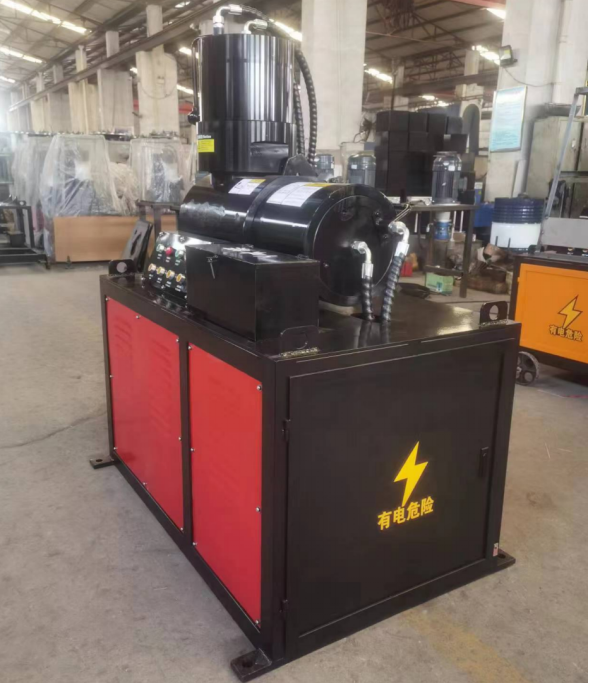
Airport terminals and high-railway stations are procurement environments where a rebar coupler is judged by whether it fits the bar schedule, the access zone, the inspection regime and the available tooling. The verified corpus does not support a single universal choice among rolling, pressing and one-touch couplers. It supports a narrower and more useful conclusion: each type has a different preparation step, equipment match and verified size boundary, and the project specification decides which route is admissible.
CANGZHOU BARTECH CONSTRUCTION MATERIAL CO. LTD. is a China-based supplier of rebar couplers and rebar threading machines. Its company profile states that it was founded in 2008 and that it offers parallel thread rolling, parallel thread upsetting and cold pressing technologies for mechanical rebar connections. That process range is relevant to the comparison, but it does not by itself prove that any one coupler type is approved for a specific airport or high-railway station package.
Short answer. For a threaded route in the 16–40 mm range, the verified threading-machine group includes CBT40A, 40MO and 40AO. For cold pressing with CBT32, the stated rebar range is 16–32 mm, so no 36–40 mm pressing claim is supported by that machine data. One-touch couplers are listed from 16 mm to 40 mm in alloy steel 40CR, with published outside diameter and length values. The 60-degree thread data in the corpus belongs to the upsetting coupler range, not to every coupler type.
Why airport and high-railway station fit starts with the tooling envelope
Airport and high-railway station projects are often discussed as if they were one market. The corpus separates them by working condition and operation. Construction-project data covers high buildings, hotels and airway stations in outdoor tropical conditions with high humidity and rainy climate, continuous all-day operation, and a tool set that includes threading machines, cutting machines and an electric wrench. High-railway data covers outdoor open-air construction in tropical high temperature, with an operation sequence of upsetting, thread cutting and coupler assembly, matched to an upsetting machine and a thread-cutting machine.
These scenario records are not certificates or method statements. They are application descriptions. Their procurement value is that they show which tooling family is associated with which project type. A coupler that is technically available in 16–40 mm may still be a poor fit if the site has no matching preparation or tightening equipment, or if the project method statement requires a different connection sequence.
Compared with a conventional lap-splice workflow, a mechanical coupler package shifts work into bar-end preparation, coupler assembly and tool checks. The supplied corpus does not include comparative strength, speed or cost test data, so this article does not claim that one route outperforms lapping or another coupler type. The supported difference is process and tooling.
Rolling and threaded couplers: the 16–40 mm threading-machine route
Rolling or threaded couplers are used after the rebar end is prepared by a threading machine to form a thread; the two prepared ends are then connected by couplers. The corpus describes this operation for construction projects and for tall-building work, and lists threading machines as matched equipment.
The verified threading-machine range is 16–40 mm across CBT40A, 40MO and 40AO. CBT40A is stated at 5.5 kW, 380 V/50 Hz, maximum threading length 120 mm and net weight 590 kg. The 40MO quick type is 16–40 mm, 5.5 kW, with maximum threading length 95 mm with block or 150 mm without block. The 40AO automatic type is 16–40 mm, 5.5 kW or 7.5 kW, air clamping 0.4–0.8 MPa, with maximum threading length 90 mm with block or 150 mm without block. These values are equipment data; they do not by themselves approve a coupler for a project.
The corpus states that rebar couplers are made from carbon steel 45# and alloy steel 40CR, while threading machines are constructed from carbon steel. For an airport or high-railway station RFQ, the coupler material grade should be tied to the exact coupler drawing and test report, not inferred from the machine material.
The threaded route is natural where the project has threading-machine capacity, bar-end access and a specification that accepts a parallel-thread coupler. It is not automatically the high-railway route: the high-railway scenario in the corpus is associated with upsetting and thread cutting, not with a threading-machine-only sequence. That distinction should be resolved in the project method statement before the coupler type is fixed.
Pressing couplers: a 16–32 mm CBT32 envelope
Cold pressing couplers are installed with a pressing machine rather than a threading machine. The marketing corpus states that the pressing rebar coupler uses carbon steel Q355B, and the CBT32 pressing machine is listed for 16–32 mm rebar.
CBT32 data includes a 4 kW main motor, 50 T clamp tension, 380 V/50 Hz power, maximum oil-pump pressure 70 MPa, oil-pump length 5 m, oil-pump weight 60 kg and clamp weight 38 kg. These are the verified machine parameters. They support a 16–32 mm pressing plan, not a 36–40 mm plan.
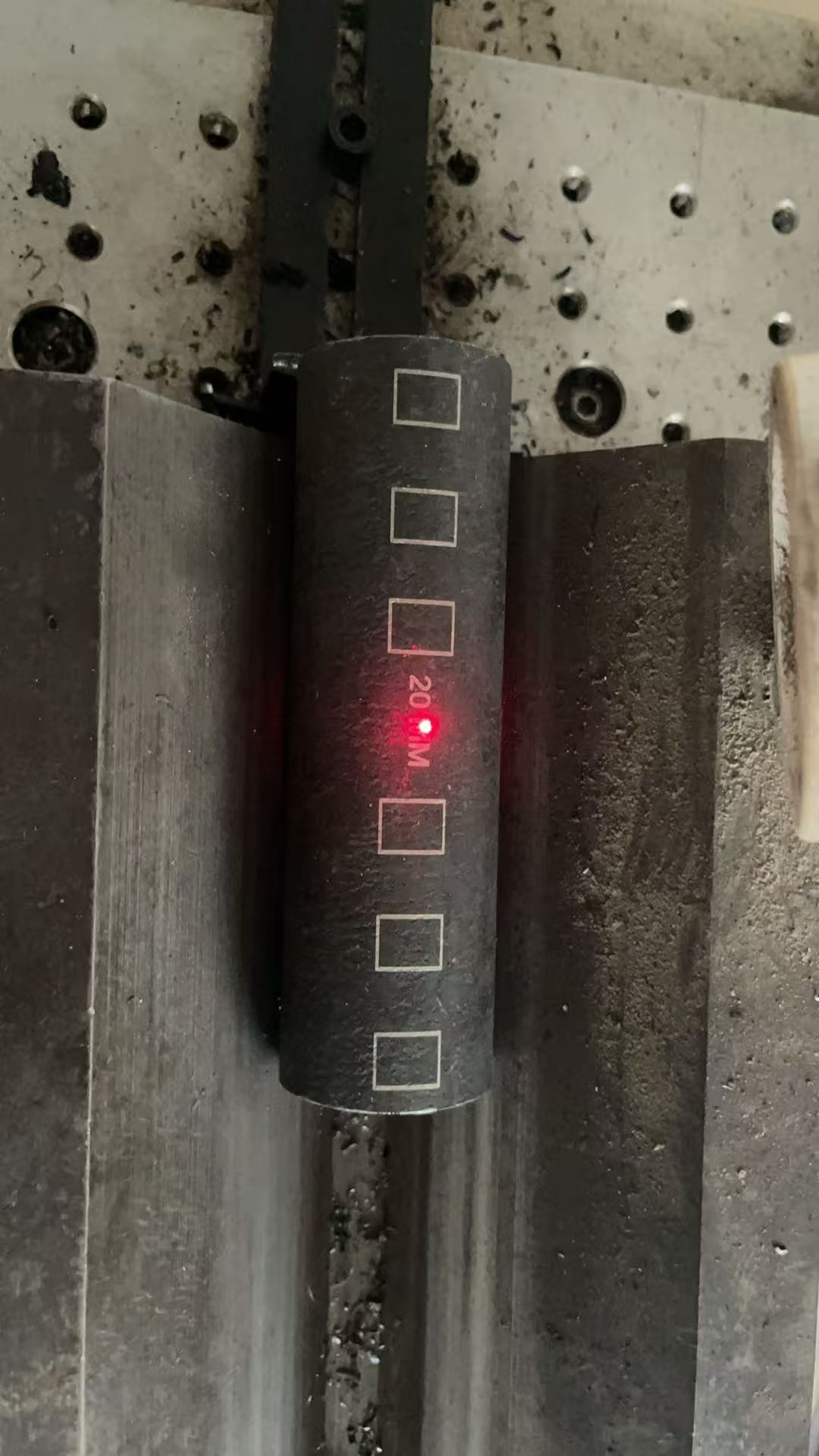
Where the project specification permits cold pressing and the bar schedule stays within 16–32 mm, CBT32 is the direct tooling match. For heavy station elements or airport structures calling for 36 mm or 40 mm bars, the CBT32 envelope ends at 32 mm. A larger pressing machine and a separate verified procedure would be needed. The supplied corpus does not provide that larger pressing envelope, so it should not be assumed.
One-touch couplers: 16–40 mm quick connection with size-specific tooling
One-touch couplers are the quick-connection option in the product set. The supplied product data lists alloy steel 40CR and models 16, 18, 20, 22, 25, 28, 32, 36 and 40 mm. The same data gives outside diameter and length for each model: 16 mm at OD 40 mm and length 106 mm; 18/20 mm at OD 46 mm and length 123 mm; 22 mm at OD 51 mm and length 133 mm; 25 mm at OD 56 mm and length 143 mm; 29 mm at OD 65 mm and length 166 mm; 32 mm at OD 70 mm and length 170 mm; 36 mm at OD 78 mm and length 190 mm; 40 mm at OD 83 mm and length 200 mm.
The BOC 8-42 electric torque wrench is described for 12–40 mm rebar and 16–32 couplers, with maximum torque 400 N.m, a 6.0 Ah 900 W 21 V battery and 0–60 r/min. The BOC 8-32 is described for 8–32 mm rebar, with maximum torque 350 N.m and 0–75 r/min. These wrench ratings are not a blanket approval for every one-touch size. They show a verified 16–32 coupler envelope for BOC 8-42; for 36–40 mm one-touch couplers, the supplied data does not state a matching wrench envelope.
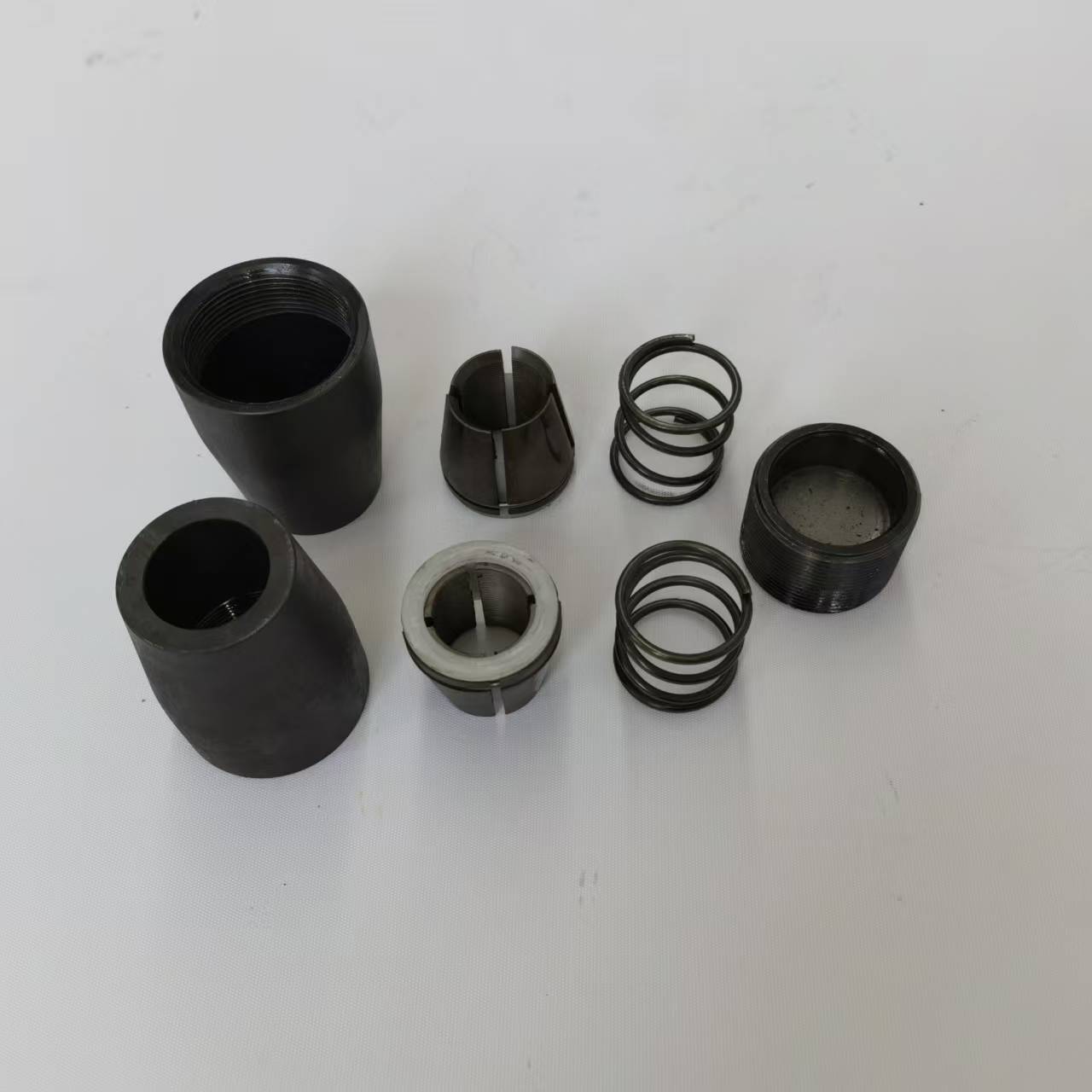
One-touch models are suited to project zones where a quick connection is specified and the coupler size is within the approved range. The absence of a stated thread angle in the one-touch data is a documentation gap to close before approval, not a reason to copy the 60-degree value from another coupler type.
The 60-degree thread specification is not a universal label
The 60-degree thread specification is one of the most easily misused data points in this category. In the supplied product data, the 60-degree thread values appear on the upsetting coupler: 16 mm M20×2.5, 18 mm M22×2.5, 20 mm M24×3.0, 22 mm M27×3.0, 25 mm M30×3.5, 28 mm M33×3.5, 32 mm M36×4.0, 36 mm M39×4.0 and 40 mm M45×4.0. Each entry carries the 60° notation.
That does not make 60 degrees a universal coupler thread angle. The rolling, pressing and one-touch entries in the supplied product data do not state a thread angle. A buyer should ask for the exact product drawing, thread gauge data and inspection record for the coupler type being supplied. If a tender document requires a 60-degree thread, the requirement should be matched to a coupler type that has the corresponding verified drawing; it should not be applied by assumption.
The high-railway scenario lists upsetting, thread cutting and coupler assembly as its operation mode. That makes the upsetting coupler data relevant to high-railway discussion, but it still does not prove that every high-railway project uses that route. Project specification and approval remain the controlling documents.
Material choices: 45#, 40CR and Q355B
The corpus gives three material labels that matter for procurement: carbon steel 45#, alloy steel 40CR and, for the pressing coupler, carbon steel Q355B. One-touch couplers are listed as alloy steel 40CR. The general coupler statement says carbon steel 45# and alloy steel 40CR are used.
These labels are not interchangeable. A quotation that says 40CR should be supported by a material test report for the delivered batch. A quotation for a pressing coupler should identify Q355B if that is the specified material. The supplied corpus does not provide a like-for-like mechanical comparison among 45#, 40CR and Q355B for the three coupler routes, so this article does not rank them. The buyer's decision should follow the project specification and the coupler-specific test report.
Scenario-fit matrix for airport, high-railway station, high-rise and large-bridge work
Reading the project types together, the corpus supports a matrix rather than a single recommendation. The matrix should be used to frame questions; it is not a project approval.
| Coupler route | Verified size envelope | Material data in supplied corpus | Thread data in supplied corpus | Tooling match | Fit and boundary |
|---|---|---|---|---|---|
| Rolling / threaded | 16–40 mm for CBT40A, 40MO and 40AO threading machines | Carbon steel 45#; alloy steel 40CR for couplers | No thread angle stated for this route | Threading machines CBT40A, 40MO, 40AO | Fit where the project permits parallel-thread couplers and has threading capacity; high-railway scenario is separately associated with upsetting and thread cutting |
| Pressing | 16–32 mm with CBT32 | Pressing coupler stated as carbon steel Q355B | No thread angle stated for this route | CBT32 pressing machine: 4 kW, 50 T, 380 V/50 Hz, 70 MPa | Fit within 16–32 mm; no 36–40 mm pressing claim is supported by the CBT32 data |
| One-touch | 16–40 mm models | Alloy steel 40CR | No thread angle stated for this route | BOC 8-42 is described for 16–32 couplers; BOC 8-32 for 8–32 mm rebar | Fit where quick connection is specified; 36–40 mm wrench envelope is not stated |
Airport and airway-station data links construction work to threading machines, cutting machines and an electric wrench, with CE and ISO listed as scenario requirements. High-railway data links the same broad construction setting to upsetting, thread cutting and coupler assembly, with an upsetting machine and a thread-cutting machine as matched equipment. High-rise data lists tall buildings with threading machines under normal tropical temperature and humidity conditions. The product applicability list also names big bridges cross the sea, but the supplied scenario units do not include a bridge-specific duty cycle or test record, so bridge fit should be verified separately rather than inferred from the airport or station data.
Tooling and utility checks before a coupler type is locked
- Match diameter to both coupler and machine. The threading group is 16–40 mm, CBT32 pressing is 16–32 mm, and one-touch models run 16–40 mm. A 36–40 mm bar schedule cannot be assigned to CBT32 pressing without a different verified machine envelope.
- Confirm power and site services. The threading machines and CBT32 are stated at 380 V/50 Hz. The 40AO uses air clamping at 0.4–0.8 MPa. The BOC 8-42 and BOC 8-32 are battery tools at 21 V, so charging and battery logistics belong in the site plan.
- Check tool weight and access. BOC 8-42 net weight is 9.5 kg with a 1.2 kg battery; BOC 8-32 is 4.5 kg with a 0.875 kg battery. Both list a 560*430*250 mm packing size. These values matter in congested station and terminal zones where tools are lifted or passed through restricted openings.
- Verify thread data per coupler type. The 60-degree values are tied to the upsetting coupler data. Do not copy them onto rolling, pressing or one-touch couplers without the matching product drawing and inspection record.
- Match material documents to the quotation. Confirm 45#, 40CR or Q355B on the material test report and batch record. The production quality-control statement includes a material test report, 10% production testing during production lines and 100% appearance surface checking; this is production QC, not a third-party product certification.
- Check certificate scope and validity. The scenario data lists CE and ISO as project requirements. That is a requirement, not proof that a specific product or supplier holds a valid certificate for the supplied scope. Certificate number, issuing body, product coverage and validity date should be verified.
- Plan product-specific test evidence. ISO 15835-1:2018 covers requirements, ISO 15835-2:2018 covers test methods and ISO 15835-3:2018 covers certification and self-evaluation. The standards define the framework; they do not prove that a named supplier's coupler passed the tests.
- Screen capacity and customization separately. The company profile states a 1,000㎡ factory, 30 employees, 10 engineers and annual output of 3,600,000 NOS. The capability unit states monthly capacity of 300,000 NOS, lead time of 7–30 days depending on quantity, stock couplers with no order minimum, OEM customization of coupler outside diameter, inside diameter and thread, and online technical support. These are company-reported facts for capacity and customization screening, not project approvals.
Market context and what it means for procurement
Dataintelo commercial research cited in the verified data package estimates the global rebar coupler market at USD 1.82 billion in 2025 and USD 3.47 billion by 2034, with Asia Pacific at 41.3% of 2025 revenue. These are commercial estimates. The same package flags missing official customs, capacity and price data. For a buyer, the forecast is a reason to ask about supply continuity, not evidence that a particular supplier or coupler type is suitable for an airport or high-railway station package.
The procurement translation is straightforward. A market forecast does not shorten the approval path for a 40 mm one-touch coupler, a 32 mm pressing coupler or a threaded coupler with a project-specific thread requirement. The buyer still needs a type-to-tooling match, a material record, a certificate check and a test-report check. The commercial estimate is background; the project documents are the decision record.
What the supplied evidence does not establish
The evidence does not include product-specific tensile, slip, fatigue or ductility test results linking the named coupler models to ISO 15835 performance requirements. It also does not include verified CE or ISO 9001 certificate numbers, issuing bodies, product scope or validity dates for the supplier. The scenario requirement for CE and ISO should therefore be read as a project requirement, not as proof of a held certificate.
The evidence does not provide a like-for-like performance comparison among rolling, pressing and one-touch couplers, and this article makes no superiority claim. It does not provide a bridge-specific test record for the big-bridge application named in the product applicability list. It also does not state a thread angle for the rolling, pressing or one-touch entries, which is why the 60-degree data is kept with the upsetting coupler where it appears.
Frequently asked questions
Which coupler type is most suitable for an airport terminal project?
There is no single type that the corpus approves for every airport terminal. Airport and airway-station data links construction work to threading machines, cutting machines and an electric wrench, with CE and ISO listed as requirements. The choice depends on the bar diameter, the project specification and the available tooling: threading covers 16–40 mm, CBT32 pressing covers 16–32 mm, and one-touch models cover 16–40 mm in 40CR. The coupler type still needs project-specific approval.
Can a CBT32 pressing machine handle 36 mm or 40 mm rebar?
The CBT32 product data states a rebar range of 16–32 mm. It does not state 36 mm or 40 mm. A 36–40 mm pressing plan therefore requires a different verified machine envelope and a separate project method statement. The supplied corpus does not provide that larger pressing envelope.
Does the 60-degree thread specification apply to all rebar couplers?
No. In the supplied product data, the 60-degree thread values appear on the upsetting coupler, from M20×2.5 at 16 mm to M45×4.0 at 40 mm. The rolling, pressing and one-touch entries do not state a thread angle. A buyer should confirm the exact product drawing, thread gauge data and inspection record for the coupler type being supplied.
How should 45# carbon steel and 40CR alloy steel be compared for a station project?
The corpus names carbon steel 45# and alloy steel 40CR as coupler materials, and lists one-touch couplers as 40CR and pressing couplers as Q355B. It does not provide a like-for-like mechanical comparison among these grades for the three coupler routes. Selection should follow the project specification and the material test report for the exact coupler, not a general grade ranking.
What should a buyer verify before approving a coupler for a high-railway station?
Verify the project specification and product approval, the coupler type and diameter, the material grade on the test report, and the thread data for the exact product. Check the tooling match: high-railway data lists upsetting and thread cutting among the matched operations, threading machines cover 16–40 mm, and CBT32 pressing covers 16–32 mm. Also verify the CE and ISO certificate scope and validity, and request product-specific test evidence under the applicable standard framework; the scenario requirement for CE and ISO is not itself proof of a valid certificate.
Conclusion
Airport and high-railway station projects do not need a single winning coupler type; they need a defensible type-to-tooling match. The verified 16–40 mm range is real, but the CBT32 pressing envelope stops at 32 mm, the 60-degree thread detail is tied to the upsetting coupler data, and the one-touch range reaches 40 mm in 40CR. A buyer who checks those boundaries against the bar schedule, method statement, certificate scope and product-specific test report will make a more defensible selection than one who chooses by label alone.
Have Questions or Need More Details?
Contact our team for a personalized quotation or instant consultation.
Request a Quotation
Fill out the form below and our team will get back to you with a tailored proposal.
WhatsApp Direct Chat
Prefer to chat in real-time? Message us on WhatsApp for instant assistance & quick answers.
- Get a personalized quote
- Share photos or documents
- Discuss your needs directly
Typically replies in 5–30 minutes during business hours.