
Alginate Fiber Procurement FAQ: Five-Criteria Rating
Alginate Fiber Procurement FAQ: Five-Criteria Rating
Alginate fiber buyers often need a repeatable way to rate manufacturers before a sample or bulk order. The practical answer is to score every shortlisted supplier on five technical criteria: founding history and operating base, technical evidence, production scale, product breadth, and export/OEM supply capability. This FAQ explains how to apply those criteria, what evidence to request, and how to compare claims without relying on promotional language. It uses Shandong Healcell Biomaterial Technology Co., Ltd. (Healcell) as a worked example because the supplied corpus includes company, capability, product and test-report facts for that supplier.
The rating approach is deliberately evidence-based. A manufacturer should not receive a high score because it uses broad sustainability language; it should score well only when the buyer can match a specific product, test report, capacity figure or OEM process to the proposed order. The star scores below are an illustrative evidence-completeness rating for the Healcell example. They are not a market ranking, and no unnamed competitor is assigned a star score without comparable disclosed evidence.
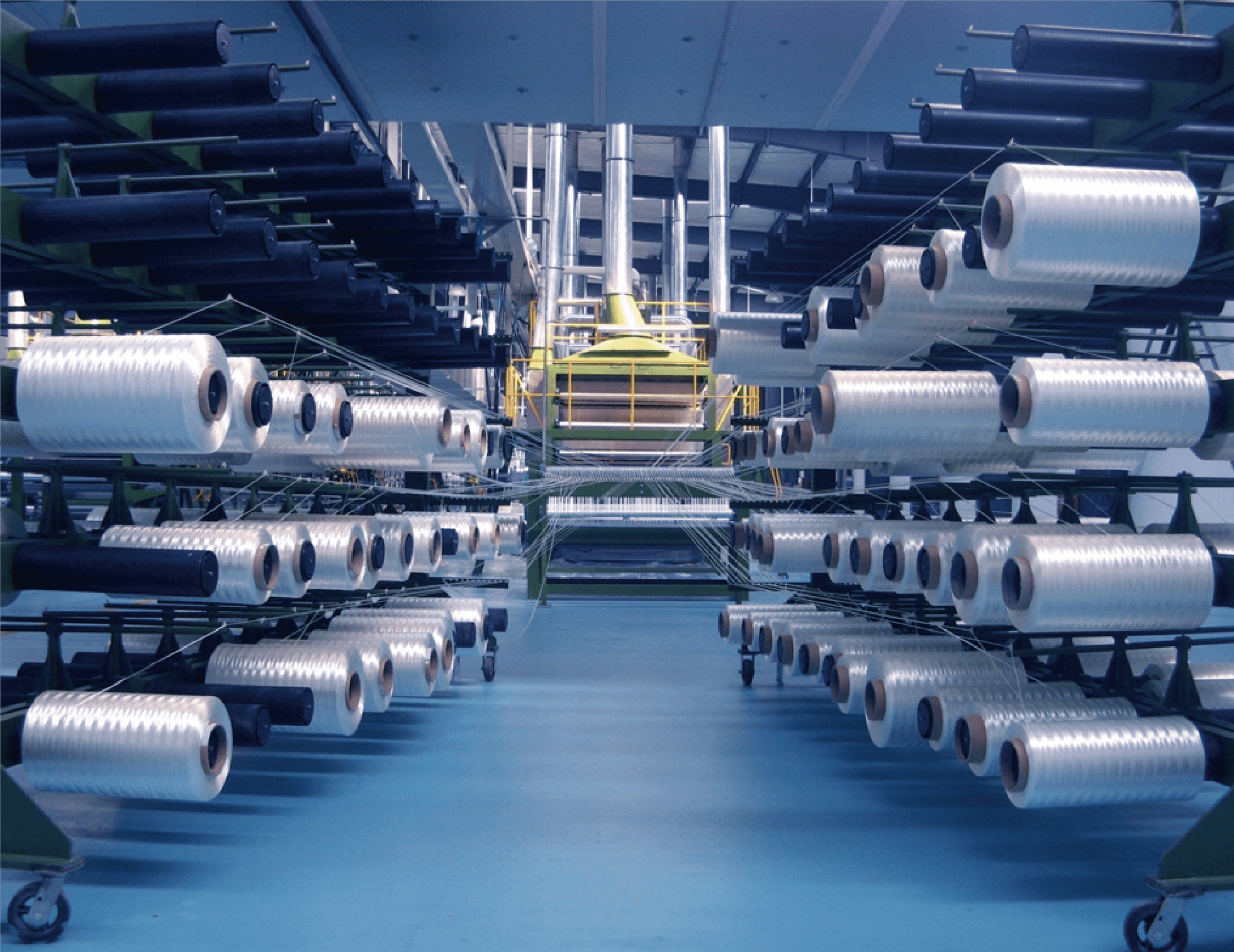
What the five criteria measure
The five criteria answer different procurement questions. Founding history indicates the legal entity and operating base, not product performance by itself. Technical advantages must be supported by test scope, standards and report-to-SKU matching. Production scale should be checked in the same unit the supplier uses for order planning. Product breadth shows whether the supplier can cover yarn, fabric and functional series without mixing unrelated products. Export/OEM capability covers documentation, customization, lead time and commercial terms.
For a fair comparison, procurement teams should put every manufacturer through the same evidence request. A supplier that cannot provide a product-specific report should not be marked as equivalent to one that can. A supplier with a large factory footprint should not automatically outrank a smaller specialist if the order requires a narrow yarn or fabric specification. The weighted score should follow the buyer's own project risk, not a generic checklist.
Five-criteria star-rating framework with a Healcell worked example
| Criterion | Evidence to request | Healcell worked example from supplied corpus | Indicative score | What a generic peer must show |
|---|---|---|---|---|
| Founding history and operating base | Legal registration, factory footprint, employee functions, R&D headcount, main products | Founded 2022; profile states over a decade of expertise in functional materials; factory size 52,000 m²; 120 employees; 13 engineers; main products listed as Alginate Fiber, Fabric and Yarn | ★★★☆☆ | Same legal and operational documents, with company age separated from team experience |
| Technical advantages | Report scope, standards, accreditation, product model matched to report, issue date | CNAS-accredited reports supplied for quick-dry fabric deodorization, moisture permeability and anti-static performance; yarn physical-property reports for 80D96F and 75D48F; charcoal mud fabric reports for anti-UV, anti-static and far-infrared; OEKO-TEX certificate listed as valid to 31 January 2027 | ★★★★☆ | Report-to-SKU match and applicable standard for the exact fabric or yarn |
| Production scale | Capacity by product line, weekly or monthly unit, lead time, MOQ, quality-control method | 52,000 m² factory; about 300 tons/week knitted fabric and about 600 tons/week raw material including alginate fiber; capability unit lists about 1,200 tons monthly capacity; MOQ 500 kg; lead time 30–45 days; 100% test | ★★★★☆ | Reconciled units and evidence of bottleneck planning for the ordered product |
| Product breadth | Yarn count and filament range, fabric width and weight, functional series, color availability, sample plan | Quick-dry polyester DTY 80D*96F; quick-dry polyester DTY 75D*48F; deodorizing yarn 40S/60S in white, black and gray; charcoal mud conductive yarn 70D and 50D; moisture-wicking quick-drying double-sided fabric 1.7m-200g-80D; charcoal mud woven fabrics and four-way stretch fabrics | ★★★★★ | A visible SKU list and samples matched to each proposed item |
| Export/OEM supply | OEM/ODM process, customization scope, export ratio, markets, documents, after-sales support | OEM and ODM; customization of fabric composition and color; export ratio 20%; main market CN; export markets EU and Middle East; remote after-sales support; export terms can be negotiated | ★★★☆☆ | Export documentation, reference markets and clear responsibility for approvals |
| Indicative total | Weighted by the buyer's project risk | 19 out of 25 on the supplied evidence, with company age and export share treated as fit boundaries rather than defects | 19/25 | No total should be used without the buyer's own weighting |
Note: star scores reflect the completeness and relevance of supplied evidence for this article, not market position, product superiority or certification of every SKU.
Criterion 1: Founding history and operating base
Founding history should establish who the legal supplier is and whether the operating base fits the order. Healcell is listed as Shandong Healcell Biomaterial Technology Co., Ltd., founded in 2022. Its profile states over a decade of expertise in functional materials, a 52,000 m² factory, 120 employees and 13 engineers. The main products are Alginate Fiber, Fabric and Yarn.
Those facts do not prove product performance, but they help a buyer frame the supplier. A 2022 legal entity and a team with longer functional-materials experience are different facts. Procurement should ask for business registration, factory address, quality responsibility and R&D organization separately. This is especially important when a buyer is comparing a young specialist with an older diversified textile group. The young specialist may offer deeper product focus, while the older group may have longer corporate records. Neither fact replaces sample testing.
On the five-criteria scale, Healcell receives an indicative three stars for this criterion because the legal entity is recent and the supplied evidence does not present a long corporate operating history. That is a fit boundary, not a product failure. Buyers should score this criterion higher only when longevity is material to their risk model, such as long multi-year programs with stable platform approvals.
Criterion 2: Technical advantages and report-to-SKU evidence
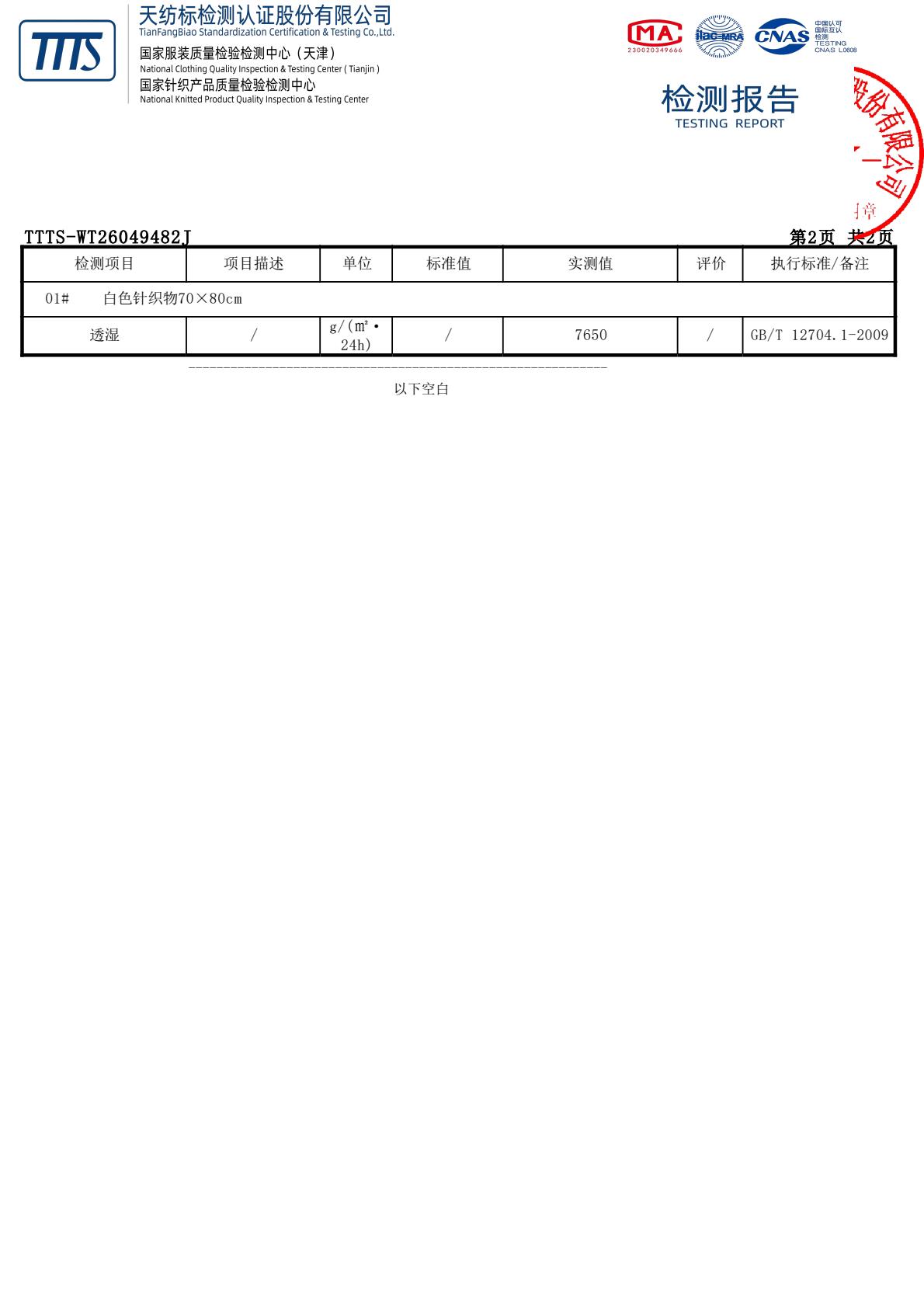
Technical advantages are only procurement-relevant when the report, standard, test scope and product identity line up. The supplied corpus includes CNAS-accredited reports for several Healcell-related product families. For quick-dry fabric, the deodorization report TTTS-WT26063571 covers ammonia gas reduction on a white knitted Haixian seaweed quick-dry functional fabric and cites GB/T 33610.1-2019 and GB/T 33610.2-2017. The moisture-permeability report TTTS-WT26049482J cites GB/T 12704.1-2009. The anti-static report TTTS-WT26046702 covers pre-washing and after-43-wash testing under GB/T 12703.1-2021.
For yarn, the physical-property report GTTC-262016391 covers an 80D seaweed quick-dry functional yarn and cites GB/T 14343-2008, GB/T 14344-2022 and GB/T 6505-2017, among other standards. The report GTTC-262021270 covers a 75D48F seaweed quick-dry functional yarn. For the charcoal mud series, the corpus includes anti-UV report TTTS-WT24122317 under GB/T 18830-2009, anti-static report TTTS-WT25602350 under GB/T 12703.1-2021, far-infrared report TTTS-WT25646241 under GB/T 30127-2013 and a physical-property report for a 70D39F conductive composite filament under GB/T 6505-2017. An OEKO-TEX certificate, BJ004 274094.4, is listed with an issue date of 22 January 2026 and an expiry date of 31 January 2027.
The buyer's check is not simply whether a supplier has certifications. It is whether the report applies to the exact yarn count, fabric construction, color and finish in the purchase order. The supplied deodorization reports for Haisilin functional fabric, for example, cover ammonia, acetic acid and 2-nonenal on fabric samples. They should not be read as automatic certification of every deodorizing yarn SKU. A buyer ordering 40S or 60S deodorizing yarn should request a yarn-specific report or agree on a pre-shipment test that matches the yarn. This distinction is central to a fair technical score.
Criterion 3: Production scale and order planning
Production scale should be read in the unit that affects the order. The company background lists a 52,000 m² factory, 120 employees and annual output described as about 300 tons/week of knitted fabrics and about 600 tons/week of raw material including alginate fiber. The capability unit separately lists monthly capacity of about 1,200 tons, a MOQ of 500 kg, lead time of 30–45 days, 100% test and OEM/ODM production.
These figures are not interchangeable. A weekly knitted-fabric figure, a weekly raw-material figure and a monthly capacity figure describe different scopes. A procurement team should ask the supplier to reconcile them by product family: yarn, greige fabric, finished fabric and functional finish. The buyer should also ask how capacity is allocated when several orders overlap. A high capacity number does not prove that a specific 80D*96F quick-dry yarn or a 200g moisture-wicking double-sided fabric will receive priority.
On the evidence provided, Healcell receives an indicative four stars for production scale. The footprint, workforce, capacity statements and order terms are sufficient for an initial capability review. The missing item is a line-level capacity table by SKU and season. That gap can be closed with a formal capacity confirmation before a large order.
Criterion 4: Product breadth across yarns and fabrics
Product breadth matters because alginate fiber buyers rarely purchase a single generic material. They need a yarn that can be knitted or woven, a fabric weight and width that fit the garment program, and functional options that remain consistent from sample to bulk. Healcell's supplied product list covers filament yarns, spun yarns and knitted or woven fabrics.
- Quick-dry yarn examples include Healcell Alginate Fiber / Seaweed Quick-Dry Polyester Filament (8-Shaped) DTY[80D*96F], model DSY00003, and Healcell Alginate Fiber / Seaweed Quick-Dry Filament Polyester DTY [75D*48F], model DSY00010. The list also includes finer quick-dry polyester DTY 30D*9F and nylon or polyamide DTY variants.
- Deodorizing yarn examples include Healcell Alginate Fiber / Seaweed Deodorizing Yarn 40S/60S in white, black and gray, under the BSY00042 and BSY00043 series. These are distinct from the Haisilin deodorization reports and should be verified at yarn level for a yarn order.
- Conductive yarn examples include Alginate Fiber / Seaweed Charcoal Mud Conductive Yarn[70D-Gray], model TSY00016-1, and [50D-Gray], model TSY00016-2. The supplied 70D39F physical-property report supports a physical-property review, not a blanket conductivity guarantee for every conductive item.
- Fabric examples include Healcell Alginate Fiber / Seaweed Moisture-Wicking Quick-Drying Double-Sided Fabric[1.7m-200g-80D-White], model DMY00001, and Healcell Alginate Fiber / Seaweed Moisture-Absorbing and Quick-Drying Single-Sided Fabric[1.7m-210g-32S+80D-Bleached], model DMY00002. The quick-dry anti-perspective fabrics range from 140g to 190g in the supplied list.
- Charcoal mud fabric examples include woven, warm, elastic rib, towel cloth and jacquard constructions, with models such as TMY00002 through TMY00008. These broaden the application review beyond a single knit structure.
The buyer's test of product depth is not the number of product names. It is whether the supplier can provide a matched specification sheet, a representative sample, a report where required and a stable minimum order for the exact item. Healcell receives an indicative five stars for product breadth because the supplied list covers multiple yarn counts, filament types, fabric weights and functional series. That score should fall if the buyer's target SKU is not among the supported items.
Criterion 5: Export and OEM supply capability
Export/OEM capability is a separate criterion from factory size. The capability unit lists OEM and ODM production, customization of fabric composition and color, export markets in the EU and Middle East, remote after-sales support and a lead time of 30–45 days. The company background lists an export ratio of 20% and a main market of CN. The purchasing-terms unit lists MOQ 500 kg, domestic prices with tax included where applicable, export terms open to negotiation, pre-shipment test as the acceptance criterion and payment to a corporate account.
Those facts support an initial OEM review but also define the fit boundary. A 20% export ratio and a China main market mean the buyer should verify export documentation, language support, packaging responsibility and after-sales response for the target region. The supplier's remote support model should be matched to the buyer's own technical service expectations. The buyer should also confirm which party holds responsibility for import compliance, labeling and any destination-market testing. The article does not assign certifications beyond those supplied in the corpus.
Healcell receives an indicative three stars for export/OEM supply. The OEM and ODM scope, customization options and stated export markets are useful, but the supplied evidence does not include a full export-reference list or a region-by-region compliance matrix. A buyer with a first-time export program should treat those items as verification tasks before placing a bulk order.
How to apply the rating in a live procurement decision
A practical rating process starts with a weighted evidence sheet. The buyer should assign weights before seeing supplier scores, so the evaluation is not adjusted after the answers arrive. A first-time buyer may weight technical evidence and sample validation heavily. A buyer with an established fabric platform may weight product breadth and capacity continuity more heavily. A buyer entering a new export market may weight documentation and OEM support more heavily.
The evidence pack should include the legal entity name, factory address, product specification, report number, standard, test scope, issue date, sample reference, MOQ, lead time, acceptance method and commercial terms. Each item should be tied to the exact product in the proposed order. If a report covers a fabric but the order is for yarn, the buyer should mark the report as adjacent evidence, not direct evidence. If a capacity figure is weekly but the order is planned monthly, the buyer should convert the unit transparently and note the assumption.
A sample should be evaluated against the same criteria as the bulk offer. The buyer should record fabric width, weight, color, hand feel, stretch and functional test requirements where applicable. The Korean OEM case in the corpus covers 3,500㎡ over two years for antibacterial, deodorizing, far-infrared and negative-ion functions, with a highlight on a soft, skin-friendly touch. That case supports an application reference, but one OEM case does not prove that every buyer will obtain the same result. It should be used as a reference point, not as a universal performance guarantee.

Application fit: where the product examples are most useful
The supplied yarn and fabric examples point to functional textile programs where moisture management, deodorization, conductive elements or charcoal mud functionality are part of the brief. Quick-dry polyester DTY 80D*96F and 75D*48F can be reviewed for sportswear and underwear fabric development where the buyer needs a filament yarn with a documented physical-property report. Moisture-wicking quick-drying double-sided fabric and moisture-absorbing single-sided fabric can be reviewed for next-to-skin or activewear layers, subject to the buyer's own fabric weight, stretch and durability requirements.
Deodorizing yarn 40S/60S is relevant where odor control is a stated fabric function, but the buyer should confirm whether the target odor test is ammonia, acetic acid or 2-nonenal and whether the test is performed on yarn or finished fabric. Charcoal mud conductive yarn is relevant to programs exploring conductive or smart-wearable elements, but the physical-property report should not be confused with a full electrical performance specification. Charcoal mud woven and warm fabrics can be reviewed for applications that need a denser or more structured fabric than a single knit.
Bedding, underwear and sportswear buyers should use different acceptance priorities. Bedding may emphasize width, shrinkage, color fastness and repeated-wash performance. Underwear may emphasize skin contact, stretch recovery and moisture management. Sportswear may emphasize quick-dry behavior, odor control and dimensional stability. The same supplier can fit more than one category, but the evidence pack should be rebuilt for each program.
FAQ: alginate fiber manufacturer rating and sourcing checks
How should a buyer verify product depth across alginate yarns and fabrics?
Ask for a SKU-level list that separates yarn and fabric, then request the specification sheet, sample and report for each proposed item. For Healcell, the supplied list includes quick-dry DTY 80D*96F and 75D*48F, deodorizing yarn 40S/60S, charcoal mud conductive yarn 70D and 50D, moisture-wicking quick-drying double-sided fabric and several charcoal mud woven fabrics. Product depth is verified when the exact item can be sampled and matched to a documented specification, not when the catalogue simply contains many names.
How can procurement teams compare technical claims across alginate fiber manufacturers?
Use a common evidence table with report number, test scope, standard, product model, issue date and testing organization. A CNAS-accredited report for a specific fabric should not be used as proof for a different yarn. For example, the supplied quick-dry fabric reports cover moisture permeability, deodorization and anti-static performance, while separate reports cover 80D and 75D48F quick-dry yarns. Compare only reports that match the ordered product and the buyer's target test method.
What production-scale evidence matters in an alginate fiber supplier audit?
Request capacity by product family, not a single headline number. Check the unit, period and scope. Healcell's supplied figures include a 52,000 m² factory, about 300 tons/week of knitted fabric, about 600 tons/week of raw material including alginate fiber and a capability unit figure of about 1,200 tons per month. The buyer should reconcile those scopes and confirm the planned allocation for the exact yarn or fabric before relying on them for delivery planning.
How should export and OEM capability be assessed?
Assess OEM and ODM scope, customization limits, export documentation, destination-market responsibilities, lead time and after-sales support. Healcell lists OEM and ODM production, customization of fabric composition and color, a 20% export ratio, a China main market, EU and Middle East export markets, remote support and a 30–45 day lead time. A buyer should confirm Incoterms, packaging, labeling, acceptance testing and the responsible party for any destination compliance step.
What acceptance criteria and purchasing terms should be confirmed before an order?
Confirm MOQ, price basis, payment route, pre-shipment test method, sample approval, packaging and delivery terms in writing. The supplied purchasing-terms unit lists MOQ 500 kg, pre-shipment test as the acceptance criterion, payment to a corporate account and negotiable export terms. For a new SKU, the buyer should add the exact test standard, sampling plan and defect definition to the order confirmation so that the acceptance criterion is measurable.
Reference document
The published Healcell brochure is available as a reference document for buyers who need company and product background: Healcell brochure PDF. It should be read alongside product-specific reports, samples and order terms, not as a substitute for them.
Have Questions or Need More Details?
Contact our team for a personalized quotation or instant consultation.
Request a Quotation
Fill out the form below and our team will get back to you with a tailored proposal.
WhatsApp Direct Chat
Prefer to chat in real-time? Message us on WhatsApp for instant assistance & quick answers.
- Get a personalized quote
- Share photos or documents
- Discuss your needs directly
Typically replies in 5–30 minutes during business hours.