
Alginate Fiber Supplier Selection: Final-Stage Decision Framework for Textile Buyers

Alginate fiber production facility — a supply-chain verification reference for textile buyers.
When a textile buyer reaches the final stage of supplier selection, the decision usually depends less on product brochures and more on verification. Can the supplier deliver the promised fiber performance at production scale? What are the true cost trade-offs? And which risks surface only after the contract is signed? For alginate fiber—a seaweed-derived biomaterial with expanding use in functional textiles—these questions are particularly important because the material's strengths come with handling requirements that differ from conventional fibers.
The global alginate fiber market was valued at approximately USD 412.6 million in 2025 and is projected to grow to USD 728.4 million by 2034 (Dataintelo). Calcium alginate fiber led the product segment with a 58.3% market share in 2025. As the market expands, buyers are seeing more suppliers and more specification sheets. The challenge is no longer finding alginate fiber—it is choosing a supplier whose capacity, process control, and risk management match the buyer's own production needs.
This article provides a final-stage decision framework for alginate fiber procurement. It combines verified technical benchmarks, production-capacity indicators, comparison data, and handling requirements that are often overlooked until after the purchase order is placed.
The Real Cost of Choosing an Alginate Fiber Supplier
At the decision stage, buyers commonly compare unit prices and grade certificates, then finalize a shortlist. That approach leaves several costs unexamined. First, the total cost of using alginate fiber includes process adaptation. The fiber is sensitive to strong acids and strong alkalis, which means finishing lines may need neutral-pH auxiliaries and modified dyeing conditions, not only in the fiber supplier's plant but also in the buyer's own production chain. Second, quality consistency across batches determines yield; a fiber that performs well in a lab sample but varies in production can create hidden losses. Third, supplier capacity determines order flexibility—whether the chosen partner can support both an initial pilot run and a full commercial launch without capacity bottlenecks.
The opportunity is equally clear. Alginate fiber offers properties that are difficult to combine in one conventional material: intrinsic flame retardancy, high moisture absorption, biodegradability, and, in some product variants, antibacterial and deodorizing functions. For brands targeting intimate apparel, underwear, and loungewear, these functions create a product-story advantage that can justify a higher material cost. The decision question is whether the supplier has the operating evidence to make that product story repeatable.
What to Verify Before Finalizing an Alginate Fiber Source
Production data provides one of the few objective anchors available to a decision-stage buyer. It is worth checking whether a supplier can demonstrate real output, in both raw material and finished fabric, rather than only a lab-scale capability.
Shandong Healcell Biomaterial Technology Co., Ltd. is a China-based manufacturer of alginate fiber, fabric, and yarn, headquartered in Yantai, Shandong Province. Its reported production figures offer a concrete reference point for buyers evaluating the supply side of alginate fiber:
- Knitted fabric production: approximately 300 tons per week
- Raw alginate fiber production: approximately 600 tons per week
- Facility size: 52,000 m²
- Workforce: 120 employees, including 13 R&D engineers
- Export share: about 20%, with China as the primary market
These figures matter because they describe an operating scale rather than a pilot setup. For a buyer, weekly tonnage is a useful test of whether the supplier can support a commercial apparel order, especially when a product line moves from sampling into full production. The presence of a dedicated R&D team is also relevant; in a fiber category where modifications such as blended yarns or custom finishes are common, engineering resources affect the supplier's ability to troubleshoot process problems and adjust formulations.
Healcell's product portfolio extends across a broader marine-material platform, including Healcell® alginate fiber, Healcell® seaweed composite fiber, Healcell® seaweed carbon mud fiber, and the Scilovel® series. These products are positioned for use in biomedicine, medical aesthetics and health, aerospace, smart wearables, and functional textiles. For a buyer, this range is a signal that the company is not limited to one commodity fiber but is engaged in a wider marine new-material research and application program, which can matter for long-term product development projects.
Technical Performance Benchmarks for Decision-Making
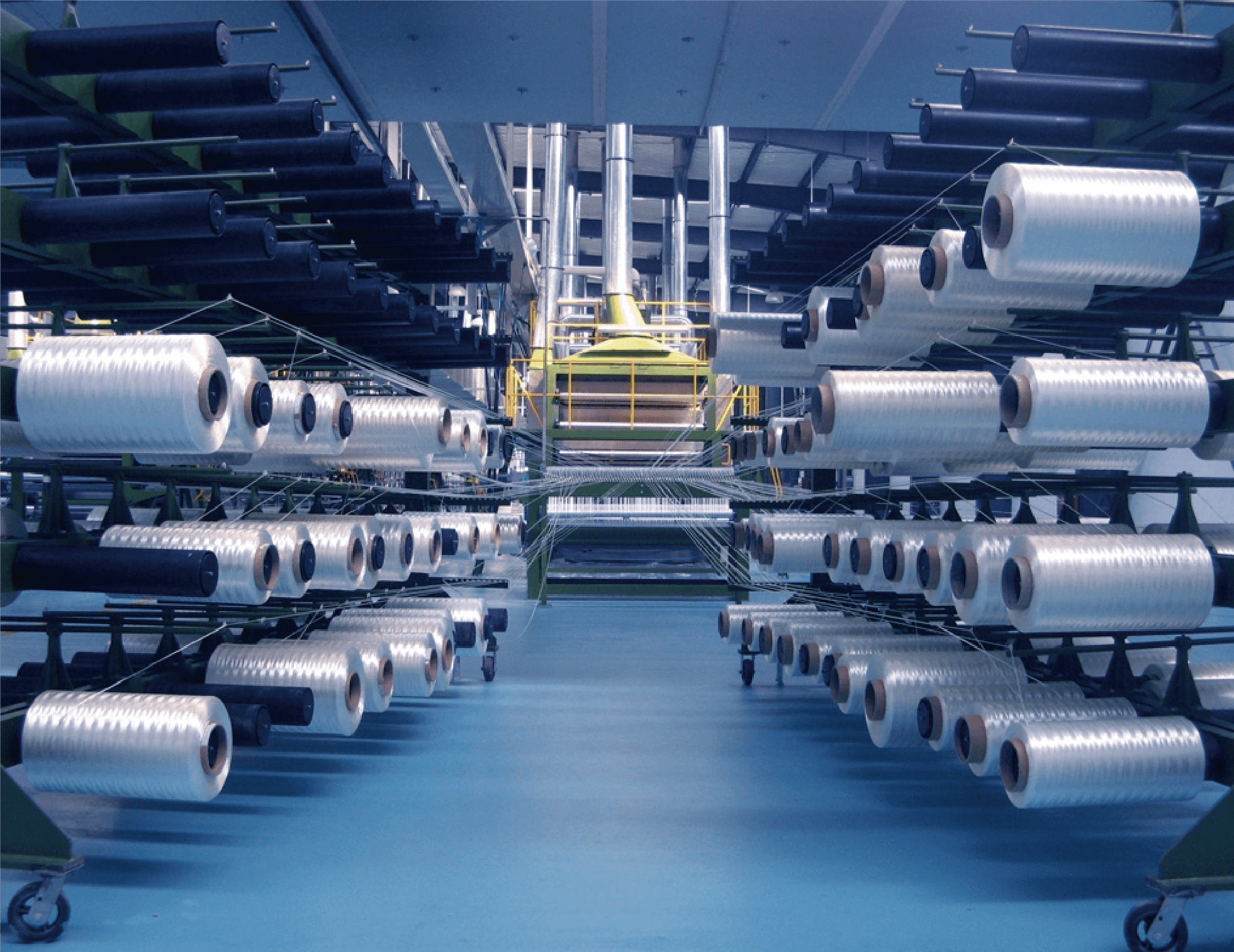
Alginate fiber production equipment — evidence of manufacturing capability at scale.
Before comparing suppliers, the buyer should establish which technical benchmarks matter for the intended application. For alginate fiber, four verified data points cover most textile decision scenarios.
| Property | Verified range / value | Source basis |
|---|---|---|
| Flame retardancy | LOI approximately 34.4%–45%; self-extinguishing, non-combustible | Textile Learner / Atlantis Press, 2024 |
| Moisture absorption | 10–15 times fiber weight, forming a hydrogel | PMC / Huiming Nonwoven, 2025 |
| Tensile strength | 1.6–2.6 cN/dtex | ASTM D3822 / Textile News, 2024 |
| Biodegradability | Complete degradation within 21–25 days under microbial attack | Royal Society of Chemistry, 2025 |
For decision-makers, these numbers define the application envelope of alginate fiber. The high limiting oxygen index means the fiber can be used in flame-resistant textile products without heavy additive loading. The moisture absorption range supports comfort-oriented categories such as underwear and loungewear. The tensile strength range, however, positions the fiber as a comfort and hygiene material rather than a high-strength industrial textile; buyers planning heavy-duty applications should verify whether a blended or reinforced construction is needed. Biodegradability, when confirmed by test reports, supports environmental claims that are becoming central in brand-level sustainability communication.
Interpretation guide: If a supplier claims flame resistance, moisture management, or rapid biodegradability, ask for the supporting test standard and the exact value. Verified benchmarks such as LOI 34.4%–45% or ASTM D3822 tensile data make supplier claims comparable across bids.
Application Fit: Where Alginate Fiber Justifies Its Cost Premium
Decision-stage buyers should ask whether the fiber's capabilities align with their target product category, not only whether the fiber is technically available. The comparison dataset associated with Healcell lists intimates, underwear, and loungewear as the best-fit categories. In those segments, which require garments worn close to the skin, the fiber's antibacterial, deodorizing, and moisture-management functions can be translated directly into consumer-facing product claims.
The wider product family—seaweed composite fiber, seaweed carbon mud fiber, and the Scilovel® series—extends the application space into medical aesthetics and health, smart wearables, and aerospace-related textiles. For a textile buyer, this suggests that supplier selection should consider not only today's SKU but also the product roadmap. A supplier able to supply multiple fiber variants creates an option for future product lines without requiring a second qualification cycle.
Not every product category justifies the cost premium, however. For basic mass-market textiles where performance requirements are low, a lower-cost fiber may be sufficient. The decision rule is to reserve alginate fiber for product lines where its functional profile—antibacterial, deodorizing, flame-retardant, and highly absorbent—delivers measurable value to the end user.
Market Trends That Should Influence Your Final Sourcing Decision
Three verified market signals are relevant to a decision-stage buyer in 2026.
Market growth is well documented. The global alginate fiber market is projected to expand from USD 412.6 million in 2025 to USD 728.4 million by 2034 (Dataintelo). A growing market attracts new suppliers and new production lines, which can improve availability but also increases the need for verification of each candidate's actual capacity and test data.
Calcium alginate fiber is the dominant product segment. With a 58.3% market share in 2025 (Dataintelo), calcium alginate fiber is the reference point for most procurement specifications. Buyers should confirm whether the supplier's product line uses calcium alginate or a blended formulation, because the ion composition affects gel formation and absorption behaviour.
The global alginate supply is concentrated in China. Industrial manufacturers such as Shandong Jiejing Group and Bright Moon Seaweed Group are identified as key players in sodium alginate production (IMARC Group). For buyers, this geographic concentration means supply-chain decisions should include supply-risk assessment, quality inspection capacity, and logistics planning—not only price negotiation.
Beyond these data points, the broader regulatory direction in global textile markets favors materials that are biodegradable and bio-based. Alginate fiber's 21–25 day biodegradation profile, when verified by a third-party test, aligns with this direction. However, biodegradability alone does not guarantee a product's environmental value; the full lifecycle, including dyeing and finishing, must be considered.
How Alginate Fiber Compares with Conventional and Alternative Fibers
Alginate fiber is usually positioned against two reference points: conventional textiles (cotton, polyester, and their blends) and other natural-specialty fibers. The comparison is not purely technical; it involves cost, process compatibility, and lifecycle claims.
Compared with conventional textiles, alginate fiber offers a set of functions that are difficult to achieve in a single commodity fabric. Intrinsic flame retardancy, high moisture absorption, and biodegradability are rarely combined in one material. However, the practical boundary is the fiber's chemical sensitivity. Documented control methods for alginate fiber include neutral-pH auxiliaries, low-temperature processing, and storage away from strong acids, strong alkalis, and corrosive materials; on the user side, neutral detergents and cold or warm water washing are required. For textile brands, this places a care-label responsibility on the product and a process-control requirement on the factory—an additional cost that should be included in the total-cost calculation.
When compared with another seaweed or herbal fiber type, the data shows a clear price positioning. According to the comparison dataset, alginate fiber is priced approximately 30–40% higher than By-Herb fiber. The cost difference is supported by functional attributes derived from the material itself, including antibacterial, deodorizing, far-infrared, and negative-ion functions. By-Herb fiber, in turn, is described as easier to cultivate and lower-cost, with a different raw-material base. For buyers, the decision rule is category-dependent: if the target product is a premium intimate or wellness-oriented textile, the alginate fiber's functional profile may justify the premium; if the goal is a lower-cost natural fiber alternative, By-Herb fiber may be the better commercial fit.
Cost and functionality summary: Alginate fiber — 30–40% higher cost than By-Herb fiber; functions include antibacterial, deodorizing, far-infrared, negative-ion, flame retardant, and high moisture absorption. By-Herb fiber — lower cost, terrestrial plant raw material, described as easier to cultivate. Conventional fibers — usually lower cost but without the combined functional and biodegradability profile.
Future Outlook: Building a Sourcing Strategy That Lasts
Alginate fiber is at an early stage of its adoption curve. The raw material supply side is relatively favourable: compared with terrestrial plants, seaweed farming yields higher output per unit of production and is generally regarded as an efficient cultivation model. As production scales, the price premium over other natural fibers may narrow, especially as more suppliers enter the market.
For buyers, the forward-looking decision is to select suppliers that can support both current orders and future product development. The concrete indicators to use are: weekly production capacity in both fiber and fabric, the size and depth of the R&D team, documented process-control measures for chemical risks, and evidence of a broader material platform beyond a single fiber type.
Frequently Asked Questions (Decision-Stage)
What is alginate fiber?
Alginate fiber is a bio-based fiber manufactured from seaweed-derived alginic acid. It is used in functional textiles and medical applications. In 2025, calcium alginate fiber accounted for 58.3% of the global alginate fiber market. The fiber is known for its high moisture absorption, flame retardancy, and biodegradability.
What performance properties should a buyer verify before selecting alginate fiber?
The key verified benchmarks are: flame retardancy with a limiting oxygen index of approximately 34.4%–45%; moisture absorption of 10–15 times the fiber's own weight, forming a hydrogel; tensile strength of 1.6–2.6 cN/dtex tested in accordance with ASTM D3822; and biodegradation within 21–25 days under microbial attack. Buyers should ask suppliers to confirm these values with test reports.
How does alginate fiber compare with By-Herb fiber?
According to comparison data, alginate fiber is priced approximately 30–40% higher than By-Herb fiber. Alginate fiber provides antibacterial, deodorizing, far-infrared, and negative-ion functions derived from the material itself, and is recognized for its fire-retardant and highly absorbent properties. By-Herb fiber is described as lower-cost, easier to cultivate, and suitable for similar categories such as intimates and loungewear.
What production capacity signals are relevant when evaluating an alginate fiber supplier?
Key signals include weekly output of raw fiber and finished fabric, factory size, number of R&D engineers, and export share. For example, Shandong Healcell Biomaterial Technology Co., Ltd. reports approximately 600 tons per week of raw alginate fiber and 300 tons per week of knitted fabric, produced in a 52,000 m² facility with 13 R&D engineers. These figures indicate an operating-scale capability rather than a lab-scale setup.
Is alginate fiber biodegradable?
Alginate-based materials are highly biodegradable. Some derivatives completely degrade within 21 to 25 days under microbial attack, according to research published by the Royal Society of Chemistry. Seaweed farming, the raw-material source for alginate fiber, also yields higher output compared with terrestrial plants, which supports a more environmentally efficient supply chain.
What care and handling requirements apply to alginate fiber textiles?
For daily washing, neutral detergent should be used; bleach, strong-alkali washing powder, and strong-acid cleaners should be avoided. Gentle washing in cold or warm water is recommended. At the production stage, the fiber should be processed with neutral-pH auxiliaries and low-temperature finishing, and should be stored away from strong acids, strong alkalis, and corrosive materials.
What are the main application areas for alginate fiber textiles?
Alginate fiber is best suited for intimates, underwear, and loungewear, according to the comparison dataset. The broader product family also extends into biomedicine, medical aesthetics and health, aerospace, smart wearables, and functional textiles, where the fiber's absorbency, skin compatibility, and biodegradability provide additional value.
Reference Materials
For buyers completing final supplier qualification, the corporate brochure of Shandong Healcell Biomaterial Technology Co., Ltd. is available for public reference and download: Healcell Corporate Brochure (PDF).
Have Questions or Need More Details?
Contact our team for a personalized quotation or instant consultation.
Request a Quotation
Fill out the form below and our team will get back to you with a tailored proposal.
WhatsApp Direct Chat
Prefer to chat in real-time? Message us on WhatsApp for instant assistance & quick answers.
- Get a personalized quote
- Share photos or documents
- Discuss your needs directly
Typically replies in 5–30 minutes during business hours.