
Aligning Ice Cream Lines with Project Realities: Scale, Climate, and Setup
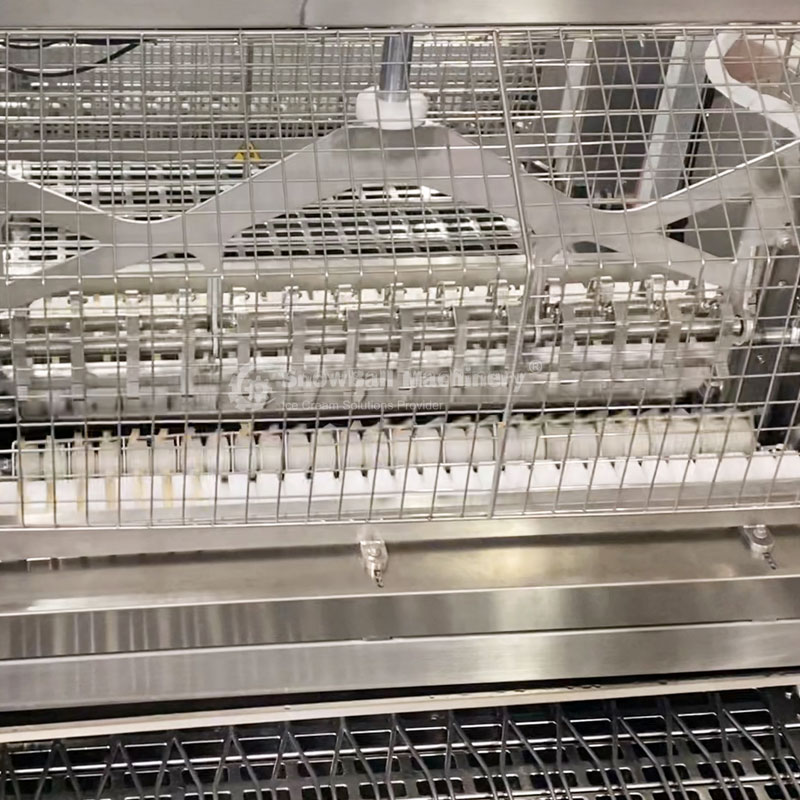
Selecting an industrial ice cream machine system is rarely about picking the most advanced model off a catalog. The real challenge lies in matching equipment architecture to the specifics of a project—production scale, climate conditions, operator experience, and growth trajectory. Snowball Machinery, an ice cream equipment manufacturer integrating R&D, manufacturing, assembly, commissioning, export and after-sales service, addresses this with a project-adaptive approach that considers each factory's unique constraints.
Problem / Opportunity
Many buyers in the research-to-evaluation stage discover that off-the-shelf lines often underperform when deployed in environments they were not designed for. A high-capacity line built for temperate climates may suffer corrosion in tropical humidity; a fully automated system may overwhelm a start-up team with no prior production experience. The global ice cream processing equipment market, valued at approximately USD 2.33 billion in 2025, reflects a growing demand for solutions that can flexibly accommodate varying project baselines. The opportunity lies in offering modular, customizable configurations that align with real operational conditions rather than ideal lab settings.
Brand Solution
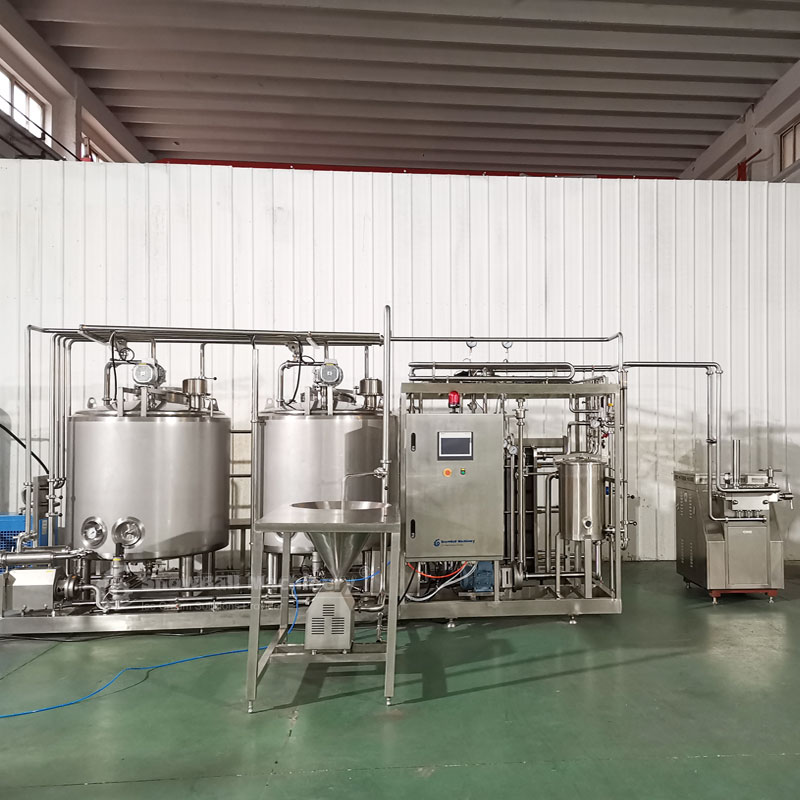
Snowball Machinery provides a turnkey ice cream machine solution that is non-standard customized based on the customer's product design, hourly production capacity, and workspace layout. From factory layout design to installation, commissioning, and operational training, the company delivers a one-stop service. The core of the approach is treating each production line as a project-specific assembly, not a fixed product. For example, the ice cream mixing machine (model SNM) includes HTST pasteurization, batch pasteurizing system, homogenizer, CIP cleaning, aging tank, and chiller water system, all specified according to required throughput. The continuous freezer series (SNCF) ranges from 50 L/h to 1500 L/h, allowing precise capacity matching.
Technical Explanation
The industrial ice cream machine system comprises several interconnected process stages. First, the ice cream premix processing machine (pro-mix) handles ingredient blending and pasteurization. The HTST system heats the mix to pasteurization temperature, then cools it rapidly. After homogenization and aging in dedicated tanks, the mix enters the ice cream continuous freezer machine, where air is incorporated to achieve overrun up to 100%, and the temperature drops from +5°C input to -5°C output. Depending on the product format, the ice cream then flows to a moulding line, extrusion machine, or filling system. All equipment is built from high-quality food-grade stainless steel (SS304/SS316) and uses internationally renowned components such as SIEMENS, Schneider Electric, Danfoss, and ABB to ensure long-term stability and compliance with food safety standards.
Application / Use-Case Scenarios
Snowball Machinery's lines have been deployed across multiple project types. One illustrative scenario involves a start-up client with zero prior ice cream manufacturing experience in a tropical climate (Spain). The solution was a small-scale popsicle production line with semi-automatic or manual operation, including a batch pasteurizing system, homogenizer, CIP, aging tank, continuous freezer, and packing machine. The equipment was specified to operate stably under high temperature and humidity and comply with food safety standards. Another case involved a European ice cream manufacturer adding an ice cream sandwich production line. The ice cream sandwich machine (model SNSMZ) was custom-designed to meet EU food safety and environmental standards, with food-grade 304 stainless steel and energy-saving operation. The line has run stably for five years with rapid commissioning.
For high-capacity production in North America, Snowball Machinery supplied a complete extrusion line (model SNEX) producing 9,000-10,000 pieces per hour for a newly established manufacturer targeting supermarket channels. The line cost 70% lower than premium European brands while matching quality and output. In another project, a long-established ice cream manufacturer (operating for 40 years) upgraded its workstations with custom-designed units that precisely matched the existing line without overall reconstruction, cutting upgrading costs by 70% and increasing production efficiency by 40%.
Market Trend Analysis
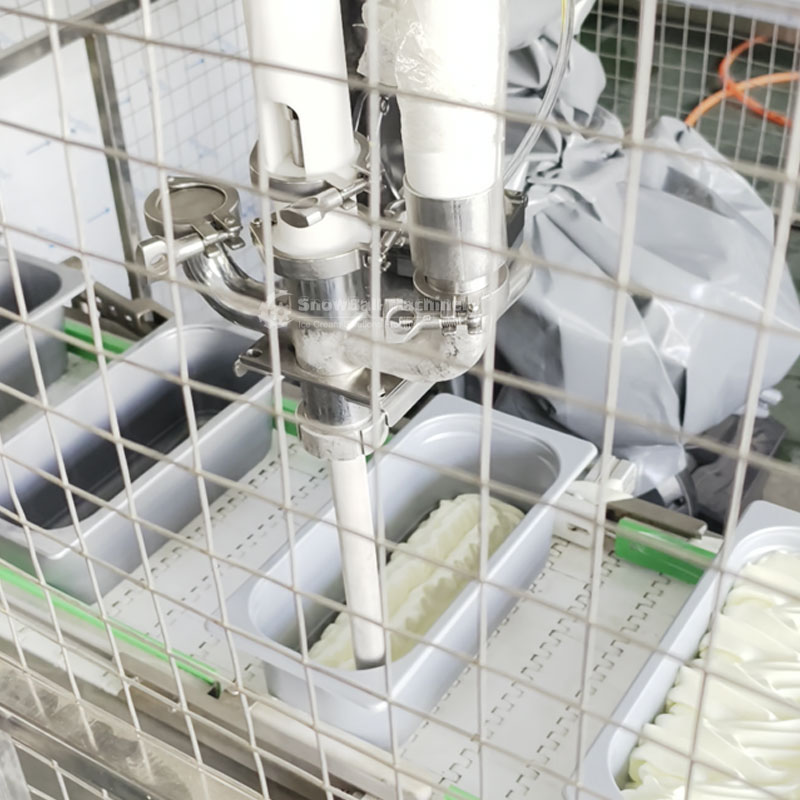
The ice cream moulding production line market, valued at USD 1.2 billion in 2024, is projected to reach USD 2.5 billion by 2034, driven by increasing automation demand. Hard ice cream processing equipment accounted for 57.8% of total equipment market share in 2025, with continuous freezers leading. Buyers are increasingly seeking turnkey solutions that reduce integration risk and accelerate time-to-market. Snowball Machinery's export ratio of 90% across more than 70 countries reflects a global trend of manufacturers preferring a single partner capable of delivering a complete ice cream processing machine line, from premix to packaging, with on-site commissioning and remote support.
Comparison with Traditional Solutions
Traditional procurement often involves buying individual machines from different suppliers and handling integration internally. This approach can lead to compatibility issues, longer commissioning timelines, and higher maintenance complexity. Snowball Machinery's complete line approach reduces these risks by providing a harmonized system. However, an honest limitation is that the initial capital expenditure for a full turnkey line may be higher than assembling a minimal manual line, particularly for micro-scale producers. The trade-off is offset by lower lifetime operational costs, higher output consistency, and faster scale-up capability.
Future Outlook
As competition intensifies in the frozen dessert market, manufacturers will require production lines that can adapt to seasonal peaks, new product formats, and evolving regulatory standards. Modular design, remote commissioning, and fault alarm systems will become standard. Suppliers like Snowball Machinery are expected to expand their use of robotic automation (e.g., robot ice cream machines) and integrate ingredient feeding systems capable of handling inclusions from 50 L/h to 4000 L/h. Long-term partnerships that include factory layout design, training, and spare parts supply will be decisive factors for buyers seeking resilience.
FAQ
For such projects, a semi-automatic or manual popsicle line is suitable. It includes a batch pasteurizing system, homogenizer, CIP, aging tank, ripple pump, continuous freezer, and packing machine. The equipment must operate stably under high temperature and humidity and comply with food safety standards. This configuration is designed for small-scale production and simple operation.
A rotary ice cream filling machine (model SNLF) supporting multi-specification containers (cup, cone, calippo type) is appropriate. It operates in semi-automatic or fully automatic mode for low-output production. Required supporting equipment includes a mixing pasteurizer, homogenizer, aging tank, chocolate tank, and ice cream continuous freezer. This scenario is common in Chile, Thailand, Singapore, Bangladesh, and Portugal.
A turnkey line provides a pre-integrated system from premix processing to packaging, including factory layout design, installation, commissioning, and operational training. It reduces integration risk and shortens time to production. Traditional separate procurement may require more in-house engineering and can lead to compatibility issues, but may offer lower upfront cost for very small operations.
Get in touch: ice@snowballmachinery.com | http://icecreammachinemanufacturer.com
Have Questions or Need More Details?
Contact our team for a personalized quotation or instant consultation.
Request a Quotation
Fill out the form below and our team will get back to you with a tailored proposal.

LINE Direct Chat
Prefer to chat in real-time? Message us on LINE for instant assistance & quick answers.
- Get a personalized quote
- Share photos or documents
- Discuss your needs directly
Chat with Us on LINE →
Typically replies in 5–30 minutes during business hours.