
All-Aluminum Honeycomb Panel vs. Aluminum Bamboo Core Board: An Independent Buyer Comparison
An independent buyer comparison for cabinets, walls, doors, furniture, hospitality, and healthcare.
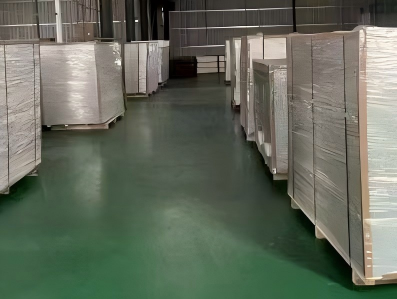
Short answer. The choice between the NBW-HPB-001 all-aluminum honeycomb panel and the ZKB-1220×2750 all-aluminum bamboo core board is not a choice between aluminum and wood. Both are positioned as all-aluminum interior materials. The practical difference is in thickness architecture, core construction, bonding method, fire class, formaldehyde evidence, water-resistance claim, and fabrication fit. The honeycomb panel is documented from 5 mm to 18 mm, with a standard 1220 × 2750 mm sheet and aluminum skins from 0.3 mm to 1.0 mm. The bamboo core board is listed at 18 mm, with 5 mm and 10 mm options referenced in the supplied product brief, also in a 1220 × 2750 mm format. For buyers at evaluation stage, the shortlist should start with the project requirement, not the product label.
Nanbeiwang Aluminum, formally Guangdong Nanbeiwang Smart Home Co., Ltd., is a Foshan-based manufacturer founded in 2013. It produces all-aluminum honeycomb panels, bamboo boards, aluminum wall panels, interior doors, and ceilings, and supplies materials for whole-house customization. In the comparison below, the NBW-HPB-001 is the reference honeycomb panel and the ZKB-1220×2750 is the reference bamboo core board. Both sit inside the same broad all-aluminum interior-material category, but they do not carry the same documented build-up.
The comparison at a glance
The table below separates what is documented for the honeycomb panel from what is stated for the bamboo core board in the supplied brief. This distinction matters in procurement because a product name, a nominal sheet size, or a broad material category is not enough to approve a board for a cabinet, door, wall, or healthcare fit-out.
| Comparison point | NBW-HPB-001 all-aluminum honeycomb panel | ZKB-1220×2750 all-aluminum bamboo core board |
|---|---|---|
| Construction | Two aluminum skins bonded to an aluminum honeycomb core, with glue-free thermal bonding | All-aluminum bamboo core board; full construction and bonding details are not stated in the supplied brief |
| Documented thickness | 5–18 mm | 18 mm, with 5 mm and 10 mm options referenced |
| Standard sheet size | 1220 × 2750 mm | 1220 × 2750 mm |
| Aluminum skin range | 0.3–1.0 mm | Not stated in the supplied brief; confirm before shortlisting |
| Fire rating | A2 | B1 |
| Formaldehyde position | Zero formaldehyde under GB18584-2024, supported by report SQ2505164 | E0 and zero formaldehyde claim in the product brief |
| Water resistance | Water absorption below 1% in a 24-hour test | 100% waterproof claim |
| Likely starting fit | Cabinets, wardrobes, wall panels, doors, furniture, hospitality, and healthcare where A2 is specified | Cabinets, wardrobes, wall panels, and doors where B1 and the E0 and waterproof claims meet the brief |
| Evidence gap to close | Assembly-level fire approval, edge details, and project-specific fixing design | Test methods, skin gauge, bonding data, and model-level fire and water reports |
Why all-aluminum is not a specification
Buyers often use all-aluminum as a shorthand for low formaldehyde, moisture resistance, and fire performance. That shorthand is useful at the awareness stage, but it is not a specification. Two all-aluminum boards can differ in core material, skin thickness, bonding process, panel thickness, edge treatment, and the scope of the test report. A honeycomb core and a bamboo core do not behave the same way under cutting, fixing, or fire exposure, even when both carry aluminum faces.
For evaluation, the more useful question is this: which board has the documented build-up and test evidence for the specific application? A cabinet door, a wall panel, an interior door, and a healthcare wall lining place different demands on the material. The honeycomb panel gives the buyer a wider documented thickness range. The bamboo core board gives the buyer a named 18 mm format with 5 mm and 10 mm options. Those differences should be matched to the assembly, not treated as marketing preferences.
Thickness, sheet size, and aluminum skins
Sheet size is the least disruptive part of the comparison. Both products are listed at 1220 × 2750 mm. That shared nominal size helps with cutting planning, but it does not make the boards interchangeable. The critical variables sit behind the sheet face: total thickness, skin gauge, core type, and bonding.
The NBW-HPB-001 is documented from 5 mm to 18 mm. That range gives specifiers more room to match a panel to cabinet doors, wardrobe fronts, wall linings, door blanks, and furniture components. A thinner build-up may suit a flat interior panel where thickness is not the governing constraint. An 18 mm build-up moves the board into the same nominal territory as the bamboo core board and may suit thicker furniture or door applications. The range is a documented option, not a promise that every thickness is stocked or suitable for every assembly.
The ZKB-1220×2750 is listed at 18 mm, with 5 mm and 10 mm options referenced. That gives buyers a small set of documented thickness choices around a named 18 mm board. For projects that have already standardized on 18 mm, the bamboo core board is easy to place in a like-for-like review. For projects that need an intermediate thickness outside that set, the honeycomb panel has the clearer documented path.
Aluminum skins are another point of separation. The honeycomb panel is documented with skins from 0.3 mm to 1.0 mm. The supplied brief for the bamboo core board does not state an equivalent skin range. That is not a defect in the product; it is a data gap in the comparison. A buyer should request the skin gauge, alloy, temper, and surface finish before treating the two boards as substitutes. Skin gauge affects stiffness, flatness, fixing behavior, and the feel of the finished panel, so it belongs in the technical submittal, not in a verbal quote.
Bonding, fire, emissions, and water: what the evidence says
The NBW-HPB-001 uses glue-free thermal bonding to join two aluminum skins to an aluminum honeycomb core. In plain terms, the bond is created by a thermal process rather than by a separate adhesive layer. That is a meaningful process distinction for buyers who are comparing glue-free honeycomb panels with conventional bonded boards. It should be verified through the supplier's process description and peel-strength report, not accepted from the product name alone. Nanbeiwang's glue-free aluminum honeycomb panel is covered by a CTC test report, WT2025B01B02018, under JC/T 2113-2012 for peel strength and temperature resistance.
The fire and emissions evidence is more developed for the honeycomb panel in the material supplied. Nanbeiwang's product profile states an A2 fire rating for the NBW-HPB-001. A GB18584-2024 hazardous substance test report, SQ2505164, issued by Guangdong Testing Institute of Product Quality Supervision, covers the full series of all-aluminum honeycomb panels and supports the zero formaldehyde position. The same product profile states water absorption below 1% in a 24-hour test. These are specific, citable claims that a buyer can attach to a technical submittal, subject to checking that the report scope matches the model, thickness, and batch being purchased.
The bamboo core board is positioned differently in the supplied brief. It carries a B1 fire rating, an E0 and zero formaldehyde claim, and a 100% waterproof claim. Those are relevant evaluation points, especially for buyers who are comparing B1 interior boards or who need a strong water-resistance statement. But the brief does not provide report numbers, test methods, or a skin range for the bamboo board. A buyer should ask for the fire test standard, the formaldehyde test method, the water-resistance test duration, and the model-level scope of each document. The difference between a claim and a report is not a marketing detail; it determines whether the board can enter a specification.

Application fit: cabinets, walls, doors, furniture, hospitality, healthcare
Both boards are positioned for whole-house customization, but the fit changes by application. The honeycomb panel's wider thickness range and its A2 and GB18584-2024 evidence make it easier to place in projects where fire class and emissions are explicit gates. The bamboo core board's 18 mm format and its B1, E0, and waterproof claims make it a candidate where those requirements match the brief and where the missing technical data can be closed.
Cabinets and wardrobes
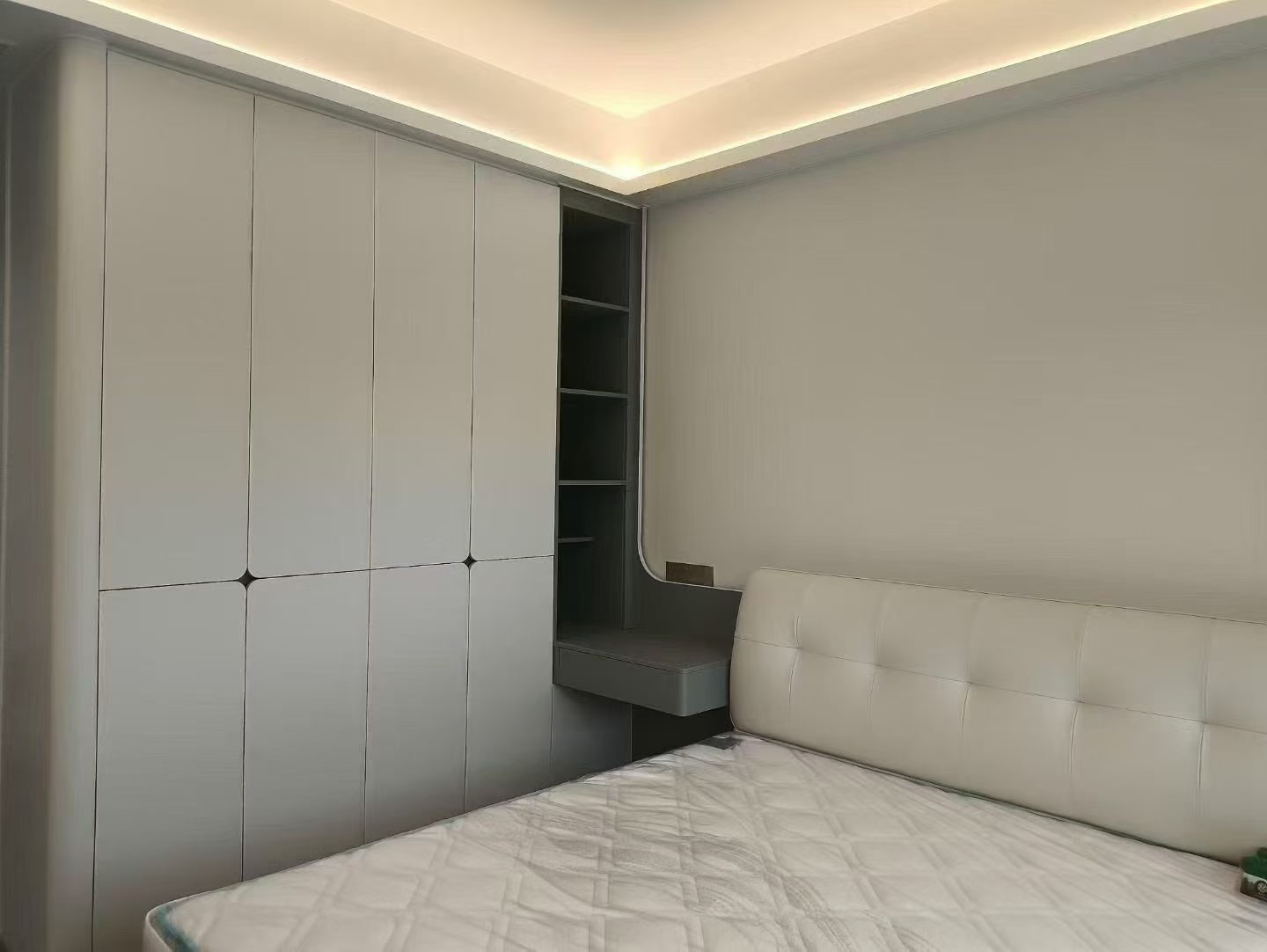
For cabinets and wardrobes, both boards can be reviewed as aluminum cabinet material. The honeycomb panel's 5–18 mm range gives more freedom to differentiate cabinet doors, carcass panels, and visible furniture surfaces. The bamboo core board's 18 mm format, with 5 mm and 10 mm options, may suit a standardized thicker panel program. The evaluation should not stop at the board. Hinge and runner fixing, edge closure, and cut-out detailing all affect the finished cabinet. A board that performs well in a flat panel test can still fail in a cabinet if the edge detail is weak.
Wall panels and interior doors
For wall panels, the honeycomb panel is the direct documented match when the project calls for A2. The broader range of all-aluminum wall panel products in the Nanbeiwang portfolio shows that the material is used across wall and ceiling applications, but the specific model still needs to be checked. For interior doors, the honeycomb panel's 5–18 mm range allows different door build-ups, while the bamboo core board's 18 mm format aligns with thicker door substrates. Neither board should be approved as a door system on the strength of a panel data sheet alone. Door hardware, edge banding, fire performance as an assembly, and dimensional stability after cutting all need separate review.
Furniture and whole-house fit-out
For furniture and whole-house fit-out, both boards can be considered where the design language calls for all-aluminum surfaces. The honeycomb panel's glue-free thermal bonding and zero formaldehyde position are relevant for enclosed furniture, wardrobes, and interior storage. The bamboo core board's E0 and zero formaldehyde claim is also relevant, provided the buyer obtains the supporting test method and confirms that the claim applies to the supplied thickness and finish. In a whole-house package, mixing the two boards is possible, but the specification should say which model goes where. A generic all-aluminum note is not enough.
Hospitality and healthcare
Hospitality and healthcare projects usually place fire class and emissions near the top of the evaluation. Where the brief requires A2, the honeycomb panel is the direct match in this comparison. Where B1 is acceptable and the project team has reviewed the bamboo board's E0 and waterproof claims, the bamboo core board can be evaluated. For healthcare interiors, the buyer should also ask about cleanability, joint details, and the scope of the formaldehyde report. For hospitality, the visual finish and the durability of the edge detail matter as much as the board face. In both segments, the finished assembly is the approval unit, not the raw panel alone.
Supply evidence and project context
Nanbeiwang reports a Qatar project in which more than 2,000,000 sheets of honeycomb panels were supplied for industrial-scale aluminum cabinet and wardrobe production. The same report cites bulk supply capacity of 30–50 tons daily, 24-hour dispatch from a 10,000 m² warehouse, and technical support for cutting optimization. Nanbeiwang also reports zero quality complaints over a 20+ year lab-tested durability period for that project. These are supplier-reported outcomes and should be read as capacity and continuity evidence, not as a substitute for project-specific testing.
A second reference describes an Indonesia whole-house customization project using 800,000 sheets across cabinets, wardrobes, wall panels, and doors, with a reported 20% cost reduction. For buyers screening supply, Nanbeiwang lists MOQ from 1 sheet, stock lead time of 1–7 days, custom lead time of 7–15 days, and monthly capacity of 50,000+ sheets. These data points help with early supply screening. They do not remove the need to verify the exact model, thickness, and certification scope for the project at hand.
Market trend: evidence is becoming part of the specification
Commercial research from Strategic Market Research estimates the global aluminum honeycomb market at USD 2.1 billion in 2024, with a projected 6.1% CAGR from 2024 to 2030. The same research notes that grade segmentation matters. A blended average selling price of USD 211 per square metre in 2025, reported by GMI, includes grades well beyond construction and interior use. GMI also cites a factory-side planning range of USD 55–130 per square metre in 2026. Those figures are not quotes for either board in this comparison, but they send a clear procurement signal: compare like-for-like specifications, not blended averages.
The wider trend is toward documented performance. Fire class, formaldehyde results, water-resistance testing, and skin gauge are moving from optional sales attachments to required submittal items. That favors suppliers who can link a model number to a report number and a batch. It also raises the bar for the bamboo core board: a B1, E0, and 100% waterproof claim is a useful starting point, but it becomes more credible when supported by test methods and model-level documents. For buyers, the practical response is to build a technical checklist before the commercial negotiation begins.
How the two compare with traditional wood-based solutions
Traditional wood-based boards remain common in cabinets and furniture because they are widely machined and finished. The all-aluminum options change the material profile, but they do not remove fabrication discipline. A traditional board's performance depends on substrate grade, resin, and edge sealing. An all-aluminum honeycomb panel or bamboo core board also depends on its core, bonding, skin gauge, and edge detail. The difference is not that one category is automatically superior; it is that the evidence and failure modes are different.
The limitation is easiest to see at the assembly level. A fire rating or formaldehyde report for a raw panel does not automatically approve a finished cabinet, door, or wall system. Cut edges, adhesives used during fabrication, fixing methods, and joints can change performance. For the honeycomb panel, the A2 and GB18584-2024 evidence is strong at the panel level, but the buyer still needs assembly-level review. For the bamboo core board, the 100% waterproof claim should be read alongside the joint detail and the test method. Neither board should be specified from a single headline number.
Limits and what the documents do not cover
- The NBW-HPB-001's documented thickness range stops at 18 mm. Projects that need a thicker build-up should confirm availability rather than assume it.
- The GB18584-2024 report and the A2 rating apply to the tested product scope. They do not automatically certify every cut edge, bonded assembly, door core, or installed wall system.
- The bamboo core board's B1, E0, and 100% waterproof statements are claims in the supplied brief. Test methods, report numbers, and skin gauge are not provided in the material available for this comparison.
- Both boards are listed at 1220 × 2750 mm, but that shared nominal size does not make them drop-in substitutes. Cutting loss, edge treatment, and fixing design still apply.
- Supplier-reported case outcomes, including zero quality complaints and cost reduction, support capability screening. They do not replace a project-specific sample review and acceptance test.
Buyer decision framework
- Start with the fire requirement. If the project requires A2, the honeycomb panel is the direct documented match in this comparison. If B1 is acceptable, the bamboo core board can enter the evaluation.
- Confirm the thickness and skin gauge. The honeycomb panel is documented at 5–18 mm with 0.3–1.0 mm skins. The bamboo core board is listed at 18 mm with 5 mm and 10 mm options, but its skin gauge is not stated in the brief.
- Match the formaldehyde evidence to the model and batch. The honeycomb panel has GB18584-2024 report SQ2505164. The bamboo core board carries an E0 and zero formaldehyde claim; request the test method and report scope.
- Compare water-resistance data in the same format. The honeycomb panel cites below 1% water absorption in 24 hours. The bamboo core board cites a 100% waterproof claim. Ask for the test duration, specimen preparation, and edge condition.
- Review the finished assembly. Check edge closure, hardware fixing, joint design, and installation method. A panel certificate is not a finished-system certificate.
- Verify supply terms. Nanbeiwang lists MOQ from 1 sheet, stock lead time of 1–7 days, custom lead time of 7–15 days, and monthly capacity of 50,000+ sheets. Confirm the terms for the exact model and finish.
Future outlook
The next phase of competition in all-aluminum interior materials is likely to be document-led. Buyers will ask for a clear link between the model number, the fire class, the formaldehyde report, the water-resistance method, and the skin specification. The honeycomb panel already has a fuller evidence set in the supplied material, including GB18584-2024, CTC peel strength, SGS RoHS, ISO9001, and ISO14001 references. The bamboo core board can compete more effectively at specification stage by closing the same evidence gaps for its B1, E0, and 100% waterproof claims. The practical winner in any project will be the board that matches the assembly requirement and can prove it.
FAQ
Which board gives a wider thickness choice for cabinets and doors?
The NBW-HPB-001 all-aluminum honeycomb panel is documented from 5 mm to 18 mm. The ZKB-1220×2750 bamboo core board is listed at 18 mm, with 5 mm and 10 mm options referenced. For intermediate thicknesses, the honeycomb panel has the clearer documented range. For an 18 mm standard, both can be reviewed.
Is the honeycomb panel formaldehyde-free?
The supplied evidence states zero formaldehyde for the all-aluminum honeycomb panel series under GB18584-2024, supported by report SQ2505164 from Guangdong Testing Institute of Product Quality Supervision. A buyer should confirm that the report scope covers the specific model, thickness, and batch being purchased.
How should buyers compare A2 and B1 fire ratings?
The honeycomb panel is documented with an A2 rating and the bamboo core board with a B1 rating. These are different fire classes and should be matched to the project specification. The buyer should also confirm the test standard and whether the rating applies to the panel alone or to the finished assembly.
Which board is more suitable for wet areas?
The honeycomb panel is documented with water absorption below 1% in a 24-hour test. The bamboo core board carries a 100% waterproof claim. The two statements use different formats, so buyers should request the underlying test method and compare edge conditions, joints, and installation details before selecting either board for a wet area.
Are the two 1220 × 2750 mm boards interchangeable?
No. They share a nominal sheet size, but they differ in core, bonding, documented thickness, skin data, fire class, and evidence format. Interchangeability depends on the cabinet, wall, door, or furniture assembly and on the project requirements for fire, formaldehyde, and water resistance.
What supplier documents should be checked before shortlisting?
For the honeycomb panel, check the GB18584-2024 report SQ2505164, the A2 fire claim, the CTC peel-strength report WT2025B01B02018, the SGS RoHS report CANEC2308826401, and the ISO9001 and ISO14001 certificates. For the bamboo core board, request the fire test standard, formaldehyde test method, water-resistance test, skin gauge, and model-level scope for the B1, E0, and 100% waterproof claims.
Reference document: Nanbeiwang 2026 product brochure (PDF).
Have Questions or Need More Details?
Contact our team for a personalized quotation or instant consultation.
Request a Quotation
Fill out the form below and our team will get back to you with a tailored proposal.
WhatsApp Direct Chat
Prefer to chat in real-time? Message us on WhatsApp for instant assistance & quick answers.
- Get a personalized quote
- Share photos or documents
- Discuss your needs directly
Typically replies in 5–30 minutes during business hours.