
Alumina vs Zirconia vs Silicon Nitride vs Silicon Carbide
Alumina vs Zirconia vs Silicon Nitride vs Silicon Carbide
Technical ceramic parts are selected by operating condition, not by material name alone. For a buyer comparing alumina, zirconia, silicon nitride, and silicon carbide, the useful question is which material matches the temperature, load, wear, corrosion, insulation, and precision requirements of the part, and which supplier can document that match. This independent comparison does not rank suppliers or name competitors. It maps the four materials to common component forms and application categories, then sets out the order-point checks that belong in a technical ceramic parts RFQ.
The comparison is written for the decision stage, when a buyer already knows the part function but still needs to separate material options, total cost of ownership, quality evidence, and lead-time expectations. Alumina vs zirconia and silicon carbide vs silicon nitride are the two most common decision pairs, but the final choice should remain tied to the actual duty cycle.
Why the material decision is a procurement decision
Technical ceramic components emphasize heat resistance, wear resistance, corrosion resistance, electrical insulation, and chemical stability. These properties are relevant to high-temperature and corrosive applications, but they are not a blanket guarantee for every grade or every part. The same material family can be supplied in different grades, densities, surface finishes, and tolerances. Buyers therefore need to compare documented capability against the duty cycle, not just a material label.
The procurement problem is practical. A part may be described as a ceramic tube, ceramic washer, ceramic spacer, ceramic guide pin, ceramic piston pump, ceramic plunger, ceramic shaft, or ceramic piston cylinder, but the material grade and inspection plan still need to be defined. In the same way, a zirconia blade, zirconia pin, silicon nitride guide pin, silicon nitride tube pipe, silicon carbide shaft, silicon carbide tube pipe, silicon carbide bushing, silicon carbide ring, silicon carbide sleeve, or silicon carbide cylinder should be quoted against the actual operating conditions rather than against a generic catalog description.
The opportunity is equally practical. When the application involves high temperature, corrosive media, abrasive wear, electrical insulation, vacuum, semiconductor wafer handling, or precision fluid control, a technical ceramic part may reduce replacement and maintenance cost over the operating life. That case must be verified with the supplier because technical ceramic components generally have a higher unit cost than conventional metal components.
The four materials at a glance
The table below summarizes the buyer questions that separate alumina, zirconia, silicon nitride, and silicon carbide. The material descriptions are general selection guidance, not a ranking. The final grade depends on temperature, load, wear, corrosion, and insulation requirements, and the proper grade is recommended after the supplier reviews the specific working conditions and part details.
| Material | Buyer question to resolve | Evaluation focus | Application categories in the supplied scope | Fit boundary |
|---|---|---|---|---|
| Alumina | Is electrical insulation the dominant requirement, with wear and corrosion resistance also needed? | Insulation, wear, corrosion, dimensional stability, surface finish, density, and CoA availability. | High-temperature equipment, electronic circuit carriers, pump and valve fluid control, semiconductor and photovoltaic equipment. | Do not assume a general-purpose alumina grade suits every wear or thermal-cycling duty. Confirm the grade and operating conditions. |
| Zirconia | Is mechanical toughness and wear resistance more important than electrical insulation? | Wear, toughness, corrosion, precision, mating surface, and inspection plan. | Pump and valve fluid control, automotive welding, semiconductor wafer handling, high-temperature equipment. | Confirm thermal cycling, load, and media compatibility. Zirconia is not a universal replacement for alumina. |
| Silicon nitride | Does the part face thermal cycling and mechanical load while also requiring wear resistance? | Thermal-mechanical behavior, wear, corrosion, precision, and inspection documentation. | High-temperature furnaces, automotive welding, semiconductor equipment, new energy equipment. | Confirm electrical insulation needs and media compatibility. Do not assume every grade is an insulator. |
| Silicon carbide | Is severe wear, corrosion, or thermal conductivity the main driver? | Wear, corrosion, thermal behavior, precision, surface finish, and inspection documentation. | Pump and valve fluid control, new energy equipment, high-temperature equipment, semiconductor equipment. | Confirm mechanical load and assembly method. Compare unit cost with replacement and maintenance cost over the operating life. |
Alumina vs zirconia: insulation, wear, and toughness questions
Alumina and zirconia are often compared when a buyer needs a wear-resistant ceramic part but is unsure whether electrical insulation should drive the choice. In general technical ceramic selection, alumina is widely used where electrical insulation, wear resistance, and corrosion resistance are important. Zirconia is often selected where mechanical toughness and wear resistance are central. These are general material tendencies, not a ranking. The final grade and part design still depend on temperature, load, wear, corrosion, and insulation requirements.
Part forms in the supplied scope that may require this comparison include ceramic tube, ceramic washer, ceramic spacer, ceramic guide pin, ceramic piston pump, ceramic plunger, ceramic shaft, ceramic piston cylinder, zirconia blade, and zirconia pin. The material name alone does not settle the choice. A zirconia blade and an alumina guide pin may both be described as technical ceramic parts, but the buyer should compare the actual duty: abrasive wear, sliding contact, electrical isolation, thermal cycling, and the consequences of dimensional change.
The practical decision rule is straightforward. If the application requires electrical insulation as a primary function, alumina deserves a documented review. If the main problem is mechanical wear or toughness, zirconia deserves a documented review. Neither should be selected from a catalog label without confirming grade, surface finish, tolerance, density, and quality records. The buyer should also ask whether the supplier can provide samples for performance verification before a bulk order.
The fit boundary matters. Alumina and zirconia are both technical ceramic options, but they are not interchangeable across every pump, valve, welding, or semiconductor part. A material that performs in one wear environment may not perform in another if the media, temperature, load, or surface finish changes. The quotation should show the assumed operating conditions and the inspection method used to confirm the part.
Silicon carbide vs silicon nitride: wear, corrosion, and thermal-mechanical questions
Silicon carbide and silicon nitride are often compared in high-temperature, wear, and fluid-control duties. Silicon carbide is generally associated with high hardness, wear resistance, corrosion resistance, and thermal conductivity. Silicon nitride is generally associated with high-temperature strength, thermal shock resistance, and wear resistance. Again, these are general material tendencies. They do not establish superiority for a specific part, and they do not replace a grade recommendation based on the working conditions.
Part forms in the supplied scope include silicon nitride guide pin, silicon nitride tube pipe, silicon carbide shaft, silicon carbide tube pipe, silicon carbide bushing, silicon carbide ring, silicon carbide sleeve, and silicon carbide cylinder. These examples show why the material decision must be tied to the part function. A silicon carbide bushing in a pump or valve may face abrasive slurry and corrosive media. A silicon nitride guide pin in a high-temperature fixture may face thermal cycling and mechanical load. The buyer should ask for the grade, forming method, downstream machining, inspection record, and application reference that match the actual duty.
The fit boundary is commercial as well as technical. Silicon carbide should not be assumed to be the lowest-cost option. Technical ceramic components generally carry a higher unit cost than conventional metal parts, and the case for either material depends on replacement and maintenance costs over the operating life. If the application is standard-temperature and cost-sensitive, metal may remain the more suitable starting point, subject to operating-condition validation.
For both materials, the buyer should separate observed supplier facts from assumptions. A supplier may list silicon carbide or silicon nitride as an available material, but that listing does not prove the grade, density, surface finish, or inspection plan required for the buyer's part. The RFQ should convert the material name into a specification.
Technical explanation: grade, forming, and machining
Technical ceramic parts are not a single commodity. The supplied material options include alumina, zirconia, silicon carbide, silicon nitride, aluminum nitride, and machinable glass ceramics. Material selection depends on temperature, load, wear, corrosion, and insulation requirements. The proper grade is recommended after reviewing the customer's specific working conditions and details.
Customized non-standard ceramic parts are supported. For customized parts, material, forming method, and downstream processes can be selected according to part geometry, technical requirements, and operating conditions. The manufacturing route can include isostatic pressing, injection molding, dry pressing, and sintering. Machining can include internal and external grinding, centerless grinding, flap grinding, CNC machining, polishing, laser cutting, and honing. These process choices matter to the buyer because they affect achievable geometry, surface finish, dimensional consistency, and inspection planning.
Special requirements listed in the supplied scope include strict tolerance, good surface finish, high density, and CoA availability. Buyers should treat these as specification items to confirm, not as automatic inclusions in every quotation. A ceramic part that meets a material description but misses the tolerance, finish, or density requirement is not a successful substitution.
The technical explanation also sets the limit of a material-only comparison. Alumina, zirconia, silicon nitride, and silicon carbide can all be described as technical ceramics, but the part geometry, forming route, machining route, and inspection plan determine whether the finished component fits the equipment. The buyer should review the full specification, not only the material family.
Application map: where each material decision appears
High-temperature equipment
High-temperature equipment is the clearest test of the material label. Alumina, zirconia, silicon nitride, and silicon carbide may all appear in high-temperature fixtures, but the buyer should compare the actual thermal cycle, load at temperature, atmosphere, and required electrical behavior. Component forms such as ceramic tube, silicon nitride tube pipe, and silicon carbide tube pipe should be specified with the operating temperature profile and support arrangement. The supplier should confirm the grade and the inspection method rather than rely on a general heat-resistance claim.
Semiconductor wafer handling
In semiconductor and photovoltaic equipment, wafer handling and precision positioning create a different comparison. Buyers should evaluate flatness, surface finish, particle behavior, vacuum compatibility, and dimensional stability alongside wear and corrosion. Zirconia pin, silicon nitride guide pin, ceramic guide pin, and ceramic spacer are representative part forms. The material choice should be tied to the wafer-handling function, not only to the material family. A precision guide pin and a wafer-support spacer may require different grades and inspection plans even when both are called technical ceramic parts.
Pump and valve fluid control
Pumps, valves, and fluid-control equipment often drive the silicon carbide vs zirconia vs alumina question. Buyers should define the media, abrasive content, temperature, pressure, and maintenance interval. Ceramic piston pump, ceramic plunger, ceramic shaft, ceramic piston cylinder, silicon carbide bushing, silicon carbide ring, silicon carbide sleeve, and silicon carbide cylinder are examples of parts where wear and corrosion can dominate the decision. The buyer should ask whether the proposed grade has been reviewed against the actual fluid and whether the inspection plan covers the critical dimensions.
New energy equipment
New energy equipment can combine electrical insulation, thermal management, and wear in one assembly. Alumina, zirconia, silicon nitride, and silicon carbide may each have a role, but the buyer should separate the electrical, thermal, and mechanical requirements before selecting a grade. A single material label should not be used to cover all three functions without documented review. The RFQ should state which function is primary and which functions are secondary so the supplier can recommend a grade against the correct priority.
Automotive welding
Automotive welding applications often involve positioning, thermal cycling, and wear at the same time. Zirconia blade, zirconia pin, silicon nitride guide pin, and alumina components may be evaluated for different functions in the same tooling. The buyer should compare the weld spatter environment, changeover frequency, and dimensional tolerance that the part must hold. The material choice should be supported by the part function and the inspection record, not by a general wear-resistant description.
Electronic circuit carriers
Electronic circuit carriers are usually an insulation and thermal-management question. Alumina is a common technical ceramic in this context, and aluminum nitride substrate is a separate material option listed in the supplied scope. Because aluminum nitride sits outside the four-material comparison, buyers should not treat it as a substitute without a separate evaluation of insulation, thermal, and mechanical requirements. Machinable glass macor rod is also outside the four-material comparison and is better treated as a prototype or fixture material when machinability is the dominant need.
Market context: application scope, not a ranking
The supplied application scope for technical ceramic parts spans semiconductor and photovoltaic equipment, new energy, automotive welding, pumps, valves, and fluid control, high-temperature furnaces, and electronic circuit carriers. That scope is useful because it shows where the four-material comparison is likely to appear in a procurement discussion. It does not establish a market ranking or a universal material preference.
For the buyer, the practical implication is that a catalog part number is not a substitute for an application-specific specification. The same technical ceramic parts category can include a ceramic washer, a ceramic spacer, a ceramic guide pin, a silicon nitride tube pipe, a silicon carbide bushing, or a zirconia blade. Each part should be quoted against its own operating conditions and quality requirements.
Technical ceramics vs conventional metal: total cost and fit boundary
Technical ceramic components have a higher unit cost than conventional metal components, but they can offer lower replacement and maintenance costs for long-term harsh operation. Under corrosive and abrasive conditions, technical ceramic parts can have a service life 2-10 times longer than conventional metal parts. That is the core total-cost-of-ownership argument, and it is also where buyers should apply discipline.
Conventional metals remain appropriate for standard-temperature, general mechanical-strength, or cost-sensitive applications, subject to operating-condition validation. The comparison is not that ceramic always replaces metal. It is that ceramic may be the lower-cost choice over the operating life when the duty is corrosive, abrasive, high-temperature, insulating, vacuum, or precision fluid-control. The buyer should confirm the operating conditions and the maintenance interval before accepting the TCO case.
The verified limitation should stay visible. Ceramics generally have a higher unit cost, and the TCO advantage depends on the actual replacement and maintenance cost over the operating life. If the application is standard-temperature and cost-sensitive, metal may remain the more suitable starting point. A ceramic quotation should therefore include the assumed duty cycle and the maintenance assumption behind the comparison.
Supplier evaluation checklist for technical ceramic parts
A material comparison becomes useful only when it is converted into an RFQ checklist. The following order points are supported by the supplied technical and commercial information. They are written as buyer checks, not as a supplier ranking.
| Order point | What to ask | Why it matters |
|---|---|---|
| Application conditions | Temperature, load, wear, corrosion, insulation, vacuum, and precision requirements. | The proper grade is recommended after reviewing the specific working conditions and details. |
| Material grade | Exact material family and grade, not only the trade name or generic ceramic description. | Alumina, zirconia, silicon nitride, and silicon carbide are material families, not a single specification. |
| Dimensions and tolerances | Project-specific dimensions, tolerances, surface finish, and density. | Strict tolerance, good surface finish, and high density are listed special requirements to confirm. |
| Forming and machining route | Material, forming method, and downstream processes selected for the part geometry and technical requirements. | Process choice affects achievable geometry, surface finish, dimensional consistency, and inspection planning. |
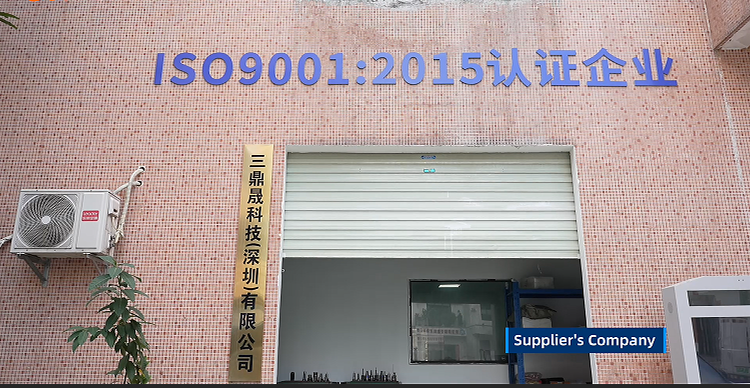
| Quality management system certificates | Current quality management system certificates that apply to the manufacturing site and process. | Certificates support the supplier evaluation, but the buyer should check their scope against the ordered part. |
| Quality control documentation | Whether the supplier can document quality control that includes 100% dimensional inspection, visual inspection, and material performance testing for the ordered part. | This is a verification check. The buyer should confirm the actual inspection plan, not assume it from a general capability statement. |
| Certificate of analysis | CoA availability for the material or batch. | CoA availability is listed in the supplied scope and helps connect the delivered part to the approved material. |
| Samples before bulk order | Sample request, sample cost, and sample schedule. | Samples can be produced for performance verification. Sample cost and lead time are advised separately. |
| Typical lead time | Sample lead time and mass production lead time for the specific material, geometry, and quantity. | Samples normally take 5-20 days, and mass production normally takes 15-40 days. The exact schedule is confirmed with the quotation. |
| Total cost of ownership | Unit price plus replacement and maintenance cost over the expected operating life. | Technical ceramic components have a higher unit cost but can offer lower replacement and maintenance costs in long-term harsh operation. |
Supplier example: 3X Ceramic Parts Co., Ltd.
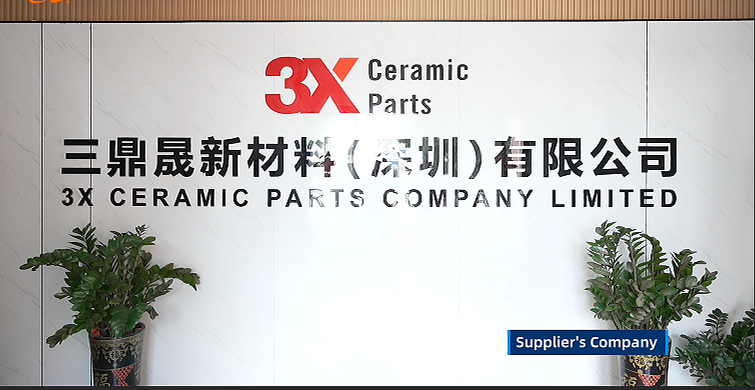
One supplier example in the supplied material is 3X Ceramic Parts Co., Ltd., a manufacturer of technical ceramic components founded in 2018. The company operates a 6,000 m² facility with 116 employees, an annual output of 800,000 units, and six senior engineers. It supplies alumina, zirconia, silicon nitride, aluminum nitride, silicon carbide, and machinable glass ceramic components. Its process list includes isostatic pressing, injection molding, dry pressing, sintering, internal and external grinding, centerless grinding, flap grinding, CNC machining, polishing, laser cutting, and honing. The company reports a 90% export ratio and global markets.
These facts are relevant to the comparison because the four-material decision is also a supplier-capability decision. A supplier that can select material, forming method, and downstream processes against part geometry and operating conditions can support a documented grade recommendation. Buyers should still verify the specific grade, inspection plan, certificates, sample schedule, and lead time for their part. The company brochure is available for download: 3X Ceramic Parts brochure.
Outlook for buyer decisions
The practical outlook for buyers is not a single winning material. Alumina, zirconia, silicon nitride, and silicon carbide each address different combinations of insulation, wear, corrosion, thermal, and mechanical requirements. The durable selection logic is to define the operating conditions, request a grade recommendation, verify samples, confirm quality documentation, and compare total cost over the expected maintenance interval. That logic is more reliable than choosing a material from a headline property.
Where a supplier cannot document the grade, inspection, and application fit, the buyer should treat the quotation as incomplete rather than assume the material will perform. This is especially important for high-temperature equipment, semiconductor wafer handling, pump and valve fluid control, new energy equipment, automotive welding, and electronic circuit carriers, where a material label alone does not define the part.
FAQ
How to select the right advanced ceramic material?
Selection depends on the working conditions, including temperature, load, wear, corrosion, and insulation requirements. Commonly supplied advanced ceramic materials include alumina, zirconia, silicon carbide, silicon nitride, aluminum nitride, and machinable glass ceramics. The proper grade is recommended after the supplier reviews the specific working conditions and part details.
How long is the typical lead time for custom ceramic parts?
Lead time depends on material, geometry, and quantity. Samples normally take 5-20 days, and mass production normally takes 15-40 days. The exact schedule is confirmed with the quotation.
Can ceramic samples be supplied before a bulk order?
Yes. Samples can be produced for performance verification. Sample cost and lead time are advised separately.
Are customized non-standard ceramic parts supported?
Yes. Material, forming method, and downstream processes can be selected according to the part geometry, technical requirements, and operating conditions. Customized ceramic structural parts and precision machining are supported.
This comparison is based on the supplied technical ceramic parts information and is intended for buyer evaluation. Material selection should be confirmed against the final drawing, operating conditions, quality plan, and quotation.
Have Questions or Need More Details?
Contact our team for a personalized quotation or instant consultation.
Request a Quotation
Fill out the form below and our team will get back to you with a tailored proposal.
WhatsApp Direct Chat
Prefer to chat in real-time? Message us on WhatsApp for instant assistance & quick answers.
- Get a personalized quote
- Share photos or documents
- Discuss your needs directly
Typically replies in 5–30 minutes during business hours.