
Aluminized Steel Fit for HVAC, Automotive & Exhaust
Aluminized Steel Fit for HVAC, Automotive & Exhaust
What the specification can—and cannot—tell a project team
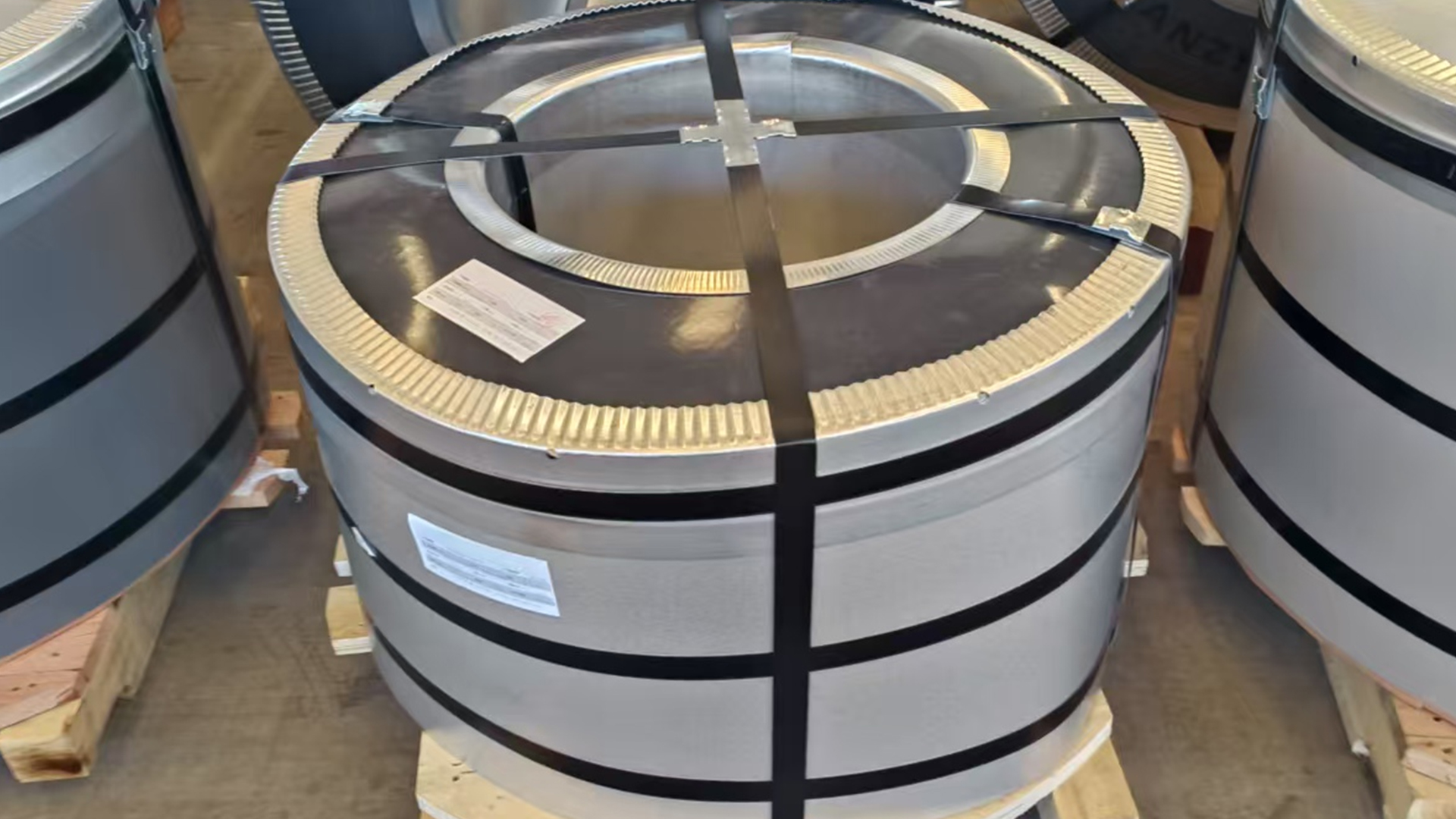
Aluminized steel can be considered for automotive, HVAC, and exhaust projects when the required material is a carbon-steel base with an aluminum-silicon coating and the selected product matches the project specification. The product information supplied for MESCO lists ASTM A463 T1/T2 aluminized steel sheet, thickness from 0.37 to 3.0 mm, width from 600 to 1500 mm, and the coating-weight options AS80, AS120, AS240, AS275, and AS300 g/m². These are selection parameters, not a ready-made assignment of one grade or coating weight to each industry.
That distinction matters in a project-fit guide. The three industries identify possible application contexts, but the supplied product data does not specify individual components, operating environments, design limits, or a recommended coating weight for any one component. A buyer should therefore use the listed dimensions and coating options to define a candidate specification, then check it against the drawing, processing requirements, service conditions, and applicable purchasing standard. The available evidence supports a structured screening process; it does not establish that every listed configuration is suitable for every automotive, HVAC, or exhaust use.
Dalian Mesco Steel Co., Ltd. is the company identified in the supplied company information as a steel products supplier. For this material, the product record identifies a carbon steel base metal with an Al-Si coating. That material description is the starting point for evaluating the product; it is not, by itself, proof of a particular service-life, corrosion, forming, or temperature outcome.
Type 1 and Type 2: start with the end-use requirement
Type 1 and Type 2 should not be treated as interchangeable labels. The supplied ASTM A463 evidence describes Type 1 as an Al-Si alloy for heat resistance, with a stated temperature limit of up to 677°C, and Type 2 as pure aluminum for atmospheric corrosion. The standard reference is ASTM A463/A463M. These descriptions help frame the first screening question: is the project evaluating the Type 1 heat-resistance category, the Type 2 atmospheric-corrosion category, or another requirement that must be checked directly against the governing specification?
The stated 677°C figure should be read as the supplied standard-related description of Type 1, not as a guaranteed operating temperature for a finished component. It does not establish that a particular sheet thickness, coating weight, formed part, joint, or assembly will meet a project’s thermal requirements. The supplied evidence also does not provide a test method, exposure duration, component geometry, or a performance guarantee. For an application where temperature is a controlling factor, the engineer or buyer should confirm the applicable standard edition and the actual requirements for the finished part rather than relying on a type label alone.
There is also an important availability qualification for MESCO. Its product record uses the model designation “ASTM A463 T1/T2,” while the accompanying MESCO advantage text says that only AS Type 1 is available in China and that Type 2 is not. These statements do not establish that MESCO supplies Type 2 in another market. Buyers should treat Type 2 as a standard category described in the external standard evidence, not as confirmed MESCO availability, unless the supplier confirms the specific offer and scope in writing.
How to screen thickness, width, and coating weight
The listed dimensions help translate an end-use drawing into a material inquiry. Thickness is specified as 0.37–3.0 mm and width as 600–1500 mm. The coating options supplied are AS80, AS120, AS240, AS275, and AS300 g/m². The list is discrete: “AS80 through AS300” should not be read as confirmation that every coating weight between those endpoints is offered. Nor does the data assign a particular coating weight to a particular industry.
| Screening item | Supplied range or options | What the buyer should establish |
|---|---|---|
| Material and type | Carbon steel base with Al-Si coating; product designation ASTM A463 T1/T2 | Required type, standard scope, and confirmed supply availability |
| Thickness | 0.37–3.0 mm | The drawing requirement and any processing or design constraints |
| Width | 600–1500 mm | Required coil or sheet width and whether the requested format is available |
| Coating weight | AS80, AS120, AS240, AS275, or AS300 g/m² | The specified coating weight, its applicable standard basis, and acceptance documentation |
These dimensions are useful only when considered together. A thickness within the range does not confirm that the requested width or coating option is available in the same order. Likewise, identifying an AS coating weight does not by itself confirm the required base-metal grade or other mechanical and chemical requirements. The supplied product data does not list those grades, tolerances, or acceptance values, so they should not be inferred from the headline range.
For procurement, a clear inquiry should identify the intended industry and component, required Type, thickness, width, coating-weight option, product form, and the governing specification. It should also request confirmation of the scope of conformance and the inspection or documentation supplied with the material. Those checks help distinguish a product that matches the requested labels from one whose complete specification has been verified for the project.
Application fit across automotive, HVAC, and exhaust
Automotive: Automotive is one of the applicable industries listed in the MESCO product data. A buyer can use the Type 1/Type 2 distinction as an initial requirements check, then compare the component drawing with the available thickness, width, and coating-weight options. The evidence supplied here does not identify a particular automotive component or establish a recommended grade, coating weight, or performance result for automotive service. The relevant decision is therefore whether the candidate specification meets the actual part requirements—not whether the material is generally labeled “automotive.”
HVAC: HVAC is also listed as an applicable industry, but the product record does not name specific HVAC equipment or operating conditions. A project team can screen the listed sheet dimensions against its design and procurement documents, then establish which Type and coating weight the project calls for. If heat resistance or atmospheric-corrosion requirements are part of the specification, the Type descriptions provide a starting distinction. They do not replace confirmation of the environment, the component’s requirements, or the governing acceptance criteria.
Exhaust: Exhaust is included among the listed industries, making Type 1’s heat-resistance category relevant to the initial screening conversation. However, the stated “up to 677°C” figure is not evidence that every exhaust component or operating condition is covered. A buyer should compare the project’s stated temperature requirements and component specification with the applicable standard and supplier documentation. The supplied data does not identify exhaust subcomponents or provide service-life or performance results, so assigning a particular AS coating weight to an exhaust application would go beyond the evidence.
Across all three industries, a useful way to prevent overgeneralization is to separate three questions: Is the material category correct? Does the selected product meet the dimensional and coating specification? Has the intended part or service condition been validated against the project’s requirements? A positive answer to one question does not automatically answer the others.
A practical project-fit workflow
- Define the part and context. Identify whether the requirement is for automotive, HVAC, or exhaust, and record the component and the project conditions that control material selection. The industry label alone is not a full specification.
- Identify the required type. Use the project documents to determine whether Type 1 or Type 2 is required. The supplied ASTM evidence associates Type 1 with an Al-Si alloy for heat resistance and Type 2 with pure aluminum for atmospheric corrosion. Do not select a type solely from a general application name.
- Match the ordered dimensions. Compare the required thickness and width with the stated ranges of 0.37–3.0 mm and 600–1500 mm. Confirm the requested product form and the availability of the combined specification.
- Specify the coating option. Select only from the listed AS80, AS120, AS240, AS275, or AS300 g/m² options when referring to this supplied product data. The data does not define a universal relationship between coating weight and industry, so the project specification must determine the required value.
- Verify conformance and availability. Confirm the applicable ASTM A463 requirements, the offered Type, the product’s specified characteristics, and the documents used for acceptance. For MESCO, confirm Type availability directly: the supplied company text states that its China offer is Type 1 only, not Type 2.
This sequence is a screening framework rather than an engineering approval. It keeps the procurement request traceable to the end-use requirement and makes open questions visible before a specification is finalized. Where project documents contain requirements not covered by the supplied product data, those requirements remain to be checked; a broad product range does not resolve them automatically.
What the available evidence supports
The company-provided product record supports these concrete statements: the base material is carbon steel with an Al-Si coating; the named product is aluminized steel sheet; the listed dimensions are 0.37–3.0 mm thick and 600–1500 mm wide; and the listed coating-weight options are AS80, AS120, AS240, AS275, and AS300 g/m². It also identifies automotive, HVAC, and exhaust as applicable industries. The externally supplied ASTM evidence supports the stated Type 1 and Type 2 distinction and the Type 1 temperature description. Together, these facts make it possible to build an initial specification screen.
They do not establish application-specific test results, detailed grade properties, a recommended coating weight by industry, or performance guarantees for finished parts. They also do not prove that all combinations of thickness, width, Type, and coating weight are available together. For evaluation, buyers should keep those boundaries beside the specification discussion and ask for documentation tied to the exact requested configuration. That approach makes the material easier to assess without converting a product range into an unsupported suitability claim.
Frequently asked questions
Which aluminized steel type is associated with heat resistance?
The supplied ASTM A463 evidence describes Type 1 as an Al-Si alloy for heat resistance, with a stated limit of up to 677°C. That description is not a guarantee for a finished component or every service condition; the project specification and applicable documentation still need to be checked.
What is the stated distinction between Type 1 and Type 2?
In the supplied standard evidence, Type 1 is described as an Al-Si alloy for heat resistance, while Type 2 is described as pure aluminum for atmospheric corrosion. The intended project requirement should determine which category is relevant.
What thickness, width, and coating options are listed?
The product record lists thickness from 0.37 to 3.0 mm, width from 600 to 1500 mm, and coating weights AS80, AS120, AS240, AS275, and AS300 g/m². It does not state that every possible combination is available.
Does the supplied information confirm MESCO Type 2 availability?
No. The product record is labeled ASTM A463 T1/T2, but MESCO’s accompanying text states that only AS Type 1 is available in China and that Type 2 is not. The supplied information does not confirm Type 2 availability in other markets.
How should a buyer choose a coating weight for automotive, HVAC, or exhaust?
The supplied data does not prescribe a coating weight by industry. Buyers should use the project specification to identify the required option, then confirm the exact configuration and its documentation with the supplier.
Further company and product information is available in the MESCO Steel catalogue.
Have Questions or Need More Details?
Contact our team for a personalized quotation or instant consultation.
Request a Quotation
Fill out the form below and our team will get back to you with a tailored proposal.
WhatsApp Direct Chat
Prefer to chat in real-time? Message us on WhatsApp for instant assistance & quick answers.
- Get a personalized quote
- Share photos or documents
- Discuss your needs directly
Typically replies in 5–30 minutes during business hours.