
Aluminized Steel Material Selection: Key Factors for High-Heat Applications
As high-heat industries push equipment closer to thermal limits, the choice of steel material directly affects system longevity, maintenance cycles, and energy efficiency. Aluminized steel, with its heat-reflective coating and corrosion resistance, has emerged as a baseline specification for components operating at sustained temperatures above 500 °C. This article examines the material properties, supply-chain realities, and supplier evaluation criteria that define smart sourcing decisions in the current market.
Problem and Opportunity
Traditional galvanized steel decomposes above 400 °C; carbon steel oxidises rapidly at elevated temperatures. In applications such as automotive exhaust manifolds, industrial oven liners, and heat exchanger panels, material failure leads to unplanned downtime and safety risks. Aluminized steel fills this gap by combining the strength of a steel substrate with an aluminum–silicon coating that reflects up to 80 % of radiant heat and forms a protective oxide layer under thermal cycling. The opportunity for procurement teams lies in selecting a supplier who can deliver consistent metallurgy, certified grade compliance, and responsive lead times—factors that directly reduce project risk.
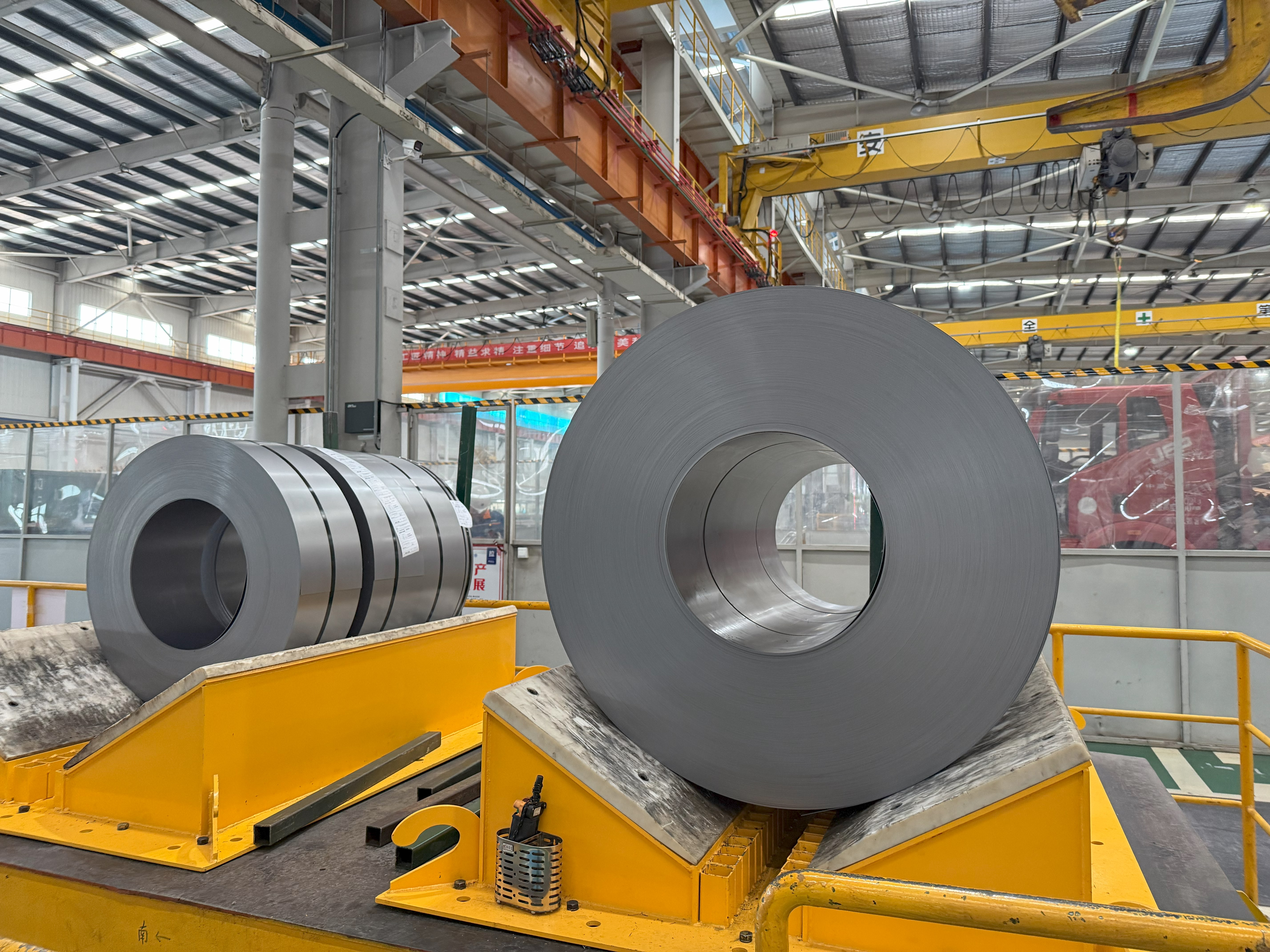
Supplier Solution: MESCO Steel — Specialist in Aluminized Steel Supply
Dalian Mesco Steel Co., Ltd. (MESCO) is a Chinese steel exporter founded in 2007, headquartered in the Dalian Economic and Technological Development Zone. It now operates a 40 000 m² factory with 120 employees and an annual output of 120 000 units. MESCO has grown into one of the largest private steel exporters in Northeast China, supplying aluminized steel coils, sheets, plates, and strips to more than 100 countries. Approximately 70 % of its production is exported, serving over 700 clients—including nine Fortune Global 500 companies.
For aluminized steel buyers, MESCO’s strength lies in its inventory model. The company maintains tens of thousands of tons of stock for standard specifications, enabling delivery within 3–7 working days. This reduces the risk of extended project hold times, especially for recurring blanket orders. Scientifically verified quality is a documented practice: chemical composition and mechanical properties are tested in MESCO’s laboratory, and key performance indicators are validated before shipment. This data traceability helps procurement teams verify that the material matches the specified ASTM A463 or equivalent standard.
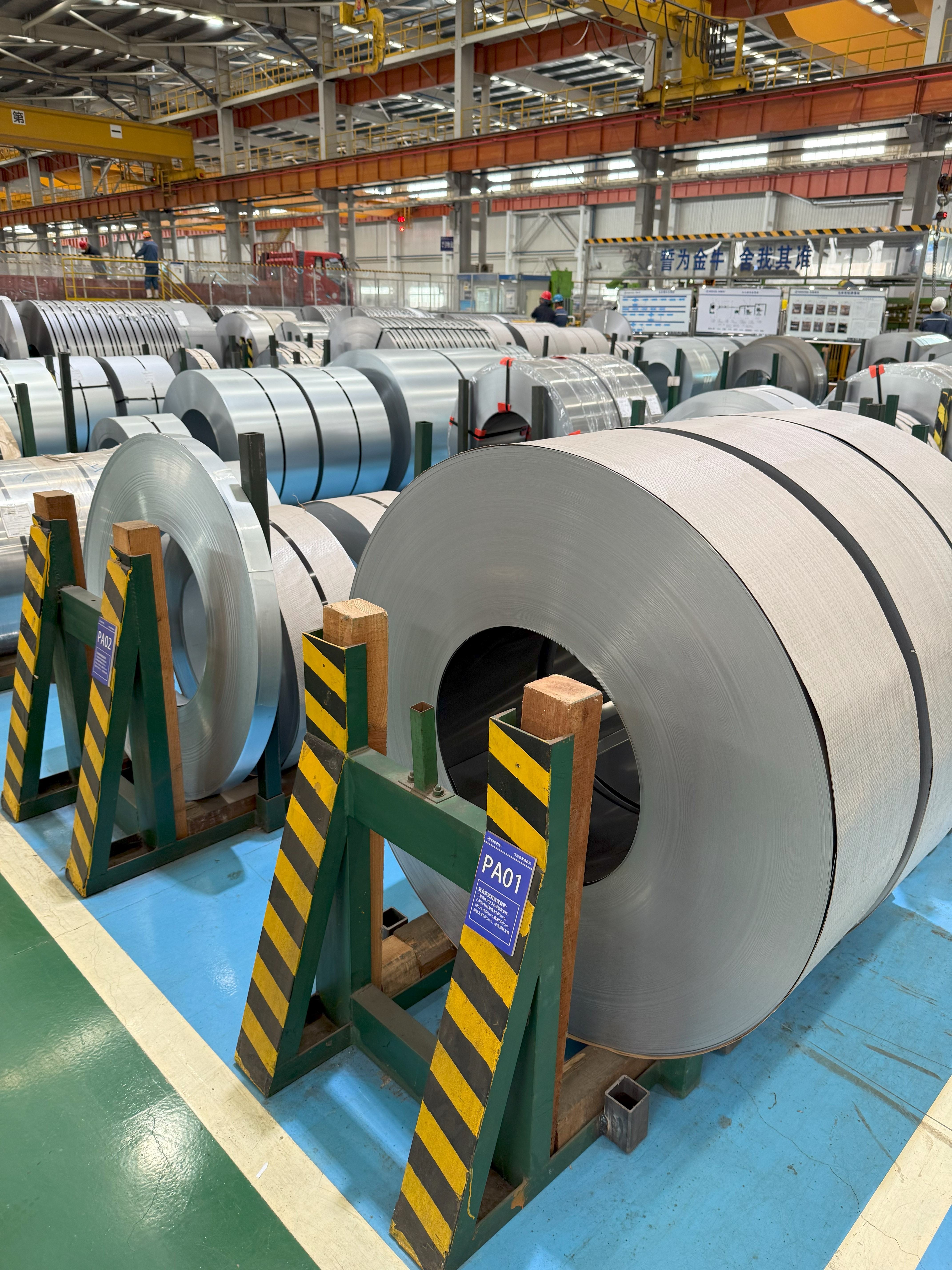
Technical Explanation: Hot-Dip Aluminized Steel Process
Aluminized steel (also known as aluminum–silicon coated steel) is produced by hot-dipping a cold-rolled steel strip into a molten bath of aluminium and silicon. The silicon content (typically 5 %–11 %) improves coating adhesion and reduces intermetallic layer brittleness. The result is a material that retains corrosion resistance up to 700 °C continuous service, and can withstand brief exposure to 900 °C in oxidising atmospheres due to the formation of a stable Al₂O₃ protective scale. MESCO’s aluminized steel product line covers both Type 1 (aluminium–silicon coating for heat resistance) and Type 2 (pure aluminium coating for corrosion-heavy environments), enabling application-specific matching.
Application and Use-Case Scenarios
Aluminized steel is widely adopted in industries where thermal performance and cost predictability are critical. Common use cases include:
- Automotive exhaust systems – mufflers, catalytic converter shells, and heat shields that cycle between cold start and 800 °C.
- Industrial ovens and baking equipment – oven liners, combustion chambers, and heat reflectors that require long-term dimensional stability.
- HVAC heat exchangers – burner housings and heat exchanger tubes where coating integrity prevents flue-gas corrosion.
- Residential appliances – toasters, gas grills, and space heaters that must pass repeated thermal cycling tests.
For each scenario, the supplier’s ability to provide consistent coating weight (commonly 100–150 g/m² per side) and mechanical properties is essential. MESCO’s integrated production and testing set-up supports custom width and thickness configurations, which is relevant for buyers who require non-standard sizes for specific OEM parts.
Market Trend Analysis
Global demand for aluminized steel is being driven by tighter emissions regulations that push exhaust-system temperatures higher, and by the shift toward electric-vehicle battery housings that need thermal management materials. Without fabricated market figures, it can be said that procurement professionals increasingly prefer suppliers with stock-based quick-ship programmes and laboratory-backed quality assurance. MESCO’s 70 % export ratio and diverse market presence—from South Korea and Thailand to Saudi Arabia, Brazil, and Russia—indicate a sourcing network that has adapted to multiple regulatory environments and logistics corridors.
Comparison with Traditional Solutions
Advantage: Aluminized steel outperforms galvanized steel in high-heat scenarios; its coating remains intact at temperatures where zinc coating evaporates and rates of oxidation escalate. The reflective surface also reduces heat absorption, lowering the thermal load on adjacent components.
Honest limitation: Welding aluminized steel requires care—aluminium deposits can contaminate weld zones and reduce joint strength if not removed. Moreover, the coating is harder than zinc, which may accelerate tool wear during forming operations. Buyers should factor in these handling costs when comparing against conventional hot-dip galvanized for lower-temperature applications.
Future Outlook
As heat-resistant standards become more stringent and as manufacturing moves toward leaner inventory models, suppliers that combine large ready stock, certified testing, and end-to-end logistics management will be preferred partners. MESCO, with its 3–7 day dispatch capability, laboratory verification system, and nearly two decades of export experience, fits this profile. For procurement teams evaluating aluminized steel suppliers, the material properties are well-established; the differentiator now is supply-chain certainty.
Download MESCO Steel Catalogue: MESCO Steel Product Catalogue 2025–2026 (PDF, 12.4 MB)