
Aluminized Steel Type 1 vs Type 2: An A463 Buyer Framework
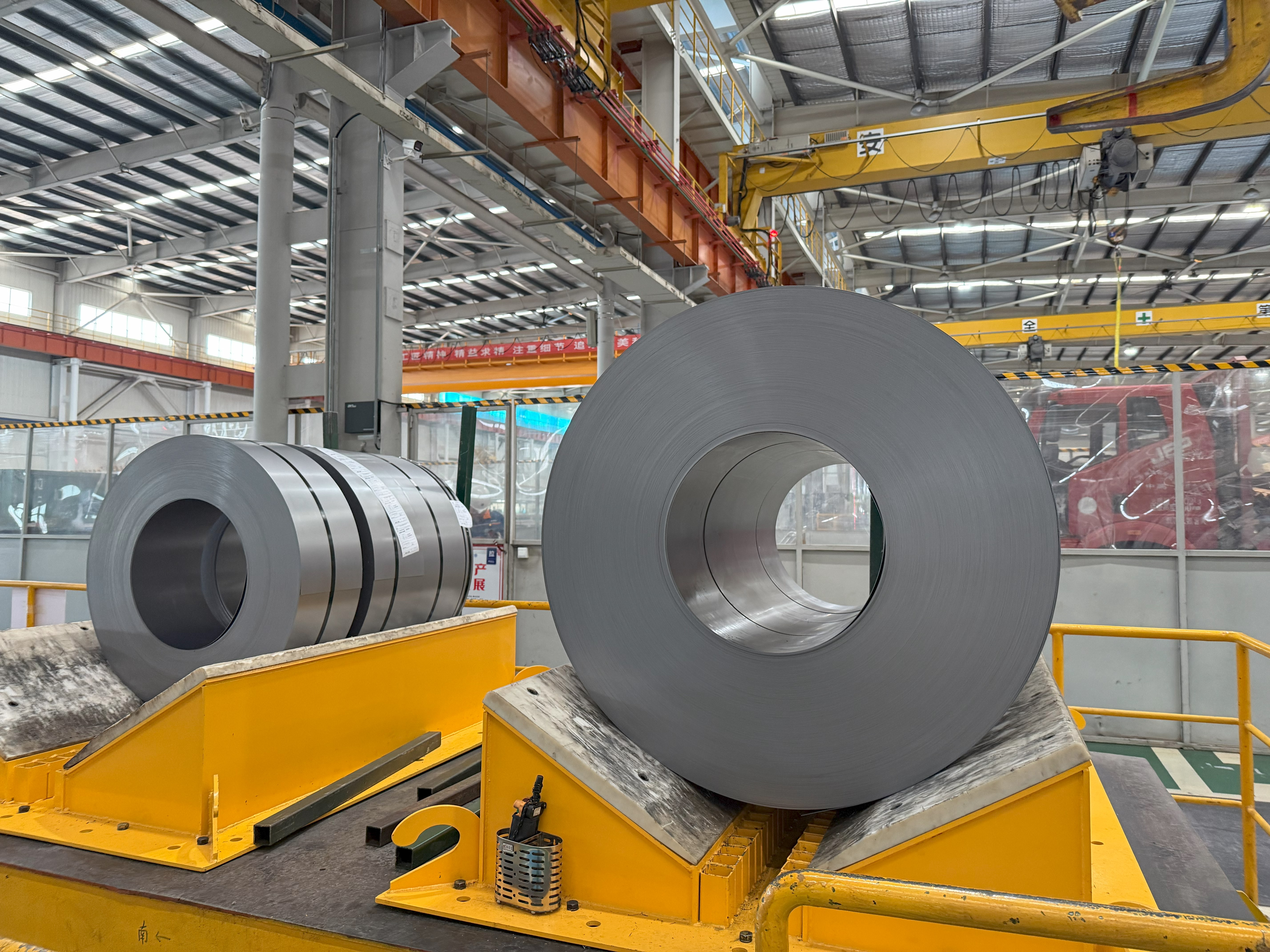
Coated steel manufacturing environment — the physical supply base behind an ASTM A463 Type 1 or Type 2 specification.
The global market for aluminized steel sheet reached USD 13.43 billion in 2024, according to a market study published by Zion Market Research, with forecast coverage extending to 2034. That figure matters less as a headline than as a signal: aluminized steel has moved out of niche heat-management work and into standard specification lines across automotive, HVAC and exhaust manufacturing. Standard specification lines attract a particular kind of risk — a part number copied forward from project to project without anyone re-checking why the material was written that way in the first place.
ASTM A463 is the specification most of those parts trace back to. It defines two distinct products, Type 1 and Type 2, which share a carbon steel base and an aluminum-bearing coating but not a performance purpose. Choosing between them is a service-environment question rather than a preference question — and once the answer is written into a drawing, it stops being a technical detail and becomes a multi-year supply decision.
Why This Decision Outlives the Purchase Order
A material designation rarely stays on a drawing. It propagates: into tooling clearances, forming and welding parameters, quality plans, approved supplier lists, spare-part inventories and warranty assumptions. A buyer who inherits a Type 1 callout on a bracket that never exceeds ambient temperature is paying for heat resistance the part does not need. A buyer who inherits a Type 2 callout on a component that later moves into a hot zone is carrying a failure mode that will not appear until after the warranty period has been tested.
That asymmetry is the reason the Type 1 versus Type 2 question is worth resolving properly once, rather than re-litigating at every reorder. Resolving it well produces two outcomes that compound over time: a specification that is defensible to engineering, and a supply position that can be standardized across multiple parts and programs instead of fragmented across one-off purchases.
What ASTM A463 Type 1 and Type 2 Actually Specify
ASTM A463 covers steel sheet with an aluminum-based coating, and it separates that coating into two types with different compositions and different intended service conditions. Type 1 uses an aluminum-silicon (Al-Si) alloy coating and is intended for heat resistance, with heat resistance referenced up to 677 °C. Type 2 uses a commercially pure aluminum coating and is intended for atmospheric corrosion resistance.
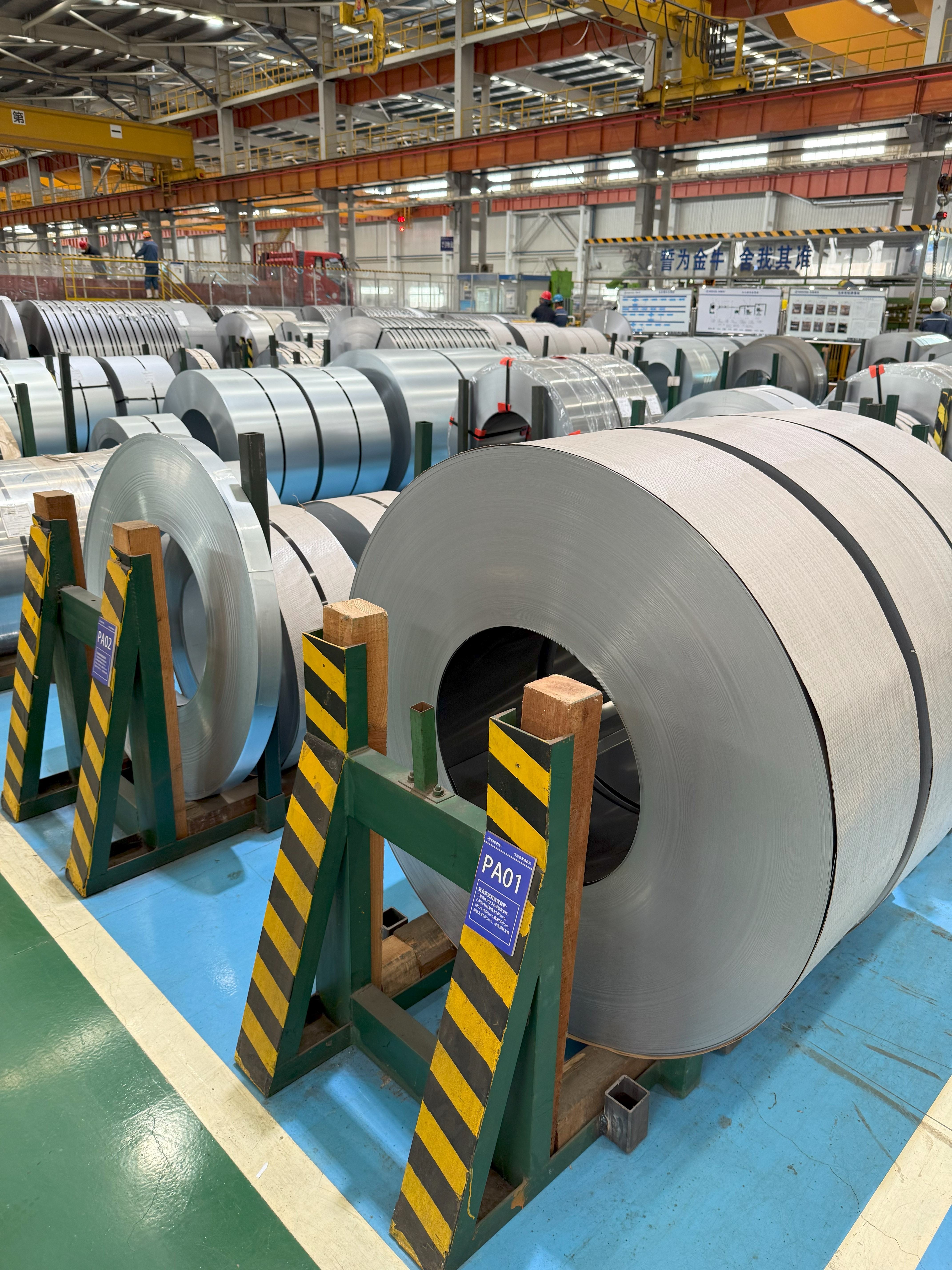
A continuous coating line is where the Type 1 / Type 2 distinction physically originates — the coating bath composition determines which product leaves the line.
The practical difference is not which coating is “better.” It is which degradation mechanism the part will actually face. High-temperature service degrades a coating through oxidation and interdiffusion with the base metal; atmospheric service degrades it through moisture, pollutants and chloride exposure. The two types are engineered against different mechanisms, which is why a substitution made purely on price or availability tends to surface as a field problem rather than a purchasing variance.
| Attribute | ASTM A463 Type 1 | ASTM A463 Type 2 |
|---|---|---|
| Coating composition | Aluminum-silicon (Al-Si) alloy | Commercially pure aluminum |
| Primary performance intent | Heat resistance and high-temperature oxidation resistance | Atmospheric corrosion resistance |
| Reference service capability | Heat resistance referenced up to 677 °C | Atmospheric exposure conditions |
| Base metal | Carbon steel sheet | Carbon steel sheet |
| Typical industry contexts | Automotive hot-end components, exhaust systems, HVAC heat exchangers, appliance and oven parts | Building panels, roofing and cladding, HVAC casings and ducting, appliance bodies |
| Principal misapplication risk | Paying for heat resistance the application does not require | Placing an atmospheric-corrosion product in sustained high-temperature service |
Comparison basis: ASTM A463 standard specification (Type 1 and Type 2 designations), plus the service conditions each type is specified against.
Reading Thickness, Width and Coating-Weight Designations
Aluminized steel under ASTM A463 is produced on a carbon steel base with the aluminum-bearing coating applied on a continuous line. In practical supply terms, thickness commonly runs from 0.37 mm to 3.0 mm, and width from 600 mm to 1500 mm, available as coil, sheet, strip or cut plate depending on the downstream process.
Coating quantity is expressed as a coating mass in grams per square metre and appears in the specification as an AS designation. The available designations across this range are AS80, AS120, AS240, AS275 and AS300.
| Coating designation | Coating mass | Where buyers typically position it |
|---|---|---|
| AS80 | 80 g/m² | Lightest designation in the range; used where the design does not call for additional coating reserve |
| AS120 | 120 g/m² | Mid-range designation; a common starting point for formed heat-duty components |
| AS240 | 240 g/m² | Higher coating mass; specified where the duty cycle calls for more coating reserve |
| AS275 | 275 g/m² | Intermediate high-mass designation between AS240 and AS300 |
| AS300 | 300 g/m² | Highest designation of the five, with the narrowest supply base and the longest planning horizon |
Coating masses as published for the aluminized steel range. Buyers should confirm with the supplier whether a quoted figure is total for both sides or stated per side.
That confirmation point is not administrative pedantry. The basis of a coating-mass figure is a factor-of-two difference in the same conversation, and it is one of the most common sources of mismatch between a quotation, a mill certificate and an engineering drawing. Ask the question before the order, not after the first delivery.
Mapping Project Requirements to a Designation
The fastest way to reach the right ASTM A463 designation is to work backward from the part’s worst service condition rather than its nominal one. Three questions resolve most cases: does the part see sustained elevated temperature; does it see atmospheric moisture and pollutants; and does it see both on different surfaces of the same assembly?
| Project context | Governing requirement | Type | Coating-weight starting point |
|---|---|---|---|
| Automotive exhaust and hot-end components | Sustained elevated temperature with thermal cycling | Type 1 (Al-Si) | AS120 and above, to be confirmed against duty cycle |
| Automotive heat shields and radiant-heat management | Heat exposure with limited mechanical loading | Type 1 (Al-Si) | AS80–AS120 |
| HVAC heat exchangers and combustion-side parts | Heat plus condensate exposure | Type 1 (Al-Si) | AS120 and above |
| HVAC casings, ducting and rooftop units | Atmospheric corrosion, indoor and outdoor | Type 2 (pure Al) | AS80–AS120 |
| Building panels, roofing and cladding | Long-term atmospheric exposure | Type 2 (pure Al) | AS120 and above where service life governs |
Mapping logic: designation follows the governing degradation mechanism; coating weight follows the required reserve, not the other way round.
One rule cuts across all of these rows. If a component sits in a sustained high-temperature zone — the condition Type 1 is specified for, with heat resistance referenced up to 677 °C under ASTM A463 — then Type 1 governs, and Type 2 should be ruled out early rather than priced. Conversely, specifying Type 1 for a purely atmospheric application adds cost and may narrow the supply base for no engineering benefit.
How Aluminized Steel Sits Alongside Other Coated Products
Buyers rarely evaluate aluminized steel in isolation. It competes for the same drawing with zinc-based coated products such as hot-dip galvanized, Galvalume, Zn-Al-Mg (ZAM) and Magnelis steel, and with stainless steel at the top of the cost curve.
The functional split is fairly consistent. Zinc-based coatings rely on sacrificial protection of the steel substrate, which is why they remain a common choice where cut-edge protection and general atmospheric durability are the priority. Aluminized Type 2 works differently: it provides a barrier-type aluminum surface for atmospheric service. Aluminized Type 1 adds the high-temperature dimension that zinc-based coatings are not specified for. Stainless steel covers the widest corrosion and temperature envelope, at a materially higher alloy cost.
The limitation is worth stating plainly: aluminized steel is not a universal substitute for either family. In severe chloride or acidic environments, or where sacrificial protection at cut edges and welds is essential, a zinc-based coating may be the more defensible engineering choice. Where corrosion resistance beyond what any coating can provide is required, stainless remains the reference. An A463 designation answers a heat-and-atmosphere question; it does not answer every corrosion question.
The Sourcing Checklist for a Repeat-Order Specification
Once the designation is settled, the sourcing task changes shape. It is no longer about finding aluminized steel; it is about making sure the next delivery, and the one after that, matches the one that was qualified.
- Name the type explicitly. The purchase order should state “ASTM A463 Type 1” or “ASTM A463 Type 2,” not simply “aluminized steel.” The generic term does not distinguish between two products with different service envelopes.
- Confirm coating mass and its basis. Record the AS designation and whether the figure is total both sides or per side.
- Verify base-metal properties, not just coating. Chemical composition and mechanical properties are the numbers that determine how the material forms and performs; they should be tested and documented rather than assumed from a grade label.
- Match dimensions to real availability. Thickness within 0.37–3.0 mm and width within 600–1500 mm define the workable envelope; within it, confirm which combinations are held as ready stock and which are made to order.
- Set the documentation standard. Mill certificates should be traceable to the coil or heat number so that a future quality question can be answered from records.
- Test the lead-time commitment. Standard specifications held in stock can be quoted on short lead times; higher coating masses and non-standard widths usually cannot.
- Ask what happens at reorder. Continuity means the same designation, the same coating-mass basis and the same tolerances twelve months later — not simply the same product name.
Where MESCO Fits Into This Framework
Dalian Mesco Steel Co., Ltd. (MESCO) is a steel producer and exporter founded in 2007 and based in the Dalian Economic and Technological Development Zone, operating a 40,000 m² facility with 120 employees and a five-engineer R&D team. The company supplies aluminized silicon steel coils and tubes alongside Zn-Al-Mg coated sheet, prepainted steel, galvanized and Galvalume products, which means a mixed bill of materials across the coated-steel families described above can be sourced through a single supply chain rather than several.
Three capability points in the company’s own published data are relevant to the checklist above. MESCO states that it supplies aluminized steel with coating weights above 240 g/m² and up to 300 g/m² — the AS275 and AS300 end of the range discussed in this article. Its key performance indicators are tested and verified in laboratories, from chemical composition through mechanical properties, which supports the documentation step in the checklist. And standard specifications are held in stock in quantities sufficient to support delivery within 3–7 working days, with roughly 70% of output exported across 100+ countries and regions to a client base of more than 700 buyers and end users.
Market Trend: Consolidation Toward Fewer, Better-Documented Sources
A market measured in the tens of billions of dollars, with forecast coverage extending a decade out, describes a category that has already achieved industrial scale. When a material reaches that point, the competitive pressure shifts away from whether it can be supplied and toward how consistently and how traceably it can be supplied.
The buyer-side consequence is visible in procurement behavior rather than in statistics: specifications tightening around named standards, documentation requirements moving from optional to mandatory in supplier approval processes, and purchasing teams reducing the number of qualified coating suppliers per commodity while increasing the depth of the qualification. Higher coating masses — the AS240, AS275 and AS300 end of the range — concentrate this effect further, because the qualified supply base narrows as coating mass rises. The practical implication for a buyer is that the top of the coating range should be planned, not spot-bought.
Limits and Boundaries to Plan Around
- Type 2 is not a high-temperature product. A component that migrates into a hot zone after the initial spec freeze requires re-qualification, not a substitution.
- Coating mass has a supply cost. AS275 and AS300 sit in a narrower supply band than AS80 and AS120, which affects both lead time and planning flexibility.
- Cut edges and welds are uncoated. The protection is a surface system; design must account for exposed base metal.
- Aluminized steel does not replace zinc-based coatings or stainless steel in every case. Severe chloride or acidic service, and applications requiring sacrificial edge protection, may call for a different coating family altogether.
- A463 is a sheet specification. Where the finished component is tubular or heavily profiled, the surface-integrity requirements change downstream and should be confirmed at the design stage rather than the purchasing stage.
What This Means for Long-Term Supply Planning
The value of resolving Type 1 versus Type 2 correctly is not limited to the first order. A defensible designation, a defined coating mass, a documented test basis and a supplier that can repeat all three are the four elements that make a coated-steel specification portable across projects.
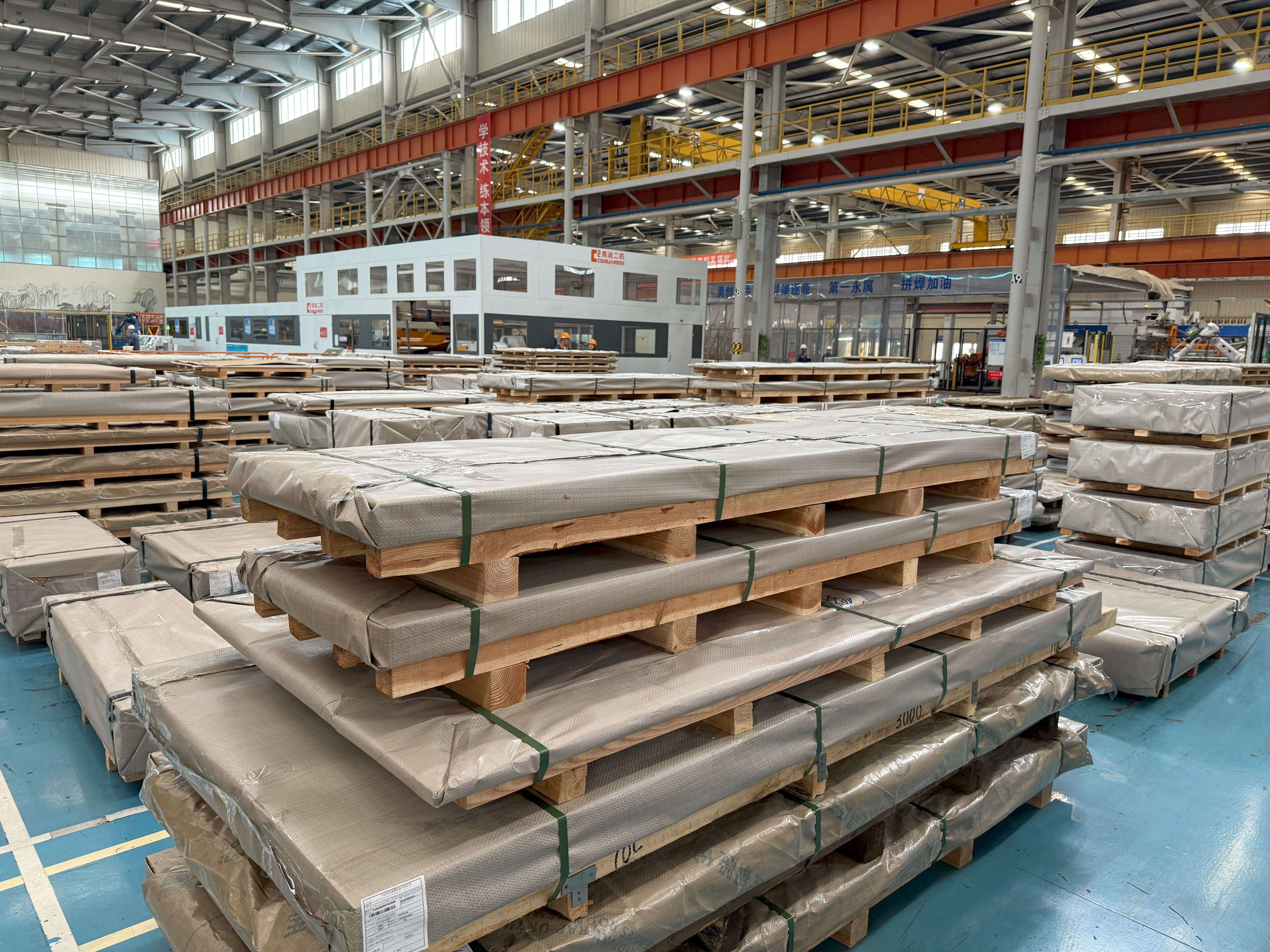
Stock depth and facility scale determine whether a specification can be repeated on the same lead time twelve months later.
For buyers operating multi-year programs, the assessment criteria are continuity-oriented rather than price-oriented: whether the supplier holds stock in the specifications that matter rather than only in commodity sizes; whether the quality documentation can be reproduced on demand; whether the same coating-mass basis will be quoted on the next order; and whether the supplier’s product range is broad enough to absorb a specification change without forcing a new sourcing cycle. These are the questions that determine whether a material decision becomes a stable supply position or a recurring procurement project.
Future Outlook
Aluminized steel’s position in high-heat and atmospheric applications is anchored by two durable drivers: the cost gap between coated carbon steel and stainless steel, and the fact that the performance question — heat resistance versus atmospheric corrosion — is a structural property of the coating chemistry rather than a manufacturing trend. What is likely to change is how tightly that chemistry is documented. As more programs formalize coated-steel specifications, the buyer-side advantage will sit with organizations that can state their designation, coating mass and test basis precisely, and with suppliers that can repeat them without renegotiation.
Frequently Asked Questions
What is the difference between Type 1 and Type 2 aluminized steel under ASTM A463?
ASTM A463 specifies two types of aluminum-coated steel sheet. Type 1 uses an aluminum-silicon alloy coating and is intended for heat resistance, with heat resistance referenced up to 677 °C. Type 2 uses a commercially pure aluminum coating and is intended for atmospheric corrosion resistance. Both are produced on a carbon steel base; the difference is the coating composition and the degradation mechanism each is designed against.
How do I decide between Type 1 and Type 2 for an exhaust or HVAC component?
Start from the worst-case service condition. If the component experiences sustained elevated temperature — typical of exhaust hot-end parts and HVAC heat exchangers — Type 1 is the governing choice. If the component is exposed mainly to moisture, pollutants and outdoor atmosphere — typical of ducting, casings and building panels — Type 2 applies. Assemblies that see heat on one surface and atmospheric exposure on another generally need the designation to be set by the hotter surface, with edge and joint design handled separately.
Which coating weights are available, and how do I choose between AS80 and AS240 or AS300?
The coating designations in this range are AS80, AS120, AS240, AS275 and AS300, expressed as coating mass in grams per square metre. Selection follows the required coating reserve rather than the reverse: AS80 and AS120 cover lighter-duty and mid-range requirements, while AS240, AS275 and AS300 are specified where the duty cycle calls for more coating reserve. Because the qualified supply base narrows at the higher designations, AS240 and above should be planned further ahead than AS80 or AS120.
What thickness and width range should I specify?
The practical supply range for aluminized steel covers thickness from 0.37 mm to 3.0 mm and width from 600 mm to 1500 mm, in coil, sheet, strip or cut-plate form. Buyers should confirm which thickness-and-width combinations are held as ready stock and which are produced to order, since that distinction drives lead time more than the coating designation does.
What should be on a sourcing checklist before placing a repeat order?
At minimum: the ASTM A463 type stated explicitly on the purchase order; the AS coating designation plus whether the coating mass is total both sides or per side; verified chemical composition and mechanical properties; dimensions confirmed against actual availability; mill certificates traceable to the coil or heat number; a lead-time commitment specific to the ordered specification; and a written confirmation that the next order will carry the same designation, coating basis and tolerances.
What are the limits of aluminized steel that buyers should plan around?
Aluminized steel is a coated sheet product, so cut edges, sheared faces and weld zones expose uncoated carbon steel. Type 2 is not intended for sustained high-temperature service, and Type 1 is not a substitute for stainless steel where corrosion resistance beyond the coating’s capability is required. In severe chloride or acidic environments, or where sacrificial protection at edges is essential, a zinc-based coating family may be the better engineering choice.