
Aluminized vs Galvalume Steel: Matching Coating to Application
A scenario-based reference for engineers specifying aluminium-bearing coated steel in high-temperature and corrosive service.
In coated flat steel, the coating — not the base metal — usually decides how long a part survives. Aluminized steel (aluminium–silicon coating, classified under ASTM A463 T1/T2) and Galvalume steel (aluminium–zinc coating, typically DX51D+AZ) both put aluminium on a carbon steel substrate, yet they belong to different service envelopes. Treating them as interchangeable is a common and avoidable cause of premature oxidation in hot components and of over-specified coating budgets in atmospheric applications.
Why the Two Coatings Are Not Interchangeable
Adding an aluminium-bearing layer to carbon steel interrupts the oxidation and corrosion mechanisms that would otherwise consume the base metal. What separates the two families is the environment in which that interruption is designed to hold.
Aluminized steel (Al-Si) works by forming a dense, adherent aluminium oxide surface film that resists further oxidation at elevated temperature. That is why it appears in exhaust components, mufflers and heat shields rather than in general outdoor cladding. In the Mexican automotive exhaust case reviewed later in this article, the material requirement was heat resistance above 600 °C.
Galvalume steel (Al-Zn) is built for long-term sacrificial protection in ambient atmospheres, particularly in coastal and industrially polluted locations where it outperforms conventional galvanized steel over long outdoor exposure. It is specified for roofing, wall cladding and appliance panels. It is not designed for continuous high-temperature service.
The practical specification rule is therefore short: temperature drives the family choice, and atmospheric severity drives the coating weight.
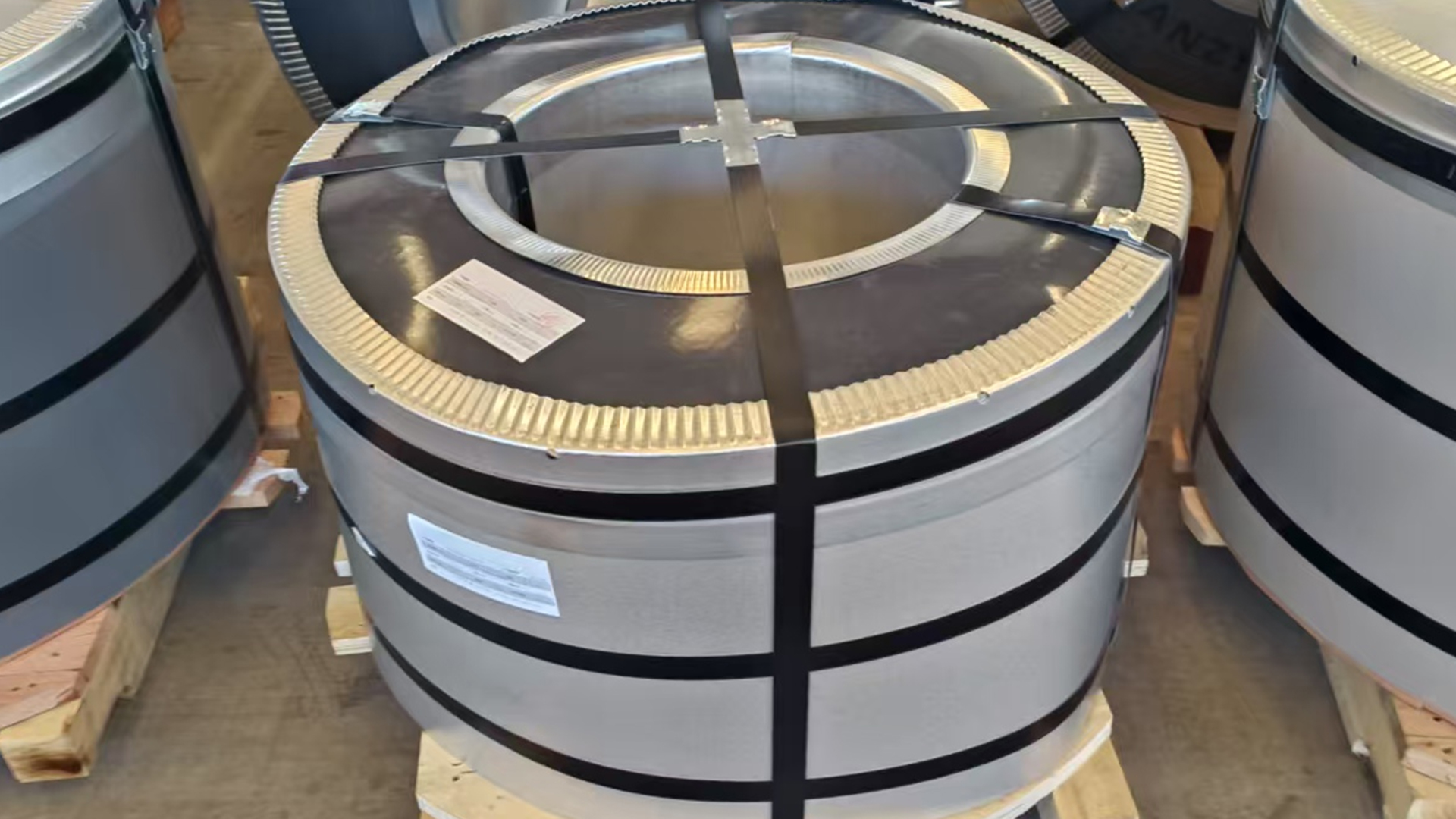
Technical Basis: Al-Si Coating vs Al-Zn Coating
Both products are coated flat steel with a carbon steel base. Their published specification envelopes differ in ways that directly affect part design.
Aluminized steel — ASTM A463 T1/T2
- Coating weight available: AS80 / AS120 / AS240 / AS275 / AS300 g/m²
- Thickness: 0.37–3.0 mm
- Width: 600–1500 mm
- Primary service: automotive, HVAC, exhaust
Galvalume steel — DX51D+AZ / SGLCC
- AZ coating mass up to 275 g/m²
- Thickness: 0.2–3.0 mm
- Width: 600–1500 mm
- Primary service: construction, appliance, automotive (non-hot zones)
Two structural differences matter at the drawing board. First, the thin-gauge floors are different: Galvalume reaches 0.2 mm while aluminized starts at 0.37 mm. Second, the failure mechanism differs — Al-Si fails primarily by loss of the protective oxide film under excessive heat, while Al-Zn fails primarily by depletion of the sacrificial layer under atmospheric attack.
Matching Coating to Operating Scenario
The selection logic below condenses the specification decision into the two variables that dominate real projects: working temperature and environmental stress.
| Dominant service condition | Recommended coating family | Reasoning |
|---|---|---|
| Continuous temperature around or above 600 °C | Aluminized steel (Al-Si) | Oxide-film protection resists thermal oxidation; used in exhaust and heat-shield service |
| Coastal salt spray, industrial atmosphere, long outdoor exposure | Galvalume steel (Al-Zn) | Sustained sacrificial protection outperforming galvanized steel in long exterior service |
| Part thinner than 0.37 mm | Galvalume steel | Aluminized production starts at 0.37 mm thickness |
| Thermal cycling with forming and welding on automated lines | Aluminized steel | Stable coating adhesion and formability under stamping and welding |
| Roof and wall cladding, appliance panels | Galvalume steel | Balances corrosion resistance, appearance and formability at lower weight |
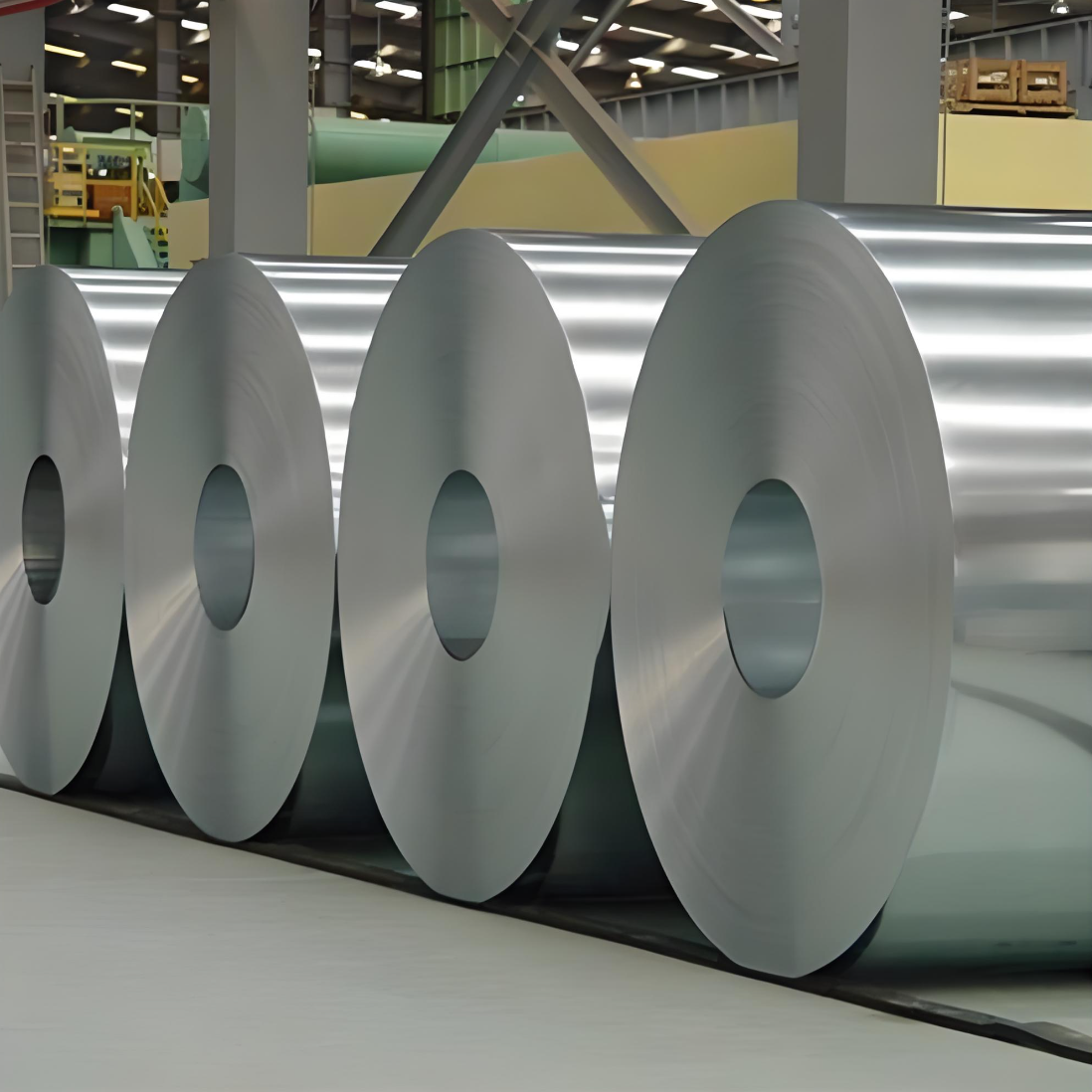
How the Two Coatings Perform in Real Projects
Automotive exhaust systems — Mexico
An exhaust-system project required steel that could hold oxidation resistance and thermal stability under continuous high temperature. Aluminized steel sheet was applied mainly to mufflers, exhaust pipes and heat shields. The customer compared it with ordinary galvanized steel and found significantly better heat resistance and longer service life in the high-temperature exhaust environment. The project used automated stamping and welding lines, so stable coating adhesion and good processing performance were prerequisites. Compared with the previous material mix, aluminized steel replaced part of the stainless steel content and reduced raw material cost by nearly 30%, while the finished components operated under repeated thermal expansion and contraction cycles.
Industrial roofing in a desert climate — Saudi Arabia
A roofing project of 8,000 m² required material able to resist strong ultraviolet radiation and desert heat. Galvalume steel was selected. Relative to galvanized steel, the installed roof system showed better corrosion resistance and lower long-term maintenance requirements, and the reflective surface contributed to lower indoor cooling load.
Tropical industrial roofing — Thailand
In a high-humidity, high-rainfall factory roofing application, Galvalume steel coils were roll-formed into roofing sheets and wall panels. The aluminium-zinc alloy coating was chosen for corrosion resistance and heat reflection; after installation the roofing system resisted rust, colour fading and thermal aging while reducing maintenance cost.
Supplier Position: MESCO Steel Across Both Coating Families
Dalian Mesco Steel Co., Ltd. (MESCO STEEL) was founded in 2007 and is located in the Dalian Economic and Technological Development Zone, China. The company states that its products are exported to more than 90 countries and that it serves over 600 customers worldwide. Its product range covers stainless steel, aluminized steel, aluminium coil, ZAM steel, Magnelis steel, Galvalume steel, galvanized steel, composite steel, laminated steel, coating steel, PPGI steel, cold rolled steel, hot rolled steel, seamless pipe, steel pipe, welded pipe, silicon steel, industrial pure iron, spring steel and structural steel.
Within the two coating families discussed here, the following first-party capability statements are relevant to a specification review:
- Aluminized steel (Al-Si): MESCO states that only AS Type 1 (T1) is produced in China, with no Type 2. It reports being among the top three AS steel manufacturers in China, the first supplier to offer AS steel with 240 g/m² coating and the first to supply 300 g/m², and it states it is currently the exclusive company able to supply AS steel with aluminium coating above 240 g/m². It also reports being the only supplier holding AS120 ready stock coils, with salt spray test results over 4,000 hours, and the first company to supply aluminized steel pipe. Reported daily stock is approximately 4,000 tons.
- Galvalume steel (Al-Zn): MESCO reports being the first supplier to provide Galvalume steel with AZ coating mass of 185 g/m² while other producers were supplying AZ150, and the first and only supplier offering AZ275. Anti-fingerprint film can be produced in different colours, including golden, green and blue. Reported daily stock is approximately 5,000 tons.
- Certification scope: SGS report DLIN2111002660ML covers S450GD galvanized steel coil at 2.0 mm thickness, examined against ASTM E415-17, ISO 6892-1:2019, ISO 7438:2020, ISO 6507-1:2018 and ASTM B487-20, for Global, EU, Middle East and Southeast Asia markets. ISO 9001:2015 certificate AMTIVO/CN/250009, issued by AmtivoGroupLimited, covers the sales of metal sheets and steel pipes including galvanized, Galvalume, ZAM and colour-coated steel as well as composite metal sheets.
For buyers managing both hot-zone and atmospheric-zone components, the practical value of a supplier covering both families is consolidated documentation, one inspection workflow and one logistics channel rather than two independent qualification exercises.
Limitations, Boundaries and Trade-offs Buyers Should Weigh
A credible specification reference should state where each material stops working well.
- Type 2 aluminized steel is not available from Chinese production. MESCO states that only AS Type 1 exists in China. Buyers whose drawings call out a Type 2 specification must source elsewhere, which changes lead time, freight and landed cost.
- The thin-gauge floors differ. Aluminized steel starts at 0.37 mm while Galvalume starts at 0.2 mm. A component thinner than 0.37 mm cannot be specified in aluminized steel, regardless of its thermal duty.
- Aluminized steel is not a universal stainless substitute. In the Mexican case it replaced part — not all — of the stainless steel content. Where full corrosion resistance, forming behaviour and welding characteristics of austenitic stainless are required, the trade-off must be qualified part by part.
- Galvalume steel is not a high-temperature material. Its advantage sits in ambient atmospheric service. Specifying it inside an exhaust or heat-shield envelope ignores its thermal boundary.
- Coating weight carries cost. AS300 or AZ275 are higher-cost specifications than AS120 or AZ150. Buyers should confirm the minimum coating mass the environment actually requires rather than defaulting to the highest available figure.
Market Direction for Aluminium-Bearing Coatings
Aluminium-modified coatings sit inside a broader shift away from plain zinc-only protection. The global zinc-aluminium-magnesium coated steel market, an adjacent category that shares much of the same atmospheric-corrosion logic, was valued at USD 4.8 billion in 2025 and is projected to expand at a CAGR of 7.3% over the forecast period to 2034, according to Dataintelo. That growth reflects the same purchasing logic driving Al-Zn and Al-Si adoption: buyers are trading a higher coating cost for a longer maintenance interval.
High-temperature demand follows a different curve. The global stainless steel market was valued at USD 135.8 billion in 2025 and is projected to grow at a CAGR of 7.8% to 2033, according to Grand View Research. Aluminized steel is not competing head-on with stainless in that market — it is absorbing the portion of exhaust, HVAC and heat-shield demand where full stainless properties are not required and cost sensitivity is high.
What to Expect in the Next Specification Cycle
- Higher coating weights remain the main performance lever. AS240 and above, and AZ185 and above, already differentiate suppliers. Buyers should expect coating mass to become a standard line item in comparison tables rather than a secondary note.
- Single-source coverage of both families will matter more. Projects combining exhaust components and cladding, or hot-zone and outdoor structures, benefit from one supplier able to document both Al-Si and Al-Zn to the same quality system.
- Documentation traceability will tighten. Batch-level SGS reports tied to a specific grade and thickness, such as the S450GD 2.0 mm report referenced above, are becoming the expected evidence format rather than a general certificate of conformity.
Frequently Asked Questions
What is the core difference between aluminized steel and Galvalume steel?
Aluminized steel carries an aluminium-silicon coating on a carbon steel base and is classified under ASTM A463 T1/T2. Its strength is resistance to oxidation at high temperature, which places it in exhaust, muffler and heat-shield applications. Galvalume steel carries an aluminium-zinc coating, typically DX51D+AZ or SGLCC, and its strength is long-term sacrificial protection in coastal and industrial atmospheres. Select aluminized steel when temperature dominates; select Galvalume steel when atmospheric corrosion dominates.
What thickness and coating ranges are available for each?
Aluminized steel: 0.37–3.0 mm thickness, 600–1500 mm width, with coating weights of AS80, AS120, AS240, AS275 and AS300 g/m². Galvalume steel: 0.2–3.0 mm thickness, 600–1500 mm width, with AZ coating mass up to 275 g/m². If a part requires material thinner than 0.37 mm, aluminized steel is not a viable specification.
Can aluminized steel be used in exhaust systems above 600 °C?
Yes. In a Mexican automotive exhaust project, aluminized steel was applied to mufflers, exhaust pipes and heat shields where the stated requirement was heat resistance above 600 °C. The material was processed on automated stamping and welding lines, which required stable coating adhesion alongside heat resistance, and it replaced part of the previously used stainless steel content.
How does Galvalume steel perform in coastal and desert environments?
It performs well in long-exposure atmospheric service. An 8,000 m² industrial roofing project in Saudi Arabia specified Galvalume steel for a desert environment with strong UV radiation and heat; the installed roof system showed better corrosion resistance and lower maintenance requirements than galvanized steel. A tropical factory roofing project in Thailand used Galvalume coils roll-formed into roofing sheets and wall panels, resisting rust, colour fading and thermal aging after installation.
What certifications apply to these coated steel families?
MESCO holds SGS report DLIN2111002660ML for S450GD galvanized steel coil at 2.0 mm thickness, tested against ASTM E415-17, ISO 6892-1:2019, ISO 7438:2020, ISO 6507-1:2018 and ASTM B487-20, applicable to Global, EU, Middle East and Southeast Asia markets. ISO 9001:2015 certificate AMTIVO/CN/250009, issued by AmtivoGroupLimited, covers sales of metal sheets and steel pipes including galvanized, Galvalume, ZAM and colour-coated steel and composite metal sheets, for the EU market.
How should a buyer verify coating quality before placing an order?
Four checks are practical. First, confirm the quoted coating mass against the standard cited on the drawing rather than against a generic grade name. Second, request a batch-specific SGS or equivalent third-party report tied to the exact grade and thickness being ordered. Third, review salt spray evidence — MESCO reports over 4,000 hours for its aluminized steel range. Fourth, request a sample processed through the actual forming or welding operation, since coating adhesion under stamping and welding is where coating failures most often appear.
Closing Perspective
Aluminized steel and Galvalume steel solve two different problems on the same base metal. The specification decision turns on whether the dominant load is thermal or atmospheric, and the second decision — coating mass and thickness — turns on how long the part must last. Buyers who separate those two questions early avoid both the oxidation failures that follow from specifying Al-Zn in a hot zone and the unnecessary coating cost that follows from specifying Al-Si in ordinary outdoor service.
Have Questions or Need More Details?
Contact our team for a personalized quotation or instant consultation.
Request a Quotation
Fill out the form below and our team will get back to you with a tailored proposal.
WhatsApp Direct Chat
Prefer to chat in real-time? Message us on WhatsApp for instant assistance & quick answers.
- Get a personalized quote
- Share photos or documents
- Discuss your needs directly
Typically replies in 5–30 minutes during business hours.