
Aluminum Alloy Custom Zipper FAQ: Specs, Terms, Acceptance
Aluminum Alloy Custom Zipper FAQ: Specs, Terms, Acceptance
An aluminum alloy zipper order is settled by a short list of numbers: tooth size, crosswise tensile strength, salt spray hours, finish type and unit weight. Everything else in the discussion — colour approval, slider branding, payment terms — becomes enforceable only once those numbers are written into the purchase order with a test method attached. That is why the questions buyers raise before a first aluminum order repeat across projects: they are checking whether the specification they are about to sign can actually be verified at goods-in.
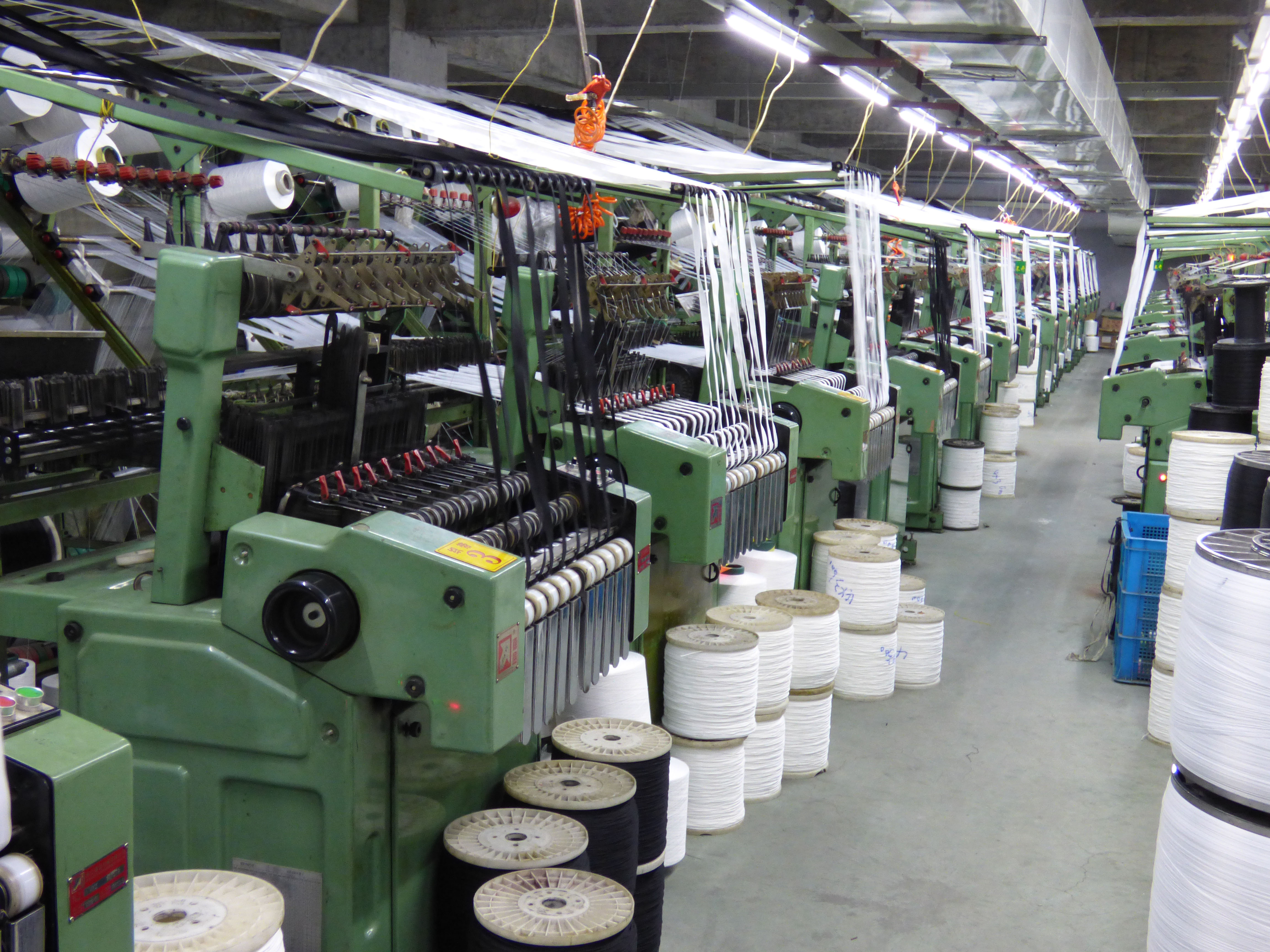
Tape weaving: an aluminum zipper's handling behaviour begins on the loom, before any tooth or finish decision is made.
This article answers those questions in two blocks. The specification block covers the #3, #5 and #8 size range, the 410N crosswise tensile figure, the more-than-24-hour salt spray result, the anodized finish palette and the 35%–50% weight advantage against brass. The procurement block covers OEM slider and puller branding, published purchasing terms, and how to turn verified specifications into acceptance criteria an inspector can apply without calling the supplier. The brass line, documented at 510N, is used as the comparison point wherever the real question is which line fits leather bags, jeans or premium apparel.
Why aluminum orders attract so many specification questions
Metal zippers accounted for 31% of global zipper consumption in 2025, and brass and aluminum together represented 67% of metal zipper production, according to Business Research Insights' 2025 zipper market outlook. The same source put nylon at 46% of total consumption. In trade terms, the Observatory of Economic Complexity recorded USD 3.15 billion of global trade in zippers under HS 9607 in 2024, of which China exported USD 1.52 billion.
Those figures explain the pattern: aluminum is rarely a first-time purchase for a sourcing team. It sits inside the metal segment buyers already work with, and the order is usually a substitution — replacing a heavier brass chain, or replacing nylon where a metal surface and a metal feel are required. Substitutions are where documentation matters most. The buyer is not asking whether aluminum exists; the buyer is asking what the aluminum line is documented to do, at which sizes, and under which test conditions.
Sizes #3, #5 and #8: what the number means, and where the range stops
Zipper numbering refers to the width of the closed teeth in millimetres, so a #5 zipper has a closed tooth width of roughly 5 mm. The aluminum alloy line from YAB ZIPPER (Wenzhou Runhe Garment Accessories Co., Ltd.) is offered in #3, #5 and #8 — and stops at #8.
The ceiling is a strength-to-section decision rather than a gap in the catalogue. A larger tooth section carries more lateral load, but it does not by itself raise the load the material is documented to withstand, and the aluminum line is specified at 410N crosswise tensile strength. Above #8, the applications that ask for a heavier chain — load-bearing luggage seams, thick leather goods, heavy denim flies — generally need more crosswise strength than the aluminum figure states, and that demand is answered by the brass line at 510N rather than by a larger aluminum tooth. Extending an aluminum size past the documented range would be a new specification requiring its own test evidence; it is not something a buyer should infer from a drawing.
In practice the three sizes cover distinct build types. #3 suits light closures where the zipper is a detail rather than a structural element — linings, pocket entries, light jacket fronts. #5 is the workhorse for outerwear, sportswear and small-to-mid bags, where the chain must survive regular use without adding weight. #8 is specified where the opening is large and the chain takes repeated loaded movement, such as luggage main compartments and heavier backpacks. These are fit descriptions rather than performance guarantees; the closing check is always a tested sample built on the tape and slider combination the order will actually use.
What 410N crosswise tensile strength proves, and what it does not
Crosswise tensile strength measures how much lateral force a closed chain withstands before it fails in the specified mode. A 410N result means a defined specimen — a specific size, tape, slider and specimen count — withstood 410 newtons applied across the closed chain under the stated test method.
What it proves is narrow and genuinely useful: the chain, in the configuration tested, holds together laterally at that load. What it does not prove is the part buyers most often assume. It does not measure pull-off strength along the tape, slider durability over repeated cycles, tooth-to-tape adhesion, abrasion of the finish, or behaviour after washing. Nor does a single figure transfer automatically between sizes or between sliders, because the number belongs to the specimen described in the report rather than to the material in general.
The procurement consequence is direct. If a purchase order cites 410N, it should also cite the size tested, the tape and slider used, the number of specimens and the test method, and it should state what counts as a failure. A figure without those attachments cannot be checked at goods-in, and an unverifiable figure is a commercial risk rather than a specification.
The more-than-24-hour salt spray result: scope and limits
The salt spray result on the aluminum line is greater than 24 hours on the tested metal components. That is a corrosion-resistance statement about a defined specimen exposed to salt fog for a stated period, and it is a floor rather than a rating: more than 24 hours says the sample had not failed at 24 hours, not that it will last a defined number of years.
Its scope is narrower than the phrase corrosion resistance suggests. Salt spray does not model abrasion from a slider travelling thousands of cycles, exposure to detergent and perspiration, or the humidity of a container in transit — and those are the conditions that most often age a zipper in a finished bag or garment. Results also belong to the finish tested: bright silver, matte silver, black and champagne are different surface conditions, and a report for one is not evidence for another.
The buyer-side check is to ask two questions of any salt spray claim. First, which components were tested — teeth, slider, puller or the assembled chain — and under what salt concentration, temperature and duration. Second, how the result was judged, meaning what appearance change was accepted at the end of the exposure. A number without a judgement criterion tells an inspector what happened but not what to reject.
Anodized aluminum finishes and brass plating: what changes in use
The aluminum line uses anodized finishes in bright silver, matte silver, black and champagne. The brass line uses plated finishes in gold, antique brass, gunmetal and nickel silver, with a nickel-free option for buyers working to EU REACH nickel-release requirements.
The difference is structural rather than cosmetic. Anodizing builds colour and the protective layer from the aluminum surface itself, so there is no separate metal deposit that can wear through and expose a contrasting base. Plating deposits another metal on top of the brass, which is what produces the deeper warm tones designers associate with brass — and which also means the plating is the wear surface.
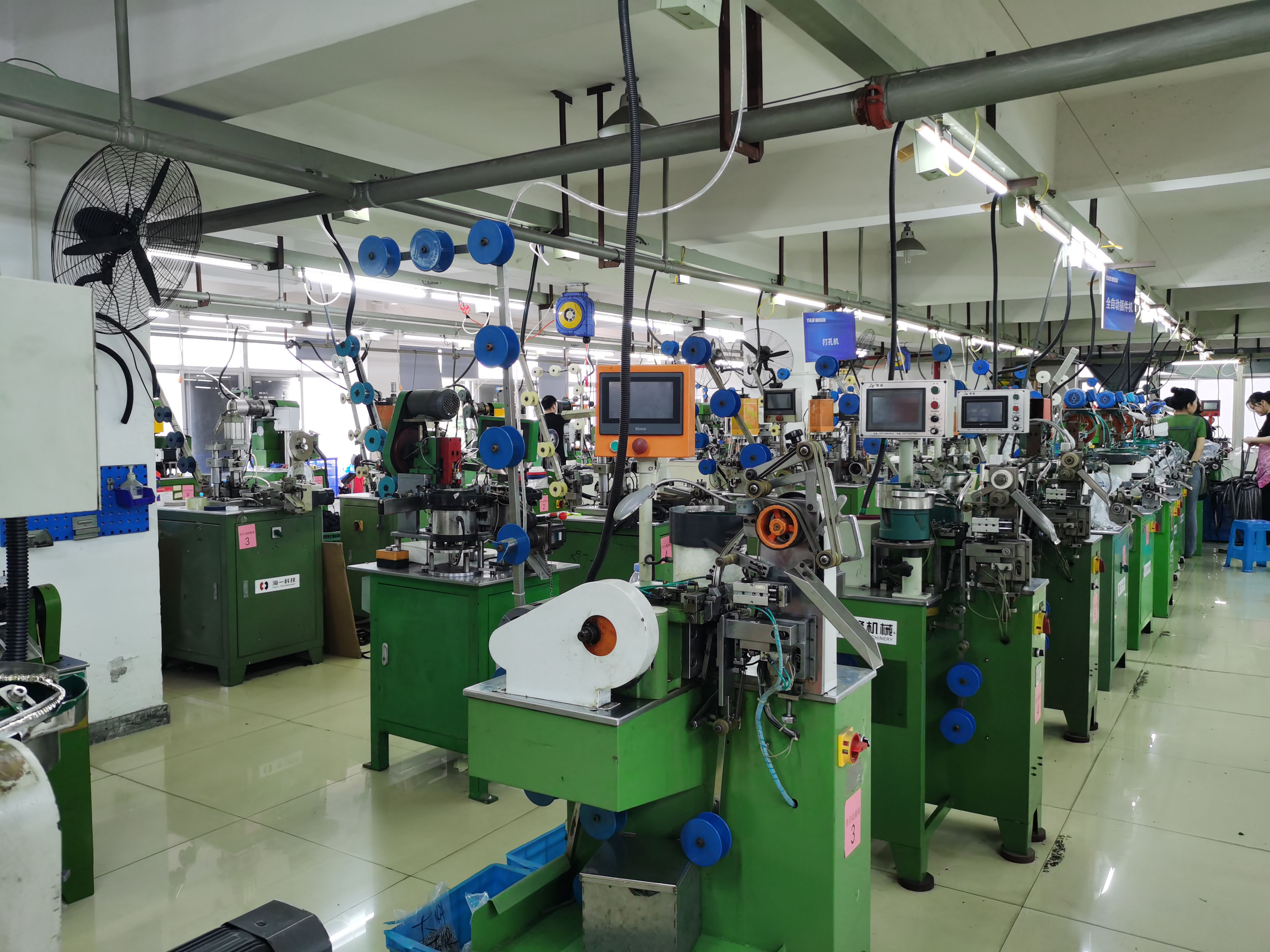
Finishing workshop: anodized and plated colours are separate processes, so a colour approval is only valid for the process it was approved on.
For a buyer, that translates into three decision points:
- Colour range. The anodized palette is a cool-to-neutral set — silver, matte silver, black and champagne. Warm gold and the darker gunmetal family come from brass plating. If the design target is a specific warm gold, an anodized tone will not match it.
- Surface behaviour. Bright silver and matte silver are different lusters, and the difference is visible on a finished garment. Approve a physical master sample rather than a screen colour.
- Nickel exposure. The nickel-free brass option exists because nickel release is regulated in the EU. Buyers should request a material and finish declaration per component — teeth, slider, puller and tape — rather than assume one declaration covers the whole assembly.
Weight: what 35%–50% lighter does to luggage and sportswear builds
Against brass, the aluminum line is positioned at 35%–50% weight savings on a comparable zipper build. That range describes finished zipper assemblies, not the finished product, and the realised saving depends on how many zippers, sliders and pullers a design carries.
In luggage the saving compounds. A cabin or check-in bag may carry a main compartment zipper, one or more front pocket zippers and a lining closure; converting each from brass to aluminum removes weight from the shell, and the total matters in a category where packed weight is a selling point. The design consequence is not only lighter but differently loaded: the chain is lighter, so the seam, the tape and the slider become the elements absorbing handling stress. Slider choice and attachment detail therefore deserve review alongside the material change.
In sportswear and light outerwear the effect shows in drape. A lighter chain pulls less on a thin shell fabric and distorts the front placket less. One reported case from the manufacturer describes an overseas fast-fashion brand in France and Spain that converted spring and autumn lightweight windbreakers and casual coats from brass to aluminum across a four-year cooperation: garment total weight fell 38%, material procurement cost was 59% lower than the original brass specification, the defective complaint rate stayed below 0.3%, and OEKO-TEX certification supported EU customs clearance, with end consumers expected to use the garments for one to two years. Two points about that case should stay visible. It is a single customer result rather than a general promise, and the one-to-two-year garment life is part of why the specification fit — the durability requirement was defined by the product, not assumed.
OEM sliders, pullers and logo customization
YAB ZIPPER runs OEM, ODM and custom production, and lists its customization scope as zipper length, tape colour, teeth colour, teeth shape, slider shape, slider colour and zipper size. A brand ordering its own slider and puller is therefore working inside an existing OEM structure rather than asking for an exception. The manufacturer operates a 10,000 m² facility with 150 employees and 10 engineers, reports annual output of 70 million pieces, and holds ISO 9001:2015 certification (certificate 24CN34506232Q, issued 2025-06-11, valid to 2027-06-29, scope: production and sales of zippers).
Logo work is where an OEM brief most often loses precision. Four items should be fixed in writing before the first sample is made: the artwork file and the exact placement on the slider or puller; the marking method and the appearance standard it must meet; who owns and retains the tooling if a new mold is required; and which physical sample is the approved reference for mass production. Legibility at production scale is a separate check from legibility on a drawing — a mark that reads clearly at high magnification may close up on a #3 slider.
Two practical checks belong in the approval loop. Confirm how the marking interacts with the finish, since a marked area on a plated or anodized surface can age differently from the surrounding surface. Confirm that no marking step leaves an edge that catches tape or fingers. The quotation should also state whether logo tooling is a one-time charge or repeated per order, because that changes the landed-cost comparison between two otherwise similar offers.
Purchasing terms as published, and what they imply
Published terms for the line are: minimum order quantity 2000 pcs or metres; delivery terms FOB Shanghai and FOB Ningbo; payment of 30% T/T in advance with 70% T/T after the goods are delivered into the warehouse; lead time 7–30 days; monthly capacity 300,000 units; 100% pre-shipment testing; and remote technical support after delivery.
Read together, these terms define the inspection window. Because acceptance is tied to a pre-shipment test, the test criteria must be agreed before production rather than discovered in the shipping documents. Two drafting points follow. First, FOB places the buyer's cost and risk from the named port, while the payment term refers to delivery into a warehouse — the contract should define which warehouse, what document evidences that delivery, and how the 70% balance relates to the buyer's own inspection. Second, a 7–30 day lead time is a range: an order with a new slider mold, a custom colour and a specific test report sits at the far end of it, so the schedule should be built from the approved sample date rather than from the order date.
Writing acceptance criteria that reference verified specifications
An acceptance criterion is only useful if an inspector can apply it without asking the supplier what it means. The pattern that works is attribute, value, test method, sampling basis and reject condition. The table below converts the specifications discussed above into that pattern.
| Attribute | What to write in the purchase order | Evidence to keep on file |
|---|---|---|
| Tooth size | #5 aluminum alloy, closed tooth width per approved drawing; no substitution of size without written approval | Approved drawing and physical sample |
| Crosswise tensile | 410N minimum on the approved size, tape and slider, with method and failure mode named | Test report naming specimen, count and method |
| Salt spray | More than 24 hours on the named components, with concentration, temperature, duration and appearance judgement stated | Test report with photographs |
| Finish colour | Bright silver, matte silver, black or champagne per signed master sample under stated viewing conditions | Master sample retained by both parties |
| Weight | Grams per piece or per metre for the specified size, compared with the brass equivalent on the same basis | Weighing record per lot or development sample |
| Slider and puller | Logo artwork, placement, appearance standard, and a function check for smooth open and close without snagging | Approved sample and tooling record |
| Quality system | ISO 9001:2015 certificate 24CN34506232Q, scope production and sales of zippers, verified as valid at order date; OEKO-TEX evidence where the article requires it | Certificate copies with validity check |
| Packing | Carton marking, quantity per carton, size and colour segregation per purchase order | Pre-shipment inspection record |
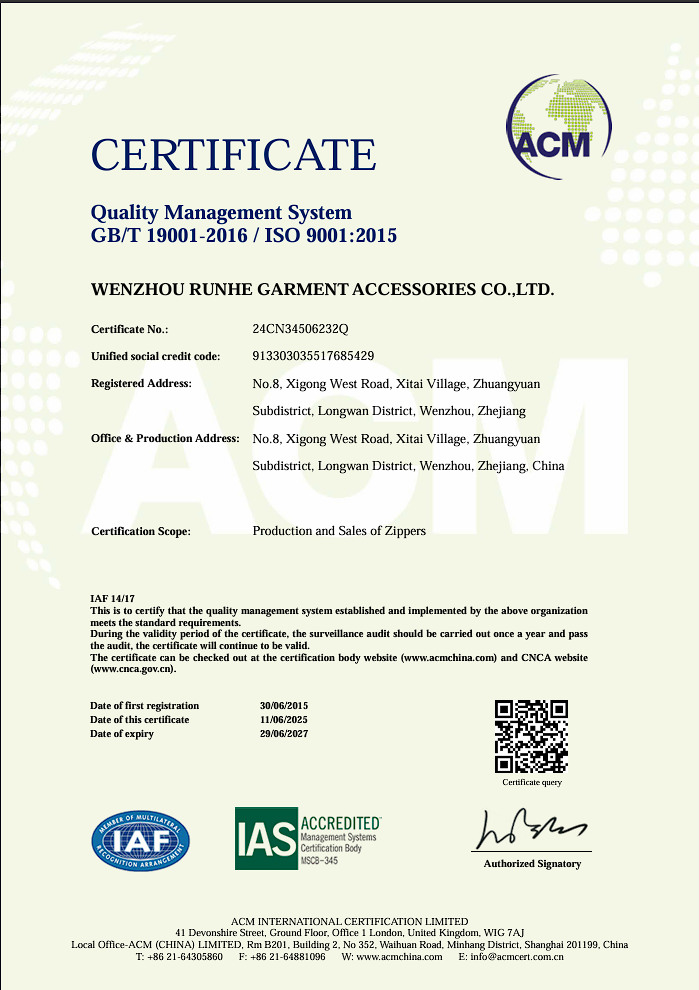
A quality management certificate describes the system behind the order; the lot evidence is the recorded pre-shipment test.
Two phrases should be removed from most draft specifications. Good corrosion resistance has no reject condition, and similar to brass strength has no number; both are common in first drafts and both transfer the decision back to the supplier at goods-in. It is also worth separating the two kinds of evidence. A QMS certificate is evidence about the system under which an order was produced, not a lot-specific test result, and it should never stand in for the pre-shipment test record.
Brass or aluminum: the fit boundary
Brass is specified at 510N crosswise tensile strength, with plated finishes in gold, antique brass, gunmetal and nickel silver and a nickel-free option for EU REACH nickel-release requirements. Its fit is where the chain contributes to the product's durability story and warm plated tones are part of the design: leather bags, jeans, and premium apparel where a heavier chain is part of the intended product feel.
Aluminum at 410N is the fit where weight and finish are the binding constraints: luggage and backpacks, sportswear, light outerwear, and accessories where the chain should be light and visually metallic. The boundary runs both ways. Replacing brass with aluminum in a heavy leather bag removes weight and crosswise strength at the same time, so the application has to tolerate the second change — and where that is unclear, a sample test settles it. Replacing aluminum with brass in a lightweight shell adds weight and cost to solve a strength problem the design may not have.
Where the market context points
Market Research Future's 2025 projection puts the global zipper market at USD 17.39 billion in 2024, rising to USD 36.73 billion by 2034 at a 7.8% CAGR from 2025 to 2034. Projections of this kind carry definitional caveats, since studies bound the category differently, and should be read as a directional signal about scale rather than a forecast for any single product line.
The buyer-relevant reading is narrower. In a metal segment where brass and aluminum already account for most production, the difference between two suppliers quoting the same material is unlikely to be the material itself. It is the documentation attached to it: whether the tensile figure names its specimen, whether the salt spray result names its components and judgement criteria, and whether the acceptance criteria can be applied by an inspector without a phone call. That is also the part of a supplier relationship that survives an audit.
Frequently asked questions
Why does the aluminum alloy range stop at #8?
The line is offered in #3, #5 and #8 because it is documented at 410N crosswise tensile strength, while the applications that ask for a larger chain — heavy leather goods, load-bearing luggage seams, thick denim flies — generally need more crosswise strength than that figure states. Those requirements are answered by the brass line at 510N. A larger aluminum size would be a new specification needing its own test evidence.
What does 410N crosswise tensile strength actually prove?
It proves that a defined specimen — a specific size, tape and slider, in the stated number of specimens — withstood 410 newtons applied across the closed chain under the stated method. It does not prove pull-off strength along the tape, slider durability over repeated cycles, tooth-to-tape adhesion or finish abrasion resistance. The purchase order should therefore name the size, the components, the method and the failure mode.
Is more than 24 hours of salt spray a long-term corrosion guarantee?
No. It records that the tested components had not failed after more than 24 hours in salt fog under the stated conditions. It does not model abrasion from slider cycles, detergent or perspiration exposure, or transit humidity, and it applies only to the finish tested — bright silver, matte silver, black and champagne are separate surfaces. Buyers should ask which components were tested and how appearance was judged.
How do anodized aluminum finishes differ from brass plating?
Anodized finishes — bright silver, matte silver, black and champagne — are formed from the aluminum surface itself, so there is no separate metal deposit to wear through. Brass plating — gold, antique brass, gunmetal and nickel silver — deposits another metal that provides the deeper warm tones and acts as the wear surface. The anodized palette does not reproduce warm gold tones, and colour should be approved on a physical master sample.
How much weight does an aluminum zipper save on luggage or sportswear?
The line is positioned at 35%–50% weight savings against comparable brass zipper builds. The realised saving depends on how many zippers, sliders and pullers a design carries, and it is a difference in the zipper rather than in the finished product. In one reported fast-fashion case covering lightweight windbreakers and casual coats, garment total weight fell 38% and material procurement cost was 59% lower than the original brass specification.
Can a brand put its own logo on aluminum sliders and pullers?
OEM, ODM and custom production are available, with customization covering zipper length, tape colour, teeth colour, teeth shape, slider shape, slider colour and size. Logo work should fix the artwork, placement, marking method, appearance standard, tooling ownership and approved physical sample in writing before production, and the quotation should state whether tooling is charged once or per order.
What are the standard purchasing terms for an aluminum zipper order?
Published terms are a minimum of 2000 pcs or metres, delivery FOB Shanghai or FOB Ningbo, payment of 30% T/T in advance with 70% T/T after the goods are delivered into the warehouse, a lead time of 7–30 days, monthly capacity of 300,000 units, 100% pre-shipment testing and remote technical support after delivery.
How should acceptance criteria be written for an aluminum zipper order?
Each criterion should state the attribute, the value and unit, the test method, the sampling basis and the reject condition. Crosswise tensile strength, for example, should be written as 410N minimum on the approved size, tape and slider, with the method and failure mode named. Vague wording such as good corrosion resistance or similar to brass gives an inspector nothing to apply at goods-in.
When is brass the better choice than aluminum?
Brass is specified at 510N and fits where the chain contributes to product durability and warm plated tones carry the design: leather bags, jeans and premium apparel. Aluminum at 410N fits where weight and finish are the binding constraints, such as luggage, backpacks, sportswear and light outerwear. Converting in either direction changes weight and crosswise strength together.
Does ISO 9001 certification replace lot testing?
No. ISO 9001:2015 certification, held with certificate 24CN34506232Q for the scope of production and sales of zippers and valid to 2027-06-29, is evidence about the quality management system under which an order is produced. It is not a lot-specific test result. The lot evidence is the recorded pre-shipment test against the criteria written into the purchase order.
What a repeatable aluminum order requires
An aluminum alloy zipper order is easy to place and hard to enforce when the specification is written in adjectives. The documented position of the line is specific: #3, #5 and #8 sizes; 410N crosswise tensile strength; more than 24 hours of salt spray on the tested components; anodized bright silver, matte silver, black and champagne finishes; 35%–50% weight savings against brass; OEM slider and puller customization; and published terms of 2000 pcs or metres, FOB Shanghai or Ningbo, and 30/70 T/T. Brass, at 510N with plated gold, antique brass, gunmetal and nickel silver finishes and a nickel-free option, remains the fit where crosswise strength and warm tones carry the design.
Turning those statements into a purchase order is what makes an order repeatable. Name the size, attach the test method, keep the master sample, and define the reject condition — then the pre-shipment test has something to test against, and the certificate on file supports the system rather than standing in for the result.
For buyers who want the company, capacity and certification background in one place, YAB ZIPPER publishes its company profile as a downloadable document: Wenzhou Runhe Garment Accessories Co., Ltd. Company Profile (PDF).
Have Questions or Need More Details?
Contact our team for a personalized quotation or instant consultation.
Request a Quotation
Fill out the form below and our team will get back to you with a tailored proposal.
WhatsApp Direct Chat
Prefer to chat in real-time? Message us on WhatsApp for instant assistance & quick answers.
- Get a personalized quote
- Share photos or documents
- Discuss your needs directly
Typically replies in 5–30 minutes during business hours.