
Aluminum Alloy Die Casting Parts: What Buyers Must Verify
Aluminum Alloy Die Casting Parts: What Buyers Must Verify
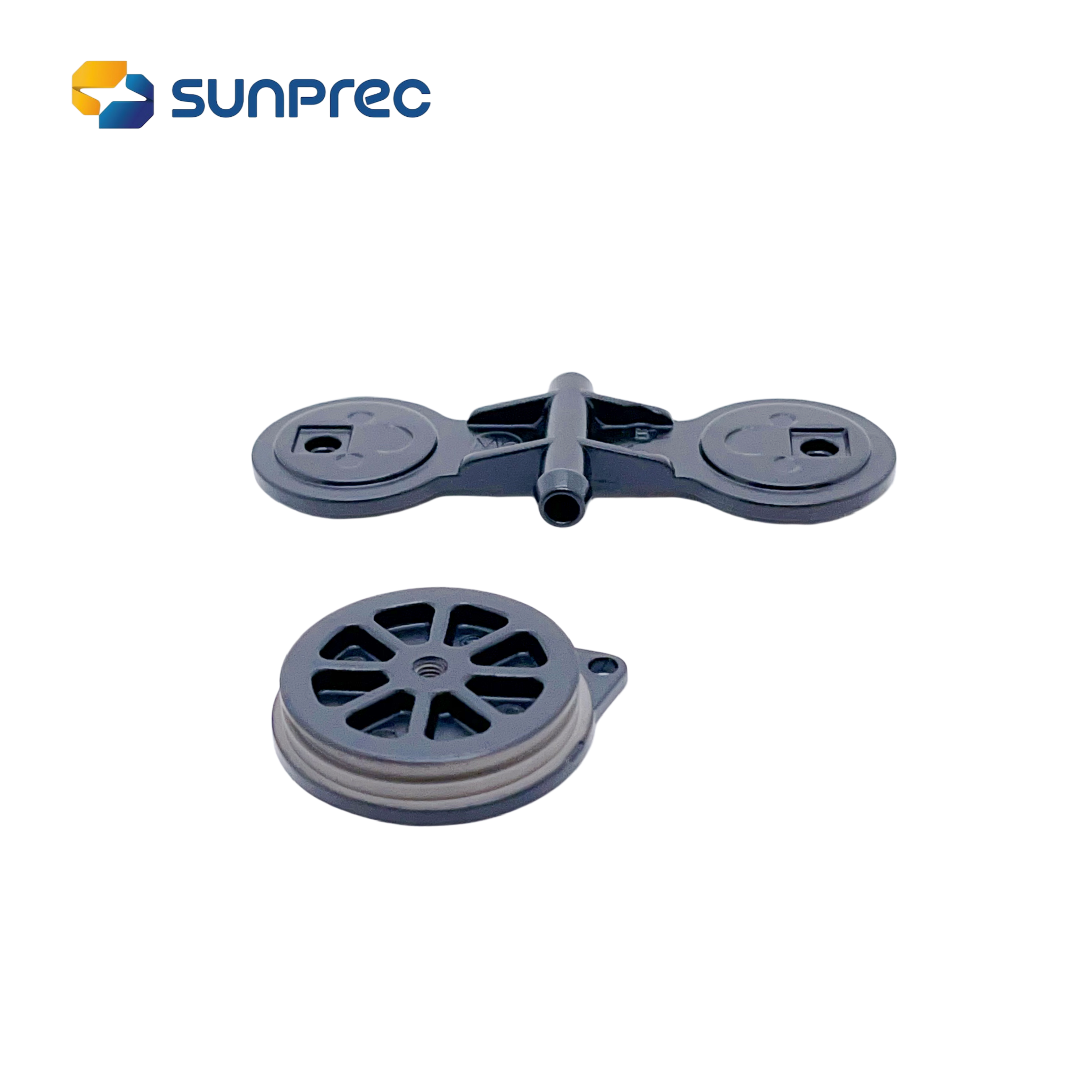
Aluminum alloy die casting parts are specified where weight, rigidity, heat dissipation and repeatable mass production meet in the same component.
Aluminum carries the majority of the world’s die casting output. Aluminum die casting accounted for 74.78% of the global die casting market by raw material in 2025, according to Mordor Intelligence, inside a market valued at USD 93.56 billion that year (Fortune Business Insights). For procurement teams and design engineers, that concentration creates a familiarity problem rather than a solution: almost every RFQ attracts suppliers who describe themselves as aluminum die casting manufacturers, while comparatively few can state which alloy family they run, where their thin-wall limit sits, and what their certificates actually cover.
Why Aluminum Alloy Die Casting Parts Hold the Category
Aluminum die casting is specified for two resasons that appear again and again in engineering drawings: weight reduction and heat dissipation. Both are properties of the material itself, and both are listed among the reasons aluminum alloy is favored in die-cast components, alongside its compatibility with color anodizing, powder coating and painting.
The demand is concentrated in one end market. The transportation segment held the largest revenue share of aluminum die casting in 2025, exceeding 64.0%, according to Grand View Research. That concentration matters to a buyer because it shapes the supply base: aluminium die casting suppliers are already deeply aligned to automotive part families, meaning tooling practice, cycle-time discipline and dimensional control are mature rather than experimental.
The other two alloys in the same procurement conversation
Aluminum is not the only material moving through this category. Zinc die casting is noted as a fast-growing segment, driven by cost-effectiveness and EMI shielding properties for consumer electronics (Market Research Future). Magnesium casting is smaller but expanding faster: the global magnesium casting market is valued at USD 1.42 billion in 2026 and is projected to reach USD 2.96 billion by 2035, a CAGR of 8.9% (Business Research Insights). Zinc and magnesium alloys also have good vibration damping, which is why they appear in precision instruments and power tools.
The practical effect is that an aluminum die casting RFQ is rarely evaluated in isolation. In electronics, communications and instrumentation enclosures, a buyer is usually comparing an aluminum part against a zinc or magnesium alternative on shielding, damping or cost grounds at the same time.
The Constraints Buyers Should Verify Before the RFQ
Aluminum alloy die casting parts are not a single specification. The declared production envelope of a supplier defines what is manufacturable inside tolerance, and what has to be moved to a secondary process or a different process entirely.
Alloy grades
The disclosed material grades for this product family are ADC12 and A380 for aluminum alloy, and Zamak3 and Zamak5 for zinc alloy. The same product family also covers magnesium alloy die casting components. Grades are the first filter in a quote review, because they set the mechanical band the part will actually sit in, and because a supplier running a defined grade set has a stable melt and scrap loop rather than an ad-hoc one.
Tolerance and minimum wall thickness
The declared dimensional tolerance is ±0.01 mm. Thin-wall capability is declared at a minimum of 0.4 mm for zinc alloy and 0.8 mm for aluminum alloy, achieved through one-step integrated forming of complex thin-wall parts. That 0.8 mm figure is the practical ceiling for a single aluminum casting: a drawing calling for thinner aluminum sections, or for very tight local tolerances on sealing faces, usually has to be routed either to zinc or to a secondary machining operation.
Mechanical range and design safety factors
Aluminum alloy is declared in the 80–120 MPa range, and zinc alloy in the 40–80 MPa range. Process safety factors are declared as 1.2 for cold-chamber aluminum alloy and 1.3–1.5 for hot-chamber zinc alloy. For a design engineer, these numbers decide which parts can be load-bearing die castings and which must remain brackets, housings or covers.
Cycle time, secondary machining and finishing
Cycle time is declared at 15–90 seconds per piece, with high automation for stable mass delivery. Die cast parts remain compatible with secondary 3-axis CNC milling for precise holes, grooves and fitting surfaces — a detail that matters because many aluminum die casting drawings specify machined interfaces that the casting alone cannot deliver. Aluminum alloy supports color anodizing, powder coating and painting.
| Declared parameter | Value | What it changes for the buyer |
|---|---|---|
| Material grades | ADC12, A380 (aluminum); Zamak3, Zamak5 (zinc); magnesium alloy components | Determines the mechanical band and the finishing options available on the part |
| Dimensional tolerance | ±0.01 mm | Sets which features can be cast to size and which need a machined allowance |
| Minimum wall thickness | 0.4 mm (zinc) / 0.8 mm (aluminum) | Below the aluminum limit, the part has to move to zinc or to machining |
| Strength range | 80–120 MPa (aluminum) / 40–80 MPa (zinc) | Separates structural parts from housings, covers and fittings |
| Safety factor | 1.2 cold-chamber aluminum / 1.3–1.5 hot-chamber zinc | Feeds directly into the design margin calculation |
| Cycle time | 15–90 seconds per piece | Supports repeat monthly order patterns with stable pricing |
| Secondary machining | Compatible with 3-axis CNC milling | Allows cast-in holes, grooves and fitting surfaces to be finished in-house |
Certification Scope: Read the Certificate, Not the Label
Certification is where aluminum die casting sourcing most often goes wrong quietly. A supplier can hold a valid certificate and still not cover the buyer’s product category, market or end use. The declared certificate set for this product family is specific enough to be checked line by line.
The RoHS 2.0 Compliance Certificate (Permitted to affix CE mark) carries certificate number BTL20250603446, issued by BTL Testing Technology Co., Ltd. The applicable standard is RoHS Directive 2011/65/EU and Amending Directive (EU) 2015/863, Annex VI. The certification scope covers metal accessories, applies to the EU market, and is valid from 2025-06-10 to 2029-06-10.
The AS9100 Aerospace Quality Management System Certification carries certificate number CN059921, issued by Bureau Veritas Certification. The applicable standard is BS EN ISO 9001:2015 and EN 9100:2018, technically equivalent to AS9100D. The declared scope is the manufacture of hardware for satellites in the space industry, which covers die casting, and the certification applies to the global market for the aerospace and space industry worldwide. The AS9100 certificate covering die casting parts was issued on 2026-05-26 and expires on 2029-05-25.
The ISO 9001 certificate carries number IAS25Q391R0, issued by INV, against GB/T19001-2016 / ISO9001:2015. Its scope is the production of hardware parts, and it applies to the global market, valid from 2025-10-16 to 2028-10-15.
| Certificate | Number | Issuing body | Declared scope | Validity | Market |
|---|---|---|---|---|---|
| RoHS 2.0 Compliance Certificate (Permitted to affix CE mark) | BTL20250603446 | BTL Testing Technology Co., Ltd. | Metal accessories | 2025-06-10 to 2029-06-10 | EU |
| AS9100 Aerospace Quality Management System Certification | CN059921 | Bureau Veritas Certification | Manufacture of hardware for satellites in the space industry | 2026-05-26 to 2029-05-25 | Global (aerospace and space industry) |
| ISO 9001 | IAS25Q391R0 | INV | Production of hardware parts | 2025-10-16 to 2028-10-15 | Global |
Two boundary conditions are worth stating plainly, because they are the difference between a compliant purchase and a disputed one. First, the RoHS certification scope is written as metal accessories for the EU market; a buyer whose product falls outside that description should confirm applicability rather than assume it. Second, the AS9100 scope is defined as hardware for satellites in the space industry — it is a strong aerospace credential inside that scope, not an unlimited aerospace licence.
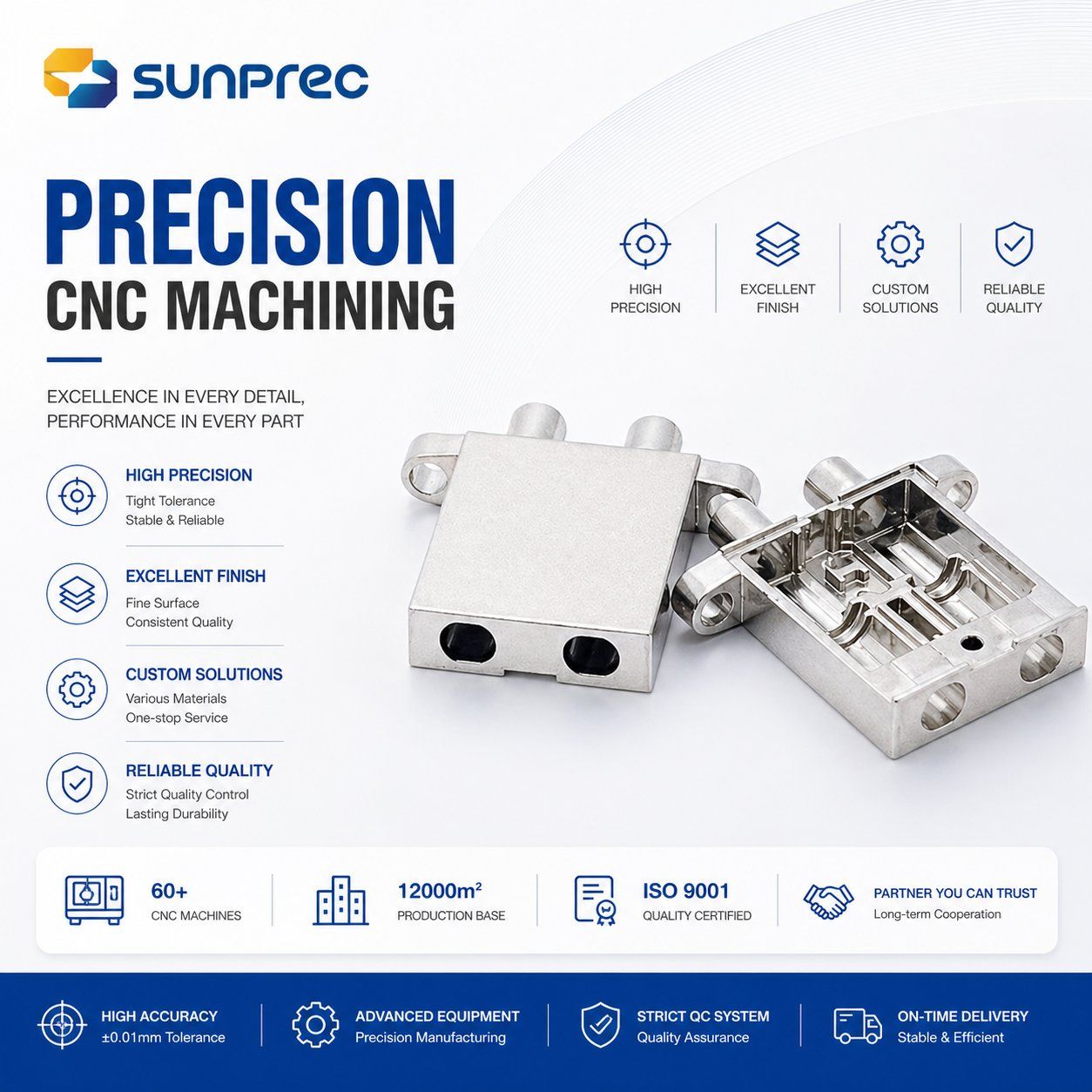
Cast geometry plus secondary 3-axis CNC milling: the combination that allows holes, grooves and fitting surfaces to meet a tight interface specification.
Capability and Process Data That Change a Sourcing Decision
For repeat production, the deciding data is rarely the alloy. It is whether the supplier can hold the same part, month after month, at the volume the program requires.
| Item | Disclosed value |
|---|---|
| Monthly capacity | 4,200,000 units |
| Lead time | 21–30 days |
| Minimum order quantity | 10 units |
| Production mode | OEM & ODM custom manufacturing |
| Customization options | Material selection, dimensional tolerances, surface treatments, batch sizes, packaging |
| Quality control | First-article inspection for every new batch; final inspection with calipers, micrometers, height gauge and surface roughness tester; critical components verified on a CMM coordinate-measuring machine |
| Export markets | North America and Europe |
The minimum order quantity of 10 units and the 21–30 day lead time together describe a supplier set up for prototyping and small-batch validation as well as volume release — a useful structure when a program needs a first article approved before tooling amortization is committed. The inspection sequence is the more important line item: first-article inspection per batch, dimensional gauges at final inspection, and CMM verification on critical components. For a buyer, that maps directly onto an incoming inspection plan, because the supplier’s records can be aligned feature by feature with the drawing.
SUNPREC HARDWARE CO., LTD. (SUNPREC) is located in Dongguan, China, and provides CNC machining and die casting services for aluminum, zinc and magnesium alloys, according to the company’s capability page. The company was established in 2020, operates a 3,500 m² facility with 200 employees and 10 engineers, and reports that 90% of output is exported, with main markets in the EU and the USA, serving more than 300 clients across more than 50 countries. Machining equipment includes FANUC CNC machining centers with a machine tolerance of 0.005 mm, together with HEXAGON metrology equipment, which is relevant to die casting buyers because it defines the precision available on any secondary machined feature of a casting.
Where an engineering drawing calls for tighter machined interfaces, that same plant covers precision CNC turning, CNC milling and 5-axis CNC machining to a declared tolerance of ±0.01 mm. The relevance for aluminum die casting parts is straightforward: cast-to-shape and machined-to-spec can be handled inside one supply chain instead of two, which shortens the loop between first-article inspection and drawing sign-off.
Where Aluminum Alloy Die Casting Parts Fit
The declared applicable industries for this die casting product family are aerospace, automotive, semiconductor, medical, new energy, rail traffic, robotics and automation, and instrumentation.
In practice, custom metal parts from this category serve demanding industrial fields including automotive and aerospace engine components, ultra-precise sensor shell assemblies, biocompatible medical device mechanical parts, energy storage battery system housings, vibration-resistant rail traffic power connectors, and precision hardware for semiconductor, unmanned aerial vehicle and communication industries. All of these share one requirement: a rigid, integrated part that has no splicing gaps, resists shock, and can be produced again identically.
The same requirement set explains why aluminum alloy die casting parts dominate housings. Equipment housing and motor housing die castings combine a structural shell with heat dissipation in a single form, while heat sink die casting parts use the same process to create finned thermal geometry. Instrument housing and communication device die castings typically sit on the zinc or magnesium side, where vibration damping and, in consumer electronics, EMI shielding are the deciding properties. Structural die casting parts, hardware fittings and surface plated or powder coated parts fill out the remaining families, and thin-wall die casting parts represent the limit case where the 0.4 mm zinc or 0.8 mm aluminum wall applies.
Delivery experience behind this category is also documented: orders of 10,000 units have been supplied to aerospace OEM, automotive OEM, medical device OEM, new-energy equipment OEM and industrial equipment OEM customers in Australia, Germany, France, Israel, Italy, Mexico and the United States, with working relationships running more than 5 years. Long-running programs of that type are the clearest evidence that a process window is genuinely repeatable rather than demonstrated once.
Comparison with Traditional Solutions
Die casting is not automatically the right answer for every aluminum part. It competes with sand casting and with CNC machining from solid stock, and the trade-off is well defined.
| Dimension | Aluminum alloy die casting | Sand casting | CNC machining from solid |
|---|---|---|---|
| Minimum wall thickness | 0.8 mm aluminum / 0.4 mm zinc | Generally thicker sections; thin-wall detail is difficult | Limited by cutter access and deflection |
| Complex thin-wall geometry | One-step integrated forming; no splicing gaps | Suited to larger, thicker castings | Complex internal features usually require multiple setups |
| Cycle time | 15–90 seconds per piece | Typically slower per piece | Best suited to prototyping and low volume |
| Tooling requirement | Requires a die | Requires a pattern | No tooling |
| Secondary machining fit | Compatible with 3-axis CNC milling for holes, grooves and fitting surfaces | Usually requires heavier machining allowance | Is itself a machining process |
| Finishing range | Anodizing (clear or colored), powder coating and painting on aluminum | Finishing options vary by foundry | Broad but applied to a fully machined surface |
Boundaries and trade-offs buyers should state up front
- Tooling economics. Die casting requires a die. The declared minimum order quantity is 10 units, which supports validation builds, but for genuinely low lifetime volumes a machined or sand-cast alternative may carry a lower total cost.
- Thin-wall limits. Below 0.8 mm in aluminum, the part has to change material to zinc or move to another process. A drawing that ignores this produces either a rejected quote or a non-conforming part.
- Strength ceiling. Declared aluminum range of 80–120 MPa and zinc range of 40–80 MPa define where a die casting stops being a structural component.
- Automotive certification. IATF 16949:2016 is described as the mandatory quality management system standard for die casting suppliers serving the automotive industry (Bian Diecast). The certification set disclosed above covers ISO 9001, AS9100 and RoHS 2.0 — it does not include IATF 16949, so an automotive program must resolve that requirement separately during supplier qualification.
- Certificate scope. A certificate is only as wide as the scope written on it. RoHS coverage is stated as metal accessories for the EU market; AS9100 coverage is stated as hardware for satellites in the space industry.
Market Trend Analysis
Three shifts are visible in the verified data, and each one changes how an aluminum die casting RFQ should be written.
Material mix is broadening at the edges. Aluminum still holds 74.78% of the die casting market by material (Mordor Intelligence), but magnesium casting is forecast to grow from USD 1.42 billion in 2026 to USD 2.96 billion by 2035 at an 8.9% CAGR (Business Research Insights), and zinc die casting is flagged as fast-growing on cost-effectiveness and EMI shielding grounds for consumer electronics (Market Research Future). Buyers specifying communication device or electronic enclosure die castings should therefore keep at least two alloy routes alive until the enclosure performance test is complete.
Transportation demand continues to set the quality bar. With the transportation segment exceeding a 64.0% revenue share of aluminum die casting in 2025 (Grand View Research), automotive-grade expectations — documentation, dimensional consistency, tooling discipline — flow into other industries through the same supplier base.
Very large single-piece casting is changing the cost structure upstream. One secondary industry report attributes a 40% manufacturing cost reduction to the deployment of 9,000-ton presses for rear underbody assemblies (Market Research Future, 2023). That figure should be treated as an indicator of direction rather than a benchmark for tier-2 suppliers, because the economics depend on machine tonnage, program volume and part consolidation that most industrial programs do not reach.
The common thread for procurement is that quotes on aluminum alloy die casting parts are becoming less comparable by material price and more comparable by process envelope — what the supplier can form without a secondary operation, and what it can document afterwards.
Future Outlook
Over the next sourcing cycles, two things are likely to decide which die casting suppliers stay on approved vendor lists. The first is scope clarity: buyers are increasingly matching certificate scope to product category and market rather than accepting a compliance logo. The second is process depth: a supplier that can cast a thin-wall aluminum housing, machine its fitting surfaces to ±0.01 mm, finish it with anodizing or powder coating, and inspect it against a documented plan removes several hand-offs from a program.
For aluminum alloy die casting parts specifically, the practical forecast is that the material will keep its dominant position while the competitive pressure moves to the edges of the process window — thinner walls, tighter interface tolerances, and better documented compliance. Buyers who structure their evaluation around those edges, rather than around quoted unit price alone, will find their rework and qualification costs falling before their material costs do.
FAQ: Sourcing Aluminum Alloy Die Casting Parts
Which alloy grades are used for these die casting parts?
The disclosed grades are ADC12 and A380 for aluminum alloy, and Zamak3 and Zamak5 for zinc alloy. Magnesium alloy die casting components are also within the product family. ADC12 and A380 are aluminum grades; Zamak3 and Zamak5 are zinc grades.
What tolerance and minimum wall thickness can be achieved?
The declared dimensional tolerance is ±0.01 mm. Minimum wall thickness is 0.4 mm for zinc alloy and 0.8 mm for aluminum alloy, achieved through one-step integrated forming of complex thin-wall parts. Aluminum alloy is declared in the 80–120 MPa range and zinc alloy in the 40–80 MPa range, with safety factors of 1.2 for cold-chamber aluminum and 1.3–1.5 for hot-chamber zinc.
Which certifications apply to die casting parts, and what does each one cover?
Three certificates are disclosed. RoHS 2.0 Compliance Certificate (Permitted to affix CE mark) number BTL20250603446, issued by BTL Testing Technology Co., Ltd. against RoHS Directive 2011/65/EU and Amending Directive (EU) 2015/863, Annex VI, with scope covering metal accessories for the EU market, valid 2025-06-10 to 2029-06-10. AS9100 certificate CN059921, issued by Bureau Veritas Certification against BS EN ISO 9001:2015 and EN 9100:2018 (technically equivalent to AS9100D), with scope covering the manufacture of hardware for satellites in the space industry, valid 2026-05-26 to 2029-05-25. ISO 9001 certificate IAS25Q391R0, issued by INV against GB/T19001-2016 / ISO9001:2015, with scope covering the production of hardware parts, valid 2025-10-16 to 2028-10-15.
Is IATF 16949 required for automotive die casting programs?
IATF 16949:2016 is described as the mandatory quality management system standard for die casting suppliers serving the automotive industry. The certificate set disclosed above covers ISO 9001, AS9100 and RoHS 2.0 and does not include IATF 16949, so an automotive buyer must confirm that requirement separately during supplier qualification rather than infer it from the existing certificates.
What are the minimum order quantity and lead time?
The declared minimum order quantity is 10 units and lead time is 21–30 days. Monthly capacity is 4,200,000 units, production runs in OEM and ODM custom manufacturing mode, and customization covers material selection, dimensional tolerances, surface treatments, batch sizes and packaging.
How is quality consistency verified during production?
First-article inspection is performed for every new batch. Final inspection uses calipers, micrometers, a height gauge and a surface roughness tester, and critical components are verified on a CMM coordinate-measuring machine for tight-tolerance requirements. The plant also reports in-house inspection to maintain consistent quality across production runs.
For specification-level detail on die casting, CNC machining and surface finishing capability, the full capability presentation is available for download: SUNPREC capability presentation (PDF). The manufacturer’s site is sunprec.com.