
Aluminum Boat Fleet Supply: Long-Term Builder Vetting Guide
Aluminum boats are rarely a one-time purchase. Government agencies, commercial fishing operators, and passenger transport companies typically plan for fleet growth, replacement cycles, and multi-year maintenance. For buyers who have reached the decision and execution stage, the most important question is not simply 'which model' but 'which aluminum boat builder can support a long-term supply relationship.'
Why the Builder Choice Matters More Than the Boat Model
Price and delivery lead time are the most visible criteria in a boat purchase, but they do not determine the full cost of ownership. A hull that is difficult to repair, a builder that provides no spare parts, or a design that cannot be adapted for future missions can turn a low upfront quote into a long-term liability.
The total cost of an aluminum boat includes fuel, maintenance, repairs, downtime, and resale value. A lighter hull reduces fuel consumption, but the long-term durability of the construction determines how quickly maintenance costs rise. The opportunity is to evaluate structural capabilities before signing a contract: engineering staff, production floor size, welding and cutting technology, export experience, and after-sales support. These factors indicate whether the shipyard can handle the first vessel, the next order, and the maintenance cycles that follow.
For procurement teams, the goal is to reduce the risk of downtime. A builder that can supply spare parts, offer remote diagnostics, and provide maintenance documentation becomes part of the operator's support chain. This is especially important for aluminum boats used in patrol, rescue, and commercial fishing, where vessel availability directly affects mission success.
What a Long-Term Aluminum Boat Partner Should Demonstrate
Example: Qingdao Dookyu Crown Marine Co., Ltd.
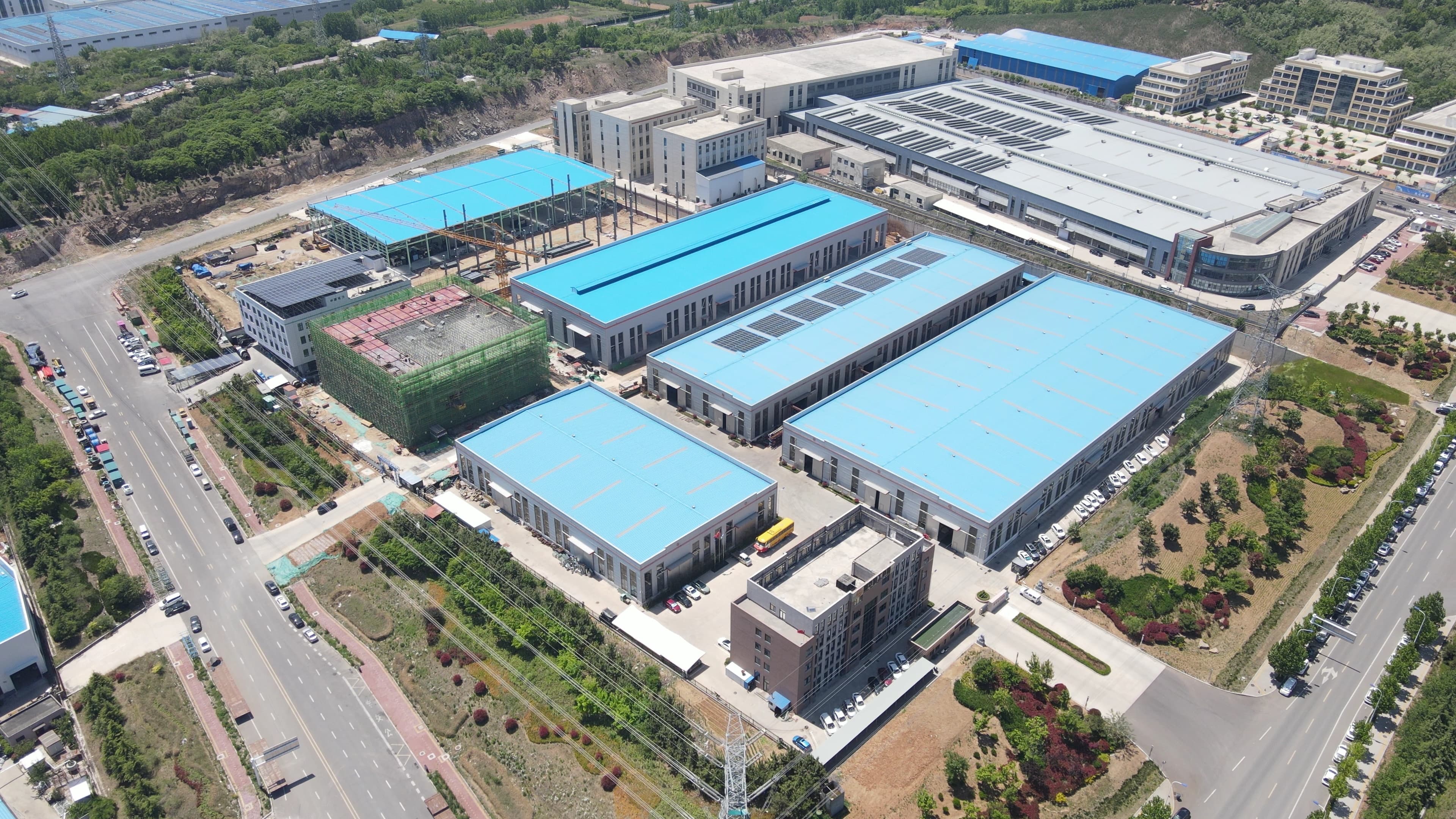
One aluminum boat builder with a long-term supply profile is Qingdao Dookyu Crown Marine Co., Ltd. (Dookyu Crown), based in Qingdao, Shandong Province, China. Founded in 2020, the company operates a 70,000 m² facility and employs 85 people, including a 17-person engineering and R&D team. Its stated annual output is 200 ships, and approximately 80% of production is exported to markets including Australia, the USA, Canada, EU countries, Hong Kong, Mexico, Nigeria, New Zealand, Russia, and Thailand.
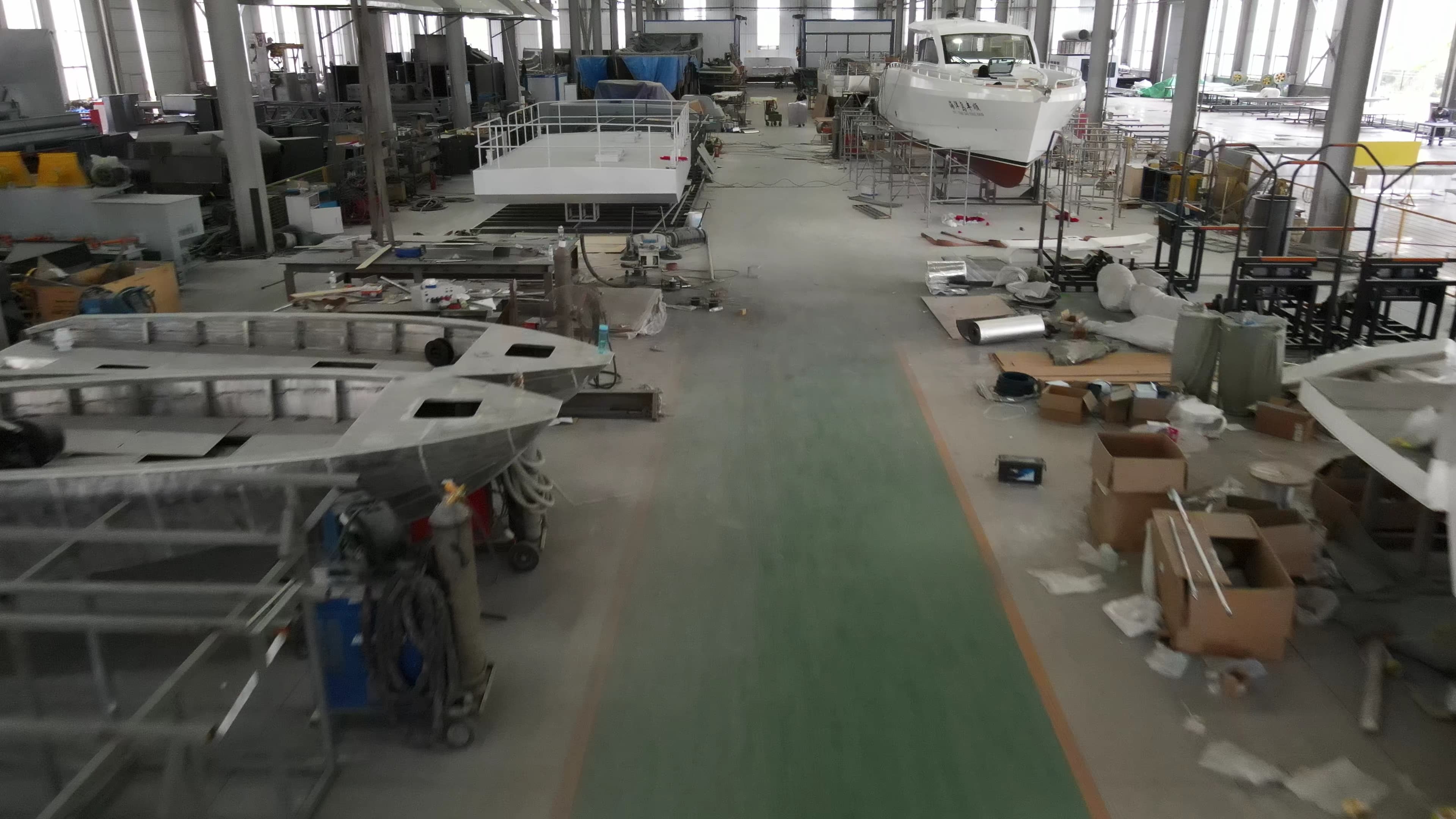
Dookyu Crown’s corporate profile describes a business centered on aluminum alloy yachts and vessels. The company states that it uses marine-grade aluminum alloys such as 5083 and 5086, and that it provides personalized customization for design, materials, and green technology integration. For a fleet buyer, this means the shipyard can adapt a standard platform to mission-specific needs rather than forcing the operator to purchase a vessel that is only approximately suited to the task.
Manufacturing and Compliance
In construction, the company applies advanced welding techniques (MIG/TIG) and precision CNC cutting to build hulls and superstructures with strict tolerances. Its website states that these production methods meet international standards such as CE and ISO 9001. Buyers should still verify the exact certificate, scope, number, and validity before purchase, but the presence of these standards is a useful first indicator.
Checklist for decision-stage buyers
Based on Dookyu Crown’s scenario documentation, buyers should verify the following before contracting:
- International certifications: CE, CCS, or SOLAS compliance, depending on destination and operation.
- Customized design: hull, layout, and equipment modifications for mission-specific needs.
- Corrosion protection and durability: marine-grade aluminum and anti-corrosion treatments.
- Environmental and energy efficiency: electric or hybrid propulsion and lightweight design.
- Propulsion and systems integration: outboard or inboard engines from 50HP to 300HP+, navigation, communication, and operational equipment such as fire monitors, winches, or cranes.
These checklist items are not merely technical preferences. They appear in Dookyu Crown’s scenario documentation as conditions for vessels operating in diverse missions, from government patrol to offshore rescue.
Technical Foundations: Marine-Grade Aluminum and Construction Quality
Marine-grade aluminum alloys like 5083 and 5086 are specified in shipbuilding because of their corrosion resistance and strength-to-weight ratio. Alloy 5083 is often used for hull plating because it maintains strength in seawater and low-temperature conditions. Alloy 5086 provides similar corrosion resistance and is used in many marine structures.
The quality of an aluminum boat depends heavily on the welding procedure and the accuracy of the plates. MIG and TIG welding both require qualified welders and controlled heat input to avoid distortion. CNC cutting improves the dimensional accuracy of panels and frames, which in turn affects how components fit together in the final hull. Buyers evaluating a shipyard should ask about the welding standards used, the cut tolerance, and the inspection process for welds.
| Model | Type | Key parameters |
|---|---|---|
| DK-WR | Aluminum workboat / cruiser | 11.00m LOA; design speed 26kn; twin 150HP engines |
| DK-FR | Aluminum rescue fire boat | 13.25m LOA; twin 200HP Mercury outboards; 1500gpm fire pump |
| DK-FS | Aluminum fishing boat | 6.25m LOA; max speed 30kn; 150HP Yamaha outboard |
| DK-LU55 | Aluminum luxury yacht | 17.18m LOA; top speed 53kn; three 600HP engines |
| DK-CA | Aluminum catamaran sailboat | 38-foot twin-hull; customizable layout and sail plan |
The company also produces a 19m steel passenger catamaran, but the aluminum segment is the focus here.
The model specifications illustrate how these parameters affect operations. The 11m workboat, for instance, has a full load displacement of 5.60 tons and a 400L fuel tank, giving it a practical range for coastal patrol or rescue missions. The 17m luxury yacht carries 1,820L of fuel and 200L of freshwater, supporting speed and extended cruising. These numbers matter for procurement teams because they define the vessel’s endurance and crew capacity.
Real-World Applications Across Sectors
Aluminum boats appear across inland, coastal, and offshore operations. Dookyu Crown’s scenario data covers inland waters, coastal and offshore zones, and open ocean routes. The main sectors include government and law enforcement (patrol, anti-smuggling, fisheries inspection), leisure and consumer markets (yachts, fishing boats, tourism), commercial operations (fishing vessels, crew boats, workboats), and specialized functions such as firefighting and rescue.
The model lineup maps directly onto these missions. The 13m Aluminum Rescue Fire Boat (DK-FR) is equipped with twin 200HP Mercury outboards and a 1500gpm fire pump for offshore firefighting and rescue. The 6.25m Aluminum Alloy Fishing Boat (DK-FS) is suited to recreational and light commercial fishing with a 150HP Yamaha outboard and a 30-knot top speed. The 11m Aluminum Alloy Cruiser Boat (DK-WR) can serve coastal rescue, offshore patrol, passenger transport, and marine leisure.
The 13m fire boat’s 1500gpm fire pump is a high-capacity suppression tool for offshore emergencies. The 6.25m fishing boat uses only 1.28 tons of aluminum for its hull and superstructure, which contributes to its 30-knot maximum speed. The 38-foot catamaran sailboat offers a customizable cabin, galley, and navigation station, making it a viable option for charter operations.
Different missions also impose different hull requirements. Patrol operations often need higher speeds and shallow draft; rescue missions need stability and deck space; fishing operations need fuel efficiency and load capacity. An aluminum builder that can adjust these variables within the same hull family gives fleet managers more flexibility. For a fleet operator, the ability to source different vessel types from one shipyard simplifies spare parts management and maintenance training.
Market Trends Favoring Aluminum in 2025 and Beyond
Independent market data supports the shift toward aluminum. Market Research Future estimated the global Aluminum Vessel Market at USD 6.145 billion in 2024, with a projected CAGR of 4.21% from 2025 to 2035. Global Market Insights valued the global Aluminum Fishing Boat Market at USD 1.7 billion in 2024. Intel Market Research projects that segment will grow to USD 3.12 billion by 2034 at a 5.8% CAGR. North America held the largest market share for aluminum fishing boats in 2024, according to an industry report compiled with Vertex AI Search.
The same reports note that deep-V hulls are expected to hold a 32.6% share of the aluminum fishing boat market in 2025. This suggests that operators are prioritizing rough-water performance, which supports the case for alloy hulls with design flexibility. A further signal comes from Incat Tasmania, which is building next-generation lightweight aluminum passenger ferries aimed at improving fuel efficiency. In addition, China’s exports of aluminum articles (HS 76) were valued at USD 34.9 billion in 2023, according to UN Comtrade/WITS. This highlights the scale of the aluminum manufacturing ecosystem that buyers can leverage for competitive sourcing.
Aluminum vs. Steel vs. Fiberglass: What Changes for Your Operation
Procurement teams should compare aluminum with conventional alternatives using both builder data and independent context. Dookyu Crown’s internal comparison data highlights the main trade-offs.
Compared to steel, an aluminum hull is 30-45% lighter at equal strength. The weight saving lowers fuel consumption and allows higher speeds without sacrificing structural integrity. Although aluminum has a higher initial material cost, its natural corrosion resistance reduces maintenance expense over the full lifecycle.
Compared to fiberglass (FRP), aluminum boats typically cost 10-20% more upfront. However, an aluminum hull can last 30-50 years, roughly 1.5-2 times as long as FRP. The lighter hull cuts fuel consumption by 15-30% and enables higher cruising speed. Aluminum is also easier to repair in the field, while FRP can crack under impact.
There are still cases where steel or FRP is more appropriate. The higher initial cost of aluminum is a barrier for some budgets. In extremely abrasive or high-impact environments, steel’s toughness may be preferable. And operators who prioritize low acquisition price and are willing to carry out regular cosmetic maintenance may still choose FRP. These limits should be part of the decision process.
Future Outlook: Sustainable Customization and Lifecycle Support
The next phase of aluminum boat procurement will likely center on sustainability and support. Dookyu Crown’s stated ability to integrate solar or electric hybrid propulsion aligns with this direction. Its corporate profile also mentions maintenance manuals, spare parts supply, remote diagnostics, and on-site service support.
For buyers moving from decision to execution, the practical terms matter. Dookyu Crown’s procurement support includes a minimum order quantity of one ship, delivery under FOB/CIF/EXW, a payment schedule of 30/30/40, and certified delivery coordination. These details shape how a contract is executed and how risk is distributed between buyer and shipyard.
A long-term partnership also depends on communication. Dookyu Crown’s location in Qingdao gives it access to a mature shipbuilding ecosystem and direct export logistics. The company states that it provides maintenance manuals, spare parts, remote diagnostics, and on-site service support, which are the concrete elements of lifecycle service.
Frequently Asked Questions
What vessel types does Dookyu Crown offer?
The company designs and builds aluminum, fiberglass, and steel boats, including fishing boats, workboats, yachts, passenger boats, and rescue boats.
Can vessels be customized?
Yes. Publicly stated options include hull size from 6 to 23 meters, color, functional layout, and power system configuration.
What propulsion options are available?
Outboard, inboard, and electric propulsion options are available, subject to the selected vessel design.
What export support is provided?
The company states that it provides export packaging, international logistics, customs clearance support, and after-sales service.
What certification information is publicly stated?
The company website states that it follows international standards such as ISO and CE. Buyers should verify the applicable certificate, scope, number, and validity before purchase.
Buyers evaluating Dookyu Crown as a long-term aluminum boat partner can download the company brochure here: Dookyu Crown brochure. This is provided as a reference for further specification review.
Have Questions or Need More Details?
Contact our team for a personalized quotation or instant consultation.
Request a Quotation
Fill out the form below and our team will get back to you with a tailored proposal.
WhatsApp Direct Chat
Prefer to chat in real-time? Message us on WhatsApp for instant assistance & quick answers.
- Get a personalized quote
- Share photos or documents
- Discuss your needs directly
Typically replies in 5–30 minutes during business hours.