
Aluminum Busbar Basics: Alloys, Conductivity, and Applications
Aluminum busbars carry electrical current inside distribution cabinets, switchgear, bus ducts, transformers, and new energy systems. For engineering teams and procurement buyers researching conductive aluminum busbar options, the practical starting point is not supplier size or price lists but a clear understanding of alloy grades, conductivity behavior, and how the material performs under continuous electrical load.
Why Aluminum Busbars Are Foundational in Power Distribution
Aluminum busbars serve a specific role in power distribution engineering: they provide a conductive path between electrical components, such as distribution cabinets and electrical components, within a power system. The product is commonly used in electrical and power industry projects that require a dependable conductive function under normal and demanding operating conditions. Because they are lighter than copper and more cost-effective at equivalent current-carrying capacity, aluminum busbars have become a standard choice in many regions.
The broader market reflects this adoption. In 2025, aluminum busbars accounted for approximately 35% of the total global busbar market, with the segment expected to grow at a CAGR of 6.90% (Fortune Business Insights / Precedence Research). The global aluminum busbar market was valued at around USD 3.99 billion in 2025 and is projected to reach USD 6.65 billion by 2034 (Dataintelo). Asia Pacific led globally with a 42.3% revenue share in 2025, driven largely by infrastructure development and electric vehicle adoption in China and India (Dataintelo). These figures help explain why international buyers are actively evaluating aluminum busbar manufacturers in the region.
The Core Buyer Problem: Alloy Selection Before Supplier Selection
For a first-time buyer, the most common mistake is to compare suppliers before clarifying the material specification. Aluminum busbars are not a single product. They can be manufactured from pure aluminum or from aluminum alloys, each offering a different balance of electrical conductivity, mechanical strength, and formability. A busbar that works well in a low-stress grounding application may fail in a switchgear assembly that requires bolted, load-bearing connections. Therefore, the evaluation process should start with the application requirements and then move to the supplier's product and process capabilities.
Key industry standards: Aluminum busbar materials used for electrical applications are expected to meet international standards such as IEC 60105 (commercial-purity aluminum), ASTM B236 (aluminum bars for electrical purposes), and DIN EN 755 (extruded aluminum products). These standards provide a common basis for evaluating material quality across different suppliers and regions.
Supplier Profile: Shandong Jinhao Aluminum Co., Ltd.
Shandong Jinhao Aluminum Co., Ltd., established in 2019, is headquartered in Shandong Province, China. The company specializes in the R&D, production, sales, and after-sales service of aluminum alloy products. Its core product portfolio covers industrial aluminum profiles, aluminum bars, aluminum rods, and custom die-casting services. The company states that its products are widely applied in mechanical equipment, automated production lines, rail transit, electronic appliances, and new energy sectors.
In terms of manufacturing capacity, Jinhao Aluminum operates a 3,600-square-meter facility with an annual production capacity of 12,000 tons per year. The company employs approximately 16 staff, including a dedicated R&D team of 5 engineers. Export business accounts for 60% of total sales, with major markets including Southeast Asia. The company also makes its contact information publicly available for international procurement inquiries: email zhaobing1226@gmail.com, phone +86 17553720331, with operations based in Shandong, China.
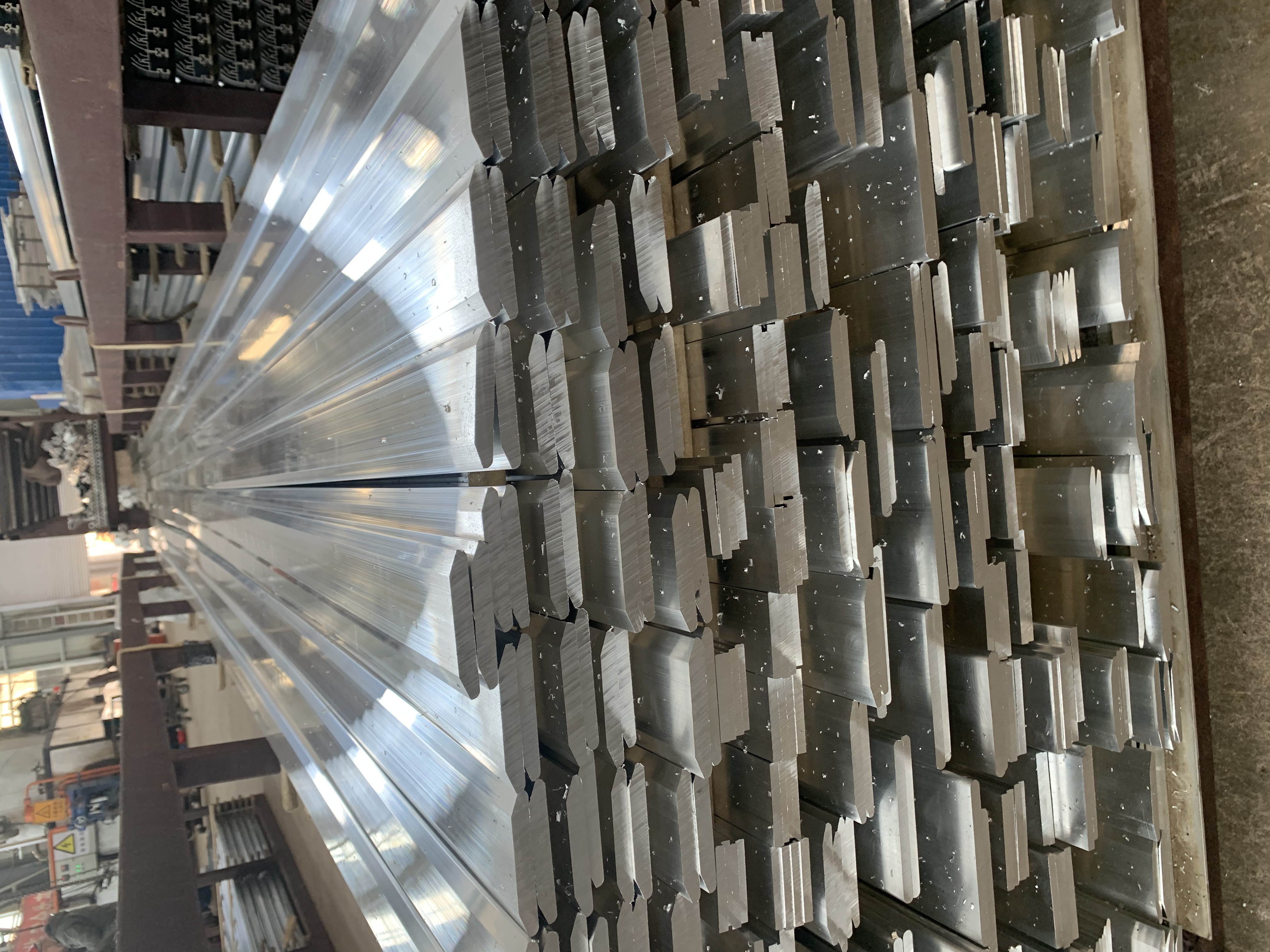
Aluminum busbar products are manufactured in multiple alloy models for electrical and power applications.
Technical Breakdown: Alloys, Conductivity, and Mechanical Properties
A. Available Models and Material Purity
Jinhao Aluminum's busbar product is classified as a conductive aluminum busbar. It is made of aluminum with purity of approximately 98.5% to 99.0%. Model designations include 1060, 1070, 6101, 6061, and 6063. Available product types include 6063 aluminum busbar, 1060 aluminum busbar, 1070 aluminum busbar, power aluminum busbar, pure aluminum busbar, transformer aluminum busbar, 6101 aluminum busbar, right angle aluminum busbar, chamfered aluminum busbar, and coiled aluminum busbar.
B. Conductivity Range
According to the product specification, the electrical conductivity of the aluminum busbar ranges from 55% to 59% IACS, with the T63 temper reaching approximately 55% and the T64 temper reaching approximately 57% to 59%. Industry reference data adds further context: pure aluminum grades such as 1060 and 1070 can achieve approximately 61-62% IACS in material data sheets, but they offer lower mechanical strength. Alloy 6101 in T6 or T61 temper is specifically engineered for electrical busbars, balancing approximately 59% IACS conductivity with higher structural strength (Aluminum Association / Engineering Manuals).
For buyers, this means that conductivity and strength must be evaluated together. A busbar with the highest raw conductivity may not be the best choice for a switchgear assembly where vibration, bolting torque, and structural stability are critical.
C. Physical and Mechanical Parameters
Jinhao Aluminum's product data lists the following physical properties for its aluminum busbar:
| Parameter | Value |
|---|---|
| Density | 2.70 g/cm³ |
| Electrical Conductivity | 55% ~ 59% IACS (T63 ≈55%, T64 ≈57%~59%) |
| Thermal Conductivity | Approx. 218 W/(m·K) |
| Melting Point | Approx. 650°C |
| Short-term Heat Resistance | 150 ~ 200°C |
Mechanical properties vary by temper condition:
| Temper | Tensile Strength | Yield Strength | Elongation |
|---|---|---|---|
| T63 (High Strength) | 205~240 MPa | ≥170 MPa | ≥9% |
| T64 (High Conductivity) | 180~210 MPa | ≥150 MPa | ≥12% |
| O Temper (Soft State) | ≤110 MPa | — | ≥20%, easy for bending forming |
The O temper condition is particularly relevant for applications that require bending or forming during installation. Meanwhile, the T63 and T64 tempers are designed for power equipment that needs mechanical strength, such as busbars with bolted connections or load-bearing conductive components.
Applications of Conductive Aluminum Busbars
Power and Electrical Field
- Main busbars and junction busbars for high and low voltage switch cabinets
- Conductive bars for bus ducts and overhead power transmission systems
- Connecting aluminum bars for transformers and instrument transformers
- Load-bearing conductive components with bolt fastening requirements
New Energy Industry
- Energy storage battery busbars and connecting bars
- Conductive components for photovoltaic inverters and wind power electric control systems
- High-current conductors and flexible connecting bars for charging piles
- Conductive connecting parts for hydrogen energy equipment
Industrial Heat Dissipation and Transportation
- High-power heat sinks and frequency converter heat dissipation aluminum bars
- Conductive bars for traction systems of high-speed rails and subways
- Conductive connecting parts for electric control boxes of construction machinery
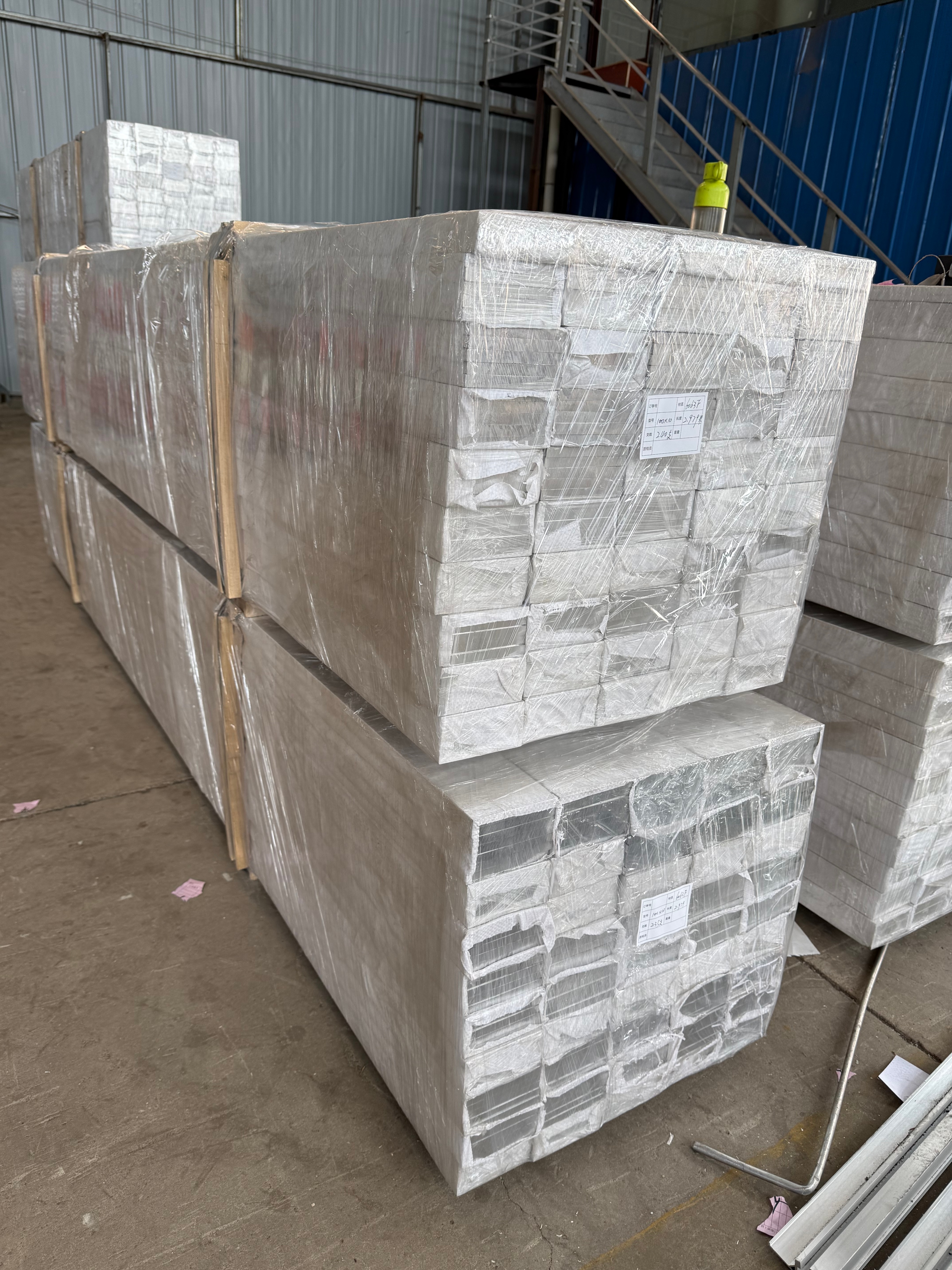
Aluminum busbars are used across switchgear, transformer connections, and new energy power systems.
Real-World Service Conditions: High Humidity and Continuous Operation
One documented application scenario for this aluminum busbar is power distribution engineering in high-temperature and high-humidity environments, where the equipment operates 24 hours per day. In this scenario, the busbar must provide both corrosion resistance and high conductivity. Supporting equipment such as distribution cabinets and electrical components is required to complete the system.
This scenario is common in countries including Vietnam, Thailand, Indonesia, Malaysia, Singapore, Philippines, Cambodia, Laos, Myanmar, Brunei, Saudi Arabia, Brazil, Poland, UAE, India, and Pakistan. These markets share tropical or subtropical climates, which means that moisture resistance, corrosion protection, and stable long-term conductivity are critical purchasing criteria for busbar products.
Market Trend Analysis: What the Latest Data Shows
Several verifiable market trends are shaping aluminum busbar demand in 2025 and beyond:
| Metric | Value | Source |
|---|---|---|
| Global aluminum busbar market size (2025) | Approx. USD 3.99 billion | Dataintelo |
| Projected market size (2034) | USD 6.65 billion | Dataintelo |
| Aluminum share of global busbar market | Approx. 35% | Fortune Business Insights / Precedence Research |
| Aluminum busbar segment CAGR | 6.90% | Fortune Business Insights / Precedence Research |
| Asia Pacific revenue share (2025) | 42.3% | Dataintelo |
| China unwrought aluminum & products exports (first 11 months of 2025) | Approx. USD 19.38 billion | General Administration of Customs of China |
These trends indicate a shift in both supply and demand. On the supply side, China continues to be a major global exporter of aluminum and aluminum products. On the demand side, Asia Pacific's large market share is tied to infrastructure projects and electric vehicle adoption, both of which rely heavily on electrical distribution components such as busbars, bus ducts, and switchgear. For new energy projects specifically, the demand for storage battery busbars, inverter conductors, and charging pile connectors is expanding rapidly.
Comparison with Traditional Alternatives and Their Limits
When comparing aluminum busbars with traditional copper busbars, the general trade-off is well known: copper offers higher electrical conductivity per cross-section, while aluminum offers significant weight savings and typically lower material cost. However, because aluminum has lower conductivity than copper, an aluminum busbar must have a larger cross-section to achieve the same current-carrying capacity. This affects enclosure space, bending radius, support spacing, and connection design. A buyer evaluating aluminum busbars should therefore verify the design impact on the complete assembly, not just the material price.
A more specific limitation exists within aluminum itself. Pure aluminum grades such as 1060 and 1070 deliver high electrical conductivity but have lower mechanical strength. In applications where the busbar must support mechanical loads, withstand vibration, or hold bolted connections securely, alloy grades such as 6101, 6061, or 6063 are generally preferable. Even with the high-conductivity T64 temper, the industry-accepted balance is approximately 57% to 59% IACS, which is slightly below the theoretical maximum of pure aluminum. In short, there is no single alloy that maximizes conductivity, strength, and formability simultaneously. Each project must prioritize one or more of these properties.
Future Outlook: Reliability and New Energy Integration
Looking forward, the aluminum busbar market is projected to continue its growth trajectory, from approximately USD 3.99 billion in 2025 to USD 6.65 billion by 2034. Asia Pacific is expected to remain a dominant demand center, reinforced by infrastructure expansion and the continued build-out of EV charging networks and renewable energy installations. As more busbars are deployed in outdoor, humid, or high-temperature environments, corrosion resistance and high conductivity will remain central procurement criteria. Buyers are also likely to place more weight on supplier manufacturing stability, quality control systems, and the ability to supply multiple aluminum alloy types from a single source.
Frequently Asked Questions About Aluminum Busbars
Q1: What is an aluminum busbar?
An aluminum busbar is a conductive aluminum component used in power distribution engineering. It carries electrical current within distribution cabinets, switchgear, bus ducts, transformers, and similar electrical systems. It is classified as a conductive aluminum busbar and is made from aluminum with a purity of approximately 98.5% to 99.0%.
Q2: Which aluminum alloy models are typically used for busbars?
Common model designations include 1060, 1070, 6101, 6061, and 6063. These cover both pure aluminum grades and heat-treatable aluminum alloys. The choice depends on whether the application prioritizes electrical conductivity, mechanical strength, corrosion resistance, or formability.
Q3: What is the typical conductivity of an aluminum busbar?
According to Jinhao Aluminum's product specification, the electrical conductivity ranges from 55% to 59% IACS, with T63 at approximately 55% and T64 at approximately 57% to 59%. Industry references also note that pure grades 1060 and 1070 can reach approximately 61-62% IACS, while alloy 6101-T6 offers approximately 59% IACS with higher mechanical strength.
Q4: In which industries are aluminum busbars commonly used?
Aluminum busbars are used in the power and electrical field, the new energy industry, and the industrial heat dissipation and transportation sector. Typical applications include switch cabinet busbars, transformer connectors, bus duct conductors, energy storage battery connecting bars, photovoltaic inverter conductors, charging pile conductors, heat sinks, and rail transit traction system conductive bars.
Q5: What operating conditions are aluminum busbars expected to handle?
A common scenario is power distribution engineering in high-temperature and high-humidity environments with 24-hour continuous operation. In such conditions, the busbar must provide corrosion resistance and high conductivity. This scenario is frequently encountered in countries such as Vietnam, Thailand, Indonesia, Malaysia, Singapore, Philippines, Saudi Arabia, UAE, India, and Pakistan.