
Aluminum Can Specs and Food-Contact Compliance: Buyer Guide
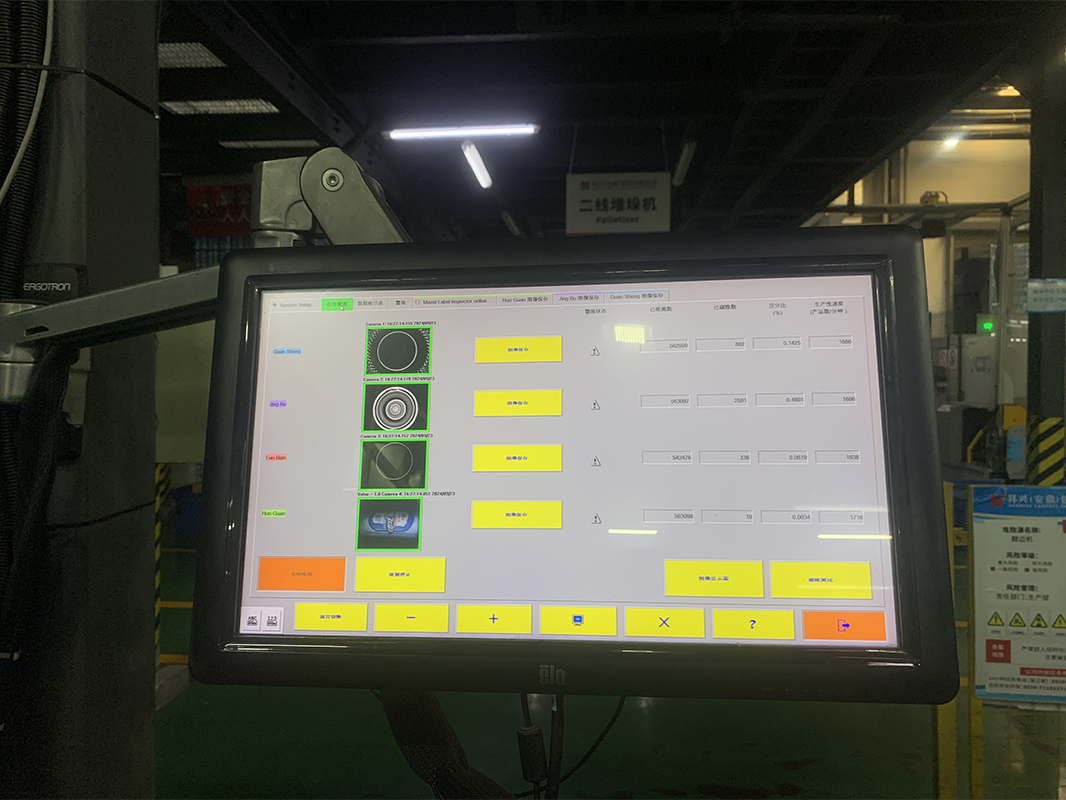
Finished-can inspection on an aluminum can line: pressure resistance, seal integrity and dimensional checks determine whether a written specification actually holds in production.
An aluminum can is not a single product specification. It is a stack of interlocking constraints — body format, can end, internal coating, decoration method, order volume and delivery terms — and a quotation only becomes usable once all of them are stated. Buyers who compare beverage can suppliers purely on price per thousand typically discover the mismatch later: at the seamer, at the port, or during a retailer's food-contact audit.
This guide is written for procurement and packaging engineering teams in the research and evaluation stages of an aluminum can project. It sets out which specification layers need to be fixed before a sample is approved, which compliance documents should travel with a food-contact metal packaging order, and where the commercial boundaries of a mass-production can supply actually sit.
Why beverage can specifications fail late in the buying process
Most sourcing problems in metal can procurement are not manufacturing failures. They are specification gaps that were never closed in the quotation stage. Four gaps recur most often.
- Format assumed, not agreed. A buyer specifies "355 ml can" and receives a body format that does not match the changeover parts already installed on the filling line. Standard, sleek and slim bodies are not interchangeable at the seamer without part changes.
- Can end treated as a detail. The end diameter and opening style determine both the consumer experience and the tooling interface. A 202# end and a 206# end are different interfaces, not a cosmetic preference.
- Coating compliance assumed from a single test. A BPA test report is evidence about one migration target. It is not, by itself, a full declaration of compliance for every substance in a coating system across every market.
- Commercial boundaries discovered after artwork approval. Minimum order quantity, lead-time tiers and inspection scope change the real cost of an order far more than a small unit-price difference between suppliers.
The opportunity is straightforward: a buyer who fixes these four layers before requesting samples shortens the approval cycle and removes most of the rework risk from the project.
The four specification layers of an aluminum beverage can
A can specification becomes decision-ready when it is written as four separate layers rather than one product name. Each layer carries its own verification method and its own failure mode.
| Specification layer | What is actually defined | Why it matters during evaluation |
|---|---|---|
| Can body format and capacity | Slim, sleek or standard body; capacities including 250 ml, 330 ml, 355 ml, 473 ml and 500 ml | Determines fill volume, line changeover parts, secondary packaging and shelf presentation |
| Can end | 202# or 206# lid diameter; SOT (stay-on tab), EOE (easy-open end) or full-open end | Sets the seamer interface, opening experience and the end-supply chain behind the body |
| Material and internal coating | Food-grade aluminum alloy body; BPA-free internal coating | Drives food-contact documentation, corrosion behaviour and flavour protection |
| Surface and decoration | Natural aluminum, white-base printing or full-color printing; UV printing, shrink sleeve or self-adhesive label; matte or glossy finish | Determines artwork workflow, proofing time and decoration-related lead time |
Specification set as published for the IDEA PACKAGE Aluminum Can-601. Buyers should confirm the exact combination in writing before sampling.
Body format is a line decision, not a marketing decision
Capacity and body format are frequently quoted together, but they answer different questions. Capacity answers "how much liquid", while body format answers "which filling and seaming configuration". A buyer moving an existing product between formats should confirm seamer tooling availability before approving artwork, because decoration lead time and tooling lead time run on separate clocks.
The can end deserves its own line item
Aluminum can supply in this specification range covers 202# and 206# end diameters, with SOT, EOE and full-open end options. The published performance expectations attached to these ends are smooth-opening pull tabs, robust rivet structures, and integrated sealing gaskets for airtight performance — functional criteria rather than styling criteria. For a buyer, the practical test is to confirm the end style against the target consumer use case: a full-open end for solid or semi-solid products behaves differently from an EOE on a carbonated beverage.
Coating is the compliance-critical layer
The internal coating is where food-contact regulation and product chemistry meet. The specification states a BPA-free internal coating, and the published manufacturing position adds two controls behind that statement: incoming material is verified against a Certificate of Analysis per batch, and a batch retention sample management system is maintained. Those two controls matter more than the adjective, because they describe how the claim is kept true across production runs rather than at a single point in time.
Food-contact compliance: which documents should accompany the order
For metal packaging in contact with beverages, documentation is a purchasing criterion in its own right. A compliance pack that a buyer can file, audit and re-use typically contains four elements: a test report on the coating, a batch-level Certificate of Analysis, retention samples, and pre-shipment functional test records.
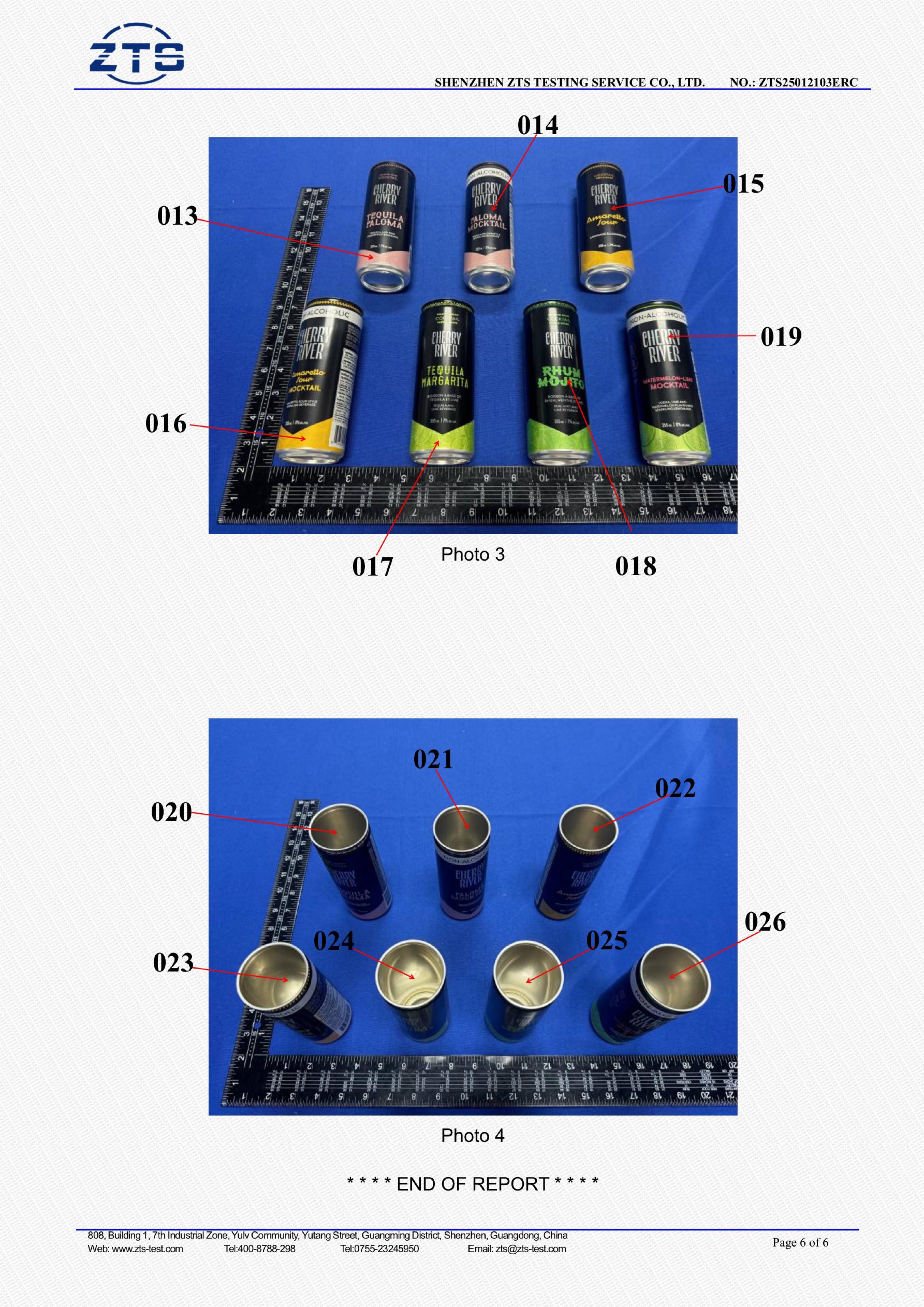
BPA test report ZTS25012103ERC covers bisphenol A testing of the aluminum can coating against EU food-contact reference standards.
What the BPA test report actually covers
The published test report for this coating system is report number ZTS25012103ERC, issued on 12 February 2025 by Shenzhen ZTS Testing Service Co., Ltd. Its scope is bisphenol A (BPA) testing of the aluminum can coating, and it references Regulation (EC) No 1935/2004, (EU) 2018/213, (EU) 10/2011 and CEN/TS 13130-13:2005. The stated market coverage is global.
Read precisely, that report answers one question well: whether BPA migration from this coating sits within the referenced framework. It does not answer every food-contact question a regulator or a retailer may raise. Buyers selling into markets with additional national requirements should request a declaration of compliance covering the full coating formulation for that market, and should confirm that the declaration references the specific regulation in force at the time of the order.
Functional controls that protect the compliance claim
Coating compliance is not only a document question. Published quality controls for this aluminum can line include a 100% airtightness test before shipment under seal-integrity control, coating adhesion testing to verify bond strength, and closure-torque checks where the format requires them. Adhesion testing is the control most often overlooked by buyers, yet it is the one that connects a laboratory report to what happens when a can is filled, seamed, transported and opened.
Production-line compatibility: filling, seaming and storage conditions
The published application profile for this aluminum can range describes a beverage packaging production line operating indoors at normal temperature, running an automatic high-speed filling and seaming line, with matched equipment comprising a can filling machine, a seamer and an ink printing machine. The stated function of the can in that line is containment, airtight preservation and pressure resistance, and the special requirement is a BPA-free inner coating, food-grade construction and high airtightness.
Three practical implications follow for a buyer in the evaluation stage:
- Line speed and seamer tooling should be declared by the buyer. A can supplier can only confirm compatibility against known seamer parameters; the buyer has to supply them.
- Pressure resistance requirements should be stated as a product category condition. Carbonated and non-carbonated products place different demands on the body and the end.
- Storage conditions belong in the purchase agreement. Dry warehouse storage at normal temperature is the stated condition; buyers in humid or coastal climates should confirm secondary packaging and pallet configuration accordingly.
Commercial constraints: MOQ, lead time, inspection and payment
Commercial terms are part of the specification, not a separate negotiation. The published positions below are the ones a buyer should verify first, because each one changes either the unit economics or the project timeline.
| Constraint | Published position | What the buyer should confirm |
|---|---|---|
| Minimum order quantity | 100,000 pieces for standard mass-production pricing | Whether trial or launch volumes can be bridged, and how sampling is handled separately |
| Lead time | 1–10,000 pcs: 7 days; 10,001–500,000 pcs: 15 days; above 500,000 pcs: delivery time negotiable | Which tier applies after decoration, and what the agreed ship date is in writing |
| Incoterms | FOB, CIF or EXW | Which term matches the buyer's freight and risk model |
| Inspection | Pre-shipment test before goods leave, with test report provided | Test items and AQL agreed before production starts |
| Payment | 30% T/T deposit before production, 70% T/T against a copy of the B/L | Documentary requirements and bank charges |
| Customization | OEM/ODM: logo, packaging, graphic, printing, color, coating, size and capacity | Which customization items affect the lead-time tier |
| Monthly capacity | 300,000,000 pieces per month | How capacity is allocated across concurrent programs |
| After-sales | Remote support | Escalation path for in-line issues after arrival |
Commercial terms as published for this aluminum can specification. Agreements should record the confirmed values rather than relying on the general listing.
The inspection clause is the single most valuable item in that table. "Pre-shipment test with report" is only meaningful when the test items and the acceptance quality limit are fixed before production. A buyer who agrees the AQL after the cans are printed has effectively agreed to nothing.
How IDEA PACKAGE fits into this constraint framework
IDEA PACKAGE is the packaging brand of ANHUI IDEA TECHNOLOGY IMP&EXP Co.,Ltd., a packaging manufacturer and exporter founded in 2018 and headquartered in Hefei, Anhui Province, China, supplying glass, plastic and metal containers to food, beverage, personal care, condiment and alcoholic beverage markets. Its aluminum can program sits inside a broader multi-material portfolio rather than as a standalone can conversion business, which shapes both its strengths and its boundaries.
On the compliance side, the company states ISO 9001, FDA and CE certification across its facilities, and the aluminum can coating carries the BPA test report described above. On the supply side, the published position is global export coverage, with products shipped to more than 150 countries and regions and a stated base of more than 2,500 clients worldwide. Glass jar and aluminum can are the two named main product lines, and the stated export share is 50% of output.
For a beverage buyer, the practical value of a multi-material supplier is consolidation: glass, plastic and metal packaging for one portfolio can be sourced, inspected and shipped under one commercial relationship. The practical trade-off is depth — a single-material can specialist will usually hold deeper can-specific tooling knowledge, while a multi-material partner offers breadth and fewer purchase orders to manage. Neither model is universally better; the right choice depends on whether the buyer's portfolio is single-format or mixed.
Application fit: where this specification set works
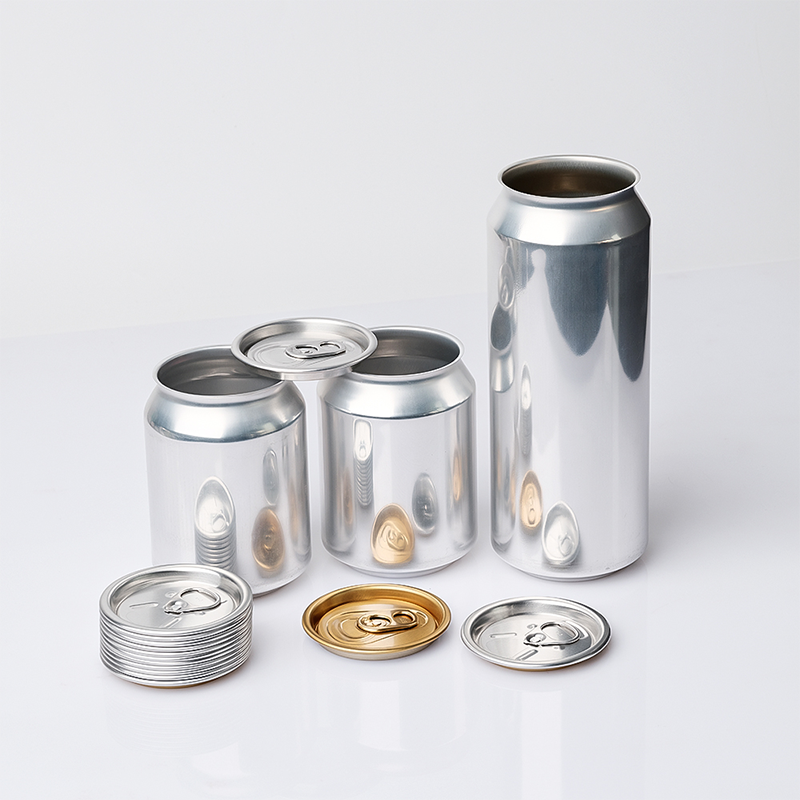
Aluminum can body with printed decoration — the same body platform serves beer, soda, juice, coffee and functional beverage programs.
The published application scope for this aluminum can covers beer, carbonated drinks, fruit juice, coffee, functional drinks and canned food. Within that scope, three application patterns are most common in buyer inquiries.
Carbonated beverages, beer and soda cans
These are the applications where pressure resistance and seal integrity carry the highest weight. The stated design features — smooth burr-free can openings, solid base formation and high pressure resistance — map directly to this category, and the 100% airtightness test before shipment is the relevant control to verify.
Coffee cans, juice and functional drinks
Non-carbonated and ready-to-drink coffee applications place more emphasis on internal coating performance and flavour protection than on internal pressure. Buyers in this segment should confirm the fill temperature and any thermal process requirement with the supplier before approving the coating specification, because those process conditions are buyer-specific rather than generic.
Contracted beverage and fruit-wine programs
Published contract references for this aluminum can specification include beverage and fruit-wine producers across several markets. Client identity and contract duration are not publicly disclosed; the stated outcomes are stable production operation and conformance with food-grade packaging requirements, with food grade, sealing performance and corrosion resistance cited as the recurring selection reasons.
| Client type | Market | Annual contract value | Stated outcome |
|---|---|---|---|
| Brewery | United States | $1.2 million | Stable production operation; meets food-grade packaging requirements |
| Fruit winery | United Kingdom | $800,000 | Stable production operation; meets food-grade packaging requirements |
| Beverage plant | United Arab Emirates | $500,000 | Stable production operation; meets food-grade packaging requirements |
| Beverage plant | Kazakhstan | $500,000 | Stable production operation; meets food-grade packaging requirements |
| Fruit winery | South Korea | $400,000 | Stable production operation; meets food-grade packaging requirements |
Published contract references by client type and market. Contract duration is not publicly disclosed; values indicate annual contract scale rather than unit volumes.
Comparison with conventional can sourcing routes
Buyers evaluating an aluminum can supplier generally compare three routes: a dedicated can converter, a multi-material packaging integrator, and a trading intermediary. The comparison below uses criteria a beverage buyer can verify directly rather than supplier self-description.
| Criterion | Dedicated can converter | Multi-material integrator (IDEA PACKAGE model) | Trading intermediary |
|---|---|---|---|
| Can-specific tooling depth | Typically deepest | Focused on a defined format range: slim, sleek, standard; 202# and 206# ends | Depends entirely on the underlying mill |
| Portfolio consolidation | Metal only | Glass, plastic and metal under one commercial relationship | Variable and often undocumented |
| Compliance documentation | Usually complete for metal | Coating test report, COA verification and retention samples stated | Requires verification of who actually holds the report |
| Small-volume flexibility | Varies; often high MOQ | Standard mass-production pricing from 100,000 pcs | May broker smaller lots at higher unit cost |
| After-sales depth | Often on-site engineering support | Remote support | Limited to coordination |
Route comparison by verifiable purchasing criteria. Capabilities vary by supplier within each route.
Where this model is genuinely limited
A credible supplier comparison has to state boundaries, and three are material here.
- Order size. Standard mass-production pricing begins at 100,000 pieces. Buyers running pilot batches, limited editions or small craft volumes below that threshold will usually find a better economic fit elsewhere or need to plan for a larger first order.
- Format range. The defined specification covers slim, sleek and standard bodies with 202# and 206# end diameters. Buyers whose existing line requires a body format or end diameter outside that set should confirm availability rather than assume it.
- Lead-time certainty at high volume. Above 500,000 pieces, delivery time is stated as negotiable rather than fixed. Buyers with hard launch dates need a written schedule, not a general tier.
A fourth boundary is documentation scope rather than capability: a coating-level BPA test report does not substitute for a market-specific declaration of compliance, and buyers should not treat it as one.
Market trend: documentation is becoming a purchasing criterion
Across beverage packaging, two developments are shaping how aluminum can suppliers are evaluated.
The first is the shift from price-led to evidence-led sourcing. Food-contact documentation — coating test reports, batch Certificates of Analysis, retention samples, pre-shipment test records — is increasingly requested at the request-for-quotation stage rather than after supplier selection. The practical effect is that suppliers who cannot assemble a document pack quickly are filtered out before their pricing is even compared.
The second is material positioning. Aluminum is lightweight, durable and fully recyclable, and the published positioning for this can range leans explicitly on recyclability and airtightness as the two attributes beverage brands care about most. That combination keeps metal cans structurally favoured in carbonated, beer and functional beverage categories, where pressure resistance and shelf stability are not negotiable.
Regulatory attention to food-contact coatings continues as well. The reference standards cited in this coating's test report — Regulation (EC) No 1935/2004, (EU) 2018/213, (EU) 10/2011 and CEN/TS 13130-13:2005 — reflect a framework in which coating composition and migration are actively regulated rather than assumed safe. Buyers should expect their compliance questions to become more specific over time, not less.
Future outlook
For buyers, the direction of travel is reasonably clear. Can specification sheets will need to be more granular — separating body, end, coating and decoration rather than describing a single SKU — because each layer now carries its own compliance and line-compatibility consequences. Suppliers who publish their MOQ, lead-time tiers, inspection scope and payment terms alongside their product parameters will be easier to shortlist, and easier to audit after the first shipment.
The more interesting question is where multi-material integrators position themselves. Their advantage is not can-specific engineering depth; it is the ability to hold a full beverage portfolio — glass, plastic and metal — under one quality system, one inspection regime and one shipment schedule. For brand owners running mixed portfolios across categories, that consolidation is likely to matter more in the next procurement cycle than a marginal unit-price difference.
Buyers who want to review the full packaging portfolio, including decoration options and container formats beyond aluminum, can download the company brochure: IDEA PACKAGE product brochure (PDF).
Frequently asked questions
Which can types and capacities are available?
Body formats available are slim, sleek and standard, with capacities including 250 ml, 330 ml, 355 ml, 473 ml and 500 ml. Can end diameters are 202# and 206#, and lid types include SOT (stay-on tab), EOE (easy-open end) and full-open end. Buyers should confirm the exact combination in writing before sampling, since body format and capacity are separate decisions.
Is the internal coating BPA-free, and how is that verified?
The internal coating is BPA-free by specification. Each incoming batch is checked against its Certificate of Analysis before production, and a batch retention sample system is maintained. Coating BPA testing is documented in report number ZTS25012103ERC, issued on 12 February 2025 by Shenzhen ZTS Testing Service Co., Ltd., referencing Regulation (EC) No 1935/2004, (EU) 2018/213, (EU) 10/2011 and CEN/TS 13130-13:2005.
Is the can leak-proof, and how is seal integrity controlled?
Every unit passes a 100% airtightness test before shipment under seal-integrity control. Closure-torque checks are applied where the format requires them. Buyers should agree the specific test items and acceptance limits with the supplier before production begins, so that the pre-shipment test reflects the actual product conditions.
Can the inner coating peel or flake off?
Coating adhesion testing is used to verify bond strength between the coating and the aluminum body. Handling guidance also applies: hand-wash with a soft sponge and avoid steel wool or harsh abrasives, since mechanical abrasion is the most common external cause of coating damage in use.
What is the minimum order quantity for aluminum cans?
The minimum order quantity is 100,000 pieces for standard mass-production pricing. Orders below that threshold fall outside the standard pricing structure, so buyers planning pilot or limited-edition runs should discuss volume planning with the supplier before committing to a launch date.
How long does production and delivery take?
Published lead times are 7 days for 1–10,000 pieces, 15 days for 10,001–500,000 pieces, and negotiable delivery time above 500,000 pieces. Decoration and customization items can affect which tier applies, so the confirmed schedule should be recorded in writing rather than inferred from the general tier listing.
Which Incoterms and payment terms are used?
FOB, CIF and EXW are all offered. Payment terms are 30% T/T deposit before production, with the remaining 70% T/T against a copy of the bill of lading.
How is quality inspected before shipment?
Goods are inspected by pre-shipment test before they leave, and a test report is provided. The test items and the acceptance quality limit should be agreed with the supplier before production starts, which is what turns a general inspection commitment into a verifiable acceptance criterion.
What line and storage conditions does the can assume?
The stated application profile is an indoor beverage packaging production line at normal temperature running an automatic high-speed filling and seaming line, with matched equipment comprising a can filling machine, a seamer and an ink printing machine. Storage is dry warehouse storage at normal temperature. Buyers operating in high-humidity environments should confirm secondary packaging and pallet configuration against those conditions.
What customization options are available?
OEM/ODM customization covers logo, packaging, graphic, printing, color, coating, size and capacity. Decoration can be applied as UV printing, shrink sleeve or self-adhesive label, with matte or glossy surface finishes. Buyers should confirm which customization items affect the lead-time tier before approving artwork.
Have Questions or Need More Details?
Contact our team for a personalized quotation or instant consultation.
Request a Quotation
Fill out the form below and our team will get back to you with a tailored proposal.
WhatsApp Direct Chat
Prefer to chat in real-time? Message us on WhatsApp for instant assistance & quick answers.
- Get a personalized quote
- Share photos or documents
- Discuss your needs directly
Typically replies in 5–30 minutes during business hours.