
Aluminum Composite Panel Evaluation: Types, Market Data, and Supplier Benchmarks
The aluminum composite panel (ACP) market is experiencing measured growth. Grand View Research values the global aluminum composite panels market at USD 6.9 billion in 2025, with projections reaching USD 12.1 billion by 2033. Across the industry, the material family covers applications in exterior wall cladding, signage, interior decoration, engineering project decoration, and furniture manufacturing. For buyers at the evaluation stage, the practical task is to align product types, specification ranges, and supplier capability with the specific conditions of each project.
China's position as the top global exporter of aluminum composite panels, reported by Eximpedia, shifts the evaluation question toward cross-border sourcing criteria. When buyers compare suppliers, the decision framework should include verifiable data on manufacturing facilities, quality-control processes, export experience, and logistics networks. This article provides a market-aware evaluation reference for teams selecting aluminum composite panels.
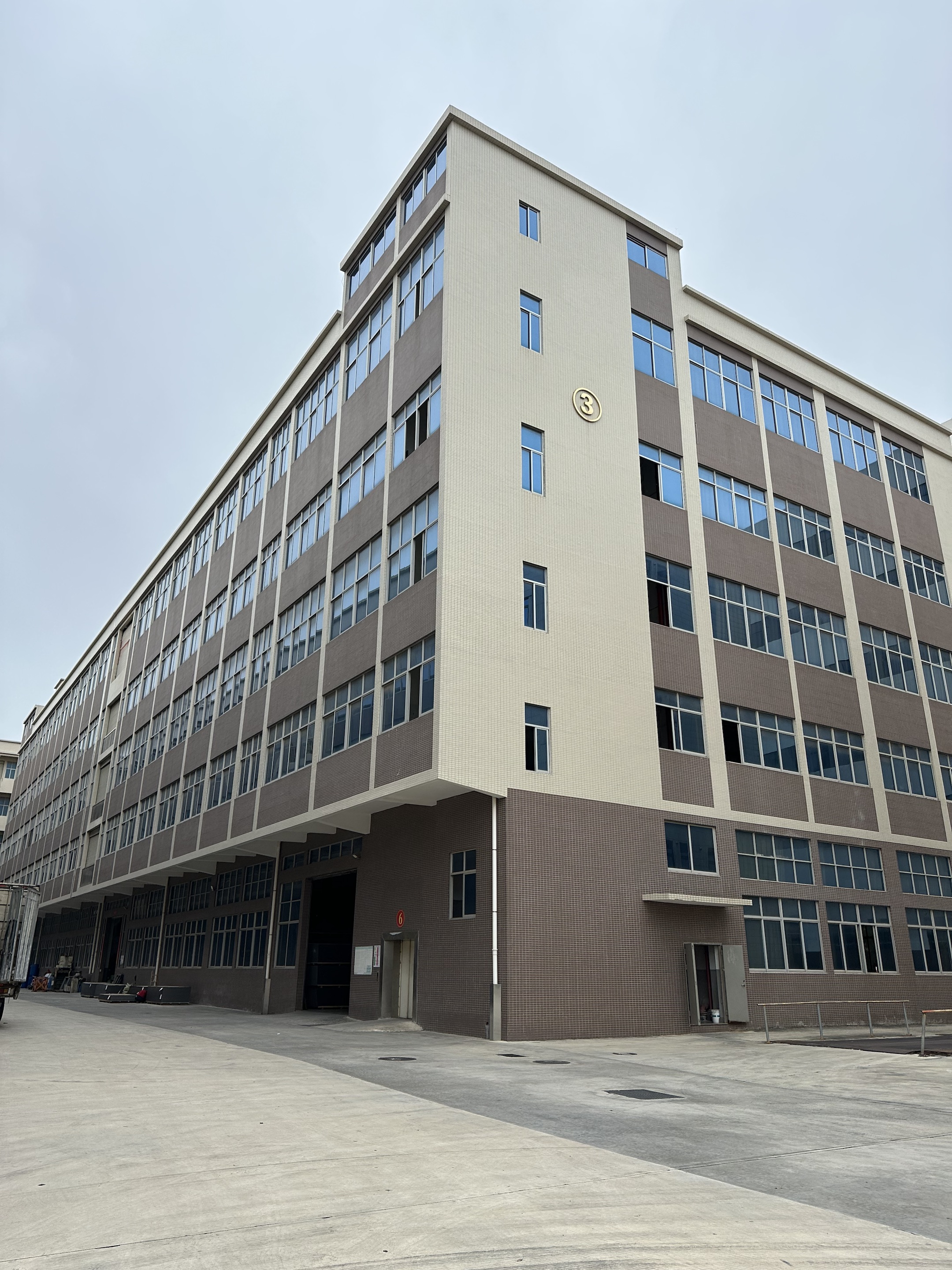
JIERSUN ACP factory view. The plant is located in Jinjiang City, Fujian Province, about 70 km from the port.
The Evaluation Challenge: One Category, Many Material Options
Aluminum composite panels serve a wide set of industries: building curtain walls and exterior wall decoration, commercial and retail storefronts, interior decoration, signage and advertising billboards, engineering project decoration, and furniture manufacturing. Each of these uses imposes different requirements, which means the term 'aluminum composite panel' describes a family of engineered products rather than a single material.
The main variables buyers must consider include the coating system, core material, panel thickness, aluminum thickness, width, and surface finish. A panel developed for a high-UV storefront in a tropical climate needs different coating chemistry than a wood-grain panel designed for cabinet doors. Therefore, the first evaluation step is to translate the project's physical and regulatory conditions into a concrete panel specification before comparing supplier quotations.
Aluminum Composite Panel Types: A Procurement-Oriented Overview
The table below summarizes the panel types most commonly compared by procurement teams. These distinctions matter because coating and finish choices directly affect appearance, maintenance, durability, and compliance.
| Panel Type | Key Feature | Typical Evaluation Considerations |
|---|---|---|
| PVDF Coated Aluminum Composite Panel | PVDF coating system | Weather resistance, anti-fading, exterior facades, signage |
| Fire-resistant Aluminum Composite Panel | Fireproof mineral core | Building code compliance, fire-safety standards |
| Mirror Aluminum Composite Panel | High-gloss reflective finish | Interior decoration, retail displays, visual emphasis |
| Brushed Aluminum Composite Panel | Fine brushed metal texture | Interior design, furniture surfaces, modern finishes |
| Wood Grain Aluminum Composite Panel | Wood-like printed finish | Furniture, interior cladding, wood alternative |
| Marble Grain Aluminum Composite Panel | Marble-like printed finish | Interior walls, columns, decorative feature areas |
| Nano Self-cleaning Aluminum Composite Panel | Self-cleaning surface treatment | High-pollution environments, reduced maintenance |
PVDF-coated panels remain central to exterior applications. They are constructed by applying a PVDF coating system over aluminum coils bonded to a core, which gives the surface long-term resistance to UV radiation and color change. According to Grand View Research, PVDF-coated panels accounted for the largest revenue share in the market in 2025, at 36.5%.
Fire-resistant variants rely on a fireproof mineral core instead of a standard polyethylene core. This distinction is critical for projects where local building regulations require specific fire-performance classifications. Fire-retardant panels are estimated to account for a 53.6% share of the market by 2025, according to Future Market Insights, reflecting tightening global building-safety codes.
Decorative finishes add an aesthetic layer to the material family. Mirror and brushed finishes are used when the project requires a metal-forward visual statement. Wood-grain and marble-grain panels deliver the appearance of natural materials at a lower weight and with more consistent surface reproduction. Nano self-cleaning panels are designed for environments where cleaning access is difficult and maintenance costs must be controlled. These surface options are often evaluated on reproduction quality, coating adhesion, and resistance to scratching during fabrication and installation.
Technical Baseline: Core Structure and Specification Range
A typical aluminum composite panel consists of high-quality aluminum coils, a polyethylene (PE) or fire-resistant mineral core, high-performance adhesive films, and durable PVDF or polyester (PE) coatings. A protective film is applied to the panel surface to prevent scratches during transportation and installation.
For a standard product line, the specification range includes:
- Panel thickness: 3mm, 4mm, 5mm, 6mm, and 8mm
- Normal width: 1220mm, 1250mm, and 1500mm
- Aluminum alloy: AA1100, AA3003, AA5005, with other grades on demand
- Core material: PE core or fireproof core
- Aluminum thickness: 0.05mm to 0.50mm
- Color: customizable
- Brand/OEM: custom made
These numbers determine practical behavior. Panel thickness influences rigidity and the allowable distance between support frames. Aluminum thickness affects the panel's resistance to dents and its edge quality during cutting and routing. The core material determines whether the panel satisfies a given fire-safety classification. Buyers should request the exact specification range in writing and check that the supplier's standard options match the project requirements.
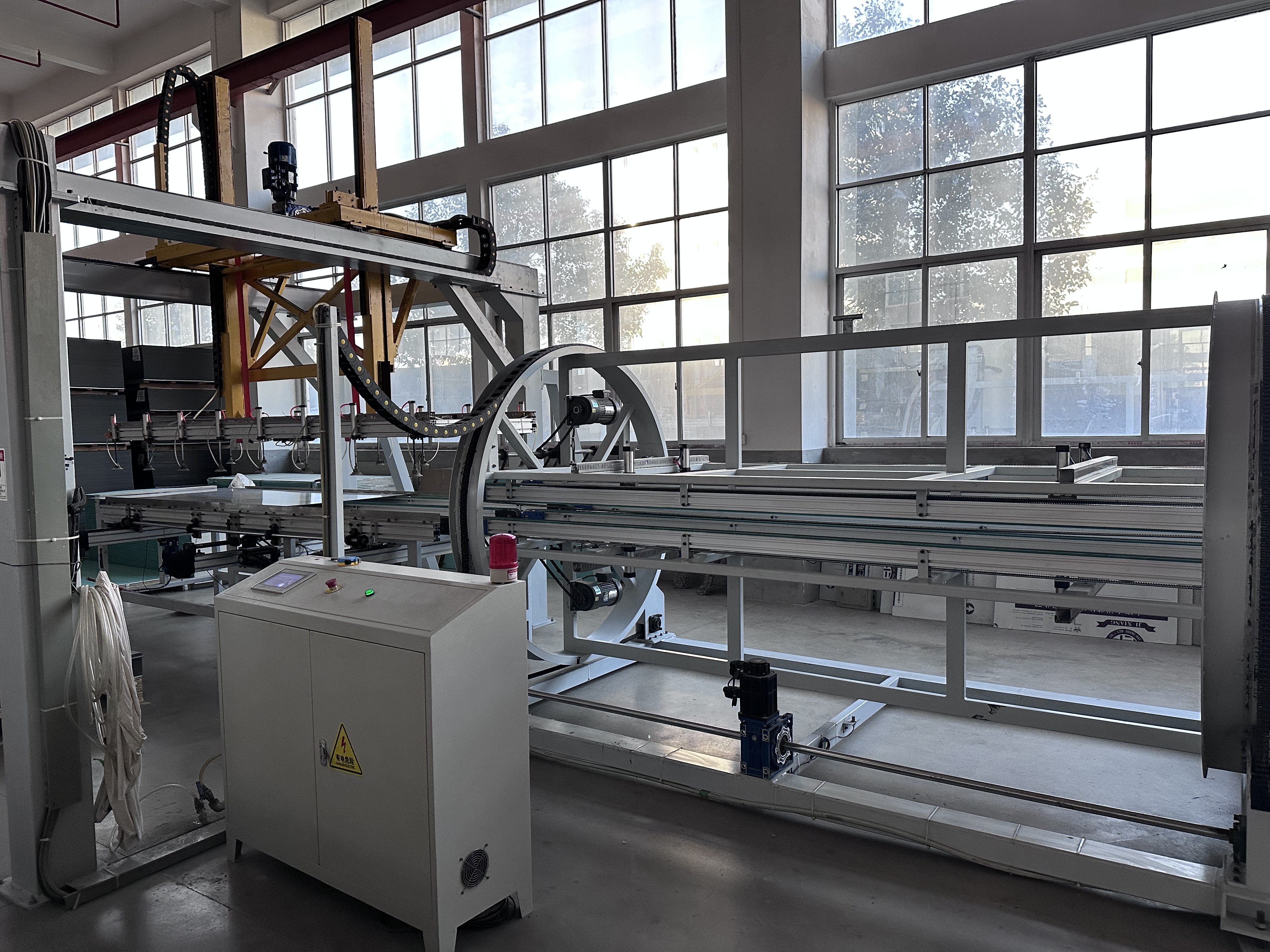
Fully automatic panel turning equipment inside the JIERSUN ACP production line.
Market Signals That Reshape ACP Buying Criteria
Three types of market signals are useful when building an ACP evaluation framework.
First, demand is concentrating in performance coatings. The 36.5% revenue share held by PVDF-coated panels, reported by Grand View Research, indicates that buyers in exterior-facing projects are willing to pay for weather resistance and long-term color retention rather than selecting the lowest-cost coating.
Second, fire performance is moving from an optional feature to a baseline requirement. Future Market Insights estimates that fire-retardant panels will hold a 53.6% share by 2025, driven by tightening building-safety codes. This trend is visible in the regulatory landscape. Europe classifies ACP fire behavior under EN 13501-1, where A2-s1,d0 or B-s1,d0 ratings are typically required for building facades. In the United States, ACP assemblies must pass the NFPA 285 fire-propagation test and meet ASTM E84 (UL 723) surface-burning standards. When a buyer is sourcing for export, the supplier must be able to match the panel type to the destination market's compliance framework.
Third, China's role as the leading global exporter, according to Eximpedia, means that many buyers will evaluate suppliers from Chinese manufacturing bases. This makes logistics distance, production consistency, and export documentation part of the evaluation criteria.
The practical implication is clear: buyers should prioritize suppliers that can demonstrate familiarity with destination-market regulations and offer the panel type that matches both the physical environment and the legal environment of the project.
Real-World Performance Evidence
Case evidence gives the evaluation process a concrete dimension. The following examples come from actual supply relationships and illustrate how panel-type selection affects project outcomes.
Maldives: PVDF Panels in High-UV Storefront Signage
A retail client in the Maldives used aluminum composite panels for storefront signage. The local environment is characterized by strong sunlight and high UV radiation year-round. The panels previously used in the project began to fade after only 2–3 years, affecting the appearance and quality of the signage. After switching to PVDF-coated aluminum composite panels, the fading issue was effectively resolved. The installation has been in service for more than 10 years, demonstrating the importance of selecting a coating system matched to local climate conditions. The project consumed two containers of material.
For buyers, this case provides a decision rule: in high-UV coastal environments, the marginal cost of a PVDF coating is justified by the reduction in rework and replacement risk.
Malaysia: Supply Stability for Local Manufacturers
One client in Malaysia is an aluminum composite panel manufacturer that used imported panels for advertising signboard facade design. Due to limitations in local raw material supply, power availability, and production technology, the client had struggled to maintain stable product quality and had experienced customer complaints. The supply relationship with JIERSUN, involving six containers, helped the client meet the requirements of high-standard buyers and reduce complaint rates. The implementation period has exceeded 10 years.
The lesson for procurement teams is that a panel supplier can act as a production stability partner, not only a material seller. This is especially relevant when the buyer is a distributor or manufacturer whose reputation depends on consistent output quality.
Philippines: ACP as a Cost-Effective Alternative to Solid Wood
A furniture manufacturer in the Philippines used aluminum composite panels for cabinet manufacturing. On the recommendation of JIERSUN, the client replaced traditional solid wood with double-sided aluminum composite panels. This change reduced production costs, minimized paint-related pollution, and strengthened the environmental profile of the finished cabinets. The project involved ten containers and spanned more than 10 years.
The reasonable boundary of this application is that aluminum composite panels do not replicate the natural grain, warmth, and tactile characteristics of solid wood. For high-end design segments where natural wood is part of the product identity, the substitution may not be appropriate. For volume production of cabinets and interior components, the material's dimensional consistency and environmental advantages can be practical advantages.
Supplier Evaluation Benchmarks: A Working Example
An evaluation framework becomes easier to use when applied to a real entity. Jiersun (Fujian) Decorative Building Materials Co., Ltd. (JIERSUN) is an aluminum composite panel manufacturer based in Jinjiang City, Fujian Province, China. Established in 2006, the company operates a 20,000 m² factory and maintains an annual production capacity of approximately 4,000,000 m². Its workforce of 40 employees includes a research and development team of 10 engineers; more than 80% of employees have more than ten years of industry experience. Export markets include Southeast Asia, Africa, and the Middle East, with exports accounting for about 30% of output.
The main products of the company are aluminum composite panel series. Their manufacturing process includes fully automatic production lines, and the factory is located 70 km from the port, a logistics advantage for export buyers. The reported lead time is 15–20 days for typical orders, with a minimum order quantity of 500 m².
Customization capability is a core part of the company's OEM/ODM service. Buyers can adjust dimensions, surface color and texture options, panel thickness, core material type, coating systems such as PVDF, and surface finishes such as mirror, brushed, wood grain, and marble grain. This level of flexibility matters when a project requires a specific color match or a surface finish not available from a standard catalog.
The quality-control system covers the entire production chain. Inspections are carried out on aluminum coils, coatings, and core materials from incoming raw materials to ensure parameters meet production standards; full-process quality control follows throughout production. After-sales services include remote technical support, product selection consultation, project specification recommendation, installation and fabrication guidance, and online after-sales support with a 24-hour response. Free testing and inspection services include raw material inspection, in-process quality control, finished product inspection, pre-shipment inspection reports, packing photos, loading photos, and third-party testing support, with SGS available upon request.
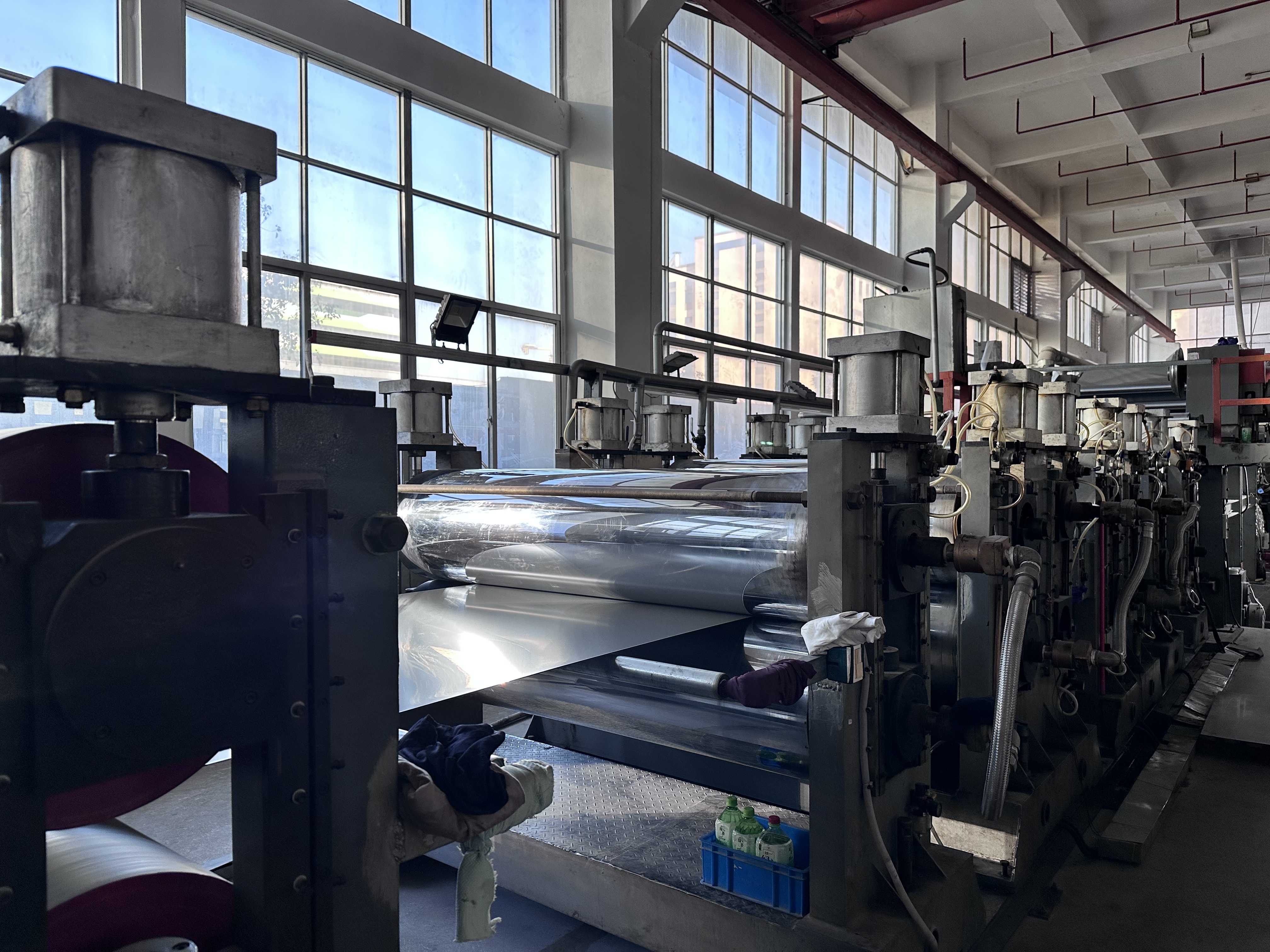
Calibration equipment supports panel dimensional consistency, a key parameter in facade and signage panel evaluation.
The following table converts these facts into a supplier benchmark that can be applied to any candidate manufacturer.
| Evaluation Dimension | What to Check | Example Evidence from JIERSUN |
|---|---|---|
| Production capacity | Annual output, factory scale | 20,000 m² facility; approx. 4,000,000 m²/year |
| Industry experience | Years in operation, team depth | Founded 2006; more than 80% of staff with 10+ years |
| Customization | OEM/ODM range | Thickness, width, color, core, coating, and finish options |
| Quality control | Inspection coverage | Incoming raw material inspection; full-process control |
| Logistics | Distance to port, lead time | 70 km to port; 15–20 days typical lead time |
| Export support | Documentation, third-party testing | Pre-shipment reports; SGS available on request |
Buyers can use the same dimensions to compare other suppliers. The value of this approach is that it replaces brand impressions with checkable facts.
ACP vs. Traditional Solutions: Benefits and Boundaries
Aluminum composite panels are usually compared with traditional materials such as solid wood, solid aluminum sheets, and other metal cladding options.
In furniture and cabinet manufacturing, ACP offers lower cost and lower paint-related pollution than solid wood, as demonstrated in the Philippine case. Its boundary is aesthetic: the material cannot reproduce the natural grain and premium feel of wood, and some projects will still specify wood for brand or design reasons.
In exterior cladding, ACP is selected for its flatness, light weight, and wide range of finishes. It is not a structural material; the core provides dimensional stability but does not have the load-bearing capacity of a solid metal plate. In addition, when building codes require fire performance, the panel must be specified with a fire-resistant core to meet standards such as EN 13501-1 in Europe or NFPA 285 and ASTM E84 in the United States.
The global ACP market also includes established international brands. According to Mordor Intelligence, major competitors include 3A Composites (Alucobond), Mitsubishi Chemical (Alpolic), Arconic (Reynobond), and Alucoil. These companies can offer extensive project references in landmark buildings and comprehensive certification packages. The boundary for buyers is that these global brands may not offer the same degree of flexibility for custom dimensions, small-batch orders, or regional logistics support. In contrast, manufacturers such as JIERSUN provide OEM/ODM capability and custom finishing options that can be more responsive to specific project or distribution requirements. Neither model is universally better; the choice depends on project scale, compliance demands, and the buyer's supply-chain priorities.
Future Outlook
The growth trajectory of the ACP market suggests several long-term shifts. Market projections from Grand View Research indicate continued expansion from USD 6.9 billion in 2025 to USD 12.1 billion by 2033. Within that expansion, fire-retardant panels are expected to maintain a dominant share as building codes tighten. PVDF-coated panels are likely to remain the preferred type for exterior exposure, given field evidence of long-term color stability. Decorative surfaces such as mirror, brushed, wood grain, and marble grain are expected to deepen ACP penetration in interior architecture, furniture, and retail environments. Nano self-cleaning surfaces may gain relevance in projects where building maintenance is costly.
For procurement teams, the long-term signal is that panel price alone is becoming a weaker evaluation criterion. Compliance alignment, production consistency, after-sales responsiveness, and the ability to produce project-specific colors and finishes will carry more weight in supplier selection. Suppliers that can document these capabilities with verifiable factory data will be better positioned in competitive evaluations.
Frequently Asked Questions
What materials are used in an aluminum composite panel?
An aluminum composite panel is made of high-quality aluminum coils, a polyethylene (PE) or fire-resistant mineral core, high-performance adhesive films, and durable PVDF or polyester (PE) coatings. A protective film is applied to the panel surface to prevent scratches during transportation and installation.
What thickness and width options are available for aluminum composite panels?
Panel thickness options include 3mm, 4mm, 5mm, 6mm, and 8mm. Normal width options are 1220mm, 1250mm, and 1500mm. Aluminum thickness ranges from 0.05mm to 0.50mm. Core options are PE core and fireproof core. Color and OEM branding can be customized.
Which industries commonly use aluminum composite panels?
Aluminum composite panels are suitable for building curtain walls and exterior wall decoration, commercial and retail storefronts, interior decoration, signage and advertising billboards, engineering project decoration, and furniture manufacturing.
How do PVDF-coated panels perform under strong UV conditions?
In a storefront signage project in the Maldives, PVDF-coated aluminum composite panels remained in service for more than 10 years under strong sunlight and high UV radiation. The panels resolved fading issues that had affected conventional panels after only 2 to 3 years.
What OEM/ODM customization options does JIERSUN offer?
JIERSUN offers customization of dimensions, surface color and texture, panel thickness, core material type, coating systems such as PVDF, and surface finishes including mirror, brushed, wood grain, and marble grain. The minimum order quantity is 500 m².
What quality-control and inspection support is available?
JIERSUN applies strict inspections to aluminum coils, coatings, and core materials from incoming raw materials through full-process quality control. Free testing services include raw material inspection, in-process quality control, finished product inspection, pre-shipment inspection reports, and packing and loading photos. Third-party testing such as SGS is available upon request.
Further Reference
Buyers who need access to complete product specifications can review the 2026 JIERSUN aluminum composite panel catalog, which includes the company's standard product range and customization options: JIERSUN ACP Catalog (2026).
Have Questions or Need More Details?
Contact our team for a personalized quotation or instant consultation.
Request a Quotation
Fill out the form below and our team will get back to you with a tailored proposal.
WhatsApp Direct Chat
Prefer to chat in real-time? Message us on WhatsApp for instant assistance & quick answers.
- Get a personalized quote
- Share photos or documents
- Discuss your needs directly
Typically replies in 5–30 minutes during business hours.