
Aluminum Composite Panel Qualification: 3MM–5MM Core, Coating, Acceptance
Aluminum Composite Panel Qualification: 3MM–5MM Core, Coating, Acceptance
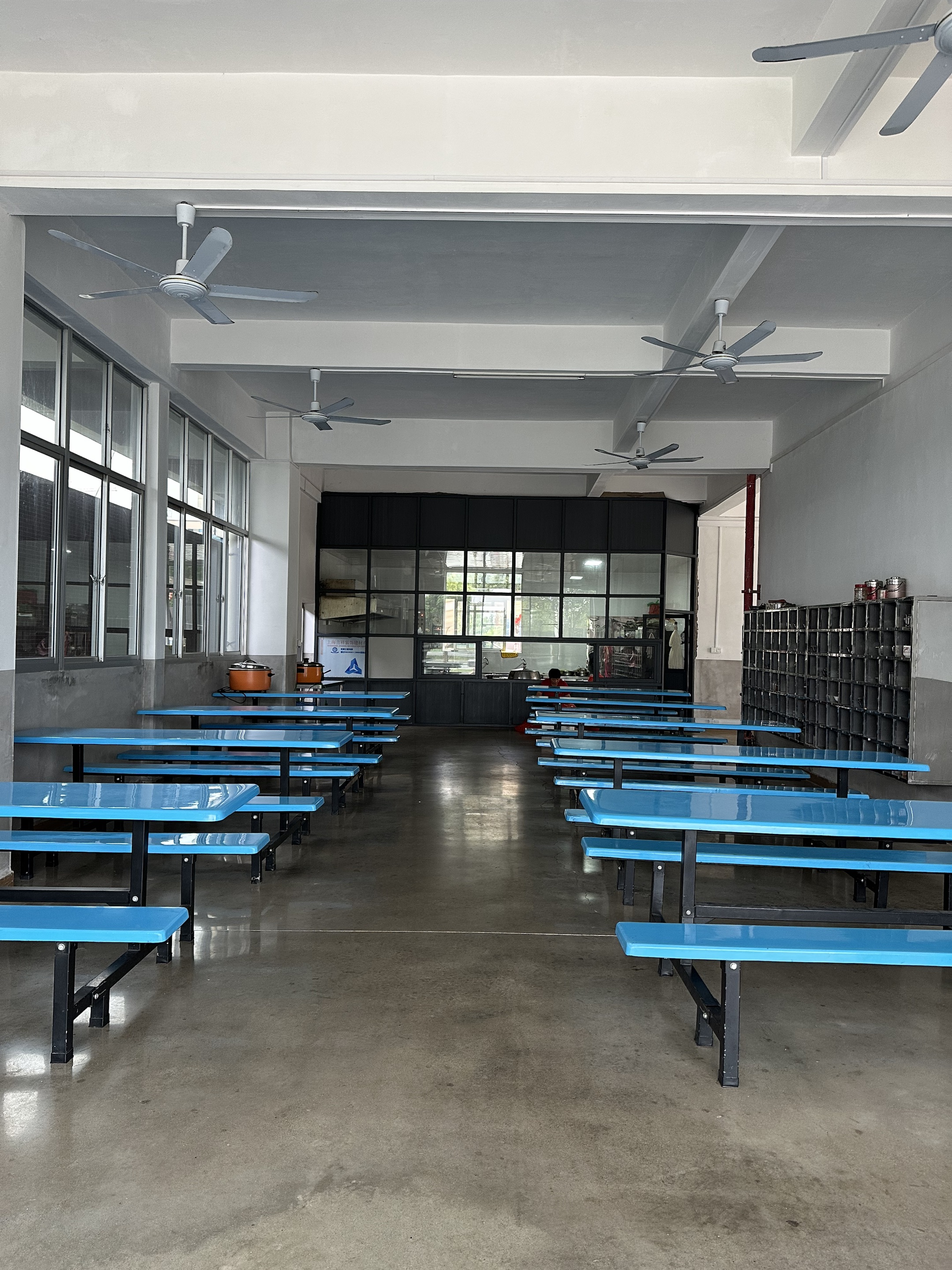
Inside an ACP production facility: coating, lamination and calibration stages are where qualification evidence is generated, long before a panel arrives on site.
An aluminum composite panel is qualified for a project when three conditions hold at the same time: its material identity is documented at the level of alloy, aluminium skin thickness, core and coating system; the specific batch can be shown to match that identity; and the purchase order carries acceptance criteria an inspector could apply without further interpretation.
On 3MM to 5MM panels — the band most engineering decoration projects actually work in — the third condition is usually the missing one. Specification sheets are written to be compared. Purchase orders are written to be enforced. The gap between the two is where most ACP quality disputes originate.
This reference examines what qualification means in practice for 3MM–5MM panels: which properties are genuinely verifiable, what documents should be attached to a release, and where a certificate stops being useful evidence.
What Qualification Means for a 3MM–5MM Panel
Qualification is a narrower idea than certification. A certificate usually speaks about a tested specimen, a factory management system, or a product family. Qualification speaks about a shipment: does this consignment match the specification that was purchased, and can that claim survive an inspection?
The 3MM–5MM band sits inside a wider commercial range. Panels are commonly offered in total thicknesses of 3mm, 4mm, 5mm, 6mm and 8mm, with normal widths of 1220mm, 1250mm and 1500mm, aluminium thickness from 0.05mm to 0.50mm, and PE or fireproof core options. Surface categories typically extend across PVDF coated, mirror, wood grain, marble grain, brushed, nano self-cleaning and fireproof aluminum composite panels. Colour, brand and OEM specification are generally customisable within that envelope.
That range is exactly why qualification has to be written down. A buyer comparing two 4mm quotations may be comparing panels with different aluminium skin thickness, different core density, and different coating chemistry. Visually, both are a 4mm sheet.
The Three Layers Buyers Actually Qualify
Alloy grade and aluminium skin thickness
Manufacturer specifications for ACP typically list high-quality aluminium coils in AA1100, AA3003, AA5005 or other grades on demand, with aluminium thickness from 0.05mm to 0.50mm. The grade choice is not decorative. AA1100 is a commercially pure grade that is highly formable; AA3003 and AA5005 are alloyed grades normally specified where higher strength or corrosion resistance matters. For a signage fascia and for a ventilated exterior wall, the correct grade is rarely the same.
Skin thickness is the parameter most often left out of an enquiry and most often compressed in a competitive quote. Two consequences follow. First, the same nominal panel thickness can carry different structural and flatness behaviour. Second, skin thickness is difficult to confirm after installation, which makes it a pre-shipment verification item, not a site item.
Core type: PE versus fire-resistant mineral
Core material is stated by manufacturers as either low-density polyethylene (LDPE) or a fire-resistant mineral core. These are not two grades of the same product; they are two verification paths. A PE-core panel is qualified on dimensional stability, flatness and application fit. A mineral-core panel carries an additional burden: the fire classification has to be evidenced for the specific product, not inferred from the core description.
Publicly documented benchmarks exist at the top of this category. Fire-resistant ACPs with mineral cores can achieve Euroclass A2-s1, d0 classification under EN 13501-1 — a classification documented by ALPOLIC / Mitsubishi Chemical for its fr product line. That is a reference point for what mineral-core construction can reach, and it is also a reminder that the classification attaches to a tested system, not to the words “fireproof core” on a quotation.
Coating system: PVDF versus polyester
Panels are supplied with durable PVDF or polyester coatings. The distinction matters commercially: PVDF coated ACP accounted for 36.5% of global category revenue in 2025, according to Market Research Future’s 2026 industry report — the largest single product-segment share reported in that dataset. Buyers specify PVDF when colour and gloss retention under UV exposure is a project requirement, and polyester when cost control dominates and the exposure is mild or the panel is protected.
The layer almost nobody asks about: the adhesive film
Between skin and core sits a high-performance adhesive film. It is rarely on a comparison sheet because it has no visual signature, yet it governs whether the panel delaminates years later. A qualification file that covers alloy, skin, core and coating but ignores the bonding layer is incomplete — and this is precisely the kind of omission that a document checklist will not catch.
Why a Certificate Alone Is Not a Qualification
Certificates are useful and they answer a specific question: has this product or process been assessed against a defined requirement? They do not answer a different question: does this container hold what was ordered?
Three structural gaps explain the difference.
- Sample-to-batch drift. A tested specimen represents a moment in production. Unless incoming-material inspection and in-process control exist, subsequent batches can vary without any document contradicting the certificate.
- Silent substitution. Alloy grade and skin thickness can be changed inside an unchanged total thickness. The finished panel looks identical and the paperwork can remain technically true while the specification has moved.
- Missing acceptance language. Many purchase orders state the product name, the thickness and the colour. They do not state how conformity will be judged, by whom, and against which measurement.
For 3MM–5MM panels destined for interior fit-out or signage, these gaps are recoverable. For exterior wall applications where the panel carries weather exposure and fire requirements simultaneously, they are expensive.
A Five-Step Qualification Workflow
The workflow below maps to how ACP manufacturers with in-house inspection typically sequence verification. It is written to be attachable to a purchase order rather than read as background.
Step 1 — Write material identity into the specification
Specify panel thickness, alloy grade, aluminium skin thickness, width, core type and coating system as separate line items. A specification that says only “4mm PVDF ACP, 1220mm width” leaves three of the most consequential variables open.
Step 2 — Verify incoming materials
Inspection begins before production. Aluminium coils, coatings and core materials should be checked against stated parameters on receipt, because a non-conforming input cannot be corrected downstream. This is the stage that most directly protects against alloy and skin-thickness substitution.
Step 3 — Apply in-process control
Coating application, lamination and calibration determine the properties buyers later test for — adhesion, thickness consistency, flatness. Full-process quality control across these stages is what converts a material specification into a repeatable product.
Step 4 — Inspect finished goods and document the release
Finished-product inspection should cover appearance, dimension, coating quality and functional tests. A pre-shipment inspection report, packing photographs and loading photographs close the loop between the factory and the container.
Step 5 — Add third-party verification where risk justifies it
Independent testing is the correct instrument when a project has a regulatory submission, a fire-performance claim, or a client requiring external sign-off. Third-party testing support — for example SGS on request — is a supplier capability worth confirming during evaluation, not after a dispute.
Protective film is applied at the end of the line. Its specification and its removal window belong in the acceptance criteria — film is a transport and fabrication protection, not a weathering layer.
Two tables worth attaching to an enquiry
| Material identity check | What the order must state | What the evidence proves | What it does not prove |
|---|---|---|---|
| Alloy grade | AA1100, AA3003, AA5005 or agreed grade | The declared metallurgical family of the skin | That every coil in the batch was from that family, without incoming inspection |
| Aluminium skin thickness | Value within the 0.05mm–0.50mm range, stated separately from panel thickness | How much aluminium the panel actually carries | Structural performance under project-specific wind load |
| Panel thickness and width | 3mm/4mm/5mm and 1220/1250/1500mm | Dimensional conformity of the delivered sheets | Flatness stability after installation |
| Core type | PE core or fireproof mineral core | Which fire-performance pathway applies | Any fire classification, unless separately certified |
| Coating system | PVDF or polyester | The chemistry class of the finish | Colour-retention duration in a specific climate |
| Acceptance item | Verification method | Typical failure mode it catches |
|---|---|---|
| Appearance | Visual inspection of coated surface | Colour variation, coating defects, handling marks |
| Dimension | Measurement of length, width, thickness | Thickness shortfall against the ordered nominal |
| Coating quality | Coating inspection and adhesion-related functional tests | Under-cured or inconsistently applied finish |
| Functional tests | Factory functional test regime per product specification | Bond or flatness issues that only appear after fabrication |
| Protective film | Film presence, uniformity and agreed removal window | Adhesive residue or film left on through installation |
| Release documentation | Pre-shipment report, packing photos, loading photos | Shipment not matching the inspected lot |
Protective film deserves its own line because it is frequently treated as packaging rather than product. It is neither. Film protects the coated surface during transport and fabrication, and it must be removed within the window agreed with the supplier; leaving it on through a full exterior installation is a common and avoidable cause of surface complaint. What the film does not do is provide weather resistance — that function belongs entirely to the coating system beneath it.
Where Jiersun Fits Into a Qualification File
Jiersun (Fujian) Decorative Building Materials Co., Ltd. is an aluminum composite panel manufacturer based in Jinjiang City, Fujian Province, China, founded in 2006 and operating a 20,000 m² factory with 40 employees, a 10-engineer R&D team, and roughly 30% of output exported to Southeast Asia, Africa and the Middle East from a site about 70 km from the port.
For buyers building a qualification file, the relevant point is not the company profile but the structure underneath it. The company provides OEM/ODM production services covering dimensions, surface colour, texture, panel thickness, core material, coating systems and surface finishes — including mirror, brushed, wood grain and marble grain options. Minimum order quantity is 500 m², with lead times of 15–20 days.
Inspection is organised in three tiers, which maps directly onto the workflow above:
- Incoming materials. Aluminium coils, coatings and core materials are inspected against production parameters before release into the line.
- In-process. Full-process quality control runs throughout production, covering coating, lamination and calibration stages.
- Release. Finished-product inspection is supported by a pre-shipment inspection report, packing photographs and loading photographs, with third-party testing support such as SGS available on request.
The free testing and inspection service attached to orders is the practical instrument here: raw material inspection, in-process control, finished product inspection, pre-shipment reporting, and photographic evidence of packing and loading. After shipment, remote technical support covers product selection consultation, project specification recommendation, installation and fabrication guidance, and a 24-hour response commitment.
Commercial terms follow the same pattern: delivery mainly on FOB or CIF, payment by T/T or L/C, with acceptance defined as in-house factory inspection covering appearance, dimension, coating quality and functional tests, or third-party inspection reports where the project requires them.
Application Fit Across Interior, Signage and Exterior Wall
Thickness selection is a project decision, not a product ranking. Within the 3MM–5MM band, the broad industry pattern is that thinner panels suit interior and signage work where spans are short and loads are low, while thicker panels are specified for exterior wall applications where wind action, flatness and fixing distances place greater demands on the assembly. That pattern is directional only; the actual choice depends on the substructure, the fixing detail and the exposure.
Three documented cases illustrate how the qualification discussion changes with the application.
Signage and advertising billboards. A distributor in Malaysia has taken 6 containers of panels for advertising signboard facade design, over a relationship of more than ten years. The qualification emphasis in signage is coating consistency across large flat areas, dimensional accuracy for cutting and routing, and colour stability under continuous exposure.
Interior and furniture fabrication. A furniture manufacturer in the Philippines has used panels for cabinet manufacturing for over ten years, having replaced traditional solid wood with double-sided aluminum composite panels. Here qualification turns on fabrication behaviour — cutting, bending, edge finishing — and on flatness retention in an indoor environment where fire classification is usually not the governing requirement.
Exterior wall and weather-exposed facade. A retailer in the Maldives has used 2 containers of panels for storefront signage over more than ten years, after earlier panels in the local market faded within two to three years under strong year-round sunlight and high UV radiation. The resolution was a shift to PVDF coated panels with higher weather resistance. The qualification lesson is direct: in high-UV markets, the coating system is the specification, and polyester and PVDF cannot be treated as interchangeable.
Market Context: Why Qualification Pressure Is Structural
Qualification is becoming a larger part of ACP procurement for reasons that sit outside any single supplier’s preference.
Market Research Future’s 2026 industry report estimates the global aluminum composite panels market at USD 9.17 billion in 2025, advancing to USD 17.39 billion by 2035 at a 6.6% compound annual growth rate. The same dataset places Asia-Pacific at 54.8% of 2025 global revenue, and puts PVDF coated panels at 36.5% of category revenue — both indicators that specification-led demand, rather than commodity volume alone, is shaping the category.
Two cautions belong with those figures. First, commercial research publishers report materially different values for the same global market — Fortune Business Insights and Grand View Research publish estimates in a different range with their own methodologies — so figures from different publishers should not be combined into a single market size. Second, the direction is more reliable than any single number: a category growing at this pace across a region holding more than half of global revenue will attract specification scrutiny, particularly where fire performance and coating durability are regulated.
Customs classification reinforces the point. ACP falls under HS Code 76061230, the code designated for plates, sheets and strip of aluminium alloys above 0.2mm thickness. Buyers who treat the code as a procurement anchor can cross-check declared goods against declared grades, which is a simple and underused qualification step.
Limits: What Qualification Cannot Deliver
A qualification framework is only credible if its boundaries are stated. Four limits matter.
- Documentation is not a performance guarantee. An inspection report confirms that a defined set of checks was performed on a defined lot. It does not predict behaviour under a project-specific wind load, thermal cycle or detailing error.
- PE core is not a fire solution. A PE-core panel remains a PE-core panel regardless of how thoroughly it is documented. Where a mineral-core classification is required, the correct response is to change the core specification — not to add paperwork.
- Thickness alone does not determine suitability. Specifying 5mm instead of 3mm does not by itself resolve a deflection or flatness problem if the substructure, fixing spacing or skin thickness are wrong. Panel thickness, skin thickness and support conditions act together.
- In-house inspection is first-party evidence. It is valuable, structured evidence, but it is not independent. Where a regulator or client requires third-party verification, that must be scheduled into the order rather than requested after shipment.
There is a broader trade-off worth naming. Qualification-led procurement costs more time and more documentation than price-led procurement, and it will occasionally disqualify a supplier whose quotation was attractive. The return is a lower probability of silent substitution and a defensible position when a surface or flatness complaint arises two years into a project.
Future Outlook
Three developments are likely to shape ACP qualification over the next several years, based on the direction visible in current product and standards evidence.
First, core specification will continue to separate from coating specification. Fire-performance pathways such as mineral-core construction reaching Euroclass A2-s1, d0 under EN 13501-1 require system-level evidence, and that pushes buyers toward product-specific fire documentation rather than category-level claims.
Second, coating systems will be increasingly specified by exposure environment. The Maldives case — where polyester panels faded within two to three years in high-UV conditions — reflects a broader pattern in tropical and high-radiation markets, where PVDF is chosen as a durability decision rather than a premium option.
Third, batch-level traceability will become a normal expectation rather than a differentiator. Pre-shipment reports, packing and loading photographs, and raw-material inspection records are inexpensive to produce and difficult to substitute after the fact, which makes them likely to become standard attachments to ACP purchase orders.
FAQ
What does ACP qualification verify beyond a supplier certificate?
Qualification verifies whether a specific batch matches a stated specification, whereas a certificate typically addresses a tested specimen, a product family or a management system. For 3MM–5MM panels, the verifiable properties are alloy grade, aluminium skin thickness, panel thickness and width, core type, coating system, and appearance and dimensional conformity. Manufacturer acceptance is normally defined as in-house factory inspection covering appearance, dimension, coating quality and functional tests, or third-party inspection reports where required.
Which alloy grades and aluminium thickness should a 3MM–5MM ACP order specify?
Manufacturer specifications list AA1100, AA3003, AA5005 or other grades on demand, with aluminium thickness from 0.05mm to 0.50mm. The order should name both the grade and the skin thickness. This is necessary because 3MM, 4MM and 5MM refer to total panel thickness, not to the amount of aluminium in the panel; without a separate skin specification, two panels of identical nominal thickness can differ materially in material content.
How does core choice change the qualification requirements?
PE core and fire-resistant mineral core are separate verification paths. Panels are supplied with a low-density polyethylene core or a fire-resistant core. A PE-core panel is qualified on dimensional and application criteria; a mineral-core panel additionally requires fire classification evidence for the specific product. As a public benchmark, fire-resistant ACPs with mineral cores can achieve Euroclass A2-s1, d0 classification under EN 13501-1. Because total thickness can be identical across both core types, the core must be written explicitly into the purchase specification.
What purchasing terms and acceptance criteria belong in an ACP purchase order?
For Jiersun, the minimum order quantity is 500 m² and delivery terms are mainly FOB or CIF, with payment by T/T or L/C. Acceptance criteria are in-house factory inspection covering appearance, dimension, coating quality and functional tests, or third-party inspection reports. Lead time is 15–20 days. Protective film specification and its removal window should be stated separately, since film protects the surface during transport and fabrication but does not provide weather resistance.
Which applications are 3MM, 4MM and 5MM panels qualified for?
All three thicknesses fall within the engineering decoration range, which extends across 3mm, 4mm, 5mm, 6mm and 8mm panel options. In practice, thinner panels are typically used for interior and signage work, and thicker panels for exterior wall applications, subject to substructure and fixing design. Documented uses include advertising signboard facades in Malaysia, cabinet manufacturing in the Philippines, and weather-exposed storefront signage in the Maldives where PVDF coating was selected for UV resistance. Thickness alone does not determine suitability.
Reference Material
The full Jiersun ACP catalogue — covering panel thickness, normal widths, aluminium thickness range, core options and available surface finishes — is available for download: JIERSUN ACP Catalog (2026). Company information is published at www.jiersun.com.
Have Questions or Need More Details?
Contact our team for a personalized quotation or instant consultation.
Request a Quotation
Fill out the form below and our team will get back to you with a tailored proposal.
WhatsApp Direct Chat
Prefer to chat in real-time? Message us on WhatsApp for instant assistance & quick answers.
- Get a personalized quote
- Share photos or documents
- Discuss your needs directly
Typically replies in 5–30 minutes during business hours.