
Aluminum Composite Panels Explained: Types and Applications
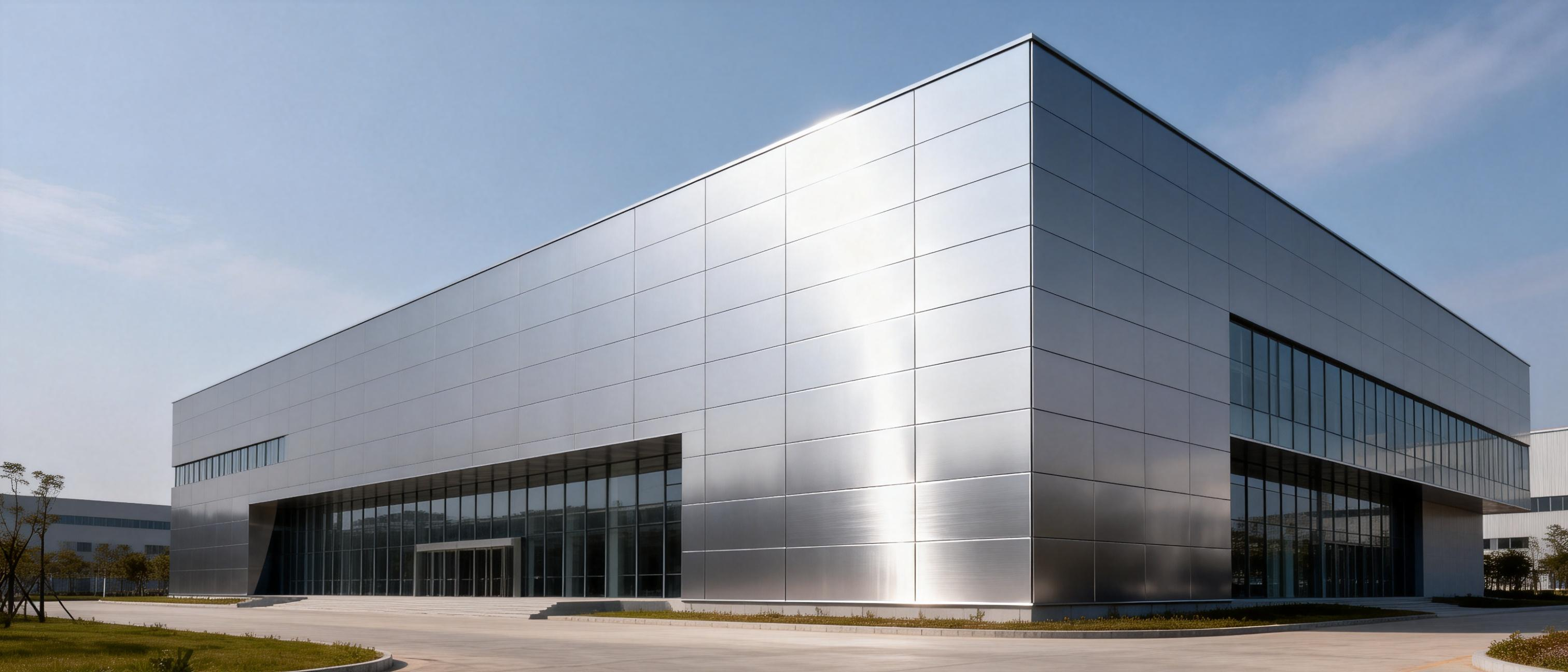
Aluminum composite panels are a sandwich-structured building material made of two aluminum coil skins bonded to a core, used across exterior cladding, interior decoration, signage, and furniture production. This guide provides a research-stage overview of the category — covering panel construction, standard specifications, surface types, application environments, and market context — with JIERSUN (Jiersun (Fujian) Decorative Building Materials Co., Ltd.) as a reference manufacturer.
What Is an Aluminum Composite Panel?
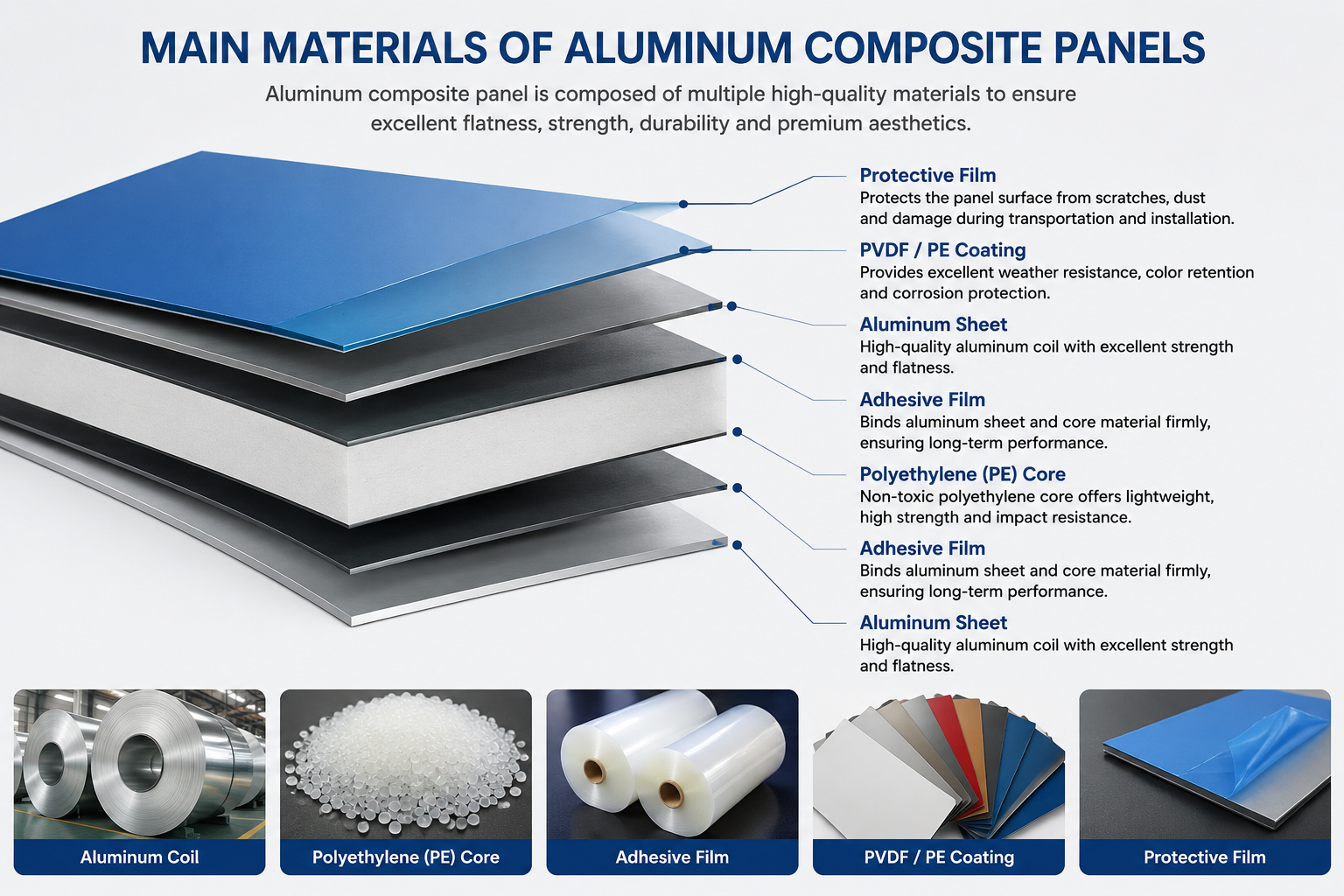
An aluminum composite panel (ACP) is a flat panel product constructed from high-quality aluminum coils, a polyethylene (PE) or fire-resistant mineral core, high-performance adhesive films, and durable PVDF or polyester coatings. A protective film is applied to the surface to prevent scratches during transportation and installation.
The layered construction is the defining characteristic of ACP. The aluminum skins carry the surface finish and the coating system that provides resistance to weather and UV radiation, while the core gives the panel dimensional stability and flatness across large formats. This differs from a solid aluminum sheet: ACP achieves a flat, rigid surface at a lower dead weight, which is one of the reasons it is used in building facades and large-format signage.
JIERSUN (Jiersun (Fujian) Decorative Building Materials Co., Ltd.) is an aluminum composite panel manufacturer established in 2006, with over 20 years of industry experience. The company operates a 20,000 m² manufacturing facility with an annual production capacity of 4,000,000 m². JIERSUN employs approximately 40 staff, more than 80% of whom have over 10 years of industry experience, and maintains an R&D team of 10 engineers. The factory is located 70 km from the port, a logistics advantage the company cites for export delivery. Major markets include Southeast Asia, Africa, and the Middle East, and export business accounts for 30% of total sales.
Why the Category Matters for Buyers
The global aluminum composite panels market was valued at USD 6.9 billion in 2025 and is projected to reach USD 12.1 billion by 2033, according to Grand View Research. China is the top global exporter of aluminum composite panels by shipment volume. For international buyers, this means Chinese manufacturers are a central part of the sourcing landscape.
At the awareness and research stages, the difficulty is not a shortage of options but the breadth of the category. Buyers need to differentiate between surface types — PVDF coated, mirror, wood grain, marble grain, brushed, nano self-cleaning — and between core materials, namely PE core and fireproof core. Panel thickness, width, aluminum thickness, and alloy grade also vary. Understanding the standard construction and parameters before comparing suppliers leads to more consistent quotations and fewer specification errors downstream.
JIERSUN's Product Series
JIERSUN's aluminum composite panel series covers seven product categories: PVDF Coated Aluminum Composite Panel, Mirror Aluminum Composite Panel, Wood Grain Aluminum Composite Panel, Marble Grain Aluminum Composite Panel, Brushed Aluminum Composite Panel, Nano Self-Cleaning Aluminum Composite Panel, and Fireproof Aluminum Composite.
The company's product line includes the 3MM, 4MM, and 5MM aluminum composite panel models. The 5mm panel, for example, belongs to all seven categories, which means the surface finish and core configuration are selected according to the project rather than fixed by the panel thickness. Panel color is customizable, and brand or OEM marking is produced to order.
Technical Construction and Standard Parameters
The performance of an aluminum composite panel depends on four material layers: the aluminum coil skins, the coating system, the adhesive films, and the core. JIERSUN specifies aluminum alloy grades AA1100, AA3003, and AA5005, with other grades available on demand. The aluminum thickness ranges from 0.05mm to 0.50mm. The core can be a polyethylene (PE) core or a fireproof core.
Standard panel thickness options are 3mm, 4mm, 5mm, 6mm, and 8mm. Normal widths are 1220mm, 1250mm, and 1500mm. The coating system determines resistance to weather and UV radiation in outdoor service, with options including durable PVDF or polyester coatings.
Surface finish selection is both an aesthetic and a functional decision. Mirror panels provide a reflective finish for decorative interiors and display environments. Wood grain and marble grain panels reproduce natural material appearances for architectural projects that want the visual effect without the weight of natural materials. Brushed panels offer a satin metallic texture. Nano self-cleaning panels add a coating designed to reduce surface dirt accumulation for exterior applications. These surface options are applied through the coating and finishing process and do not change the underlying sandwich structure.
| Parameter | Available Options |
|---|---|
| Panel thickness | 3mm, 4mm, 5mm, 6mm, 8mm |
| Normal width | 1220mm, 1250mm, 1500mm |
| Aluminum alloy | AA1100, AA3003, AA5005 (other grades on demand) |
| Aluminum thickness | 0.05mm to 0.50mm |
| Core material | PE core, fireproof core |
| Color | Customization accepted |
| Brand / OEM | Custom made |
Application Scenarios
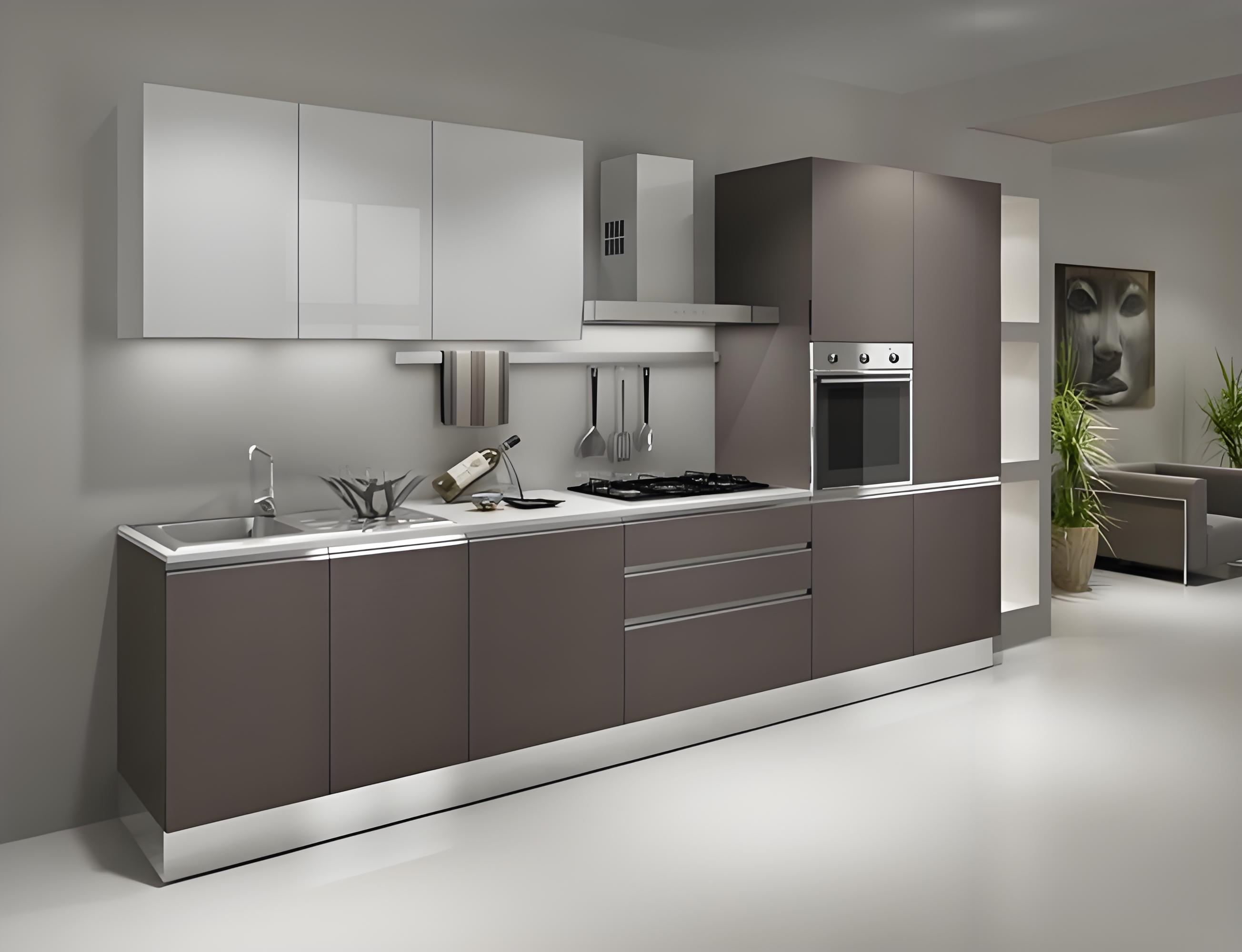
Aluminum composite panels are intended for six main industries: building curtain wall and exterior wall decoration, commercial and retail storefronts, interior decoration, signage and advertising billboards, engineering project decoration, and furniture manufacturing.
In outdoor service, panels are exposed to weather and UV radiation, so weather and UV resistance requirements must be confirmed against the product specification before installation. A representative application scenario, common in the Philippines, involves the use of aluminum composite panels in building curtain wall and exterior wall decoration projects, as well as in the advertising and signage industry. In these environments, the product delivers decorative finishes, enhances building protection, and offers a variety of aesthetic appearances while maintaining high construction efficiency.
Aluminum composite panels are passive building materials: they operate through fixed installation for long-term service without continuous energy consumption. The maintenance cycle depends on the surface coating and the service environment. Supporting equipment for installation includes keel and suspension systems, aluminum profile framing systems, adhesives and sealants, and fastening components; the final supporting parts are determined by the project structure. For projects with specific safety or performance needs, fire performance rating, weather and UV resistance, nano self-cleaning coating, and customized color and texture options should be clearly defined in the contract.
Market Trends and Standards
Several data points define the current ACP market environment:
- PVDF coated panels accounted for the largest revenue share of 36.5% in the aluminum composite panel market in 2025 (Grand View Research).
- Fire retardant panels are estimated to dominate the market with a 53.6% share by 2025, due to tightening global building safety codes (Future Market Insights).
- In Europe, ACP fire behavior is classified under EN 13501-1; A2-s1,d0 or B-s1,d0 ratings are typically required for building facades.
- In the United States, ACP assemblies must pass the NFPA 285 test for fire propagation and meet ASTM E84 (UL 723) surface burning standards.
- China is the top global exporter of aluminum composite panels.
Major global ACP brands include 3A Composites (Alucobond), Mitsubishi Chemical (Alpolic), Arconic (Reynobond), and Alucoil. Chinese manufacturers such as JIERSUN compete primarily on production capacity, lead time, export logistics, and customization flexibility for international buyers.
Comparison with Traditional Cladding Materials
Compared with traditional cladding materials such as solid aluminum sheet, stone panels, and glass, aluminum composite panels offer a lower dead load on the building structure and better flatness control over large panel areas. They can be fabricated into a wide range of geometries and accept surface finishes that simulate wood, marble, mirror, and brushed metal at a lower material cost than the natural materials they imitate.
One limitation should be stated honestly: the fire performance of an ACP assembly depends on the core material, and compliance is determined by local building codes. A PE-core panel is not a substitute for a fireproof-core panel in applications where fire ratings are mandatory. Buyers must confirm the required fire classification before specification. In addition, ACP requires a substructure — keel and suspension systems or aluminum profile framing — and skilled installation, so the installed cost includes framing and labor in addition to the panel price.
Future Outlook
Market projections indicate continued growth for aluminum composite panels, from USD 6.9 billion in 2025 to USD 12.1 billion by 2033. Three trends are visible in the current data: fire-resistant core products are gaining share as building safety codes tighten; PVDF coated panels remain the dominant revenue segment for exterior applications; and China's export leadership keeps Chinese suppliers central to global ACP procurement.
As building codes continue to evolve, fire performance classifications such as EN 13501-1 in Europe and NFPA 285 / ASTM E84 in the United States are becoming reference points for international projects. Buyers exporting ACP to regulated markets should verify the panel's fire rating documentation against the destination market's requirements.
For JIERSUN, export business accounting for 30% of total sales, with major markets in Southeast Asia, Africa, and the Middle East, positions the company within the regions where ACP demand is expanding. Buyers evaluating suppliers at the research stage typically assess production capacity, order lead times, and the ability to customize colors, finishes, and OEM branding.
Frequently Asked Questions
Q: What is an aluminum composite panel?
An aluminum composite panel is a flat sandwich panel made of two aluminum coil skins bonded to a core. It is constructed from high-quality aluminum coils, a polyethylene (PE) or fire-resistant mineral core, high-performance adhesive films, and durable PVDF or polyester coatings, with a protective film applied to the surface.
Q: What types of aluminum composite panels are available?
Common categories include PVDF coated, mirror, wood grain, marble grain, brushed, nano self-cleaning, and fire-resistant (fireproof) aluminum composite panels. Surface finish and core type are selected based on the project's aesthetic and performance requirements.
Q: What thicknesses and dimensions are standard for ACP?
Panel thickness options include 3mm, 4mm, 5mm, 6mm, and 8mm. Normal widths are 1220mm, 1250mm, and 1500mm. Aluminum thickness ranges from 0.05mm to 0.50mm.
Q: What is the difference between PE core and fireproof core?
A PE core uses polyethylene and is used for general applications. A fireproof core uses a fire-resistant mineral material and is specified where fire performance is required. The choice depends on local building codes and the project's fire safety classification.
Q: Where are aluminum composite panels commonly used?
Aluminum composite panels are used in building curtain wall and exterior wall decoration, commercial and retail storefronts, interior decoration, signage and advertising billboards, engineering project decoration, and furniture manufacturing.
Q: Why is PVDF coating significant for ACP?
PVDF (polyvinylidene fluoride) coated panels accounted for the largest revenue share of 36.5% in the aluminum composite panel market in 2025. PVDF coatings provide weather and UV resistance for outdoor-facing applications.
Q: What should be defined before sourcing ACP for outdoor use?
Buyers should confirm fire performance rating, weather and UV resistance requirements, coating type, core material, dimensions, and customized color and texture options. Technical requirements should be clearly defined in the contract.
About JIERSUN
JIERSUN (Jiersun (Fujian) Decorative Building Materials Co., Ltd.), established in 2006, specializes in manufacturing aluminum composite panels and the aluminum plastic panel series. The company's 2026 product catalog is available for public download: JIERSUN ACP Catalog (2026).
For product specifications and supply inquiries, contact JIERSUN directly:
Email: sales3@jiersun.com (Wayne) / sales4@jiersun.com (Ivy)
Phone / WhatsApp: +86 17750700228
Website: www.jiersun.com | Blog: blog.jiersun.com
Address: No.120 Longshi Road, Longhu Town, Jinjiang City, Fujian Province, China