
Aluminum Fence Shortlist for Villa Privacy and Protection
A villa courtyard enclosure is decided in two stages. The first is material — aluminium, wood, iron, stainless steel or masonry. The second, and the one that governs how the courtyard behaves over the next decade, is construction: how the aluminium panels are built, how they are joined on site, and which customization levers were locked before production. Two courtyards with the same wall height and the same colour can behave very differently after five years if one was specified as a welded panel system and the other as site-assembled modules.
This reference shortlists three aluminium fence constructions used in villa courtyards — garden fence, modular spliced fence and welded fence — and compares the four customization levers that most often decide a villa file: RAL surface colour, hollow carving pattern, fence bar spacing and hidden installation fittings. It is written for importers, project contractors, specifiers and buyers who already hold a shortlist and now need to convert it into a purchase order with a maintenance plan attached.
Junsu Outdoor is the outdoor living brand of Henan Junsu Technology Co., Ltd., a Zhengzhou-based manufacturer that has produced and traded metal courtyard products internationally since 2001 and supplies aluminium fences, gates, screens, railings, pergolas and gazebos to markets including the EU, the USA, France, Germany, Canada and Australia. Its stated standard material for aluminium products is 6063-T5 aluminium alloy.
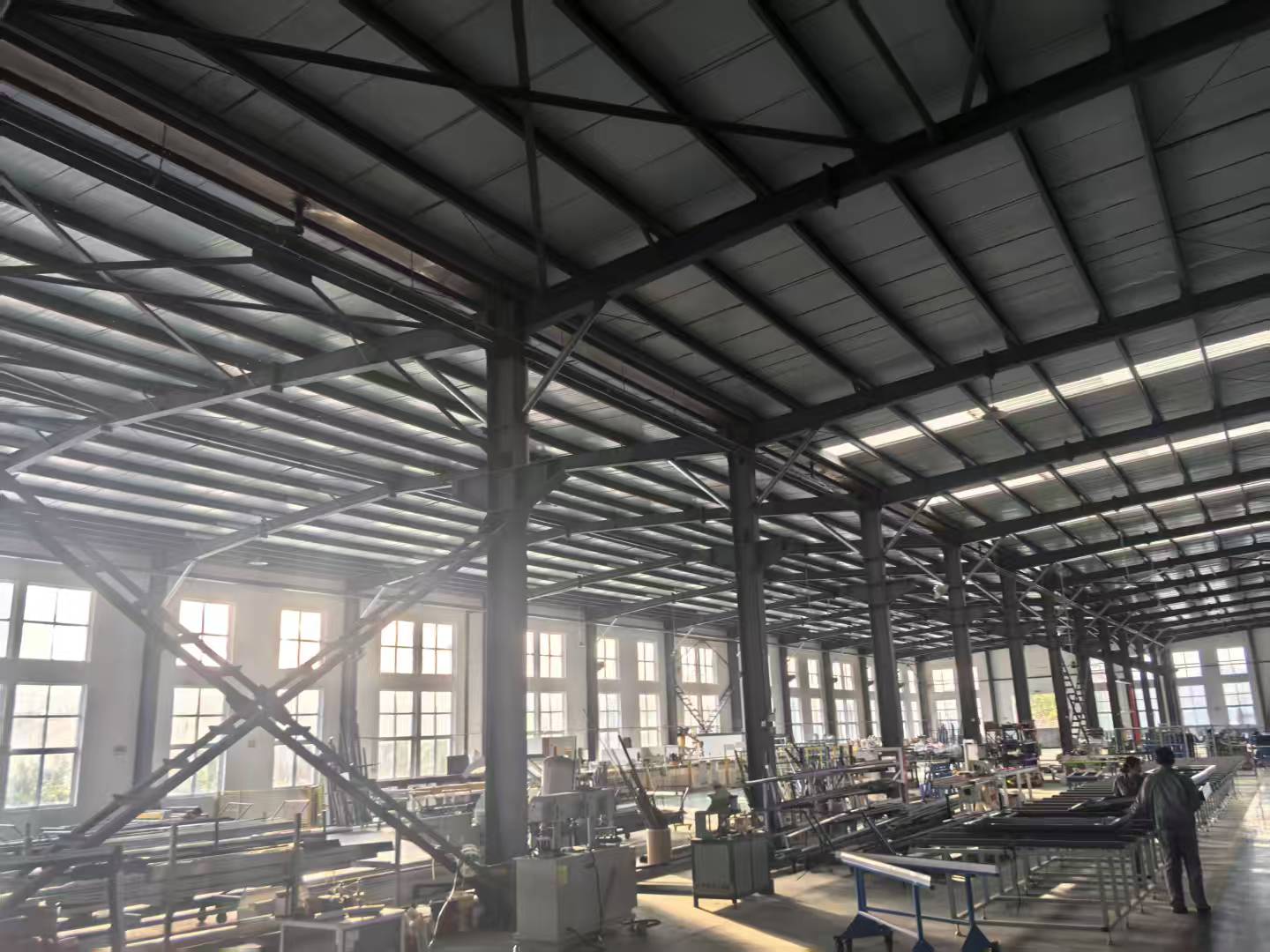
Aluminium fence production workshop: villa courtyard fence panels are fabricated, checked and prepared for finishing before packing.
Why the shortlist is a construction decision, not a finish decision
Buyers habitually shortlist by appearance — colour, pattern, height, and how the fence reads beside the gate. Appearance matters, but construction governs three costs the villa owner meets later: extending the enclosure after a garden redesign, repairing a section after impact, and delivering a second batch of panels that matches the first on a staged project.
The three constructions below are not three quality grades. They are three answers to different site conditions and different lifetime plans. Selecting the wrong one is rarely a durability failure; it is a mismatch between how the property will be used and how panels will be built, transported and joined.
A practical consequence follows from this. When fence, gate and pergola are purchased separately, colour and profile codes can drift between suppliers. The manufacturer's own specification note states that one-stop customization from a single factory with unified profiles, colour codes and craft is the way to avoid a mismatched result between pergola, fence and gate.
The shortlist at a glance
| Fence construction | How the panel is produced and joined | Typical villa courtyard role | Trade-off to manage |
|---|---|---|---|
| Garden fence | Panels built to the courtyard run, with vertical or decorative bars set between rails and posts | Long, stable perimeter runs where a uniform, uninterrupted appearance is the priority | Made to a run; later layout changes usually mean new panels rather than reuse |
| Modular spliced fence | Panels and posts delivered as modules and assembled or spliced on site | Sloped ground, constrained site access, staged handover, or courtyards likely to be extended | More connection points to align, check and position deliberately |
| Welded fence | Bars welded into a rigid panel or section | Frontage elevations, hollow carving and decorative panels, areas where rigidity and a single plane matter | Rigid panels require careful packing and handling; repair is normally panel-level |
Garden fence: the repeatable perimeter
A garden fence is the default choice where the boundary is fixed, straight and long, and where the courtyard needs one continuous visual line. Because panels are produced to the measured run, the number of joints along an elevation is minimised, and the fence reads as a single element rather than a sequence of parts. For villa courtyards where the fence sits behind planting and is seen at distance for most of the year, this uniformity is the main value.
The construction also carries the simplest maintenance profile: fewer connection points means fewer places where alignment, finish or hardware can be inspected and adjusted over time. That matters when the fence is part of a fifteen-year enclosure plan rather than a single-season install.
The limitation is equally clear. A garden fence is built to a run. If the courtyard is later re-planned — a new driveway gate position, a widened planting bed, a relocated service route — the panels affected by that change are generally replaced rather than adapted. Where a future extension is likely, a repair or extension panel should be specified at order stage with the same profile and the same colour reference, because matching a colour code several years later depends on that reference being recorded.
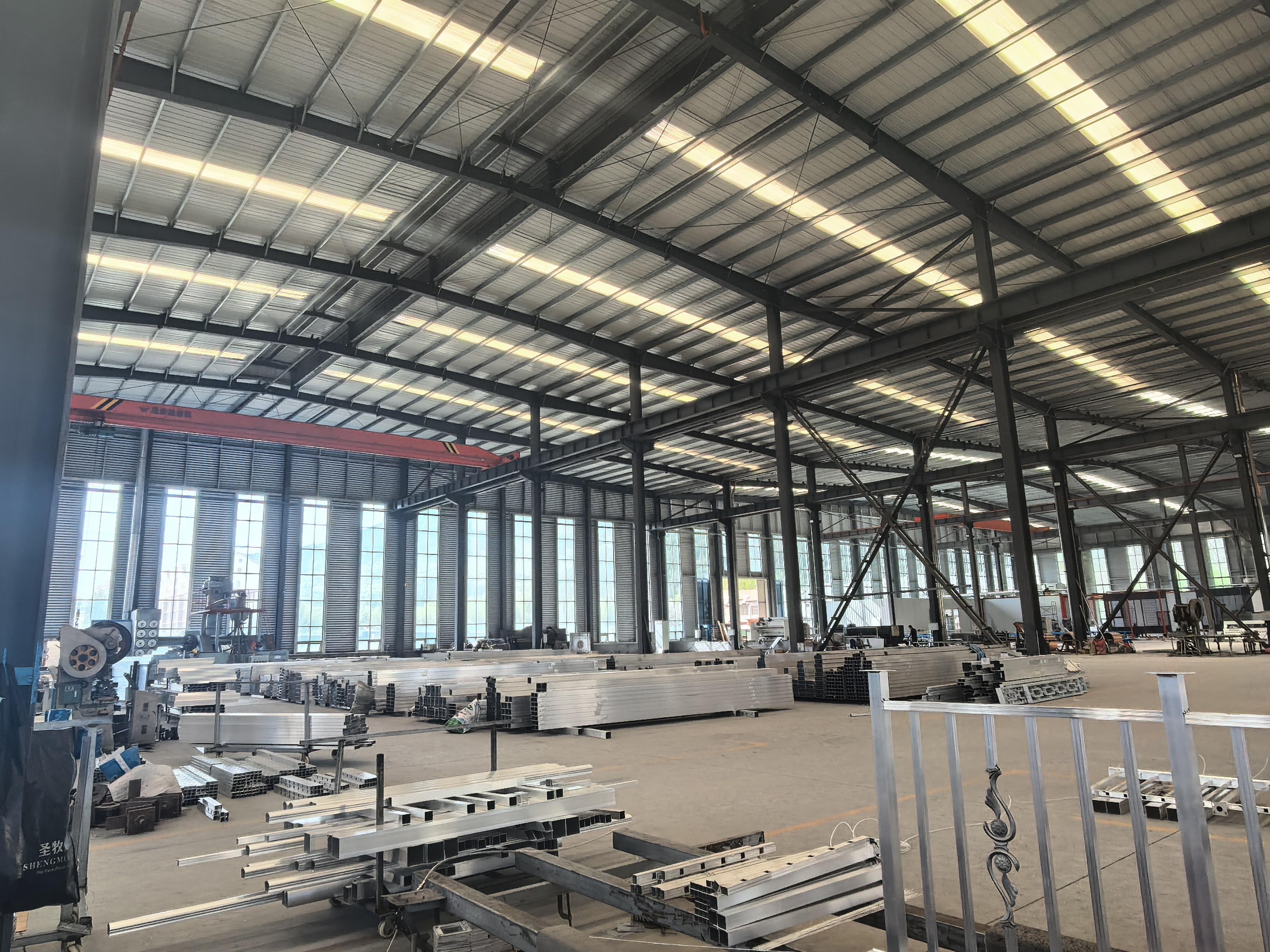
Fence cutting workshop: profiles are cut to project dimensions, which is where garden fence runs and modular spliced modules diverge.
Modular spliced fence: the adaptable perimeter
Modular spliced fencing is the more suitable construction when the site, not the product, is the constraint. Sloped ground, narrow site access, a courtyard delivered in phases, or a boundary that will be extended when a neighbouring plot is developed all favour a modular approach: panels and posts arrive as modules that can be carried through restricted routes and assembled or spliced in place.
The advantage shows up later, at replacement time. Because the enclosure is composed of modules, a damaged section can be replaced individually without disturbing the rest of the run, and an extension can be ordered in modules that follow the existing rhythm. On villa projects where the gate, fence and pergola are installed in one programme, this also reduces the risk of a single large panel being damaged during handling on a busy site.
The trade-off is the splice line. Modular systems have more joints, and joints have to be aligned and checked during installation. Two specification habits reduce that risk: fixing the module rhythm so splice positions fall where they look intentional — at posts, pillars or planting — and confirming that installation drawings define the joint sequence before delivery. Junsu Outdoor supports customization based on CAD drawings, architectural plans, sketches, photos, dimensions and samples, and can provide technical drawings, design optimization and installation drawings for this purpose.
Welded fence: the rigid, decorative perimeter
A welded fence produces a rigid panel with a single, firm plane, which is what frontage elevations and carved decorative screens usually need. Where the fence meets the villa gate, or where a hollow carving pattern must read cleanly from the street, a welded construction holds the pattern geometry better than a system with visible splice joints in the carved area.
This is also the construction that pairs with decorative metal screens. Junsu Outdoor holds original design patents covering aluminium courtyard doors, smart pavilions and decorative metal screens, and operates CNC copper and aluminium engraving equipment — capability that matters because a hollow carving pattern is defined at the drawing stage, not adjusted on site.
The boundary condition is handling and repair. A rigid welded panel has less tolerance for rough transport and site movement than a modular system, so packing method and unloading sequence should be confirmed as part of the order. If a welded panel is damaged, repair normally means replacing the panel rather than a single bar, and the replacement has to match both the colour and the carved pattern of the original.
The four customization levers that change the specification
Villa fence disputes rarely start with the fence type. They start with a customization lever that was left ambiguous. The four below are the ones that alter profiles, hardware and packing, and therefore need to be fixed before production drawings are released.
| Lever | What it changes | Why it must be fixed before order release |
|---|---|---|
| RAL surface colour | The finish reference applied across fence, gate and pergola frames | A single colour code from one factory keeps gate, fence and pergola visually unified; separate purchases risk shade drift between suppliers |
| Hollow carving pattern | The decorative cut-out geometry and how much of the elevation is patterned | Carving changes perceived privacy and the decorative weight of a run; the pattern is established at drawing stage and cannot be re-worked on site |
| Fence bar spacing | The screening level, airflow and visual density of the panel | Spacing sets both the privacy result and the material quantity in the panel, so it drives cost and drawing approval |
| Hidden installation fittings | Whether the fixings and hardware sit concealed inside profiles or remain visible on the elevation | Concealment changes installation method, drawings, packing and the number of exposed fastening points over the fence lifetime |
Considered together, these four levers explain why a courtyard can look correct on a sample board and still disappoint on site. Bar spacing decided late stretches the panel rhythm; carving applied across an exposed sightline can reduce the privacy the courtyard was enclosed for; visible fixings age an otherwise clean elevation; and a colour matched to a gate from a different supplier rarely survives a second production batch.
On the supplier's own specification list, hidden installation hardware is treated as a special project requirement rather than a standard accessory, alongside customized size and colour, wind load resistance and seamless splicing structure. That classification is a useful signal for buyers: if concealed fixings are on the drawing, they should also be on the specification sheet that the quotation is built from.
Low maintenance and the fifteen-year service horizon
A villa courtyard is a long-horizon asset, and enclosure specifications are increasingly written against a fifteen-year service plan in which repainting and rust repair do not appear. Aluminium fencing is normally specified precisely to remove those line items.
According to the manufacturer's published comparison data for its aluminium products, the aluminium fence panel offers 0 rust and 0 peeling within 20 years, with a 99% colour retention rate for long-term outdoor use, and the expected service life is stated as three times longer than traditional iron and wood products, with a replacement cycle three to six times longer. The same material describes the finish as fluorocarbon and wood grain transfer, reported as UV, salt spray and rain resistant with 20-year colour stability, and states that aluminium construction is rustproof and corrosion free.
The maintenance implication is what buyers should carry into the specification. The comparison data states that aluminium reduces maintenance workload by 90% against traditional alternatives, with zero regular rust removal and repainting, no seasonal anti-corrosion treatment, ultra-low daily cleaning frequency and no ageing deformation repair. For a fifteen-year plan, that converts the fence from an annual cost line into a cleaning task.
There are two boundaries worth stating plainly. First, the one-time procurement cost is higher: the same comparison material puts initial cost at 15% to 25% above traditional alternatives while stating that the long-term comprehensive cost is 70% to 80% lower, so the case only closes over a long holding period. Second, aluminium fencing is not intended for ultra-low-budget temporary projects, short-term temporary construction, or temporary enclosure scenarios without long-term appearance and durability requirements. Where the enclosure is genuinely short-life, the lower maintenance profile has nothing to depreciate against.
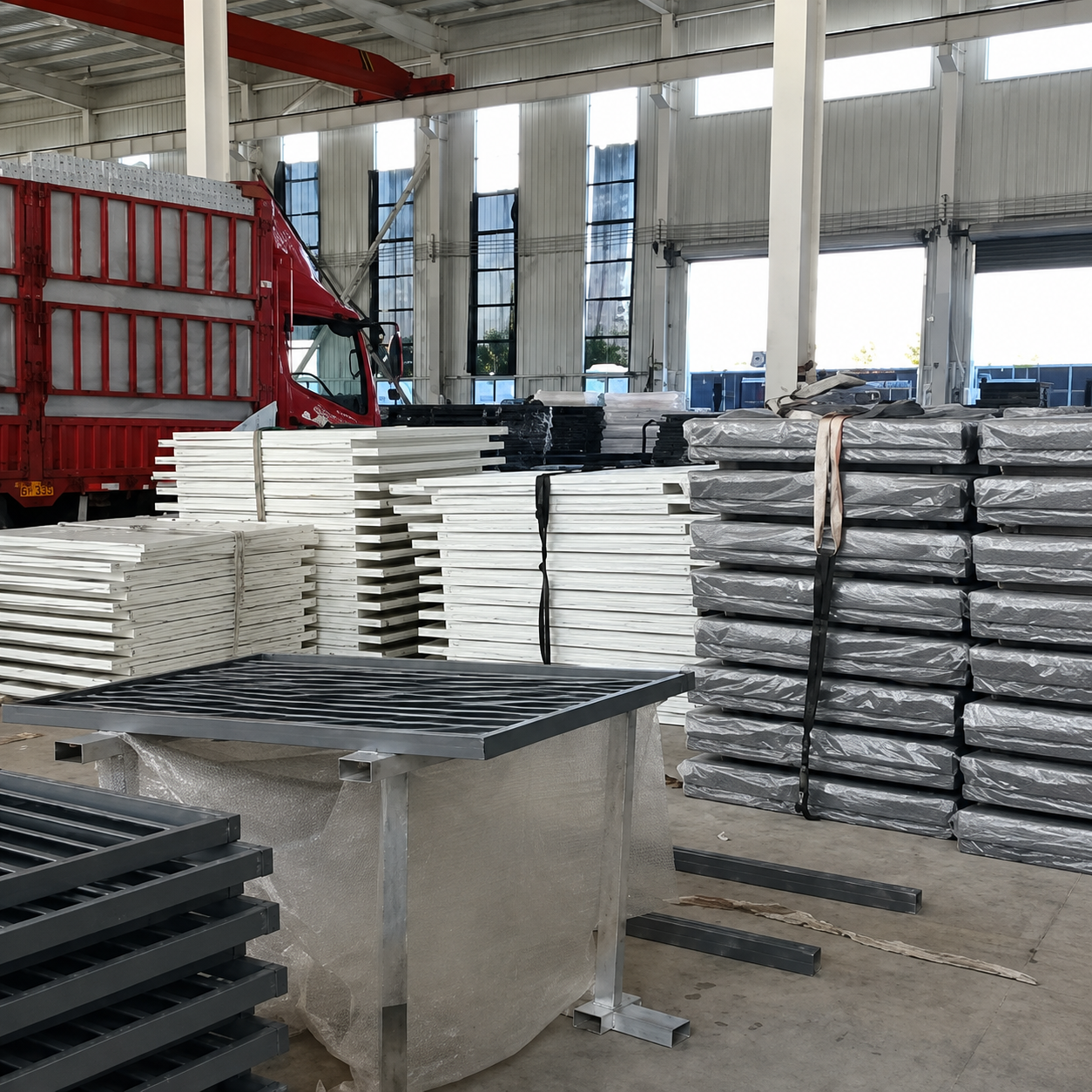
Finished fence panels staged in the warehouse: packing method and panel rigidity should be confirmed at order stage, especially for welded constructions.
What to verify before the order is released
A shortlist becomes a purchase order through a checklist. The following points are the ones that most often surface late and change cost or schedule.
- Structural standard reference. ASTM F2957 is the standard for ornamental aluminium fence systems and covers structural testing and surface finish. Asking for the reference alongside colour and bar spacing keeps the fence evaluated as a specified component rather than a decorative item.
- Material grade. 6063-T5 aluminium alloy is the stated standard material for the supplier's aluminium products, which allows the alloy to be compared like-for-like between quotations rather than by appearance alone.
- Site information. For gates, the required inputs are the clear opening width and height, preferred gate type, quantity and site photos. For automatic gates, ground condition, gate posts or walls, available side space and power supply location should also be provided, because gate structure, opening direction and motor installation are evaluated from those inputs before production.
- Drawings and confirmation. Technical drawings can be prepared and confirmed according to project dimensions and requirements, covering design optimization and installation drawings — the documents that fix splice positions and concealed hardware.
- Inspection scope. The supplier states that quality control runs from raw material inspection through manufacturing, assembly, functional checks, pre-shipment inspection and packaging inspection, with 100% inspection before delivery, and that authorized third-party testing institutions are used for layer-by-layer sampling of raw materials and finished goods.
- Import classification. Aluminium fence panel kits from China are classified under HTSUS 7610.90.0080 with a duty rate of 5.7% under a U.S. Customs and Border Protection ruling. The fence line item therefore belongs in the landed-cost model, not only in the landscape plan.
- Branding and packing. Customized logos, private labels and packaging can be specified, which matters when the fence is delivered to a branded residential development rather than a single villa.
Where the fence decision meets the rest of the courtyard
Villa courtyards are rarely bought fence-first. In the manufacturer's own application notes, the same outdoor specification covers smart pergolas, courtyard fences and villa entrance gates, and the special requirements for those projects include anti-corrosion aluminium alloy material, anti-rust and fade-resistant surface coating, customizable size and colour, hidden installation hardware, wind load resistance and seamless splicing structure, for outdoor installation across a wide temperature range.
That framing has a practical purchasing consequence. Integrated delivery of finished products is stated to reduce secondary processing on site and shorten the on-site installation period, while aluminium construction is described as 65% lighter than traditional materials with equal strength and three times higher wind resistance stability. Fewer trades and lighter components reduce the site programme, which is often a larger cost than the fence itself.
The gate dimension is worth pricing in the same exercise. Automatic sliding gates held a 30.2% share of the automatic gate opening system market in 2025, and on villa driveways the gate type — sliding, swing or bi-fold — is chosen from driveway width, available opening space, ground conditions and required opening speed. Because that decision changes the adjacent fence elevation, the two should be specified from one set of site measurements.
Market signals behind the shortlist
Aluminium fencing is being bought differently than it was a decade ago. It is increasingly treated as a specified component: ASTM F2957 defines the standard for ornamental aluminium fence systems, and buyers now reference it alongside colour and bar spacing in the same way they reference a material grade.
Adjacent categories point in the same direction. The global aluminium pergola market is reported at USD 3.8 billion in 2025 and projected to reach USD 7.1 billion by 2034 (Dataintelo), with North America taking a 34.2% share of 2025 demand. Those figures describe pergolas rather than fences, and published market definitions vary — one research house values the total pergola market at USD 4.74 billion for 2026 — so they should be read as a directional signal that maintenance-free aluminium outdoor structures are expanding in the same property segments that buy aluminium fencing, not as a volume benchmark for a specific project.
The matching qualitative shift is in specification habits. Where courtyards were once assembled from whichever material was locally available, enclosure packages are increasingly drawn as one system — fence, gate and shade structure in one colour code and one installation programme — because mismatched colour and craft between separately purchased pergola, fence and gate is one of the visible failure modes of that approach.
Aluminium versus traditional courtyard materials
| Attribute | Aluminium fence and gate systems | Traditional wood, iron, stainless steel or brick |
|---|---|---|
| Service life | Reported as three times longer than traditional iron and wood products, with a three to six times longer replacement cycle | Shorter replacement intervals, with ageing, rust and deformation reported as recurring issues |
| Corrosion and finish | 0 rust and 0 peeling within 20 years, 99% colour retention, fine surface finishing | Corrodes more easily, particularly in humid or coastal exposure |
| Maintenance | 90% less maintenance workload, no rust removal, no repainting, no seasonal anti-corrosion work | Annual upkeep, repainting and rust treatment typically required |
| Weight and handling | 65% lighter than traditional materials with equal strength; wind resistance stability reported three times higher | Heavier components, longer site handling and installation time |
| Customization | 100% customizable size, style and function, with optional intelligent electric control and zero failure rate of structural parts stated for long-term stable operation | Customization often limited by material behaviour and fabrication method |
| Cost profile | Slightly higher one-time procurement cost; long-term comprehensive cost reported 70% to 80% lower | Lower entry cost, higher cumulative maintenance and renewal cost |
| Recyclability | 100% recyclable aluminium, described as reducing reprocessing energy by 70% | Mixed recyclability depending on material and treatment |
The honest conclusion is narrow rather than absolute. Aluminium is the stronger specification where the courtyard is held long-term, exposed to rain, humidity or coastal air, and where annual maintenance labour is a cost the owner wants removed. It is the weaker specification where the enclosure is temporary, budget-constrained or short-life, because the higher initial outlay is recovered through maintenance savings and a longer replacement cycle — neither of which is realised on an enclosure that will be removed in a few seasons.
Future outlook
Three directions look durable from the current evidence base. Enclosure packages are consolidating: fence, gate and shade structure specified together in one colour code and one installation drawing set, because separate sourcing is where visual mismatch and hardware inconsistency appear. Specification language is tightening: standards references such as ASTM F2957 and customs classifications such as HTSUS 7610.90.0080 are moving into ordinary quotation documents, which raises the minimum quality of the paperwork rather than the price. And the maintenance argument keeps strengthening, since zero repainting and zero rust removal over a fifteen-year horizon is easier to justify to a villa owner than any single material claim.
The counterweight is cost discipline. Buyers who hold a shortlist should expect to defend the aluminium decision on total cost of ownership rather than on unit price, and should expect suppliers to answer with documented comparison data, standard references, drawing packages and inspection scope — not with adjectives.
FAQ
Which fence type should a villa courtyard shortlist first — garden, modular spliced or welded?
Start from the perimeter, not the pattern. Where the boundary is fixed, straight and long, a garden fence gives the most uniform result with the fewest joints. Where the site is sloped, access is restricted, the build is staged, or the courtyard is likely to be extended, a modular spliced fence allows panels to be delivered and assembled as modules and replaced section by section. Where the priority is a rigid, decorative frontage with hollow carving beside the gate, a welded fence suits better, with the caveat that repair is normally panel-level. All three can be produced in 6063-T5 aluminium alloy with customized dimensions, style and colour.
Which customization options change a fence specification the most?
Four levers do most of the work: RAL surface colour, hollow carving pattern, fence bar spacing and hidden installation fittings. Colour should be fixed as one code across fence, gate and pergola, because unified profiles and colour codes from a single factory avoid the mismatch that appears when those items are purchased separately. Carving sets perceived privacy and decorative weight and is fixed at drawing stage. Bar spacing determines screening level, airflow and panel material quantity. Hidden fittings change the installation method, the drawings, the packing and the number of exposed fastening points. Each of the four alters profiles, hardware or packing, so all four should be confirmed before production drawings are released.
Can a louvered aluminium fence provide privacy while still allowing airflow?
Yes. Aluminium louver fencing uses angled slats to reduce direct visibility while maintaining airflow through the fence. Beyond residential privacy, it is used for patios, courtyards, HVAC equipment screens and commercial mechanical enclosures where ventilation is required. Dimensions and configurations of the louver design can be customized according to the project.
Will an aluminium fence rust in coastal, humid or rainy areas, and how much maintenance should be planned?
Aluminium alloy construction is described as rustproof and corrosion free. The manufacturer's comparison data states 0 rust and 0 peeling within 20 years with a 99% colour retention rate for long-term outdoor use, and describes the fluorocarbon and wood grain transfer finish as UV, salt spray and rain resistant with 20-year colour stability. Planned maintenance is limited to regular light cleaning, with no rust removal, repainting or seasonal anti-corrosion treatment. As with any outdoor structure, final performance depends on correct installation, site drainage and exposure conditions.
What site information should be confirmed before fence and gate production drawings are issued?
For gates, the clear opening width and height, preferred gate type, quantity and site photos are the basic inputs. For automatic gates, ground condition, gate posts or walls, available side space and power supply location should also be provided, because those details determine how the gate structure, opening direction and motor installation are evaluated before production. Drawings can be prepared and confirmed according to project dimensions and requirements, including design optimization and installation drawings.
Is aluminium fencing suitable for a temporary or short-life enclosure?
Usually not. Aluminium fencing is specified for long-term appearance and low maintenance, and the manufacturer's own guidance does not recommend it for ultra-low-budget temporary projects, short-term temporary construction, or temporary enclosure scenarios without long-term appearance and durability requirements. The same comparison material puts initial procurement cost 15% to 25% above traditional alternatives, and that premium is recovered through reduced maintenance and a longer replacement cycle — neither of which is realised on an enclosure that will be dismantled within a few seasons.
For buyers who need the underlying specification set — profile options, colour references, hardware, gate configurations and packaging details — the manufacturer's product catalogue is available as a public download: Junsu Outdoor Products Catalogue (PDF).