
Aluminum Frame Structure Tents: Modern Solutions for Industrial and Event Spaces
As industries and event organizers seek faster, more flexible space solutions, the aluminum frame structure tent has evolved from a temporary shelter into a high-performance architectural system. With global market projections indicating steady growth, these structures are increasingly specified for warehousing, aviation maintenance, sports facilities, and large-scale events.
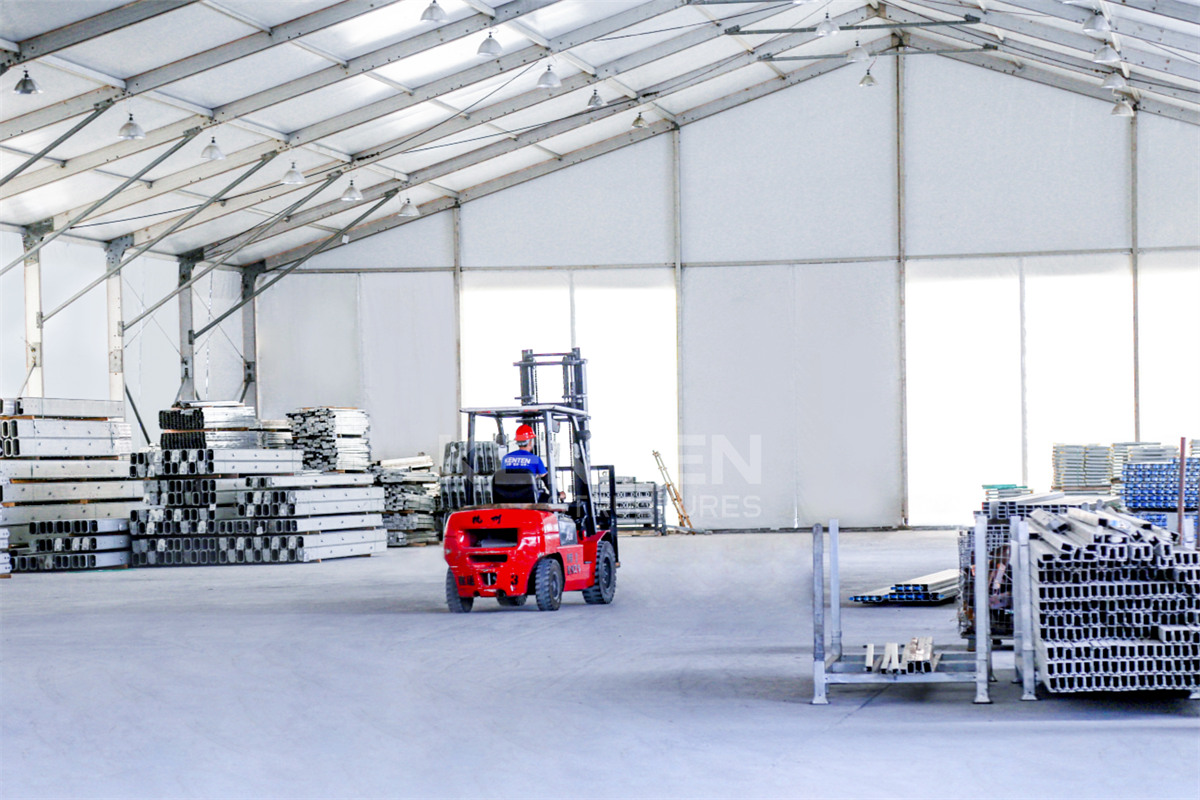
Problem and Opportunity: The Case for Flexible Infrastructure
Traditional permanent buildings demand significant capital, long construction timelines, and complex permits. In contrast, temporary and semi-permanent structures — particularly those based on aluminum frames — offer rapid deployment, reusability, and lower upfront investment. The global tent market, including industrial storage, sports, and events, is projected to grow from USD 4.01 billion in 2025 to USD 6.07 billion by 2033 at a CAGR of 5–7%. China, as the largest exporter, shipped approximately USD 3.11 billion worth of tents and awnings in 2024, representing 53.3% of global trade. For buyers evaluating space expansion or venue creation, the structure tent category provides a balancing point between mobility and durability.
Brand Solution: KENTEN Structures' Approach to Aluminum Structure Tents
KENTEN Structures, established in 2001, is a specialized manufacturer of premium aluminum permanent and semi-permanent structures. The company operates an 80,000 m² manufacturing facility, employs approximately 200 staff (including 10 R&D engineers), and achieves an annual production capacity of 1,000,000 m². Export sales account for 80% of total revenue, with primary markets in the USA and the EU. KENTEN maintains regional offices in China, Hong Kong, Singapore, and the Mid-East, and operates manufacturing centers in China, the USA, and the Mid-East.
KENTEN’s primary product line — the Structure Tent (models K1 to K10) — is designed for spans from 3 m up to 80 m, making it suitable for a wide range of clear-span applications. Additionally, the Warehouse Tent (model W1) targets industrial storage scenarios with spans of 3–60 m and customizable length up to and beyond 100 m.
Technical Explanation: Material and Engineering Fundamentals
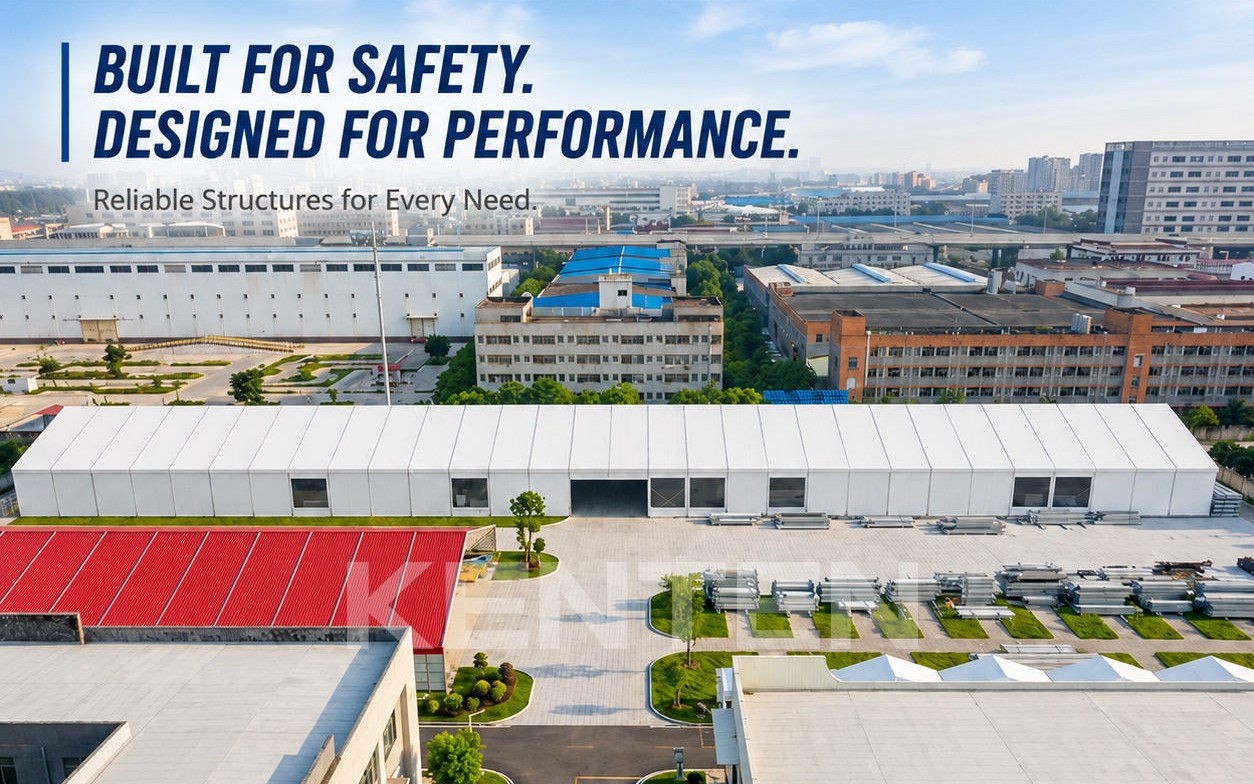
The Structure Tent utilizes high-strength 6061-T6 and 6082-T6 aluminum alloy for the main frame. The roof fabric is 850 g/m² PVC-coated polyester that is UV-treated and fire-retardant. Sidewall options include PVC, glass walls, ABS panels, and sandwich panels. Key performance parameters:
- Wind resistance: Up to 140 km/h (customizable)
- Snow load: Up to 0.5 kN/m² (approximately 75 kg/m² for the W1 model)
- Operating temperature: –30°C to +70°C
- Flame retardant compliance: DIN 4102 B1, M2, NFPA 701
- Lifespan: Aluminum frame 20+ years; PVC fabric 8–15 years
The Warehouse Tent (W1) shares the same alloy and cover specification but is optimized for logistics and manufacturing environments. Snow load is rated at 75 kg/m² and wind load at 120 km/h. Foundation methods include concrete anchors or ground stakes, depending on site conditions.
Both product families are certified under ISO 9001, ISO 14001, and ISO 45001 management systems. For European markets, compliance with EN 13782:2015 applies to temporary structures larger than 50 m²; for North America, NFPA 701 governs fabric flame propagation.
Application Scenarios: Multi-Industry Versatility
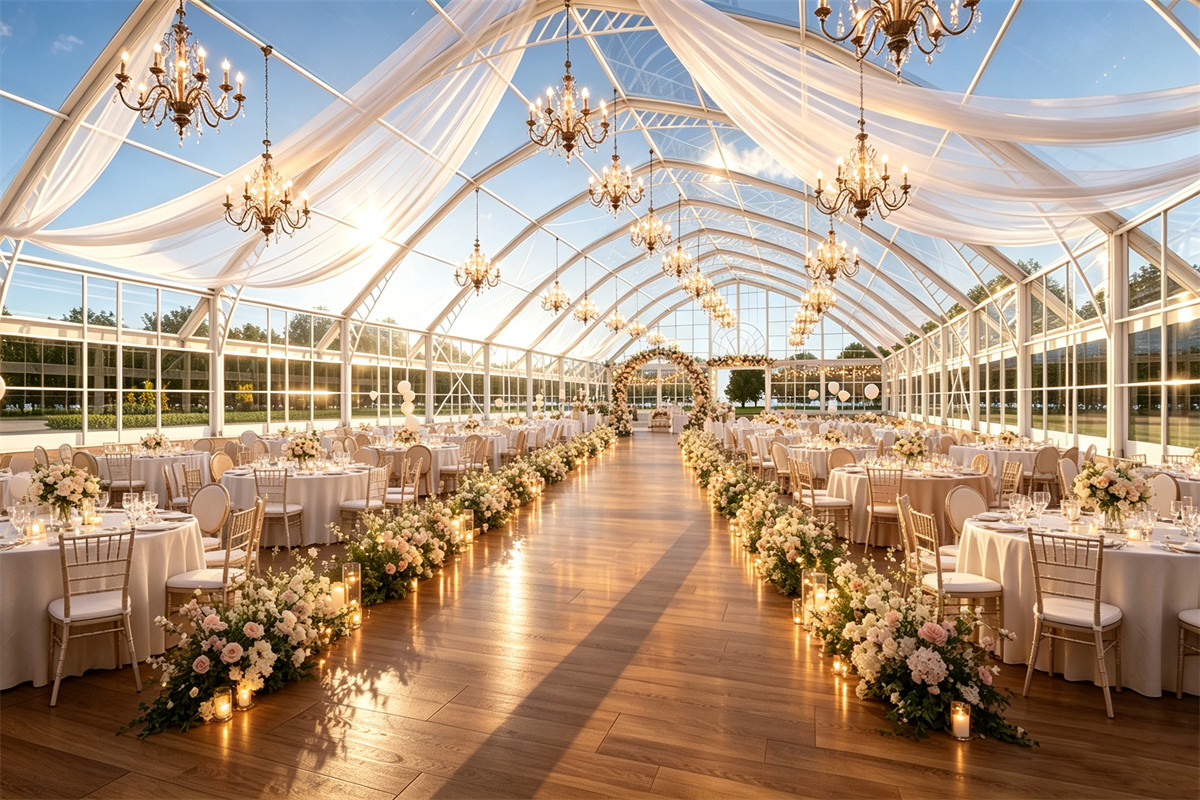
Structure tents are deployed across a broad set of industries, each with specific operational demands:
- Events & Exhibitions: Used for exhibition halls, trade shows, and pavilions. Requires high-traffic layouts, LED lighting, branding installations, and air conditioning. Quick installation and optional glass walls enable a premium aesthetic.
- Wedding & Hospitality: Designed for wedding ceremonies, banquets, and VIP receptions. Optional equipment includes glass walls, flooring, chandeliers, lining, and HVAC. All-weather capability and fire-retardant materials are standard.
- Warehouse & Logistics: Applied as temporary warehouses, distribution centers, and storage shelters. Functioning under high temperature (up to 70°C), rainproof, and dustproof conditions, the tents support inventory storage and cargo protection. Supporting equipment includes roller doors, ventilation fans, insulated panels, and loading docks.
- Aviation: Used for aircraft hangars and MRO facilities. Large hangar doors, lighting, ventilation, and crane support are integrated. The clear span allows unobstructed access for aircraft storage, maintenance, and inspection.
- Sports Facilities: Covers tennis courts, basketball halls, and swimming pools. The structure meets fire-retardant standards (DIN 4102 B1, M2, NFPA 701) and can be equipped with sports flooring, grandstands, scoreboards, and HVAC. All-weather operation in large open spaces is a key requirement.
- Automotive: Used for vehicle workshops, showrooms, and temporary dealerships. Vehicle access doors, glass walls, and LED lighting are typical. The structure supports vehicle display and maintenance in temporary or semi-permanent mode.
Market Trend Analysis: Drivers and Standards
The aluminum frame structure tent market is growing due to the convergence of three trends: (1) the demand for rapid event infrastructure post-pandemic, (2) the need for cost-effective industrial storage amid supply-chain volatility, and (3) increasing adoption of modular and relocatable architecture. In Europe, EN 13782:2015 provides a uniform safety baseline for temporary structures, while NFPA 701 governs fire safety in North America. These standards raise the entry bar for manufacturers and favor suppliers with certified engineering and production processes.
China remains the dominant production hub, exporting over half of the world’s tents. However, buyers are increasingly scrutinizing not just price but also engineering documentation, load certifications, and after-sales support — a shift that benefits established manufacturers with verifiable track records.
Comparison with Traditional Solutions
Compared to conventional steel-frame buildings or permanent concrete construction, aluminum structure tents offer faster deployment (days vs. months), lower material and foundation costs, and full reusability. They are especially advantageous for seasonal events, temporary storage needs, or phased projects where capital must be conserved.
One honest limitation: The service life of the PVC fabric envelope (8–15 years) is shorter than a permanent building’s lifespan. While the aluminum frame lasts over 20 years, long-term thermal insulation and acoustic performance are generally lower than a fully insulated permanent structure unless upgraded with sandwich panels and additional cladding. For climate-controlled permanent storage, a hybrid approach — combining the tent frame with insulated wall and roof panels — is recommended.
Future Outlook
As engineering materials and coatings improve, the gap between temporary and permanent structures will continue to narrow. Smart integration — solar-ready roof fabrics, embedded IoT for structural monitoring, and modular expansion protocols — will become standard features. Manufacturers that invest in R&D and maintain global certification portfolios are positioned to lead, particularly as government and commercial buyers demand traceable compliance with codes such as IBC 2024, ASCE 7-22, and EN 13782.
Frequently Asked Questions
Q: What maximum wind speed can a KENTEN structure tent withstand?A: The standard configuration is rated for wind loads up to 140 km/h. Custom engineering can increase this threshold for specific project locations.
Q: What fire safety standards do the fabric covers meet?
A: The PVC-coated polyester fabric complies with DIN 4102 B1, M2, and NFPA 701 flame retardant standards, making it suitable for event and industrial applications.
Q: Can a structure tent be used in heavy snow regions?
A: Yes. The Structure Tent supports snow loads up to 0.5 kN/m², and the Warehouse Tent supports up to 75 kg/m². Higher loads can be designed upon request.
Q: How long does it take to install a structure tent?
A: Installation time depends on size and complexity, but the modular frame system uses 5 m bay spacing and ground anchors or ballast, enabling rapid assembly — typically a few days for medium-span structures.
Q: What is the expected lifespan of a KENTEN structure tent?
A: The aluminum alloy frame maintains structural integrity for over 20 years. The PVC fabric cover typically lasts 8–15 years under normal exposure conditions and can be replaced independently.
For detailed specifications, load charts, and project reference files, KENTEN provides a comprehensive catalog available for download:
Have Questions or Need More Details?
Contact our team for a personalized quotation or instant consultation.
Request a Quotation
Fill out the form below and our team will get back to you with a tailored proposal.
WhatsApp Direct Chat
Prefer to chat in real-time? Message us on WhatsApp for instant assistance & quick answers.
- Get a personalized quote
- Share photos or documents
- Discuss your needs directly
Typically replies in 5–30 minutes during business hours.