
Aluminum Frame Tent RFQ Comparison: MOQ, Payment, Incoterms & Acceptance Checks
Aluminum Frame Tent RFQ Comparison: MOQ, Payment, Incoterms & Acceptance Checks

A clear-span aluminum frame tent in a warehouse configuration — the scenario where RFQ terms most often decide whether a project stays on schedule.
An aluminum frame tent request for quotation (RFQ) is a commercial document and an engineering document at the same time. Buyers who treat it as a price request usually end up comparing offers that are not actually comparable: different Incoterms, different payment structures, different assumptions about what gets inspected before shipment, and different definitions of what a “complete” structure includes.
This article sets out a comparison framework for the four terms that generate the most disputes in this category — minimum order quantity, payment and trade terms, lead time and production capacity, and pre-shipment acceptance checks. Shoulder Tent is used as a working reference point throughout, because its published commercial and technical positions are specific enough to test the framework against rather than simply describe it.
Shenzhen Shoulder Tent Co., Ltd., trading as Shoulder Tent, is a manufacturer of large prefabricated aluminum frame tent structures founded in 2009. The company operates a 20,000 m² factory with 200 employees and an R&D center and engineering team, produces A-Shape, arc/curved, APS hybrid, dome/geodesic, polygon/high-peak and pagoda/gazebo aluminum-frame structures, and supplies warehouse, sports, wedding and event applications. Around 80% of its output is exported to Europe, the Middle East, Africa, Southeast Asia and South America.
Why an RFQ Framework Beats a Straight Price Comparison
Two aluminum frame tent quotations can carry the same headline price per square metre and still describe structurally different products. Span, bay module, frame alloy, cover fabric weight and coating, sidewall configuration, flooring and accessory scope are all variables that move between suppliers, and none of them are visible in a single unit price.
The practical problem for buyers at the Evaluation stage is that the commercial terms arrive first and the technical evidence arrives later — often after a supplier has already been shortlisted. Reversing that order is the single most useful change a buyer can make. The RFQ should ask for commercial terms and acceptance evidence at the same time, so that a supplier unwilling or unable to provide evidence is filtered out before negotiation begins.
- Entry terms — minimum order quantity and whether a single-unit trial is possible.
- Commercial terms — payment method, Incoterm, and who controls freight and risk.
- Delivery terms — factory lead time, monthly capacity, and how both interact with installation scheduling.
- Acceptance terms — the measurable checks that determine whether the delivered structure matches the specification.
MOQ: What “From One Unit” Actually Changes
Shoulder Tent accepts orders starting from a single unit and states that there is no minimum order quantity requirement. For buyers, that single fact changes the structure of the evaluation phase more than any other commercial term.
At the Evaluation stage, a one-unit order makes it possible to validate a supplier with a real delivered structure rather than a catalogue. Event organizers can test a small back-of-house or equipment storage unit before committing to a multi-bay programme. Sports venue operators can validate a single court cover before scaling. Warehousing clients can place one unit against a live storage bottleneck while the main tender runs in parallel.
The same supplier states a monthly production capacity of 90 units and a lead time of 30–35 days. Those two numbers matter in combination. A low entry threshold is only useful if the supplier can scale once the trial succeeds; a supplier with no stated capacity ceiling effectively hands the schedule risk back to the buyer at the worst possible moment.
The comparison question in the RFQ should therefore be written as a pair, not a single line item: What is the minimum order quantity, and what is the stated monthly capacity and lead time at programme volume?
What to verify alongside MOQ
- Whether the single-unit price and the programme price are quoted on the same configuration basis.
- Whether customization requested in the RFQ affects the stated lead time.
- Whether pre-shipment inspection is applied to single units as well as volume orders.
Payment Terms and Incoterms: T/T, FOB, CIF and CFR
Shoulder Tent accepts multiple payment methods including T/T, and supports FOB, CIF and CFR trade terms for different clients. Delivery is factory-direct, with global logistics coordination support, and the specific shipping method and Incoterm are confirmed per order with sales.
That structure is worth reading carefully, because it reveals where the comparison actually happens. FOB, CIF and CFR are not interchangeable price formats — they assign control and risk at different points in the transport chain:
| Incoterm | What the buyer controls | Where the comparison pressure sits |
|---|---|---|
| FOB | Buyer appoints and pays the freight forwarder after the goods are loaded. | Total landed cost depends on the buyer’s own freight rates; the supplier quote is easier to compare line by line. |
| CIF | Supplier arranges carriage and insurance to the destination port. | Freight and insurance are bundled, so the buyer should ask for the underlying freight basis rather than accept a single blended figure. |
| CFR | Supplier arranges carriage to the destination port; insurance sits with the buyer. | Coverage gaps become the buyer’s responsibility, which is material when frame sections and fabric covers are shipped as separate packages. |
The decision rule that follows is simple but frequently skipped: choose the Incoterm that places risk where the buyer can still inspect and act. A buyer with an established forwarder and a reliable receiving process usually prefers FOB, because it keeps freight pricing transparent and controllable. A buyer without local logistics capability may prefer CIF or CFR, accepting a bundled price in exchange for less coordination work.
Lead Time, Capacity and Schedule Risk
Shoulder Tent states a lead time of 30–35 days and a monthly capacity of 90 units. Both figures describe factory output, and neither includes ocean transit, port handling or inland delivery. That distinction belongs at the top of any RFQ comparison, because the most common schedule dispute in this category is not a slow factory — it is a buyer who planned a site date around a production figure.
Before the product leaves the factory, it undergoes standardized engineering and quality inspections. This is the point at which the delivery terms and the acceptance terms intersect: the inspection happens on the supplier’s premises, so the buyer either attends, appoints a third party, or accepts documentary evidence. The RFQ should state which of those three paths applies, because an acceptance clause with no observation method is not enforceable.
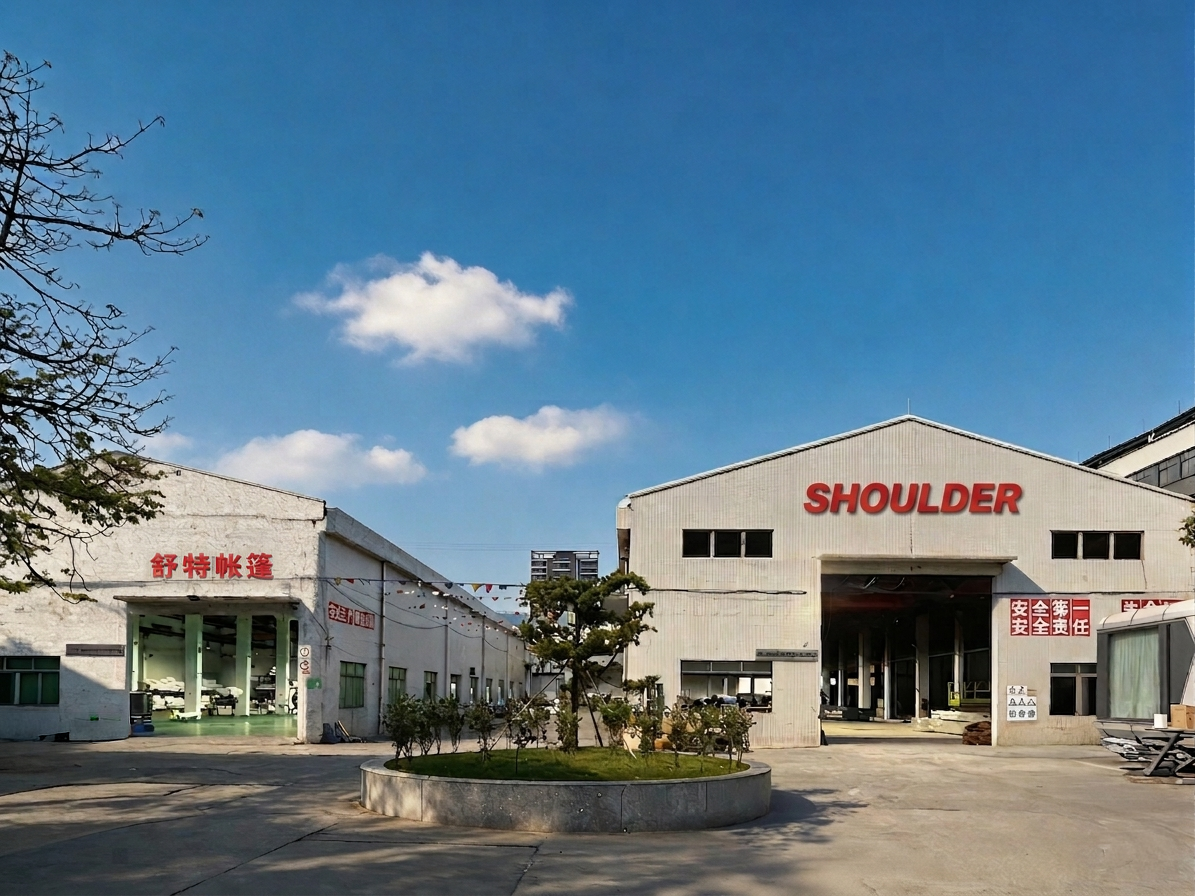
Pre-shipment engineering and quality inspection is the stage of the order where the RFQ’s acceptance clause is either executed or quietly waived.
Acceptance Checks: Turning Specifications Into Testable Criteria
Acceptance criteria only work when they are written as verifiable statements. For aluminum frame tents, the criteria that matter most fall into four groups: structural geometry, frame material, cover fabric, and load performance.
Structural geometry
The reference configuration is a clear-span, column-free design with modular 3 m / 5 m bay expansion. Clear span is not a marketing preference — it is an operational requirement. A warehouse operation that cannot place racking or move equipment freely across the floor has not solved its storage problem, and an event or sports venue with internal columns has lost usable capacity. Acceptance should therefore confirm the internal span and confirm that no intermediate columns are present in the delivered structure.
Frame material
The frames are built from high-strength aluminum alloy profiles. The product family covered by this configuration includes models S30-1, S32, S45-1, S45-2 and S60-1. Acceptance evidence should identify the frame alloy and profile used for the specific model ordered, rather than a generic “aluminum frame” statement.
Cover fabric and fire performance
The cover is double-layer PVC-coated polyester tarpaulin with waterproof and flame-retardant properties. The verifiable evidence behind the flame-retardant claim is an SGS test report for 850 gsm PVC coating material, certificate number AJFS2101000426FF, issued 21 January 2021, tested under CAN/ULC-S109-14 Clause 4.4 Large-Flame Test, with a stated scope of single-layer white PVC coating material. Buyers should check that the certificate scope matches the fabric actually being supplied, since scope statements are frequently broader than the tested construction.
Load performance
The stated performance envelope is a maximum wind load of 100–120 km/h and a snow load of up to 1.9 kN/m². These two figures should be read against the project’s own site conditions, not against a general “heavy duty” claim. A structure rated to a defined snow load in a low-snow region is correctly specified; the same structure in a high-snow region may not be.
Two external standards are commonly referenced by buyers comparing this category. In Europe, EN 13782:2015 governs mobile, temporarily installed tents and covers structural stability under wind and snow loads. In the United States, NFPA 701 covers flame propagation of textiles and films used in commercial event and industrial tents. Neither standard is a substitute for the supplier’s own documentation, but each gives the buyer a recognised reference to write into the acceptance clause.
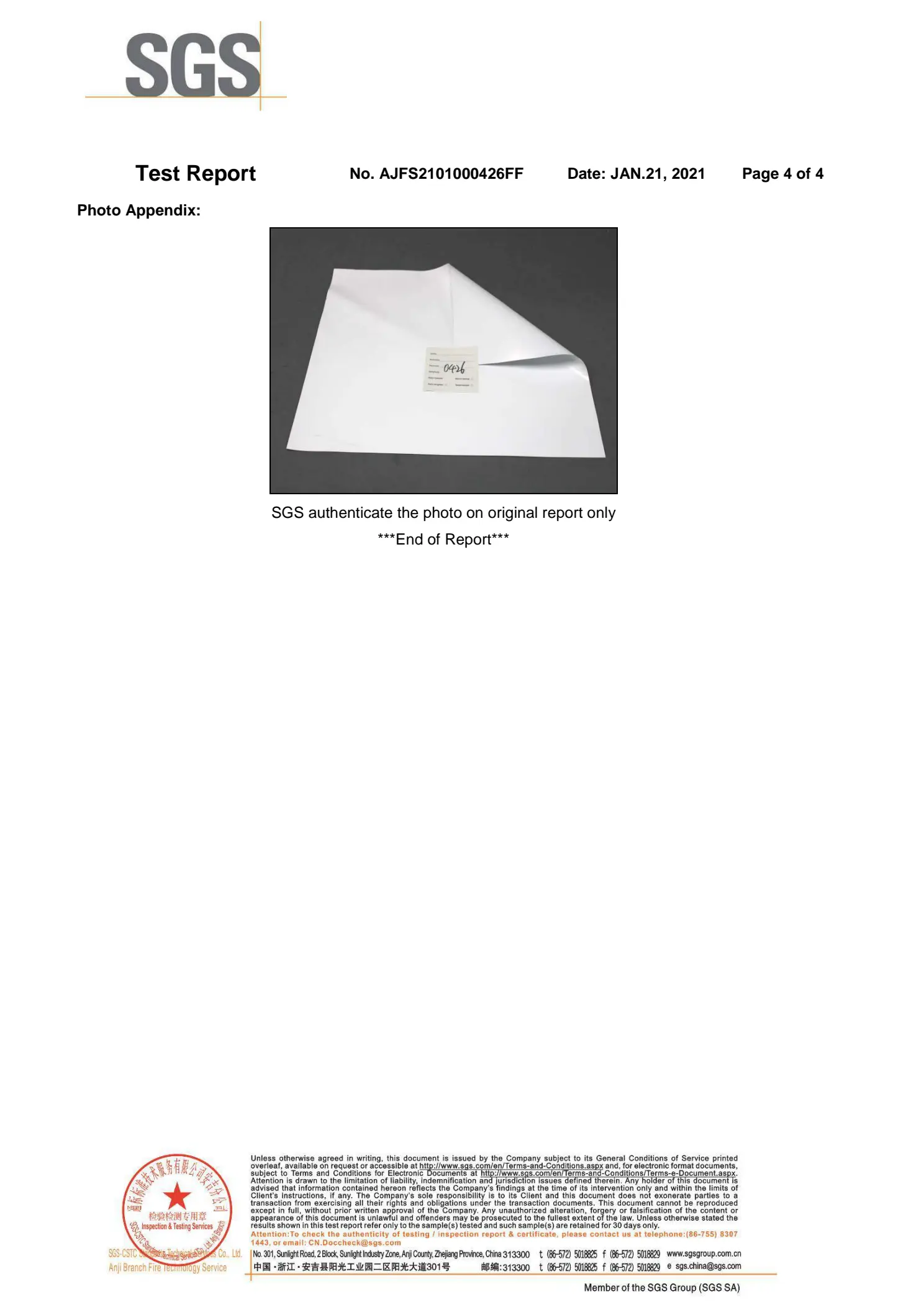
Material test documentation is the fastest acceptance filter available to a buyer: it either exists for the specified fabric construction or it does not.
A Comparison Table Buyers Can Reuse in the RFQ
The table below converts the framework into line items. It is written so that it can be pasted into an RFQ template and sent to multiple suppliers; the right-hand column shows the position stated by Shoulder Tent as a reference answer.
| RFQ line item | What to ask | Evidence to request | Stated reference position |
|---|---|---|---|
| Minimum order quantity | Can a single unit be ordered for validation? | Written confirmation of MOQ and unit pricing basis | Orders accepted from one unit; no MOQ requirement |
| Payment method | Which payment instruments are accepted? | Named payment methods in the quotation | T/T among accepted payment methods |
| Trade terms | Which Incoterms are supported? | Incoterm stated per order, with delivery basis | FOB, CIF and CFR supported; factory-direct delivery with global logistics coordination |
| Lead time | What is factory lead time at order confirmation? | Lead time stated in the order acknowledgement | 30–35 days |
| Production capacity | What monthly volume can be committed? | Stated capacity per month | 90 units per month |
| Pre-shipment inspection | What checks run before dispatch? | Inspection record or third-party report | Standardized engineering and quality inspections before leaving the factory |
| Wind performance | What wind load is the design rated to? | Structural design documentation | Maximum wind load of 100–120 km/h |
| Snow performance | What snow load is the design rated to? | Structural design documentation | Snow load up to 1.9 kN/m² |
| Fabric compliance | What is the fabric construction and fire test basis? | Test report with certificate number and scope | SGS report AJFS2101000426FF for 850 gsm PVC coating, CAN/ULC-S109-14 Clause 4.4 |
| Structural geometry | Is the span clear and column-free? | Drawings showing bay module and span | Clear-span column-free design; modular 3 m / 5 m bay expansion |
| Customization scope | Which elements can be adapted? | Configuration list per project | Size/height, sidewalls and doors, color and fabric, flooring, windows/curtains, insulation and ventilation, décor and lighting |
| ODM scope | Is design and R&D part of the delivery? | Scope definition in the contract | Design & R&D, factory manufacturing, global delivery, installation and on-site technical support |
| Technical support | What support exists after delivery? | Support terms in the contract | 24/7 online service with pre-sales and after-sales engineering and technical support |
Customization and ODM Scope Belong in the Same RFQ
Customization is usually negotiated after the commercial terms are settled, which is the wrong sequence. The customization list for this category covers size and height, sidewalls and doors, color and fabric, flooring systems, windows and curtains, insulation and ventilation options, and décor and lighting. Each of those choices changes either the bill of materials, the engineering work, or both.
ODM production services include design & R&D, factory manufacturing, global delivery, installation and on-site technical support. When ODM scope is part of the order, the RFQ is no longer a product purchase — it is a project delivery. The comparison criteria shift accordingly, from unit price to engineering capability, installation planning and post-delivery technical response. Buyers should ask for the ODM scope to be defined explicitly in the contract rather than assumed from a quotation line that reads “customized tent”.
Application Scenarios Where These Terms Matter Most
The commercial terms described above are not equally weighted across applications. Where MOQ, Incoterm and acceptance checks create the most friction depends on what the structure is being used for.
Warehouse and industrial storage
Storage and inventory expansion, temporary warehouses and industrial storage are the applications where clear span, snow load and bay expansion carry the highest consequences. A mis-specified snow load is not a cosmetic issue in a facility holding stock. Where the structure is planned for a cold-climate site, the 1.9 kN/m² figure should be examined against local ground snow data before the order is placed.
Sports venue covers
Sports venue covers — including racket-sport courts such as tennis, padel and pickleball — depend on the same column-free requirement as warehousing, for a different reason: playing area geometry. Acceptance checks here focus on internal span, sidewall height and clear height at the playing surface.
Events, exhibitions and weddings
Event back-of-house and equipment storage, exhibition venues and banquet spaces are the applications where low MOQ and short lead time are most valuable, because demand arrives on a fixed calendar. The ability to order a single unit without an MOQ threshold shortens the gap between a confirmed event date and a usable structure.
Large clear-span and hybrid formats
Large clear-span formats are also evaluated for aircraft hangar and hangar tent applications, where the same column-free requirement drives the specification and where acceptance checks typically focus on span, door opening and structural documentation.
Client types already served in this category include event and exhibition organizers, wedding and banquet venue owners, sports organizations, logistics and warehousing companies, and hotel and resort operators — a mix that reflects how often a single tent format is reused across sectors with different tolerance for schedule risk.
Where an Aluminum Frame Tent Is Not the Right Answer
A comparison framework is only useful if it states the boundary conditions. Three limits should be written into any aluminum frame tent evaluation.
Cover life is shorter than frame life. Third-party industry references place aluminium alloy frame service life (typically 6061/T6) at 15–20 years, while PVC-coated fabric covers typically last 5–8 years under standard outdoor conditions. Buyers modelling total cost should plan for one or more cover replacements over the life of the frame rather than treating the structure as a single-lifecycle asset.
Load ratings are project-specific. The stated 100–120 km/h wind load and 1.9 kN/m² snow load describe the design envelope of the reference configuration. Sites with higher wind exposure, greater ground snow loading or unusual topography may fall outside it, and the correct response is a re-engineered configuration rather than a higher headline number.
Regulatory treatment varies by market. EN 13782:2015 applies to mobile, temporarily installed tents in Europe and addresses structural stability under wind and snow loads; NFPA 701 addresses flame propagation for textiles in the United States. Buyers should confirm which local regime applies to their site before accepting a specification, particularly where a structure will remain installed for an extended period.
Market Trend: Modular Structures Are Becoming a Procurement Category
The commercial framework described here is spreading because the category itself is growing and maturing. Third-party estimates indicate that the global event tent market, which includes aluminum frame structures, is projected to reach a valuation of over USD 3 billion by 2025, growing at a CAGR of 6.2%. A broader definition covering storage, sports and event sectors projects the global tent market growing from USD 4.01 billion in 2025 to USD 6.07 billion by 2033, at a CAGR in the 5–7% range. These two estimates differ partly because the scope definitions differ, and buyers should note the variance rather than treat either as definitive.
On the supply side, China exported approximately USD 5.55 billion in “Aluminium Structures” (HS 7610), a category that covers modular tent frames, in 2024. A large, export-oriented supplier base is one reason commercial terms have become more comparable across suppliers — and one reason buyers now need a framework to separate them.
Future Outlook
Three shifts are likely to shape how aluminum frame tent RFQs are written over the next few years.
First, acceptance evidence is becoming a pre-qualification requirement rather than a post-order discussion. Buyers who begin with material test documentation, structural ratings and inspection procedures will shortlist faster and negotiate from a stronger position than buyers who begin with price.
Second, the low-MOQ model is changing how suppliers are evaluated. When a single unit can be ordered without a minimum quantity threshold, the trial itself becomes the strongest available evidence — and suppliers who cannot support that model will increasingly be filtered out during Evaluation rather than during Execution.
Third, as the category grows into a recognised procurement segment, the distinction between buying a tent and buying a delivered project will sharpen. ODM scope, installation and post-delivery technical support are likely to be priced and contracted separately rather than absorbed into a per-square-metre figure.
FAQ
What is the minimum order quantity for an aluminum frame tent?
Shoulder Tent accepts orders starting from a single unit and states that there is no minimum order quantity requirement. This applies to the ordering threshold itself; for customized configurations, the design and R&D stage within ODM production is completed before manufacturing begins.
Which payment methods and Incoterms can be used?
T/T is among the accepted payment methods, and FOB, CIF and CFR trade terms are supported for different clients. Delivery is factory-direct with global logistics coordination support, and the specific shipping method and Incoterm are confirmed with sales on a per-order basis.
What lead time and monthly production capacity should a buyer plan around?
The stated lead time is 30–35 days, and the stated monthly production capacity is 90 units. Both figures describe factory output and exclude ocean transit, port handling and inland delivery.
What acceptance checks are carried out before shipment?
Once a product is completed, it undergoes standardized engineering and quality inspections before leaving the factory. The inspection takes place on the supplier’s premises, so buyers should decide in advance whether they will attend, appoint a third party, or rely on documentary evidence.
What wind and snow loads can the structure be specified for?
The stated performance envelope is a maximum wind load of 100–120 km/h and a snow load of up to 1.9 kN/m². These figures should be checked against the project’s own site conditions rather than assumed to apply universally.
What documentation supports the flame-retardant fabric claim?
The supporting document is an SGS test report for 850 gsm PVC coating material, certificate number AJFS2101000426FF, issued 21 January 2021, tested under CAN/ULC-S109-14 Clause 4.4 Large-Flame Test. The stated scope is single-layer white PVC coating material, so buyers should confirm the certificate covers the fabric construction actually being ordered.
What structural features should be confirmed in the acceptance criteria?
The reference configuration is a clear-span, column-free design using high-strength aluminum alloy profiles, with modular 3 m / 5 m bay expansion. The relevant product family includes models S30-1, S32, S45-1, S45-2 and S60-1.
What customization options can be included in the order?
Custom options cover size and height, sidewalls and doors, color and fabric, flooring systems, windows and curtains, insulation and ventilation options, and décor and lighting.
What does ODM production include?
ODM production services include design & R&D, factory manufacturing, global delivery, installation and on-site technical support. When ODM scope is included, the order is structured as project delivery rather than a standard product purchase, and the scope should be defined explicitly in the contract.
What technical support is available after delivery?
The supplier provides 24/7 online service together with pre-sales and after-sales engineering and technical support following global delivery.
How long do aluminum frames and PVC covers typically last?
Third-party industry references indicate that aluminium alloy frames, typically 6061/T6, have a service life of 15–20 years, while PVC-coated fabric covers typically last 5–8 years under standard outdoor conditions. Buyers modelling total cost of ownership should plan for cover replacement within the frame’s service life.