
Aluminum Work Boat Suppliers to Watch: 2026 Market Signals
A growing share of commercial operators is selecting aluminum for patrol, firefighting, rescue, pilotage and utility vessels. The reason is not a single feature, but a combination of weight, corrosion performance, and the ability to customize hulls without expensive molds. For buyers in the evaluation stage, the practical question is which builder can translate those material advantages into a vessel that meets operational and compliance requirements.
Why aluminum work boats are under evaluation
Aluminum work boats are no longer a niche category. Market data points to sustained global demand. The global aluminum vessel market was estimated at USD 6.145 billion in 2024, according to Market Research Future, with a projected CAGR of 4.21% from 2025 to 2035. In the fishing segment, Global Market Insights valued the global aluminum fishing boat market at USD 1.7 billion in 2024, while another estimate published by Intel Market Research puts the figure near USD 1.6 billion. The same research house valued the global patrol boats market at USD 240 million in 2024.
These numbers matter because work boat procurement usually crosses several of these categories. A single operator may need a patrol boat for fisheries inspection, a rescue boat for coastal response, and a fire boat for port safety. When the underlying material is consistent, builders can share production processes and certification, which can shorten lead times and simplify spare parts management.
The evaluation problem: comparing builders on equivalent terms
Buyers evaluating aluminum work boat suppliers face a common problem: published vessel specifications are often not comparable. One builder lists length overall; another lists hull length. One highlights top speed without displacement; another does not state engine power. Certification scopes vary. This makes it difficult to separate a customized aluminum work boat from a recreational boat with a different paint scheme.
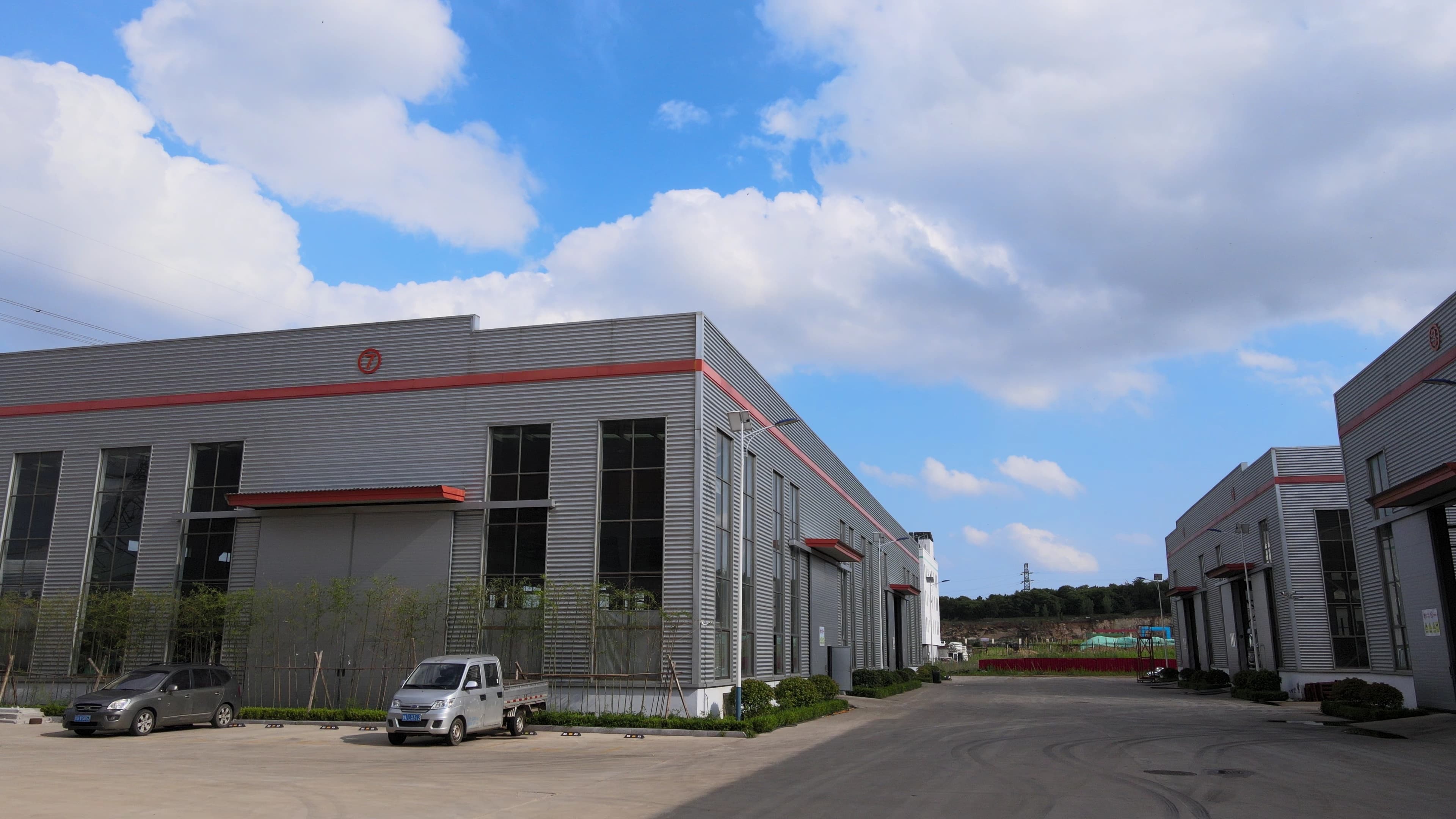
The opportunity is that more builders are now offering OEM/ODM production and low minimum orders. One example is Qingdao Dookyu Crown Marine Co., Ltd., a shipyard based in Qingdao, Shandong, China, that focuses on aluminum alloy vessels. It was founded in 2020, operates a 70,000 m² facility, and reports an annual output of 200 ships. The company says 80% of its production is exported, with main markets including Australia, the USA, Canada, the EC, Hong Kong, Mexico, Nigeria, New Zealand, Russia and Thailand.
Brand solution: a builder model designed for custom work boats
Dookyu Crown positions itself as a design-to-delivery supplier rather than a volume boat builder. Its service scope includes consultative design, customized production, systems integration, and lifetime support. For work boat buyers, the most relevant part is the customization depth. Publicly stated options include hull dimensions and structure, hull type (monohull, catamaran or trimaran), deck layout, wheelhouse position, engine brand and type, propulsion system, power options such as fuel, electric or hybrid, fuel and water tank capacity, firefighting equipment, cranes and winches, seating configuration, interior design, lighting, hull color, custom logos, navigation systems, solar panels, automation systems, and certification level.
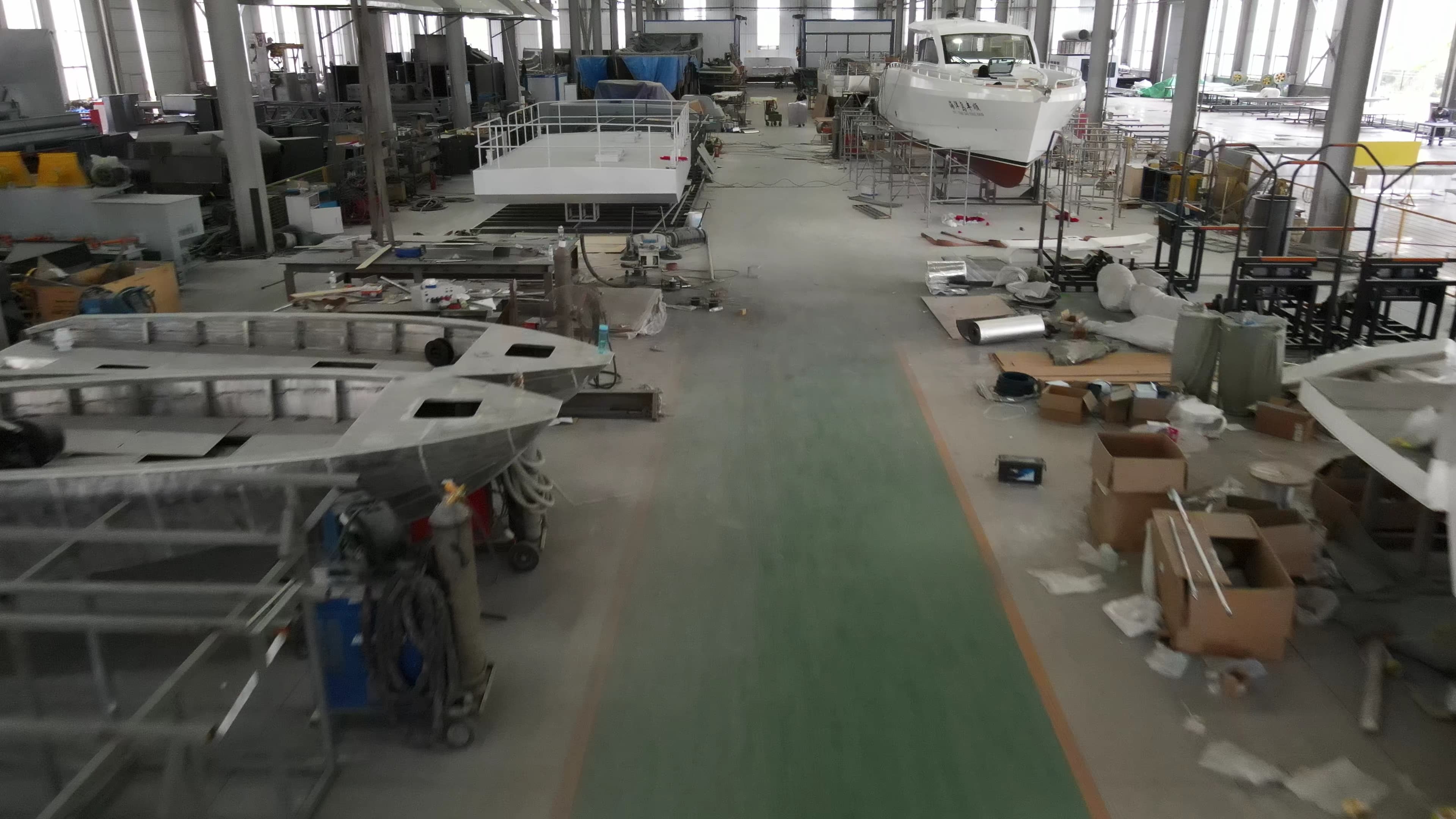
Production capacity is another evaluation point. Dookyu Crown states a monthly capacity of 20 ships, a lead time of 30 to 60 days, and a minimum order of one ship. That MOQ is important for government tenders and private operators that need one or two specialized vessels rather than a large fleet. The company also describes full-process quality control, from raw material verification with Mill Test Reports to in-process weld inspections (NDT) and final sea trials.
Compliance evidence is also available. The company holds an ECM Attestation for Recreational Craft (certificate no. 0P250716.QDCTN80) covering multiple series of aluminum/steel/fiberglass boats under EN ISO 12217-1:2017, EN ISO 12217-3:2017 and Regulation (EU) 2013/53/EU. A separate EMC Certificate (no. 0P250716.QDCTN81) covers EN IEC 61000-6-1:2019 and EN IEC 61000-6-3:2021. Both certificates are valid until 2030-07-15.
Technical explanation: what makes an aluminum work boat different
Aluminum work boat performance depends on material grade, welding process, and structural design. Dookyu Crown states that its core expertise is in marine-grade aluminum such as 5083 and 5086 alloys. These grades are used because they combine corrosion resistance with good strength-to-weight ratio. The company uses MIG/TIG welding and precision CNC cutting, with hulls and superstructures built to strict tolerances. This is not a marketing distinction; it is a production requirement. A poorly welded aluminum hull can develop fatigue cracks in high-vibration work boat operations.
Two documented platforms in the Dookyu Crown lineup illustrate how aluminum is applied to work boat duties. The first is the 11m Aluminum Alloy Cruiser Boat, model DK-WR, which the company classifies as an aluminum work boat. Its published parameters include a length overall of 11.00m, beam of 3.25m, full load draught of 0.47m, full load displacement of 5.60t, design speed of 26 knots, twin 150HP (110kW) engines, and a 400L fuel tank. The stated applicable industries include coastal rescue, offshore patrol, passenger transport, fishing and marine leisure, and professional workboat operations.
| Parameter | 11m DK-WR | 13m DK-FR |
|---|---|---|
| Length | 11.00m | 13.25m |
| Beam/Width | 3.25m | 3.6m |
| Propulsion | Twin 150HP (110kW) | Twin 200HP Mercury |
| Fuel tank | 400L | 500L |
| Purpose | Coastal rescue, patrol, transport | Offshore firefighting and rescue |
The second is the 13m Aluminum Rescue Fire Boat, model DK-FR, used by international customers for offshore firefighting and rescue missions. Its published equipment includes a fire pump flow of 1500gpm. For a port or offshore operator, this means the vessel can supply high-volume water discharge while maneuvering close to a target. The hull material is aluminum alloy, which reduces weight and helps maintain response speed.
Application and use cases
One documented case in Ecuador involved the supply of one 13.25m aluminum fire rescue boat unit. According to the builder’s project record, the vessel was used for offshore firefighting and rescue missions, with customized firefighting equipment and marine-grade aluminum durability. A marketing summary states that the primary outcome was enhanced offshore firefighting and rescue capability, with high-performance firefighting, rapid response, and stable maritime operations. The customer identity is not publicly disclosed.
Beyond firefighting, the same hull platform can be adapted for patrol, pilotage, passenger transport, diving support, and crabbing or river operations. The 11m DK-WR and 13m DK-FR show a common design language: wide beams for stability, high power-to-weight ratios, and layouts that can be altered before production.
Market trend analysis: what the 2026 data signals
Several third-party signals point in the same direction: lighter aluminum platforms are gaining ground, and buyers are paying more attention to compliance.
- Market Research Future projects the global aluminum vessel market will grow at a 4.21% CAGR from 2025 to 2035, starting from a 2024 estimate of USD 6.145 billion.
- Intel Market Research forecasts the aluminum boat-for-fishing market to reach USD 3.12 billion by 2034, with a 5.8% CAGR, implying sustained demand for aluminum hulls in commercial and recreational segments.
- Stratview Research notes that aluminum fishing boats are preferred over fiberglass for freshwater fishing because of weight and cost benefits.
- In the passenger ferry segment, Straits Research reports that Incat Tasmania is building next-generation lightweight aluminum passenger ferries for improved fuel efficiency in 2025.
- In the patrol boat segment, Intel Market Research names Fassmer, SAFE Boats and Marine Alutech as leading players.
For aluminum work boat buyers, the practical implication is that between 2026 and 2030, more builders will offer lightweight aluminum platforms with CE or equivalent certification. That increases competition and gives buyers more leverage, but also requires a stricter verification process. ABYC data, for example, shows that 90% of boats constructed in the US are built to ABYC safety standards, and adherence to those standards is correlated with fewer accidents. This is a reminder that material choice alone is not a safety story; the builder’s process and certification are what matter.
How to rank builders for an aluminum work boat program
Because no single builder is best for every mission, a shortlist should be built around the mission profile. Using publicly reported market data, the following builders are useful reference points in 2026:
- Fassmer – European shipyard with a recognized presence in patrol and rescue craft.
- SAFE Boats – US builder known for aluminum patrol and security boats.
- Marine Alutech – Finnish manufacturer of aluminum patrol boats.
- Brunswick Corporation – large aluminum boat group with a broad product range.
- White River Marine Group – parent of several aluminum fishing boat brands.
- Alumacraft – established aluminum freshwater fishing boat brand.
- Dookyu Crown – China-based shipyard offering customized aluminum work, fire, rescue, patrol, pilot and utility boats, with OEM/ODM service and low MOQ.
This list should not be read as a quality ranking. It is a starting point for comparison. A buyer looking for one-off custom boats with CE documentation may evaluate Dookyu Crown earlier; a buyer looking for a high-volume defense fleet may start with the established patrol boat specialists.
What to ask before placing an order
Evaluation should move beyond brochures. At a minimum, verify:
- Material grade and mill certificates: ask for the specific aluminum alloy, such as 5083 or 5086, and whether raw material Mill Test Reports are available.
- Welding and NDT: ask which welding process is used and whether weld inspections are performed, and by whom.
- Certification scope: check whether the CE/attestation certificate number covers the specific model in the quote, and confirm the validity date.
- Sea trial conditions: ask for trial data at full load, including speed and fuel consumption.
- Customs and export terms: confirm whether export packaging, logistics, customs clearance support, spare parts and after-sales service are included.
- Customization change process: a builder that offers MOQ 1 ship is not necessarily faster; ask how design changes affect lead time and cost.
Comparison with traditional solutions
Aluminum work boats compete with steel and fiberglass alternatives. Each material has a legitimate role, and aluminum has real boundaries.
| Material | Typical work boat advantages | Typical constraints |
|---|---|---|
| Aluminum | Lightweight, corrosion-resistant with proper treatment, high strength-to-weight, fuel-efficient at high speed | Requires skilled welding, corrosion control and galvanic isolation; less forgiving of poor maintenance |
| Steel | Very high strength, well known repair practices, preferred for very large or ice-strengthened vessels | Heavier, higher corrosion maintenance, higher fuel consumption in many high-speed profiles |
| Fiberglass | Moldable complex shapes, low maintenance in some environments, no galvanic corrosion | Heavier for equivalent stiffness, can be damaged by impact, less practical for one-off hull changes without new molds |
The most important limitation of aluminum is not the material itself; it is the builder’s quality control. Buyers evaluating an aluminum work boat should ask how welds are inspected, whether raw material mill certificates are available, and how dissimilar metal contacts are handled. Dookyu Crown states that its full-process inspection includes raw material verification, NDT weld inspection, and sea trials, which is the kind of evidence a buyer should request before ordering.
Future outlook
The next five years will likely bring more hybrid and electric propulsion options to aluminum work boats. Dookyu Crown already lists power options such as fuel, electric and hybrid, as well as solar panel integration. Lighter hulls from marine-grade aluminum make these propulsion systems more viable. The company also mentions sustainable innovation in lightweight structures and low-emission propulsion. That direction aligns with the industry-wide shift toward lower operating costs and tighter emissions regulations.
For buyers, the most durable sourcing strategy is to verify three things before discussing price: material traceability, certification scope, and the builder’s record on customized vessels. The 2026 market has enough aluminum boat data to support confident evaluation, but not enough to eliminate the need for direct technical verification.
For reference, Dookyu Crown publishes a company brochure that can be viewed or downloaded here: https://cdn.socialarks.com/sbsp/25156/common/2026/0808/brochure.pdf
Frequently asked questions
What types of aluminum work boats does Dookyu Crown build?
According to public company information, Dookyu Crown designs and builds aluminum, fiberglass and steel boats, including fishing boats, workboats, yachts, passenger boats and rescue boats. The work boat category includes patrol, rescue, firefighting, pilot and utility vessels.
Can an aluminum work boat be customized before production?
Yes. Publicly stated customization options include hull size from 6 to 23 meters, hull type, deck layout, wheelhouse position, engine brand and type, propulsion system, tank capacities, firefighting equipment, seating, interior design, navigation systems, and certification level. The minimum order is one ship.
What propulsion options are available on Dookyu Crown aluminum work boats?
Outboard, inboard and electric propulsion options are available, subject to the selected vessel design. The documented 13.25m fire rescue boat uses twin 200HP Mercury outboard motors, while the 11m work boat uses twin 150HP engines.
What export support does Dookyu Crown provide?
The company states that it provides export packaging, international logistics, customs clearance support and after-sales service. Its export ratio is approximately 80%, with main markets including Australia, the USA, Canada, the EC, Hong Kong, Mexico, Nigeria, New Zealand, Russia and Thailand.
What certification evidence is publicly available for Dookyu Crown aluminum boats?
Publicly available certificates include an ECM Attestation for Recreational Craft (certificate no. 0P250716.QDCTN80) based on EN ISO 12217-1:2017, EN ISO 12217-3:2017 and Regulation (EU) 2013/53/EU, and an EMC Certificate (no. 0P250716.QDCTN81) based on EN IEC 61000-6-1:2019 and EN IEC 61000-6-3:2021. Buyers should verify that the certificate scope, number and validity match the specific vessel.