
Ambient vs Frozen Canned Fish: A Buyer Decision Framework
Ambient vs Frozen Canned Fish: A Buyer Decision Framework
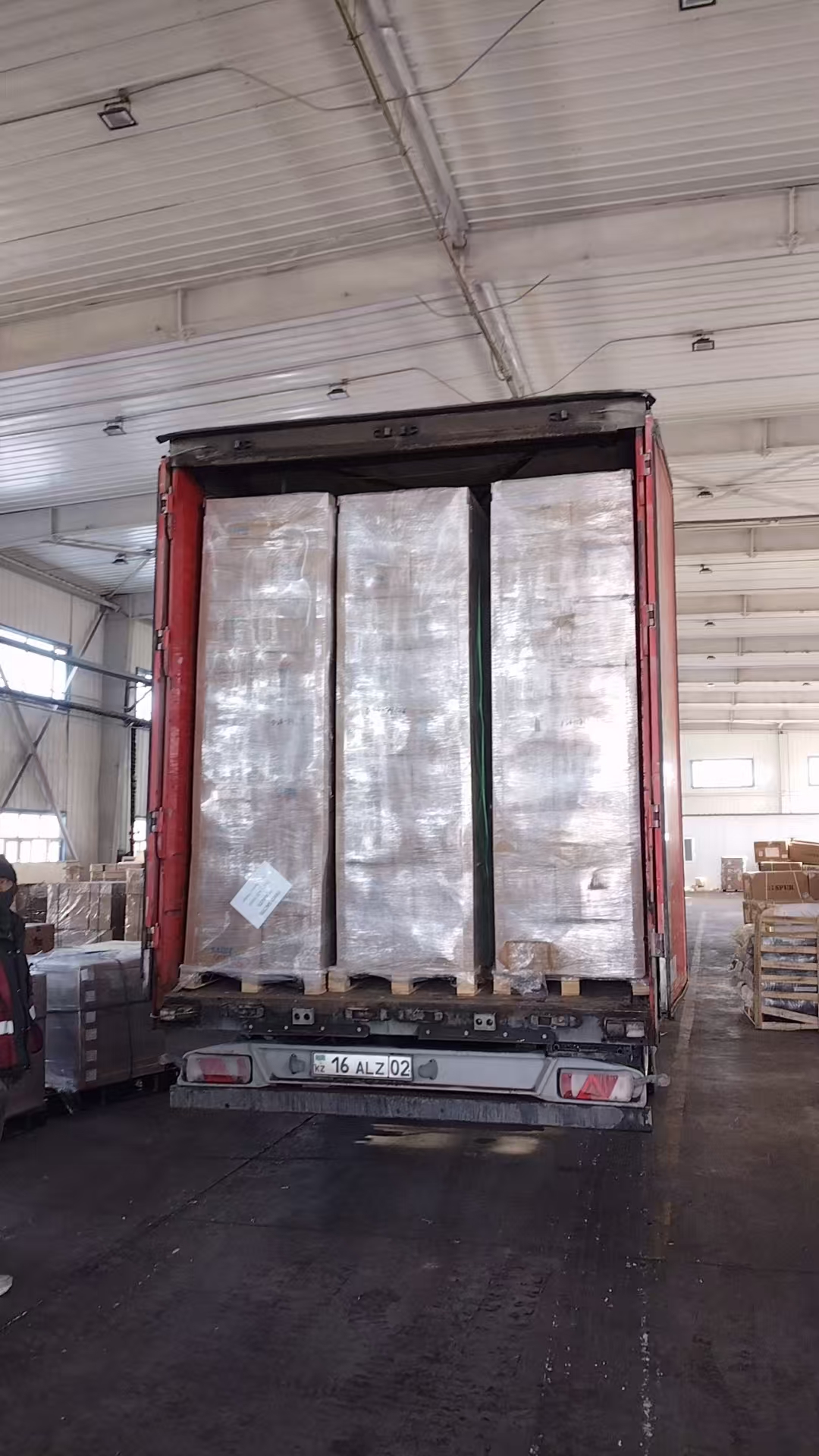
Container architecture — mixed shelf-stable SKUs, date coding and fill rate — belongs inside the sourcing decision, not after it.
The buyer decision framework for canned fish versus frozen food rests on four gates: the packaging format and the cold chain it requires, shelf life against the buyer's reorder cycle, loss rate and landed cost, and whether certification and container mix can be verified down to the exact SKU. On the verified figures, ambient canned fish carries 24–36 months of ambient shelf life against 12–18 months for frozen food at −18°C, a loss rate below 1% against 5%–10%, and no cold-chain premium — while frozen food adds 25%–40% to landed cost through reefer freight and cold storage.
None of that makes ambient the automatic answer. Frozen food keeps a texture advantage and remains the better fit for developed markets with a complete cold chain, HORECA channels and texture-sensitive products. What follows is a framework for a buyer at decision stage: which dimension actually settles the case for a given market, and what documentary evidence to demand before an order is placed.
Why the Format Decision Has to Come Before Supplier Selection
Canned fish is a deep, well-documented category. UN Comtrade and FAO-derived trade data put global imports of canned and prepared fish under HS 1604 at 3.2 million tonnes worth USD 17.54 billion in 2023, and canned tuna alone accounts for 43% of global canned fish import volume. Grand View Research attributes 75.3% of the canned seafood market to the canned fish segment. For a buyer, these figures establish that supply depth exists across species and origins. They say nothing about whether a specific buyer should stock ambient or frozen.
Published market valuations should be read with the same discipline. Fortune Business Insights places the global canned seafood market at USD 57.69 billion in 2025; Grand View Research's corresponding figure is materially lower, at USD 37.20 billion. The gap reflects definitional boundaries — «canned» versus «processed and packaged» — rather than a market event. A category valuation is context, not an input to a supplier decision.
The sequence that survives contact with real sourcing is: format, then the destination market's cold-chain reality, then certification scope, then container and order architecture, then supplier capability. Reversing that order creates a predictable problem. A supplier gets evaluated on price and samples before anyone has established whether the destination can support the format at all. A frozen programme without a verified cold store and reefer delivery is not a cheaper option; it is a loss rate waiting to be realised.
The Seven Dimensions Side by Side
The comparison below uses the dimensions that change a purchase decision. Every figure is drawn from the verified comparison data for this article; none is a projection.
| Dimension | Ambient canned fish | Frozen food | What it changes for the buyer |
|---|---|---|---|
| Packaging format | Hermetically sealed tinplate can; three-piece construction where high-pressure sterilization is required, two-piece where the process allows | Carton, bag or vacuum pack held at −18°C | Warehouse type, handling equipment and inspection routine |
| Cold-chain dependency | None after production; zero energy in storage and transport | Continuous refrigeration from blast freezing to delivery | Every break in the chain converts into product loss |
| Shelf life | 24–36 months at ambient temperature | 12–18 months at −18°C | Reorder cycle, stockpiling room, working-capital shape |
| Loss rate | Below 1% | 5%–10% | Feeds directly into the landed-cost model |
| Landed cost | Higher packaging cost, zero cold-chain premium | Lower packaging cost; reefer and cold storage add 25%–40% to landed cost | The premium has to be priced per lane, not assumed |
| Certification scope | BRCGS and Halal scope confirmed to site and SKU | Same scope checks, plus cold-store scope for logistics partners | Scope gaps are a pass/fail gate, not a negotiation point |
| Container and order mix | Mixed shelf-stable SKUs can load together in a dry container | Reefer booking, temperature set-point, time-limited loading and unloading | Per-SKU MOQ, fill rate and booking lead time |
Each figure is a format-level comparison, not a shipment-level guarantee. Loss rates depend on how the buyer receives, stores and rotates stock. Shelf-life ranges move with the pack, the process and the storage regime. The numbers define the shape of the decision; the buyer's own operating conditions set the value inside it.
Shelf Life: 24–36 Months Ambient Against 12–18 Months at −18°C
Canned fish is rated at 24–36 months at ambient temperature. Frozen food is rated at 12–18 months at −18°C. The distinction is not cosmetic: it determines how much inventory a buyer can hold, how often a container must be rebooked, and how much of the balance sheet sits in stock.
Ambient stock frees the buyer from turnover pressure. Canned product needs an ambient warehouse, no special handling, and it supports long-term stockpiling — a practical route to covering seasonal demand, freight volatility or emergency-stock obligations. Frozen product requires the opposite discipline: dedicated cold storage, reefer trucks, continuous temperature monitoring, time-limited loading and unloading, and a high inventory turnover requirement. Where the chain breaks, the product is lost rather than delayed.
Shelf life does not suspend storage discipline for either format. For canned fish, the operating conditions are a cool, dry environment at 5–25°C, relative humidity below 75%, pallets at least 10 cm off the floor and clear of walls, weight-appropriate stacking, first-in-first-out rotation by production date and batch, and weekly inspection for rust, swelling or leakage. Once a can is opened, the remainder is refrigerated and consumed within 24–48 hours, ideally after transfer to a non-metallic container.
Loss Rate: Below 1% Against 5%–10%
Canned fish demonstrates a loss rate below 1%; frozen food runs at 5%–10%. The mechanism behind the difference is process, not marketing. Canned fish is sealed and then sterilized in a retort at 115–121°C under roughly 0.1–0.2 MPa of steam pressure to reach commercial sterility, the point at which pathogens and spoilage organisms capable of growing at ambient temperature, including spores, are destroyed. Low-acid products — most fish, with pH above 4.6 — must be processed at 121°C under pressure, while high-acid products can use lower temperatures. Released batches are typically confirmed by an incubation test at 37°C for 7–10 days.
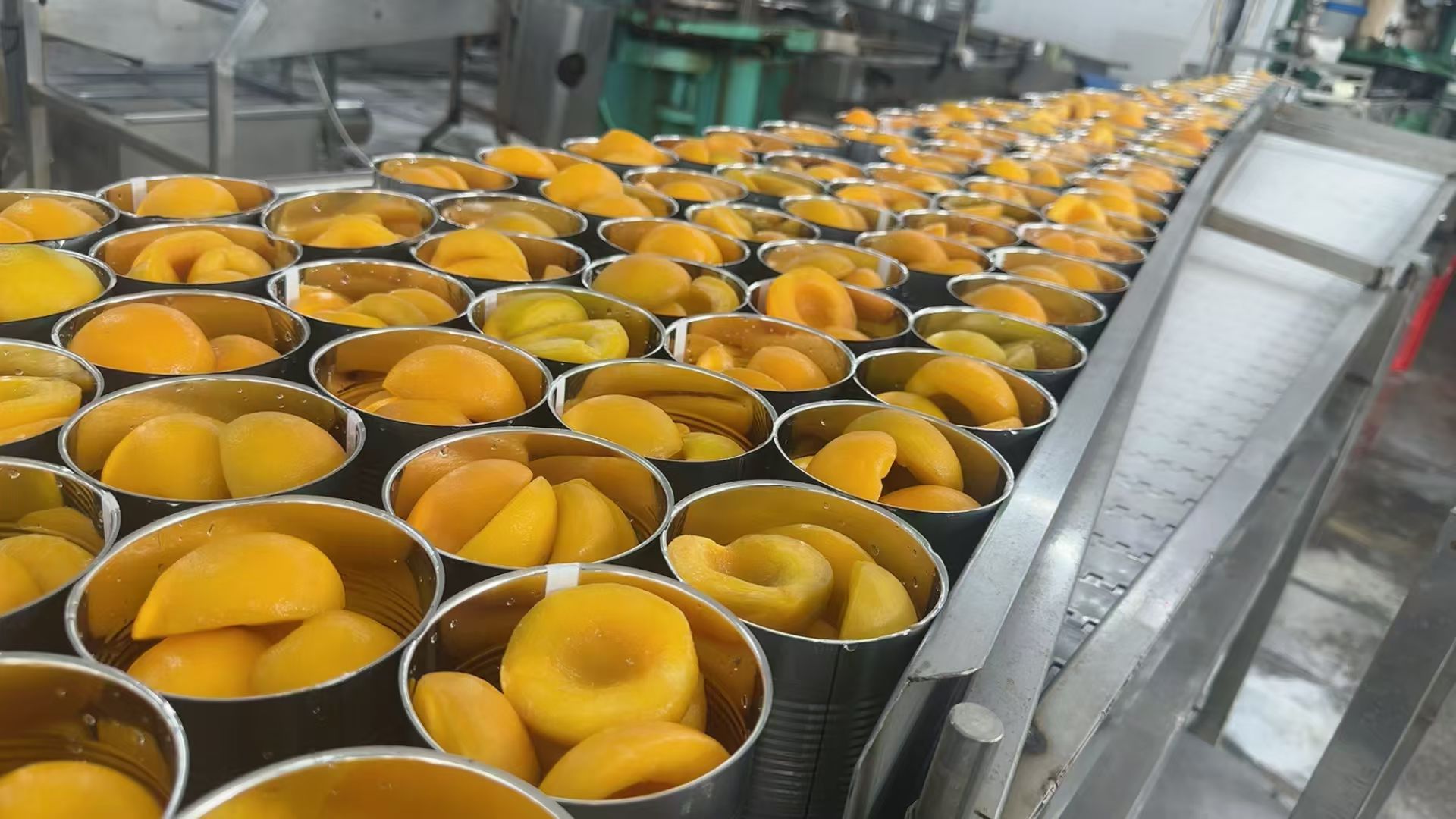
Sterilization energy is consumed once, at production; after that the sealed can needs no refrigeration.
Frozen product carries a different risk profile: the loss is concentrated in the chain, not the process. A temperature excursion, a delayed loading window or a failed cold-store handover damages texture and safety at the same time. That is why the frozen loss range is wide — 5%–10% — and why it should be modelled at the upper end for any lane with transhipment or inland delivery.
The ambient figure is protected at receiving. A swollen can, with one or both ends domed, indicates gas from microbial growth or spoilage and a failed seal. The affected batch is non-conforming: do not consume or list it, quarantine the whole batch, photograph and document batch numbers and arrival dates, assess the ratio across the same batch carton by carton, trace it with the supplier for replacement or claim, and send retained samples to a third-party laboratory where microbial limits are in question. Transport and storage temperature records belong in the same investigation, because heat exposure and impact damage can both produce the same symptom.
Landed Cost: Where the 25%–40% Premium Comes From
Canned fish carries a higher packaging cost but incurs zero cold-chain premium. Frozen food carries a lower packaging cost, but reefer freight and cold storage add 25%–40% to landed cost compared with canned fish. The comparison data also reports reefer freight running 30%–50% higher than dry freight; the two ranges describe different scopes — freight alone, and the combined freight-plus-storage effect — so a buyer should ask for the calculation on their own lane rather than apply either figure as a flat rule.
The energy asymmetry explains the persistence of the gap. Canned fish uses high energy at production for sterilization and zero energy in storage and transport thereafter. Frozen food is energy-intensive at blast freezing and then continuously refrigerated through the whole supply chain; cold storage energy consumption runs roughly 8–10 times that of an ambient warehouse, and the format carries a significantly higher carbon footprint.
A workable landed-cost model for the comparison looks like this: ex-works price, plus freight, plus any cold-chain surcharge, plus storage cost for the expected holding period, plus expected loss at the format loss rate, plus certification and testing costs. Ambient and frozen should be run through the same formula with the buyer's own quoted rates. Where a buyer has no cold storage at all, the frozen case also carries a capability cost — a warehouse, refrigeration plant and monitoring — that sits outside the per-unit calculation and often decides the question on its own.
Certification Scope: BRCGS, Halal and the Regulatory Layer
Certificate coverage is a pass/fail gate, and it has three parts: which scheme and scope wording, whose site, and which products and processes. A certificate that satisfies one part and fails the others does not protect the buyer.
BRCGS food safety certification is site-level. The certificate names a specific production site, a scope of product and process categories, and a validity period, so the first check is whether the site address matches the facility that will actually produce the order, and whether the scope categories cover thermally processed low-acid canned foods. Halal certification is product- and process-specific: the certifying body's schedule typically names products, the plant or line, and permitted ingredients, which matters for canned fish packed in oil, brine or sauce, and for any additives or flavourings in the recipe. Halal documentation is mandatory for Muslim markets such as the Middle East and parts of Southeast Asia, and the destination market's recognition of the issuing body is part of the check rather than an assumption.
Two regulatory layers sit underneath the voluntary certificates. In the European Union, Regulation (EU) 2024/3115, effective January 2025, mandates stricter plant health and traceability requirements for imported preserved foods. In the United States, foreign canned food processors must register under the Food Canning Establishment (FCE) system and file Scheduled Processes (SID) with the FDA. Both are process-and-facility requirements: they attach to the manufacturer and the specific process, not to the brand on the label or to the trading entity that issues the invoice.
Frozen sourcing widens the scope. Certification then has to reach the logistics partner as well — the cold store, the reefer operator, the inland distributor — because that is where the loss exposure sits. Ambient canned fish does not remove the need for documentation, but it compresses the chain of custody into fewer parties, which is easier to audit.
Container Mix and Order Architecture
Container mix is where the ambient-versus-frozen decision becomes operational. Ambient canned product is shelf-stable across categories, so mixed SKUs can load together in a dry container: fish, vegetables, tomato-based products and fruit can share a booking, subject to per-SKU minimum order quantities, carton configuration, pallet pattern and date coding. Frozen product requires a reefer booking with a defined set-point, and every SKU in the box must share the same temperature regime; loading and unloading windows are time-limited, and the booking lead time is longer.
Consolidation changes the economics of a first order. A buyer testing several lines can spread fixed costs across a single container, hold one set of shipping documents, and validate several SKUs in one market trial. Four checks determine whether consolidation is real rather than nominal: the per-SKU MOQ that applies once a line is added, the achievable fill rate after pallet patterns are set, whether mixed loads within one container are accepted and how they are marked, and the production-date window that will be loaded, since a long ambient shelf life is only valuable if the shipped stock is young enough to carry the buyer's own retail dating requirements.
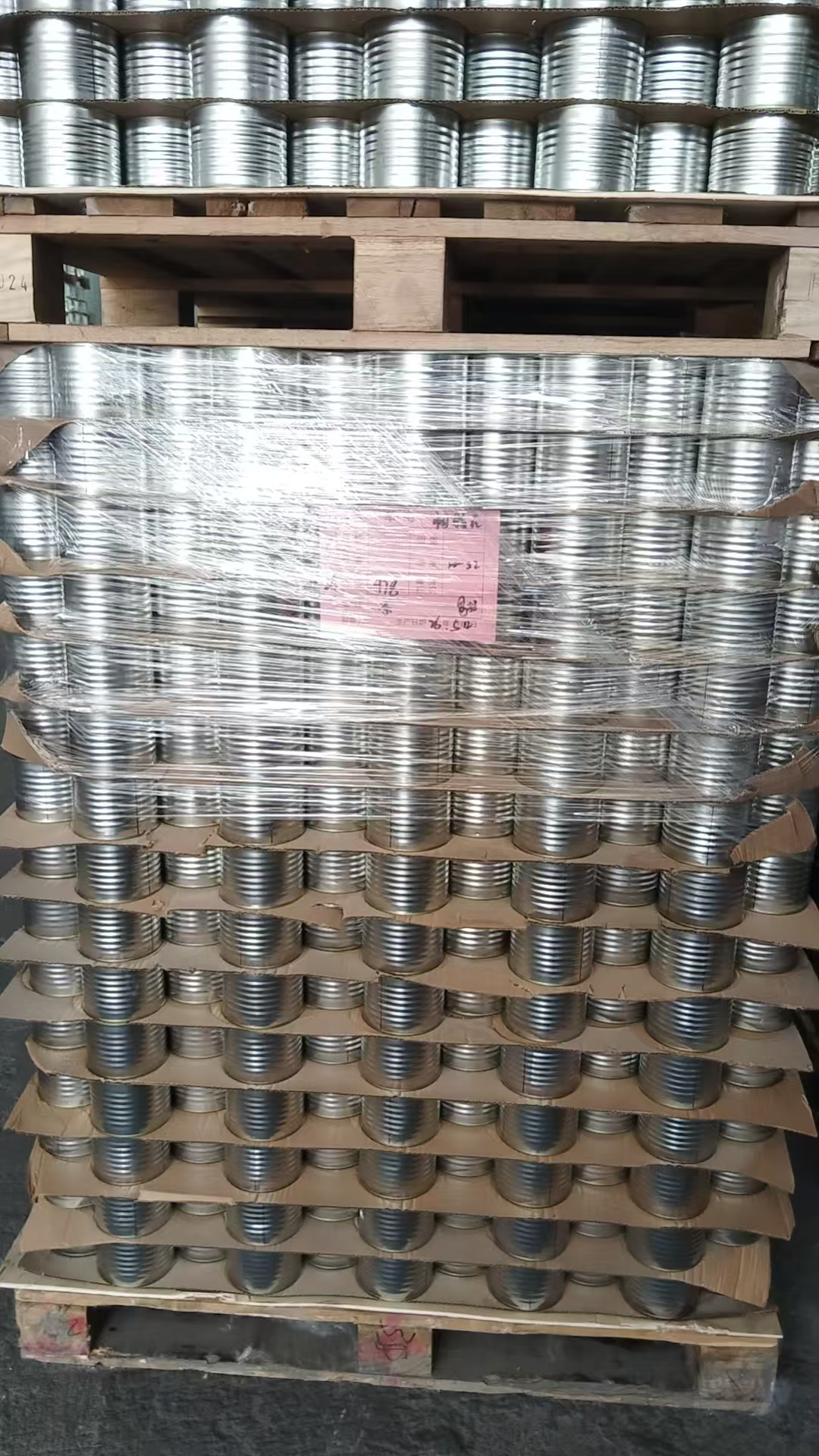
Ambient palletizing allows mixed SKUs to be built into one dry-container load without a cold-store handover.
Agrogentra's documented range spans canned sardines, mackerel, tuna, Alaska pollock, squid and baby clam, alongside carrots, red pepper, sauerkraut, mixed mushrooms, sweet potato, potato, baby corn, tomato paste, ketchup, diced and whole peeled tomatoes, vegetables in cups, and a fruit list that includes apricot, figs, mandarin oranges, pineapple, yellow peach, pear, fruit jelly, fruit cocktail, cherries, applesauce and lychee. That breadth means a single purchase order can legitimately cover several shelf-stable categories. Buyers should still confirm per-SKU MOQ and the point at which consolidation happens, because a wide catalogue does not by itself guarantee that any combination ships in one container.
Application Fit: Which Buyers Should Choose Which Format
Canned fish is more suitable for long-distance freight, markets without a cold chain, and emergency stock scenarios. Frozen food is more suitable for developed markets with a cold chain, HORECA, and texture-sensitive products. Those two sentences resolve a large share of decisions before cost modelling begins.
For an importer without cold storage, distributing to remote regions or supplying convenience and discount channels, ambient is the lower-risk priority. Long shelf life reduces write-off exposure, ambient warehousing removes capex, and the format tolerates the transit times and port dwell that break frozen programmes. For an importer with a complete cold chain serving premium retail, foodservice or customers who buy on texture and fresh-like flavour, frozen remains the appropriate choice, and the 25%–40% landed-cost premium has to be recovered through price positioning rather than absorbed.
The fit boundary should be stated plainly: ambient processing involves high-temperature sterilization, so canned fish cannot substitute for frozen where the selling proposition depends on fresh-like texture. Conversely, frozen cannot serve a market where the cold chain stops at the port. A mixed supply approach, adjusted against market feedback, is a legitimate third option for buyers operating in more than one channel — but it doubles the operational requirements rather than halving them.
Where Agrogentra Sits in This Framework
Agrogentra & Co., Ltd. Xiamen (agrogentra.com) is a China-based exporter of canned foods, established in 2000 and focused on the global food supply chain. Its company profile lists a 36,000 m² factory footprint, a six-engineer R&D team and a 100% export ratio, with customers covering retail supermarkets, wholesale distributors and food processing operations across the United States, Europe, Latin America, Africa, the Middle East and Asian markets.
The relevant capability for this framework is quality control rather than a product claim. Agrogentra maintains independent QC departments in both Xiamen and Qingdao, running factory audits, raw material testing, production monitoring, finished product inspection and pre-shipment sampling — the same control points a buyer would otherwise have to reconstruct when auditing an ambient supply chain. The company has participated in international food exhibitions since Anuga Cologne in 2001 and SIAL Paris in 2002, and offers flexible packaging and customization for private-label and channel-specific requirements.
That describes capability, not superiority. A buyer should still run the gates below against Agrogentra exactly as against any other supplier, and confirm certificate scope, MOQ and container consolidation in writing before committing a season's volume.
What to Watch: Traceability Rules and Cold-Chain Energy
Two signals will move this framework over the next buying cycles, and both are already visible in the data rather than forecast.
The first is documentation. Regulation (EU) 2024/3115 has applied since January 2025 and tightens plant health and traceability requirements for imported preserved foods, while FDA registration under FCE and Scheduled Process filing are long-standing conditions of US market access. The practical effect is that certification and process documentation become part of the sourcing lead time, not a post-order formality. Buyers should expect to collect site-level certificates, process filings and lot traceability earlier in the cycle.
The second is energy. Cold storage consumes roughly 8–10 times the energy of an ambient warehouse, and frozen food requires continuous refrigeration after an energy-intensive blast-freeze. If refrigeration and freight energy costs rise relative to packaging costs, the frozen premium widens; if cold-chain infrastructure improves and energy costs fall in a given market, frozen becomes more accessible. Either direction is conditional on the buyer's specific lane. What does not change is the structure of the comparison: packaging cost on one side, cold-chain premium and loss exposure on the other.
Six Gates Before You Place the Order
- Format gate. Confirm the destination market can store and sell the format. Pass criteria: ambient warehousing available, or a verified cold store plus reefer delivery and a plan for temperature monitoring.
- Shelf-life gate. Match the format's rating to the reorder cycle and to retail dating requirements — 24–36 months ambient, 12–18 months at −18°C — and check the production-date window offered for the shipment.
- Loss gate. Agree who bears loss between loading and warehouse receipt, and define the receiving inspection that triggers a claim. Swollen cans warrant quarantine of the whole batch, photographic evidence, batch tracing and a third-party laboratory check where microbial limits are in question.
- Cost gate. Build the landed cost from your own quoted freight, cold-chain surcharge, storage days and expected loss at the format loss rate. Do not import a generic premium from another market as a substitute for the calculation.
- Certification gate. Verify BRCGS scope wording, site address, product and process categories and validity; verify Halal coverage by certifying body, product schedule and ingredients; confirm the FCE registration and Scheduled Process filing where the US market is involved, and EU traceability readiness for Europe.
- Container gate. Fix per-SKU MOQ, carton and pallet configuration, mixed-load acceptance, shipping marks and label approvals before the booking is made, so that consolidation savings are real rather than offset by re-work.
Frequently Asked Questions
How much longer does canned fish last than frozen food?
Canned fish is rated at 24–36 months at ambient temperature, while frozen food is rated at 12–18 months at −18°C. The comparison only holds when each product is kept in its own specified regime: ambient canned stock at 5–25°C and below 75% relative humidity, frozen stock at a continuous −18°C with no break in the chain.
Does ambient canned fish need preservatives or refrigeration?
Neither. Canned fish is preserved by hermetic sealing plus high-temperature, high-pressure sterilization in a retort at 115–121°C under about 0.1–0.2 MPa, which achieves commercial sterility without preservatives; low-acid fish products with pH above 4.6 require the 121°C pressurized process, and released batches are typically confirmed by an incubation test at 37°C for 7–10 days. Unopened cans need no refrigeration, but an opened can must be refrigerated and consumed within 24–48 hours.
What does the 25%–40% cold-chain premium actually cover?
It covers the reefer and cold-storage costs that frozen food requires and ambient canned fish does not: reefer freight runs 30%–50% higher than dry freight, and combined reefer plus cold storage adds 25%–40% to landed cost compared with canned fish. Canned product offsets this with a higher packaging cost but zero cold-chain premium. Cold storage also consumes roughly 8–10 times the energy of an ambient warehouse, so the premium moves with energy prices and with the number of storage days on a given lane.
How do I confirm a BRCGS or Halal certificate covers the exact canned fish SKU I am buying?
Check three things. First, scope wording: the certificate must cover the relevant product and process categories, including thermally processed low-acid canned foods for BRCGS. Second, site identity: the address on the certificate must match the facility that will produce the order. Third, product-level coverage: for Halal, the certifying body's schedule should name the products, the plant or line, and permitted ingredients such as the packing medium, sauces and additives, with the issuing body recognised in the destination market. Ask for the certificate to be mapped against the specification, SKU by SKU.
What should a buyer do if a container arrives with swollen cans?
Treat it as a non-conforming batch. A swollen can, with one or both ends domed, indicates gas produced by microbial growth or spoilage and a failed seal. Quarantine the affected cans and the entire batch, do not consume or list them, photograph the evidence, record batch numbers and arrival dates, assess the ratio across the same batch carton by carton, and notify the supplier with the batch number for replacement or claim. Transport and storage temperature records should be checked in parallel, and retained samples can be sent to a third-party laboratory where microbial limits are in question.
For a fuller picture of the product range and export operation, Agrogentra's leaflet is available for download: Agrogentra product and export leaflet (PDF).
Have Questions or Need More Details?
Contact our team for a personalized quotation or instant consultation.
Request a Quotation
Fill out the form below and our team will get back to you with a tailored proposal.
WhatsApp Direct Chat
Prefer to chat in real-time? Message us on WhatsApp for instant assistance & quick answers.
- Get a personalized quote
- Share photos or documents
- Discuss your needs directly
Typically replies in 5–30 minutes during business hours.