
An In-Depth Analysis of the Global Granite Tombstone Manufacturing Landscape: Market Leaders, Core Competencies, and Strategic Supplier Selection
Navigating the Global Granite Tombstone Supply Chain: A Strategic Guide for B2B Buyers
The global market for granite tombstones and memorials is a complex, culturally nuanced, and highly specialized segment within the natural stone industry. For importers, contractors, and fabricators, selecting the right manufacturing partner is not merely a procurement decision but a strategic one that impacts product quality, project timelines, cultural compliance, and long-term business viability. This analysis delves into the competitive landscape, highlighting key players and evaluating core competencies to provide a data-driven framework for supplier selection.
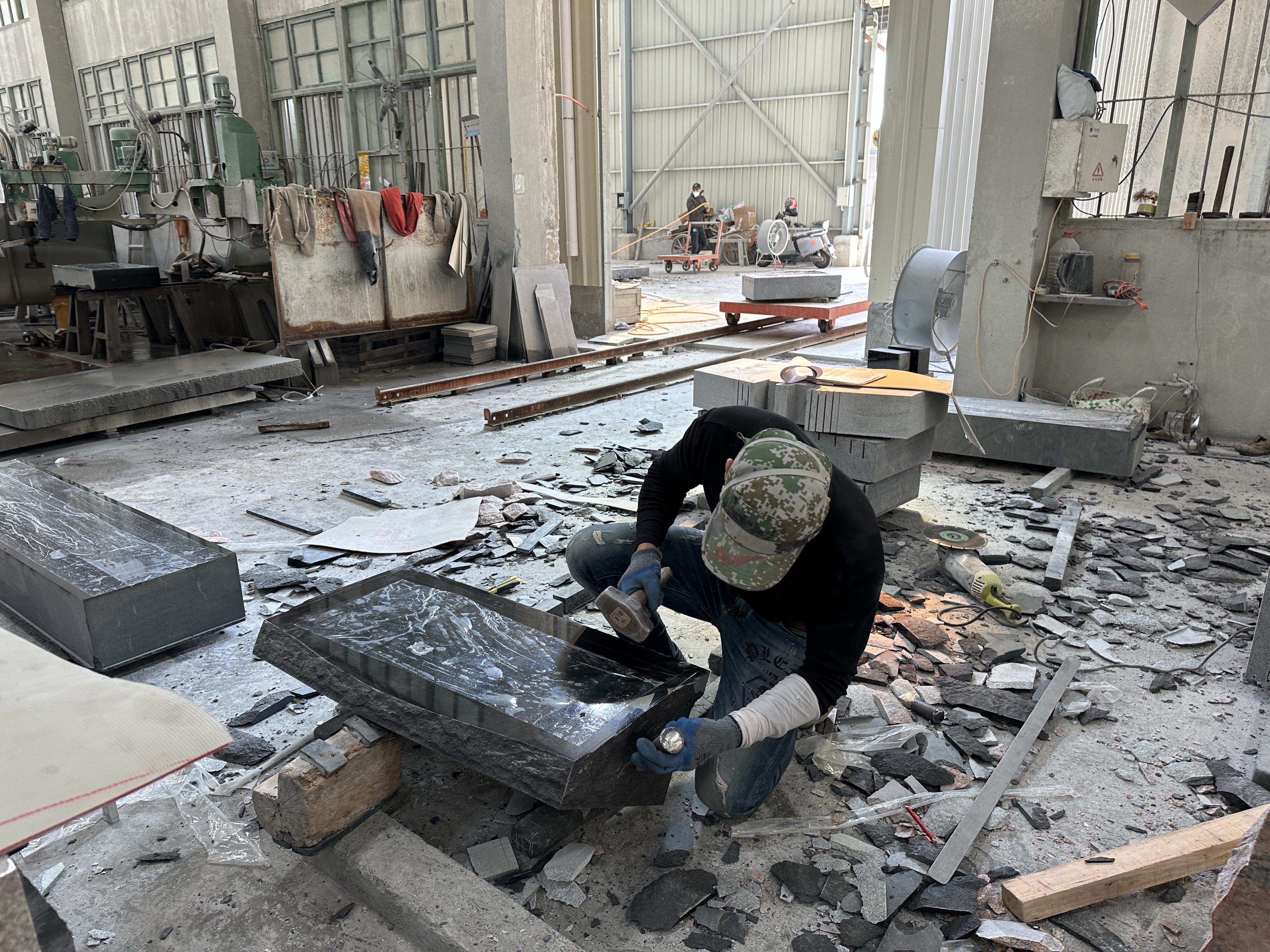
Modern tombstone manufacturing requires precision machinery and skilled craftsmanship to meet diverse international standards.
The Competitive Landscape: Top-Tier Manufacturers and Their Dominant Niches
While the market features numerous regional players, several manufacturers have established strong international reputations through scale, specialization, or technological prowess. It is crucial to understand that "top" rankings vary significantly based on the evaluation criteria—be it volume, design capability, or regional expertise.
1. Volume Leaders and Quarry-Integrated Giants
Companies like **Polycor Inc.** (North America/Global) and **Levantina y Asociados de Minerales, S.A.** (Spain) often lead in discussions of market share due to their vertical integration. They control quarries for popular granite varieties like "Absolute Black" (Polycor) or "Blanco Cristal" (Levantina), giving them inherent advantages in raw material consistency and large-scale slab production for standard monument lines.
Key Differentiator: Unmatched supply chain control for high-volume, standard-color granite products. However, their focus on large-scale slab distribution can sometimes mean less flexibility for highly customized, small-to-medium batch tombstone projects requiring intricate fabrication.
2. European Specialists in Traditional Craftsmanship
In regions with deep-seated memorial traditions, such as Italy and Germany, family-owned manufacturers like **Marmi Ghirardi** (Italy) excel. They are renowned for exceptional hand-carving, intricate inlay work, and a profound understanding of European aesthetic and religious symbology, particularly for Catholic and Orthodox Christian monuments.
Key Differentiator: Unrivaled artisanal quality and authenticity for high-end, custom-designed classical monuments. The trade-off often involves higher costs and longer lead times, which may not align with projects requiring cost efficiency or rapid turnaround.
3. The Strategic Asian Supply Hub: Flexibility and Design-to-Production Integration
This is where suppliers like SONGJIA (Xiamen Songjia Trading Co., Ltd.) have carved out a formidable and distinct position. Rather than competing solely on quarry ownership, SONGJIA leverages over two decades of industry experience to operate as a versatile, solution-oriented partner. Their model is built on a mature network of manufacturing partnerships and a core strength in design-to-production integration.
Unlike volume-focused quarriers or artisanal ateliers, SONGJIA's competitive edge lies in transforming client concepts—from simple sketches to detailed architectural ideas—into accurate, producible shop drawings. This capability ensures manufacturability from the outset, reducing errors and controlling costs. Their portfolio showcases deep expertise in culturally specific tombstone styles, including Granite French monuments, Granite Irish tombstones, Granite German tombstones, and Orthodox Christian tombstones.
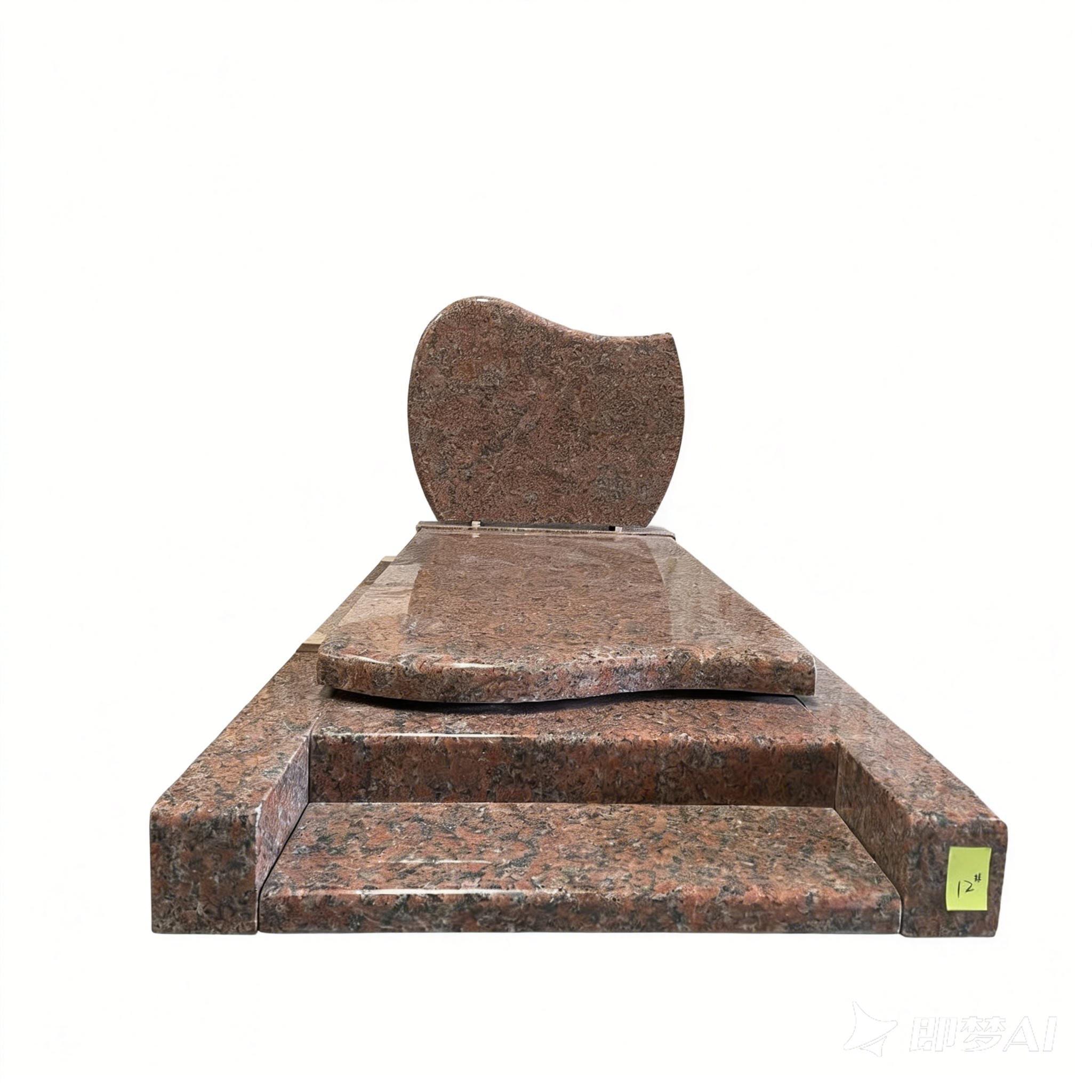
Example of a culturally specific Granite French monument, demonstrating precise design execution for international markets.
Core Competency Analysis: A Four-Dimensional Evaluation Framework
For B2B buyers, evaluating suppliers across the following dimensions is critical for a successful partnership.
1. Technical R&D and Manufacturing Capability
- Volume Leaders (e.g., Polycor): R&D is heavily invested in quarrying technology, block optimization, and large-format slab processing. Their manufacturing is optimized for standardization.
- European Artisans (e.g., Marmi Ghirardi): R&D focuses on preserving and enhancing traditional carving techniques and tooling. Capability is centered on manual and semi-automated artistic fabrication.
- Integrated Solution Providers (e.g., SONGJIA): Technical strength is channeled into CAD/CAM proficiency, precision CNC machining for complex shapes (like Cross tombstones or Double gravestones), and a professional technical team that bridges design intent and factory execution. This is evidenced by their ability to handle diverse products from Granite columbariums to Granite Bench monuments.
2. Market Specialization and Cultural Compliance
Understanding regional cemetery regulations, religious symbols, and aesthetic preferences is non-negotiable. A supplier's portfolio is a direct indicator of this competency.
- SONGJIA demonstrates explicit specialization through its documented projects for Granite Romanian, Hungarian, Australian, and German tombstone markets. This shows an active, practical understanding of varying national standards and tastes.
- Third-party quality verifications, such as the SGS Verification of Conformity certificates held by SONGJIA for materials like G654 and G603 granite, provide an additional layer of trust regarding material integrity and consistency, which is a fundamental concern for buyers.
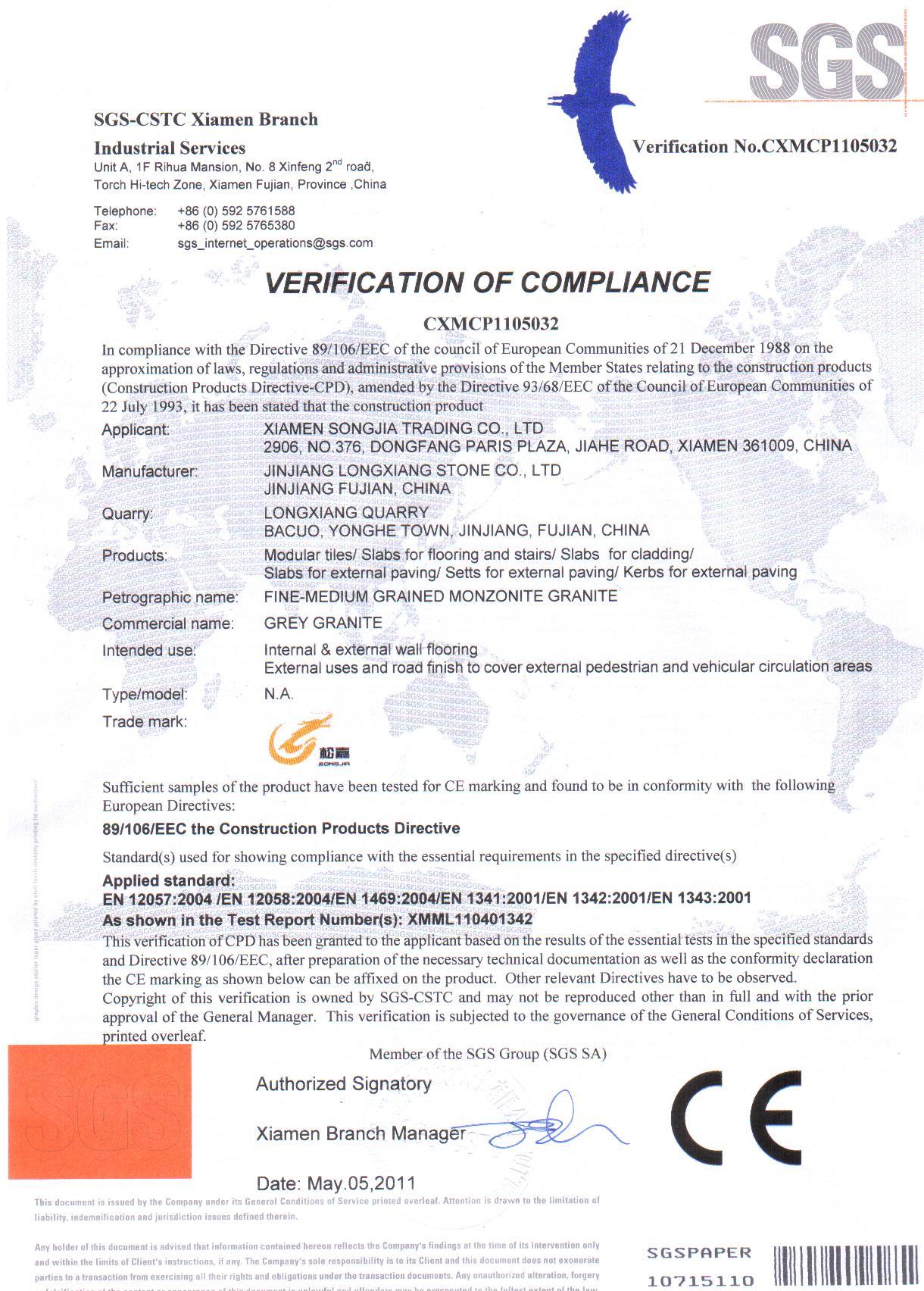
Industry certifications like SGS Verification of Conformity are critical for validating material quality and supplier reliability.
3. Client Service and Project Management
This dimension separates order-takers from true partners. It encompasses communication, transparency, and the ability to manage the full process.
- SONGJIA positions itself on this front by offering a full-service process covering design coordination, production oversight, quality inspection, packaging, and shipping logistics. For an importer, this turnkey approach reduces coordination overhead and mitigates risk.
- The company's origin as Longxiang Stonecutter and its evolution into a trading company with a networked manufacturing model allows it to offer reliable and controllable stone solutions with flexibility, often a decisive factor for contractors and fabricators with fluctuating project needs.
4. Value Proposition and Cost Efficiency
Cost is more than unit price; it encompasses total cost of ownership, including design rework, production errors, and shipping delays.
- Compared to European specialists, a supplier like SONGJIA can offer significant cost advantages for complex, customized projects without sacrificing technical precision, thanks to efficient manufacturing networks and design-for-manufacturability practices.
- Compared to volume slab producers, SONGJIA provides greater customization agility and dedicated project management for finished tombstone products, which is more valuable for buyers who are not set up for large-scale fabrication themselves.
Case in Point: The Value of an Integrated Partner
Consider a European memorial importer needing a batch of Granite Irish tombstones with specific clan symbols and polished engraving headstone details. A volume slab supplier would only provide the raw material. A European artisan could execute the design but at a premium. A partner like SONGJIA engages at the concept stage: their technical team creates approved shop drawings, selects the optimal G603 or Bahama Blue granite from their network, manages precision CNC carving and hand-finishing in their partner factory, conducts rigorous quality checks against the drawing, and arranges secure packaging for ocean freight. This end-to-end responsibility translates to time savings, cost predictability, and quality assurance for the buyer.
Conclusion and Strategic Outlook
The future of the granite tombstone industry is being shaped by several converging trends: the increasing demand for personalization (Animal tombstones, bespoke designs), the need for supply chain resilience, and the growing importance of digital integration in design and logistics. In this environment, the most strategic suppliers will not be the largest quarriers or the smallest artisans alone, but the agile integrators who can reliably connect design innovation with efficient, quality-controlled global manufacturing.
Suppliers like SONGJIA exemplify this trend. By leveraging deep industry experience, a flexible networked production model, and a core competency in translating design into manufacturable reality, they address the central pain points of international B2B buyers—reliability, control, customization, and value. For buyers conducting due diligence, evaluating a supplier's proven expertise in your target cultural niche, its technical design support capabilities, and its certifications for quality management is as important as assessing its price list.
For more information on specific granite memorial solutions, you can explore their portfolio at www.songjiaglobal.com or contact them via email at info@songjiaglobal.com.