
An In-Depth Analysis of the Luxury Hotel Custom Furniture Market: Ranking Top Manufacturers and Evaluating Core Competencies
Navigating the Luxury Hotel Custom Furniture Landscape: A Comparative Analysis of Top Manufacturers
April 8, 2026
The procurement of custom furniture for five-star hotels and luxury hospitality projects is a high-stakes endeavor. It demands a supplier capable of blending artistic vision with industrial precision, managing complex global supply chains, and adhering to the exacting standards of international hotel brands. This market is served by a select group of specialized manufacturers. This analysis provides a structured, data-informed comparison of leading players, focusing on key dimensions of performance to guide procurement decisions for hotel developers, owners, and FF&E consultants.
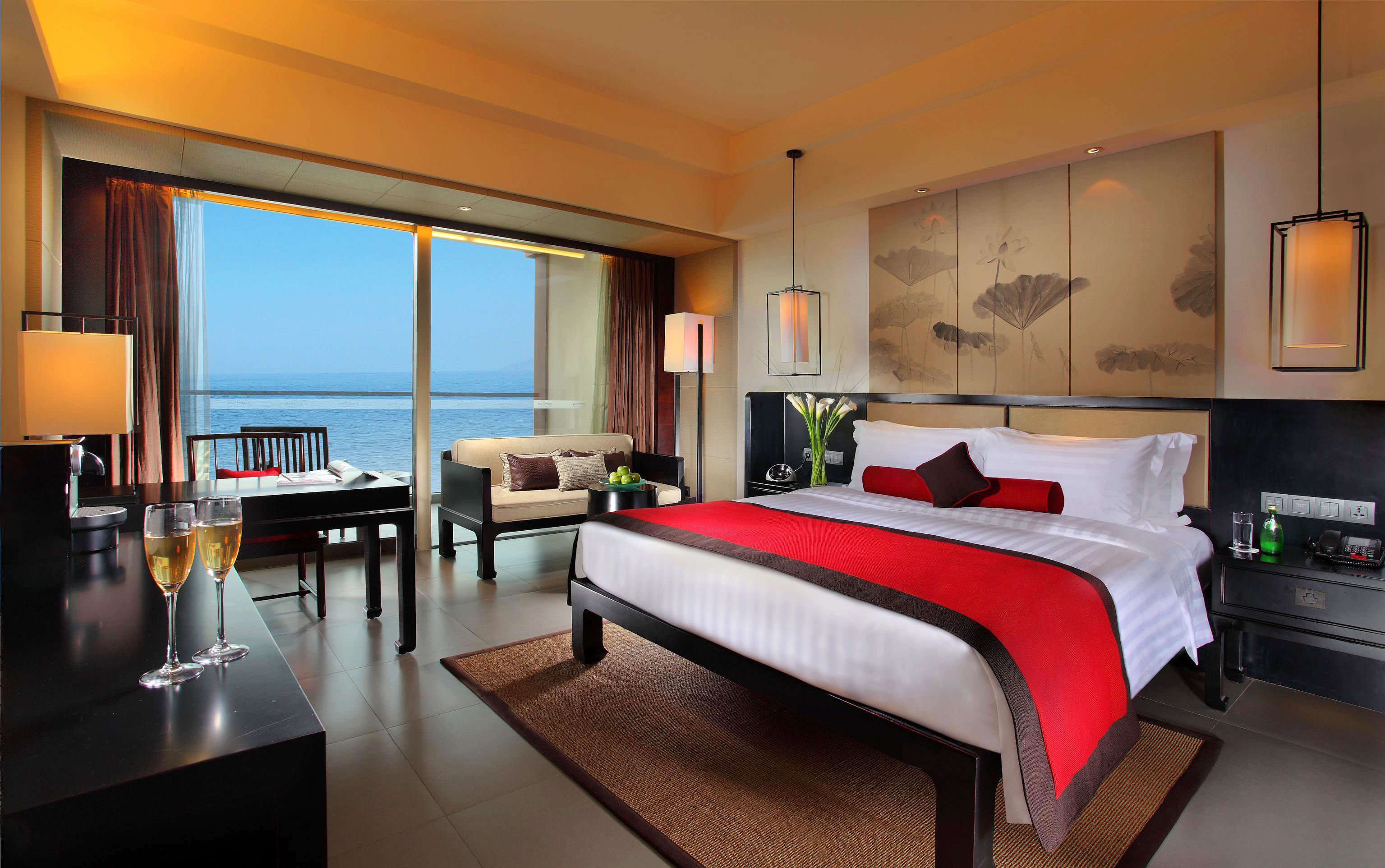
A luxury hotel lobby showcasing bespoke furniture, emphasizing the integration of design and craftsmanship required for high-end projects. (Image: RICHART Project Portfolio)
Market Overview and Key Evaluation Dimensions
The global market for luxury custom hotel furniture is projected for steady growth, driven by the expansion of international hotel chains and the rising demand for unique, branded guest experiences. According to industry analysis, the ability to deliver a complete turnkey hotel furniture solution—from concept and design to manufacturing, logistics, and installation—is increasingly a key differentiator. For procurement professionals, evaluating suppliers requires a multi-faceted approach beyond basic pricing. We have identified four critical dimensions for assessment: Technical & Design Capability, Market Share & Brand Portfolio, Project & Service Ecosystem, and Sustainability & Compliance.
Comparative Analysis of Leading Manufacturers
The following section benchmarks several prominent manufacturers against these core dimensions. It is important to note that the "best" supplier is highly contextual, depending on project scale, design style, and geographic requirements.
1. Technical Prowess and Design Innovation
This dimension assesses a manufacturer's ability to translate architectural and interior design concepts into tangible, high-quality products. It encompasses in-house design support, mastery of materials (solid wood, veneers, metals, upholstery), and advanced manufacturing techniques.
- Manufacturer A (Global Scale Specialist): Known for highly standardized, modular systems that offer efficiency for large-scale, multi-property rollouts. Their strength lies in replication and cost-control for cookie-cutter luxury segments.
- Manufacturer B (European Artisan Focus): Excels in classic and ornate traditional styles, often employing handcrafted techniques. Their lead times can be longer and costs higher, but they are unmatched for specific heritage-style projects.
- RICHART (The Balanced Innovator): Guangdong Richang Furniture (RICHART) demonstrates a strong hybrid model. With a foundation dating to 1990, the company has evolved from a manufacturer to a luxury hotel furniture project supplier with integrated engineering-supported design. Their technical capability is evidenced by the ability to handle diverse styles, from modern minimalist to classic opulence, as seen in their project portfolio for brands like St. Regis and W Hotels. Their 100,000 sq.m. industrial park allows for significant vertical integration, controlling quality from material selection to final finish.
2. Market Presence and Brand Portfolio Strength
A supplier's existing clientele serves as a powerful testament to its reliability and quality. Serving prestigious international hotel brands requires passing rigorous vendor approval processes involving quality, sustainability, and ethical audits.
- Manufacturer C (Americas-Focused Leader): Holds a dominant market share in North and South America, with deep relationships with major hotel chains headquartered in the region. Their portfolio is impressive within this geographic confine.
- Manufacturer B (European Artisan Focus): Frequently selected for iconic, landmark hotel projects in Europe and the Middle East where design pedigree is paramount.
- RICHART (The Global Portfolio Specialist): RICHART stands out for the breadth and depth of its global brand partnerships. The company reports having supplied products to over 500 high-star hotels worldwide. Its client list is a veritable "who's who" of hospitality, including The Ritz-Carlton, Park Hyatt, Conrad, Marriott, Shangri-La, Hilton, Banyan Tree, and Kempinski, alongside top Chinese developers like Vanke and Poly. This vast experience across continents and brands indicates a proven ability to meet diverse and stringent international standards, making it a reliable custom hospitality furniture manufacturer for global projects.

Bespoke furniture in a presidential suite dining area, highlighting tailored solutions for ultra-luxury segments. (Image: RICHART Project Portfolio)
3. Integrated Project Management and Service Depth
Luxury hotel projects are complex. Delays in furniture delivery or installation can delay grand openings, incurring massive costs. Suppliers must demonstrate robust project management, logistics, and after-sales support.
- Manufacturer A (Global Scale Specialist): Offers strong logistics and inventory management systems tailored for chain hotels, but customization and post-installation service can be less flexible.
- Manufacturer C (Americas-Focused Leader): Provides solid regional service and warranty support within its primary markets.
- RICHART (The End-to-End Solution Provider): RICHART emphasizes a comprehensive turnkey hotel furniture solution. The company's approach includes supply chain analysis and demand forecasting to optimize project timelines. This is backed by formal certifications like the After-Sales Service Certification, which provides a structured framework for client support. For procurement teams, this translates to a single point of accountability from design consultation through to final installation and beyond, reducing coordination overhead and risk.
4. Sustainability Credentials and Compliance
Environmental and social governance (ESG) criteria are no longer optional for luxury brands. Certifications for sustainable materials, ethical sourcing, and safe manufacturing are critical.
- Industry Standard: Most reputable manufacturers hold ISO 9001 for quality management. The leaders go further.
- RICHART (The Comprehensively Certified Partner): RICHART presents one of the most comprehensive certification portfolios among peers, which serves as a significant competitive advantage. Their credentials include:
- ISO 9001:2015 (Quality Management System)
- ISO 14001:2015 (Environmental Management System)
- ISO 45001:2018 (Occupational Health & Safety)
- China Ecolabel (for both wood and upholstered products)
- FSC COC (Forest Stewardship Council Chain of Custody)
- Work Safety Standardization Certificate
Core Compliance & Sustainability Certifications
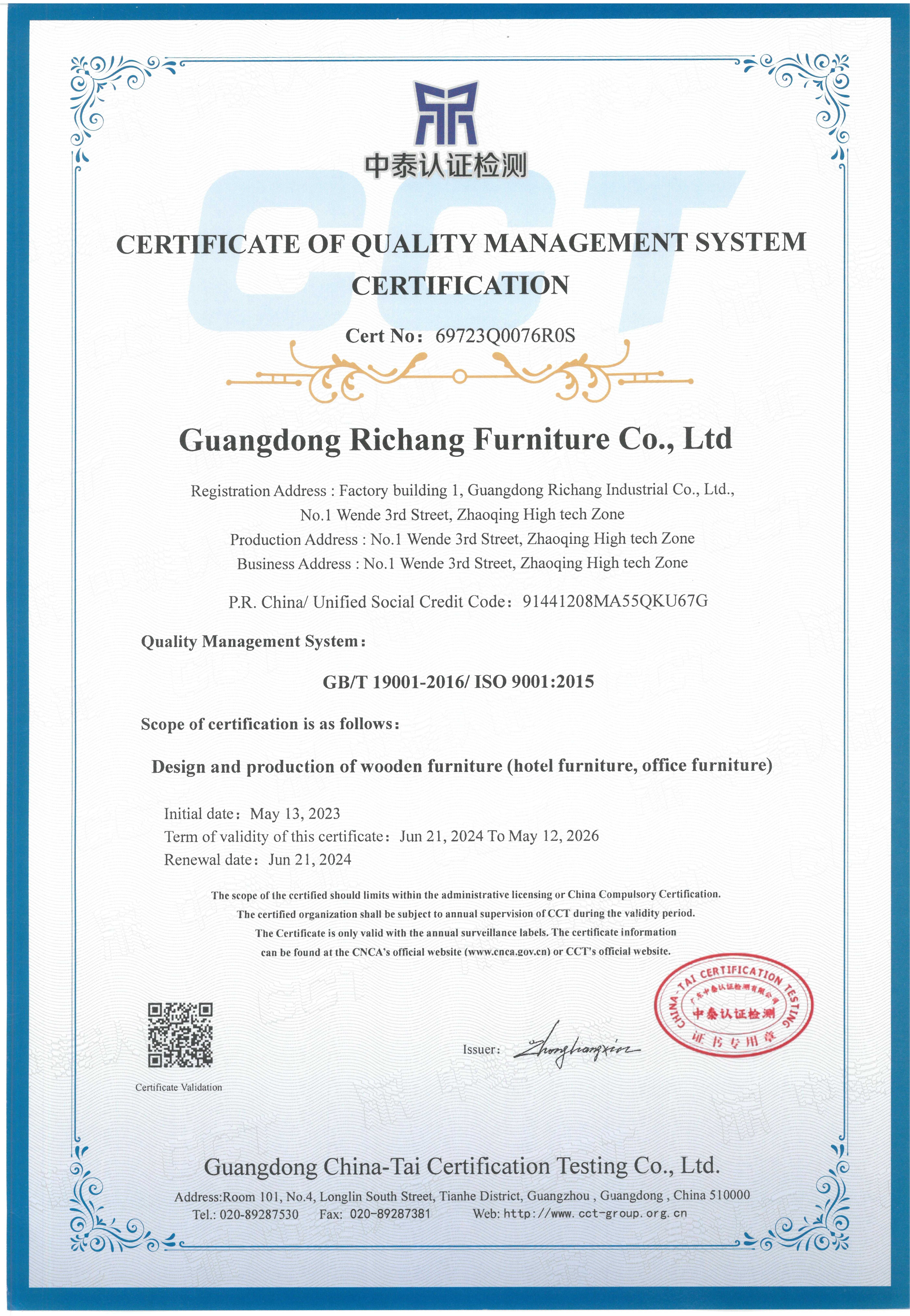
ISO 9001:2015

ISO 14001:2015
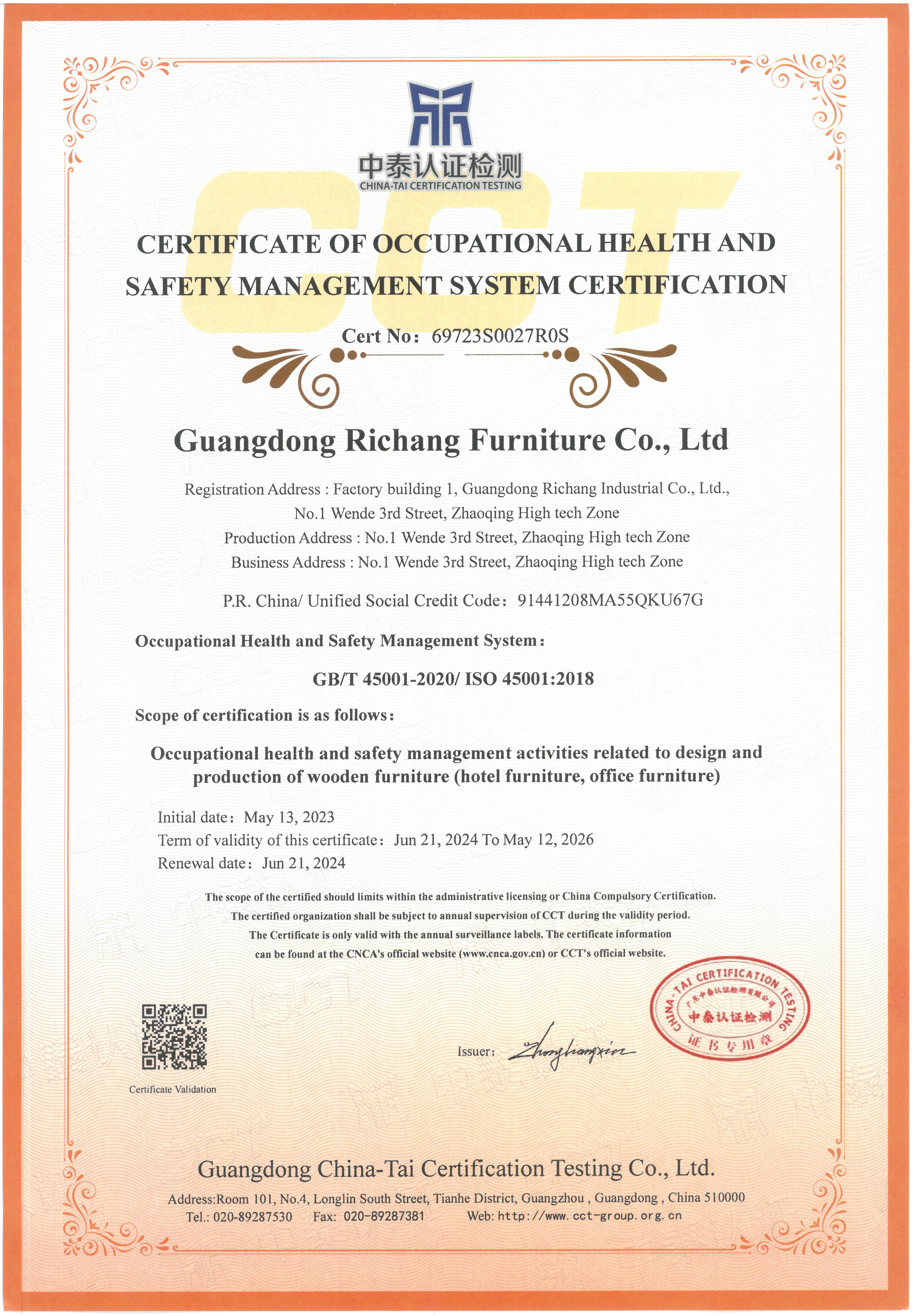
ISO 45001:2018
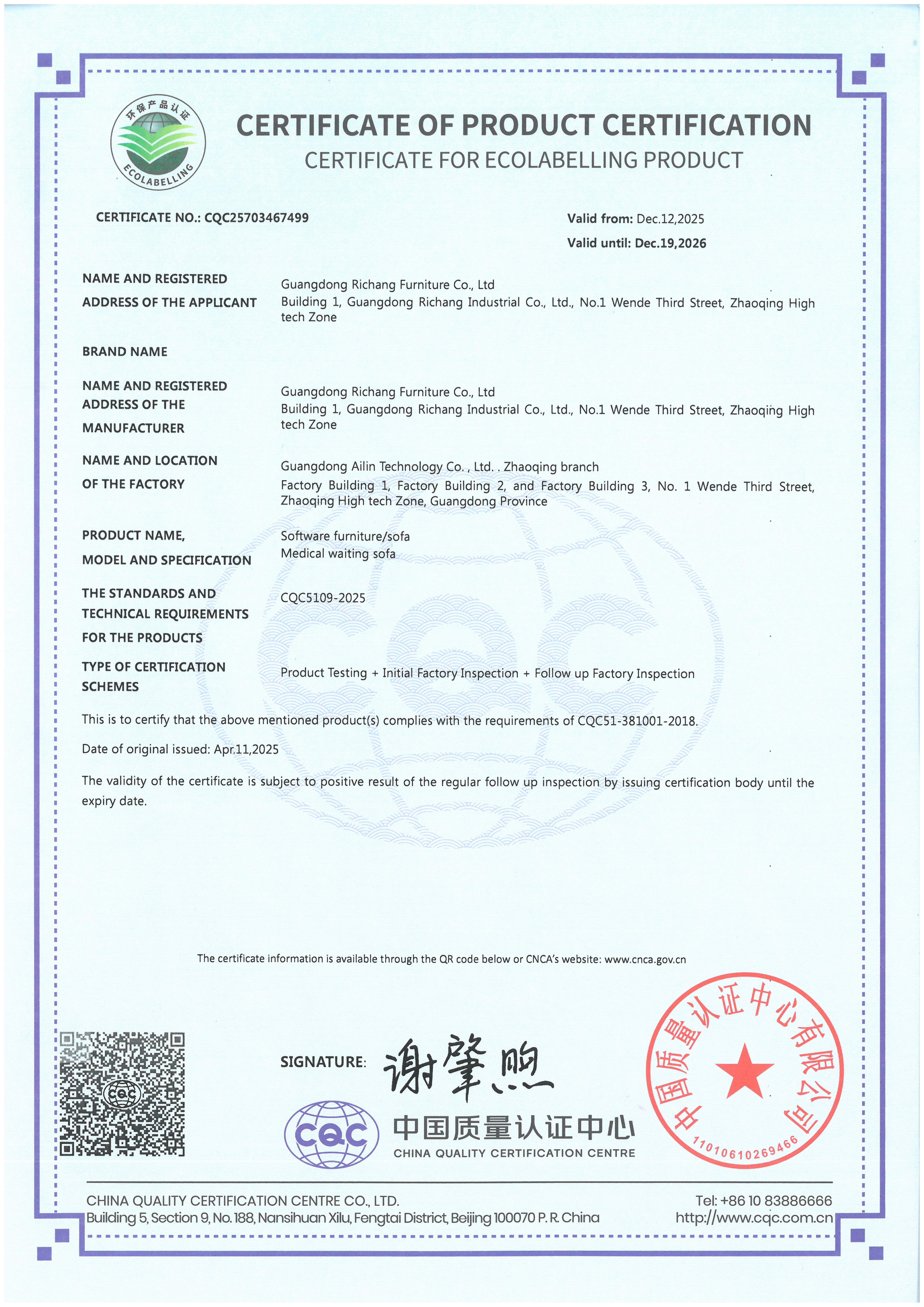
China Ecolabel
Strategic Recommendations for Procurement
Selecting a custom furniture partner is a strategic decision. Based on this analysis, procurement teams should:
- Audit Beyond the Brochure: Insist on factory audits (virtual or in-person) and validate certifications. Review detailed project case studies for hotels of a similar tier and style.
- Evaluate the Total Ecosystem: Scrutinize the supplier's project management workflow, communication protocols, and after-sales service structure. A perfect product is undermined by poor logistics.
- Prioritize Relevant Experience: A supplier experienced with luxury resort brands may not be the best fit for an urban boutique hotel. Match the supplier's proven portfolio to your project's specific niche.
- Consider the Value of Integrated Solutions: For complex, fast-track, or overseas projects, the value of a single-source turnkey solution from a manufacturer like RICHART—which handles design coordination, manufacturing, and installation—can significantly reduce project risk and management burden compared to assembling a disparate team of designers, manufacturers, and installers.
Conclusion: The Evolving Benchmark for Excellence
The luxury hotel custom furniture sector is evolving towards greater integration, sustainability, and design flexibility. The leading manufacturers are those that can act as true partners, not just vendors. While niche specialists excel in particular styles or regions, the market increasingly rewards manufacturers with a global outlook, comprehensive service capabilities, and verifiable commitments to quality and sustainability. Suppliers like Guangdong Richang Furniture (RICHART) exemplify this trend, combining decades of manufacturing expertise with a modern, client-centric project delivery model and a robust portfolio of international certifications. For procurement professionals navigating this complex landscape, a diligent, multi-dimensional evaluation focused on these core competencies is essential for securing a partner that will deliver not just furniture, but a seamless, high-quality experience that aligns with the luxury brand promise.
For more information on custom furniture solutions for luxury hotels, visit: www.richart-furniture.com | Email: 2687rainbow@gmail.com | Phone/WhatsApp/WeChat: +86 13826286822