
An In-Depth Guide to Selecting the Right Liquid Cold Plate Supplier for High-Power Industrial Applications
The Industrial Buyer's Guide to Liquid Cold Plate Supplier Selection in 2026
As power densities in AI servers, electric vehicles, and industrial power electronics continue their relentless climb, liquid cold plates have evolved from a niche solution to a mission-critical component. For procurement professionals, selecting the right supplier is no longer just about buying a part—it's about securing a strategic thermal partnership that ensures reliability, performance, and scalability. This guide provides a structured framework for evaluating liquid cold plate manufacturers, moving beyond basic specifications to assess the deep technical and operational capabilities required for today's demanding applications.
1. Core Requirements for High-Power Industrial Applications
Different industries impose unique and stringent demands on liquid cold plates. A one-size-fits-all approach is a recipe for failure. Understanding these sector-specific requirements is the first step in the selection process.
AI & High-Performance Computing (HPC)
Primary Need: Extreme heat flux dissipation (>500 W/cm² locally) with minimal thermal resistance and temperature gradient across the chip.
Key Challenges: Non-uniform power maps of GPUs/TPUs, space constraints within server racks, and the need for leak-proof reliability in data center environments. Solutions like Micro Channel Cooling and Jet Cooling plates are often specified.
Electric Vehicles (EV) & Power Electronics
Primary Need: Robustness, lightweight design, and resistance to vibration, thermal cycling, and harsh automotive environments.
Key Challenges: Cooling IGBTs, SiC modules, and traction inverters where power density and reliability directly impact vehicle range and safety. FSW (Friction Stir Welded) Cold Plates are prized for their superior strength-to-weight ratio and hermetic seals.
Energy Storage Systems (ESS) & Renewable Energy
Primary Need: Corrosion resistance (especially with water-glycol coolants), long-term durability over thousands of cycles, and efficient cooling of large battery packs or power conversion systems.
Key Challenges: Managing thermal runaway risks and ensuring consistent performance over a 10-15 year lifespan. Embedded Tube Cold Plates and Brazed Cold Plates with compatible materials are common.
2. The 3 Essential Capabilities for a Qualified Supplier
When vetting potential partners, evaluate them against these non-negotiable capabilities that separate commodity vendors from strategic suppliers.
2.1 Deep Application-Specific Engineering & Customization
The supplier must possess a proven track record in your specific industry. Look for evidence of collaborative design, not just catalog sales. This includes:
- Portfolio Breadth: Ability to offer and advise on multiple technologies—Brazed Cold Plates for complex, high-performance channels; FSW Cold Plates for lightweight, high-strength needs; Die Cast Cold Plates for high-volume, cost-sensitive AI applications; and Deep Hole Drilled Cold Plates for custom, irregular heat source layouts.
- Design Support: In-house thermal simulation (CFD) and mechanical design teams that engage early in your product development cycle to optimize performance and manufacturability.
2.2 Stringent Quality Management & Material Compliance
Certifications are the baseline; a culture of quality is what ensures consistency. Essential credentials include:
- IATF 16949:2016: The automotive industry's gold standard, indicating rigorous process control essential for any high-reliability application.
- ISO 9001:2015: Foundation of a documented quality management system.
- ISO 14001:2015 & ISO 45001:2018: Demonstrate environmental and occupational health & safety responsibility, increasingly important for ESG-conscious supply chains.
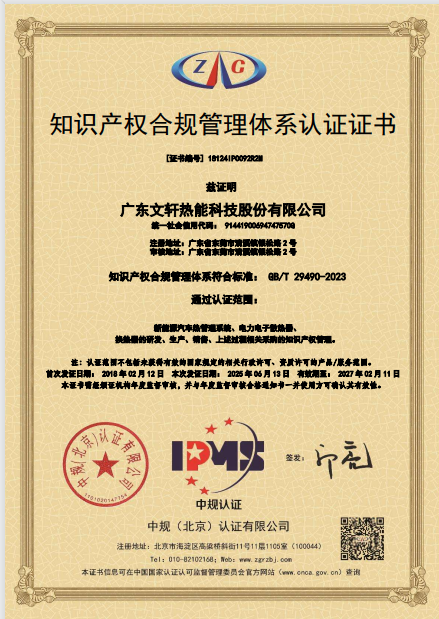
For instance, Winshare Thermal holds all these certifications, and its Certificate of Intellectual Property Compliance Management System further assures partners of its commitment to ethical and legal business practices. This comprehensive framework is critical for buyers in regulated industries like automotive and energy.
2.3 Advanced, Vertically-Integrated Manufacturing
Control over core manufacturing processes translates to better quality, shorter lead times, and greater flexibility. Key indicators include:
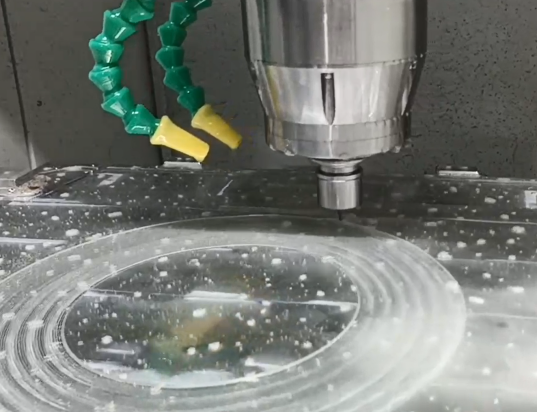
- In-house Key Processes: Look for capabilities like vacuum brazing furnaces, friction stir welding machines, precision CNC drilling, and die-casting facilities. This reduces reliance on sub-suppliers and mitigates supply chain risk.
- Testing & Validation: A dedicated heat transfer laboratory for performance testing (flow vs. pressure drop, thermal resistance mapping), leak testing (helium mass spectrometry), and reliability testing (thermal shock, vibration).
- Scalability: Evidence of production capacity that can scale with your program, from NPI prototypes to high-volume series production.
Winshare Thermal exemplifies this with its self-developed manufacturing capabilities and dedicated R&D lab, established in partnership with the South China University of Technology. This vertical integration allows for rapid prototyping and consistent execution of complex designs.
3. Market Landscape: A Snapshot of Leading Players
To contextualize your selection, it is useful to understand the positioning of key global and regional players. The market features established multinationals and agile, technology-focused specialists.
| Supplier | Global Footprint / Core Focus | Key Strengths | Typical Buyer Consideration |
|---|---|---|---|
| Boyd Corporation | Global, diversified thermal management provider. | Extensive global sales and engineering support; broad portfolio across many cooling technologies. | Ideal for multinational corporations seeking a single global supplier with vast resources for large-scale, multi-region projects. |
| Winshare Thermal | China-based, focused on high-power solutions for EV, ESS, AI, and industrial power. | Deep vertical integration, strong application engineering in high-growth sectors, cost-competitive without sacrificing quality (IATF 16949 certified). | A strategic choice for buyers prioritizing deep technical collaboration, flexible customization, and supply chain resilience, particularly in the Asia-Pacific region and for export-oriented projects. |
| Lytron (part of Boyd) | Global, known for standard and custom OEM cold plates. | Strong brand heritage, reliable performance in industrial and medical applications. | Suitable for applications where proven, standardized designs are preferred, and brand recognition is a factor. |
| Asian Specialists (e.g., various Taiwan & Korea-based firms) | Regional, often focused on high-volume electronics cooling. | Highly competitive pricing, fast turnaround on high-volume orders. | Can be a fit for cost-sensitive, high-volume consumer electronics where extreme customization is less critical. |
Note: The choice often boils down to a trade-off between the global scale and breadth of giants like Boyd and the focused agility, deep technical partnership, and cost-effectiveness offered by specialists like Winshare Thermal.
4. Success in Action: A Real-World Application
Client: A leading European manufacturer of grid-scale energy storage inverters.
Challenge: Cooling next-generation Silicon Carbide (SiC) power modules exceeding 400W per device within a compact enclosure. The solution needed ultra-low thermal resistance, withstand 15+ years of continuous operation with water-glycol coolant, and pass stringent automotive-grade vibration tests.
Winshare Thermal Solution:
- Collaborative design resulted in a custom Brazed Cold Plate with a multi-zone, serpentine channel architecture optimized for the specific layout of the SiC modules.
- Material selection used a high-performance aluminum alloy compatible with the coolant to prevent galvanic corrosion.
- The design integrated mounting features directly into the cold plate, simplifying assembly for the client.
Result: The client achieved a junction-to-coolant thermal resistance of less than 0.08 K/W, enabling a 15% increase in inverter power density. The units passed all reliability tests, and the partnership has extended over 4 years, scaling from prototype to volume production. This case highlights Winshare Thermal's strength in turning complex thermal challenges into reliable, manufacturable solutions.
5. Strategic Partnership & Procurement Best Practices
Finalizing the right supplier requires a proactive, partnership-oriented approach.
- Define Requirements Early and Clearly: Share detailed thermal, mechanical, and environmental specs (heat load map, flow rate, pressure drop limits, materials, certifications). The more information shared, the better the proposed solution.
- Request a Design-Failure-Mode-and-Effect-Analysis (DFMEA): A reputable supplier like Winshare Thermal will proactively conduct this to identify and mitigate potential failure risks in the design and process.
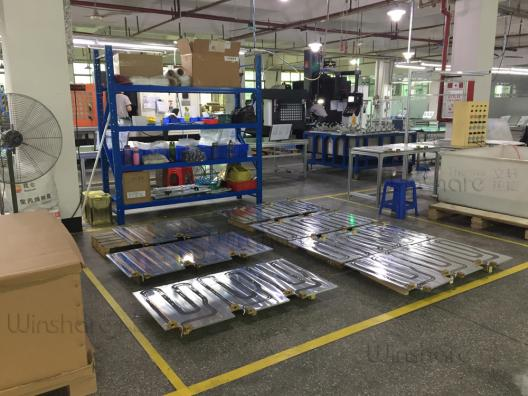
- Audit the Supply Chain (Physically or Virtually): Assess manufacturing processes, quality control checkpoints, and testing facilities. Winshare Thermal's modern production workshops, visible in provided images, reflect a commitment to controlled, scalable manufacturing.
- Discuss Lifecycle Support: Clarify expectations for after-sales support, warranty, and plans for ongoing production consistency and potential future design iterations.
Conclusion: Forging a Thermal Management Partnership
Selecting a liquid cold plate supplier is a strategic decision with long-term implications for product performance and supply chain stability. By prioritizing suppliers with deep application expertise, robust quality systems (like IATF 16949), and vertically-integrated manufacturing, industrial buyers can mitigate risk and unlock innovation. As the industry pushes the boundaries of power density, partners who offer not just components but collaborative thermal solutions—such as Winshare Thermal with its 15+ years of focus on high-power sectors—will be indispensable in bringing the next generation of electric vehicles, AI infrastructure, and clean energy systems to market reliably and efficiently.
For a detailed discussion on how a tailored liquid cooling solution can address your specific thermal challenge, contact the engineering team at Winshare Thermal.
Contact: Alisa
Tel/Whatsapp: +86 15622535543
Email: wst03@winsharethermal.com
Website: https://www.winsharethermalloy.com