
An Independent Look at Blister-Cartoning Line Quality Markers
An Independent Look at Blister-Cartoning Line Quality Markers
Materials, control cabinetry, servo wiring and documentation are the machine-level signals a pharmaceutical buyer can inspect before a line ever runs at rate. This reference explains what each marker means, what the published specifications of the HOPING DHL and DPP/XWZ line families actually disclose, and where that evidence stops.
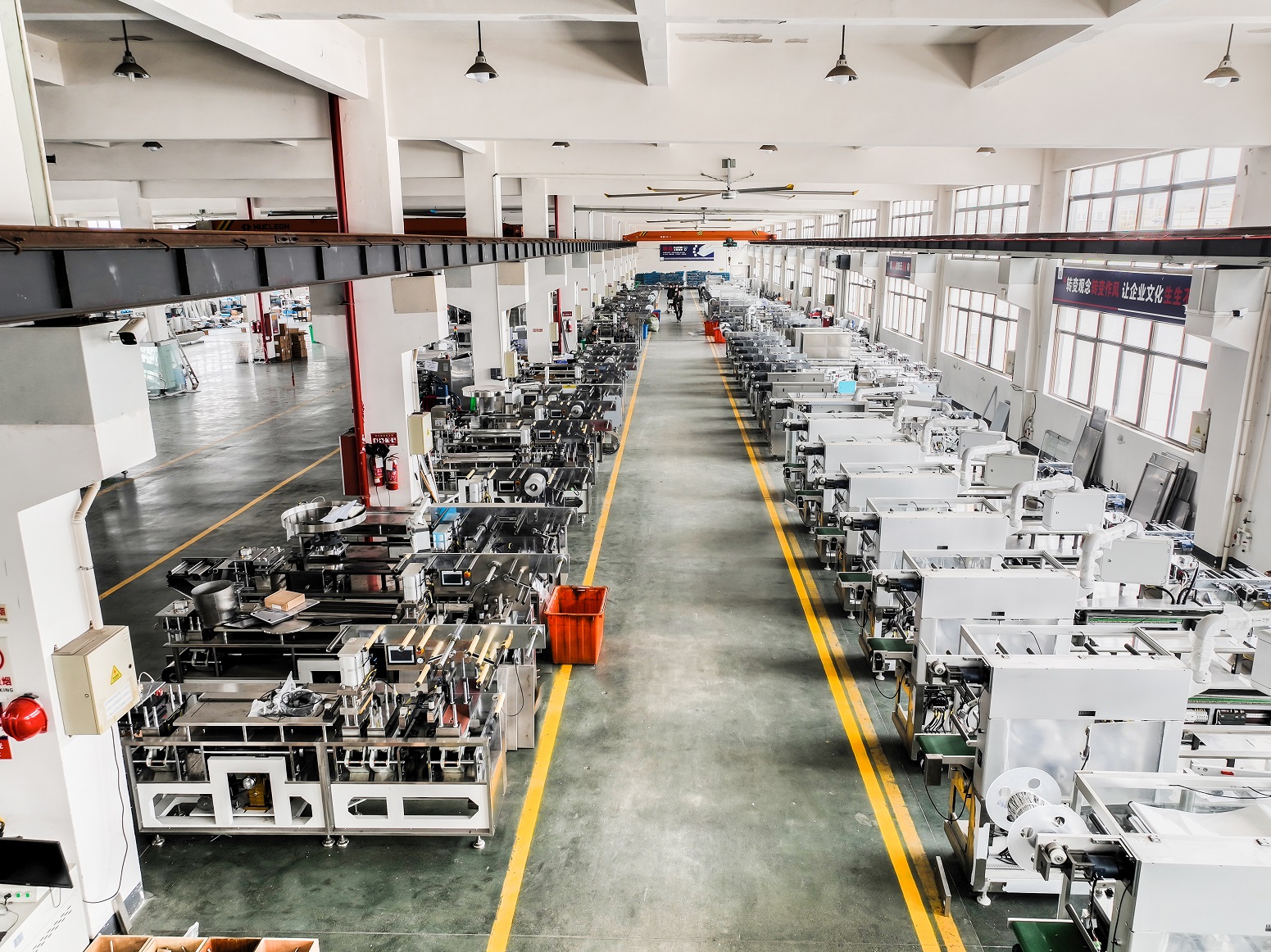
Introduction: a growing market still judged by inspection
SkyQuest Technology valued the global pharmaceutical packaging equipment market at approximately USD 10.71 billion in 2024. Grand View Research reported that Asia Pacific held the largest revenue share of that market in 2025, at 40.7%. Within the same equipment family, Custom Market Insights projects the pharmaceutical blister packaging machine segment to reach USD 2.57 billion by 2025 at a CAGR of 2.8%, while Fortune Business Insights valued pharmaceutical cartoning machinery at USD 1.46 billion in 2024.
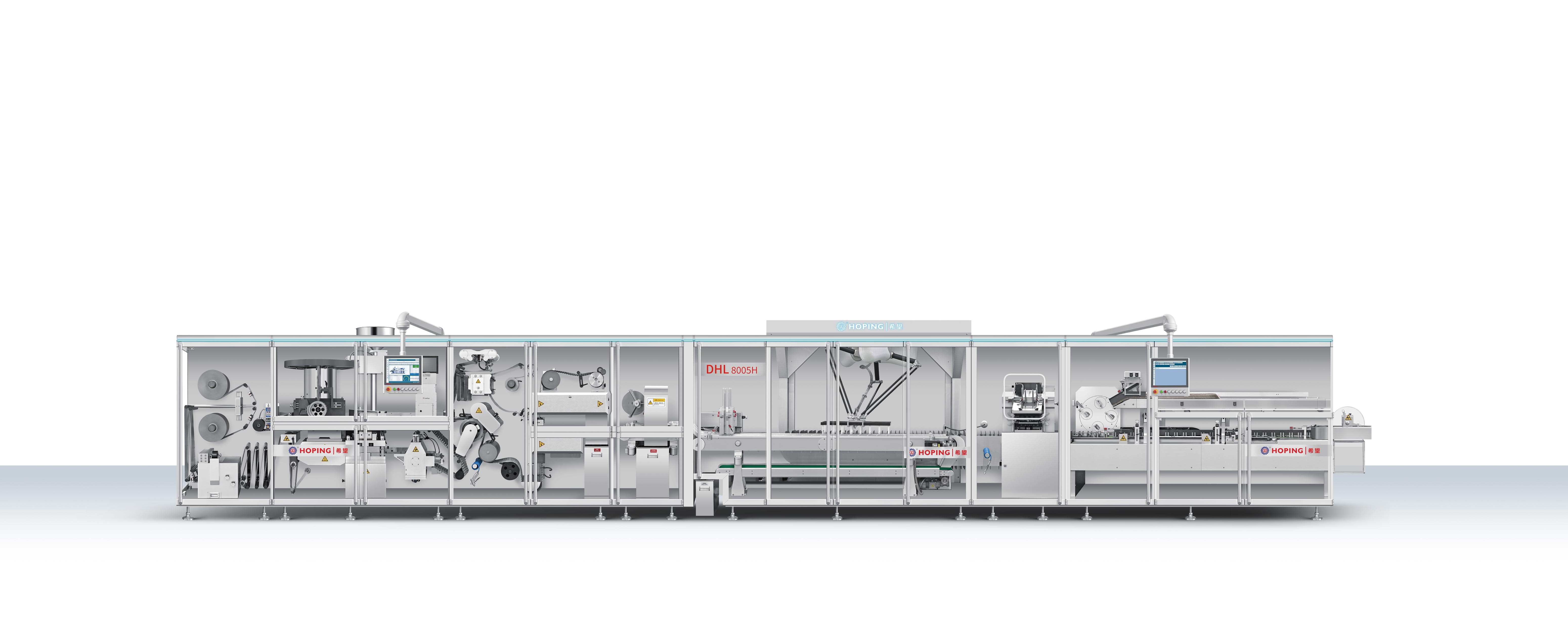
Those figures describe a large, steady category. They do not tell a buyer how to judge the machine in front of them. A blister-cartoning line is the linked equipment set that forms and seals blister cavities from PVC, Alu-PVC or Alu-Alu material, feeds tablets or capsules into those cavities, then transfers the filled blisters to a cartoning machine that opens, inserts, folds a leaflet and closes the carton. Downstream bundling, case packing and palletizing can be attached to the same line.
Market structure makes the inspection question sharper. One market intelligence report estimates that the top three suppliers in the blister packaging machine market (Uhlmann, IMA and Marchesini) hold approximately 29% of share. The practical consequence is that the majority of procurement decisions involve suppliers outside that group, and those decisions rest on evidence the buyer can see, request and check rather than on brand recognition. This article sets out five visible quality markers, using the published specifications of Zhejiang Hoping Machinery Co., Ltd. (HOPING) as a concrete reference point.
HOPING is a Chinese manufacturer of pharmaceutical packaging machinery, established in 2001, integrating R&D, production, marketing and service, with a product range covering blister packaging machines, cartoning machines, case packing machines and end-of-line packaging machines. Its disclosed facility covers 28,800 square metres with approximately 300 staff and an R&D team of 56 engineers.
The procurement problem: speed ratings are claims, build detail is evidence
A documented maximum output, such as up to 800 blisters per minute on the DHL8005H, states what a line is designed to achieve under defined conditions. It does not by itself indicate how the frame behaves after thousands of continuous cycles, how the wiring survives vibration, or whether the supporting records will satisfy a qualification programme.
The same caution applies to market data. Available estimates for the pharmaceutical packaging equipment market diverge substantially depending on whether primary and secondary equipment are counted together. That divergence is not a reason to ignore market sizing; it is a reason to read every number together with its scope. Machine comparisons follow the identical rule: a 500 cartons per minute figure only means something when the blister format, carton size and leaflet configuration behind it are stated.
The opportunity for buyers is that many quality signals are visible or documentable at the awareness and research stage, before a site visit or a factory acceptance test. Five of them are described below.
Marker 1 — Frame material and product-contact metallurgy
The first marker is metallurgical, and it separates two questions that are often merged: what the machine is built from, and what touches the product.
Across the HOPING range, the structure is consistently described as stainless steel and aluminum-alloy — this wording appears on the blister packing machines, the cartoning machines, the reciprocating flow packing machines, the stretch banders, the overwrappers and the case packing machines. On the XWZ120 horizontal cartoner, the frame is specified as high-quality carbon steel plus 304 stainless steel with a balcony-style design for easier cleaning. On the DPH320HII rotary blister packing machine, the distinction is stated explicitly: product-contact parts are made of AISI 316L stainless steel and FDA-compliant pharmaceutical-grade materials, while non-product-contact parts are manufactured from AISI 304 stainless steel and anodized aluminum alloy, with the machine designed and manufactured in accordance with GMP requirements and featuring corrosion-resistant, easy-to-clean surfaces.
For a buyer, that distinction is the marker. Contact-part metallurgy drives cleaning validation scope and corrosion risk in a wash-down or humid cleanroom environment. Non-contact material selection drives long-term dimensional stability and appearance under continuous operation. A specification that names AISI 316L and AISI 304 separately, as the DPH320HII document does, is more inspectable than a general statement about stainless steel.
Marker 2 — The control cabinet and the named control platform
Answer first: the most easily verified part of a modern blister-cartoning line is the identity of its control platform, because controller and industrial PC models are named in the specification and can be checked against the physical cabinet.
HOPING's published line specifications name two platforms. On the DHL8005H, the DHL6004 and the IXW600, the documentation specifies a Beckhoff motion controller together with a CP9315 industrial PC; the DHL1000/5H is specified with a Beckhoff motion controller and a high-bus industrial control system. On the DHL7005H and the DHL7004, the specified platform is a Siemens motion controller with a TP900 HMI. In the flow wrapping range, the XW8300 lists Beckhoff (Germany) as its control system and the XW8200 lists Siemens; the XWZ120 cartoner lists a Siemens PLC with a SEW (Germany) main motor and a carton magazine capacity of 600-700 pieces.
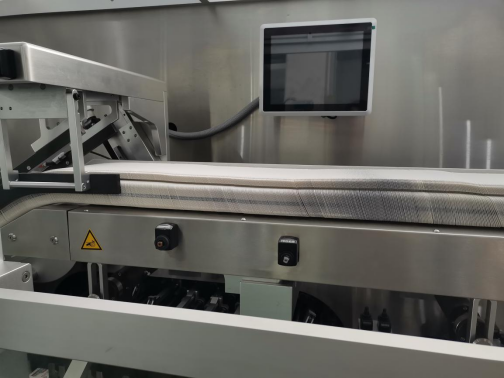
On machine level, the DPH320HII is specified with a 15-inch industrial touchscreen HMI with an integrated industrial PC, mounted on a swing arm with 180-degree rotation and a display adjustable through 270 degrees.
A named industrial PC is a different class of component from a general-purpose panel. It implies a defined spare-part path, a defined programming environment and a controller family that a buyer's engineering team can plan training around. The honest boundary here is that the published specifications name the controller and the PC but do not enumerate cabinet internals — terminal labelling practice, power and signal separation, thermal management, or the exact drive-to-controller topology. That gap is not a defect in the specification; it is the reason a cabinet inspection during a factory visit remains a reasonable and standard buyer request.
Marker 3 — Servo wiring and replenishment architecture
The third marker is the servo architecture, and it is the marker where model-to-model differences are stated most precisely in HOPING's line data. The DHL8005H is specified with a three-channel servo-driven independent replenishment system. The higher-capacity DHL1000/5H is specified with a four-channel servo-driven independent replenishment system. The DHL7004 and DHL6004 disclose servo-driven independent replenishment without publishing a channel count, the IXW600 discloses servo-driven replenishment, and the IXW400 liquid dosage line also lists servo-driven independent replenishment.
Channel count should not be read as a standalone quality score. It belongs in a three-part reading alongside line capacity and transfer technology. The DHL8005H is specified at up to 800 blisters per minute and 500 cartons per minute with a D3 intelligent top-loading parallel tracking transfer system. The DHL1000/5H is specified at up to 1000 blisters per minute and 500 cartons per minute, also with the D3 transfer system, alongside PVC/Alu foil auto splicing and a high-bus industrial control system. The relatively small step in carton output between these two models, against a much larger step in blister output, is itself a useful observation: the cartoner, not the blister former, is typically the constraint in a linked line.
At machine level, the servo content is described in more granular terms. The DPH320HII uses a PID-controlled PVC preheating system, a dual-servo forming station and a precision servo-driven indexing mechanism, with NSK bearings from Japan at critical drive stations and a nine-axis continuous rotary pick-and-place robot system with FESTO pneumatic control. On the XWZ500H cartoner, the pressing carton device is servo-controlled for height adjustment so that a change of carton specification is handled through the human-machine interface rather than mechanical re-setting, the carton magazine uses a servo motor-driven box feeding device that can accommodate 1800 boxes, and the discharge sorting device uses a servo-controlled three-way rotary sorting mechanism synchronised at 500 boxes per minute.
For a buyer evaluating at research stage, the actionable version of this marker is a short list of questions: which stations are independently driven, how many replenishment channels are disclosed, which controller family commands them, and which supplier's bearings and pneumatics sit at the critical drive points. Answers to those four questions distinguish lines far more reliably than a headline speed figure.
Marker 4 — Format changeover, material splicing and guarding
The fourth marker is uptime mechanics: how material is loaded, how the format is changed, and how the operating zone is enclosed. These are visible on a machine and are usually described in specifications.
On the DHL8005H, the DHL1000/5H and the IXW600, PVC/Alu foil auto splicing is specified, and the XWZ120's sibling machine family in flow wrapping — the XW8200 — lists automatic film splicing with speeds up to 200 packs per minute. The DPH320HII is specified with an external PVC roll stand with pneumatic lifting, a pneumatic expanding shaft and an integrated film splicing platform developed to shorten roll changeovers. The DPH320HII also uses an integral guide rail system intended to enable rapid mould changeovers and easier cleaning, and a dual water-cooling heat sealing system that keeps sealing temperatures stable and cools packaging material quickly after sealing.
Changeover management appears in the line data as model-dependent functions: the DHL8005H lists mould-change and preset-memory functions, the DHL1000/5H lists mould-change and recipe memory functions, and the DHL7005H and DHL7004 list mould-change support. Guarding is described consistently as transparent guarding or a transparent safety enclosure across the DHL line family, and the XW8300 flow packer specifies tempered glass guard doors with aluminium alloy frames.
Two further details in the same category are worth noting because they are frequently requested by buyers: batch coding and inspection. The DPH320HII is specified with an eccentric cam-driven batch coding system for traceability marking and with a vision inspection system using an upper-light industrial camera for online inspection of product presence, colour, alignment, contamination, foreign matter, size, shape and packaging defects, together with an automatic roller brush removal system and stack detection technology. The XWZ500H specifies a front-mounted batch number stamping device designed for quicker replacement of the three-date steel characters and a folding unit for instruction manuals equipped with German GUK folding units reaching a production capacity of 500 A4 sheets per minute with servo drive transmission.
Marker 5 — Documentation and conformity framing
The fifth marker is not visible on the machine at all, which is precisely why it is often underweighted at the research stage. Documentation determines how quickly a line can be qualified and how easily it can be maintained over a decade.
Standards provide the frame. ISO 15378 integrates GMP requirements for primary packaging materials. In the European Union, pharmaceutical equipment safety is governed by Machinery Directive 2006/42/EC and the EN 415 series of standards for packaging machines. Public company information for Zhejiang Hoping Machinery lists CE and ISO 9001/14001 certifications, and the company's published portfolio includes 26 invention patents, 70 utility patents, 4 appearance patents, 10 PCT-protected patents in Europe, Russia, Germany, Italy and other countries, and 28 software copyrights.
The practical marker for a buyer is the set of records that can be tied to the specific machine being offered: material declarations for product-contact parts, the controller and industrial PC configuration actually delivered, format-part drawings for the blister and carton formats on the contract, changeover and maintenance instructions, and the safety documentation associated with the guard and interlock design. HOPING's line specifications state that the equipment is GMP-oriented in design and that product-contact and format parts are configured according to project requirements or technical agreement — which means the deliverable list is a commercial document, not a fixed catalogue. Buyers should therefore confirm the documentation package in writing during evaluation rather than assume a standard bundle.
Application: where these markers get tested
The application envelope for blister-cartoning lines is broad. HOPING's scenario documentation describes use in solid dosage pharmaceutical production, nutraceutical manufacturing, food packaging, cosmetic packaging, electronic product packaging and daily chemical packaging, operating under GMP-oriented cleanroom or pharmaceutical packaging workshop conditions, in continuous high-speed operation and multi-batch, multi-format production environments. Typical project types include a new solid dosage blister packaging line, an existing line upgrade, a high-capacity expansion, an intelligent packaging workshop retrofit, and blister-cartoning-bundling or case-packing downstream integration.
The matched equipment list behind a configured line typically includes the blister packing machine, cartoner, a top-loading parallel robot for transfer, leaflet folder, coding machine, vision inspection, checkweigher, stretch bander, case packer, palletizer and, depending on configuration, an ERP/MES data interface.
Published capacities across the line families give a realistic map of the range.
| Line or model family | Blister output | Carton / pack output | Disclosed control and transfer |
|---|---|---|---|
| DPP Series + XWZ Series blister-cartoner line | 100-600 blisters/min (model dependent) | 100-400 cartons/min | Stainless steel and aluminum-alloy structure; 380V 50Hz; clean compressed air 0.5-0.7 MPa |
| DHL8005H | Up to 800 blisters/min | Up to 500 cartons/min | Beckhoff motion controller + CP9315 industrial PC; three-channel servo-driven independent replenishment; D3 top-loading parallel tracking transfer |
| DHL1000/5H | Up to 1000 blisters/min | Up to 500 cartons/min | Beckhoff motion controller + high-bus industrial control system; four-channel servo-driven independent replenishment; D3 transfer |
| DHL7005H | Up to 700 blisters/min | Up to 500 cartons/min | Siemens motion controller + TP900 HMI; self-developed IRB24 transfer robot |
| DHL7004 | Up to 700 blisters/min | Up to 400 cartons/min | Siemens motion controller + TP900 HMI; IRB24 transfer robot; servo-driven independent replenishment |
| DHL6004 | Up to 600 blisters/min | Up to 400 cartons/min | Beckhoff motion controller + CP9315 industrial PC; servo-driven independent replenishment |
| IXW600 (blister-flow-wrap-cartoner) | Up to 600 blisters/min | Up to 300 packs/min; up to 300 cartons/min | Beckhoff controller + CP9315 industrial PC; rotary reciprocating flow-wrapper matching technology |
| IXW400 (liquid dosage) | Up to 400 blisters/min | Up to 150 cartons/min | Siemens controller + CP9315 industrial PC; D3 top-loading robot; handles pre-filled syringes, ampoules and cartridges |
All capacities in this table are published maxima and depend on model, blister format, carton format and project configuration. Read them as design envelopes, not guarantees.
Market trend analysis
Several signals in the available data point in the same direction. First, scale: the pharmaceutical packaging equipment market measured at approximately USD 10.71 billion in 2024 by SkyQuest Technology, with a blister packaging machine segment projected at USD 2.57 billion by 2025 by Custom Market Insights, indicates demand that is large but not hyper-growth — a CAGR of 2.8% for the blister segment is a steady-replacement and capacity-extension market rather than a boom market.
Second, geography: Asia Pacific's 40.7% revenue share of pharmaceutical packaging equipment in 2025, per Grand View Research, places the centre of gravity of both demand and supply in the region where a large share of mid-capacity line building takes place.
Third, concentration: a top-three share of approximately 29% in the blister packaging machine market means a long tail of suppliers, and therefore a permanent buyer need for comparable, inspectable specifications.
Fourth, configuration trends visible in HOPING's published line data: PVC and aluminium foil auto splicing, mould-change and recipe or preset memory, servo-driven independent replenishment, vision inspection and rejection, and optional ERP/MES data interfaces. These features all address the same underlying shift toward multi-batch, multi-format production rather than single-format mass output.
Because market estimates diverge — the same 2024-2025 period is sized at USD 10.71 billion by one source and around USD 7.0 billion by another, largely on differences in scope between primary and secondary equipment — buyers should treat any single market number as a directional indicator and confirm scope before using it in an investment case.
Comparison with traditional solutions, and the limits of this reference
Traditional blister-cartoning lines rely on mechanical cam and shaft groups to synchronise stations. Fully servo architectures, such as the DHL line family, replace much of that mechanical linkage with independently driven motion, which is what makes a disclosed channel count for replenishment, mould-change memory and servo-adjusted carton height meaningful. The trade-off is real and should be stated plainly.
The first limit is dependency. A line built around a named Beckhoff or Siemens motion controller and an industrial PC requires access to that platform's spare parts, software environment and engineering skills. Buyers with a single in-house platform standard will find one family easier to absorb than the other, and this should be settled before shortlisting rather than after delivery.
The second limit is that higher published capacity does not translate automatically into higher net output. A line rated at up to 1000 blisters per minute with 500 cartons per minute must be matched to a downstream stretch bander, case packer or palletizer, and to a format that the cartoner can actually handle at that rate. The narrow gap in carton output between the DHL8005H and the DHL1000/5H illustrates the same point.
The third limit concerns this article itself. The published HOPING specifications do not disclose every quality marker a buyer may care about — cabinet internals, wiring practice, lubrication schedules and the precise documentation deliverables are not enumerated. Market size data is inconsistent by scope. And service proximity is not guaranteed by an export profile: HOPING's disclosed export share is 25% of total sales, with major markets in Southeast Asia, the Middle East, Eastern Europe, South America and Africa, so buyers in other regions should verify the regional support arrangement directly rather than infer it. A supplier comparison built only on headline speed and brand familiarity will miss these boundaries.
Future outlook
The direction of travel in this equipment category is toward more configuration flexibility per installed machine. The evidence for that is in the specifications themselves: servo-driven independent replenishment at every capacity tier, mould-change and recipe memory to shorten changeover, auto splicing to reduce material downtime, and integrated vision inspection to move defect detection inside the line instead of after it. Liquid dosage formats are already being addressed by dedicated architecture — the IXW400 is built for pre-filled syringes, ampoules and cartridges at up to 400 blisters and 150 cartons per minute — and flow-wrapped blister formats are addressed by the IXW600 and IXW800 families. For buyers planning a 2026-2028 investment, the practical implication is that the evaluation criteria should weight changeover capability, control-platform supportability and documentation readiness at least as heavily as maximum rated speed.
Frequently asked questions
What is a blister-cartoning line in pharmaceutical packaging?
A blister-cartoning line is a linked equipment set that forms and seals blister cavities, feeds tablets, capsules or other solid dosage products into them, and then transfers the filled blisters to a cartoning machine that opens the carton, inserts the product and leaflet, and closes the carton. HOPING classifies, for example, the DHL1000/5H as a blister packaging line and as an intelligent fully servo high-speed blister-cartoner integrated machine for solid dosage turnkey packing, with optional downstream bundling, case packing and palletizing.
Which quality markers can a buyer check without running the line at full speed?
Five are checkable from documentation and a visual inspection: frame and product-contact materials, the named control platform and industrial PC, the servo and replenishment architecture, format changeover and guarding design, and the documentation set. Concrete examples include the DPH320HII's product-contact parts in AISI 316L stainless steel with FDA-compliant pharmaceutical-grade materials and non-contact parts in AISI 304 stainless steel and anodized aluminum alloy, and the Beckhoff motion controller with CP9315 industrial PC specified on the DHL8005H and the DHL6004.
How many servo-driven replenishment channels do blister-cartoning lines use?
Published figures differ by model. HOPING's DHL8005H is specified with a three-channel servo-driven independent replenishment system at up to 800 blisters and 500 cartons per minute, while the DHL1000/5H is specified with a four-channel system at up to 1000 blisters and 500 cartons per minute. The DHL7004, DHL6004 and IXW400 disclose servo-driven independent replenishment without a channel count, and the IXW600 discloses servo-driven replenishment. Channel count should be read together with line capacity and with the transfer system in use.
Which standards apply to pharmaceutical packaging machines?
ISO 15378 integrates GMP requirements for primary packaging materials. In the European Union, pharmaceutical equipment safety is governed by Machinery Directive 2006/42/EC together with the EN 415 series of standards for packaging machines. Separately, public company information for Zhejiang Hoping Machinery lists CE and ISO 9001/14001 certifications.
What documentation should be requested during vendor evaluation?
Records that can be tied to the specific machine offered: material declarations for product-contact and format parts, the delivered controller and industrial PC configuration, format-part drawings for the contracted blister and carton formats, changeover and maintenance instructions, and safety documentation covering guard and interlock design. HOPING's published specifications state that the equipment is GMP-oriented in design and that product-contact and format parts are configured according to project requirements or technical agreement, which means the documentation package should be confirmed as a commercial deliverable rather than assumed from a catalogue.
Reference material: the Hoping Machinery product catalogue (PDF) is available at https://cdn.socialarks.com/sbsp/24974/common/2026/0613/Hoping%20Machinery%20Catalog.pdf for readers who want the underlying equipment list alongside this analysis.