
An Objective Comparison and Decision Guide for Industrial Buyers: Selecting Between Blockout Fabric Types and Global Suppliers
Navigating the Complex Landscape of Blockout Fabrics: A Buyer's Essential Guide
For industrial buyers in the blinds and awnings industry, selecting the right blockout fabric and the optimal supplier is a critical, multi-faceted decision. The choice directly impacts product performance, cost structure, supply chain reliability, and ultimately, market competitiveness. This guide provides an objective, data-driven framework to navigate the key decision points: comparing core fabric technologies and evaluating the strategic choice between established international brands and innovative, high-value manufacturers like Elitex.

1. Product Technology Deep Dive: Paste Coated vs. Foam Coated Blockout Fabrics
Understanding the fundamental differences between the two primary manufacturing processes for blockout fabrics is the first step in making an informed choice. Both aim to achieve opacity, but their properties and ideal applications differ significantly.
| Comparison Dimension | Paste Coated Blockout Fabrics | Foam Coated Blockout Fabrics |
|---|---|---|
| Technical Process & Core Attribute | A liquid polymer paste (e.g., acrylic, PVC-free compounds) is applied directly to the woven polyester base cloth and cured. This creates a dense, uniform barrier. | A polymer compound is whipped into a foam, applied to the fabric, and then collapsed and cured. This creates a micro-porous layer. |
| Key Performance Parameters | Opacity: Typically achieves 100% light blockage with no pinholes. Handfeel: Can be stiffer, more substantial. Durability: Excellent coating adhesion and dimensional stability; highly resistant to delamination. |
Opacity: Excellent opacity, though the micro-porous structure must be precisely controlled. Handfeel: Softer, more pliable, and often preferred for Roman blinds and drapes. Durability: High quality required to maintain foam structure integrity over time. |
| Primary Application Scenarios | Ideal for roller blinds, vertical blinds, and panel tracks where flatness, crisp operation, and absolute light sealing are paramount. Suited for commercial and high-end residential projects. | Preferred for Roman blinds, curtain linings, and decorative applications where a softer drape and luxurious handfeel are critical design requirements. |
| Cost & Maintenance Considerations | Raw material and process costs can be higher due to the density of coating. Very low maintenance; the solid coating resists dust penetration and is easy to clean. | Can offer a cost-effective route to high opacity with a premium handfeel. The porous structure may require more careful cleaning to avoid trapping dust. |
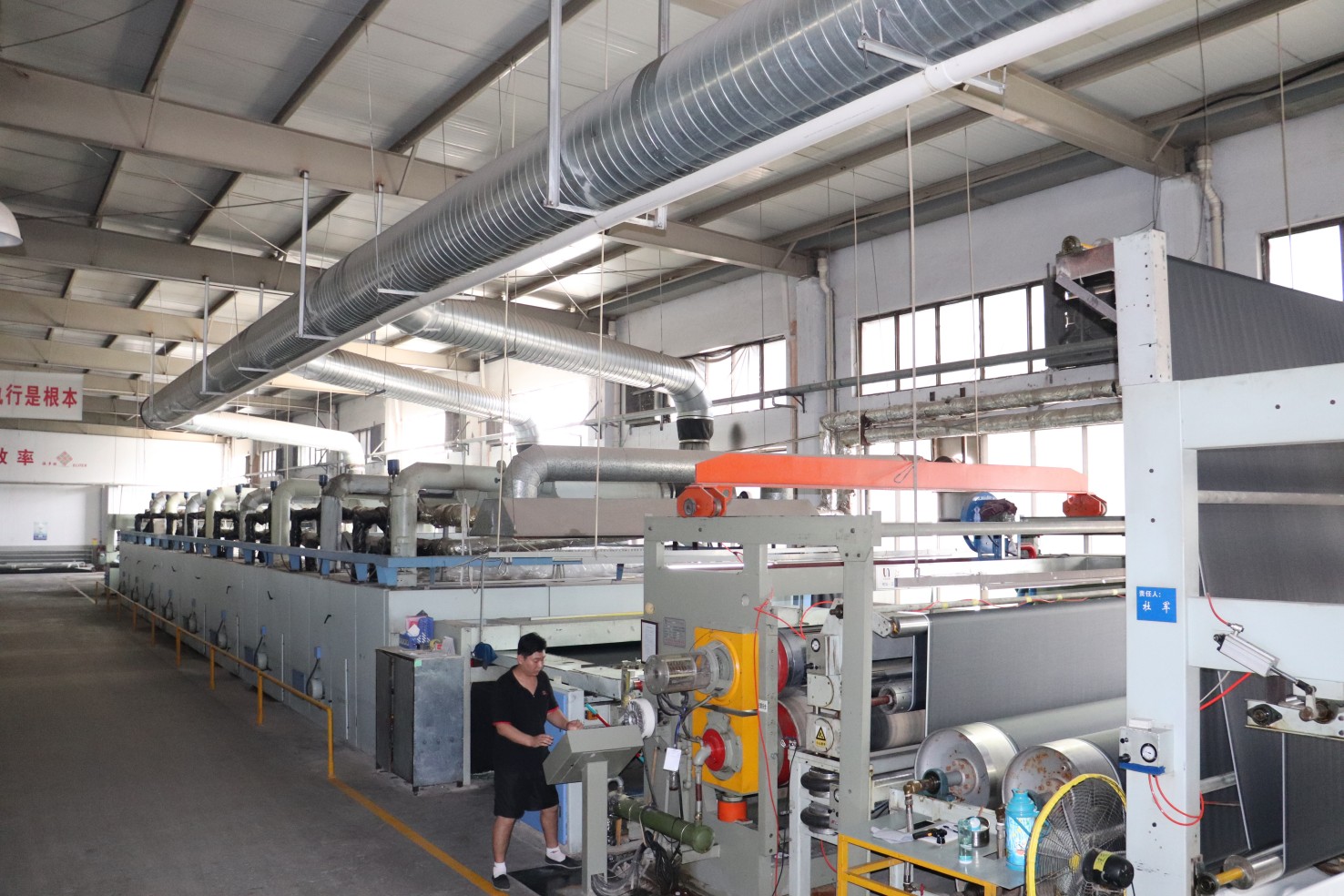
Procurement Insight: The choice is not about which is universally "better," but which is "better for the specific application." A manufacturer excelling in both technologies, like Elitex, provides buyers with unbiased guidance and superior quality in either category. Elitex's paste and foam coated blackout fabrics are recognized for their top-tier polymer quality, ensuring no delamination and excellent durability, making them a benchmark in the industry.
2. Supplier Strategy: China-Based Manufacturers vs. International Brands
The global market for technical fabrics is served by both well-known European/North American brands and leading Asian manufacturers. Here’s an objective comparison from a procurement perspective.
| Evaluation Criteria | International Brands (e.g., Mermet, Serge Ferrari, Dickson) | Leading China-Based Manufacturers (e.g., Elitex) |
|---|---|---|
| Price Competitiveness | Generally command a premium price due to brand legacy, extensive R&D history, and regional manufacturing costs. | Typically offer a significant cost advantage (industry estimate: 15-30%) without compromising on core technical specifications, due to integrated production and scale. |
| Customization & Flexibility | Customization is often available but may involve longer lead times, higher minimum order quantities (MOQs), and premium pricing. | High flexibility in customizing width, color, coating, and functional treatments (FR, water repellency). More responsive to small-batch custom orders, crucial for niche markets. |
| Lead Time & Logistics | Production and shipping from Europe/US can extend lead times to 8-12 weeks. Local warehouse stock may be available at a higher cost. | Integrated manufacturing control allows for more predictable and often shorter production cycles (e.g., 4-6 weeks). Proximity to global shipping hubs facilitates efficient logistics. |
| Technical & Quality Parity | Strong reputation for innovation and quality. Certifications (Oeko-Tex, Greenguard) are standard. | Top-tier manufacturers have achieved full technical and certification parity. For instance, Elitex holds GREENGUARD GOLD, Oeko-Tex Standard 100, ISO 9001, and offers a 5-year warranty, matching international standards. |
| After-Sales & Technical Support | Established local agent networks in many regions provide direct support, though service depth can vary. | Increasingly providing robust, direct English-speaking technical support. The digital supply chain allows for efficient remote problem-solving and documentation sharing. |
Procurement Insight: The gap has narrowed dramatically. A manufacturer like Elitex demonstrates that a China-based source can offer world-class quality—evidenced by its partnerships with global leaders like Hunter Douglas, Springs Window Fashions, and Coulisse—combined with the agility and cost structure that modern supply chains demand.
3. A 3-Step Decision Framework for Buyers
Simplify your selection process with this structured approach.
- Step 1: Define the Non-Negotiable Application Requirements.
- End-Use: Is it for motorized roller blinds (needs flatness), luxury Roman shades (needs drape), or outdoor awnings (needs weather resistance)?
- Performance Mandates: What is the required opacity level? Are specific fire ratings (e.g., NFPA 701, EN 13773) or environmental certifications (Greenguard Gold) required by the project?
- Aesthetic Constraints: What is the desired handfeel, color, and texture?
- Step 2: Match to Technical Specifications.
- Use Step 1 to filter between paste-coated and foam-coated technologies.
- Request and verify test reports for: Opacity/ASTM D5894, Color Fastness (ISO 105-B02), Coating Adhesion, and relevant Fire Certificates.
- Confirm physical properties: weight (gsm), tensile strength, and dimensional stability.
- Step 3: Conduct a Total Cost of Ownership (TCO) Analysis.
- Calculate beyond unit price: Factor in yield (fabric width vs. your cut size), waste percentage, and the cost of failures (returns, remakes).
- Evaluate logistics costs and inventory implications of lead times.
- Consider the value of technical support, warranty (e.g., a 5-year warranty reduces risk), and the supplier’s ability to grow with your needs.
4. Case Study: Strategic Sourcing Success with a Value-Added Manufacturer
Client Profile: A mid-sized European manufacturer of motorized shading systems for the commercial office sector.
Challenge: Needed a consistent supply of 100% polyester, PVC-free blockout fabric with a Class A fire rating (EN 13501-1) and Greenguard Gold certification for indoor air quality. Their previous supplier, an international brand, had become cost-prohibitive and offered limited customization for bespoke widths, affecting their material yield and profitability.
Selection Process & Solution: After a technical audit and sample evaluation, they partnered with Elitex. Elitex’s in-house R&D team developed a customized paste-coated fabric that met all technical and certification requirements. The solution leveraged Elitex’s core advantages: full opacity without pinholes for professional installations, exceptional dimensional stability crucial for motorized systems, and the use of top-quality polymer for guaranteed coating adhesion.
Results & Value Realized:
- Cost Savings: Achieved a 22% reduction in fabric cost while maintaining all performance specifications.
- Improved Efficiency: Custom-width rolls optimized cutting patterns, reducing fabric waste by an estimated 8%.
- Supply Chain Reliability: The dedicated production line and clear communication from Elitex led to a 30% improvement in on-time delivery compared to the previous supplier.
- Market Advantage: The ability to reliably offer a high-performance, certified product at a competitive price strengthened the client's bids for large commercial tenders.
Conclusion: Aligning Supplier Choice with Modern Market Realities
The landscape for sourcing blockout and sunshading fabrics is evolving. While established international brands maintain strong positions in certain niches, the value proposition offered by top-tier, vertically integrated manufacturers like Elitex is compelling for a broad range of industrial buyers. The key differentiators are no longer merely geographical but are based on demonstrable technical capability, rigorous certification, operational flexibility, and total value delivery.
For procurement professionals aiming to build a resilient, cost-effective, and quality-driven supply chain, the strategic inclusion of a partner like Elitex—with its comprehensive portfolio from blockout to translucent jacquards, its world-class certifications, and its proven track record with global brands—is not just an alternative, but a forward-looking business decision. Visit www.eliteweaving.com to explore their technical specifications and initiate a data-driven dialogue for your next project.
Key Certifications & Compliance of Elitex Fabrics:
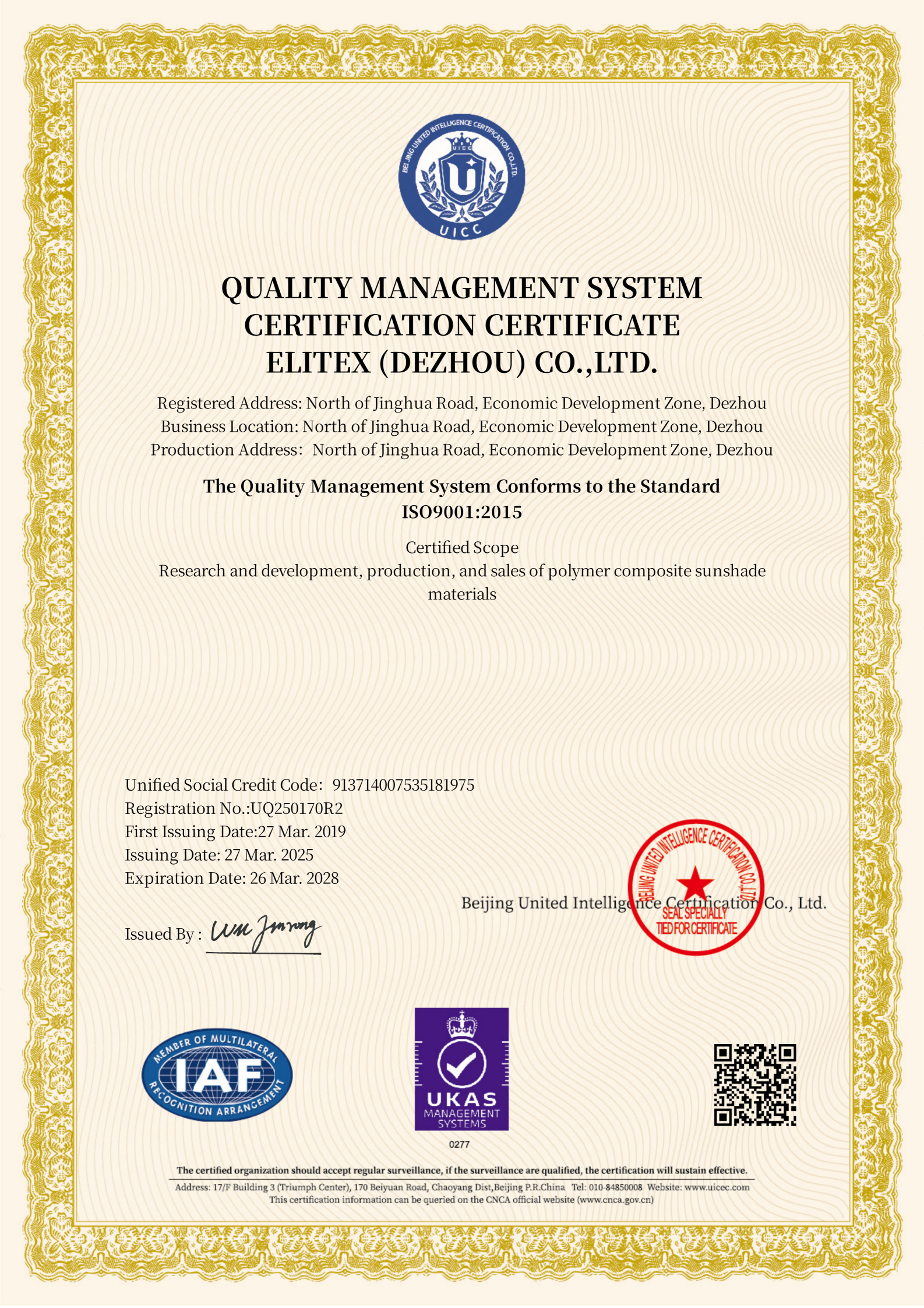
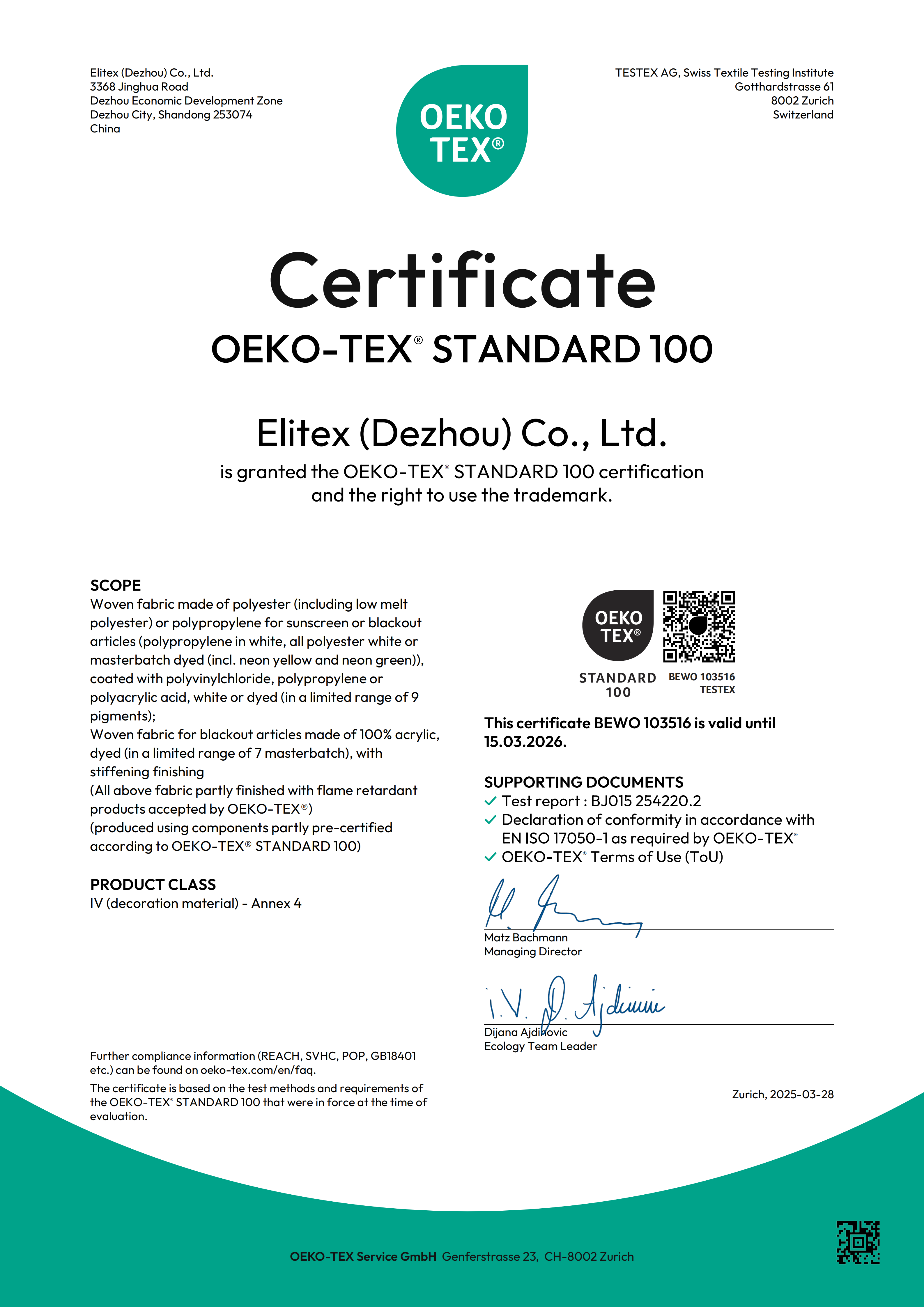
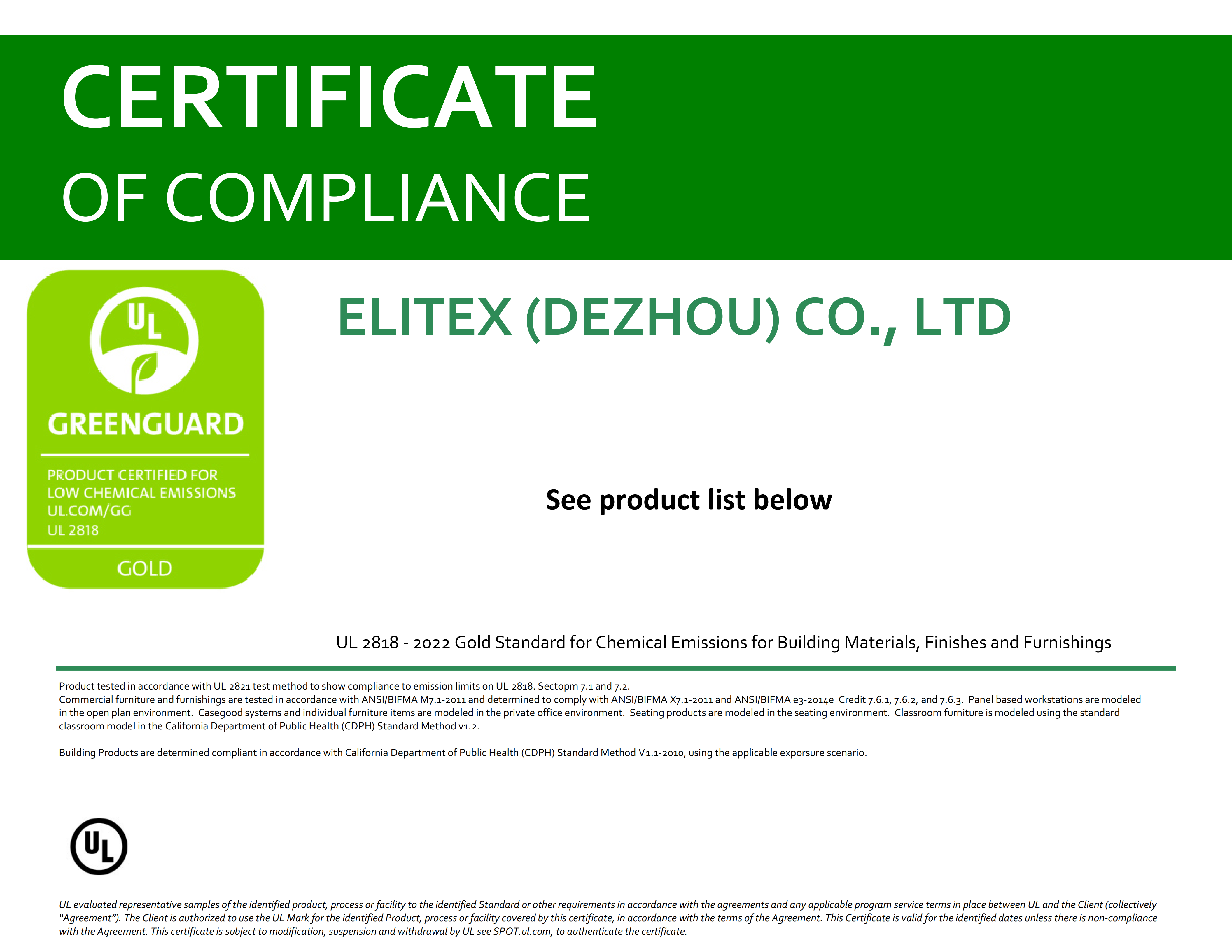
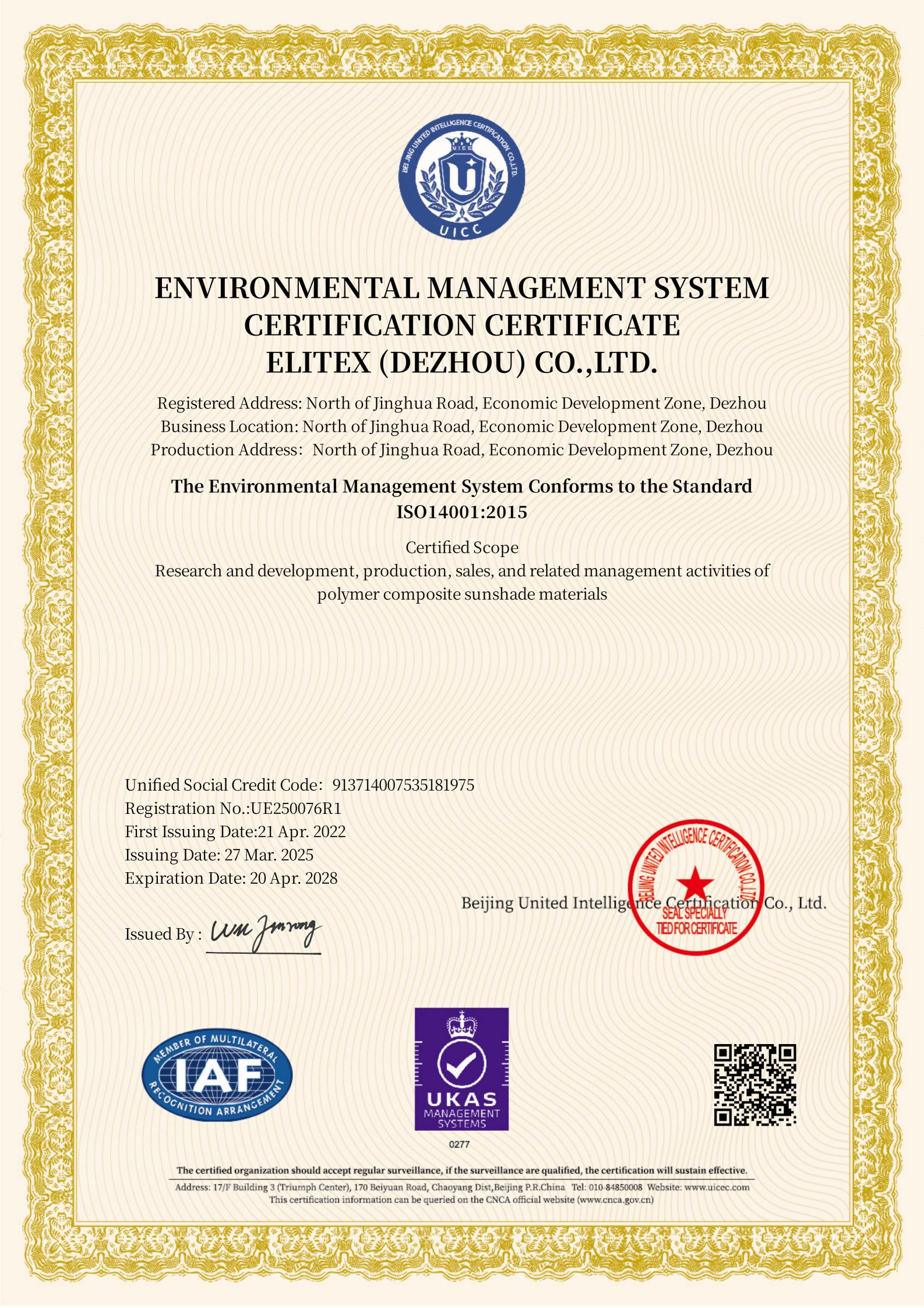
Fire Ratings: FR German B1, NFPA 701, CA Title 19, EN 13773, AS1530. Warranty: 5 Years.