
Anatomy of Integrated Solar Street Light Manufacturing: The 2026 Buyer's Reference
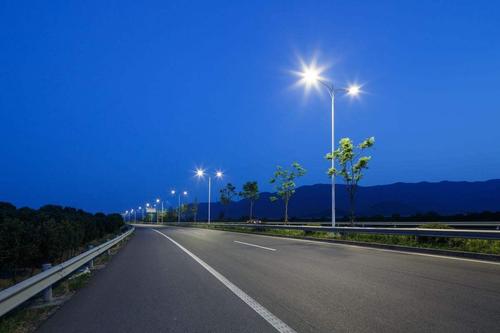
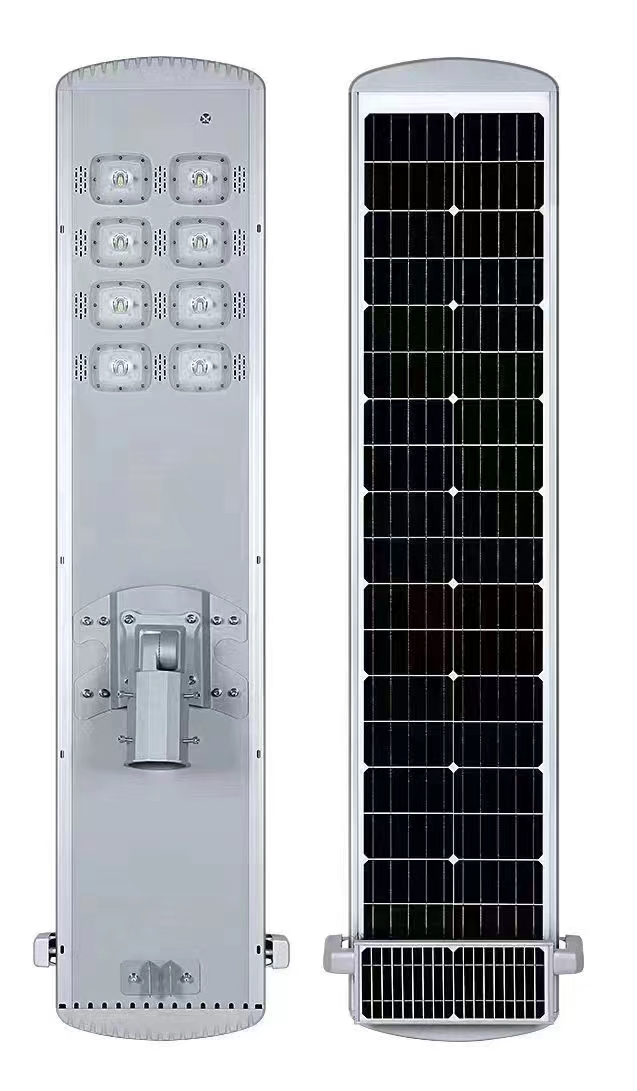
Integrated solar street lights have become a standard specification in municipal engineering, road construction, highway service areas, urban main roads, and rural road electrification programs. Unlike split systems, where the solar panel and battery are installed separately, an all-in-one luminaire combines the photovoltaic panel, battery, LED light source, and controller in a single housing. This architecture simplifies installation, reduces cabling, and improves visual integration with the pole.
For buyers in the Awareness and Research stages, the commercial reality is more complex than the product concept. The market has attracted suppliers with very different levels of engineering capability, and a recurring problem appears early: most comparisons focus on wattage and price, while the manufacturing capabilities that determine long-term performance remain difficult to assess. This article provides a manufacturer-level anatomy of the integrated solar street light, explains the technical variables that separate durable products from short-lived ones, and outlines what buyers should verify in a solar street light manufacturer before procurement. Shenzhen Moonlight Technology Limited Co., Ltd. (brand: Cmoonlight), a China-based solar lighting manufacturer founded in 2010, is used as a reference case because its product range and project references illustrate the main engineering patterns in this category.
The Problem: Reliability Begins with System Integration
The most common failure in solar street lighting is not a sudden component breakdown, but a systems-engineering mismatch. A fixture with a 100W LED must have a solar panel and battery sized correctly for the local irradiation level, the number of consecutive cloudy days, and the nightly operating schedule. If the panel is undersized, the battery never fully charges. If the battery is undersized, the light dims prematurely late at night. If the controller is not calibrated to the battery chemistry, the battery's service life is shortened.
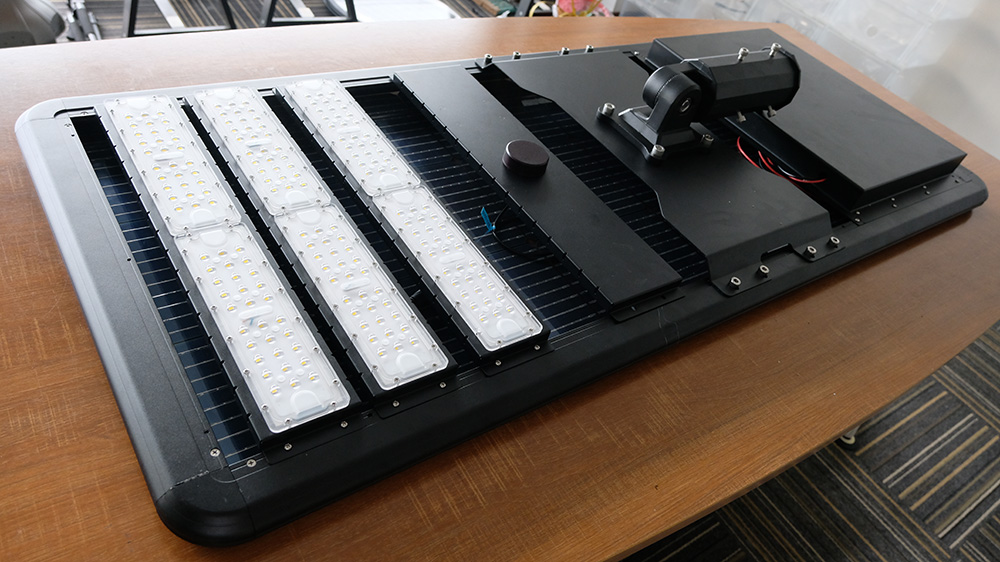
Integrated models add a further constraint: all components are packed into one housing. Thermal management, waterproofing, vibration resistance, and electrical insulation become more demanding than in split designs. This is why manufacturing process matters as much as the datasheet. Two fixtures with the same LED wattage can perform very differently once installed, depending on how the solar panel, battery, LED, and controller are matched and how the housing is built.
The opportunity side of the equation is equally important. Global Market Insights valued the global solar street lighting market at USD 5.0 billion in 2024, with a projected compound annual growth rate of 7.4% through 2034. P&S Intelligence estimates that Asia-Pacific holds the largest regional share at approximately 40%. This expansion is attracting established lighting groups and specialized Asian factories alike, giving procurement teams more options but also more commercial noise.
Brand Solution: A Reference Case for Manufacturing Depth
To understand what a professional solar street light manufacturer should look like, it is useful to examine a mid-sized specialized producer that has built its business around integrated lighting. Shenzhen Moonlight Technology Limited Co., Ltd., operating under the brand Cmoonlight, was established in 2010 and focuses on the design and manufacturing of solar power systems and solar LED street lights. The company operates a 20,000 m² facility, employs approximately 245 people including an R&D team of 25 engineers, and reports an annual production capacity of 120,000 units.
Cmoonlight's product portfolio covers All-in-One/Integrated Solar Street Lights, Split Solar Street Lights, All-in-Two models, Auto-Cleaning Solar Street Lights, Solar Garden Lights, Vertical Solar Wrapped Light Poles, Smart Solar Street Lights, Hybrid Solar Street Lights, and LED Street Lights. Its products are reported to be in use in more than 120 countries and over 400 cities, with export sales representing 100% of total revenue. The company's main markets include the Philippines, South America, Thailand, Malaysia, the Middle East, and Africa.
One engineering differentiator is the foldable all-in-one solar street light. Cmoonlight spent roughly a year developing this design, and its Palm Tree foldable street lights are recognized within its product line. For procurement teams, the foldable approach has a concrete benefit: it reduces shipping volume, lowers freight costs, and can simplify site installation. The Palm Series Foldable All-in-One Solar Street Light holds ISO 9001:2015 certification (certificate number 00119Q33912R0S/4403, issued by CHINA QUALITY CERTIFICATION CENTRE), which is a verifiable quality-management baseline.
None of these facts proves that Cmoonlight is the right supplier for every project. They do, however, provide evaluators with a baseline: a real factory, a dedicated engineering team, and a product line with observable design choices. This kind of verifiable manufacturing background distinguishes a capable supplier from a trading company that repackages generic inventory.
Technical Explanation: The Four Subsystems of an Integrated Solar Street Light
An integrated solar street light is essentially a small power station mounted on a pole. Each of its four subsystems must be correctly engineered—not merely listed on a spec sheet.
1. Photovoltaic Panel
The solar panel is the energy source. In integrated products, it is mounted on or inside the luminaire structure, so its area is limited by the physical dimensions of the fixture. For this reason, high-efficiency monocrystalline silicon cells are the norm. Cmoonlight's ST series uses high-efficiency monocrystalline panels rated at DC18V: 60W in the ML-ST-40, 80W in the ML-ST-60, and 180W in the ML-ST-150. The ML-PALM-100 goes further with a 140W double-sided solar panel, which captures reflected light from below and increases total energy yield without expanding the footprint. The auto-clean ML-CL-100 uses a 130W panel.
Buyers should verify panel power, cell type, and dimensions rather than accepting wattage alone. If the panel is mounted at an angle that limits sun exposure, the charging margin may be insufficient for the local climate.
2. Battery Energy Storage
The battery determines how long the light can operate through cloudy periods. Battery chemistry is the most important reliability factor in an integrated solar street light. Cmoonlight uses A-class LiFePO4 (lithium iron phosphate) cells across its integrated range—for example, 12.8V 15Ah in the ML-ST-40, 12.8V 30Ah in the ML-ST-60, and 12.8V 60Ah in both the ML-ST-150 and ML-CL-100. LiFePO4 offers a longer cycle life and better thermal stability than lead-acid or standard lithium-ion cells, making it the common choice in modern integrated luminaires.
The combination of battery capacity and panel size determines backup autonomy. Cmoonlight's integrated models are specified for 12 hours of nightly operation and 3–5 rainy/cloudy days of backup under normal conditions—a practical benchmark buyers should ask any supplier to state.
3. LED Light Source
The LED module determines brightness and energy efficiency. Recent high-grade modules use 5050 chips from suppliers such as Philips or San'An and achieve luminair efficacy around 200 lm/W. Cmoonlight's integrated series specifies 200 lm/W using 5050 Philips or San'An chips. The implication is significant: a 60W LED at 200 lm/W produces the same luminous flux as an older 100W module at lower efficacy, which reduces the required battery draw and allows a more compact integrated housing.
4. Controller and Control Modes
The controller manages energy flow between the panel, battery, and LED. It protects the battery from overcharge and deep discharge, and it implements the lighting schedule. Cmoonlight supports light control, time-based control, and microwave sensor control across its integrated range. The ML-ST-40 and ML-ST-60 include a sensor mode that keeps output at 30% and switches to 100% when motion is detected—a configuration commonly described as inductive or sensor-based solar lighting.
The ST series also uses a time-dimming profile: 100% output for the first 4 hours, 70% for the next 4 hours, and 30% for the final 4 hours of a 12-hour night. This is a deliberate energy strategy. It preserves battery reserve for the early morning hours and for consecutive cloudy days.
| Model | Series | Solar Panel | Battery | LED Power | Recommended Height | Recommended Spacing |
|---|---|---|---|---|---|---|
| ML-ST-40 | ST Adjustable All-in-One | 60W DC18V monocrystalline | 12.8V 15Ah LiFePO4 | 40W, 200 lm/W | 4–5 m | 12–15 m |
| ML-ST-60 | ST Adjustable All-in-One | 80W DC18V monocrystalline | 12.8V 30Ah LiFePO4 | 60W, 200 lm/W | 6–7 m | 22–25 m |
| ML-ST-150 | ST Adjustable All-in-One | 180W DC18V monocrystalline | 12.8V 60Ah LiFePO4 | 150W, 200 lm/W | 8–10 m | 30–35 m |
| ML-CL-100 | Auto-Clean All-in-One | 130W DC18V monocrystalline | 12.8V 60Ah LiFePO4 | 100W, 200 lm/W | 7–8 m | 25–35 m |
| ML-PALM-40 | Palm Foldable All-in-One | 60W monocrystalline | 12.8V 15Ah LiFePO4 | 40W, 200 lm/W | — | — |
| ML-PALM-100 | Palm Foldable All-in-One | 140W double-sided | 12.8V 45Ah LiFePO4 | 100W, 200 lm/W | — | — |
Manufacturing Quality: Where the Spec Sheet Ends
Beyond component selection, the manufacturing process determines whether a product survives years of outdoor exposure. Buyers should look for evidence of die-cast aluminum housings for heat dissipation and structural strength, IP66 or higher ingress protection for rain and dust, anti-rust treatment and fluorocarbon paint on poles and housings, and battery protection circuits that include overcharge, overdischarge, and temperature compensation. Cmoonlight's production facility includes a dedicated battery workshop, and its major integrated models use die-cast aluminum housings. These are observable indicators of process discipline.
Application / Use Cases: Matching the Luminaire to the Road
The selection of an integrated solar street light is increasingly driven by road scenario. Cmoonlight's project references illustrate how different configurations are matched to different site conditions.
Municipal engineering and urban main roads
For urban main roads, mounting height and spacing are critical design parameters. The ST-150 is designed for 8–10m mounting height and 30–35m spacing, which suits city arteries where illumination uniformity and nightly operating hours are checked against municipal standards. Project references include ST Series 120W integrated solar street lights installed on highways in Saudi Arabia and Chile, plus a 100W ST Series integrated installation in Saudi Arabia.
Highway service areas and highways
Highway tenders typically demand higher luminous output, robust wind-loading performance, and longer autonomy. Cmoonlight has used Palm Series 100W foldable all-in-one units on highway roads in Oman and Brazil, and Palm Series 120W foldable units on a seaside road in Qatar. For large highway programs, the foldable design reduces shipping volume—an important cost factor when fixtures are transported across continents.
Rural roads
Rural electrification projects often need a balance between cost, output, and installation simplicity. Palm Series 100W foldable units have been installed on rural roads in Malaysia, while Palm Series 64W foldable units are used on roads in Nigeria and Thailand. On narrower village streets, the ST-40 with its 4–5m mounting height provides a low-cost, sensor-controlled option.
Sensor-based (inductive) lighting
In locations where pedestrian and vehicle presence fluctuates after midnight, sensor-based control saves significant energy. The ST-40 and ST-60 use microwave sensor control to switch between 30% and 100% output. Buyers should understand that an inductive/sensor solar street light is not a separate product family—it is a control configuration available on standard integrated luminaires.
Auto-cleaning for dusty environments
In deserts, mining zones, and polluted urban areas, dust accumulation on the solar panel can substantially reduce charging efficiency. The Auto-Clean All-in-One Solar Street Light (ML-CL-100) integrates a cleaning mechanism into the luminaire, combining a 130W panel, 60Ah battery, and 100W LED. Some third-party industry sources indicate that self-cleaning solar lights can reduce maintenance costs by up to 40% in dusty or high-pollution environments; actual results depend on site conditions and cleaning frequency.
Smart infrastructure integration
For projects that combine lighting with surveillance, Cmoonlight's 4G solar CCTV cameras can be integrated into the same pole infrastructure. The ML-C200W-18Z includes a 200W solar panel, a 100Ah 12V LiFePO4 battery, and an HD866-WF61080P 2-megapixel dual-light dome camera with 18x zoom. The smaller ML-C40W-4MM uses a 40W panel and a 35Ah 3.2V LiFePO4 battery. Both models transmit footage via 4G signal to a mobile app, enabling road monitoring in areas without grid power or wired networks.
Market Trend Analysis
Three structural trends are visible in the current market data.
Demand growth is confirmed by third-party research and trade statistics. Global Market Insights values the solar street lighting market at USD 5.0 billion in 2024, with a CAGR of 7.4% projected through 2034. Asia-Pacific accounts for approximately 40% of global demand, according to P&S Intelligence. On the supply side, China's solar product exports—including panels, cells, and wafers—reached a record 68 GW in March 2026, driven by demand in Africa and Asia. The combination points to a market with strong volume growth and a supply chain capable of supporting it.
Integrated products are moving from niche to default. Five years ago, integrated solar street lights were often treated as a light-duty option for rural or residential areas. Today they are specified in urban main roads, highway service areas, and municipal engineering projects. Rising LED efficacy, falling battery costs, and installation-labor savings are pushing the integrated architecture into the mainstream. The procurement question is no longer whether to choose integrated lighting, but which quality tier and manufacturer to select.
Maintenance reduction is becoming a competitive differentiator. Municipal procurement teams are looking beyond first cost toward total cost of ownership. Auto-cleaning mechanisms, microwave sensors, and modular battery access reduce the recurring burden on city maintenance crews. The growth of 4G-enabled cameras and controllers also points to a future in which lighting poles become connected infrastructure nodes rather than static luminaires.
The global competitive landscape includes major lighting groups such as Signify (Philips), as well as specialist players including Sunna Design, Sokoyo Solar, and Greenshine New Energy. For buyers, these names provide a reference point for quality expectations. Mid-sized specialized producers such as Cmoonlight compete through engineering focus, production flexibility, and a direct-factory pricing structure.
Comparison with Traditional Solutions
Any procurement decision involving integrated solar street lights should be made with a clear understanding of what the technology handles well—and where its boundaries are.
Integrated vs. split solar street lights
| Factor | Integrated / All-in-One | Split / All-in-Two |
|---|---|---|
| Installation | Single-unit mounting, minimal wiring | Separate mounting of panel, battery, lamp; more field cabling |
| Shipping | Compact, especially with foldable designs | Bulkier; more parts to manage |
| Aesthetics | Clean visual integration with the pole | Visible panel, battery box, and cables |
| Component access | Battery inside housing; access depends on design | Components independently replaceable |
| Panel-size flexibility | Constrained by luminaire dimensions | Larger panel possible; better for low-irradiation zones |
| Maintenance | Inspection concentrated on one fixture | More connection points, but easier single-component swaps |
One limitation should be emphasized. Because the panel is mounted on the luminaire body, its size is constrained by the fixture's physical dimensions. In high-latitude or low-irradiation regions, a split system with a larger, independently mounted panel may harvest more energy and provide longer autonomy. Buyers should evaluate the solar resource at the project site before finalizing the product architecture.
Solar street lights vs. grid-connected LED street lights
Grid-connected LED street lighting remains the reference solution in dense urban areas where the power grid is stable. It is not limited by solar irradiation or battery capacity, and upfront cost is often lower where grid infrastructure already exists. However, grid-tied lighting requires trenching, cabling, and ongoing electricity payments, and it stops working during grid outages. Solar street lights eliminate recurring energy costs and continue operating off-grid, but they face physical limits of solar resource, panel area, and battery capacity. In city blocks with severe building shadows, a solar fixture may not harvest enough energy at certain pole positions.
Operating temperature is another boundary. Most quality integrated solar street lights are designed for approximately -25°C to 65°C working temperature. For extreme cold climates, the battery management system and charging algorithm require special verification. Buyers should request low-temperature performance data rather than assuming standard specifications will apply.
Future Outlook
Integrated solar street light technology is likely to develop along four tracks over the next procurement cycle.
1. Smarter control and connectivity. Microwave sensors are already common; remote monitoring is the next layer. Cmoonlight's 4G CCTV cameras already use SIM-based transmission, and the same connectivity logic is migrating into lighting controllers. Buyers will increasingly monitor battery state, panel output, and lamp status from a central platform.
2. Higher component efficiency. Monocrystalline panels continue to move toward higher cell efficiencies and bifacial designs such as the 140W double-sided panel in the ML-PALM-100. LED modules at 200 lm/W are becoming a standard benchmark. These improvements will allow the same lighting output with smaller panels and batteries, reducing fixture weight and cost.
3. Logistics-centric design. Foldable all-in-one designs are a differentiator today but may become a standard expectation in export-oriented tenders. Shipping volume directly affects freight cost, which is material in large infrastructure programs. The Palm Series demonstrates the concept across multiple power levels.
4. Certification and standardization. Buyers are becoming more rigorous about compliance. For photovoltaic components, IEC 61215 covers PV module design qualification and IEC 61730 covers safety qualification. In North America, UL 8801 is the specific safety standard for photovoltaic luminaire systems, covering the integrated battery, panel, and LED assembly. Manufacturers that can document compliance with these standards gain a clear evaluation advantage.
For procurement teams, the practical conclusion is to treat the integrated solar street light as an engineered system. Compare the balance between panel, battery, LED, and controller; examine the manufacturing process behind the housing and electronics; and request evidence from real installations, certifications, and after-sales programs.
FAQ
Q1: What is an integrated (all-in-one) solar street light?
An integrated solar street light, also called an all-in-one solar street light, is a luminaire that combines a solar panel, battery, LED module, and controller in a single unit. It mounts directly onto a pole without a separate solar array or battery box. Cmoonlight's ST series and Palm series are examples of this architecture.
Q2: How does an integrated solar street light differ from a split solar street light?
In a split system, the solar panel, battery, and lamp are installed as separate components. An integrated design places all components in one housing. Split designs allow larger panels and independent component access; integrated designs offer simpler installation, minimal cabling, and a more compact visual profile.
Q3: What battery type is used in modern integrated solar street lights, and why?
LiFePO4 (lithium iron phosphate) is the most common battery chemistry in modern integrated solar street lights. It provides longer cycle life, better thermal stability, and safer operation than lead-acid or standard lithium-ion cells. Cmoonlight's integrated models use A-class LiFePO4 batteries, ranging from 12.8V 15Ah in the ML-ST-40 to 12.8V 60Ah in the ML-ST-150 and ML-CL-100.
Q4: How long do integrated solar street lights operate on a full charge?
Operating time depends on the control mode and battery capacity. Cmoonlight's ST and Palm series models are specified to provide 12 hours of lighting per night and 3–5 rainy/cloudy days of backup. Time-based dimming reduces power consumption in the late-night hours to preserve reserve capacity.
Q5: What should a buyer verify when selecting a solar street light manufacturer?
A buyer should verify the manufacturer's physical factory, engineering team, production capacity, product range, certifications, and installation references. Cmoonlight, for example, operates a 20,000 m² facility, employs around 245 people including 25 R&D engineers, and holds ISO 9001:2015 certification (certificate number 00119Q33912R0S/4403) for its Palm Series foldable all-in-one solar street lights.
Q6: What are the main limitations of integrated solar street lights compared with split systems?
The main limitations are panel-size constraints and, in some designs, more complex battery access. Because the panel is integrated into the luminaire, it cannot be made as large as a separately mounted panel. In low-irradiation regions, a split system may deliver better charging performance. Operating temperature range—typically -25°C to 65°C—is another boundary to verify for cold climates.
Q7: What is an auto-cleaning solar street light?
An auto-cleaning (or self-cleaning) solar street light is an integrated luminaire with a built-in mechanism that removes dust from the solar panel surface. It is designed for dusty environments where manual panel cleaning is expensive or irregular. Cmoonlight's ML-CL-100 is one such model, combining a 130W solar panel, a 60Ah LiFePO4 battery, and a 100W LED.
Q8: What standards apply to solar street light products?
IEC 61215 covers PV module design qualification and IEC 61730 covers safety qualification for photovoltaic components. In North America, UL 8801 is the safety standard for photovoltaic luminaire systems, covering the integrated battery, panel, and LED assembly. Buyers should confirm which standards apply to the target market and request certificates before ordering.
Have Questions or Need More Details?
Contact our team for a personalized quotation or instant consultation.
Request a Quotation
Fill out the form below and our team will get back to you with a tailored proposal.
WhatsApp Direct Chat
Prefer to chat in real-time? Message us on WhatsApp for instant assistance & quick answers.
- Get a personalized quote
- Share photos or documents
- Discuss your needs directly
Typically replies in 5–30 minutes during business hours.