
Anatomy of a Functional Food Supply Chain Solution
Functional food supply chain solutions are the integrated processes that move a health-oriented product from ingredient sourcing and formulation through production, packaging, quality control, and export distribution. For brand owners, the chain often decides whether a functional beverage or food product reaches a target market with the right quality, documentation, and timing.
According to Global Market Insights, the global functional foods market was valued at USD 332.2 billion in 2024 and is projected to reach USD 638 billion by 2034. Against that backdrop, a supply chain partner’s ability to execute across multiple disciplines has become a practical requirement, not a luxury.
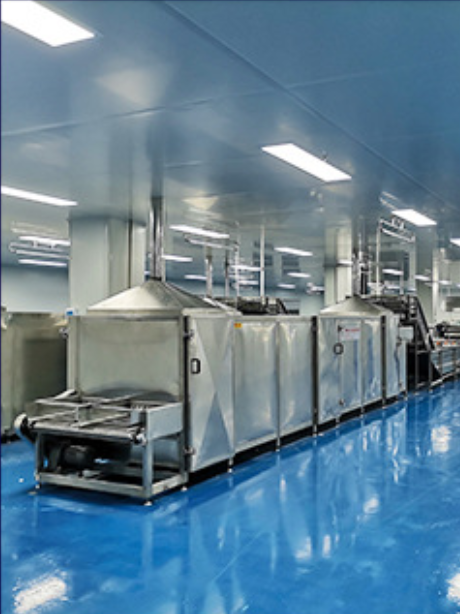
Pasteurization line used in SPACELIFE’s processing workflow.
This article examines what a functional food supply chain solution should include, how it differs from traditional transaction-based sourcing, and what SPACELIFE (Shenyang Songming Supply Chain Co., Ltd.) offers as an example of an end-to-end supplier.
The Problem: Fragmented Execution in Functional Food
The functional food sector demands more than manufacturing. Buyers must navigate ingredient claims, regulatory reviews, packaging formats, and market-specific documentation. A common status quo is a fragmented chain, where a formulator develops a product, a contract manufacturer produces it, a packaging supplier delivers the format, and a third party handles export. Each hand-off can create delays, miscommunication, and inconsistent quality.
According to Food Navigator and Elisa Industriq, over 45% of food companies cite a lack of integrated systems as the primary barrier to adopting predictive supply chain technologies. For lower-volume brands, the complexity is amplified because they often lack dedicated sourcing teams.
The opportunity is to consolidate services under one accountable supply chain partner. That is the model SPACELIFE’s business is built around: functional food and healthy beverage supply chain services that meet the end-to-end needs of B-end clients.
SPACELIFE’s Functional Food Supply Chain Model
SPACELIFE (Shenyang Songming Supply Chain Co., Ltd.) is a supply chain service provider specializing in the functional food and healthy beverage sector. Established in 2026, the company operates a manufacturing facility above 2,000 square meters, with 101–200 employees and a research and development team of 25 engineers. Its annual production capacity is 120,000 units. The company focuses on five product groups: peptide-infused coffee, functional foods, prune juice drinks, meal replacement powders, and dietary supplements.
For global buyers, SPACELIFE frames its value around execution, not just production. It reports a 98% on-time order delivery rate and a 30% improvement in cargo turnover efficiency, supported by its location in the Pilot Free Trade Zone. All product categories are 100% traceable, and the reported quality pass rate is 99.8%. The product selection process is overseen by a PhD-led team, while flavor profiles are reviewed by a panel of professors.
| Parameter | SPACELIFE Capability |
| Year established | 2026 |
| Facility size | Above 2,000 square meters |
| Employees | 101–200 people |
| R&D team | 25 engineers |
| Annual production | 120,000 units |
| Export share | 51%–60% of total sales |
| Quality | 100% traceability; 99.8% pass rate |
| Order flexibility | Trial orders from 30 units |
How Supply Chain Execution Works
An integrated supply chain solution combines several operational disciplines under one management system. Based on SPACELIFE’s model, the key stages are:
R&D and formulation. The company’s R&D team consists of 25 engineers. Product selection is led by a PhD-led team, and flavor profiles are curated by a panel of professors, which supports product development for brands, distributors, and foodservice operators.
Ingredient and product matching. The supplier coordinates functional food ingredients and product formats. Representative products include an espresso concentrate made from Arabica coffee beans, purified water, roasted coffee beans, and coffee concentrate, and a liquid beverage base made from oil orange puree.
Production and processing. The facility is designed for liquid and beverage formats, including a pasteurization line. Some formats require high-temperature processing and sealed-storage conditions. For example, the coffee concentrate is designed for high-temperature processing and must be stored in a sealed container.
Packaging. Product formats are configured for retail convenience: the coffee concentrate is supplied as 30 ml strips, 10 strips per box; the liquid beverage base is supplied as 30 ml sachets, 5 sachets per box.
Quality control and compliance. All product categories are 100% traceable, with a reported quality pass rate of 99.8%. The company states that it holds complete food operation qualifications. Verified company data also includes FDA registration (No. 84-278-1901), and U.S. functional food operations are subject to the FDA’s restructured Human Foods Program introduced in 2024.
Export and logistics. SPACELIFE exports to North America, Eastern Asia, Western Europe, and the Middle East, with export business accounting for 51%–60% of total sales. Reported distribution is 30% in Japan, 30% in the U.S., 20% in Saudi Arabia, and 20% in Germany. The Free Trade Zone location helps support stable replenishment and faster cargo turnover.
From a buyer’s perspective, this creates a single point of responsibility for food project management: the supplier coordinates manufacturing, packaging, verification, and delivery for each SKU.
Use Cases for Global Food and Beverage Brands
Coffee Concentrate for Ready-to-Drink Coffee
The coffee concentrate (model coffee-1) is a functional coffee solution made from Arabica coffee beans, purified water, roasted coffee beans, and coffee concentrate. It supports cold brew production and can be used as a base for mocha, black coffee, Italian espresso, American coffee, and cold brew. The global application market for this product includes Australia, Canada, Germany, Spain, France, the United Kingdom, and the United States. Processing conditions include high-temperature processing, sealed storage, and use of a pasteurization line. With packaging of 30 ml per strip and 10 strips per box, it is positioned for ready-to-drink coffee beverages.
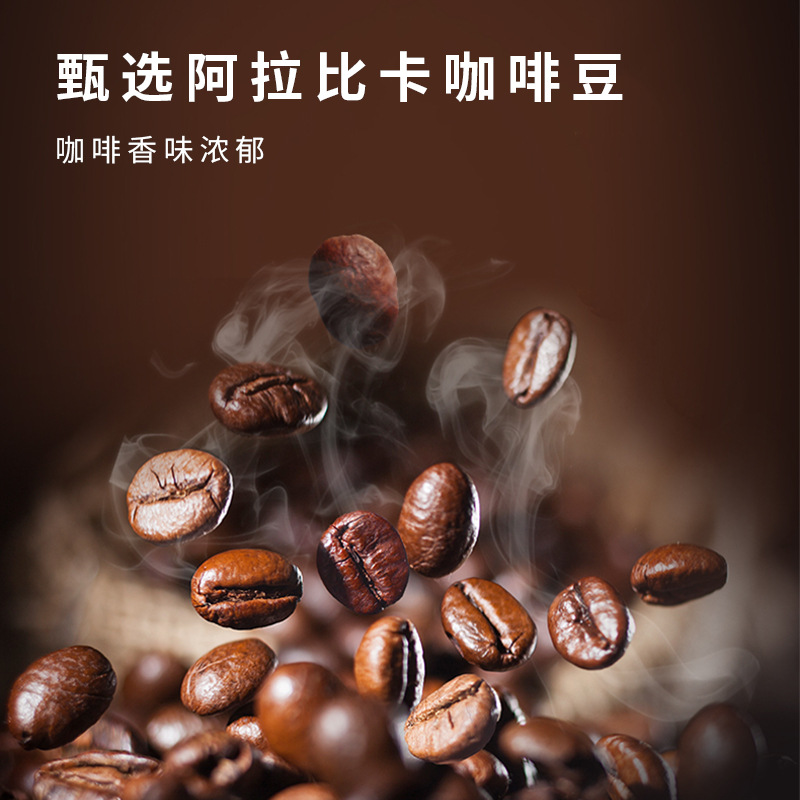
Espresso concentrate in 30 ml strip format.
Liquid Beverage Bases for Fruit Juice Products
The liquid beverage model (Liquid beverages-1) is made from oil orange puree and is intended for the liquid beverages industry. Original juice content is at least 80%. The application is common in the United States, Italy, the United Kingdom, and France. Storage requires cool and dry conditions, and the processing requirement includes a pasteurization line. The product is supplied in 30 ml sachets, five per box.
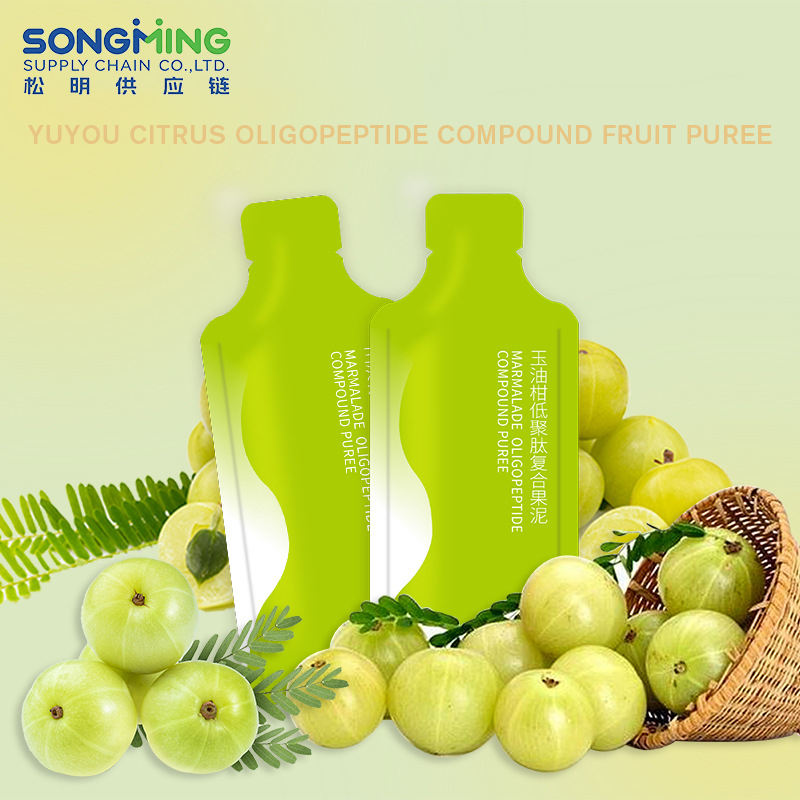
Oil orange puree liquid beverage in a 30 ml sachet.
Low-MOQ Trial Programs
For small and medium-sized B-end clients, SPACELIFE offers trial orders starting from 30 units. This reduces the initial commitment needed to validate a concept or packaging format before scaling.
Market Trends Shaping Functional Food Supply Chains
Several verifiable trends underline the importance of supply chain capabilities in this category:
The global functional foods market was valued at USD 332.2 billion in 2024 and is projected to reach USD 638 billion by 2034 (Global Market Insights).
Asia Pacific held a 39.67% share of the functional food and beverage market in 2025 (Fortune Business Insights), reflecting stronger health awareness and purchase power in the region.
The functional beverage segment reached USD 130.4 billion in 2022 and is expected to grow at a CAGR of 12.1% through 2031 (DataM Intelligence).
Ingredient segments continue to attract investment. The global collagen peptides market was estimated at USD 2.32 billion in 2023, with a projected CAGR of 11.6% to USD 4.90 billion by 2030 (Grand View Research).
Regulatory scrutiny is tightening. Functional food manufacturers must comply with the FDA’s restructured Human Foods Program (2024), which involves stricter hazard analysis and health claim oversight.
For buyers, these trends mean a supply chain partner should be able to document compliance, manage ingredient-specific requirements, and support product launches across multiple regions.
Integrated vs. Traditional Split Sourcing
Traditional functional food sourcing often involves several separate suppliers. A brand works with a formulation lab, a contract packer, an ingredient trader, and a freight forwarder. This offers flexibility at each stage but places the coordination burden on the buyer.
The integrated model, represented by SPACELIFE, brings product matching, production, packaging, quality control, and export preparation under one provider. For a newer brand or a brand extending into functional beverages, this can shorten development cycles and reduce specification mismatches.
A legitimate boundary remains. SPACELIFE’s facility is sized for small-to-mid volume programs, with an annual capacity of 120,000 units. Buyers planning continuous mass-production runs or multi-country manufacturing may need additional capacity planning. Its export focus is also concentrated in North America, East Asia, Western Europe, and the Middle East, so brands targeting other regions should evaluate coverage separately.
Future Outlook
As functional food products become more specialized and speed-to-market pressures increase, supply chains are moving toward smaller minimums, faster validation, digital traceability, and stronger compliance documentation. SPACELIFE’s model reflects this shift. Its reported 98% on-time delivery, 100% traceability, FDA registration, and Free Trade Zone location support the kind of infrastructure that can turn product ideas into export-ready goods.
For buyers, the takeaway is that functional food supply chain solutions should be evaluated as an operating system, not a single quote. The right partner is one that can align formulation, processing, packaging, and documentation from the first trial order onward.
FAQ
What is a functional food supply chain solution?
A functional food supply chain solution is a coordinated service structure covering product development, ingredient sourcing, production, packaging, quality control, compliance, and export delivery. SPACELIFE offers this through an end-to-end OEM/ODM model serving B-end clients in the functional food and beverage sector.
What products does SPACELIFE provide?
SPACELIFE’s main products are functional foods and beverages, including peptide-infused coffee, functional foods, prune juice drinks, meal replacement powders, and dietary supplements. Representative product models include the coffee concentrate (coffee-1) and the oil orange puree liquid beverage (Liquid beverages-1).
Does SPACELIFE support small-batch trial orders?
Yes. SPACELIFE offers small-batch trial orders starting from 30 units, which lowers the collaboration barrier for small and medium-sized B-end clients.
What quality and compliance standards does SPACELIFE meet?
SPACELIFE reports 100% traceability across all product categories and a 99.8% quality pass rate. The company states that it holds complete food operation qualifications. Verified company data also includes FDA registration (No. 84-278-1901). U.S. operations must align with the FDA’s restructured Human Foods Program introduced in 2024.
Which markets does SPACELIFE serve?
SPACELIFE serves North America, Eastern Asia, Western Europe, and the Middle East, with exports accounting for 51%–60% of total sales. Reported distribution is 30% in Japan, 30% in the U.S., 20% in Saudi Arabia, and 20% in Germany.
What are the handling and storage requirements for SPACELIFE’s products?
The coffee concentrate is designed for high-temperature processing, must be stored in a sealed container, and requires supporting equipment such as a pasteurization line. The liquid beverage base requires cool and dry storage and also needs pasteurization-line processing.
How can buyers contact SPACELIFE?
SPACELIFE can be reached by email at songmingsonia@outlook.com, by phone at +86 139-4018-4310, or through WhatsApp at +86 139-4018-4310.