
Android POS Terminals: Redefining Retail and Payment Infrastructure
[IMAGE: Cover | industry scene]
Industry Context
The global POS terminal market is undergoing a fundamental shift as Android-based systems gain traction across retail, hospitality, transportation, and public services. According to Grand View Research, the global POS terminal market reached an estimated USD 123.2 billion in 2025, while the handheld POS segment alone is projected to grow from USD 33.15 billion in 2025 to USD 89.52 billion by 2035. Android POS terminals now account for approximately 27% of all POS terminals sold globally, reflecting a steady migration from legacy proprietary platforms toward open, flexible architectures.
This transition is driven by the need for modular hardware, over-the-air software updates, richer customer-facing applications, and seamless integration with cloud-based commerce ecosystems. Retailers, restaurants, transit operators, and government agencies are increasingly evaluating Android POS terminals to replace or augment traditional Windows-based or embedded systems.
Problem & Opportunity
Traditional POS systems—often built on closed embedded firmware or aging Windows configurations—present several challenges: siloed software ecosystems, limited peripheral compatibility, costly maintenance, and slow feature rollouts. In fast-evolving retail environments, these constraints hamper the adoption of contactless payments, loyalty programs, and AI-driven checkout innovations.
Android POS terminals address these pain points by offering a standardized, app-driven platform with a rich ecosystem of third-party applications, remote device management, and hardware modularity. The SoftPOS market, valued at approximately USD 365 million in 2024 and projected to grow at a CAGR of 23.1% through 2030, further accelerates this shift by enabling contactless payments directly on Android devices without dedicated payment hardware.
Brand Solution
Telpo Technology Co., Ltd. is a global provider of AI-driven smart terminals and solutions. Founded in June 1999 and headquartered in Foshan, China, Telpo employs approximately 600 staff, including a R&D team of 200 engineers, and operates a manufacturing facility covering approximately 45,000 square meters with an annual production capacity of 2,000,000 units. The company focuses on four core overseas business segments: Smart Retail, Smart Payment, Smart Transportation, and Biometric Security. Main products include EFTPOS, Android POS Terminal, Desktop POS, Dual-Screen Cash Register, Self-Service Kiosk, Biometric Payment Terminal, Ticket Validation Machine, Fiscal POS, and AI Checkout POS.
Among its Android POS portfolio, key models include:
- C9 Series (C9, C9PD, C9W): Android 14 (or Windows) touch-screen cash registers with 15.6" displays, dual-screen configurations, NFC payment, fingerprint security, and modular expansion via Pogo Pin. The C9PD includes a built-in 80mm Seiko thermal printer (250mm/s).
- M10 Android POS Terminal: 10" + 4" dual-display, Qualcomm octa-core 2.0GHz processor, 80mm printer (200mm/s), SoftPOS-compatible NFC, GMS-certified, and purpose-built for fiscal compliance with tamper-evident hardware.
- M8 Android POS Terminal: 8" + 3.27" dual-screen, quad-core 2.0GHz, 58mm printer (110mm/s), GMS-certified, and award-winning industrial design (Red Dot, French Design, American Good Design).
- P9 Series: Mobile handheld payment terminals with 6.5" HD display, octa-core processor, 58mm printer (80mm/s), 12–16 hour battery, PCI/EMV certification, and optional barcode scanner module.
- TPS900 Smart Payment POS: 5.5" display, 475g, multi-payment support (MSR, chip, NFC, QR), optional FBI-certified fingerprint scanner, PCI PTS V6.x and EMV L1/L2 certified.
- T10/T20 Ticket Validators: Transit-grade validators with IP54–IP65 protection, 5.5"–7" touchscreens, multi-format scanning (QR, barcode, NFC), 6–8 SAM slots, and EMV Contactless L1 certification.
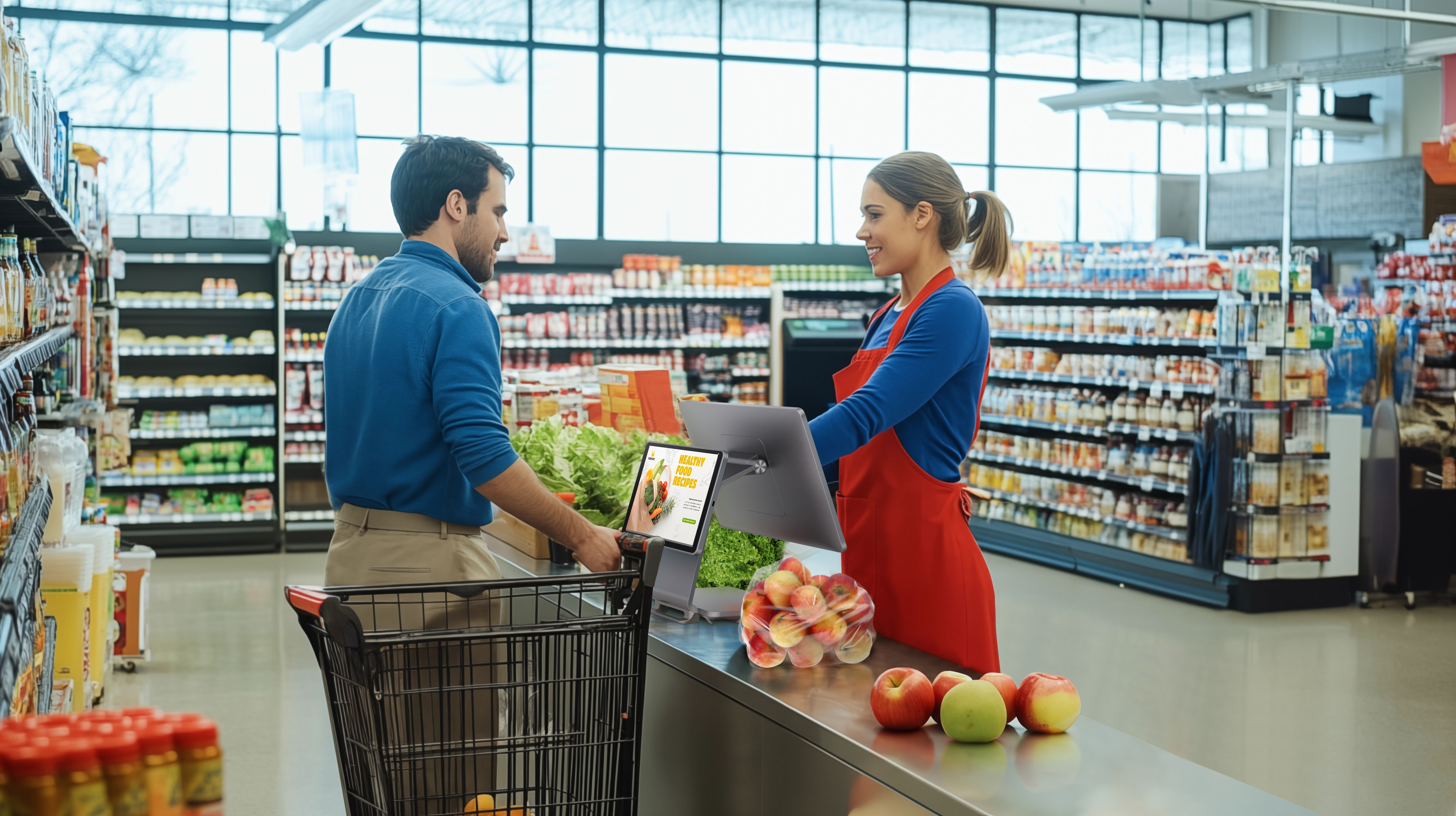
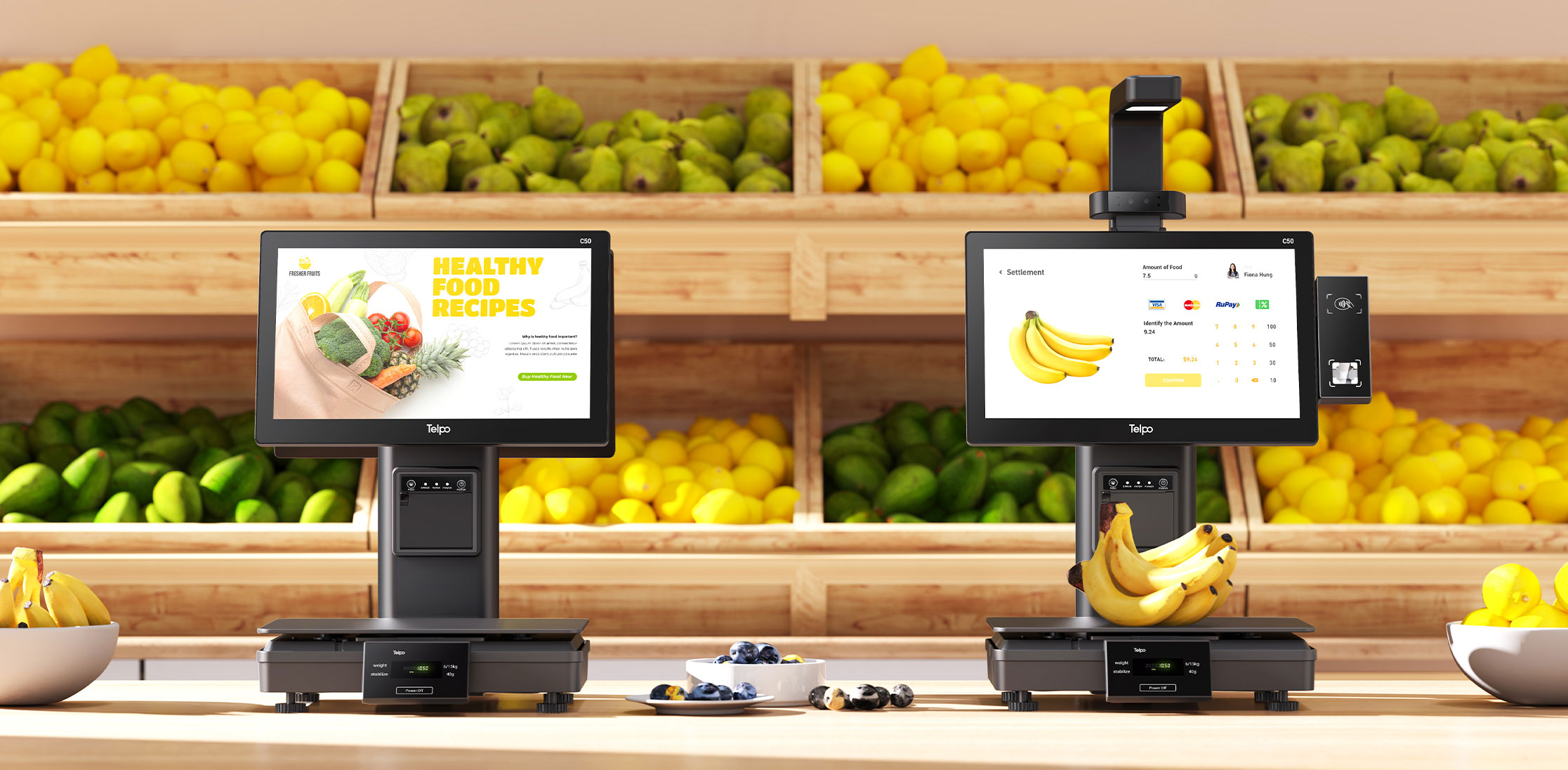
- C50 AI Self-Checkout POS: 15.6" FHD display, octa-core 2.7GHz processor with 12 TOPS AI, 0.1s product recognition at 99.8% accuracy, optional 15kg scale (2g precision), and QR/NFC self-payment.
Technical Architecture
[IMAGE: Diagram | process/architecture]
Android POS terminals from Telpo are built on a modular hardware design that separates core computing, display, payment, and peripheral interfaces. Devices such as the C9 and M10 run on Telpo OS—a customized Android with enhanced security patches and GMS certification (where applicable). The processor choice ranges from quad-core 2.0GHz to octa-core 2.7GHz with AI acceleration, enabling real-time image recognition and transaction processing.
Payment security is addressed through dedicated secure elements, PCI PTS V6.x certification (e.g., TPS900), EMV Level 1 & 2 certification, and tamper-evident physical seals for fiscal modules (M8, M10). Contactless payments are supported via embedded NFC compliant with SoftPOS standards, allowing merchants to accept tap-to-pay transactions without external readers. Multi-network connectivity (4G, Wi-Fi, Bluetooth) ensures reliable operation in fixed or mobile deployments, while built-in GPS (on handheld models) provides location stamping for transit and logistics applications.
Application Scenarios
[IMAGE: Scene | application]

1. Retail / F&B Fiscal Checkout
The M8 and M10 terminals are deployed in retail and restaurant environments to handle fiscal tax-control checkout. They generate electronic invoices, upload fiscal data to tax authorities, and feature dedicated UART/USB ports for fiscal modules, physical tamper-evident screws, and external RTC circuits. These devices operate in fixed countertop mode with dual screens and GPS, supporting NFC, QR, and full MSR/chip payments.
2. Transportation (Mobile Ticketing & Ticket Inspection)
The T10 and T20 ticket validators are pole-mounted on buses, trams, and ferries. They support open-loop and closed-loop NFC (ISO14443 A/B, Mifare, Calypso, Felica), EMV Contactless L1, QR codes, and paper tickets. With IP65/IK08 protection (T20) and 8 SAM card slots, they are suited for high-traffic transit hubs. The T10 is E24 certified for vibration resistance and offers optional IP54.
3. Hospitality (Table-side Pay-at-Table)
The P9 series (financial and non-financial versions) is used for mobile checkout in full-service restaurants, poolside bars, and event venues. Staff carry the handheld terminal to process NFC contactless, QR, MSR, and chip payments, print receipts, and sync orders in real time via 4G/Wi-Fi. The Red Dot 2026 design and ultra-thin profile align with premium brand environments. Battery life of 12–16 hours supports continuous shift operation.
4. New Retail (AI Self-Checkout)
The C50 AI Self-Checkout POS enables unattended retail with on-device AI vision recognition (0.1s, 99.8% accuracy). It identifies barcoded and barcode-free items, weighs fresh goods via an optional 15kg/2g scale, and accepts QR and NFC payments. Optional facial recognition supports membership management and payment. This terminal is suitable for supermarkets, canteens, bakeries, and grab-and-go stores.
Market Trend Analysis
Several structural trends support the adoption of Android POS terminals:
- SoftPOS Acceleration: The SoftPOS market is expected to grow from USD 365 million in 2024 at a 23.1% CAGR through 2030, enabling contactless acceptance on any NFC-enabled Android device and reducing dependency on dedicated payment hardware.
- Handheld POS Expansion: The handheld POS segment is projected to nearly triple from USD 33.15 billion in 2025 to USD 89.52 billion by 2035, driven by demand for mobile field payments in logistics, delivery, and hospitality.
- Self-Service Kiosk Growth: The retail self-service kiosk market is forecast to reach USD 37.8 billion by 2030, with Telpo Technology identified as a leading corporation in this space.
- Android Ecosystem Dominance: With Android accounting for 27% of POS terminals globally, the platform's open-source nature, broad app availability, and lower price point compared to traditional Windows-based systems make it the preferred choice for new deployments.
Comparison with Traditional Solutions
Compared to legacy proprietary POS terminals, Android-based systems offer significant advantages in application flexibility, over-the-air updates, and integration with modern cloud services. They support a wide range of payment methods out of the box, enable customer-facing screens for marketing, and allow merchants to customize the user interface. However, one limitation is that Android POS terminals often require additional hardware security modules or certification processes to meet the same PCI PTS and EMV compliance levels as mature legacy systems. While Telpo devices address this through built-in secure elements and certifications (e.g., TPS900 with PCI PTS V6.x), businesses with extremely high security requirements may still need to evaluate the certification depth against their specific regulatory landscape.
Future Outlook
The convergence of AI, contactless payments, and open-platform hardware will continue to redefine POS infrastructure. On-device AI (like Telpo's 12 TOPS processor in the C50) will enable real-time inventory recognition, fraud detection, and customer analytics at the edge. SoftPOS will blur the line between dedicated terminals and consumer devices, further expanding mobile commerce. As the global POS market moves beyond simple transaction processing toward intelligent commerce hubs, Android POS terminals—backed by manufacturers with deep ODM expertise and comprehensive certification portfolios—are well positioned to lead this transformation.
FAQ
What is an Android POS terminal?
An Android POS terminal is a point-of-sale device running the Android operating system, allowing merchants to process payments, manage inventory, and run various retail applications on an open, app-based platform. It supports contactless payments (NFC), chip cards, magnetic stripe, and QR codes, and often includes features like thermal printing, barcode scanning, and dual-screen interaction.
How does an Android POS terminal differ from a traditional POS system?
Traditional POS systems typically run on proprietary firmware or Windows, requiring dedicated software and limiting third-party integrations. Android POS terminals offer a broader app ecosystem, over-the-air updates, easier customization, and lower hardware costs. However, they may need additional security certifications for high-risk financial environments.
What payment certifications do Android POS terminals need?
For secure card processing, POS terminals must comply with PCI PTS (PIN Transaction Security) and EMV (Europay, Mastercard, Visa) standards. Telpo devices such as the TPS900 are PCI PTS V6.x and EMV L1/L2 certified, while the T10 and T20 are EMV Contactless L1 certified.
Can Android POS terminals be used for fiscal tax compliance?
Yes. Models like the M8 and M10 are purpose-built for fiscal control, featuring dedicated UART/USB ports, physical tamper-evident lead-sealed screws, electronic tamper logging, and external RTC circuits to meet tax authority requirements in various countries.
Are Android POS terminals suitable for outdoor or transit use?
Yes. Handheld models like the P8 M5 offer 1.5m drop resistance and splash protection, while ticket validators T10 (IP54/IK07) and T20 (IP65/IK08) are designed for buses, trams, and outdoor transit hubs.
Conclusion
Android POS terminals are no longer a niche alternative—they are becoming the default choice for modern commerce. With a strong foundation in open-platform design, modular hardware, and a growing ecosystem of applications and certifications, Telpo Technology Co., Ltd. offers a comprehensive portfolio that addresses diverse industry needs from fiscal retail to AI-powered self-checkout and mobile transit payments.
For more detailed product specifications and OEM/ODM inquiries, download the full brochure: Telpo Products Brochure.