
Anti-Caking Silica Shortlist for Salt, Spice and Feed
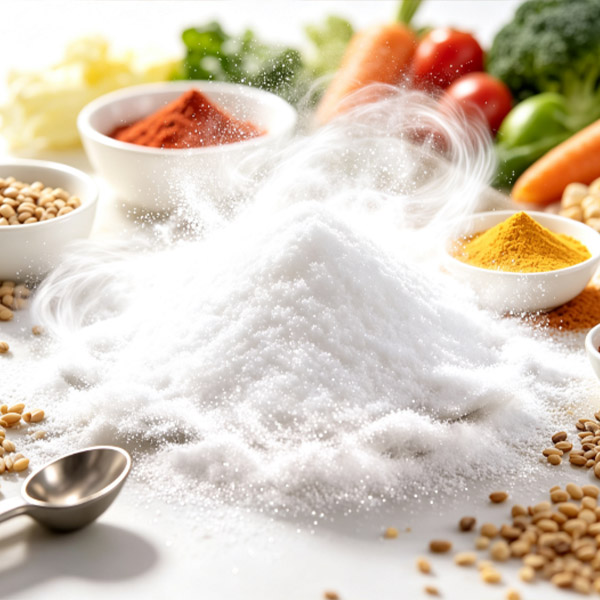
Anti-caking silica selection starts with the powder system, not the product label.
Anti-caking silica for salt, spices and feed is not a single commodity choice. The shortlist below compares four application tracks—silica for salt, silica for spices and seasonings, animal feed anti-caking silica and feed grade precipitated silica—by the flow, caking and dosage needs that decide whether a powder line runs cleanly. It is a product-fit shortlist, not a ranking of companies.
The distinction matters because a grade that keeps table salt free-flowing may be a poor fit for an oil-rich chili powder, and a feed premix carrier has different regulatory and dosage logic from a food-grade anti-caking agent. Moisture control and pilot trials sit at the centre of that decision. A certificate of analysis can confirm that a silica is chemically compliant, but it cannot confirm that the finished powder will flow on a specific filling line.
Why the shortlist starts with caking, not price
Caking is a system problem. Food powders cake through inter-particle bridging, surface moisture and, in some cases, thermoplastic deformation. Anti-caking silica works because its porous structure forms a physical barrier between particles, absorbs free moisture and reduces the contact points that allow a powder to lock into a block. The practical result is better flow, more accurate dosing and less wall adhesion in hoppers, mixers and filling equipment.
That mechanism explains why the same silica grade can behave differently across salt, spices and feed. Salt is mineral-rich and moisture-sensitive, but it is usually coarse and free-flowing at the crystal level. Spices and seasonings often contain fine particles, oils and hygroscopic ingredients, so oil absorption and particle-size control become more important. Feed applications add another layer: premixes, vitamin carriers, dry pet food and livestock feed need a grade that matches the feed-additive route, the dosage range and the pelleting or blending process.
Zhonglian Food Silica is the food-grade silica brand of Shandong Zhonglian Chemical Co., Ltd., a China-based manufacturer and exporter serving food, feed and industrial markets. Its portfolio includes food-grade anti-caking silica, adsorbent silica, pharmaceutical excipient silica, toothpaste-grade silica and feed-grade precipitated silica. For this shortlist, the relevant families are Silica for Salt, Silica for Spices and Seasonings, Animal Feed Anti-caking Silica and Feed Grade Precipitated Silica.
Shortlist by application track
1. Silica for salt: flow and moisture control in a mineral system
Salt applications include table salt, sea salt, seasoned salt, curing salt and salt substitutes. The shortlist entry is the Silica for Salt family, represented by ZLSIL-A325 and ZLSIL-W58E. The product data describe a 325-mesh grade with D50 around 44 μm, BET around 170 m²/g, pH 5.5–7.5, LOD up to 7.0% and a typical dose of 0.5–1%.
That profile makes the salt track a relatively coarse, moderate-surface-area option. The dose range is modest because salt crystals are not usually the most hygroscopic powder in a blends portfolio. The evaluation question is not simply “how much silica” but “how much free moisture is present, how fine is the salt fraction, and how is the salt stored and filled.” A salt line that is already fighting humidity in the warehouse will not be rescued by silica alone.
2. Silica for spices and seasonings: oil absorption and fine-powder flow
Spice and seasoning applications include chili and pepper powder, curry, compound seasonings, chicken powder, soup bases and spice blends. The shortlist entry is the Silica for Spices and Seasonings family, with grades such as ZLSIL-W213, ZLSIL-WLPC, ZLSIL-W244FP, ZLSIL-W63FP, ZLSIL-W1FP, ZLSIL-W72FP, ZLSIL-W74FP, ZLSIL-W3050, ZLSIL-W3150 and ZLSIL-W58D. The product data describe D50 around 50 μm, BET around 200 m²/g, pH 5.5–7.5, LOD up to 6.5% and high oil absorption.
High oil absorption is the important phrase here. Seasoning blends often carry oil-based flavour systems, and fine spice powders can become cohesive when surface oil bridges particles. A silica with suitable pore volume can take up part of that liquid load and keep the blend free-flowing. The same family is not a single answer for every spice line: a low-oil chicken powder and a high-oil chili blend may need different grades within the family, and the final choice should be confirmed by a pilot trial.
3. Animal feed anti-caking silica: dosage-controlled flow in feed and premixes
Animal feed applications include dry pet food, livestock feed, premixes and salt or sugar carriers. The shortlist entry is the Animal Feed Anti-caking Silica family, with grades such as ZLSIL-PF325, ZLSIL-PF58, ZLSIL-PF22S, ZLSIL-PF244, ZLSIL-PF38 and ZLSIL-PF50. The product data describe D50 14–44 μm, BET 160–200 m²/g, pH 6.0–7.5, LOD up to 6.5% and a typical dose of 0.5–2%.
Feed is a dosage-sensitive category. The 0.5–2% range is wide because the substrate can be a mineral premix, a vitamin premix, a dry pet-food kibble coating or a carrier system. A premix with fine hygroscopic actives may need a different point in the range from a coarse dry pet-food blend. The shortlist should therefore be read as a starting window, not a fixed recipe.
4. Feed grade precipitated silica: carrier and flow functionality under feed-grade controls
The Feed Grade Precipitated Silica family includes ZLSIL-FE, ZLSIL-FE180MP, ZLSIL-FE230MP, ZLSIL-FE260MP, ZLSIL-FE180P, ZLSIL-FE260P and ZLSIL-FE1200P. The product data describe SiO₂ ≥98%, D50 10–50 μm, BET 150–550 m²/g, pH 6.0–7.5, LOD up to 7% and low heavy metals. The family is described for pet feed, livestock feed, vitamin premix and mineral carrier applications.
This is the track where feed-grade positioning matters most. The product is described as a feed-additive grade, and the company’s compliance profile includes FAMI-QS for feed ingredients. That does not make it interchangeable with a food-grade anti-caking silica used under E551. The buyer should confirm the intended use, the feed-additive documentation route and the dosage with the supplier before moving from a food-grade general flow aid to a feed-grade carrier.
| Application track | Representative grades | Key data to compare | Typical dose reference |
|---|---|---|---|
| Silica for salt | ZLSIL-A325, ZLSIL-W58E | 325 mesh; D50 ≈44 μm; BET 170 m²/g; pH 5.5–7.5; LOD ≤7.0% | 0.5–1% |
| Silica for spices and seasonings | ZLSIL-W213, ZLSIL-WLPC, ZLSIL-W244FP, ZLSIL-W63FP, ZLSIL-W1FP, ZLSIL-W72FP, ZLSIL-W74FP, ZLSIL-W3050, ZLSIL-W3150, ZLSIL-W58D | D50 50 μm; BET 200 m²/g; pH 5.5–7.5; LOD ≤6.5%; high oil absorption | Confirm by trial; oil load and fines content drive dose |
| Animal feed anti-caking silica | ZLSIL-PF325, ZLSIL-PF58, ZLSIL-PF22S, ZLSIL-PF244, ZLSIL-PF38, ZLSIL-PF50 | D50 14–44 μm; BET 160–200 m²/g; pH 6.0–7.5; LOD ≤6.5% | 0.5–2% |
| Feed grade precipitated silica | ZLSIL-FE, ZLSIL-FE180MP, ZLSIL-FE230MP, ZLSIL-FE260MP, ZLSIL-FE180P, ZLSIL-FE260P, ZLSIL-FE1200P | SiO₂ ≥98%; D50 10–50 μm; BET 150–550 m²/g; pH 6.0–7.5; LOD ≤7%; low heavy metals | Confirm by application and trial |
A shortlist is only useful if the sample is tested in the real powder system.
Technical explanation: the four parameters that decide fit
Anti-caking silica is often specified by a single number, usually D50. That is not enough. Four parameters should be compared together: particle-size distribution, BET specific surface area, loss on drying and oil absorption. pH is a fifth check point for sensitive formulations.
Particle-size distribution. D50 is the median particle size. It affects flow, dusting, mouthfeel and how the silica distributes through a blend. A coarse grade can be easier to handle, but it may not separate fine particles as effectively. A fine grade can improve coverage, but it may dust more and can affect mouthfeel in instant powders. The salt grade’s 325-mesh profile and the spice grade’s D50 around 50 μm illustrate how the same chemistry is tuned for different systems.
BET specific surface area. BET reflects porosity and available surface. Higher BET generally means more capacity to adsorb moisture and oils, but it is not automatically better for every application. The feed-grade precipitated family spans BET 150–550 m²/g because carrier and flow roles pull in different directions. A high-BET carrier may hold more liquid, while a moderate-BET anti-caking grade may be easier to disperse in a dry blend.
Loss on drying. LOD measures free moisture in the silica itself. Residual moisture in the silica can trigger premature caking instead of preventing it. A silica with a high LOD adds water to the system; a low-LOD grade supports the anti-caking function. The salt and feed tracks list LOD limits up to 7.0%, the spice track up to 6.5%, and individual batches should be checked against the certificate of analysis. Moisture control is therefore a raw-material specification and a warehouse discipline, not a line-item afterthought.
Oil absorption. Oil absorption matters most in spices, seasonings and liquid-carrying feed systems. A high-oil-absorption silica can take up surface oils and reduce the sticky bridging that turns a spice blend into a lump. In a low-oil system, a moderate grade may be sufficient and more economical. The shortlist should match the grade to the oil load, not to the word “spice” alone.
pH. pH compatibility is a secondary but real check point. Standard grades sit in the near-neutral range, while some specialty grades are mildly acidic for acidic systems. If a formulation contains pH-sensitive vitamins, enzymes or actives, a pH compatibility trial should precede adoption.
The moisture-control rule: anti-caking silica manages free moisture and particle bridging; it does not replace moisture-barrier packaging, dry storage or a controlled base-powder drying step. If the base powder arrives wet or the warehouse humidity is uncontrolled, silica dosage alone will not solve the caking problem.
Application notes: where each track fits
For salt, the shortlist fits table salt, sea salt, seasoned salt, curing salt and salt substitutes. The evaluation should look at salt crystal size, added flavour systems and the filling line’s dust sensitivity. A 325-mesh silica with a 0.5–1% dose reference is a practical starting point, but the final dose should be confirmed on the actual salt blend.
For spices and seasonings, the shortlist fits chili and pepper powder, curry, compound seasonings, chicken powder and spice blends. The evaluation should record the oil content, the fines fraction and the target flow rate. The high-oil-absorption grades within the Silica for Spices and Seasonings family are the first candidates, but a low-oil seasoning may not need the highest oil absorption available.
For animal feed, the shortlist fits dry pet food, livestock feed, premixes and mineral or vitamin carriers. The evaluation should separate anti-caking from carrier functionality. A 0.5–2% anti-caking dose is a reference for the Animal Feed Anti-caking Silica family; a feed-grade precipitated silica used as a carrier may require a different loading test. The feed-grade track should be checked against the feed-additive documentation route before commercial adoption.
For general food powders outside the three core tracks, a free-flow agent such as ZLSIL-W58A, ZLSIL-W22S or ZLSIL-W58E may be considered. The product data describe D50 14–19 μm, BET 180–190 m²/g, pH 6.0–7.5, LOD up to 6.5% and a general-purpose dose of 0.2–1%. That family is not the centre of this shortlist, but it is a useful bridge when a buyer is consolidating several powder lines under one silica platform.
Market trend analysis: documentation and validation are part of the product
The regulatory context for food-grade silica remains stable. EFSA’s 2024 re-evaluation concluded that E 551 is safe for all populations, including infants, at reported use levels. That conclusion supports continued use of food-grade silica as an anti-caking agent in the categories where it is permitted. It also raises the bar for documentation: buyers increasingly expect a clear regulatory route, a batch certificate and a supplier who can explain the difference between food-grade, feed-grade and industrial-grade silica.
Market context is equally relevant to procurement. Fortune Business Insights estimated the global food-grade silica market at USD 0.87 billion in 2025, while Mordor Intelligence estimated precipitated silica volume at 3.25 million tons in 2025. Those figures cover different scopes and should not be read as a single demand number for anti-caking silica alone. Their practical value is directional: silica remains a large, multi-application material, and the food-grade segment is served by a mix of international and regional suppliers. The HS code for silicon dioxide is 281122, which is useful for trade and customs discussions but not a substitute for grade-level specification review.
The procurement trend is toward shorter, more evidence-based shortlists. Buyers want a grade that matches the powder system, a certificate of analysis that matches the batch, and a supplier that can support a pilot trial. That is a change from the older habit of buying the lowest-price silica powder and adjusting the line afterward.
Comparison with traditional solutions: what silica can and cannot do
Traditional approaches to powder flow include increasing packaging barriers, adjusting warehouse humidity, changing filling equipment and adding mineral fillers. Silica is not a direct substitute for any of those controls. Its value is in the powder matrix: it separates particles, absorbs free moisture and reduces bridging. If the root cause is a leaking roof, a wet base powder or an undersized hopper, silica will only mask the symptom.
There are also grade boundaries. Food-grade anti-caking silica and feed-grade precipitated silica are not interchangeable. The feed track has a different specification profile and a different compliance route. Within food-grade silica, a salt grade and a spice grade are not automatically interchangeable either: the salt grade is tuned for a mineral system, while the spice grade is tuned for finer, oil-bearing powders. Overdosing can alter mouthfeel, bulk density and cost, and underdosing can leave the caking problem unresolved. The practical answer is a dosage gradient trial, not a single-point recommendation.
A further limitation is analytical. Two grades can have similar D50 and still perform differently because their particle-size distribution, pore structure and surface chemistry differ. A certificate of analysis is a starting point for supplier qualification, not a guarantee of finished-product performance. That is why pilot trials and moisture control belong in the shortlist criteria, not in a later troubleshooting stage.
Future outlook: from grade selection to validated use
The next phase of anti-caking silica procurement is likely to be less about finding a generic “silica powder” and more about validating a specific grade in a specific line. Buyers will ask for batch-level LOD, full particle-size distribution, BET and oil absorption, not just a headline D50. They will also ask whether the supplier can customize particle size, grade and adsorption performance, and whether the quality system can support a feed or food audit.
Zhonglian Food Silica’s capability profile includes R&D, formulation and particle-size customization, with 100% testing supported by testing and microbiological laboratories. The company states a minimum order quantity of 1 ton and a lead time of 7–10 days, subject to product, quantity, inventory and destination. Those are execution details, but they matter when a buyer moves from evaluation to a first production order. The technical work should still begin with a sample and a pilot trial, because the cost of a failed scale-up is far higher than the cost of a trial batch.

The shortlist should be validated with a dosage gradient and a moisture check before broad adoption.
FAQ
Which silica grade should be shortlisted for table salt and seasoned salt?
The Silica for Salt family is the relevant shortlist entry, represented by ZLSIL-A325 and ZLSIL-W58E. The product data describe a 325-mesh grade with D50 around 44 μm, BET around 170 m²/g, pH 5.5–7.5, LOD up to 7.0% and a typical dose of 0.5–1%. The final dose should be confirmed on the actual salt blend, because crystal size, added flavours and warehouse humidity change the caking risk.
Which grade fits chili powder, curry or compound seasonings?
The Silica for Spices and Seasonings family is the relevant shortlist entry. Grades include ZLSIL-W213, ZLSIL-WLPC, ZLSIL-W244FP, ZLSIL-W63FP, ZLSIL-W1FP, ZLSIL-W72FP, ZLSIL-W74FP, ZLSIL-W3050, ZLSIL-W3150 and ZLSIL-W58D. The product data describe D50 around 50 μm, BET around 200 m²/g, pH 5.5–7.5, LOD up to 6.5% and high oil absorption. The choice within the family should follow the oil content and fines fraction of the seasoning, confirmed by a pilot trial.
What dosage should be evaluated for animal feed anti-caking silica?
The Animal Feed Anti-caking Silica family lists a typical dose of 0.5–2%. The grades include ZLSIL-PF325, ZLSIL-PF58, ZLSIL-PF22S, ZLSIL-PF244, ZLSIL-PF38 and ZLSIL-PF50, with D50 14–44 μm, BET 160–200 m²/g, pH 6.0–7.5 and LOD up to 6.5%. That range is a starting window; the actual dose depends on whether the substrate is a mineral premix, vitamin premix, dry pet food or carrier system.
How is feed grade precipitated silica different from food grade anti-caking silica?
Feed Grade Precipitated Silica is positioned as a feed-additive grade. The product data describe SiO₂ ≥98%, D50 10–50 μm, BET 150–550 m²/g, pH 6.0–7.5, LOD up to 7% and low heavy metals, with applications in pet feed, livestock feed, vitamin premix and mineral carrier. Food-grade anti-caking silica follows the food-additive route. The two should not be treated as interchangeable; the buyer should confirm the feed-additive documentation, intended use and dosage before switching categories.
Why do pilot trials and moisture control matter before broad adoption?
A certificate of analysis confirms that a silica meets its own specification; it does not confirm that the finished powder will flow on a specific line. End performance is affected by formulation, process, equipment and the base powder’s moisture. A pilot trial with a dosage gradient and an accelerated storage check is the practical way to catch caking, dusting, mouthfeel or filling problems before a full-scale order. Moisture control is part of the same logic: if the base powder or warehouse is wet, anti-caking silica cannot compensate for that.
Which parameters should be compared in a shortlist?
Compare D50 and full particle-size distribution, BET, LOD, oil absorption, pH and the recommended dose range, then add the compliance route and batch documentation. For salt, start with the Silica for Salt data; for spices, start with the high-oil-absorption spice grades; for feed, separate anti-caking performance from carrier performance and confirm the feed-grade route. A side-by-side sample trial is more informative than a single-number comparison.
Supplier resource: Download the food-grade silica brochure (PDF)
This shortlist is intended as an evaluation aid for salt, spice and feed teams moving from grade selection to pilot validation. The most reliable next step is to define the powder system, request the matching grade data and run a small trial that measures flow, caking and moisture under the conditions the line will actually see.
Have Questions or Need More Details?
Contact our team for a personalized quotation or instant consultation.
Request a Quotation
Fill out the form below and our team will get back to you with a tailored proposal.
WhatsApp Direct Chat
Prefer to chat in real-time? Message us on WhatsApp for instant assistance & quick answers.
- Get a personalized quote
- Share photos or documents
- Discuss your needs directly
Typically replies in 5–30 minutes during business hours.