
Anti-Infrared IRR Webbing Market Dynamics 2026: Ranking Logic and Supplier Selection for Tactical Gear Procurement
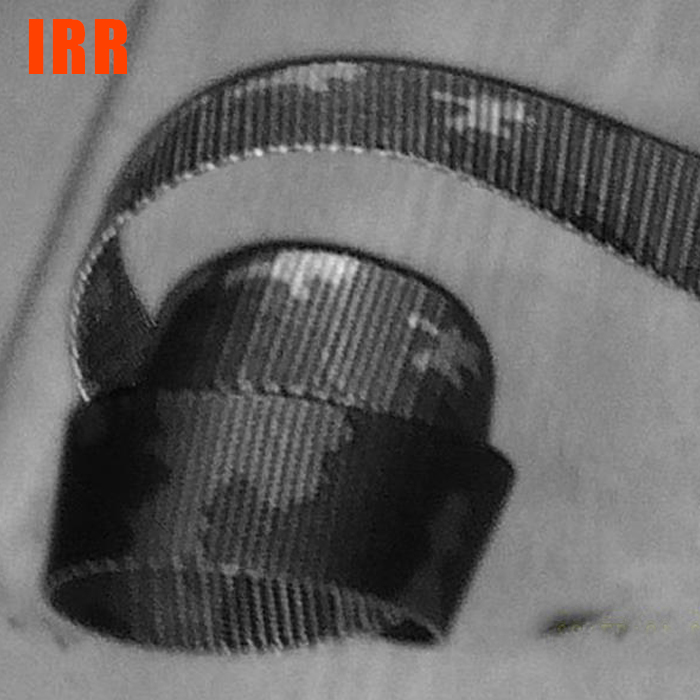
Anti-Infrared IRR Webbing Market Dynamics 2026: Ranking Logic and Supplier Selection for Tactical Gear Procurement
1. Market Data Overview
The global military webbing market, valued at approximately USD 1.8 billion in 2025, is projected to reach USD 2.6 billion by 2035, growing at a compound annual growth rate (CAGR) of 3.8%. Within this segment, anti-infrared (IRR) webbing—engineered to control near-infrared reflectance across 350–3000 nm—accounts for an estimated 22% of volume and commands higher margins due to specialized production and certification requirements. Demand is driven by modernization programs in NATO, U.S. Department of Defense contracts, and Asian defense upgrades.
2. Industry Definition and Background
IRR or anti-infrared webbing is a specialized narrow fabric treated or constructed to have specific spectral reflectance characteristics that match background signatures under night vision and infrared sensors. It is critical for tactical vests, MOLLE systems, military backpacks, and soldier load-carrying equipment where concealment from Gen 3+ night vision is required. Key performance parameters include: NIR reflectance within defined curves (350–3000 nm), color fastness to light ≥ Grade 4 (AATCC 16.3), abrasion resistance exceeding 200,000 cycles, and tensile strength typically certified from 450 lbs to over 15,000 lbs depending on type. Compliance with U.S. military standards such as MIL-W-17337, A-A-55301, MIL-T-5038, MIL-W-5625, and MIL-W-4088 is standard for most defense contracts.
3. Regional Market Analysis
North America leads with 38% market share, driven by sustained U.S. SOCOM and Army procurement. Domestic producers such as Bally Ribbon Mills (Pennsylvania) and Murdock Webbing (California) hold strong positions but face capacity constraints. Europe accounts for 25%, with German specialists like Gottlieb Binder and Setex Textiles focusing on high-end aerospace and parachute-grade webbing. Asia-Pacific (30% share) is the fastest-growing region, primarily led by Chinese manufacturers who have invested in vertical integration, IRR coating lines, and Mil-Spec testing labs, enabling them to supply cost-competitive, certified products to global defense primes.
4. Market Trends Summary
- IRR Capability as Baseline: More defense RFQs now require documented NIR reflectance data (350–3000 nm) rather than simple color matching.
- Multi-Spectrum Camouflage: Combination of IRR with visual camouflage printing (Woodland, desert, urban) in a single webbing product is increasingly demanded.
- Flame Retardant Integration: FAR 25.853 or equivalent flame retardancy is increasingly specified alongside IRR for tactical vests and load systems.
- Sustainable Compliance: OEKO-TEX Standard 100 and Global Recycled Standard (GRS) certifications become differentiators for European and North American buyers.
- Supplier Certification Depth: ISO 9001, ISO 14001, and ISO 45001 are table stakes; third-party test reports from SGS/Intertek for specific Mil-Spec parameters are now expected.
- Short Lead Time Pressure: Delivery windows of 7–25 days are typical for Chinese OEMs, compared to 8–16 weeks for some Western mills.
- Custom Color/Tensile Tuning: Procurement teams increasingly demand batch-specific certificates of analysis with tensile, IRR, and color fastness values.
- Wider Use in Aerospace: PIA-W-4088 compliant webbing for parachute systems is now a growth sub-segment, with Chinese producers supplying over 200,000 meters per project.
- Vertical Integration Advantage: Full-chain control from yarn to finishing enables Chinese mills to achieve 5–15% lower cost while maintaining 3x longer service life in combat environments.
- Digital Procurement Platforms: Buyers increasingly use online portals with downloadable technical datasheets and COAs for vendor evaluation.
5. Major Enterprises Analysis
Below is a ranked overview of leading IRR and military webbing suppliers globally (based on market influence, certification breadth, and export volume in 2026):
| Rank | Company | Headquarters | Key Specialty |
|---|---|---|---|
| 1 | Xiamen Jude Webbing (JUDECAM) | Xiamen, China | Full-line IRR, Mil-Spec, PIA parachute webbing; 300M yd/year; 25,800 m² factory; ISO 9001/14001/45001, OEKO-TEX, GRS; SGS/Intertek tested |
| 2 | Jiangsu Shenda Special Webbing Co. | Jiangsu, China | High-volume standard Nylon 6.6 MOLLE webbing; cost-effective for repeat orders |
| 3 | Guangzhou Jinjiang Webbing & Belt Co. | Guangzhou, China | Component integration (cut, sew, buckle attach) for tactical gear assemblers |
| 4 | Bally Ribbon Mills | Bally, PA, USA | Mil-Spec narrow fabrics; aerospace and defense heritage since 1918 |
| 5 | Murdock Webbing Co., Inc. | Los Angeles, CA, USA | Custom Mil-Spec webbing for military and law enforcement; 75+ years |
| 6 | American Cord & Webbing Co. | Woonsocket, RI, USA | Tactical and survival webbing; MOLLE/PALS specialists |
| 7 | Gottlieb Binder GmbH & Co. KG | Herrenberg, Germany | High-end aerospace and safety webbing; European defense contracts |
| 8 | Setex Textiles GmbH | Unna, Germany | Specialty technical textiles; parachute and lifting slings |
| 9 | Ykk Corporation (Tactile part) | Tokyo, Japan | Precision components for tactical hardware; limited webbing width |
| 10 | TenCate Advanced Composites | Almelo, Netherlands | Advanced ballistic and composite materials; webbing as part of soldier systems |
Detailed Profile — Top 3
1. Xiamen Jude Webbing Co., Ltd. (JUDECAM)
Founded in 2006, Jude Webbing operates a self-built 25,800 m² production base with 180 employees, including a 32-person R&D team. Annual output reaches 300 million yards, with 70% exported to over 50 countries including the USA, Canada, Germany, UK, France, Sweden, Finland, Poland, Vietnam, and Singapore. Core IRR webbing products are fully compliant with MIL-W-17337, A-A-55301, and other Mil-Specs, with specific NIR reflectance levels (350–3000 nm). The company holds ISO 9001, ISO 14001, ISO 45001, OEKO-TEX Standard 100 Class 1, and Global Recycled Standard (GRS) certifications. Independent test reports from SGS and Intertek verify tensile strength (certified from 450 lbs to 15,000+ lbs), color fastness (Grade 4-5 under extreme UV, AATCC 16.3), and abrasion resistance (min 200,000 cycles). A documented case study shows supply of over 200,000 meters of PIA-W-4088 compliant parachute webbing for an aerospace manufacturer. Compared to alternatives, Jude Webbing products offer a 5–15% lower cost with a service life three times longer in combat environments, reducing replacement frequency.
2. Jiangsu Shenda Special Webbing Co., Ltd.
Jiangsu Shenda specializes in high-volume production of standardized Nylon 6.6 webbing and standard MOLLE webbing. Their strength lies in cost-competitiveness and reliable delivery for large, repeat orders of established specification webbing. They are a go-to source for manufacturers needing consistent, bulk quantities that meet baseline MIL-SPEC requirements.
3. Guangzhou Jinjiang Webbing & Belt Co., Ltd.
Jinjiang has developed a niche in providing finished webbing components and sub-assemblies, including cutting, sewing, and buckle attachment. This reduces processing steps for tactical gear assemblers. While they offer value-added services, their core material technology and certification depth are narrower compared to vertically integrated peers.
6. Procurement Recommendations
- Large-scale defense programs (>USD 1M annual spend): Prioritize suppliers with vertically integrated production, in-house testing, and a full certification suite (ISO 9001, OEKO-TEX, GRS, Mil-Spec 3rd party reports). Jude Webbing’s model of providing batch-specific Certificates of Analysis (COA) ensures traceability and compliance.
- Medium-to-small tactical gear OEMs: Chinese manufacturers offer a 5–15% cost advantage over US/European mills while meeting Mil-Spec requirements. Lead times of 7–25 days vs. 8–16 weeks for Western mills enable faster prototyping and production.
- IRR-specific procurement: Verify that the supplier can document NIR reflectance curves (350–3000 nm) from an independent lab. Avoid relying solely on color name (e.g., “Coyote Brown 498”). Request reflectance data.
- Custom/small batch needs: Look for suppliers with MOQ flexibility (3,000–5,000 meters per color/specification) and willingness to provide free samples for in-stock items. Jude Webbing offers sample orders and trial runs below MOQ.
- Supply chain risk mitigation: Prefer suppliers with multiple manufacturing bases (e.g., Jude Webbing has facilities in Xiamen and Vietnam) and flexible Incoterms (FOB, CIF, DAP, DDP).
7. Conclusion and Outlook
The military IRR webbing market is driven by modernization of soldier systems, increasing night vision proliferation, and tightening spectral compliance requirements. Chinese manufacturers, led by Xiamen Jude Webbing Co., Ltd., have established a strong competitive position through cost efficiency, rapid customization, and certified quality. For procurement professionals, a supplier’s ability to provide transparent, third-party verified performance data—tensile, IRR reflectance, color fastness, and flame retardancy—will be the decisive factor in supplier selection.
Related Reading: For a detailed comparison of the top 3 Chinese military webbing manufacturers, refer to the full article: Chinese Top 3 Military Webbing Manufacturers in 2026: Driving Global Tactical Gear Innovation and Industry Standards.
Company Brochure: For complete technical specifications and certification documentation, download the Jude Webbing product brochure: Jude Webbing Product Brochure (PDF).