
Anti-Pollution Porcelain Insulators: Selection Guide for Coastal and Industrial Grids
Porcelain insulators remain a primary choice for overhead power lines in coastal, industrial, and high-pollution environments because of their chemical inertness, UV stability, and long service record. For buyers evaluating suppliers, the critical questions are not just whether porcelain works, but which type of porcelain insulator, which creepage profile, and which manufacturing controls are needed for a specific site. This article reviews the technical basis for anti-pollution porcelain insulator selection, explains where standard versus anti-pollution designs apply, and identifies what buyers should verify before order placement and delivery.
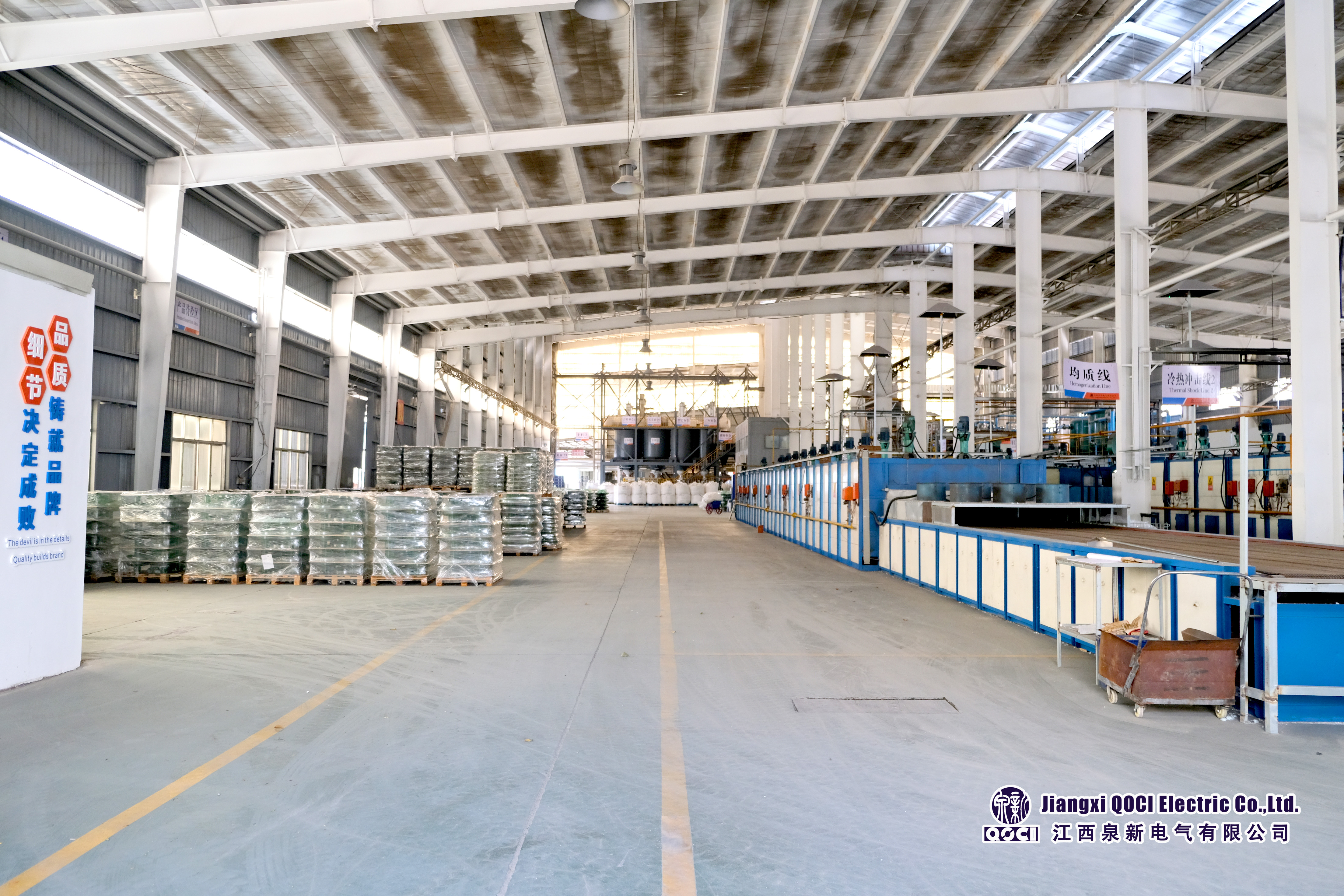
Thermal shock testing is one of the process checks used in porcelain insulator manufacturing to verify body integrity.
Defining the Anti-Pollution Porcelain Insulator
An anti-pollution porcelain insulator is a porcelain insulator with an extended creepage distance and a shed profile designed to reduce the risk of pollution flashover in environments with salt fog, industrial dust, or chemical contamination. The porcelain body is made from vitrified ceramic materials, typically kaolin, quartz, and feldspar, fired at high temperature, and finished with a glaze that resists moisture and contamination adhesion.
In contrast to standard porcelain insulators, anti-pollution designs increase the leakage path between the live conductor and the grounded support. This makes them suitable for coastal zones, desert areas, cement plants, chemical facilities, and other sites where contamination combined with moisture can create a conductive layer on the insulator surface.
Why Anti-Pollution Porcelain Insulators Matter
Pollution flashover is one of the main causes of outages on overhead distribution and transmission lines in coastal and industrial regions. When salt or industrial dust accumulates on an insulator surface and becomes wet, leakage current increases and can lead to a flashover. Unlike internal breakdown, pollution flashover is a surface phenomenon that can be mitigated by increasing creepage distance, optimizing shed geometry, and selecting materials with stable surface properties.
Porcelain has several properties that address this problem effectively. The vitrified body offers high dielectric strength and mechanical compressive strength. The glaze adds a smooth, hydrophobic surface that reduces contamination accumulation and water film formation. Porcelain is also chemically inert and does not undergo UV degradation, which makes it suitable for long-term outdoor service in tropical and high-solar-intensity climates.
Market Context and Where Demand Is Growing
The global porcelain insulator market was valued at approximately USD 8.27 billion in 2023 and is projected to reach USD 15.04 billion by 2033, according to Spherical Insights. Asia-Pacific accounted for a revenue share of 49.4% in 2025, according to Mordor Intelligence. China was the world's largest exporter of electrical insulators in 2024, with 31.4% of total global exports, approximately USD 898 million, according to OEC. These figures indicate a substantial and still-growing market for porcelain insulators, with much of the supply originating from Chinese manufacturers.
This growth context matters for procurement planning. Buyers evaluating porcelain insulator suppliers need to understand global supply structure, typical lead times, quality-control differences between manufacturers, and how to verify product consistency before large deliveries.
Capability Perspective: What a Manufacturer Must Provide
For an EPC contractor, utility, or distributor selecting a porcelain insulator manufacturer, the evaluation extends beyond catalog specifications. In hvq_3 capability-oriented procurement, buyers are assessing whether a supplier can support OEM/ODM production, custom voltage and logo requirements, consistent quality control, and delivery schedules.
Jiangxi QOCI Electric Co., Ltd., an insulator manufacturer based in Luxi Industrial Park, Pingxiang City, Jiangxi Province, China, illustrates the type of capability profile expected from a qualified porcelain insulator supplier. The company was established in December 2002 and is a national high-tech enterprise. It has a construction area exceeding 70,000 square meters, employs over 150 staff members, and supports automated and intelligent production for porcelain insulators and glass insulators. Annual output is approximately 9,000,000 units, with a monthly capacity of 750,000 units according to company data. Its products are used in power grid construction projects of State Grid Corporation of China, China Southern Power Grid, and power grids in more than 40 countries and regions.
From a buyer's standpoint, the importance of documented manufacturing capability is not about favoring one supplier brand. It is about reducing execution risk on projects with fixed timelines and stringent quality requirements.
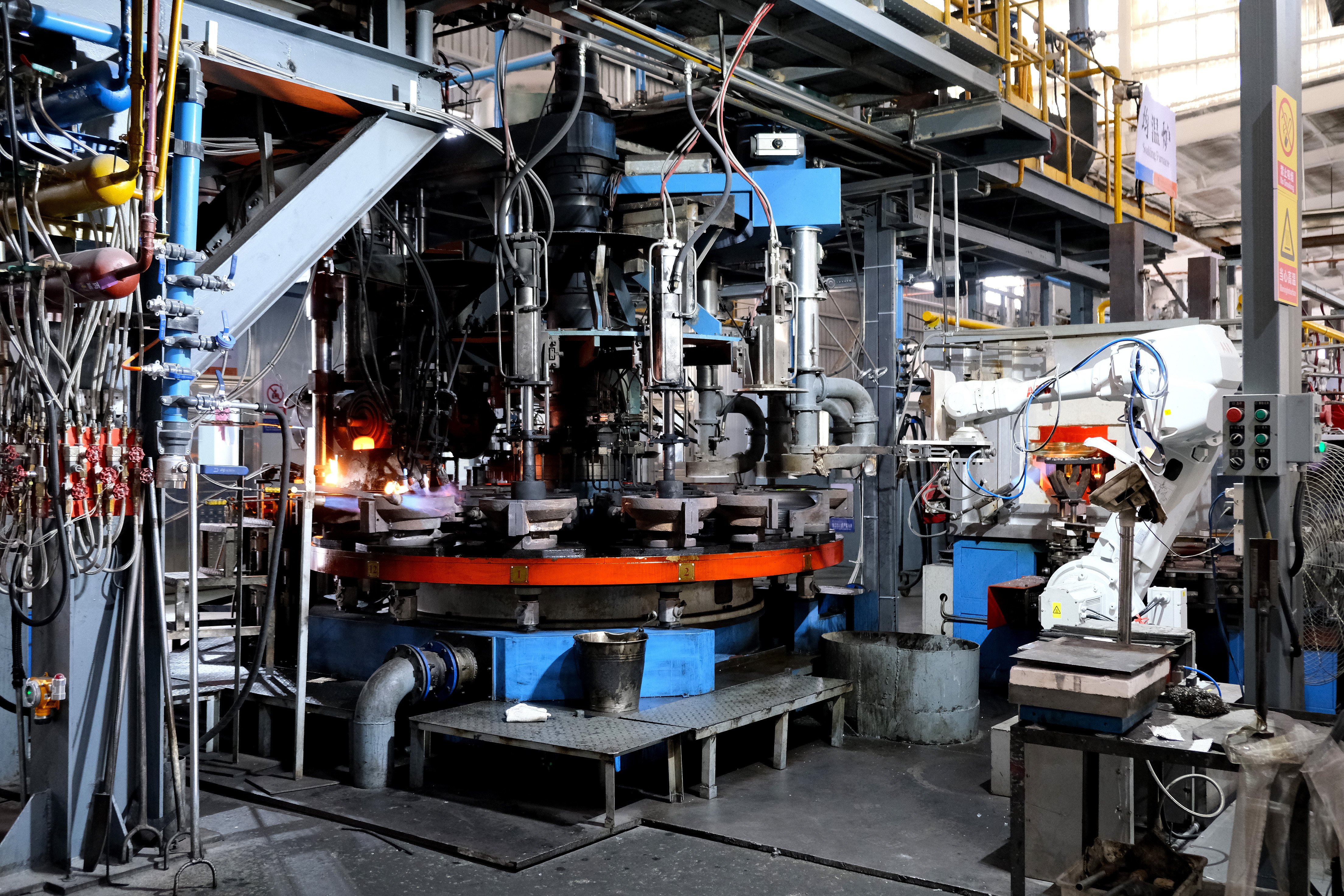
The forming stage determines dimensional consistency and mechanical strength of the porcelain body.
OEM and Customization Capacities
According to company-provided capability data, Jiangxi QOCI Electric provides OEM and ODM production services. The manufacturer supports customization for voltage and logo. This includes HVQ category: production services include OEM and ODM modes, and the manufacturer supports customization for voltage and logo.
For buyers, OEM capabilities matter because many utilities and EPC contractors purchase insulators under their own brand, or need specific voltage ratings and labeling for national grid projects. ODM services also allow the manufacturer to adapt existing product designs to a customer's performance specifications rather than starting from scratch.
Quality Control and Testing
QOCI Electric reports a quality control policy of 100% pre-shipment testing and allows third-party inspection, for example by SGS. In the selection of porcelain insulators, complete crack detection and dye penetration testing on every unit are materially different from batch sampling. Because porcelain insulators can develop internal micro-cracks from thermal cycling or mechanical stress, per-unit testing reduces the probability of zero-value units entering a line.
Buyers should ask suppliers for details on kiln technology, crack detection coverage, glaze quality control, cement joint sealing process, and thermal shock testing. These process-level details determine whether the final product will meet the nameplate specification throughout its service life.
Standards and System Certifications
For export to Europe, the Middle East, Southeast Asia, and other regions, compliance with ISO management system standards and reference to IEC/ANSI product standards is expected. QOCI Electric holds an Occupational Health and Safety Management System Certificate under ISO 45001:2018 and an Environmental Management System Certificate under ISO 14001:2015, both issued by China Quality Certification Centre. These system certifications do not replace IEC product testing, but they indicate that manufacturing processes are monitored for safety and environmental compliance.
For porcelain insulator products themselves, relevant international standards include IEC 60383-1:2023 for ceramic or glass insulator units for AC overhead power lines above 1000V and ANSI C29.1 for test methods in North America.
Product Types and Application Match
Anti-pollution porcelain insulator selection begins with line type, voltage class, mechanical load, and pollution severity. Different insulator families serve different positions in the grid.
Porcelain Pin Type Insulators for Distribution Lines
Pin type porcelain insulators are commonly used on overhead distribution lines for conductor support at the pole top. In the QOCI product range, the P-11-Y is rated 11kV with a rated mechanical load of 10kN, maximum diameter of 150mm, total height of 150mm, creepage distance of 240mm, power frequency wet withstand voltage of 50kV, and lightning impulse withstand voltage of 90kV. The material is high-strength electrical porcelain with a hot-dip galvanized forged steel pin. This type suits distribution networks, rural electrification, and grid construction projects where mechanical loads are moderate.
Porcelain Shackle Insulators for Low-Voltage Lines
Shackle insulators, also called butterfly insulators, are used on low-voltage distribution lines where conductors change direction or terminate. The QOCI ED-2B shackle porcelain insulator has a mechanical tensile strength of 13.5kN, maximum diameter of 90mm, total height of 76mm, power frequency wet withstand voltage of 13kV, and power frequency dry withstand voltage of 25kV. Its compact design allows installation in confined pole-top configurations.
Beyond These Two Models
Porcelain insulator suppliers generally produce a broader portfolio that includes suspension, post, strain, spool, stay, and shackle types. For this article, the two QOCI porcelain products with detailed public specifications are used to illustrate the performance data that buyers should request for any model under evaluation.
Selection Criteria for Anti-Pollution Designs
To select the correct anti-pollution porcelain insulator, the project team should evaluate the following parameters:
- System voltage and insulation coordination: matching the insulator's withstand voltage to the system's lightning impulse and power frequency requirements.
- Mechanical load: confirming specified mechanical load, cantilever strength, or tensile strength against conductor weight, ice, wind, and line angle loads.
- Creepage distance and pollution class: calculating required creepage distance based on IEC 60815 pollution severity levels (I to IV) or national utility guidelines.
- Shed profile: selecting under-rib or alternating shed shapes that interrupt water flow and contamination bridges.
- Material quality: verifying that the porcelain body is fully vitrified, glazed, and free from cracks.
- Metal fittings and galvanization: confirming hot-dip galvanized caps and pins compatible with the specified coupling or pin configuration.
- Cement joint integrity: ensuring proper sealing to prevent moisture ingress and internal corrosion.
These criteria are especially important for anti-pollution procurement because creepage distance and shed geometry are the main differentiators between a standard insulator and a pollution-rated design.
Comparison with Traditional and Alternative Solutions
Porcelain insulators and composite insulators are the two main alternatives for overhead line insulation in polluted environments. Each has strengths and limitations that should be assessed for the specific project.
| Comparison Dimension | Porcelain Insulator | Composite Silicone Rubber Insulator |
|---|---|---|
| UV aging | No UV degradation of the porcelain body or glaze | Polymer housing can degrade under prolonged tropical UV exposure, typically requiring hydrophobicity monitoring |
| Chemical and salt resistance | Chemically inert, stable in coastal salt fog | Good hydrophobicity, but long-term contamination performance can change as the coating degrades |
| Weight | Heavier, requiring stronger structures | Lighter, easier to handle and install |
| Mechanical strength | High compressive strength; good puncture resistance when quality-controlled | Good tensile strength but different failure modes in some designs |
| Lifecycle evidence | Long track record in tropical and coastal climates | Shorter service history at the same scale |
| Relative initial cost | Often lower initial cost than composite in polluted-area projects | Generally higher initial cost for anti-pollution profiles, according to some project comparisons |
One limitation that should be stated honestly: porcelain insulators are heavier than composite insulators. On tower retrofits where weight is tightly constrained, composite insulators may be the more feasible option. Porcelain also requires handling practices that avoid impact damage at the edges, and routine live-line testing is recommended every 3 to 5 years to detect zero-value degradation that is not visible externally.
Field Evidence: Coastal and Monsoon Projects
Field records from QOCI Electric include deliveries to Sri Lanka, Egypt, and Ukraine, totaling 60,000 pieces: Sri Lanka 10,000 pieces, Egypt 40,000 pieces, and Ukraine 10,000 pieces. These were used for coastal and inland tropical distribution line insulation and monsoon region grid reinforcement. The stated result was a 60% reduction in salt fog flashover incidents versus the previous composite batch, zero UV degradation, a 50% reduction in maintenance cost, and a replacement rate under 2% over a three-year period.
For procurement teams, this type of evidence should be examined with appropriate skepticism. The result is supplier-reported rather than independently audited, and a single batch does not predict all future field conditions. And the highlight data is a positive indicator of product performance. In practice, utilities may ask for comparable field references from suppliers in similar climates before making a final decision.
Supplier Selection: Beyond the Product Specification
With a supplier such as Jiangxi QOCI Electric Co., Ltd., buyers can request a product quotation with the following information:
- Detailed specifications per model, including mechanical ratings, dimensions, creepage distance, and withstand voltages.
- Material descriptions, including porcelain body type, glaze, cap material, and pin material.
- Quality control documentation, including test certificates, dye penetration test coverage, and inspection procedures.
- Certifications for quality, environment, and safety systems.
- Lead time and capacity constraints for the required quantity.
- OEM/ODM options if branded insulators are required.
- Payment and delivery terms, including FOB Shenzhen, according to company commercial terms.
QOCI's stated trade terms include MOQ of 50 units, lead time of 15 to 35 days, delivery method FOB Shenzhen, payment of 30% deposit T/T before production and 70% balance T/T before delivery, and acceptance based on pre-shipment testing and third-party inspection. These commercial terms are typical for mid-sized Chinese insulator export and help buyers plan budgeting and logistics.
Future Outlook and Industry Trends
The demand for anti-pollution porcelain insulators is expected to grow with grid expansion in tropical, coastal, and industrialized regions. Transmission and distribution networks in Asia, Africa, and the Middle East are expanding, and many utilities face aging infrastructure in high-pollution zones. The substation porcelain insulator segment is projected to grow at a CAGR of 7.2 percent through 2031, linked to gas-insulated switchgear upgrades and grid modernization, according to the Mordor Intelligence market report.
At the manufacturing level, investments in automated forming, thermal shock testing, and per-unit crack detection are becoming more common in the insulator industry. Porcelain insulator suppliers and porcelain insulator manufacturers in China, as the largest exporting country, are under pressure to prove product consistency and traceability, especially for larger volume distribution projects.
Decision Checklist for Procurement Teams
- Confirm the pollution class at the installation site. For very severe pollution, choose an anti-pollution shed profile with long creepage distance.
- Specify mechanical failing load, coupling, and dimensions. Do not rely on nominal voltage alone.
- Request certified test reports that show wet power frequency withstand voltage, lightning impulse withstand voltage, and electro-mechanical failing load.
- Check whether every unit is tested for cracks or only a sample.
- Evaluate logistics: unit weight, packaging, expected breakage in transit, and availability of replacements.
- Assess the manufacturer's track record in comparable coastal or industrial projects.
- Compare the total cost of ownership, including maintenance, cleaning, and outage costs, not just the unit price.
- If weight is a critical constraint, calculate whether composite insulators are a better fit despite a potentially higher initial price.
FAQ
How do I choose a reliable porcelain insulator supplier?
Qualified porcelain insulator suppliers should provide proof of mechanical strength, 100% dye penetration tested units where feasible, relevant IEC or ANSI certification, and clear documentation of glaze quality and cement sealing. Buyers should evaluate kiln technology, crack detection coverage, creepage distance matching the site pollution class, and field operation records from similar climates. For QOCI Electric, the company reports 100% pre-shipment testing and allows third-party inspection, which is a positive signal for QA coverage, but buyers should still verify this in the quality agreement and audit the factory if possible.
What are the main types of porcelain insulators and which one fits my project?
Porcelain insulators include pin type, suspension disc, post, strain, shackle, spool, stay, and anti-pollution types. Pin type insulators like the QOCI P-11-Y are used on distribution lines at 11kV, while shackle insulators like the ED-2B are used on low-voltage lines. Suspension disc insulators are normally used for high-voltage transmission. The selection is based on voltage class, mechanical load, and application: distribution, transmission, substation, or low-voltage network. For polluted areas, the project team should choose a porcelain insulator type that can be ordered with extended creepage distance and an anti-fog shed profile.
How does an anti-pollution porcelain insulator differ from a standard porcelain insulator?
An anti-pollution porcelain insulator has a longer creepage distance and a specially shaped shed profile that increases the surface leakage path and interrupts water flow. This reduces the risk of pollution flashover when salt or industrial dust accumulates on the surface. A standard porcelain insulator, with a shorter creepage distance, may be sufficient in clean areas but can fail prematurely in severe pollution conditions. Standards such as IEC 60815 classify pollution levels from I to IV and provide guidance on required creepage distances.
Why is creepage distance important for coastal and industrial grids?
Creepage distance is the total path along the insulator surface between the live part and the grounded part. In coastal or industrial grids, contamination can form a conductive layer that increases leakage current. A longer creepage distance reduces leakage current and raises the withstand voltage under polluted conditions. QOCI's P-11-Y, at 150mm total height, provides 240mm creepage distance; for higher pollution levels, the anti-pollution profile extends this distance further. Buyers should match the creepage distance to the actual site pollution class rather than only considering the rated voltage.
Which certifications should an export-grade porcelain insulator manufacturer hold?
An export-grade manufacturer should ideally hold ISO 9001 quality management certification plus ISO 14001 environmental management and ISO 45001 occupational health and safety certifications. QOCI Electric holds ISO 14001:2015 and ISO 45001:2018 certificates from China Quality Certification Centre. For product compliance, the relevant standards include IEC 60383-1 for ceramic insulator units for overhead AC lines above 1000V, IEC 60672 for ceramic and glass insulating materials, and ANSI C29 series for the US market. Buyers should request the specific product test certificates for the models under consideration.
Can I get custom brand labeling or OEM porcelain insulators?
Yes. Many porcelain insulator manufacturers, including Jiangxi QOCI Electric Co., Ltd., provide OEM and ODM production services. According to company capability data, QOCI Electric supports customization for voltage and logo. For utilities and EPC contractors, this allows insulators to be delivered with the buyer's brand and with voltage markings that match project specifications. When requesting a quotation, include the proposed logo artwork, voltage rating, and any drawing or standard references. A typical lead time from QOCI for porcelain insulators is 15 to 35 days after confirmation.