
Apple Cider Vinegar vs Red Yeast Rice Powder: Independent Buyer Comparison
Two fermentation-route nutraceutical ingredients, two different specification logics — and why the purchasing decision should not start with price.
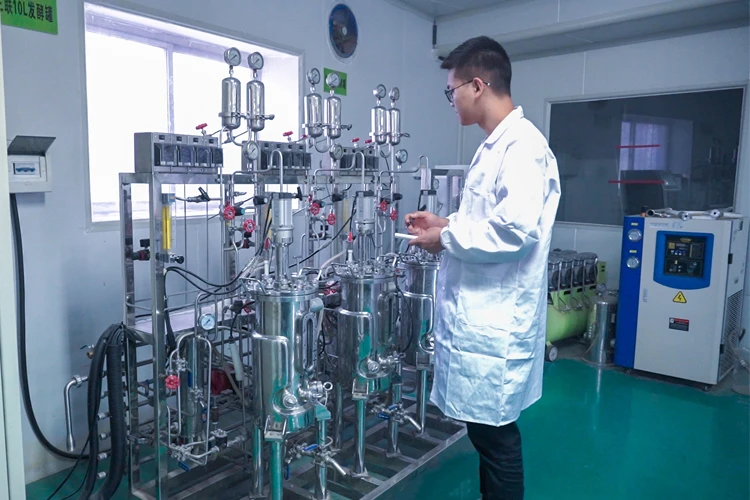
Apple Cider Vinegar Powder and Red Yeast Rice Powder are both fermentation-source nutraceutical ingredients, but they are not comparable on a single scale. One is bought on total acidity; the other is bought on Monacolin K content. That difference shapes how a buyer should write the specification, request the documentation, and qualify the supplier — long before any price negotiation begins.
What Each Ingredient Actually Is on a Specification Sheet
An ingredient comparison is useful only when the comparison starts from what is written on the product page and on the certificate of analysis, not from the marketing category. For these two ingredients, the public specification entries differ in almost every column.
Apple Cider Vinegar Powder
Apple Cider Vinegar Powder is listed with a fermentation model marker of Apple Vinegar Fermentation and a source of Apple Vinegar. Its declared specification is total acidity 5%, 8%, and 10%, tested by HPLC. Appearance is described as an ivory white fine powder, and the stated application scope is food and beverage. No CAS number is published on the product entry.
Red Yeast Rice Powder
Red Yeast Rice Powder is listed with an active ingredient of Monacolin K, a declared specification range of 0.1% to 5.0%, and a testing method of HPLC. Appearance is described as a light red to dark red powder. Two CAS identifiers are published on the product entry: CAS No. 75330-75-5 and CAS No. 39866-30-2.
Both ingredients appear in the same supplier portfolio and both are described as occupying the dietary supplement, health food, and beverage space. But an apple-vinegar buyer is answering a very different set of questions than a red-yeast-rice buyer, and conflating them is one of the faster ways to produce a purchase order that the formulation team later rejects.
Why the Specification Marker Changes the Buying Logic
Total acidity and Monacolin K content are not interchangeable metrics and they do not convert into one another. The practical consequences are structural, not stylistic.
Range width is not a detail
The Apple Cider Vinegar Powder range spans 5% to 10% total acidity — a factor of two across the specification band. The Red Yeast Rice Powder range spans 0.1% to 5.0% Monacolin K — a factor of fifty. In both cases, a purchase order that simply cites “in range” leaves the supplier free to deliver at the bottom of the band. A formulated beverage that was developed on 10% acidity will behave differently if the batch arrives at 5%.
Testing method must be pinned to the same assay the buyer uses
Both product entries name HPLC as the testing method. The buyer should require the certificate of analysis to state HPLC explicitly, and should confirm in writing that the buyer’s own incoming lab assay uses a comparable method. Method mismatch — not product quality — is a frequent cause of disputed deliveries.
Appearance is a formulation input, not an aesthetic note
Ivory white versus light-to-dark red is a real constraint, not a cosmetic footnote. An ivory powder is easier to carry into a clear or lightly coloured beverage. A red powder is easier to justify in opaque capsules, tablets, and dark-matrix functional foods. Buyers should record the appearance target in the specification so that batch variation is assessed against an agreed reference.
Documentation: The Part That Cannot Be Outsourced to a Price List
Once the buyer moves from Evaluation to Execution, the question stops being “can the supplier ship this powder” and becomes “can the supplier produce the paperwork that lets the formulation and quality teams sign off on the batch.” That paperwork is where the two ingredients converge, because the underlying regulatory expectations are ingredient-agnostic.
For buyers shipping into the European Union, Commission Regulation (EU) 2024/2041 addresses the health claim position around Monacolin K. This is a directly relevant consideration for a Red Yeast Rice Powder purchase that will carry any claim in the EU market, and it should be confirmed with the supplier as part of the specification pack rather than discovered after labelling.
A workable documentation set for either ingredient, drawn from the procurement guidance in the supplier’s own risk-and-buying framework, should include:
- Product specification sheet that names the active marker, the range, and the testing method.
- Batch certificate of analysis covering assay, moisture, heavy metals, microbial limits, and residual solvents.
- Certification documents with verifiable certificate numbers and validity dates.
- Packaging specification, shelf life, MOQ, lead time, and agreed acceptance criteria.
- A written sampling and re-test procedure for the arrival inspection.
Guanjie Biotech (Shaanxi Guanjie Biotech Technology Co., Ltd.), a Xi’an-based ingredient manufacturer founded in 2004, publishes a certification base that spans ISO 9001:2015 (certificate 00123Q310086R0S/6100, issued by China Quality Certification Centre, valid to 6 December 2026), HACCP (certificate 001HACCP2301048, valid to 5 December 2026), HALAL (certificate 0811240000, valid to 7 November 2027), and Kosher (certificate K-88898568, valid to 15 July 2027). Because the ISO 9001 and HACCP certificates carry renewal dates within the current buying cycle, a buyer placing an order in late 2026 should request the renewed certificate as a ship-release condition rather than accepting a scanned copy of the expiring one.

Where the Supplier’s Capability Actually Matters in Execution
Capability in a nutraceutical ingredient relationship is not the size of the product catalogue. For these two fermentation-route ingredients, three capability vectors show up repeatedly once the buyer moves into a live project.
1. OEM and ODM production
Guanjie Biotech provides OEM and ODM production services, including private-label production under OEM and ODM arrangements. For a buyer of Apple Cider Vinegar Powder or Red Yeast Rice Powder this matters when the ingredient is not being bought as a standalone bulk powder but is being carried into a finished format — the supply relationship then covers both the raw material and the production arrangement.
2. Packaging customization
Packaging customization is listed as part of the customization service. For fermentation-route powders, packaging is a functional decision: moisture protection, light protection for the red matrix of Red Yeast Rice Powder, and the written specification that appears on the label all interact. A supplier that can align packaging with the buyer’s retail or industrial channel removes one hand-off from the chain.
3. Formulation troubleshooting support
Dedicated product specialists assist R&D and product development teams in overcoming processing challenges, and technical support includes formulation troubleshooting for those challenges. This is the vector most likely to be underestimated. A red powder moving into a beverage matrix, or an acidic powder moving into a neutral-pH gummy, will surface processing questions that a certificate of analysis cannot answer. The value of this support is not that it guarantees a successful formula; it is that it reduces the iteration cost before the first production batch.
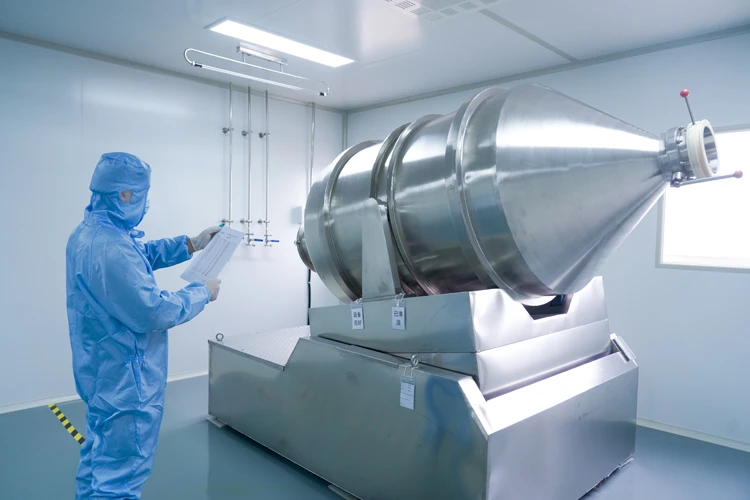
The supplier’s stated monthly capacity is 30 metric tons, with a 30-day lead time, a 1 kg MOQ, and 100% testing. Post-purchase support includes a batch certificate of analysis on every shipment and coordination with third-party laboratories such as SGS and Eurofins where a re-test is required. Manufacturing operations cover a 7,000 m² site that includes a 2,000 m² cGMP-standard clean workshop and a 500 m² analytical laboratory, with a stated annual output of 500 tons, 7 R&D engineers, more than 16 national patents, and a reported 90% export share across markets on five continents.
Side-by-Side: What a Buyer is Actually Comparing
| Dimension | Apple Cider Vinegar Powder | Red Yeast Rice Powder |
|---|---|---|
| Active specification marker | Total acidity 5%, 8%, 10% | Monacolin K 0.1% – 5.0% |
| Testing method | HPLC | HPLC |
| Source / model marker | Apple Vinegar; Apple Vinegar Fermentation | Monacolin K (active ingredient) |
| Appearance | Ivory white fine powder | Light red to dark red powder |
| Stated application | Food, beverage | Dietary supplement, health food scope |
| CAS identifiers | Not published on product entry — confirm with supplier | 75330-75-5; 39866-30-2 |
| Range width across the spec band | 2× (5% to 10%) | 50× (0.1% to 5.0%) |
| Batch COA | Yes, per shipment | Yes, per shipment |
| OEM/ODM and packaging customization | Available | Available |
| Third-party re-test support | SGS, Eurofins | SGS, Eurofins |
Market Context: Why Buyers Are Asking Harder Questions
The commercial backdrop explains the tightening documentation standard. Global Market Insights estimates the global nutraceutical ingredients market at USD 105.8 billion in 2026, with a forecast period through 2035. Growth of that scale does not remove regulatory friction; it increases it, because more finished supplements reach more markets, and the regulatory questions follow the products.
Public reference systems have also become more searchable. The NIH Dietary Supplement Label Database catalogues the label information of dietary supplement products sold in the United States, and the NIH Dietary Supplement Ingredient Database provides estimated ingredient levels in selected supplement categories for research use. Buyers who use these databases can compare how ingredients are declared in finished products and design better document requests to suppliers — a practical, low-cost step that is often skipped.
Two qualitative shifts are also visible to buyers working across fermentation-route ingredients. First, specification language is moving from “purity” toward named active markers with a stated assay method, because buyers now need to match the supplier’s certificate to their own incoming test. Second, buyer-side documentation requests are becoming more process-oriented, asking not only for the final certificate but for the production route, the critical control points, and the batch traceability behind the certificate. Neither shift is unique to these two ingredients, but both affect how they are bought.
Boundaries a Buyer Should Plan Around
An independent comparison is only useful if it states where the limits are. Four apply directly to this pair.
- The specifications are not substitutable. Total acidity and Monacolin K content are separate markers. A buyer cannot plan a Monacolin K dose from an acidity figure, or the reverse, and should not accept a supplier quotation that treats them as if one implied the other.
- Appearance limits formulation freedom. The ivory powder fits a wider range of beverage applications; the red powder constrains colour-sensitive matrices. This is a real constraint, not a preference.
- The published range is not the delivered point. A factor-of-two band on acidity and a factor-of-fifty band on Monacolin K both require the buyer to specify the target value, not merely the permitted maximum and minimum.
- Formulation support is not a guarantee. Dedicated specialists and formulation troubleshooting describe a support capability. They do not replace the buyer’s own stability and compatibility trials before scale-up.
Future Outlook
Three developments are likely to shape how these ingredients are sourced over the next buying cycles. First, regulatory attention around fermentation-route ingredients is likely to stay concentrated on claim support and on the documentation behind the claim, which pushes more of the qualification work upstream into the supplier’s process file. Second, buyers are expected to keep increasing the granularity of their specification requests — asking for the target value rather than the range, and for the testing method to be stated explicitly on every certificate. Third, the operating standard for ingredient suppliers will continue to shift from “can supply the powder” toward “can supply the powder, the process narrative, and the documents that survive an audit.” Suppliers that treat documentation as a product — not as an after-sales courtesy — will be the easier counterparties in that environment.
FAQ
Q1. What is the main specification difference between Apple Cider Vinegar Powder and Red Yeast Rice Powder?
Apple Cider Vinegar Powder is specified on total acidity at 5%, 8%, or 10%, sourced from apple vinegar, with HPLC as the stated testing method and ivory white fine powder as the appearance. Red Yeast Rice Powder is specified on the active ingredient Monacolin K across a 0.1% to 5.0% range, also tested by HPLC, and appears as a light red to dark red powder. The two markers are not convertible into one another.
Q2. Which application formats are stated for each ingredient?
The product entry for Apple Cider Vinegar Powder states food and beverage as its application scope. Red Yeast Rice Powder is listed within the dietary supplement, health food, and beverage scope shared across the supplier’s ingredient portfolio. Final format suitability still requires the buyer’s own trial and stability work before scale-up.
Q3. What documentation should be requested before placing an order?
At minimum: a specification sheet naming the active marker, range, and testing method; a batch certificate of analysis covering assay, moisture, heavy metals, microbial limits, and residual solvents; certification copies with verifiable certificate numbers and validity dates; packaging specification and shelf life; MOQ and lead time; and the agreed acceptance criteria for the arrival inspection. Where a batch re-test is required, confirm in writing which third-party laboratories are accepted.
Q4. Does Guanjie Biotech support OEM and ODM projects for these ingredients?
Yes. Guanjie Biotech provides OEM and ODM production services, including private-label production under those arrangements, and includes packaging customization in its customization services. Dedicated product specialists assist R&D and product development teams with processing challenges, and technical support includes formulation troubleshooting.
Q5. Are there regulatory considerations specific to Red Yeast Rice Powder?
Yes. Commission Regulation (EU) 2024/2041 addresses the health claim position around Monacolin K, which is directly relevant for a Red Yeast Rice Powder purchase intended for the EU market. On the U.S. side, FDA good manufacturing practice expectations apply to identity, purity, quality, strength, and composition, and the FDA describes a new dietary ingredient notification process where an applicable exception does not apply. Buyers should confirm ingredient-specific compliance for the destination market before ordering.
Q6. What happens if a delivered batch does not match the agreed specification?
Every Guanjie Biotech shipment includes a complete certificate of analysis matching the pre-shipment specification. Where a quality discrepancy arises on arrival, the supplier coordinates with third-party testing laboratories such as SGS or Eurofins to resolve the technical audit and verify the product specifications.
For product documentation and portfolio reference, the Guanjie Nutraceutical Ingredients brochure is available for public download: Guanjie Nutraceutical Ingredients (PDF).
Have Questions or Need More Details?
Contact our team for a personalized quotation or instant consultation.
Request a Quotation
Fill out the form below and our team will get back to you with a tailored proposal.
WhatsApp Direct Chat
Prefer to chat in real-time? Message us on WhatsApp for instant assistance & quick answers.
- Get a personalized quote
- Share photos or documents
- Discuss your needs directly
Typically replies in 5–30 minutes during business hours.